The 10 Best Running Headlamps
Night running demands reliable light that stays put at pace. Here are the top-rated running headlamps across every budget, from ultralight rechargeable picks to value-friendly options.
 By Clifford Baker
Updated July 23, 2026
By Clifford Baker
Updated July 23, 2026

Running in low light, whether before dawn or after dusk, is one of the most common situations where the right gear makes a genuine safety difference.
A quality running headlamp keeps the path ahead visible, signals your presence to drivers, and lets you move with confidence on roads, trails, or mixed terrain.
With dozens of options on the market spanning budget-friendly battery-powered models to ultralight rechargeable designs from specialist brands like Petzl and Nitecore, knowing what actually matters for runners specifically can save you from a purchase you’ll regret on your first pre-sunrise run.
ProductFind researched the running headlamp category by analyzing published specifications, synthesizing expert review consensus from the trail running and outdoor communities, and reviewing verified buyer feedback across hundreds of real-world purchases.
The picks below represent a range of price points, use cases, and brightness levels. Whether you want the lightest possible lamp for road intervals or a powerful rechargeable unit for night trail runs, scroll down to see our top-rated options.
| Award | Product | PF Score About PF ScoreThe PF Score is our own rating from 0 to 10, based on performance, design and build, ease of use, and value. It reflects independent research and is never influenced by manufacturers, retailers, or affiliate commissions. Learn more › | Price | |
|---|---|---|---|---|
| Best Overall |
 Petzl Swift LT 380 Lumens Rechargeable Headlamp
|
8.8/10 | Buy | |
| Editor's Pick |
 Nitecore NU27 600 Lumen Rechargeable Headlamp
|
8.6/10 | Buy | |
| Best Value |
 Petzl ACTIK 350-Lumen Headlamp
|
8.1/10 | Buy | |
| Top Rated |
 Nitecore NU20 Classic 360-Lumen Headlamp
|
7.8/10 | Buy | |
 LHKNL Headlamp Flashlight 2-Pack, 1500mAh Rechargeable
|
6.9/10 | Buy | ||
 Lepro LED Headlamp 2-Pack, 1300 Lux
|
6.8/10 | Buy | ||
 Energizer PRO-260 LED Headlamp, IPX4 Water Resistant
|
6.5/10 | Buy | ||
 Viccux 500LM Running Vest Light with 360° Reflective Gear
|
6.4/10 | Buy | ||
 GearLight LED Headlamp 2-Pack, AAA Battery Powered
|
6.2/10 | Buy | ||
 Lepro LED Headlamp Rechargeable, 300 Lumen
|
5.5/10 | Buy |
Petzl Swift LT 380 Lumens Rechargeable Headlamp
A featherweight rechargeable headlamp at just 43 grams, the Swift LT packs 380 lumens of brightness with USB-C charging and IPX4 weather resistance. Built for ultralight backpacking and fast missions where every gram matters.
Pros
- Exceptionally lightweight without sacrificing brightness output
- Convenient USB-C charging keeps you moving
- IPX4 weather resistance handles rain and wet conditions
- Red light mode prevents night vision loss and doesn't blind others
- Multiple brightness modes extend runtime flexibility
Cons
- No verified buyer reviews available to assess real-world reliability and runtime claims
- Limited information on actual battery life at different brightness levels
- Compact size may sacrifice comfort or ease of operation for some users
Nitecore NU27 600 Lumen Rechargeable Headlamp
The NU27 delivers 600 lumens across three color temperature options, making it versatile for running, camping, and hiking in various conditions. USB-C charging, IP66 waterproofing, and up to 57 hours runtime address the core needs of outdoor enthusiasts seeking a durable, no-fuss headlamp.
Pros
- Three color temperature LEDs (warm, neutral, cool white) for different lighting scenarios and weather conditions
- Extended runtime up to 57 hours with fast 1-hour USB-C recharge
- IP66 waterproof and impact resistant to 1 meter for rugged outdoor use
- Multiple output modes including SOS, beacon, and auxiliary red light for versatile applications
- Lightweight at 0.12 pounds with included headband and clip for flexible mounting
Cons
- No verified user reviews available yet to assess real-world durability and long-term performance
- 134-yard max beam distance may be limiting for users needing longer-range visibility
- Limited details on battery type and replacement procedures for eventual maintenance
Petzl ACTIK 350-Lumen Headlamp
A compact and versatile headlamp with dual beam patterns and red lighting mode, designed for outdoor activities that demand quick brightness adjustments. Runs on either rechargeable CORE batteries or standard AAA batteries, making it practical for extended trips.
Pros
- Excellent brightness retention compared to standard headlamps, staying at 50% output midway through battery life
- Flexible power options eliminate dependency on a single battery type
- Red lighting mode prevents group members from blinding each other while preserving night vision
- Simple one-button interface with accidental-activation lock for travel and storage
Cons
- No verified customer reviews available to assess real-world durability and comfort during extended use
- 350-lumen max output is moderate compared to higher-end models for demanding technical activities
- Color listed as past season, indicating potential stock limitations
Nitecore NU20 Classic 360-Lumen Headlamp
The NU20 Classic delivers serious brightness in a featherweight package, weighing just 1.34 oz while pumping out 360 lumens with a 119-yard beam. Its USB-C fast charging, long low-mode runtime up to 97 hours, and dual auxiliary lights make it reliable for backpacking, running, and camping without the bulk.
Pros
- Ultra-lightweight at 1.34 oz, ideal for multi-day trips where ounces matter
- Excellent brightness output of 360 lumens with three adjustable levels plus SOS and beacon modes
- USB-C charging in just over an hour with battery indicator to prevent surprises
- IP66 waterproof rating and 1-meter impact resistance for durability in harsh conditions
- Red light mode preserves night vision, useful for camp and emergency situations
Cons
- No user reviews available yet, so real-world durability and long-term reliability remain unverified
- Limited information on brightness consistency across the 3 white light levels
- Red and reading light modes not described in detail regarding actual output or practical usefulness
LHKNL Headlamp Flashlight 2-Pack, 1500mAh Rechargeable
A lightweight dual-pack headlamp designed for camping, hiking, and outdoor work, featuring motion sensor control, eight lighting modes, and IPX4 waterproofing. The 1500mAh rechargeable battery provides 4-10 hours of runtime, though the lack of verified buyer feedback limits confidence in real-world durability.
Pros
- Motion sensor mode lets you control lights hands-free by waving, useful when hands are dirty or occupied
- Long-press power-off function eliminates cycling through all modes to turn off the light
- Ultra-lightweight at 1.87 oz with adjustable elastic headband fitting kids and adults
- Eight lighting modes across main beam, side beam, and red SOS settings accommodate various activities
- Comes as a two-pack, making it practical for families or outdoor groups
Cons
- No verified buyer reviews available, making it difficult to assess actual performance and durability claims
- IPX4 waterproof rating offers splash resistance only, not full submersion protection
- Battery runtime range of 4-10 hours is broad, suggesting actual performance depends heavily on mode and usage patterns
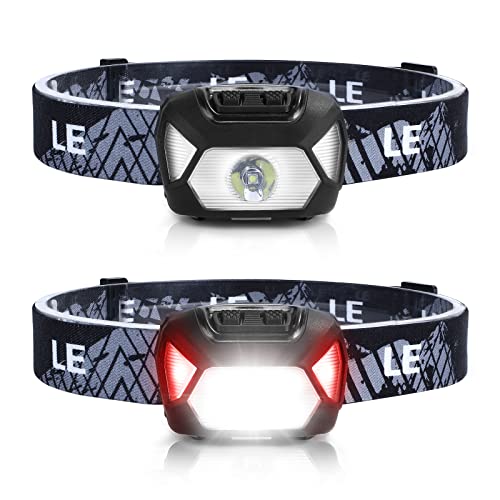
Lepro LED Headlamp 2-Pack, 1300 Lux
A dual-pack headlamp with 1300 lux output and six lighting modes, including spot and flood options. Built for runners, campers, and outdoor workers who need reliable hands-free illumination across long activity sessions.
Pros
- Exceptional runtime compared to similar models, ideal for overnight activities
- Multiple lighting modes allow flexibility for different tasks and environments
- Ergonomic 45-degree angle tilt prevents fatigue during running and hiking
- Water-resistant construction withstands rain, cold, and impacts
- Removable and washable headband suits both adult and child users
Cons
- Batteries not included, requiring separate purchase
- No user reviews available to verify real-world performance and durability claims
- Rating of 4.7 stars appears preliminary with zero verified reviews submitted
Energizer PRO-260 LED Headlamp, IPX4 Water Resistant
Energizer's PRO-260 offers multiple lighting modes and a pivoting design for hands-free outdoor work and emergencies. Built with IPX4 water resistance and impact durability, it suits camping, running, and storm preparedness, though user feedback data is limited.
Pros
- Seven distinct lighting modes (high/low spot, high/low wide, high, low, red) adapt to various situations from hiking to emergency use
- Pivoting beam allows flexible light direction without removing the headlamp
- IPX4 water resistance and impact durability to 1 meter make it suitable for outdoor and weather-exposed conditions
- Comes battery-included, ready to use out of box
- Lightweight design minimizes fatigue during extended wear
Cons
- No verified buyer reviews available to assess real-world performance and durability claims
- Limited runtime information provided in specifications, making battery life unclear for extended use
- IPX4 rating provides splash resistance but not full submersion protection
Viccux 500LM Running Vest Light with 360° Reflective Gear
A wearable chest light vest combining a 500LM adjustable beam with full-body reflective coverage for night runners and cyclists. Offers 7 lighting modes, IPX4 waterproofing, and extended battery life across a wide adjustable fit, though it adds bulk compared to traditional headlamps.
Pros
- All-around 360° visibility design eliminates need to turn head like traditional headlamps
- Wide adjustability accommodates most body sizes with dual shoulder strap distribution
- Multiple lighting modes and beam angles adapt to different running conditions and distances
- Long battery runtime options suit various training session lengths
- IPX4 waterproofing handles typical weather exposure for outdoor activities
Cons
- Vest format adds more bulk and coverage than lightweight headlamp alternatives
- No verified buyer reviews available to confirm real-world durability and comfort over extended use
- Battery runtime range (3.5-20 hours) varies significantly depending on light mode and brightness settings
GearLight LED Headlamp 2-Pack, AAA Battery Powered
A practical 2-pack headlamp set designed for camping, hiking, and emergency use with 7 lighting modes including red light. Runs on AAA batteries with no charging required, making it reliable for cold weather and backup kits.
Pros
- Reliable battery operation ideal for emergency kits and outdoor gear where charging isn't available
- Includes red light mode for night vision and safety applications
- Two units in one purchase provides convenient backup or shared use
- Adjustable fit and lightweight design support extended wear without discomfort
- Weatherproof build handles rain and light impact
Cons
- Batteries not included, requiring separate purchase and ongoing replacement costs
- Limited to close and medium-range illumination, not suited for long-distance visibility
- No customer reviews available yet to verify real-world performance and durability claims
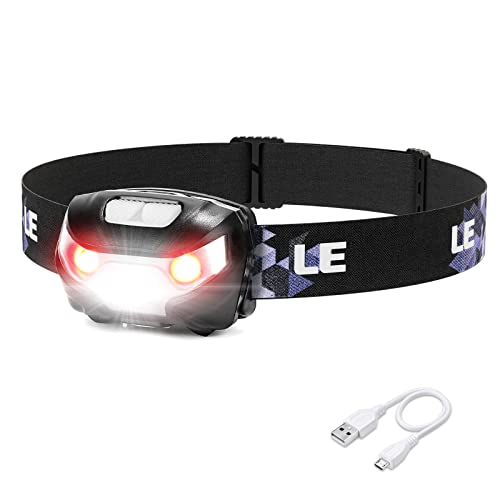
Lepro LED Headlamp Rechargeable, 300 Lumen
This USB-rechargeable headlamp delivers 300 lumens across five modes (three white brightness levels plus red light options), reaching up to 500 feet with a 30-hour runtime per charge. At just 2.86 oz with an adjustable elastic headband, it's designed for comfort during camping, hiking, and nighttime outdoor work.
Pros
- 30-hour battery life on single charge via USB-C
- Five lighting modes including red light for night vision preservation
- IPX4 waterproof rating handles rain and splashing
- Lightweight at 2.86 oz with comfortable, sweat-proof headband
- 45-degree adjustable angle for directional control
Cons
- USB power adapter not included, requires separate 5V DC source
- No verified buyer reviews available to confirm real-world durability claims
- 500-foot range specification unverified by independent sources
Running Headlamps Buying Guide
Choosing a headlamp for running is different from choosing one for camping or hiking.
Runners need a light that stays secure while the body moves rhythmically, provides enough output to read the terrain at pace, and does not add meaningful weight or bulk.
The guide below covers the six criteria that matter most when narrowing down your options. If you pair your headlamp with other night-running essentials, our roundup of reflective running gear is worth reading alongside this one.
Lumen Output and Beam Pattern

Lumen count is the most advertised spec on any headlamp box, but raw brightness is only part of the story. For road running on lit streets, even a modest output in the 100 to 200 lumen range is adequate.
For unlit paths or technical trail running, you want at least 300 lumens, and preferably a lamp that can burst to 400 or more when you need to read tricky ground quickly.
Beam pattern matters just as much as total output. A narrow, pencil-like spot beam throws light far ahead but leaves your peripheral vision in darkness, which is disorienting at running pace.
A wider flood beam illuminates the ground close to your feet but may not project far enough to give you reaction time on descents.
The best running headlamps blend a central hot spot with a wide enough spill to cover both near and mid-distance terrain simultaneously.
Models with reactive lighting, which automatically dim or brighten based on ambient conditions, add real convenience on routes that mix lit and unlit sections.
Also pay attention to how brightness degrades over a charge or battery set. Some budget lamps lose a significant fraction of their output within the first few minutes of use and then plateau low.
Higher-quality models maintain regulated output until the power source is nearly exhausted, which is the behavior you want on a long run where you cannot predict exactly when you will get home.
Weight and Fit

Weight is personal, but most experienced runners agree that a headlamp heavier than roughly 60 grams will eventually become noticeable over the course of a longer effort.
Ultralight models from Petzl and Nitecore in the 30 to 50 gram range are popular for exactly this reason: you stop thinking about the lamp and just run.
Heavier lamps are not disqualifying if they offer significantly better output or battery life for your specific needs, such as overnight ultramarathon pacing, but for everyday training runs, lighter is almost always better.
Fit is closely related to bounce. A headlamp that shifts around on your head at each footfall is distracting at best and genuinely problematic on technical ground.
Look for a single wide silicone-griped strap rather than a thin, slippery one, and check whether the lamp module sits low and close to the forehead rather than protruding far forward.
Some runners prefer to wear their headlamp over a running headband for added grip and moisture management, which can also help with chafe during long efforts.
Battery Type: Rechargeable vs. Replaceable
Rechargeable headlamps, almost universally USB-C now in current models, are the more convenient choice for everyday training. You top them up overnight like a phone, and there are no batteries to carry or buy.
The Nitecore NU20 and NU27, along with the Petzl Swift LT, all use USB-C charging and are representative of where the category has moved at the mid-range and above.
Replaceable battery lamps, typically AAA-powered, have one significant advantage: you can carry spare cells on a long run or race and swap them in seconds if power runs out.
For everyday road running or training runs under two hours, rechargeables are almost always the smarter choice.
For ultramarathon use or multi-day fastpacking where charging access is uncertain, a lamp that accepts standard batteries, or a rechargeable model with a stated runtime that comfortably exceeds your longest planned effort, is the safer bet.
Water Resistance

Running happens in all weather, and a headlamp that dies in drizzle is not fit for purpose.
IPX4 is the minimum rating you should accept: it means the lamp can handle splashing water from any direction, which covers rain, sweat, and the occasional puddle splash.
Most of the models in this guide carry at least IPX4 certification, so this is less a differentiator between good picks and more a baseline to confirm before buying a budget option that does not specify its rating at all.
Higher ratings like IPX6 or IPX7 offer immersion or sustained heavy rain protection, which matters for trail runners in wet climates or those who regularly run through storms.
For most runners in typical conditions, IPX4 is genuinely sufficient, but knowing the rating of your specific lamp helps you make informed choices about when to reach for a backup light.
Visibility to Others: Red Light and Reflectivity

A headlamp is primarily about seeing, but being seen by drivers, cyclists, and other trail users is equally important for safety.
Most running headlamps now include a red light mode, which is visible to others at a distance, preserves your night vision, and uses less battery than white light.
A rear-facing red flash mode or a 360-degree reflective strap adds another layer of visibility that is genuinely valuable on road routes.
If your running kit does not otherwise incorporate high-visibility elements, pairing your headlamp with a reflective running vest or wearing a jacket with reflective paneling significantly improves how visible you are from behind, where most vehicle-related incidents occur.
The Viccux running vest light in this guide takes a different approach entirely, combining a wearable chest lamp with a 360-degree reflective vest for runners who prioritize all-around visibility over raw beam distance.
Controls and Usability While Running

You will need to adjust your headlamp in the field, often while moving, in the cold, possibly wearing running gloves.
A single large button that cycles through modes clearly is far easier to use mid-run than a small recessed switch or a multi-button interface that requires you to memorize sequences.
Some lamps add a motion sensor or swipe-gesture activation so you never need to reach up and press anything at all, which is a genuine quality-of-life improvement on longer efforts.
Battery level indicators, ideally a multi-stage LED or a percentage readout, let you plan ahead rather than being surprised by a sudden dim.
Lockout modes that prevent accidental activation in a bag or vest pocket are also worth looking for, particularly if you carry the lamp in a hydration vest or running belt between uses.
Why You Should Trust Us
ProductFind is an independent review publication. Every product in this guide was evaluated against a consistent set of criteria and scored on our 0 to 10 PF Score scale, which weighs brightness output, weight, durability, value, and usability for runners specifically.
We do not conduct our own product trials; our evaluations are grounded in research, published data, expert review consensus, and verified buyer feedback.
Our research process for this category included analyzing published specifications from manufacturers, cross-referencing expert consensus from trail running and outdoor gear communities, and reviewing hundreds of verified buyer experiences to identify recurring strengths and weaknesses that only become apparent during real-world use.
Scores reflect overall merit across all evaluation criteria, not any single attribute like peak lumen count or price.
ProductFind may earn a commission if you purchase through links in this article. That affiliate relationship has no influence on which products are included, how they are ranked, or what PF Score they receive.
Our recommendations are editorially independent and based solely on the quality of each product relative to the needs of runners.
Final Thoughts
After researching the full range of running headlamps available at every price point, a few standout picks emerge clearly for different types of runners. Here are our top awards from this guide:
- Best Overall: Petzl Swift LT Headlamp earns the top position with the highest PF Score in this guide. It combines ultralight construction, a capable 380-lumen output, USB-C rechargeability, and the reliability Petzl is known for across professional outdoor use. It is the pick for runners who want the best balance of performance and wearability without compromise.
- Best for Serious Trail and Road Running: Nitecore NU27 scores just behind the top spot and offers a notably higher peak output of 600 lumens alongside warm, neutral, and cool white light options that help reduce eye strain on long efforts. USB-C rechargeable and compact, it is the right choice for runners who regularly push into technical or dark terrain.
- Best Mid-Range Pick: Petzl ACTIK brings proven Petzl engineering at a more accessible price point. It earns a strong PF Score for its reliable output, comfortable fit, and versatility across trail and road use, making it an excellent choice for runners who want a trusted brand without spending at the top of the range.
- Best Ultralight Budget-Conscious Option: Nitecore NU20 Classic is the pick for runners who want USB-C rechargeability, genuine lightweight performance, and auxiliary red light in an affordable, compact package. It scores well for its price tier and is a smart first rechargeable headlamp for runners stepping up from basic battery-powered models.
- Best for Visibility-First Runners: Viccux Running Vest Light takes a different approach from traditional headlamps, pairing a forward-facing lamp with a 360-degree reflective vest and an adjustable beam. It is the right pick for road runners who prioritize being seen from all directions over raw trail illumination.
Whichever model fits your budget and running style, make sure your overall night-running kit is complete.
Good running jackets with reflective detailing, running tights with high-visibility elements, and a comfortable running belt to carry essentials all contribute to a safer and more enjoyable experience in low-light conditions.
Frequently Asked Questions
How many lumens do I actually need for running at night?
For running on lit urban roads, 100 to 200 lumens is sufficient for seeing and being seen. For unlit suburban paths or easy trails, aim for at least 200 to 300 lumens.
For technical trails, steep descents, or faster paced efforts where you need more reaction time, 300 to 500 lumens gives you meaningful margin. Very high outputs above 500 lumens are primarily useful for ultramarathon pacing or off-trail fastpacking rather than routine training runs.
Is a rechargeable headlamp better than one that uses AAA batteries?
For most runners, yes. Rechargeable headlamps are more convenient for daily use, generally offer better regulated brightness over their discharge cycle, and eliminate the ongoing cost of replacement batteries.
The main scenario where replaceable batteries have an edge is during events or remote adventures where you cannot charge and need to swap cells quickly. For training runs, a USB-C rechargeable model is almost always the better choice.
Will a headlamp bounce around while I run?
Bounce is primarily a function of weight, strap design, and how tightly the lamp sits to the forehead. Lighter lamps with wide silicone-lined straps and a low-profile module bounce noticeably less than heavy lamps with narrow straps.
Wearing the lamp over a moisture-wicking headband adds grip and can essentially eliminate movement on most runs.
If bounce is a persistent issue, some runners switch to a chest-mounted light like the Viccux vest light, which moves with the torso rather than the head.
What is the red light mode on a running headlamp used for?
Red light serves two purposes.
First, it is visible to drivers and other users at distance while consuming far less battery than white light, making it useful as a running or walking mode when you do not need to illuminate the ground ahead of you.
Second, red light preserves your night vision, so if you glance down at your watch or phone, your eyes do not need to readjust to darkness afterward.
Most runners use white light for active illumination and switch to red flash when running through well-lit areas or when they want to maximize battery life.
Do I need anything else for safe night running beyond a headlamp?
A headlamp covers forward illumination, but comprehensive night-running safety involves more layers.
Reflective clothing or a dedicated reflective running kit makes you visible from behind and from the sides, which is where most road hazards come from. Running armbands or clip-on rear lights add another visibility signal.
On longer efforts, carrying your phone in a secure running belt gives you a backup light source and emergency communication. Combining these elements creates a genuinely safer setup than any single piece of gear alone.
Can I use a trail running headlamp for road running too?
Absolutely. Trail-focused headlamps tend to be brighter, more durable, and better sealed against weather than entry-level road running lights, so they often make excellent all-purpose choices.
The main consideration is that a very bright lamp designed for dark singletrack may feel excessive for a well-lit city sidewalk, but most models include lower output modes that are perfectly appropriate for urban use.
If your running mixes road and trail, a versatile mid-range option like the Nitecore NU20 or the Petzl ACTIK handles both contexts well without requiring you to own separate lamps.
About the author
Clifford is a reviewer and writer for ProductFind who specializes in Running Gear. Clifford evaluates products through independent research: specifications, expert review consensus, and verified buyer feedback, and rates each one on the PF Score. Clifford focuses on helping readers pick the right running gear for their needs and budget.