The 8 Best Stand-Up Paddle Boards
Stable enough for beginners, wide enough for yoga, and versatile across lakes and coastlines. Here are the best inflatable SUPs across every budget and skill level.
 By Olivia Shelton
Updated July 23, 2026
By Olivia Shelton
Updated July 23, 2026
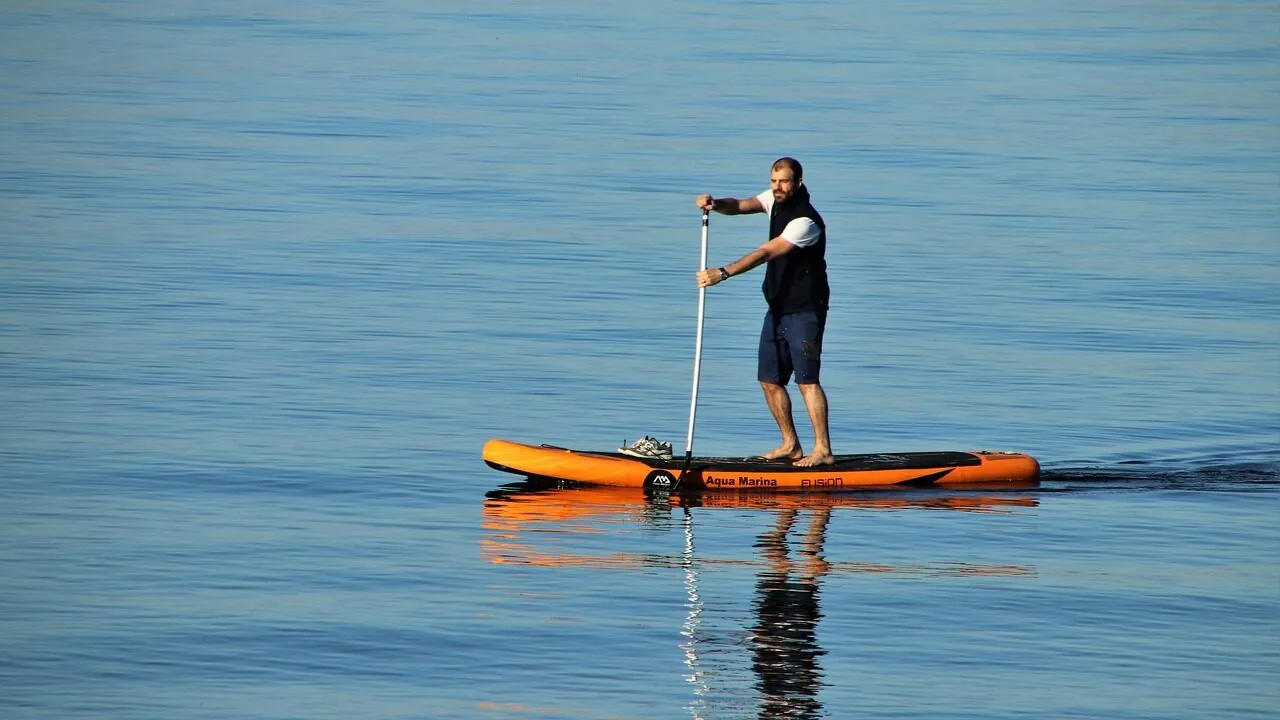
Stand-up paddle boarding has grown into one of the most accessible water sports available, drawing in everyone from weekend lake-goers to fitness enthusiasts who want a full-body workout without the gym.
The market for inflatable SUPs in particular has expanded rapidly, giving buyers an enormous range of options at very different price points and quality levels.
With so many boards claiming to be “the most stable” or “the most versatile,” it can be genuinely difficult to separate well-built boards from those that look good in listing photos but disappoint on the water.
This guide cuts through that noise. Our team at ProductFind researched the current landscape of stand-up paddle boards by analyzing manufacturer specifications, synthesizing expert review consensus from the paddling community, and combing through verified buyer feedback across hundreds of purchases.
The result is a curated list of eight boards ranging from budget-friendly entry points to wider, higher-capacity options built for yoga, fishing, and family use.
Whether you are buying your first inflatable SUP or upgrading from a basic beginner board, the picks below give you a strong starting point across every skill level and budget.
| Award | Product | PF Score About PF ScoreThe PF Score is our own rating from 0 to 10, based on performance, design and build, ease of use, and value. It reflects independent research and is never influenced by manufacturers, retailers, or affiliate commissions. Learn more › | Price | |
|---|---|---|---|---|
| Best Overall |
 Flyroc 11'6" x 35" Inflatable SUP, 450 lb Capacity
|
7.4/10 | Buy | |
| Editor's Pick |
 ATPROSS 11'6" x 35" Inflatable Paddle Board, 450lbs
|
7.3/10 | Buy | |
| Best Value |
 Roc 10'6" Inflatable Stand-Up Paddleboard with Accessories
|
7.2/10 | Buy | |
| Top Rated |
 SKADDLES 10'6" Inflatable SUP Board
|
7.1/10 | Buy | |
 FBSPORT 11-Foot Inflatable Stand-Up Paddle Board
|
6.8/10 | Buy | ||
 Wetarjoyfre 11' x 33" Inflatable SUP Board
|
6.7/10 | Buy | ||
 FEATH-R-LITE 10'6" Inflatable Paddle Board with Accessories
|
6.5/10 | Buy | ||
 Bestway Hydro-Force White Cap 10' Inflatable SUP Kayak Set
|
6.2/10 | Buy |
Flyroc 11'6" x 35" Inflatable SUP, 450 lb Capacity
An extra-wide inflatable paddleboard designed for stability across skill levels, from beginners to yoga practitioners. At 450 lb capacity, it handles solo paddlers, multiple riders, and heavy gear like fishing tackle or camping equipment.
Pros
- Exceptional stability from 35-inch beam width, ideal for balance-focused activities and new paddlers
- Comprehensive accessory package includes double-action pump that inflates in under 10 minutes, reducing setup hassle
- Durable military-grade PVC construction with reinforced dual-layer sidewalls and drop stitch technology minimizes puncture and leak risk
- Flexible storage with multiple strap attachment points accommodates coolers, fishing gear, and camping equipment without overloading
- Generous 450 lb capacity supports multiple users or heavier gear loads
Cons
- No verified customer reviews available to assess real-world durability or performance claims
- At 18 pounds, the board is relatively heavy for solo transport despite included shoulder strap
- Extra-wide 35-inch profile prioritizes stability over maneuverability, making it less responsive for experienced paddlers seeking speed
ATPROSS 11'6" x 35" Inflatable Paddle Board, 450lbs
A versatile 11'6" wide SUP designed for beginners through intermediate paddlers, offering multiple use cases from yoga to fishing with a complete accessory kit. The 450-pound capacity and detachable kayak seat provide flexibility, though no verified buyer feedback is available yet to confirm real-world durability claims.
Pros
- Comprehensive bundle includes hand pump, dual paddles, removable fins, backpack, repair kit, and waterproof storage bag
- Large deck surface and wide beam designed for all skill levels and balance assistance
- Versatile design supports yoga, fishing, surfing, snorkeling, and recreational paddling
- Removable fins enable easier maneuverability and customization for different water conditions
Cons
- No verified customer reviews available to validate performance, durability, or build quality claims
- Specifications list shows inconsistent or minimal detail (thickness listed as 0.039 inches appears incomplete)
- Marketing-heavy descriptions lack independent assessment of actual stability or paddling efficiency
Roc 10'6" Inflatable Stand-Up Paddleboard with Accessories
A wide, stable SUP design rated for 350 lbs weight capacity, built with material claimed to be 50% stronger than competitors. Comes with premium accessories and a 3-year manufacturer warranty, making it accessible for beginners and intermediate paddlers.
Pros
- High weight capacity accommodates larger riders and extra gear
- Wide deck footprint reduces tipping risk for beginners
- Bundle includes accessories, reducing separate purchases
- Durable material construction with extended warranty coverage
Cons
- No verified customer reviews available to assess real-world performance and durability claims
- Strength and durability comparisons are manufacturer claims without independent verification
- Limited information on included accessories quality or specifics
SKADDLES 10'6" Inflatable SUP Board
A complete beginner-friendly stand-up paddleboard that arrives with all necessary accessories, including pump, paddle, leash, and carrying bag. The extra-wide design and non-slip deck prioritize stability for first-time paddlers and multi-sport use like yoga and fishing.
Pros
- All accessories included means no additional purchases needed to start paddling
- Wide construction and reinforced build cater well to beginners and heavier users seeking stability
- Compact and portable with dedicated carrying backpack, suitable for trips and storage
- Versatile performance across multiple water activities and conditions
Cons
- No verified buyer reviews available to confirm real-world durability and performance claims
- PVC construction may require ongoing maintenance to prevent UV degradation with frequent sun exposure
- Weight distribution and balance information not detailed, which matters for yoga and fitness-specific use cases
FBSPORT 11-Foot Inflatable Stand-Up Paddle Board
A versatile 11-foot SUP designed for beginners through intermediate paddlers, featuring a wide 33-inch deck for stability and non-slip surface. Comes complete with paddle, pump, leash, and carry bag, making it ready for lakes, rivers, and calm ocean conditions.
Pros
- Wide stance design improves balance for all skill levels
- Complete bundle includes all essential accessories for immediate use
- Durable military-grade construction at an accessible price point
- Versatile for yoga, fishing, paddling, and casual cruising
- Triple fin configuration aids handling and steering control
Cons
- No verified buyer reviews available to confirm real-world performance claims
- Triple fin setup with two fixed fins limits customization options
- Weight capacity of 350 lbs may restrict use for larger users or gear-heavy trips
Wetarjoyfre 11' x 33" Inflatable SUP Board
An extra-wide paddle board designed for stability and versatility across yoga, fishing, and recreational paddling. Comes with a complete accessory package including pump, paddle, and travel bag for convenient transport.
Pros
- Wider than standard 30-inch boards, reducing wobbling for beginners and enabling multiple riders or pets
- High-density drop-stitch core and reinforced PVC rails provide durability on rocky terrain
- All essential accessories included eliminates the need for separate purchases
- Non-slip EVA deck with deep grooves maintains traction in wet conditions
Cons
- No verified buyer reviews available to confirm real-world performance claims
- Heavier and bulkier width may require more storage space despite included travel backpack
- Extra width could reduce paddling efficiency compared to narrower performance-oriented boards
FEATH-R-LITE 10'6" Inflatable Paddle Board with Accessories
A lightweight inflatable SUP at 18.9 pounds, designed for adults and youth across skill levels with 3-fin stability. Comes fully equipped with pump, paddle, leash, phone bag, and repair kit for immediate water use.
Pros
- Arrives with all essentials: pump, adjustable paddle, 3 removable fins, safety leash, backpack, waterproof phone bag, and repair kit
- Lightweight construction without sacrificing durability according to brand specifications
- 3-fin system provides stability across different water conditions
- Compact storage and transport due to 18.9-pound weight
Cons
- No verified customer reviews available to assess real-world performance and durability claims
- Dimensions show unusual thickness specification that may indicate data entry error
- Limited information on material composition beyond generic premium materials claim
Bestway Hydro-Force White Cap 10' Inflatable SUP Kayak Set
This 10-foot inflatable paddle board converts between stand-up and kayak modes, making it versatile for different water activities. The set includes all essentials: aluminum oar, hand pump, travel bag, and pressure gauge, though it's designed for single-person use with a 209-pound capacity.
Pros
- All necessary equipment included in one set, no additional purchases required
- Drop stitch materials and reinforced PVC construction provide strength and longevity
- Non-slip deck with molded fins enhances stability and safety on water
- Lightweight at under 20 pounds with carry handle for easy portability
- Quick-release air valve simplifies inflation and storage
Cons
- Single-person capacity limits group outings or family use
- No customer reviews available to assess real-world durability and performance
- Hand pump may require significant effort for full inflation of the board
Stand-Up Paddle Boards Buying Guide
Choosing the right inflatable SUP is not just about picking the longest board or the one with the most accessories in the box. The boards in this guide cover a range of widths, weight capacities, and intended uses.
Understanding a few core factors will help you match the right board to your actual paddling style and the water conditions you plan to tackle most often.
If you enjoy other paddle sports alongside SUP, pairing your board with the right gear matters too, tandem kayaks are worth exploring if you regularly paddle with a partner and want an alternative for calmer days.
Board Dimensions: Length, Width, and Thickness

The three numbers that matter most when comparing inflatable SUPs are length, width, and thickness.
Longer boards, typically 11 feet and above, track straighter and glide more efficiently across flat water, which makes them better suited for distance paddling or touring on open lakes.
Shorter boards are easier to maneuver and more forgiving for beginners navigating narrower waterways.
Width is the single biggest factor in stability.
Boards in the 33-to-35-inch range, such as the Flyroc and ATPROSS options in our lineup, provide a noticeably wider platform that is far more forgiving for beginners, yoga practitioners, and paddlers who plan to bring a dog or cargo.
Narrower boards, typically under 32 inches, reward more advanced paddlers with better glide and speed but require more balance. Thickness, almost universally 6 inches on quality inflatables, determines rigidity once fully inflated.
A board that feels soft or spongy underfoot has not been inflated adequately or uses lower-grade PVC lamination.
For buyers who plan to use their board for yoga sessions or want room to bring gear on fishing trips, prioritizing width of 33 inches or more is a practical decision.
The ATPROSS 11’6″ x 35″ board in our guide was specifically built around this use case and reflects that design philosophy.
Weight Capacity and Board Stiffness

Weight capacity ratings on inflatable SUPs are often overstated in marketing copy, so it pays to apply a practical rule of thumb: plan to use no more than 70 to 75 percent of the stated maximum capacity for comfortable, stable paddling.
A board rated at 300 pounds will perform well with a 200-pound paddler plus a backpack, but pushing close to the stated limit causes the board to sit lower in the water and flex more noticeably underfoot.
Boards rated at 450 pounds, like the Flyroc and ATPROSS models in our lineup, are designed with extra material and width to handle heavier paddlers, loaded fishing setups, or families where a child rides along.
For solo adult paddlers in a typical weight range, boards in the 275 to 350-pound capacity range are generally sufficient and often lighter and easier to carry.
Board stiffness at full inflation is closely tied to construction quality. Dual-layer or triple-layer PVC with drop-stitch cores holds its shape better under load and resists the flex that makes paddling feel inefficient.
When evaluating buyer feedback across our picks, stiffness at recommended PSI levels was one of the most consistently cited differences between satisfied and dissatisfied owners.
Stability and the Non-Slip Deck Pad
Stability is the quality most beginners prioritize above everything else, and it is influenced by a combination of width, thickness, volume distribution, and the shape of the board’s hull.
A wider, thicker board with volume distributed evenly toward the nose and tail will feel dramatically more planted than a narrower performance-focused design.
All eight boards in this guide feature non-slip EVA foam deck pads, which are essential for safe footing whether you are standing, doing yoga poses, or hauling yourself back on after a fall.
The quality of the deck pad matters beyond just grip. Thicker, textured foam is more comfortable during longer sessions and provides a better grip surface when wet.
Some budget boards use thin, smooth EVA that peels at the edges after a season of use.
Verified buyer feedback on the boards we assessed frequently mentioned deck pad durability as a differentiator between boards that held up year over year and those that showed wear quickly.
For paddlers focused on on-water yoga or any activity requiring low-center-of-gravity balance work, the combination of a wide platform and a dense, full-length deck pad is more important than paddle quality or accessory count.
Fin Configuration and Tracking

Most inflatable SUPs use a three-fin setup: one larger center fin and two smaller side fins. This configuration balances tracking (the ability to hold a straight line) with maneuverability.
A single large center fin gives better straight-line tracking for open-water paddling but reduces agility in tighter spaces. Boards with removable center fins allow you to adjust the setup based on conditions, which is a small but meaningful flexibility advantage.
Some boards in our lineup, including the FEATH-R-LITE, come with three removable fins, giving users more configuration options. For most recreational paddlers, a standard three-fin setup with a clip-in or screw-in center fin is perfectly adequate.
Where fin quality becomes relevant is durability: cheap plastic fins crack easily on shallow launches and landings, and replacement fins are sometimes difficult to source for lesser-known brands.
Included Accessories and What They Are Actually Worth
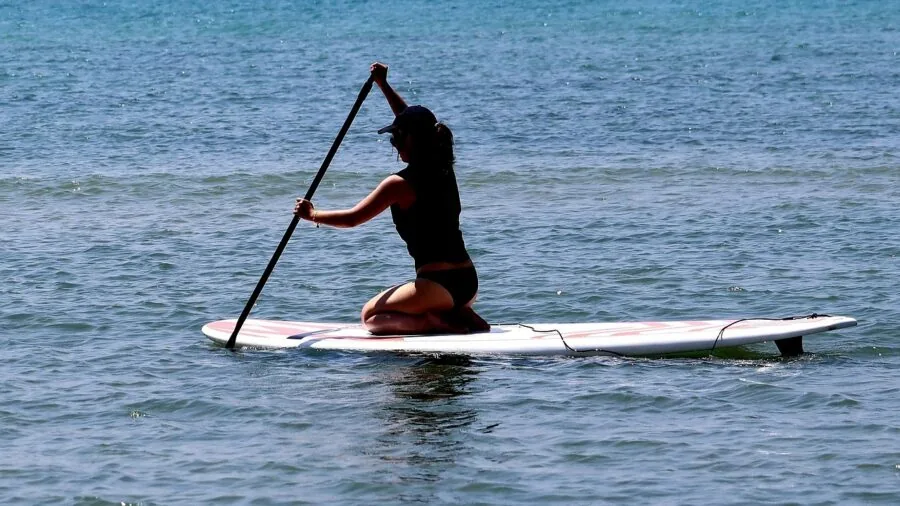
Almost every inflatable SUP at the budget to mid-range price tier now comes bundled with a package of accessories: an adjustable aluminum paddle, a hand pump or double-action pump, a coiled ankle leash, fins, and a carry bag or backpack.
The presence of these items matters less than their quality. An aluminum paddle that flexes noticeably with each stroke will tire you out faster and reduce your enjoyment significantly.
Many experienced paddlers ultimately replace the included paddle with a carbon fiber or fiberglass shaft option after their first season.
The pump included with most boards in this price range is a double-action hand pump capable of reaching the 12 to 15 PSI most boards require. These work fine but take 10 to 15 minutes of effort per inflation session.
If convenience matters to you, budgeting for an electric SUP pump separately is a worthwhile upgrade most buyers eventually make.
The carry bag or backpack quality varies widely: some are durable and comfortable to carry on long hikes to remote launch spots, while others are thin nylon sacks that barely hold the deflated board.
A waterproof phone bag, included with boards like the FEATH-R-LITE, is a genuinely useful addition for anyone who wants to keep their phone accessible on the water.
Pairing your session with an action camera mounted to your board or paddle is increasingly popular among SUP paddlers who want to capture footage without risking a dropped smartphone.
Intended Use: All-Around vs. Specialty

Most inflatable SUPs in the budget to mid-range segment are marketed as “all-around” boards, meaning they are designed to perform acceptably across multiple use cases: casual lake paddling, light fitness work, and recreational flatwater touring.
Truly all-around boards balance stability and tracking rather than excelling at either extreme. The Roc and SKADDLES boards in our lineup fit this profile well, offering versatility for paddlers who have not yet settled on a specific discipline.
Specialty use cases worth considering before buying include yoga and fitness (which benefit from maximum width and a full-length deck pad), fishing (which requires D-ring anchor points, cargo space, and high weight capacity), and paddling with kids or dogs (which demands stability above all else).
If you have a clear primary use case in mind, weight that factor heavily when comparing boards rather than defaulting to the longest spec sheet or the most accessories in the box.
Why You Should Trust Us
ProductFind is an independent review platform. We do not sell products, accept free samples from manufacturers, or allow brands to influence our coverage.
Every board in this guide was evaluated using our structured research methodology: we analyzed published manufacturer specifications, assessed expert review consensus from the broader paddling and outdoor gear community, and reviewed verified buyer feedback across verified purchase channels.
We do not conduct our own product trials; our evaluations are grounded in research, published data, expert review consensus, and verified buyer feedback.
Each product in this guide receives a PF Score on a 0 to 10 scale, assigned after evaluating performance attributes, build quality, value relative to price, and the consistency of real-world user experience reports.
The PF Score is designed to reflect a holistic picture of how a product performs in actual use conditions for typical buyers, not just how it reads on a spec sheet.
Scores are reviewed and updated when new data or significant model changes warrant a reassessment.
ProductFind may earn a commission if you purchase through links in this article. That affiliate relationship has no bearing on our rankings, scores, or product selection. We include or exclude products based solely on research merit. Our editorial decisions are made independently of commercial considerations.
Final Thoughts
The inflatable SUP market at the accessible price tier has matured considerably in recent years, and the boards in this guide reflect that.
Build quality, accessory bundles, and weight capacities have all improved, making it genuinely possible to find a capable, durable board without spending a premium. Here is how our top picks break down by use case and standout strength:
- Best Overall: Flyroc 11’6″ x 35″ Inflatable Stand Up Paddle Board earns the top PF Score in this group with its combination of extra-wide platform, high weight capacity, and well-rounded performance across skill levels. It represents the strongest balance of stability, build quality, and versatility among the boards we assessed.
- Best for Yoga and Fitness: ATPROSS 11’6″ x 35″ Inflatable Paddle Board stands out for paddlers who prioritize on-water yoga or fitness work, thanks to its extra-wide 35-inch deck and 450-pound capacity that creates a stable platform for movement-focused sessions.
- Best All-Around Pick: Roc Inflatable Stand Up Paddle Board 10’6″ delivers a wide, stable design with a comfortable non-slip deck that works equally well for beginners building confidence and recreational paddlers who want a no-fuss, dependable board for lake and calm coastal use.
- Best for Families and Casual Paddlers: SKADDLES 10’6″ Inflatable Stand Up Paddle Board offers an accessible entry point for family use, fishing, and casual fitness paddling, with a non-slip deck and a complete accessories kit that gives new paddlers everything they need to get on the water quickly.
- Best Budget Pick: FBSPORT 11′ Premium Stand Up Paddle Board provides a solid foundation for first-time buyers who want a capable yoga and recreational SUP without committing to a higher-priced option, earning one of the stronger PF Scores in the budget tier.
For paddlers who want to broaden their time on the water, exploring complementary paddle sports is a natural next step.
Tandem kayaks offer a great alternative for days when you want to paddle with a partner at a more relaxed pace. Whatever direction you go, the boards above give you a well-researched starting point grounded in real-world performance data.
Frequently Asked Questions
What size paddle board is best for beginners?
For most beginners, a board between 10 and 11 feet long with a width of 32 inches or more offers the best combination of stability and maneuverability.
Wider boards, particularly those in the 33-to-35-inch range, are significantly more forgiving when you are still developing your balance and paddle stroke.
All eight boards in this guide fall within a beginner-appropriate range in terms of stability, with the wider ATPROSS and Flyroc models providing the most planted feel for paddlers who are genuinely nervous about balance.
Are inflatable paddle boards as good as hard boards?
Inflatable SUPs have closed the gap on hard boards considerably in recent years for recreational use. A quality inflatable inflated to 12 to 15 PSI rides with minimal flex and performs well on flatwater for fitness, fishing, yoga, and casual touring.
Hard boards still hold clear advantages for high-performance paddling: better speed, more responsive tracking, and superior glide efficiency. For most recreational buyers, though, the portability and storage convenience of an inflatable SUP far outweighs those performance trade-offs.
Inflatables are also more durable against impacts from rocks and dock edges, which matters for paddlers launching from unimproved shorelines.
The boards in this guide are all inflatable designs and are sized and built for recreational and fitness use rather than performance racing or advanced surf.
How much PSI should I inflate my paddle board to?
Most inflatable SUPs recommend inflation between 12 and 15 PSI for optimal stiffness and performance.
Under-inflation is one of the most common mistakes first-time buyers make: a board inflated to 8 or 9 PSI will feel soft and unstable underfoot, leading many users to incorrectly conclude the board is low quality.
Always use the pressure gauge included with the pump (or a separate gauge for accuracy) and inflate to the manufacturer’s recommended level before launching.
In warmer conditions, air inside the board expands, so inflating to the lower end of the recommended range on hot days prevents over-pressure.
What accessories do I actually need beyond what comes in the box?
Most boards in this guide include a functional starter kit: a paddle, pump, leash, fins, and carry bag. The accessories most buyers find themselves upgrading first are the paddle and the pump.
A higher-quality fiberglass or carbon paddle makes a noticeable difference in stroke efficiency and reduces arm fatigue on longer sessions.
An electric pump eliminates the 10 to 15 minutes of manual effort required to reach full inflation, which is a quality-of-life improvement most regular paddlers appreciate.
A personal flotation device (PFD) is legally required in many jurisdictions and is strongly recommended regardless of your swimming ability.
If you plan to capture your sessions on the water, a waterproof action camera is one of the most popular add-ons in the paddling community, giving you hands-free recording while keeping your phone safely stowed.
After your session, staying hydrated on the water is easier with a well-insulated bottle, insulated tumblers are a practical accessory to keep cold drinks cold in warm weather paddling conditions.
Can I use a stand-up paddle board for yoga?
Yes, and SUP yoga has become a dedicated practice for many paddlers. The key requirement is a wide, stable platform with a full-length or large-area non-slip deck pad.
Boards narrower than 32 inches or with limited deck coverage make yoga poses significantly more challenging and introduce more risk of falling.
The ATPROSS and Flyroc boards in this guide are specifically sized with yoga-friendly width, making them strong picks for paddlers who want to incorporate fitness and balance work into their time on the water.
Anchoring your board in place using the board’s D-ring attachment points and a small anchor system lets you hold poses without drifting, which is particularly useful on open lakes with light wind.
Most yoga-focused SUP sessions work best on calm, flat water with minimal boat wake or wind chop.
How do I store and care for an inflatable SUP?
Inflatable SUPs are much easier to store than hard boards: deflated and rolled, most fit into the included backpack and can be stored in a closet, car trunk, or garage shelf.
The most important care practices are rinsing the board with fresh water after every saltwater or sandy session, allowing it to dry fully before rolling and storing (to prevent mold in the seams), and storing it out of direct sunlight and extreme heat.
UV exposure and prolonged heat degrade PVC over time and can weaken seam bonds.
Most quality inflatable SUPs will last five or more years with basic care, making the per-year cost of ownership quite low relative to the enjoyment they provide.
About the author
Olivia is a reviewer and writer for ProductFind who specializes in Water Sports. Olivia evaluates products through independent research: specifications, expert review consensus, and verified buyer feedback, and rates each one on the PF Score. Olivia focuses on helping readers pick the right water sport for their needs and budget.