The 10 Best Fish Finders
Sonar technology, screen size, and mapping capability vary enormously across fish finders. Here are the top picks for every boat type, fishing style, and budget.
 By Bernard George
Updated July 23, 2026
By Bernard George
Updated July 23, 2026

A reliable fish finder transforms every trip on the water, whether you’re chasing bass through shallow brush or trolling deep reservoirs for walleye.
Instead of guessing where fish might be holding, a quality sonar unit shows you bottom structure, depth changes, baitfish schools, and the fish themselves in real time.
The gap between fishing productively and drifting over dead water often comes down to having the right electronics on the bow. Pair your setup with proven fishing lures and you dramatically increase your odds of a successful day.
This guide covers the best fish finders available right now, spanning entry-level portables, mid-range GPS combo units, and feature-rich chartplotters for serious anglers.
ProductFind evaluated each model through comprehensive research, drawing on manufacturer specifications, expert review consensus, and verified buyer feedback to produce an honest, independent ranking.
Scroll down to see our top picks, then read the buying guide to find the right unit for your boat, budget, and fishing style.
| Award | Product | PF Score About PF ScoreThe PF Score is our own rating from 0 to 10, based on performance, design and build, ease of use, and value. It reflects independent research and is never influenced by manufacturers, retailers, or affiliate commissions. Learn more › | Price | |
|---|---|---|---|---|
| Best Overall |
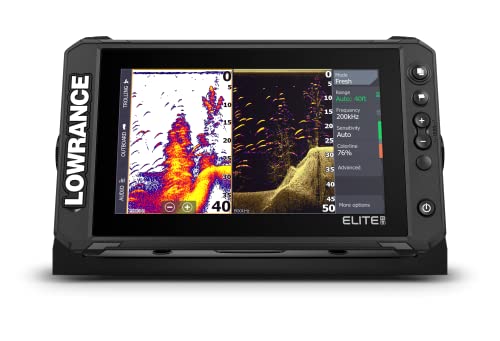 Lowrance Elite FS 9 Fish Finder with Active Imaging
|
8.8/10 | Buy | |
| Editor's Pick |
 Lowrance Eagle Eye 9 Live Sonar FishFinder with 9-inch Display
|
8.7/10 | Buy | |
| Best Value |
 Garmin Striker Vivid 7cv Fishfinder with GT20 Transducer
|
8.6/10 | Buy | |
| Top Rated |
 Humminbird Helix 5 G3 5-Inch GPS Fish Finder
|
8.5/10 | Buy | |
 Garmin Striker Vivid 4cv 4-inch Fishfinder
|
8.4/10 | Buy | ||
 Humminbird Helix 5 G3 5-Inch Fish Finder with Dual Spectrum Sonar
|
8.3/10 | Buy | ||
 Garmin Striker 4 3.5-Inch GPS Fishfinder with Chirp Sonar
|
8.2/10 | Buy | ||
 Garmin STRIKER 5CV 5-Inch GPS Fishfinder
|
7.1/10 | Buy | ||
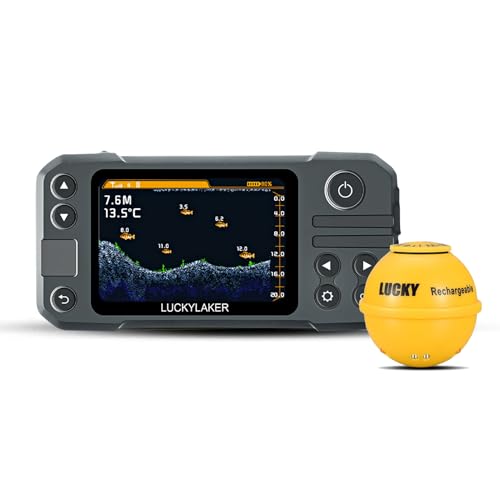 LUCKY MT-202 Portable Fish Finder, 853ft Range
|
6.1/10 | Buy | ||
 Venterior Wireless Portable Fish Finder, 80M Range
|
5.8/10 | Buy |
Lowrance Elite FS 9 Fish Finder with Active Imaging
A 9-inch touchscreen fish finder built for anglers who want multi-beam sonar and preloaded mapping without the complexity. The Active Imaging 3-in-1 transducer combines CHIRP, SideScan, and DownScan to reveal structure and fish activity, while C-MAP Contour+ charts get you to productive spots quickly.
Pros
- Three sonar modes in one transducer reduces clutter and simplifies rigging
- Preloaded contour maps eliminate the need to purchase additional chart software
- Centralized boat control integration streamlines operation on the water
- Large touchscreen makes menu navigation intuitive even in variable lighting
- Compatible with advanced live sonar for anglers willing to upgrade
Cons
- No verified buyer reviews yet to validate real-world performance and durability claims
- Live sonar compatibility requires separate ActiveTarget 2 XL purchase, adding significant cost
- 9-inch display may feel cramped for anglers upgrading from larger screens or using it in direct sunlight
Lowrance Eagle Eye 9 Live Sonar FishFinder with 9-inch Display
The Eagle Eye 9 combines live forward and down sonar with traditional CHIRP imaging in a single transducer setup, covering 17,000+ U.S. lakes with preloaded C-MAP charts. Its 9-inch IPS screen handles bright sunlight and polarized sunglasses, making it practical for serious anglers who want real-time fish tracking on the water.
Pros
- Four sonar technologies (Live Forward, Live Down, CHIRP, DownScan) accessible via single transducer eliminates multi-unit complexity
- Autotuning sonar removes guesswork from image optimization for different water conditions
- IPS screen delivers usable visibility in bright daylight and through polarized lenses, addressing common on-water visibility issues
- Extensive preloaded chart coverage of 17,000+ lakes reduces need for additional map purchases
- Lightweight and compact form factor suits various boat setups
Cons
- No verified buyer reviews available to assess real-world performance reliability and durability
- Live sonar requires transom mounting, limiting flexibility for kayaks or smaller watercraft
- Four sonar modes may present a learning curve for users unfamiliar with advanced fishfinding technology
Garmin Striker Vivid 7cv Fishfinder with GT20 Transducer
A 7-inch color fishfinder designed for recreational anglers who want straightforward sonar and GPS marking without complexity. The vivid scanning sonar color palettes help distinguish fish and structure, while built-in Quickdraw Contours mapping and Wi-Fi connectivity to ActiveCaptain add practical value for on-water navigation and waypoint management.
Pros
- Vivid color palettes make fish and underwater structure easier to distinguish than standard sonar displays
- Dual sonar capability with both traditional CHIRP and ClearVue scanning sonar included
- Built-in GPS with waypoint and route creation for navigation and return-to-spot functionality
- Wi-Fi connectivity enables seamless integration with ActiveCaptain app for software updates and community features
- Includes transducer and mounting hardware, ready to install with minimal additional purchases
Cons
- No verified customer reviews available to assess real-world reliability and user experience
- 7-inch screen is smaller than premium fishfinder models, limiting detail visibility at a glance
- Limited information on software update frequency or long-term feature compatibility with newer Garmin ecosystem
Humminbird Helix 5 G3 5-Inch GPS Fish Finder
A compact fish finder combining dual spectrum CHIRP sonar, Down Imaging, and GPS chartplotting with AutoChart Live mapping capabilities. Built for anglers who want essential sonar and navigation features without a large display footprint.
Pros
- Dual Spectrum CHIRP sonar delivers detailed fish arches and structure detection with two search modes
- Real-time mapping and AutoChart Live allow users to build custom depth and vegetation charts during use
- Integrated GPS with preloaded lake and coastal coverage eliminates need for external mapping initially
- Compact 5-inch display fits smaller boats and tight console spaces
- Intuitive button-based menu system ensures operation remains responsive in challenging conditions
Cons
- 5-inch screen is relatively small compared to mid-range and premium models, limiting detail visibility at a glance
- No user reviews available in the data to assess real-world reliability or learning curve
- Limited expandability shown; AutoChart Live expansion requires separate SD card purchase
Garmin Striker Vivid 4cv 4-inch Fishfinder
A compact 4-inch fishfinder designed for recreational anglers who want straightforward sonar and GPS functionality without complexity. The Vivid color palettes and ClearVue scanning sonar help distinguish fish and structure, while built-in waypoint marking and Quickdraw Contours mapping add navigation basics.
Pros
- Vivid color palettes make fish and underwater structure easier to distinguish
- Includes GT20 transducer with both traditional CHIRP and ClearVue scanning sonar
- Built-in GPS for marking waypoints, creating routes, and tracking boat speed
- Lightweight at 0.7 pounds with portable 4-inch display
- Quickdraw Contours mapping included for navigation assistance
Cons
- Small 4-inch screen limits detail visibility compared to larger fishfinder displays
- No user reviews available to verify real-world performance and reliability
- Limited integration details beyond basic GPS and sonar features
Humminbird Helix 5 G3 5-Inch Fish Finder with Dual Spectrum Sonar
A compact fish finder combining dual-frequency CHIRP sonar with GPS chartplotting for freshwater and coastal anglers. The 5-inch display integrates real-time mapping and supports premium chart upgrades, making it practical for recreational boaters seeking reliable depth and fish detection.
Pros
- Dual sonar modes deliver both broad coverage and detailed target separation for flexible fish detection
- AutoChart Live mapping capability creates custom depth and structure maps while you boat without separate hardware
- Extensive chart compatibility and preloaded basemap reduce learning curve for new users
- Weather-resistant keypad control ensures consistent operation in challenging conditions
Cons
- 5-inch display may feel cramped for detailed chart reading compared to larger units, especially in bright sunlight conditions
- No customer reviews available to assess real-world performance or reliability from verified buyers
- Premium chart upgrades (LakeMaster, CoastMaster, Navionics) require additional purchase beyond base unit
Garmin Striker 4 3.5-Inch GPS Fishfinder with Chirp Sonar
A compact, straightforward fishfinder built around Clear Vu imaging and Chirp sonar technology, designed for anglers who want practical fish detection without complexity. Its small display and simple button interface make it accessible for casual users, though screen real estate is limited compared to larger models.
Pros
- Clear Vu sonar technology produces detailed, easy-to-read underwater imagery
- Chirp sonar improves fish detection clarity with better target separation than traditional single-frequency systems
- Simple, intuitive controls and installation reduce learning curve for new users
- Lightweight at 0.5 pounds and compact 3.5-inch display fit tight boat spaces
- Depths to 1,600 feet in freshwater and 750 feet in saltwater cover most fishing scenarios
Cons
- 3.5-inch diagonal display is small for extended viewing sessions, especially in bright sunlight
- No verified user reviews available to validate real-world reliability and performance claims
- Limited to wireless phone accessory category binding, unclear if accessories are included with unit
Garmin STRIKER 5CV 5-Inch GPS Fishfinder
A compact fishfinder combining CHIRP traditional and ClearVu scanning sonar with built-in GPS and QuickDraw mapping. Best suited for anglers who want essential sonar capability and map creation in a portable 5-inch format.
Pros
- Dual sonar technology (CHIRP traditional and ClearVu scanning) for versatile fish detection
- Built-in QuickDraw Contours mapping lets you create custom maps up to 2 million acres with 1-foot contours
- Sunlight-readable 5-inch display remains visible in bright conditions
- Integrated GPS for waypoint marking, route creation, and speed tracking
- Lightweight and compact design suited for smaller vessels
Cons
- 5-inch display is smaller than many competing models, limiting detail visibility
- No user reviews available to verify real-world performance and reliability
- Transducer included but specific frequency and coverage specifications not detailed in product data
LUCKY MT-202 Portable Fish Finder, 853ft Range
A compact, castable fish finder with 853-foot wireless range and 90-degree sonar scanning, designed for kayak and shore fishing without installation hassle. The 3.5-inch display shows fish depth and location in real time, though the lack of verified buyer feedback limits confidence in durability claims.
Pros
- Industry-leading 853-foot wireless range eliminates cable constraints
- Truly portable design allows spontaneous fishing trips and travel use
- Wide 90-degree beam and 147-foot depth capacity suitable for varied water conditions
- Intuitive display shows fish location with exact depth numbers
- Works across multiple fishing scenarios without equipment changes
Cons
- No verified buyer reviews available to confirm real-world range and durability claims
- 3.5-inch display is small for detailed sonar interpretation compared to larger units
- Limited information on battery life and charging time specifications
Venterior Wireless Portable Fish Finder, 80M Range
A castable wireless fish finder designed for kayaks, boats, and shore fishing. Displays water depth, temperature, fish size, and bottom contour with a 262-foot wireless range and color screen readable in sunlight.
Pros
- Wireless design eliminates permanent installation; sensor can be tethered and cast like a lure
- 105-degree sonar beam angle covers wide detection area with 2.6 to 164-foot depth range
- Selectable black and white display backgrounds adapt to bright sunlight or low-light conditions
- Versatile across multiple fishing environments and methods, including kayaking and ice fishing
- 2-year warranty with responsive 24-hour customer support
Cons
- No user reviews available to verify real-world performance and reliability claims
- Sensor battery indicator displays incorrectly when powered off; requires placement in water to show accurate charge status
- 4.8-star rating lacks user feedback volume to assess long-term durability or common issues
Fish Finders Buying Guide
Choosing the right fish finder requires matching the unit’s capabilities to how, where, and how often you fish. The market ranges from compact portables suited to kayak anglers all the way to network-ready chartplotters built for serious tournament fishing.
Understanding the key specifications and trade-offs will save you money and ensure you’re not paying for features you’ll never use, or under-buying a unit that leaves you frustrated on the water.
Sonar Technology: CHIRP, Down Imaging, and Side Imaging

Traditional sonar sends a single frequency pulse and reads the return signal to display depth and fish arches.
CHIRP (Compressed High-Intensity Radiated Pulse) sonar sweeps a continuous range of frequencies simultaneously, producing sharper fish arches, better target separation, and clearer bottom definition.
If you’re comparing units, prioritize CHIRP over single-frequency sonar as a baseline feature, even at the budget end of the market.
Down Imaging (called ClearVu by Garmin and MEGA Down Imaging by Humminbird) sends a thin, high-frequency beam directly beneath the boat, producing near-photographic images of structure.
You’ll clearly distinguish a submerged timber pile from a rock ledge, something traditional cone sonar simply cannot do. Side Imaging extends that picture outward to either side of the hull, scanning up to 100 feet or more in each direction.
This is invaluable for locating isolated structure or mapping flats without repeatedly crossing the same water.
Forward-facing live sonar, found in premium systems, delivers a real-time video-like view of what lies ahead of or below the boat. It allows sight-fishing with sonar, watching a fish respond to a lure before the strike.
This technology sits at the top of the price range and is primarily for serious tournament or guide-level fishing.
For most recreational anglers, a CHIRP plus Down Imaging combination delivers the best value and the most practical improvement to fish-finding ability.
Screen Size and Display Quality

Screen size is one of the most immediately practical specs on a fish finder.
A 4-inch display is readable from the seat of a kayak or small johnboat at close range, but a 7-inch or 9-inch screen becomes essential when you’re running a larger console boat and need to read sonar at a glance while steering.
Splitting the screen between sonar view, map view, and a second sonar type (common on mid-range units) is also far more workable on a larger display.
Display brightness matters as much as size. Look for units rated at 1,000 nits or higher for strong direct-sun readability. IPS panels offer wider viewing angles than older TN-style screens, which is useful when you’re checking the display from an angle.
The newer Lowrance Eagle Eye 9 uses an IPS panel specifically for this reason. Units with adjustable color palettes, like the Garmin Striker Vivid line, let you optimize contrast for different lighting conditions throughout the day.
GPS and Mapping Capability
Entry-level units like the Garmin Striker 4 include GPS for speed, track logging, and waypoint marking, but they do not include preloaded maps. That is perfectly adequate for anglers who fish familiar water and mainly want sonar performance.
However, if you fish new lakes regularly, travel to different fisheries, or navigate at night and in low visibility, a unit with preloaded contour maps is a significant safety and productivity upgrade.
Garmin’s LakeVu and Humminbird’s AutoChart Live are leading mapping platforms. Lowrance bundles C-MAP Contour+ charts with their Elite FS and Eagle Eye series, which is particularly strong for anglers targeting inland reservoirs.
C-MAP Contour+ includes depth contours, points of interest, and detailed bottom hardness data on thousands of U.S. lakes.
Garmin’s Quickdraw Contours feature, available across their Striker lineup, lets you create your own HD contour maps as you fish, building a proprietary map of every piece of water you cover.
For saltwater or multi-body fishing, check whether your preferred charts are included or require a separate purchase. Some units bundle coastal charts; others charge for upgrades.
Factor that cost into your total budget when comparing models across the Garmin, Lowrance, and Humminbird ecosystems.
Transducer Type and Installation
Every fish finder in this guide ships with a transducer, but the transducer bundled with a unit dramatically affects its real-world performance.
A basic transom-mount single-beam transducer will power traditional CHIRP sonar fine. For Down Imaging and ClearVu, you need a compatible transducer, typically a GT20-TM style on Garmin units or an XNT or MEGA-series transducer on Humminbird.
The Lowrance Active Imaging 3-in-1 transducer bundled with the Elite FS 9 handles CHIRP, DownScan, and SideScan from a single hull mount, which simplifies installation considerably.
Transducer placement matters almost as much as the transducer itself. A transom mount is the simplest option for most small boats. In-hull (shoot-through) mounting works well on fiberglass hulls for depth reading but attenuates higher imaging frequencies.
Through-hull mounting provides the best signal quality for permanent installations on larger vessels.
Trolling motor mounts are popular for bass anglers who want to keep their transducer in clean, aerated water while working shallow cover.
Portability and Power Source
Anglers who kayak, canoe, or fish from shore have a real need for portable, self-contained units.
Portable fish finders like the Venterior and LUCKY units in this guide use rechargeable internal batteries and wireless sonar sensors that cast out from shore or clip over the side of a kayak.
They are limited in screen size, sonar frequency range, and imaging capability compared to hard-mounted units, but they cost significantly less and require zero installation.
For kayak anglers who want more serious capability, the Garmin Striker Vivid 4cv strikes an excellent balance.
It is compact enough to bracket-mount on a kayak rail, ships with a capable GT20-TM transducer, and its CHIRP plus ClearVu sonar delivers performance well above its price class.
This is one reason it consistently tops kayak fish finder recommendations across expert sources. A good landing net rounds out the kayak fishing kit once you start finding fish more reliably.
Networking and Expandability
Premium units from Garmin (ECHOMAP series), Lowrance (HDS and Elite FS), and Humminbird (Helix G3 and above) support networking between multiple displays.
On larger boats, you might run a main chartplotter at the helm and a secondary sonar unit at the bow, sharing the same transducer signal.
NMEA 2000 compatibility allows integration with VHF radios, autopilots, engine gauges, and other marine electronics on the same network bus.
If you are building out a full electronics suite, check compatibility carefully before mixing brands. Garmin’s ecosystem works seamlessly with Garmin accessories; Lowrance and Humminbird each have proprietary connector standards.
Budget-friendly units like the Striker line intentionally omit networking to keep costs low, which is a reasonable trade-off for anglers who only need one display.
Why You Should Trust Us
ProductFind is an independent review publication. We do not conduct our own product trials; our evaluations are grounded in research, published data, expert review consensus, and verified buyer feedback.
Every fish finder in this guide was assessed against a consistent set of criteria including sonar technology, screen quality, GPS and mapping capability, transducer performance, ease of use, and long-term reliability as reported by verified purchasers across multiple retail platforms.
Each product receives a PF Score on a 0 to 10 scale. The score reflects how a unit performs relative to its price tier and the needs of its intended user.
A portable sonar unit is not scored against a full chartplotter; it is scored against what an angler buying in that category should reasonably expect.
Higher PF Scores indicate stronger consensus quality, fewer reliability concerns, and better real-world utility relative to the competition in that segment.
ProductFind may earn a commission when you purchase through links on this page. That affiliate relationship has no influence on our rankings, scores, or product selections.
We include products because they represent the best options in their category, not because of commission rates. Our editorial independence is the foundation of why readers return to ProductFind for purchasing guidance.
Final Thoughts
After a thorough review of the fish finder market, the options below represent the standout performers across different budgets, boat types, and fishing styles.
Whether you’re rigging up a kayak for the first time or upgrading the helm of a dedicated bass boat, there is a pick here that fits.
A quality unit pairs naturally with other essentials like well-organized tackle storage and the right fishing line for your target species.
- Best Overall: Lowrance Elite FS 9 with Active Imaging 3-in-1 earns the top spot with the highest PF Score in this lineup, combining a large display, Active Imaging sonar, and preloaded C-MAP Contour+ charts in a package that satisfies serious freshwater and saltwater anglers alike.
- Best Premium Upgrade: Lowrance Eagle Eye 9 Live Sonar FishFinder steps up with a bright IPS screen, live sonar capability, and preloaded inland charts, making it the right choice for anglers who want the most current imaging technology without moving to a professional-grade network system.
- Best Large-Screen Mid-Range: Garmin Striker Vivid 7cv offers a 7-inch display, CHIRP plus ClearVu scanning sonar, and Garmin’s Vivid color palettes at a mid-range price point, delivering excellent readability in direct sunlight and strong sonar performance for most freshwater fishing situations.
- Best for Freshwater Structure Fishing: Humminbird Helix 5 G3 with Down Imaging brings Dual Spectrum CHIRP and Down Imaging into an approachable package, giving anglers the ability to identify brush piles, stumps, and rock transitions with photographic clarity at a price that fits mid-range budgets.
- Best Compact All-Rounder: Garmin Striker Vivid 4cv is the go-to recommendation for kayak anglers, small-boat owners, and first-time fish finder buyers who want genuine CHIRP and ClearVu performance in an easy-to-mount, easy-to-use form factor.
Completing your on-water setup goes beyond electronics. Polarized fishing sunglasses help you read surface water and spot structure visually to complement what the sonar is showing. A quality fishing cooler keeps your catch in good condition from the moment it comes over the rail.
And if you like to weigh your fish before release, a compact fishing scale is a simple addition to any tackle bag.
Frequently Asked Questions
What is the difference between a fish finder and a GPS chartplotter combo?
A basic fish finder displays sonar data, including depth, bottom contour, and fish targets, using a transducer. A GPS chartplotter combo adds a built-in GPS receiver and, on most mid-range and premium units, preloaded navigation charts.
The combo format lets you mark waypoints, navigate to known fishing spots, build custom maps, and integrate with other marine electronics.
Entry-level units like the Garmin Striker 4 include GPS for waypoint marking and speed but do not include preloaded lake or coastal maps.
Units like the Lowrance Elite FS 9 and Humminbird Helix series include both GPS and detailed charts out of the box.
Do I need side imaging, or is Down Imaging enough?
Down Imaging provides a high-resolution view directly beneath the boat, which is excellent for identifying structure and fish suspended in the water column.
Side Imaging extends that view laterally, scanning large areas of bottom on both sides of the boat without having to drive directly over them.
For anglers fishing relatively narrow rivers, small ponds, or fishing vertically over known structure, Down Imaging is usually sufficient. Anglers fishing large reservoirs, open flats, or looking to locate new structure efficiently will find Side Imaging a meaningful upgrade.
Both technologies are available on Humminbird Helix units and the Lowrance Elite FS series in this guide.
Can I use a fish finder from a kayak or while shore fishing?
Yes. Compact units like the Garmin Striker Vivid 4cv mount cleanly to kayak rails using standard RAM or Garmin bracket systems and run on the kayak’s 12V battery or a small lithium pack.
Portable wireless units like the LUCKY MT-202 and Venterior in this guide require no permanent installation at all. Their sonar sensors float or are cast out from shore, and readings appear on a handheld display.
These portables are limited in screen size and sonar depth compared to mounted units, but they are a practical solution for bank anglers and paddlers who don’t want a permanent installation.
Pair your kayak setup with a fishing vest for convenient gear storage while you focus on working the sonar.
How much should I expect to spend on a quality fish finder?
The fish finder market spans a wide price range. Portable sonar units sit at the budget end of the spectrum and are appropriate for casual anglers or those fishing from kayaks and banks.
Mid-range units with CHIRP sonar, Down Imaging, GPS, and a 5 to 7-inch display represent the sweet spot for most recreational boat anglers and deliver a significant step up in capability.
Premium units with large IPS displays, live sonar, preloaded charts, and full networking capability address the needs of tournament anglers, guides, and serious enthusiasts.
ProductFind recommends spending as much as your budget allows within your tier, since sonar quality and display clarity directly affect how useful the unit is day-to-day.
Complement your fishing budget by also investing in quality spinning rods and spinning reels matched to the species you’re targeting.
Is a higher-frequency transducer always better?
Not universally. Higher frequencies (200 kHz and above) produce finer detail in shallow to moderate depths and are excellent for imaging. Lower frequencies (50 kHz or 77 kHz) penetrate deeper water more effectively but with less resolution.
CHIRP sonar addresses this trade-off by broadcasting across a range of frequencies simultaneously, giving you strong detail at moderate depths and better performance in deeper water than single-frequency units.
For most freshwater anglers fishing depths up to about 200 feet, a mid-CHIRP transducer covers the full range of situations. Deep saltwater or Great Lakes trolling situations may benefit from a dedicated low-frequency transducer for maximum depth penetration.
What accessories pair well with a new fish finder?
Once your fish finder is installed and finding fish, the rest of your kit matters just as much. Quality braided fishing line gives you better sensitivity for feeling structure and bottom composition while you’re reading the sonar.
A reliable baitcasting reel lets you make precise casts to the structure your sonar has revealed. For handling fish once you’ve put your electronics to work, a sharp fillet knife and protective fishing gloves round out a well-equipped angler’s setup.
About the author
Bernard is a reviewer and writer for ProductFind who specializes in Fishing. Bernard evaluates products through independent research: specifications, expert review consensus, and verified buyer feedback, and rates each one on the PF Score. Bernard focuses on helping readers pick the right fishing for their needs and budget.