The 12 Best Aquarium Water evaluation Kits
Ammonia spikes and pH swings can stress fish within hours. These aquarium water evaluation kits cover every format and budget, from quick dip strips to precision photometers, so you catch problems before they escalate.
 By John Mcdonalid
Updated July 23, 2026
By John Mcdonalid
Updated July 23, 2026
Healthy aquarium water is invisible when things are going right, but the moment ammonia spikes, pH shifts, or nitrites climb, fish can suffer within hours.
Whether you keep a planted freshwater community tank or a delicate reef system, routine water quality monitoring is one of the most cost-effective habits you can build.
The difference between a thriving tank and an unexplained fish loss often comes down to whether you caught a parameter shift early enough to act.
The market for aquarium water evaluation kits ranges from inexpensive dip strips to laboratory-grade photometers, and sorting through the noise is harder than it looks.
ProductFind analyzed published specifications, expert review consensus across the aquarium hobbyist community, and verified buyer feedback to identify the most reliable options across every budget and use case.
Whether you need a quick daily check or precise readings for a demanding reef tank, the picks below cover the full spectrum.
Read on for our top recommendations, then dive into the buying guide to understand exactly what to look for.

API Freshwater Master Test Kit 800-Test
This comprehensive water quality kit monitors five critical parameters in freshwater tanks: pH, high range pH, ammonia, nitrite, and nitrate. Designed for weekly check-ins and troubleshooting, it helps catch invisible water problems before they harm fish.
Pros
- Covers all five major water parameters needed for freshwater tanks
- Includes color card for easy result comparison
- High test count makes kit economical for regular monitoring
- Helps identify problems before fish loss occurs
Cons
- Designed for freshwater aquariums only, not saltwater systems
- No verified buyer reviews available to assess ease of use or accuracy consistency
- Requires proper storage and maintenance of testing solutions

Hanna Instruments HI97115UC Marine Photometer
A waterproof multiparameter photometer designed for aquarium and marine water testing, capable of measuring 9 different parameters with a single device. Ideal for serious aquarium hobbyists and professionals who need quick, reliable water quality assessments without calibration delays.
Pros
- Measures 9 parameters simultaneously, reducing testing time
- Immediate readings with no warm-up period needed
- Rugged waterproof design that floats, suitable for field use
- Positive-locking placement system ensures consistent, reliable results
- Tutorial mode simplifies operation for less experienced users
Cons
- No verified buyer reviews available to confirm real-world performance claims
- Premium pricing typical for multiparameter testing equipment
- Relatively heavy at 8 pounds, less portable than single-parameter meters

Pawfly 6-in-1 Digital Water Test Kit with 50 Strips
This digital aquarium test kit measures six key water parameters, pH through carbonate hardness, with numerical readouts instead of color matching. It comes with 50 test strips and stores up to 100 records, making it useful for freshwater, saltwater, and reef tank monitoring.
Pros
- Clear numerical readouts remove ambiguity compared to color-based tests
- Specified test ranges allow you to identify problems before they escalate
- Straightforward operation: immerse strip, press button, insert into device for results
- Data logging feature helps monitor trends and water stability across seasons
Cons
- Batteries not included, requires three AA cells for operation
- No verified buyer reviews available to assess real-world durability or accuracy consistency
- Test ranges have upper and lower limits; readings outside these bounds display only max or min values rather than exact measurements

Fritz 6-in-1 Aquarium Test Strips, 100 Count
All-in-one test strips that monitor six essential water parameters in one dip, ideal for aquarists who want quick weekly quality checks without juggling multiple kits. Works for both freshwater and saltwater setups with 60-second result times.
Pros
- Consolidates six water quality tests into a single strip, reducing testing complexity
- Suitable for diverse aquarium types without needing separate products
- Fast results in one minute make weekly maintenance manageable
- High rating suggests consistent user satisfaction
Cons
- No user reviews available to assess real-world reliability or accuracy concerns
- Strip-based tests may be less precise than liquid reagent kits for critical parameters
- Results depend on proper dip technique and lighting conditions when reading colors
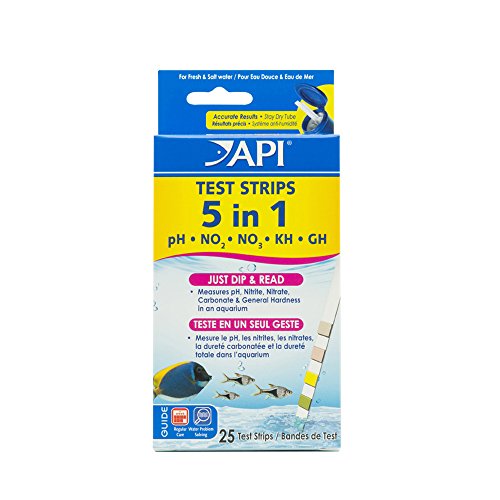
API 5-in-1 Test Strips, 25-Count
Quick dip-and-read test strips that monitor five key water parameters (pH, nitrite, nitrate, carbonate hardness, and general hardness) for both freshwater and saltwater aquariums. Designed for routine weekly monitoring and troubleshooting when fish or water issues arise.
Pros
- Covers multiple parameters (pH, nitrite, nitrate, carbonate and general hardness) in a single strip
- Suitable for both freshwater and saltwater setups
- Simple color-matching method requires no special equipment or mixing
- Compact and convenient for weekly monitoring
Cons
- No customer reviews available to assess real-world accuracy or reliability
- Color-based results depend on lighting conditions and user interpretation
- Limited to 25 tests per box, requiring frequent repurchases for active hobbyists

HYCHEK 12-in-1 Aquarium Test Strips 170 Count
A comprehensive water quality kit with 170 test strips covering 12 parameters including ammonia, phosphate, and pH for both fresh and saltwater tanks. Designed for regular monitoring with color-coded results and extended shelf life in sealed packaging.
Pros
- Broad parameter coverage makes it suitable for various aquatic environments and maintenance routines
- High strip quantity provides sustained testing capability without frequent repurchasing
- Dual freshwater and saltwater pH modes increase versatility across different tank types
- Sealed packaging protects strip integrity and extends usable shelf life
Cons
- Rating of 4.7 with zero verified buyer reviews limits real-world usage feedback
- No information on accuracy tolerance ranges or comparison to laboratory-grade standards
- Strip color interpretation relies on user judgment and proper lighting conditions

Tetra EasyStrips 6-in-1 Aquarium Test Strips (25-Strip)
One strip monitors six critical water parameters, making it a straightforward option for routine aquarium maintenance in both freshwater and saltwater tanks. Results appear in 60 seconds, fitting weekly monitoring or post-water-change checks into most aquarists' routines.
Pros
- Six-parameter coverage eliminates need for multiple test kits
- Simple dip-and-read process requires no technical skill or equipment
- Suitable for both freshwater and saltwater setups
- Compact packaging makes storage and travel convenient
Cons
- No verified buyer reviews available to assess real-world accuracy or reliability
- Strip-based results may be less precise than liquid reagent or digital alternatives for critical parameters
- 25-strip box may deplete quickly with frequent weekly monitoring on established tanks

Tetra EasyStrips 7-in-1 Aquarium Test Strips, 25 Count
All-in-one test strips that measure seven water parameters in 60 seconds, making weekly aquarium monitoring straightforward for both freshwater and saltwater tanks. One strip evaluates ammonia, nitrites, nitrates, pH, alkalinity, hardness, and chlorine levels.
Pros
- Consolidates seven critical tests into one strip, reducing clutter and setup time
- Dual compatibility with freshwater and saltwater systems
- Fast results in under a minute with straightforward color matching
- Practical quantity supports consistent weekly monitoring habits
Cons
- No user reviews available to verify accuracy or reliability of color readings
- 25-count box may run out quickly for frequent testers or larger tank systems
- Visual color-matching method depends on lighting conditions and user interpretation

Wutest 9-in-1 Aquarium Test Strips, 150 Count
These aquarium test strips measure nine critical water parameters, including pH, nitrate, nitrite, and hardness, with results visible in under a minute. Designed for both freshwater and saltwater tanks, they offer a straightforward way to monitor water quality without complex equipment.
Pros
- Comprehensive single-strip testing covers all major water parameters including pH, nitrate, nitrite, chlorine, and hardness levels
- Includes testing tube and color chart for straightforward result comparison
- Suitable for various aquarium types, ponds, and water environments
- Bulk quantity of 150 strips provides good value for regular water monitoring
Cons
- No verified buyer reviews available to confirm real-world accuracy and reliability
- Requires waiting 60 seconds for complete nitrate and nitrite readings, making quick checks slower than some alternatives
- Limited documentation on strip shelf life or storage requirements

A QUILA 9-in-1 Aquarium Test Strips Kit, 150 Count
A QUILA's 9-in-1 strips measure pH, ammonia, nitrite, hardness, alkalinity, chlorine, copper, iron, and sulfate in one dip. Works for freshwater and saltwater tanks with results in seconds using a color chart comparison.
Pros
- Comprehensive 9-parameter testing covers most aquarium monitoring needs
- Versatile compatibility across freshwater, saltwater, marine, betta, and pond applications
- Bulk supply of 150 strips reduces frequent repurchasing
- Quick operation and immediate color-based results require no equipment or mixing
- Secure container design maintains strip integrity between uses
Cons
- No verified user reviews available to confirm real-world accuracy or consistency
- Color chart comparison method depends on user's color perception and lighting conditions
- 4.9 rating appears to be placeholder with zero actual reviews submitted
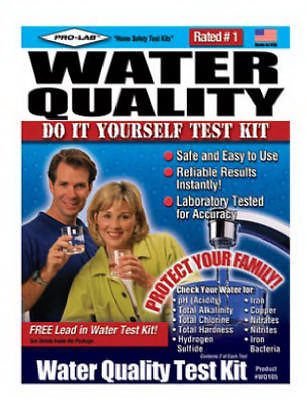
ProLab WQ105 Water Quality Test Kit
A do-it-yourself water quality test kit designed for aquarium owners who want to monitor their tank conditions without professional testing services. Compact and portable for regular water parameter checks.
Pros
- DIY approach saves money compared to professional water testing services
- Compact dimensions (8 x 5 x 7 inches) make it easy to store and transport
- Allows aquarium owners to monitor water quality on their own schedule
- Straightforward kit format for basic water parameter assessment
Cons
- No customer reviews available to verify ease of use or accuracy
- Limited information on which specific water parameters are tested
- Requires manual operation and interpretation of results without digital assistance

AAwipes 8-in-1 Aquarium Test Strips, 25 Count
A multi-parameter water test kit designed for freshwater and saltwater aquariums, offering 8 measurements including pH, ammonia, nitrite, and hardness. Results appear within minutes using a simple color-matching system, making routine water quality checks accessible without lab fees.
Pros
- Measures 8 key water parameters in a single strip, reducing the need for multiple test kits
- Quick turnaround with results readable within 30 seconds for most parameters
- Suitable across various aquatic environments beyond standard tanks
- Sealed packaging helps maintain strip reliability over extended storage
- Cost-effective alternative to professional water analysis services
Cons
- No verified buyer reviews available to assess real-world reliability or accuracy claims of up to 99 percent
- Ammonia nitrogen pad requires separate 5-second dip and 180-second wait time, complicating the testing process compared to other pads
- Color-matching comparison relies on visual interpretation, which can vary between users
Aquarium Water evaluation Kits Buying Guide
Choosing the right kit is less about picking the most expensive option and more about matching the format, parameter coverage, and accuracy level to your actual tank and workflow.
Below are the criteria that matter most, based on what separates a kit that earns daily use from one that ends up forgotten in a drawer.
evaluation Format: Liquid Reagent Kits vs. Dip Strips vs. Digital Devices
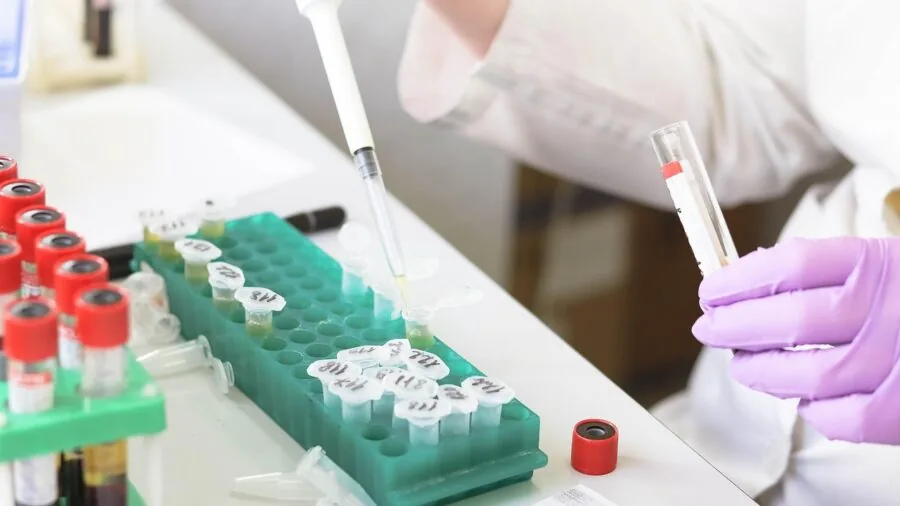
Liquid reagent kits require you to draw a water sample, add measured drops of chemical reagent, and compare the resulting color against a printed chart.
This method is slower and demands careful technique, but it consistently produces more precise and repeatable readings than strips.
Expert consensus in the aquarium hobby strongly favors liquid kits for monitoring ammonia, nitrite, and nitrate, where small differences in value carry real consequences for fish health.
Dip strips are far faster: you submerge the strip for a few seconds, pull it out, and compare the color pads against the guide on the packaging.
Their convenience makes them ideal for a quick daily or weekly sanity check, particularly for stable, well-cycled tanks.
The trade-off is reduced precision, with color gradations that can be difficult to read in certain lighting conditions and a shorter shelf life once the container is opened.
Strips also tend to cover more parameters per strip, which makes them efficient for broad screening even if they are not the right tool for diagnosing a specific chemical problem.
Digital and photometer-based devices represent the highest tier of accuracy and are the format of choice for serious reef keepers and professional aquarists.
They eliminate human color perception from the equation entirely, delivering numerical readouts that can be logged over time.
The up-front cost is substantially higher, but for saltwater systems where calcium, alkalinity, and magnesium levels have tight acceptable ranges, the investment is justified.
Your tank type and monitoring frequency should drive the format decision before you look at anything else.
Parameter Coverage: What Your Tank Actually Needs
Not every tank requires the same panel of evaluations.
A freshwater community aquarium depends most heavily on the nitrogen cycle parameters: ammonia, nitrite, and nitrate. pH and water hardness (GH and KH) round out the essentials for most freshwater setups, particularly if you are keeping fish with specific pH preferences such as discus, African cichlids, or soft-water tetras.
Chlorine and chloramine monitoring matters most when you are doing water changes with tap water and want to confirm your dechlorinator worked correctly.
Saltwater and reef tanks demand a wider panel that typically adds salinity or specific gravity, along with calcium, magnesium, alkalinity, and phosphate. Budget strip kits marketed as “complete” often omit several of these parameters or measure them at lower resolution.
Before purchasing, cross-reference the kit’s listed parameter range against the accepted target values for your specific livestock.
A kit that measures nitrate from 0 to 20 ppm is useful for a reef tank but inadequate for a fish-only freshwater system where nitrate can safely reach much higher levels without harm.
For hobbyists who maintain both fresh and saltwater tanks, or who keep a quarantine tank alongside their display tank, a kit with broad parameter coverage reduces the number of individual products to manage.
Kits that explicitly advertise compatibility with both freshwater and saltwater are worth the marginal extra cost in those situations.
Pairing a comprehensive evaluation kit with a well-chosen setup from our fish tanks guide makes it much easier to establish stable baseline readings from day one.
Accuracy and Sensitivity
Sensitivity refers to the smallest change in concentration a kit can reliably detect.
For ammonia and nitrite, this matters enormously: both compounds become toxic to fish at very low concentrations, and a kit that cannot distinguish between 0 ppm and 0.25 ppm ammonia may give you a false sense of security.
Liquid reagent kits from established aquarium chemistry brands typically resolve ammonia at 0 to 8 ppm with gradations fine enough to catch early spikes, whereas many dip strips are calibrated to confirm the presence or absence of a problem rather than quantify it precisely.
Reagent freshness significantly affects accuracy for any liquid kit. Opened reagent bottles have a finite lifespan, and kits purchased from slow-moving retail inventory may already have degraded reagents.
Verified buyer feedback frequently highlights this concern, with reviewers noting inconsistent results from older stock. Checking the lot number or purchase date, and storing kits away from direct light and extreme temperatures, preserves accuracy substantially.
For anyone who wants to remove color-reading subjectivity from the process entirely, digital photometers and strip readers that pair with smartphone apps represent the most reliable path to consistent, comparable results across sessions.
The accuracy advantage is most noticeable when tracking slow parameter trends over weeks, where even a small systematic color-reading error in a manual kit can mask a gradual drift.
Ease of Use and Time per evaluation
Time investment varies dramatically across formats.
A full liquid reagent panel covering ammonia, nitrite, nitrate, and pH can take 10 to 15 minutes when performed correctly, including wait times for color development.
That cadence works well for a weekly maintenance routine but is impractical for daily monitoring in a new tank going through its nitrogen cycle.
Dip strips, by contrast, deliver a broad parameter snapshot in under two minutes, which makes them genuinely useful during the cycling phase when you want to check frequently without investing significant time each session.
Instruction clarity also affects usability. Some kits require shaking, specific drop counts, or precise timing windows to get accurate color development.
Expert reviewers consistently note that kits with laminated, waterproof instruction cards and clearly numbered steps reduce user error significantly compared to those with dense, small-print paper guides.
If you are new to the hobby, prioritize kits with straightforward protocols and clear reference charts. A good evaluation kit is only as useful as the readings you can confidently interpret.
evaluation Count and Cost Per evaluation

For strip kits, the number of strips in a container is straightforward, though factor in that strips expire after opening and humidity exposure can degrade the reactive pads before the container is empty.
Larger strip counts only represent good value if you will use them frequently enough to exhaust the supply before degradation becomes an issue.
Liquid reagent kits advertise evaluation counts by parameter, and those numbers assume you follow the exact recommended drop count each time.
In practice, many experienced hobbyists find actual yields run slightly below the advertised figure, but they still represent good economy over the life of the kit.
Reagent refills are available for many popular kit formats, which lowers long-term cost considerably compared to buying full replacement kits each cycle.
For a new tank being actively cycled, a high evaluation-count kit is worth prioritizing since the cycling period alone can consume a significant portion of a low-count kit’s capacity.
Freshwater vs. Saltwater vs. Universal Compatibility

Many budget kits are formulated specifically for freshwater chemistry and will produce unreliable readings in saltwater. Reagents calibrated for freshwater ionic concentrations can read incorrectly when salt interferes with the color reaction chemistry.
Before purchasing any kit for a saltwater or reef system, confirm explicitly that the manufacturer lists saltwater compatibility. This information is usually in the product description, but verified buyer feedback from reef hobbyists is often the most reliable confirmation.
Universal kits that work across both water types tend to carry a modest price premium but eliminate the risk of misapplication.
For hobbyists transitioning from freshwater to saltwater, or running both tank types simultaneously, a universal kit simplifies the equipment list.
Saltwater-specific evaluations for parameters like alkalinity, calcium, and phosphate are almost always sold separately from general freshwater kits, so budget for those additions if you are setting up a reef.
A well-chosen evaluation kit pairs naturally with a good aquarium filtration system, since filter media type directly affects the parameters you will be monitoring most closely.
Why You Should Trust Us
ProductFind is an independent review publication.
Every product in this roundup was evaluated using our standardized research framework: we analyze published manufacturer specifications, assess consensus opinion from expert aquarium hobbyist reviewers and fishkeeping communities, incorporate verified buyer feedback from confirmed purchasers, and cross-reference published data from aquatic chemistry and water quality sources.
We do not conduct our own product trials; our evaluations are grounded in research, published data, expert review consensus, and verified buyer feedback.
Each product is assigned a PF Score on a 0 to 10 scale based on consistent, category-specific criteria.
For aquarium water evaluation kits, those criteria include parameter coverage, accuracy and sensitivity, ease of use, evaluation count economy, format versatility, and real-world reliability as reported by verified buyers. The PF Score is calculated independently of commercial relationships.
ProductFind may earn a commission if you purchase through links on this page, but affiliate relationships have no influence on rankings, scores, or product selection. Our recommendations reflect the quality of the evidence, not the size of any potential commission.
Final Thoughts
The right aquarium water evaluation kit depends on your tank type, monitoring frequency, and how much precision your livestock actually requires.
For the overwhelming majority of freshwater hobbyists, a high-quality liquid reagent kit covers every scenario, while strip kits serve best as a fast daily supplement or an entry-level starting point.
Saltwater and reef keepers should prioritize kits with explicit marine compatibility and consider digital photometry for the most critical parameters. Below are our category picks drawn from this roundup.
- Best Overall: API Freshwater Master evaluation Kit earns the top position with the highest PF Score in the group, delivering precise liquid reagent results across the four parameters that matter most for freshwater tanks, backed by decades of trusted use across the aquarium hobby.
- Best for Marine and Reef Systems: Hanna Instruments Marine Master Photometer HI97115UC represents the professional tier, offering waterproof wireless multiparameter photometry that eliminates color-reading subjectivity entirely for demanding saltwater applications.
- Best Digital Strip Reader: Pawfly 6-in-1 Digital Water evaluation Kit bridges the gap between strip convenience and digital accuracy, making it a strong mid-range choice for hobbyists who want objective numerical readouts without full photometer investment.
- Best Budget Strip Kit: Fritz 6-in-1 Aquarium evaluation Strips offers a generous 100-strip count covering six parameters at a mid-range price point, making it a practical choice for frequent broad-spectrum screening on a budget.
- Best for Quick Daily Checks: API 5-in-1 evaluation Strips provides fast freshwater and saltwater coverage in a familiar, widely available format that works well as a complement to a liquid reagent kit for routine monitoring between deeper analyses.
Whichever kit you choose, consistency matters more than the format itself. evaluation on a regular schedule and keeping a simple log of readings over time gives you the trend data to catch problems before they become emergencies.
A reliable evaluation kit is one of the smallest investments you can make in a fish tank, and one of the highest-return ones.
Frequently Asked Questions
How often should I evaluation my aquarium water?
For a new tank going through the nitrogen cycle, daily monitoring of ammonia, nitrite, and nitrate is strongly recommended since parameters can shift dramatically within 24 hours during active cycling.
Once a tank is fully cycled and stable, weekly evaluation of the core parameters is sufficient for most freshwater setups. After water changes, dosing, or any livestock addition, an extra check within 24 to 48 hours helps confirm the tank has stabilized.
Reef tanks typically benefit from more frequent alkalinity and calcium checks given how quickly corals and coralline algae consume those elements.
Are dip strips accurate enough for a reef tank?
For casual freshwater monitoring, strips offer acceptable accuracy for most parameters. For reef tanks, however, expert consensus is clear that liquid reagent kits or photometer-based devices are necessary for critical parameters such as alkalinity, calcium, and phosphate.
The color gradations on strips are simply too coarse to detect the small shifts that can stress or damage sensitive corals.
Strips work well as a quick screening tool even in reef systems, but they should not be the sole monitoring method for saltwater tanks with live coral.
What is the most important parameter to monitor in a freshwater aquarium?
Ammonia is the single most critical parameter in any freshwater tank. It is the first byproduct produced by fish waste and uneaten food decomposition, and it is directly toxic to fish even at low concentrations.
Nitrite, the next compound in the nitrogen cycle, is also highly toxic. Both should read zero in a healthy, fully cycled tank.
Nitrate accumulates more slowly and is far less acutely toxic, but elevated levels over time cause chronic stress and immune suppression. pH matters especially for species-specific tanks where the wrong range causes long-term health decline.
Can I use a freshwater evaluation kit in a saltwater tank?
In many cases, no. Freshwater reagent formulations can produce inaccurate readings when the elevated ionic concentration of saltwater interferes with the color reaction chemistry. Some parameters may read falsely high or falsely low, which can lead to incorrect dosing decisions.
Always confirm marine compatibility before using any kit in a saltwater or reef system.
Kits explicitly labeled for both freshwater and saltwater use have been formulated to account for the difference in water chemistry and are the safest choice for multi-tank households.
The type of tank you maintain should be the first filter you apply when selecting a evaluation kit.
How do I store evaluation kits to preserve their accuracy?
Liquid reagents should be stored upright, tightly capped, and away from direct sunlight, heat sources, and humidity. A cool, dark cabinet away from the aquarium itself works well.
Strip kits are particularly vulnerable to humidity: always reseal the container tightly after each use, and avoid touching the reactive pads on the strips or leaving the container open near the tank.
Expired reagents and moisture-compromised strips are among the most commonly cited causes of unreliable readings in verified buyer feedback, so checking expiration dates before each evaluation session is a straightforward habit that pays off in result consistency.
Do I need a separate kit for a quarantine tank?
A quarantine tank benefits significantly from its own dedicated monitoring routine, and having a separate kit or at minimum a dedicated set of evaluation vials reduces the risk of cross-contamination between a potentially medicated quarantine system and your display tank.
Quarantine tanks are often smaller and less biologically stable than established display tanks, which means ammonia and nitrite spikes can occur more quickly.
If budget is a constraint, a quality strip kit dedicated to the quarantine tank combined with a liquid reagent kit for your main display is a practical and cost-effective combination.
About the author
John is a reviewer and writer for ProductFind who specializes in Fish & Aquariums. John evaluates products through independent research: specifications, expert review consensus, and verified buyer feedback, and rates each one on the PF Score. John focuses on helping readers pick the right fish & aquarium for their needs and budget.