The 8 Best Car Amplifiers
Power output, signal quality, and impedance matching separate a great car amplifier from a mediocre one. Our picks cover mono bass amps to four-channel Class D units.
 By Aubree Howell
Updated July 23, 2026
By Aubree Howell
Updated July 23, 2026

A car amplifier is one of the most impactful upgrades you can make to any in-vehicle audio system.
Whether your factory head unit sounds flat and lifeless or you are building a full custom install around a subwoofer and component speakers, the right amplifier transforms how music feels on the road.
Power output, signal clarity, impedance matching, and thermal design all determine whether an amp actually delivers on its spec sheet in the real world, and the sheer number of options ranging from entry-level monoblock bass amps to high-output four-channel Class D units makes narrowing down the field genuinely difficult.
To help cut through the noise, the team at ProductFind assessed every model on this list using a comprehensive research approach that draws on manufacturer specifications, expert review consensus across the enthusiast and installer community, and verified buyer feedback from confirmed purchasers.
That synthesis produces a PF Score for each product on a scale of 0 to 10.
Whether you are pairing a new amp with a quality car stereo head unit or completing a broader upgrade that already includes a backup camera and dash cam, the picks below represent the strongest options across budget, mid-range, and enthusiast price brackets.
Scroll down for our ranked top picks.
| Award | Product | PF Score About PF ScoreThe PF Score is our own rating from 0 to 10, based on performance, design and build, ease of use, and value. It reflects independent research and is never influenced by manufacturers, retailers, or affiliate commissions. Learn more › | Price | |
|---|---|---|---|---|
| Best Overall |
 Rockford Fosgate R2-500X4 4-Channel Amplifier
|
8.6/10 | Buy | |
| Editor's Pick |
 JBL Stage GT 60041 4-Channel Car Amplifier
|
8.1/10 | Buy | |
| Best Value |
 Alpine S-A32F 4-Channel Class D Amplifier
|
7.8/10 | Buy | |
| Top Rated |
 Pioneer GM-A6704 4-Channel Car Amplifier
|
7.2/10 | Buy | |
 Taramps TS 1200x4 4-Channel 1200W Car Amplifier
|
7.1/10 | Buy | ||
 Taramps TS 800x4 4-Channel Car Amplifier
|
6.8/10 | Buy | ||
 Taramps HD 3000 Monoblock Car Amplifier 3000W RMS
|
6.2/10 | Buy | ||
 BOSS Audio R1100M Monoblock Amplifier 1100W
|
5.5/10 | Buy |
Rockford Fosgate R2-500X4 4-Channel Amplifier
A compact class-D 4-channel amp delivering up to 500W RMS with efficient power delivery and adjustable crossovers. Built for car audio installs needing flexible channel configuration and integrated bass enhancement without heavy electrical strain.
Pros
- Efficient class-D design minimizes impact on vehicle's electrical system
- Versatile wiring options allow 4-channel, 2-channel bridged, or mono configurations
- Integrated Punch EQ and adjustable crossovers eliminate need for external processors
- Compact form factor simplifies installation in space-limited vehicles
- Balanced differential inputs and high-level input capability for various source compatibility
Cons
- No verified buyer reviews available to assess real-world reliability or user experience
- Lower per-channel wattage at 4Ω (75W) limits performance with less efficient speakers
- Top-mounted controls may be inconvenient depending on installation location
JBL Stage GT 60041 4-Channel Car Amplifier
A compact 4-channel amp designed for factory and aftermarket car audio systems with flexible input options and built-in protection circuits. Works well for those upgrading their vehicle's sound without complex installation requirements.
Pros
- Wide input range accommodates both factory stereos and aftermarket systems
- Compact 14x8x18 inch footprint fits limited installation spaces
- Built-in protection circuitry safeguards against common electrical failures
- Compatible with modern start/stop engine technology
- Affordable entry point for 4-channel amplification
Cons
- No verified customer reviews available to assess real-world reliability
- Limited details on power output and impedance specifications
- Relatively basic feature set compared to higher-end multichannel amps
Alpine S-A32F 4-Channel Class D Amplifier
Alpine's S-A32F is a compact 4-channel digital amplifier delivering 55W RMS per channel at 4 ohms, designed for car audio integration. The Class D topology prioritizes efficiency and heat management in a space-constrained automotive environment.
Pros
- Compact footprint at 11 x 11 x 5 inches fits tight installation spaces
- 55W RMS x 4 channels provides adequate power for mid-range car audio systems
- Class D topology reduces heat generation and power consumption
- Flexible 4/3/2 channel configuration adapts to different speaker setups
- Low noise floor with 83dB noise specification
Cons
- No verified buyer reviews available to assess real-world reliability
- Limited power output compared to full-size multichannel amplifiers, better suited for compact systems
- Requires professional installation for proper car audio integration
Pioneer GM-A6704 4-Channel Car Amplifier
A versatile 4-channel Class AB amplifier delivering 1,000W max power with bridgeable configuration for flexible speaker setups. Includes high and low-pass filters for frequency control, making it suitable for drivers upgrading factory audio systems or building custom car audio.
Pros
- Flexible 4-channel architecture with bridging capability allows customization for different speaker layouts
- High power output with low distortion preserves audio clarity across genres
- Class AB efficiency reduces heat buildup in vehicle installations
- Adjustable filters provide fine-tuned control over frequency distribution to speakers
Cons
- No verified buyer reviews available to confirm real-world performance and reliability
- RMS output of 60W per channel is modest compared to some competitors in the same power class
- Limited documentation in product data regarding installation complexity or compatibility with specific vehicle models
Taramps TS 1200x4 4-Channel 1200W Car Amplifier
A 4-channel Class D amplifier delivering 1200W RMS across separate channels with flexible speaker compatibility. Built with dual input options (RCA and High Level), fixed crossover controls, and automatic activation for plug-and-play installation in car audio systems.
Pros
- High power output per channel makes it suitable for full-range car audio setups without additional amplifiers
- Crossover flexibility (HPF, LPF, Full) allows optimization for different speaker types and positions
- Dual input compatibility (RCA and High Level) works with factory or aftermarket head units
- Compact, lightweight design fits tight installation spaces common in vehicle trunks
- Heavy-duty power cabling and recommended 60A circuit protection ensure system safety
Cons
- No verified buyer reviews available, limiting real-world performance and reliability feedback
- 4.8 rating based on zero reviews makes it difficult to assess long-term durability or common issues
- Installation requires proper wiring expertise and adherence to 60A circuit breaker specification for safe operation
Taramps TS 800x4 4-Channel Car Amplifier
A multichannel amplifier delivering 800W RMS at 2 ohms with flexible bridging options for various car audio configurations. Built-in crossover, multiple input types, and thermal protection make it suitable for full-range setups without the complexity of external processors.
Pros
- High power output relative to compact footprint (1.91 lbs, under 7 inches)
- Dual input options (RCA and high-level) accommodate most factory and aftermarket head units
- Built-in crossover and level control eliminate need for external processors
- Bridging capability adds flexibility for different system configurations
- Safety systems protect against short circuits and impedance mismatches
Cons
- No user reviews available to verify real-world reliability or performance consistency
- Fixed crossover settings may limit customization for advanced tuning applications
- Requires 40A circuit breaker or fuse installation, adding installation complexity
Taramps HD 3000 Monoblock Car Amplifier 3000W RMS
A digital full-range monoblock amp delivering 3000 watts RMS at 1 ohm, designed for flexible car audio configurations including subwoofers, midbass, and full-range drivers. Built-in crossovers and gain adjustment make it adaptable to various setups, though the lack of verified buyer feedback limits real-world performance insights.
Pros
- High power output at 1 ohm suitable for demanding audio builds
- Adjustable crossovers and input settings provide setup flexibility across speaker types
- Wide frequency response from 10Hz to 20KHz covers full audio spectrum
- Class D architecture enables efficient operation with reduced heat generation
- Includes necessary cabling specifications and 150A circuit protection
Cons
- No verified customer reviews available to assess real-world reliability or build quality
- Monoblock design limits it to single-channel applications, requiring separate amplifiers for multi-channel setups
- Limited information on noise floor, THD specifications, or thermal management under sustained loads
BOSS Audio R1100M Monoblock Amplifier 1100W
A compact monoblock amplifier delivering 1100W at 2 ohms, designed primarily for subwoofer applications with remote control capability. Offers flexible input options and thermal protection at a budget-friendly price point.
Pros
- Stable down to 2 ohms, allowing flexibility in subwoofer configurations
- Both RCA and speaker-level inputs accommodate various installation scenarios
- Remote subwoofer control integrated for user convenience
- Low-profile design fits easily in trunk or under-seat installations
- Extended 6-year warranty provides long-term peace of mind
Cons
- No verified customer reviews available to assess real-world reliability or performance
- Monoblock design limits versatility to single-channel or subwoofer applications only
- Professional installation strongly recommended, adding to total ownership cost
Car Amplifiers Buying Guide
Picking the right car amplifier comes down to matching the amp’s capabilities to your specific speakers, subwoofer, available power, and installation space. The sections below walk through the criteria that matter most so you can make a confident decision before you buy.
Amplifier Class: Class AB vs. Class D

Amplifier class describes the circuit topology and directly affects efficiency, heat output, and sound character. Class AB designs split the workload between two transistors, producing a warmer, more analog sound signature that many listeners prefer for full-range speaker duties.
The trade-off is higher heat generation and lower efficiency, typically in the 60 to 70 percent range, which means more draw on your vehicle’s electrical system.
Class D amplifiers use a switching design that achieves efficiency figures of 80 percent or better. They run cooler, take up less physical space, and have become the dominant choice for subwoofer monoblock applications and compact multichannel installs.
Modern Class D designs from brands like Alpine and Taramp’s have closed much of the audio quality gap with Class AB, making them increasingly competitive for full-range use as well.
The Pioneer GM-A6704 on this list is a Class AB example that audiophiles still reach for when driving component sets, while the Alpine S-A32F and both Taramps multichannel units use Class D to keep the footprint small and the chassis cool.
Neither class is universally superior. Match Class AB to high-fidelity full-range speaker applications and Class D to subwoofers or space-constrained installs where running temperature matters.
Channel Count and Bridging
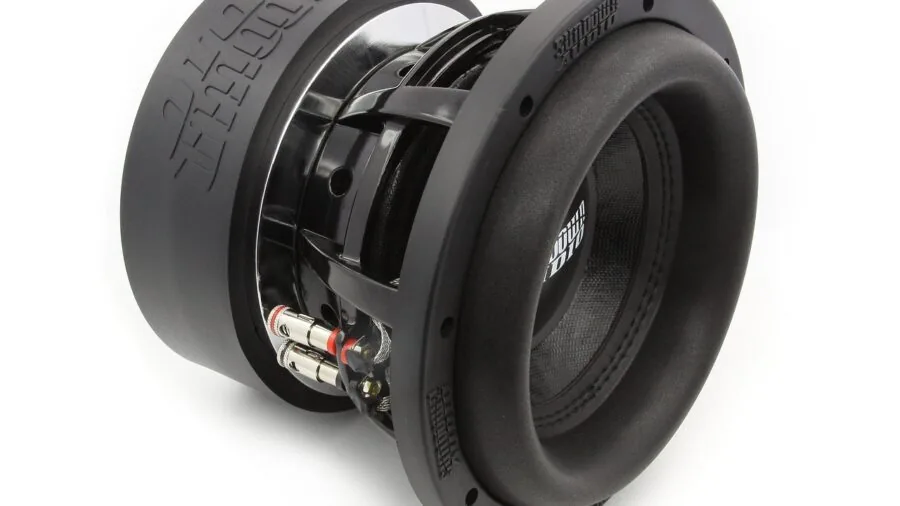
Monoblock amplifiers dedicate all available power to a single channel, making them purpose-built for driving a subwoofer.
Four-channel amplifiers power front and rear speaker pairs independently, and virtually all modern designs allow bridging two channels into one higher-power output for a subwoofer, giving you a flexible 3-channel or even 2-channel configuration without buying a separate mono amp.
Two-channel amplifiers occupy the middle ground, often bridging down to a single high-power mono channel. The Alpine S-A32F is technically a four-channel unit marketed for its compact dual-channel form factor, making it a neat fit for simple front-stage upgrades.
For builders who want a single amp to handle full speaker and bass duties, a bridgeable four-channel like the Rockford Fosgate Prime R2-500X4 or the JBL Stage GT 60041 is worth serious consideration.
Always verify the minimum stable impedance when bridging. Most four-channel amps bridge safely to 4 ohms, but bridging into a 2-ohm subwoofer on an amp rated for only 4-ohm bridged operation is a common cause of premature failure.
Power Output and Honest Wattage Claims

Power ratings in car audio are notoriously inconsistent. “Peak” or “max” wattage figures are marketing numbers measured under ideal, momentary conditions that do not reflect sustained output.
The number that matters is RMS (Root Mean Square) power, which represents continuous real-world output.
When comparing amps, always compare RMS figures at a matched impedance load, for example 4 ohms RMS or 2 ohms RMS, not a mix of peak and RMS figures from different brands.
A credible amplifier will publish its RMS power at multiple impedances with a stated THD (Total Harmonic Distortion) figure, typically 1 percent or less.
Brands like Rockford Fosgate and Alpine are known for conservative, honest ratings, while some budget manufacturers inflate numbers significantly. Cross-referencing manufacturer specs against independent measurements from reputable installer-community sources is a core part of how ProductFind evaluates power claims.
For typical door-speaker upgrades, 50 to 75 watts RMS per channel is more than sufficient. Subwoofer applications generally benefit from 300 watts RMS or more, depending on the driver’s power handling.
The BOSS Audio R1100M and the Taramps HD 3000 sit at opposite ends of that monoblock spectrum, with the HD 3000 targeting competition-level bass builds at its 1-ohm stable rating.
Impedance Stability and Ohm Compatibility
Impedance, measured in ohms, describes the electrical resistance your speakers or subwoofer present to the amplifier. Most car speakers are 4-ohm nominal. Subwoofers are often wired to 2 ohms or even 1 ohm to extract more power from a given amplifier.
An amp rated as “2-ohm stable” can safely drive a 2-ohm load without overheating or shutting down.
A “1-ohm stable” amp like the Taramps HD 3000 is built for serious bass applications where dual voice-coil subs are wired to their lowest load.
Driving an amplifier below its minimum stable impedance is destructive and will void the warranty. Always calculate your final impedance from the speaker wiring configuration before selecting an amp. Parallel wiring halves impedance while series wiring doubles it. Knowing these basics prevents a costly mismatch.
Signal Inputs: RCA vs. High-Level
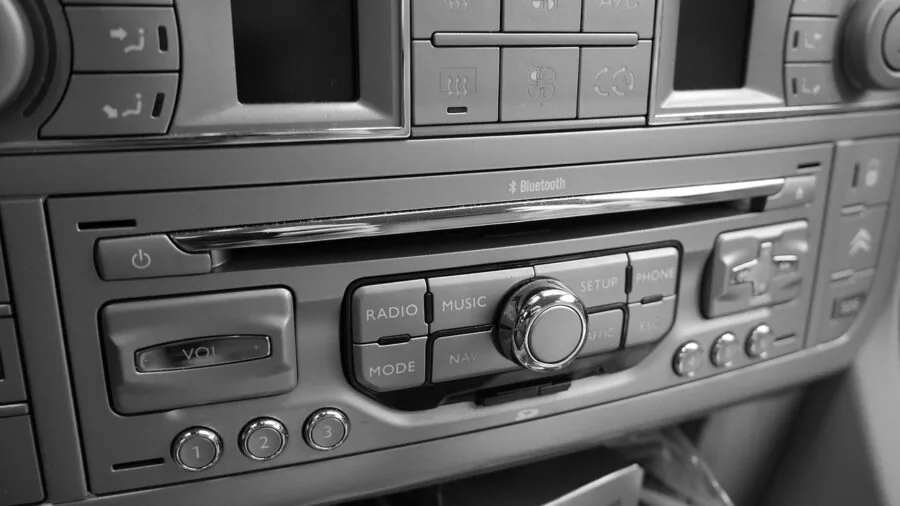
Amplifiers receive audio signal either via RCA preamp outputs from an aftermarket head unit or through high-level (speaker-level) inputs taken directly from the factory speaker wires.
If you are keeping a factory head unit or an OEM system without RCA outputs, high-level inputs are essential.
Most contemporary amplifiers include both input types, but the sensitivity range and how cleanly the amp handles a high-level signal varies considerably.
RCA connections are always preferable when available because they carry a cleaner, lower-noise signal. The Taramps TS 800×4 and TS 1200×4 both support RCA and high-level wire inputs, making them compatible with a wide range of source units.
If your install starts with a new head unit featuring 4-volt or higher preamp outputs, take advantage of those RCA connections for the cleanest possible signal chain.
Physical Size, Mounting, and Heat Management

Under-seat installs require compact dimensions, while trunk builds can accommodate larger chassis with more robust heatsinking. Class D amplifiers generally offer better power-to-size ratios, which is a key reason the Alpine S-A32F has earned strong recommendations for stealth installs.
Always check the published dimensions against your intended mounting location before ordering, and ensure adequate airflow around the heatsink fins regardless of where the amp is mounted.
Thermal shutdown is a protective feature, not a design target. If your amplifier repeatedly goes into protection mode, the cause is almost always insufficient ventilation, an impedance mismatch, or a gain structure problem rather than a defective unit.
Mount the amp with fins oriented for natural convection, avoid installing it directly against foam insulation, and leave a minimum clearance of two to three inches on all sides whenever the space allows.
Why You Should Trust Us
ProductFind is an independent review publication.
Every product on this list was evaluated using our structured research methodology: we analyze published specifications, assess expert review consensus from the car audio installer and enthusiast community, and weigh verified buyer feedback from confirmed purchasers across major retail platforms.
Each amp is then assigned a PF Score on a 0 to 10 scale that reflects overall value, reliability, and real-world performance relative to its category and price point.
We do not conduct our own product trials; our evaluations are grounded in research, published data, expert review consensus, and verified buyer feedback.
ProductFind may earn a commission when you purchase through links on this page. That affiliate relationship has no influence whatsoever on our rankings, scores, or product selections.
Every position in the list above is determined by PF Score and editorial merit alone, not by commercial agreements. We evaluate products across budget, mid-range, and premium tiers to give every buyer a genuinely useful recommendation, regardless of price point.
Final Thoughts
After a thorough evaluation of specifications, installer-community consensus, and verified buyer feedback, a clear picture emerges across the range of car amplifiers on this list. Here are our top awards by use case:
- Best Overall: Rockford Fosgate Prime R2-500X4 earns the top PF Score on this list by combining honest power ratings, robust build quality, and flexible bridging options that suit everything from speaker upgrades to moderately powered subwoofer duty.
- Best Premium Multichannel Pick: JBL Stage GT 60041 brings a trusted audio brand’s engineering to a compact four-channel design, earning strong marks from installers for clean signal reproduction and reliable thermal management.
- Best Compact Upgrade Amp: Alpine S-A32F is the go-to recommendation when space is the primary constraint. Its Class D efficiency and under-seat-friendly dimensions make it one of the most consistently praised stealth-install options at its price level.
- Best Mid-Range Four-Channel: Pioneer GM-A6704 remains a benchmark Class AB four-channel choice for audiophile front-stage builds, with well-regarded signal fidelity and a bridgeable design that gives installation flexibility.
- Best Budget Monoblock: BOSS Audio Systems R1100M covers the entry point for bass enthusiasts who need a dedicated sub channel without significant investment, though buyers should set realistic expectations given its position at the budget end of the range.
Whichever amplifier you choose, pairing it with quality speaker wire, properly rated power and ground cabling, and an in-line fuse close to the battery will protect your investment and ensure the amp performs to its potential.
A well-matched amp is often the single biggest improvement you can make to a car audio system, and the picks above cover the full spectrum of realistic budgets and use cases.
Frequently Asked Questions
How Much Power Do I Actually Need for My Car Speakers?
For typical aftermarket door speakers rated between 50 and 100 watts RMS, an amplifier delivering 50 to 75 watts RMS per channel at 4 ohms is more than adequate and is often ideal.
Overpowering a speaker beyond its rated handling is as damaging as underpowering it with a clipping amplifier.
Match the amp’s RMS output to the speaker’s RMS power handling, aiming for an amp that delivers roughly 75 to 150 percent of the speaker’s RMS rating for clean headroom without risk of damage.
Can I Run a Four-Channel Amp and a Separate Subwoofer at the Same Time?
Yes, and it is a very common configuration. You would use the four-channel amp to drive your front and rear speakers while a dedicated monoblock amplifier handles the subwoofer.
Alternatively, a bridgeable four-channel amp can be wired as a three-channel system: two channels for the front speakers and the remaining two channels bridged together to power a subwoofer.
Verify that the amp’s bridged impedance rating is compatible with your subwoofer’s wiring before choosing this route.
What Gauge Power Wire Do I Need?
Wire gauge requirements scale with the amplifier’s total current draw.
A general rule of thumb used by professional installers is that amplifiers drawing up to roughly 40 amperes are served by 8-gauge wire, up to about 80 amperes by 4-gauge wire, and higher-draw systems by 0 or 1/0-gauge cable.
Calculate your amp’s approximate current draw by dividing its total RMS wattage by your vehicle’s charging voltage (roughly 13.8 volts), then add 20 percent headroom. Always install an in-line fuse within 18 inches of the battery on the positive run.
Why Does My Amplifier Keep Going Into Protection Mode?
Protection mode is a safety circuit that activates in response to overheating, a short circuit, DC offset on the speaker outputs, or an impedance load below the amp’s minimum stable rating.
Start by checking that all speaker wires are securely terminated with no bare copper touching chassis ground. Then verify that your speaker or subwoofer wiring produces an impedance load at or above the amp’s minimum rating.
If thermal shutdown is the issue, improve ventilation around the amplifier or reduce gain levels to lower the average output demand.
Is It Worth Upgrading the Factory Stereo Before Adding an Amplifier?
In most cases, yes. A factory head unit with low-voltage preamp outputs (often 0.2 to 0.5 volts) forces an amplifier to run with high gain settings, which increases the noise floor and the risk of distortion.
An aftermarket car stereo with 4-volt or higher preamp outputs gives the amplifier a cleaner, stronger signal to work with, resulting in audibly lower background hiss and better dynamic range.
If budget forces a choice, the amplifier delivers more raw improvement, but the full system benefits significantly when both components are upgraded together.
What Is the Difference Between a Low-Pass and High-Pass Crossover on an Amplifier?
A low-pass crossover (LPF) allows only frequencies below a set point to pass through to the speaker output, which is essential for subwoofer channels so the driver only reproduces bass.
A high-pass crossover (HPF) blocks low frequencies from reaching the speaker, protecting smaller door speakers from trying to reproduce bass they cannot handle. Most multichannel amplifiers include switchable LPF and HPF filters on each channel or channel pair.
Using them correctly reduces distortion, protects drivers, and improves overall system balance without requiring an external crossover unit.
About the author
Aubree is a reviewer and writer for ProductFind who specializes in Car Electronics. Aubree evaluates products through independent research: specifications, expert review consensus, and verified buyer feedback, and rates each one on the PF Score. Aubree focuses on helping readers pick the right car electronic for their needs and budget.