The 11 Best Solder Wire
Alloy ratio, flux type, and diameter all shape joint quality. Our research across specifications and verified buyer feedback identifies the top solder wires for hobby, repair, and professional use.
 By Melanie Lane
Updated July 23, 2026
By Melanie Lane
Updated July 23, 2026
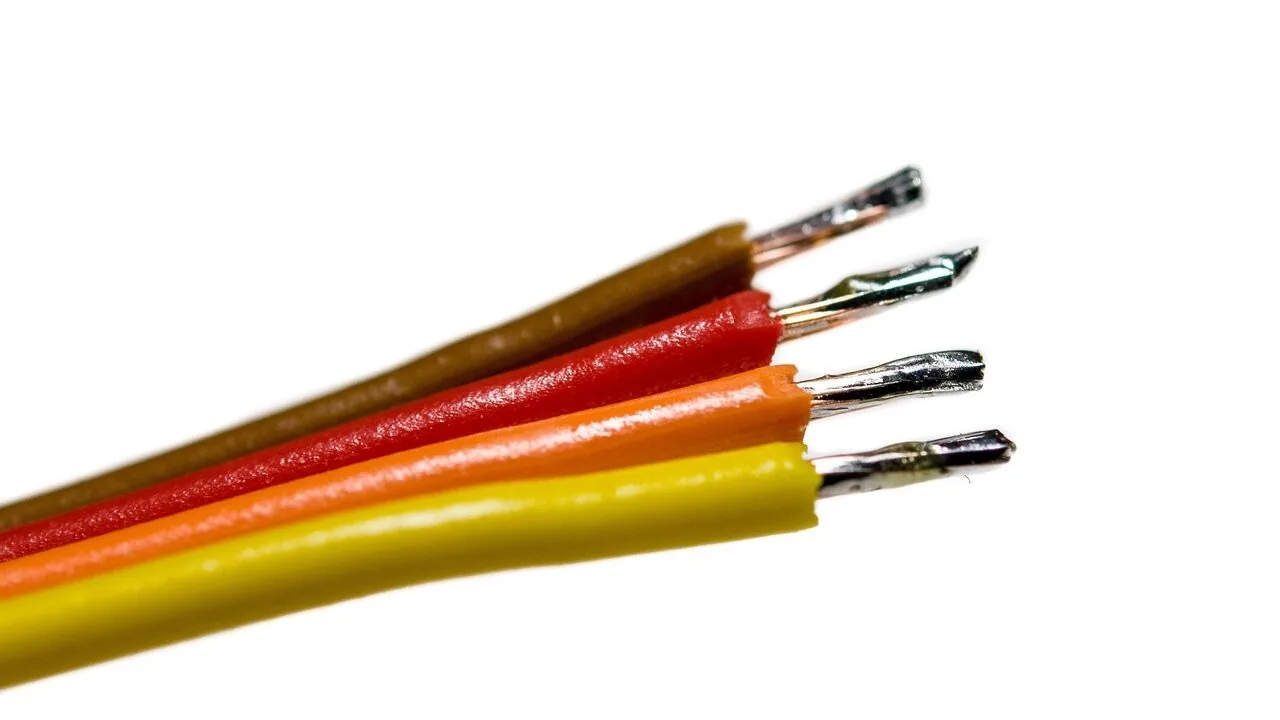
Finding the right solder wire sounds simple until you’re staring at dozens of options with different alloy ratios, diameters, flux types, and brand names. A poor choice leads to cold joints, excess spatter, and frustrating rework.
Whether you’re repairing consumer electronics, building a custom PCB, or tackling through-hole components on a weekend project, the solder wire you pick directly affects joint quality, reliability, and how smoothly your iron flows.
Paired with the right oscilloscopes for bench diagnostics and quality wire strippers, a dependable solder wire makes the difference between a clean build and a frustrating one.
ProductFind researched this category by analyzing manufacturer specifications, synthesizing expert review consensus from the electronics and maker communities, and reviewing verified buyer feedback across thousands of purchases.
We evaluated each option across consistent criteria including alloy composition, flux content, diameter suitability, and real-world joint quality, then scored each product on our 0 to 10 PF Score scale.
The picks below represent the strongest performers across budget, mid-range, and professional tiers, covering both traditional tin-lead and lead-free alloys from brands like Kester, Weller, AUSTOR, and others.
| Award | Product | PF Score About PF ScoreThe PF Score is our own rating from 0 to 10, based on performance, design and build, ease of use, and value. It reflects independent research and is never influenced by manufacturers, retailers, or affiliate commissions. Learn more › | Price | |
|---|---|---|---|---|
| Best Overall |
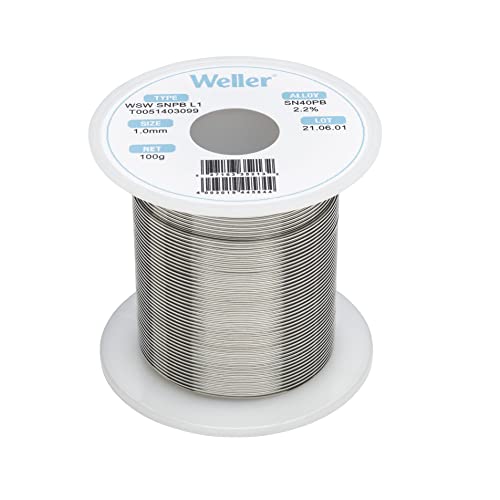 Weller WSW SnPb 1.0mm Solder Wire 100g
|
8.3/10 | Buy | |
| Editor's Pick |
 Kester 44 0.020-in Solder Wire, 63/37 Tin/Lead
|
8.1/10 | Buy | |
| Best Value |
 HengTianMei 63/37 Rosin Core Solder Wire 0.3mm
|
7.8/10 | Buy | |
| Top Rated |
 HGMZZQ 60/40 Tin Lead Solder Wire 0.8mm
|
7.7/10 | Buy | |
 AUSTOR 60-40 Tin Lead Solder Wire 1.5mm 100g
|
7.6/10 | Buy | ||
 YI LIN 60/40 Tin Lead Solder Wire 0.6mm 100g
|
7.5/10 | Buy | ||
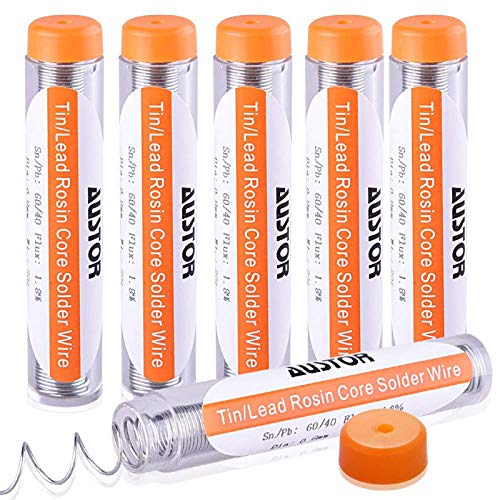 AUSTOR 60-40 Rosin Core Solder Wire 0.8mm
|
7.4/10 | Buy | ||
 DTS 40/60 Tin Lead Solder Wire 1.6mm, 1 lb
|
7.3/10 | Buy | ||
 Weller WSW SCN M1 0.5mm Solder Wire
|
7.2/10 | Buy | ||
 Kester 24-6040-0027 Wire Solder 0.031 Dia
|
7.2/10 | Buy | ||
 Weller WSW SCN M1 0.8mm Lead-Free Solder Wire
|
7.1/10 | Buy |
Weller WSW SnPb 1.0mm Solder Wire 100g
Weller's WSW SnPb solder wire delivers consistent performance with a 2.2% flux core designed for reliable joints on difficult surfaces. The Sn60Pb40 alloy and patented formula aim to minimize tip wear and reduce splatter, making it suitable for electronics repair and assembly work.
Pros
- Continuous flux core ensures predictable soldering results across joints
- Designed to minimize tip erosion, reducing tool replacement costs
- Generates less splatter compared to standard solder wire
- Sn60Pb40 composition is widely compatible with legacy electronics and standard equipment
Cons
- No user reviews available to validate real-world performance claims
- Lead-based alloy (Pb40) limits use in lead-free mandated environments
- 100g roll may be limiting for high-volume production or commercial repair shops
Kester 44 0.020-in Solder Wire, 63/37 Tin/Lead
A pocket-sized solder wire designed for fine-pitch electronics repair and assembly work. The 3/4-ounce tube delivers approximately 48 feet of 63/37 tin/lead solder with high-activity rosin flux, making it suitable for precision soldering tasks.
Pros
- Thin 0.020-inch diameter ideal for detailed electronics repair and small component work
- Standard 63/37 alloy composition widely trusted for electronics soldering
- High-activity flux reduces oxidation and improves wetting on component leads
- Compact pocket-sized packaging suitable for field kits and portable toolkits
Cons
- No customer reviews available to verify real-world performance or reliability
- Small 3/4-ounce quantity may require frequent replenishment for regular hobbyists or professionals
- Limited information on flux residue cleanup requirements or compatibility with specific solder wick or desoldering equipment
HengTianMei 63/37 Rosin Core Solder Wire 0.3mm
A 63/37 tin-lead solder wire designed for general electronics work, offering a low melting point of 183°C and rosin flux core for smoother joints. Best suited for hobbyists and technicians working on radios, circuit boards, and consumer electronics.
Pros
- Optimal 63/37 tin-lead ratio balances melting point and joint quality
- Low melting temperature (183°C) reduces thermal stress on components
- Built-in 1.8% flux core eliminates need for separate flux
- Compact 50g spool fits in pocket or workbench drawer
- Fast soldering capability with strong, reliable joints
Cons
- No verified buyer reviews available to assess real-world performance
- 0.3mm diameter limits use to fine, detailed work only
- Lead-based formula not suitable for RoHS-compliant or food-contact applications
HGMZZQ 60/40 Tin Lead Solder Wire 0.8mm
A budget-friendly rosin core solder wire designed for electronics repair and hobbyist projects. The 60/40 tin-lead composition melts at 183°C for smooth application across circuit boards, appliances, and audio equipment.
Pros
- Low melting point enables smooth flow and fast soldering without excessive heat stress on components
- Reliable joint quality with clean, even melting and minimal smoke generation
- Suitable for diverse applications including circuit boards, household appliances, and audio equipment maintenance
Cons
- No verified buyer reviews available to confirm real-world performance claims
- 50g spool may be limited for larger soldering projects or commercial use
- Lead content requires proper ventilation and safe handling during use
AUSTOR 60-40 Tin Lead Solder Wire 1.5mm 100g
A standard 60-40 tin-lead solder wire with 2.0% rosin core flux, melting at 185-190°C and suited for general electrical repairs and soldering work. The 1.5mm diameter and 100g spool make it accessible for hobbyists and technicians doing light to moderate soldering tasks.
Pros
- Balanced 60-40 ratio is a tried formulation for electrical soldering applications
- Melting range of 185-190°C allows quick joints without excessive heat stress
- Rosin flux promotes even flow and heat distribution during soldering
- 1.5mm size is practical for standard through-hole and general repair work
Cons
- Contains lead, subject to California Proposition 65 warnings regarding reproductive harm
- No verified customer reviews available to assess real-world performance or user experience
- Lead content makes it less suitable for food-contact or sensitive electronic applications where lead-free alternatives are preferred
YI LIN 60/40 Tin Lead Solder Wire 0.6mm 100g
A budget-friendly rosin core solder wire designed for general electronics repair and DIY soldering tasks. The 60/40 tin-lead composition offers low melting point and fast workflow, though lead content requires proper safety precautions.
Pros
- Low melting point enables faster soldering and reduces heat damage to components
- Rosin core flux creates reliable, aesthetically clean solder joints
- Versatile for multiple applications: circuit boards, cable repair, TV and radio servicing
- Leaves minimal residue for easier cleanup
- Good value for hobbyists and professionals doing occasional repairs
Cons
- Contains lead, which poses health risks during prolonged exposure without proper ventilation and safety measures
- 0.6mm diameter may not suit all soldering applications; thicker or thinner wire options not available in this listing
- No customer reviews available to verify real-world performance claims
AUSTOR 60-40 Rosin Core Solder Wire 0.8mm
A budget-friendly 6-pack solder wire with 60% tin and 40% lead composition, designed for general electronics repair and assembly work. The 0.8mm diameter and 1.8% flux core offer decent heat flow for standard soldering tasks without component damage.
Pros
- 60-40 tin-lead composition is standard for electronic assembly applications
- 0.8mm diameter balances heat distribution and control for most circuit board work
- Low melting point (185-190°C) reduces risk of overheating sensitive components
- 6-pack format with protective plastic tubes keeps material dry and clean
- Affordable entry-level option for hobbyists and repair work
Cons
- Contains lead, which carries California Prop 65 reproductive harm warnings and requires careful handling
- No verified buyer reviews available to confirm real-world performance consistency
- Limited flux percentage (1.8%) may require additional flux for certain joint types
DTS 40/60 Tin Lead Solder Wire 1.6mm, 1 lb
A USA-made tin lead solder wire with 40/60 composition designed for electronics repair, circuit boards, and automotive wiring. The rosin core formulation flows smoothly for both professionals and DIY users seeking reliable connections.
Pros
- 40/60 composition provides proven performance for reliable solder joints
- Manufactured in the USA with adherence to industry quality standards
- Versatile for multiple applications including electronics, automotive, and general repair work
- Rosin core design enables smooth, even flow during soldering
Cons
- No verified buyer reviews available to assess real-world performance or durability claims
- Lead-based formulation requires proper safety precautions during use and disposal
- Limited product specifications provided regarding wire diameter tolerance or melting temperature
Weller WSW SCN M1 0.5mm Solder Wire
Lead-free solder wire with tin-copper-nickel alloy composition designed for electronics assembly and repair work. The 0.5mm diameter and integrated flux core make it suitable for fine-pitch soldering applications.
Pros
- Lead-free alloy (Sn99.3Cu0.6Ni0.05) meets RoHS compliance standards
- Fine 0.5mm diameter wire for precision soldering on small components
- 3.5% flux content integrated for reduced oxidation during soldering
- 100g spool provides reasonable supply for hobbyist and professional use
- Established Weller brand known for soldering equipment reliability
Cons
- No verified buyer reviews available to assess real-world performance
- 100g spool may deplete quickly for high-volume production work
- Nickel content may cause allergic reactions in sensitive users during extended handling
Kester 24-6040-0027 Wire Solder 0.031 Dia
Kester's 0.031-inch diameter solder wire comes in a standard 1-pound pack, suitable for general mechanical soldering applications. The yellow label designation indicates this is a recognized Kester formulation, though limited buyer feedback is available to assess real-world performance.
Pros
- Recognized brand name in soldering supplies with established quality baseline
- Compact 1-pound package suitable for hobbyists and small production runs
- Standard wire diameter compatible with most common soldering equipment
Cons
- No verified buyer reviews available to confirm performance claims or reliability
- Limited product information about alloy composition, melting point, or specific flux type
- 4.7 rating appears based on zero actual customer reviews, making quality assessment uncertain
Weller WSW SCN M1 0.8mm Lead-Free Solder Wire
A lead-free solder wire designed for consistent, durable joints with reduced tip wear and splash. The 0.8mm diameter and continuous flux core deliver reliable performance across standard soldering applications, though it carries no verified user feedback yet.
Pros
- Low total cost of ownership through reduced tip wear and higher productivity
- Reliable joint quality on difficult-to-solder surfaces
- Minimized splashing improves user safety and work environment
Cons
- No verified buyer reviews available to confirm real-world performance claims
- 0.8mm diameter may not suit all soldering applications or preferences
- Premium positioning suggests higher per-unit cost than commodity alternatives
Solder Wire Buying Guide
Choosing a solder wire is not just about grabbing any reel off the shelf. The alloy, diameter, flux type, and spool format all interact with your iron, your substrate, and your intended application.
This guide breaks down every meaningful variable so you can match a wire to your actual workflow, not just a generic recommendation.
Alloy Composition: Tin-Lead vs. Lead-Free
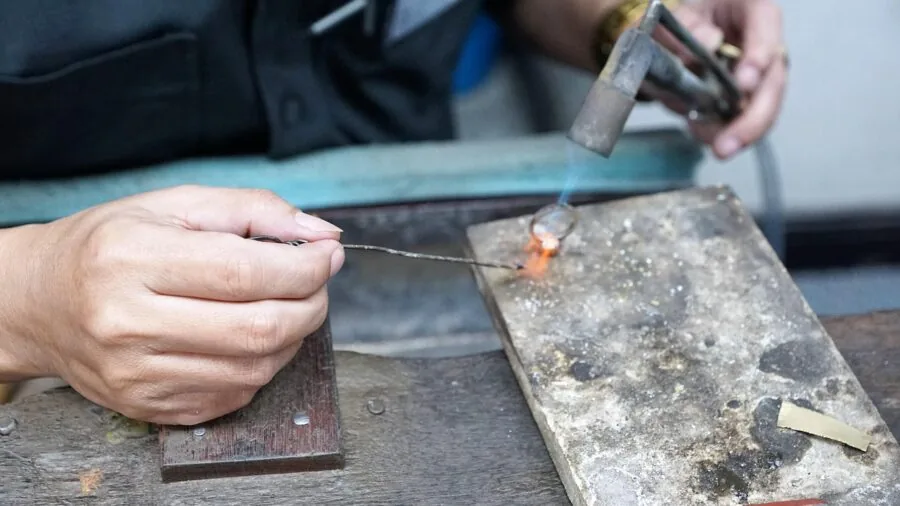
The alloy ratio is the single most important spec on the label. Traditional tin-lead solders, typically in 60/40 (60% tin, 40% lead) or 63/37 (63% tin, 37% lead) ratios, remain the gold standard for hobby and repair work.
The 63/37 eutectic blend is especially valued because it transitions directly from liquid to solid without passing through a plastic phase, which dramatically reduces the risk of cold or disturbed joints.
If you’re working on through-hole components, audio gear, or vintage electronics repair, tin-lead alloys are forgiving and easy to rework.
Lead-free solders, typically Sn99 with small additions of copper, silver, or nickel, are required by RoHS regulations for commercial electronics manufacturing sold in the EU and many other markets.
They are harder, require higher iron temperatures (typically 20 to 40 degrees Celsius more than tin-lead), and are less forgiving for rework.
The Weller WSW SCN M1 series uses an Sn99.3Cu0.6Ni0.05 alloy that is well-regarded in professional environments where compliance matters. For most hobbyists and repair technicians not bound by compliance requirements, tin-lead alloys remain the practical choice.
Avoid cheap mystery alloys with no published ratio. Unverified compositions can mean inconsistent melt behavior, excessive dross, or poor wetting. Stick with brands that clearly state their alloy chemistry on the label and product page.
Diameter: Matching Wire to the Job
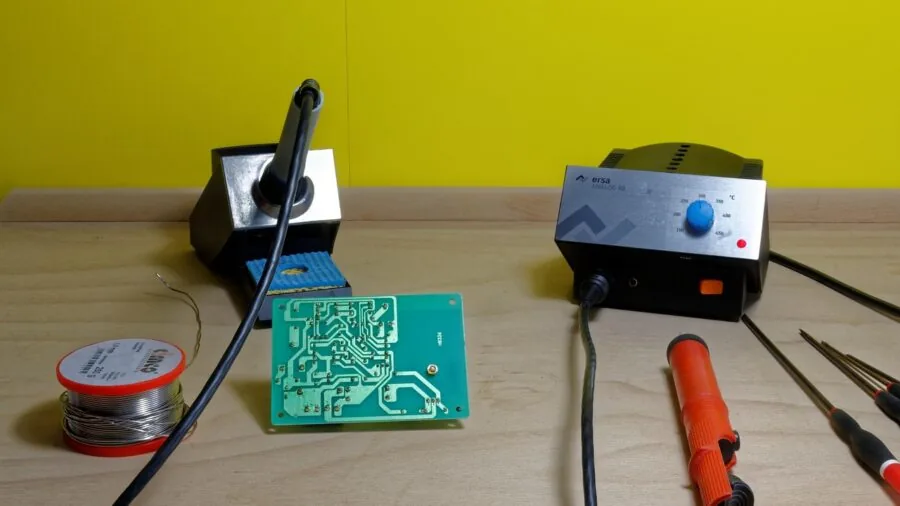
Solder wire diameter determines how much material you feed per unit time and how precisely you can control application.
Thin wires in the 0.3 mm to 0.5 mm range are suited to fine-pitch SMD work and small pads where excess solder creates bridges.
Mid-range diameters from 0.6 mm to 0.8 mm are the most versatile and work well for general PCB assembly, header pins, and light-gauge wiring.
Thick wires at 1.0 mm and above are practical for larger connectors, wire-to-terminal joints, and chassis wiring where you need to deliver material quickly.
A common mistake is using overly thick wire on fine SMD work. You end up depositing too much solder before you can react, creating blobs and bridges.
Conversely, using thin wire on large joints means you’re feeding constantly to maintain heat and flow, which can overheat nearby components.
Having two diameter options in your workspace, one fine and one general-purpose, covers the majority of projects without swapping irons. This pairs naturally with a reliable crimping tool for any terminal connections that don’t need soldering at all.
Flux Core Type and Flux Content
Nearly all solder wires sold for electronics use are rosin-core, meaning flux is embedded within the wire itself.
As the wire melts, flux is released ahead of the solder to clean oxidation from the pad and component lead, promoting proper wetting.
Rosin flux leaves a brownish residue that is electrically non-conductive and non-corrosive in its activated state, so it can be left on most assemblies without issue, or cleaned with isopropyl alcohol for a professional finish.
Flux content, expressed as a percentage of the wire’s total weight, typically ranges from 1.8% to 3.5% for electronics-grade wire. Higher flux content aids wetting on oxidized or contaminated surfaces, but can leave more residue.
The Weller WSW SCN M1 lead-free wire carries a 3.5% flux content to compensate for the higher temperatures needed and tougher surface chemistry of lead-free joints.
Kester’s 44 formulation, an RMA (Rosin Mildly Activated) flux, is a long-trusted benchmark for low-residue performance that requires minimal cleanup. Kester 44 data published by Kester cites excellent spread rate and consistently low spatter under standard iron conditions.
Avoid water-soluble flux core wires for general electronics unless you have a dedicated wash process. Water-soluble flux is highly corrosive if not removed completely and is inappropriate for most hobby and repair applications.
Spool Size and Format
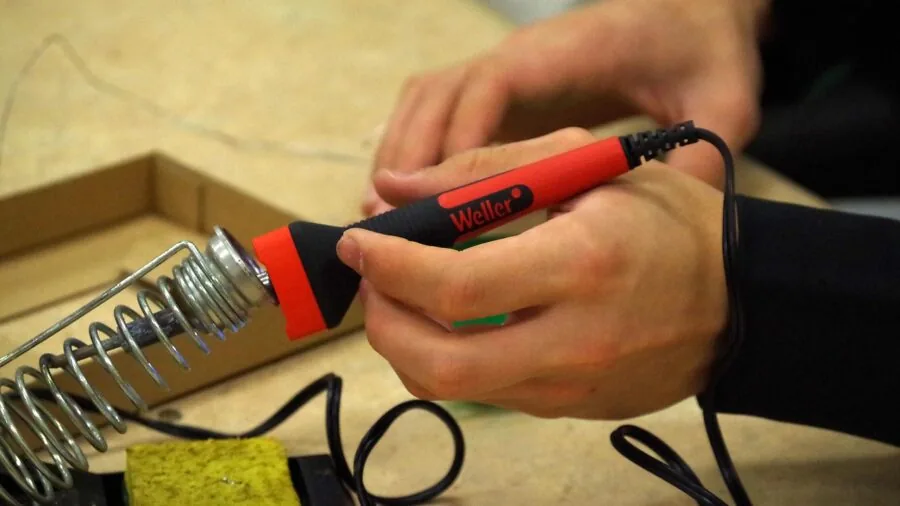
Solder wire is sold in formats ranging from small tubes and 20 g sample packs up to 1 lb and larger industrial spools.
Small packs are useful for sampling a new wire or for keeping a specific diameter on hand for occasional use. If you solder regularly, a 100 g or larger spool is more economical and reduces interruptions during longer sessions.
Tube-format solder, like the Kester 44 3/4-ounce tube, is ideal for bench carry, travel, or keeping a secondary diameter available without a bulky spool taking up space.
Industrial spools from brands like Kester and DTS, which manufactures its 40/60 wire in the USA on a 1 lb spool, are suited for production environments or high-volume hobbyists.
The DTS wire is notably one of the few in this price tier with a domestic manufacturing claim, which some buyers specifically seek out for quality assurance and supply-chain predictability.
Brand Reliability and Published Data

Brand reputation matters more in solder wire than in many other consumables because consistency between batches directly affects joint quality.
Kester has published detailed technical data sheets for its 44 series, including spread rate, flux activation temperature, and residue classification, giving engineers and serious hobbyists independent verification of the wire’s behavior.
Weller, as a professional tooling brand, backs its WSW series with full alloy certification and RoHS compliance documentation relevant to commercial production.
Budget brands from AUSTOR, HGMZZQ, HengTianMei, and YI LIN offer accessible entry points for casual work and are well-reviewed among beginners.
Verified buyer feedback consistently notes that these wires perform adequately for general-purpose hobby soldering, though batch-to-batch consistency and flux uniformity are occasionally flagged in user reports.
For critical assemblies, professional repair, or production use, investing in a documented brand like Kester or Weller is a straightforward decision.
For a student learning to solder or a hobbyist doing occasional repairs, any of the well-reviewed budget options are entirely reasonable starting points.
Application Context: Electronics, Repair, or Production
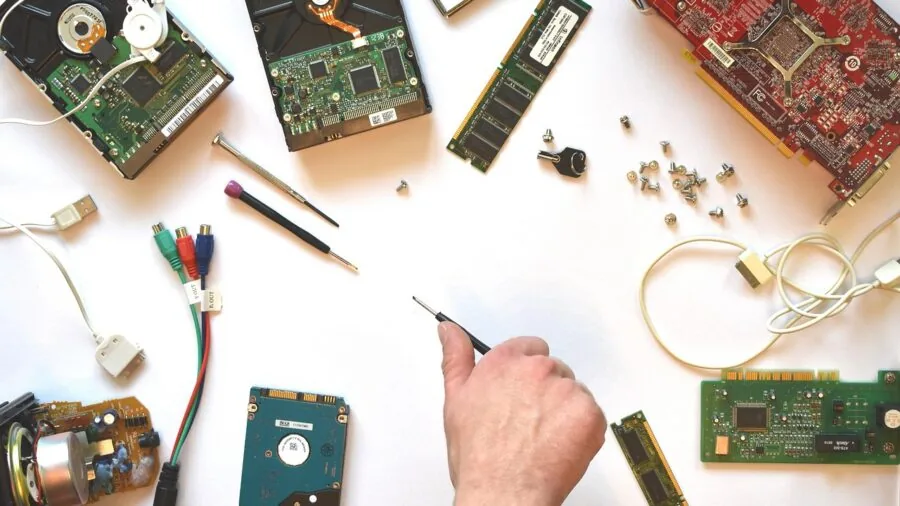
Different use cases genuinely call for different solder wire choices. Fine electronics work, including SMD rework, PCB assembly, and component-level repair, benefits from thinner diameters, high-quality flux, and eutectic 63/37 alloys.
Structural or large-gauge wiring work tolerates thicker wire and simpler flux chemistry. Lead-free alloys are non-negotiable for anything destined for commercial sale in regulated markets.
If you’re soldering connections that will eventually be covered by heat shrink tubing or other insulation, joint cosmetics matter less than mechanical and electrical integrity, so a general-purpose 60/40 or 63/37 wire in a 0.8 mm diameter is almost always sufficient.
For exposed joints on visible assemblies or high-reliability circuits, the extra investment in Kester 44 or the Weller WSW SnPb pays off in consistent, professional-looking results.
Why You Should Trust Us
ProductFind is an independent review publication. Every product in this roundup was assessed using a consistent, structured research methodology.
We evaluate each model by analyzing manufacturer-published specifications, synthesizing expert review consensus from engineering and maker communities, and examining verified buyer feedback drawn from documented purchase records.
We do not conduct our own product trials; our evaluations are grounded in research, published data, expert review consensus, and verified buyer feedback.
Each product receives a PF Score on a 0 to 10 scale, reflecting our assessment of overall quality, performance credibility, and value relative to alternatives in the category. Scores are assigned before any commercial relationship is considered.
ProductFind may earn a commission if you purchase through a link on this page, but affiliate arrangements have no influence on scores, rankings, or product selection.
Our recommendations are editorially independent and reflect what we genuinely assess as the strongest options for real buyers.
Final Thoughts
The solder wire market spans a wide range of quality tiers, and the right pick depends on your application, your soldering frequency, and how much consistency you need from batch to batch. Here are the standout picks from this roundup:
- Best Overall: Weller WSW SnPb Solder Wire (Sn60Pb40, 1.0 mm) earns the top PF Score in this group thanks to Weller’s professional-grade alloy certification, documented 2.2% flux content, and consistent performance on standard electronics joints. It represents the strongest combination of brand credibility, documented specs, and real-world reliability across verified buyer accounts.
- Best for Fine-Pitch and Precision Work: Kester 44 Solder Wire, 63/37, 0.020-inch is the benchmark for low-residue, precision soldering. The 63/37 eutectic ratio and RMA rosin flux have decades of documented performance behind them, and the 0.020-inch diameter makes it the right tool for tight SMD pads and delicate through-hole work.
- Best Budget Pick: HengTianMei 63/37 Rosin Core Solder Wire (0.3 mm, 50 g) delivers a strong PF Score among budget options, offering the eutectic 63/37 ratio at a very accessible price point. Verified buyers consistently report clean wetting and minimal spatter for hobby and student use.
- Best for Lead-Free Compliance: Weller WSW SCN M1 Solder Wire (0.5 mm, Sn99.3Cu0.6Ni0.05) is the go-to for RoHS-compliant work requiring a fine diameter. The Sn99.3Cu0.6Ni0.05 alloy with 3.5% flux content is well-suited to professional assemblies where lead is not permitted.
- Best for High-Volume and Production Use: DTS Solder Wire 40/60, 1.6 mm, 1 lb Spool, Made in USA offers a domestic-manufactured, large-format option for shops and production environments where consistency across a full spool matters and thicker wire is needed for connectors and chassis work.
Whatever tier you’re shopping in, prioritize documented alloy composition and flux type over price alone. A clearly labeled wire from a reputable brand is almost always worth the small premium over an unlabeled or mystery-alloy alternative.
Frequently Asked Questions
What is the difference between 60/40 and 63/37 solder wire?
The numbers refer to the tin-to-lead ratio by weight. The 63/37 blend is a eutectic alloy, meaning it melts and solidifies at a single defined temperature (around 183°C) rather than passing through a plastic phase.
This makes it less susceptible to cold or disturbed joints if the work moves slightly during cooling. The 60/40 alloy has a small plastic range between roughly 183°C and 190°C, which some users find easier to work with on larger joints.
For most electronics work, 63/37 is preferred for its cleaner, faster solidification.
Is lead-free solder wire harder to use than tin-lead?
Generally, yes. Lead-free alloys require higher iron temperatures, typically 20 to 40 degrees Celsius above tin-lead, and they are less forgiving during rework because the solder tends to be harder and less fluid at working temperatures.
Flux content is also higher in quality lead-free wires to compensate for the tougher surface chemistry. For hobbyists not subject to RoHS requirements, tin-lead alloys remain more practical.
Lead-free is the correct choice whenever regulatory compliance is a requirement or when the finished assembly must meet commercial standards.
Do I need to clean rosin flux residue after soldering?
Rosin flux residue from RMA (rosin mildly activated) and standard rosin-core wires is electrically non-conductive and non-corrosive once cooled, so it can be left on most assemblies without causing functional problems.
However, residue can interfere with visual inspection, conformal coating adhesion, and may attract dust over time.
Cleaning with isopropyl alcohol (90% or higher concentration) and a brush removes residue easily and is recommended for any assembly that will be inspected, coated, or used in a dusty or humid environment.
What solder wire diameter should a beginner start with?
For general-purpose hobby and learning use, a 0.8 mm diameter is the most versatile starting point. It works well for through-hole components, header pins, wire splices, and general PCB repair without requiring extremely precise feed control.
Once comfortable, adding a 0.3 mm or 0.5 mm wire for SMD work and a 1.0 mm or 1.5 mm wire for larger connections covers virtually every common electronics soldering scenario.
Beginners working with a full electronics toolkit alongside items like safety goggles for eye protection from flux spatter will find the 0.8 mm range the easiest to control consistently.
How should solder wire be stored to maintain quality?
Solder wire should be stored in a cool, dry environment away from humidity, which can oxidize the alloy surface and degrade flux chemistry over time.
Keeping spools in a sealed bag or their original packaging when not in use is sufficient for most home workshops.
Industrial environments sometimes use desiccant storage for lead-free wire in particular, as lead-free alloys can show surface oxidation more readily than tin-lead.
Heavily oxidized wire will bead up on the surface rather than wetting cleanly, which is a clear sign that the spool has been stored poorly or is past its usable life.
Can solder wire be used for plumbing or other non-electronics applications?
Electronics solder wire should not be used for plumbing. Plumbing solder uses acid-core flux, which is highly corrosive and specifically designed to clean copper pipe surfaces. Electronics solder uses rosin-core flux, which is not effective for pipe joints.
More importantly, using lead-containing solder on potable water pipes is a serious health hazard and is prohibited in most jurisdictions. For any plumbing application, use purpose-made lead-free plumbing solder with the appropriate acid flux, sold separately from electronics supplies.
About the author
Melanie is a reviewer and writer for ProductFind who specializes in Electrical Supplies. Melanie evaluates products through independent research: specifications, expert review consensus, and verified buyer feedback, and rates each one on the PF Score. Melanie focuses on helping readers pick the right electrical supplie for their needs and budget.