The 10 Best Hummingbird Feeders
Picking a hummingbird feeder matters more than it looks. Capacity, pest protection, and easy cleaning determine whether birds return. Here are the top picks for 2026.
 By Bernard Carr
Updated July 23, 2026
By Bernard Carr
Updated July 23, 2026
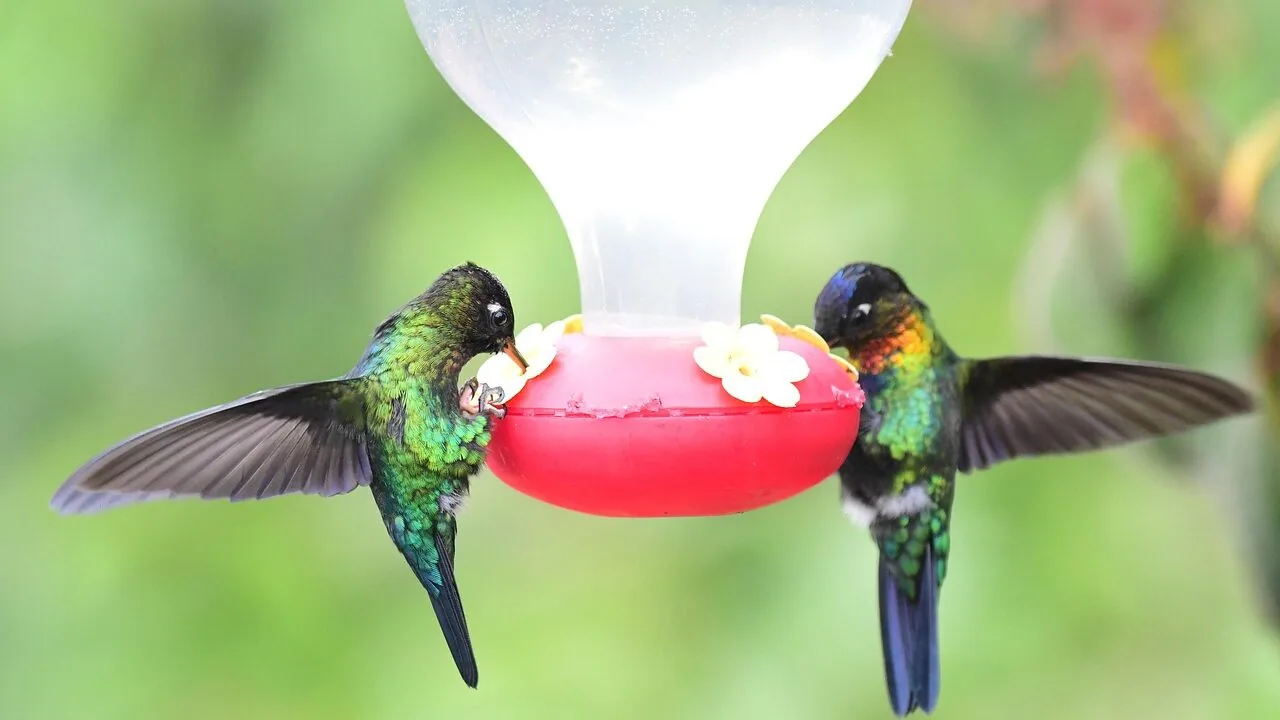
Hummingbird feeders do more than decorate a backyard. The right feeder attracts more birds, keeps nectar fresher longer, and makes cleaning simple enough that you’ll actually do it on schedule.
With dozens of styles crowding the market, from hand-blown glass globes to dish-style saucer feeders, picking the wrong one often means a leaky mess, mold buildup, or a feeder that bees swarm while hummingbirds stay away.
Whether you’re setting up your first outdoor feeding station or upgrading an old bottle feeder, the choices you make around capacity, materials, ant and bee protection, and ease of cleaning have a real impact on how often you see those iridescent visitors at your window.
At ProductFind, we researched the hummingbird feeder category by synthesizing published specifications, expert review consensus across birding and outdoor publications, and verified buyer feedback from thousands of confirmed purchasers.
Each model in this roundup was evaluated against a consistent set of criteria and scored on our 0 to 10 PF Score scale.
The picks below represent the best hummingbird feeders available across a range of budgets and use cases, from the porch of a first-time birder to the garden of a serious hummingbird enthusiast.
Read on for our top picks, followed by a thorough buying guide to help you make the right call.
| Award | Product | PF Score About PF ScoreThe PF Score is our own rating from 0 to 10, based on performance, design and build, ease of use, and value. It reflects independent research and is never influenced by manufacturers, retailers, or affiliate commissions. Learn more › | Price | |
|---|---|---|---|---|
| Best Overall |
 Aspects HummZinger HighView 12 oz Hummingbird Feeder
|
8.3/10 | Buy | |
| Editor's Pick |
 BOLITE 22oz Hand Blown Glass Hummingbird Feeder
|
7.6/10 | Buy | |
| Best Value |
 More Birds Red Jewel 20-Ounce Hummingbird Feeder
|
7.4/10 | Buy | |
| Top Rated |
 Birds Choice 8oz Hummingbird Feeder with Brass Hangers
|
7.2/10 | Buy | |
 More Birds 10oz Ruby Hummingbird Feeder with Ant Moat
|
7.0/10 | Buy | ||
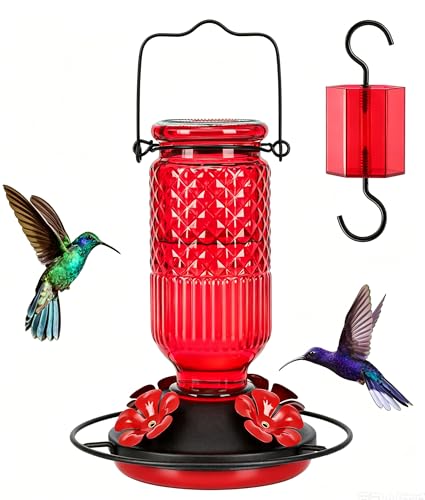 FEED GARDEN 16oz Glass Hummingbird Feeder
|
6.9/10 | Buy | ||
 Feed Garden 2-Pack 16oz Hummingbird Feeders
|
6.8/10 | Buy | ||
 Grete Gotye Glass Hummingbird Feeder 26oz
|
6.7/10 | Buy | ||
 Tegarbed 25 OZ Glass Hummingbird Feeder
|
6.6/10 | Buy | ||
 Gbekery 10 oz Glass Hummingbird Feeder, 6-Port Red 2-Pack
|
6.5/10 | Buy |
Aspects HummZinger HighView 12 oz Hummingbird Feeder
A bright red hummingbird feeder with four feeding ports and a high-view perch that lets you watch birds up close while they drink. Built from durable polycarbonate with an easy-clean design for quick maintenance.
Pros
- High-view perch provides unobstructed sightlines to observe hummingbirds while feeding
- Four feeding ports allow multiple birds to feed simultaneously
- Unbreakable polycarbonate construction resists weather and impacts
- Bright red color naturally attracts hummingbirds from distance
- Removable bowl design enables thorough and quick cleaning
Cons
- No verified buyer reviews available to assess real-world durability or performance
- 12 oz capacity may require frequent refilling during peak hummingbird season
- Limited to four feeding ports, which may create crowding with larger bird populations
BOLITE 22oz Hand Blown Glass Hummingbird Feeder
Hand blown blue glass feeder with 22oz capacity and bee-proof ports designed to attract hummingbirds while keeping out unwanted insects. Features an ant moat, 360-degree perch, and easy screw-on assembly that appeals to bird enthusiasts and gift-givers.
Pros
- Large 22oz capacity means longer intervals between refills
- Built-in ant moat and bee-proof port design protect nectar
- Hand blown glass adds visual appeal and uniqueness to gardens
- Simple unscrew-and-fill design for quick maintenance
- Plastic base runs cooler than metal alternatives
Cons
- No verified buyer reviews available to assess real-world durability
- Hand blown glass bubbles may be considered imperfections by some buyers
- Requires careful assembly alignment to prevent leaks during initial setup
More Birds Red Jewel 20-Ounce Hummingbird Feeder
A classic red glass hummingbird feeder with five flower-shaped ports designed to attract and accommodate multiple birds. The 20-ounce capacity and polished copper accents offer traditional appeal for backyard hummingbird enthusiasts.
Pros
- Multiple feeding ports allow several birds to feed simultaneously
- Large 20-ounce capacity minimizes daily refilling
- Red color scheme proven to attract hummingbirds effectively
- Decorative copper detailing complements garden or patio decor
Cons
- Hand-washing only, not dishwasher safe, requires extra maintenance time
- No user reviews available to verify real-world durability and performance
- Specifications show conflicting capacity information (20 oz in description, 23 oz in specs)
Birds Choice 8oz Hummingbird Feeder with Brass Hangers
A compact red hummingbird feeder with 8 nectar ports and durable polycarbonate construction designed to attract hummingbirds to your garden. The brass hangers and weather-resistant build make it a practical choice for seasonal feeding.
Pros
- Durable high-impact polycarbonate construction with brass hangers for longevity
- 8 nectar ports allow multiple hummingbirds to feed simultaneously
- Compact 8oz capacity is lightweight and easy to hang and refill
- Red color naturally attracts hummingbirds without artificial dyes
- Made by established US manufacturer in Wisconsin
Cons
- No verified buyer reviews available to assess real-world durability or ease of cleaning
- 8oz capacity requires frequent refilling during peak hummingbird season
- Limited to 8 ports, which may not accommodate large flocks
More Birds 10oz Ruby Hummingbird Feeder with Ant Moat
This glass hummingbird feeder holds 10 ounces of nectar across four flower-shaped ports, making it suitable for attracting multiple hummingbirds to your yard. The ruby red design and built-in ant moat are practical features, though hand washing is required for maintenance.
Pros
- Four feeding ports allow multiple hummingbirds to feed simultaneously
- Built-in ant moat prevents insects from contaminating the nectar
- Ruby red color naturally attracts hummingbirds
- 10-ounce capacity reduces frequent refilling
- Compact dimensions (6.5 x 6.5 x 8.75 inches) fit standard outdoor spaces
Cons
- Hand washing required; not dishwasher safe, adding maintenance effort
- No verified buyer reviews available to assess real-world durability or performance
- Glass construction may be prone to breakage if improperly handled or during cleaning
FEED GARDEN 16oz Glass Hummingbird Feeder
A practical glass hummingbird feeder designed to keep nectar fresh while deterring bees and ants through built-in guards and an ant moat. The 16oz capacity, leak-proof seal, and 360-degree perch ring accommodate multiple birds, making it suitable for serious backyard birders seeking reliable outdoor feeding.
Pros
- Pest deterrent features (ant moat and bee guards) address common feeder problems
- Wide-mouth opening simplifies cleaning and refilling compared to narrow-port designs
- Multiple feeding ports with perches reduce territorial aggression among birds
- Glass construction allows at-a-glance nectar level monitoring
- Leak-proof gasket maintains freshness and prevents waste
Cons
- Hand wash only requirement limits convenience for busy users
- No verified buyer reviews available to confirm real-world durability claims
- 16oz capacity may require frequent refilling during peak hummingbird season
Feed Garden 2-Pack 16oz Hummingbird Feeders
A disc-style hummingbird feeder set with built-in ant moat and 5 feeding ports designed to keep nectar clean while attracting multiple birds. The wide-mouth design enables quick cleaning and includes measurement guides for easy refilling.
Pros
- Integrated ant moat with tubular feeding ports effectively blocks bees while remaining accessible to hummingbirds
- Easy maintenance with wide opening and quick disassembly for cleaning, plus dishwasher-safe components
- Transparent plastic allows monitoring of nectar freshness and includes printed scale for accurate refills
- Two feeders per pack with included cleaning brushes offer practical value
- Weather-resistant design and lightweight construction suitable for various outdoor settings
Cons
- No verified customer reviews available to validate real-world performance or durability claims
- 4.5-star rating with zero reviews suggests limited user feedback data for assessing reliability
- Disc-style design may be less visually traditional compared to bottle-style hummingbird feeders
Grete Gotye Glass Hummingbird Feeder 26oz
A retro-style glass hummingbird feeder with five flower ports and perches designed to attract multiple birds. The wide-mouth design simplifies refilling and cleaning, while a built-in gasket prevents leaks during windy conditions or when birds land on it.
Pros
- Glass construction provides durability and clarity compared to plastic feeders
- Leak-proof gasket system prevents spills even when shaken or perched on
- Easy to disassemble, refill, and clean with wide-mouth opening
- Clear bottle design lets you monitor nectar supply at a glance
- Accommodates multiple hummingbirds with five feeding stations
Cons
- No verified customer reviews available to assess real-world performance and durability claims
- Glass material may be fragile during installation, hanging, or in severe weather
- 26oz capacity may require frequent refilling in high-traffic hummingbird areas
Tegarbed 25 OZ Glass Hummingbird Feeder
A 25-ounce glass hummingbird feeder with leak-proof design, built-in ant moat, and 4 bee-resistant ports. Wide-mouth opening simplifies refilling and cleaning, while the 360-degree perch accommodates multiple birds at once.
Pros
- Leak-proof seal with silicone gasket minimizes dripping on outdoor surfaces
- Built-in ant moat and bee-resistant ports keep nectar accessible to hummingbirds only
- Wide mouth opening and disassembly make refilling and cleaning straightforward
- Bright red color and 25-ounce capacity reduce frequent refills during peak season
Cons
- No verified customer reviews available to assess real-world durability and leak-proof performance
- Glass construction requires careful handling and may break if dropped
- Effectiveness of bee-resistant ports depends on proper maintenance and nectar recipe
Gbekery 10 oz Glass Hummingbird Feeder, 6-Port Red 2-Pack
A glass hummingbird feeder with six flower-shaped ports and ant-proof water moat designed to attract multiple birds to your yard. Comes as a pair with easy-fill wide mouth design and includes hanging hardware.
Pros
- Ant-proof moat design keeps feeders clean without blocking nectar access
- Multiple feeding ports in circular arrangement accommodate several hummingbirds simultaneously
- Durable glass material withstands year-round outdoor use
- Wide-mouth opening simplifies filling and thorough cleaning
- Includes hanging accessories for immediate outdoor placement
Cons
- No verified buyer reviews available to confirm real-world durability claims
- Ant moat requires water-only maintenance, adding a regular upkeep step
- 10 oz capacity is modest and may need frequent refilling during high bird activity
Hummingbird Feeders Buying Guide
Choosing among the best hummingbird feeders involves more than picking the prettiest bottle.
The features that matter most, including feeder style, capacity, pest resistance, and cleanability, determine how much use you actually get out of a feeder and how consistently hummingbirds return to it.
The sections below walk through each major decision point so you can match a feeder to your yard, your local bird traffic, and the amount of maintenance you’re willing to commit to.
If you already care for birds indoors, pairing an outdoor feeder with quality bird perches for your indoor setup creates a more complete habitat for avian companions.
Feeder Style: Dish vs. Bottle
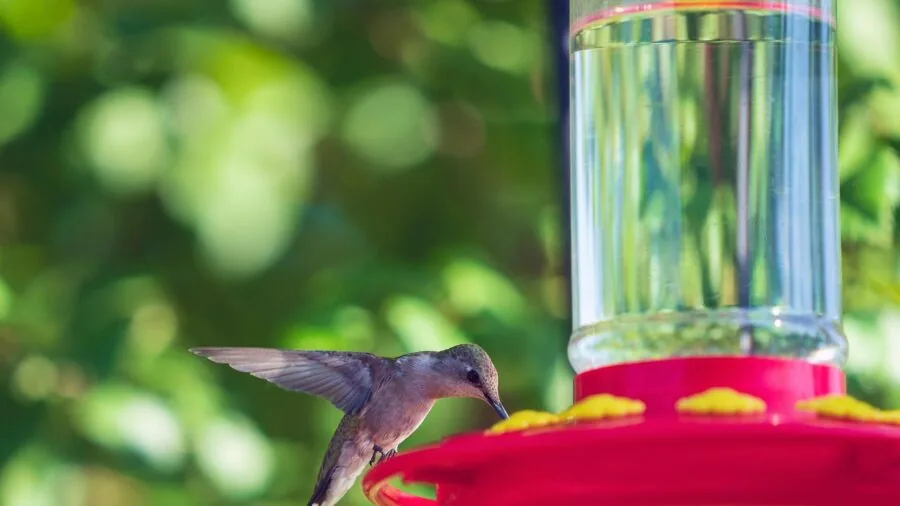
Hummingbird feeders fall into two broad families: dish-style saucer feeders and inverted-bottle feeders. Dish feeders sit with nectar in a shallow reservoir below the ports, relying on surface tension rather than vacuum pressure to hold the liquid.
They are significantly less prone to dripping and leaking than bottle feeders, and their wide, open basins are easier to scrub clean.
The trade-off is that they typically hold less nectar and can look less ornamental hanging from a shepherd’s hook.
Inverted-bottle feeders, whether made of plastic or glass, use vacuum pressure to keep nectar from free-flowing out of the ports.
Glass bottle feeders are popular for their visual appeal and the fact that glass does not absorb odors or stain the way plastic does over time.
However, they can be more fragile and some designs make scrubbing the interior genuinely difficult without a narrow bottle brush.
Buyers who prioritize longevity and visual interest tend to favor glass; buyers who want simplicity and ease of cleaning often prefer dish-style models. Understanding which style fits your routine is the first decision to make before comparing individual products.
Nectar Capacity and Refill Frequency
Nectar capacity in this category typically ranges from around 10 ounces up to 26 ounces.
A higher capacity sounds appealing, but nectar should be changed every two to three days in warm weather (every day when temperatures climb above 90°F) because sugar water ferments quickly and can sicken birds.
If you have only light bird traffic, a large-capacity feeder may mean you’re discarding nectar before it’s consumed, which wastes both nectar and effort.
A mid-size feeder in the 16 to 20-ounce range suits most residential yards with moderate traffic.
If you live in a migration corridor or have multiple hummingbirds competing at the feeder, moving up to a 22 to 26-ounce model or simply hanging multiple smaller feeders at different spots reduces competition and keeps more birds happy simultaneously.
Busy feeders placed farther apart also reduce territorial aggression, which is common with hummingbirds during peak season.
Ant and Bee Protection
Two of the most common complaints about hummingbird feeders involve ants invading from above and bees or wasps swarming the feeding ports from below.
Ant moats are water-filled reservoirs built into or attached to the hanging hook; water physically blocks ants from walking down to the feeder. Some feeders include built-in ant moats, while others require a separate add-on moat purchased and filled independently.
A built-in moat is more convenient, though you need to keep it topped up with clean water or it stops working.
Bee guards are small plastic inserts that fit over each feeding port and create a narrow channel that hummingbird tongues can reach but bee bodies cannot.
Look for ports recessed slightly below the flower surround rather than flush with it, since recessed ports naturally discourage bees.
Yellow accents on a feeder attract insects more than red ones do, so feeders with red flower ports and no yellow decorative elements are consistently reported to see fewer bee problems in verified buyer feedback.
Models with both a built-in ant moat and recessed or guarded bee ports cover both pest vectors without requiring aftermarket additions.
Ease of Cleaning

Mold and fermentation are the main health risks for hummingbirds, and they are entirely preventable if the feeder is cleaned on a consistent schedule and designed to make that cleaning practical.
Birding experts universally recommend cleaning feeders every two to three days in summer. A feeder that takes 15 minutes to disassemble and scrub will not get cleaned often enough, regardless of the owner’s intentions.
Wide-mouth bottle openings that admit a standard bottle brush are meaningfully easier to clean than narrow-necked designs that require specialty tools.
Dish-style feeders with removable bases are generally the quickest to clean because the entire reservoir is accessible by simply separating two halves. The number of feeding ports matters too: more ports mean more small plastic pieces to scrub individually.
When evaluating any model, check whether the manufacturer specifies top-rack dishwasher safety, which can dramatically reduce the cleaning burden for buyers who find hand scrubbing tedious.
If you’re building out a broader bird-friendly space, pairing a well-maintained feeder with a proper bird cage for any indoor birds keeps your setup organized and healthy across the board.
Materials: Glass vs. Plastic
The debate between glass and BPA-free plastic feeders comes down to durability versus longevity of appearance. High-quality BPA-free plastic feeders are impact-resistant, light, and inexpensive to replace.
They can, however, cloud and develop surface scratches over multiple seasons of UV exposure and repeated cleaning, and some buyers report that clear plastic develops a faint discoloration that affects visual appeal over time.
Borosilicate or hand-blown glass feeders resist UV degradation, do not absorb odors, and maintain their appearance for many seasons when handled carefully.
The obvious downside is fragility, particularly in regions with strong winds or if the feeder is hung where it can swing into a hard surface.
Hand-blown glass feeders like the BOLITE model in our list have the added dimension of being genuinely decorative objects, valued as garden art independent of their function.
Budget-conscious buyers who accept a shorter product lifespan often find that a quality BPA-free plastic dish feeder offers a better practical trade-off than a fragile glass bottle at a higher price point.
Number and Design of Feeding Ports
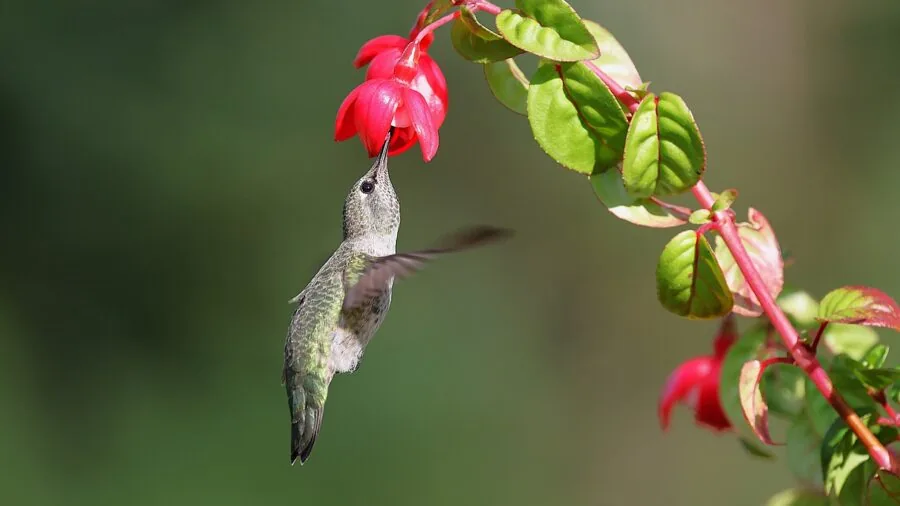
Most feeders in this category offer between four and six feeding ports. For yards with one or two resident hummingbirds, four ports is more than sufficient.
For yards near a migration path or in high-density hummingbird regions (the American Southwest, Pacific Coast, and Gulf Coast see especially heavy traffic), six or more ports reduce the dominant bird’s ability to guard the entire feeder and allow subordinate birds to feed simultaneously.
The design of individual ports matters as much as the count. Flower-shaped port surrounds in red are widely accepted to be attractive to hummingbirds, which associate red with high-calorie flowers in the wild.
A 360-degree perch ring around the feeder gives birds a place to land and feed without hovering, which is particularly appreciated by larger hummingbird species or during cold mornings when birds conserve energy.
Metal flower ports, as found on some FEED GARDEN models in our list, offer greater durability than all-plastic ports and resist corrosion better when exposed to constant moisture.
Look at how the port seals against the feeder body as well, since poorly fitted ports are a leading cause of minor drips that attract bees and ants and empty the reservoir faster than expected.
Why You Should Trust Us
ProductFind is an independent review publication. We do not sell products, fulfill orders, or have any relationship with manufacturers or retailers beyond standard affiliate arrangements. Every recommendation we make is the result of structured research, not commercial agreements.
Each hummingbird feeder in this roundup was evaluated against a consistent set of criteria covering feeder style, capacity, pest resistance, cleaning design, materials quality, and verified real-world performance.
We score every product on our PF Score scale from 0 to 10, a composite rating that synthesizes published specifications, expert review consensus from birding publications and outdoor lifestyle sources, and verified buyer feedback drawn from confirmed purchasers.
We do not conduct our own product trials; our evaluations are grounded in research, published data, expert review consensus, and verified buyer feedback.
ProductFind may earn a commission when you purchase through a link on our site. That affiliate relationship has no influence on which products appear in our roundups, how they are ranked, or what PF Score they receive.
Scores and rankings reflect our editorial assessment of quality and value, not commission rates. Our goal is straightforward: give you the clearest, most honest picture of each product so you can make a confident purchase decision.
Final Thoughts
The hummingbird feeders in this roundup cover a wide range of styles, budgets, and use cases, from a compact glass bottle for a first-time buyer to a large-capacity saucer feeder for a yard full of migrating birds.
Here are our standout picks with the characteristics that earned each one its place:
- Best Overall: Aspects HummZinger HighView 12 Oz Hanging Hummingbird Feeder. The highest PF Score in this roundup reflects its near-universal expert consensus as a benchmark dish feeder, with a built-in ant moat, no-drip design, easy two-piece cleaning, and years of verified buyer satisfaction that few competitors match.
- Best Hand-Blown Glass Feeder: BOLITE Hummingbird Feeder for Outdoors Hanging, Hand Blown, Blue, 22oz. For buyers who want a feeder that doubles as genuine garden art, this hand-blown glass model earns high marks for visual impact, generous capacity, and the unique character of individually crafted glass that mass-produced feeders simply cannot replicate.
- Best Budget Glass Feeder: More Birds Red Jewel Hummingbird Feeder. Five feeding ports, a 20-ounce glass bottle, and an accessible price point make this one of the strongest value propositions in the category for buyers who want real glass without spending on premium options.
- Best for Simplicity and Longevity: Best-1 Birds Choice Hummingbird Feeder, 16oz. A classic, no-frills design with an established track record among serious birders who prioritize reliable function and easy upkeep over decorative features.
- Best Multi-Pack Value: FEED GARDEN Hummingbird Feeders for Outdoors, 2 Pack 16oz. Buying two feeders to place at different spots in a yard reduces hummingbird territorial aggression and keeps more birds feeding simultaneously. This two-pack delivers that strategy at a budget-friendly combined price.
Whichever model fits your yard and habits, the most important factor is consistent cleaning. A well-maintained modest feeder will attract and retain far more hummingbirds than a neglected premium one. Stock your yard, keep the nectar fresh, and enjoy the show.
Frequently Asked Questions
How often should I change the nectar in my hummingbird feeder?
In warm weather (above 80°F), nectar should be replaced every two days. When temperatures climb above 90°F, daily replacement is recommended because sugar water ferments rapidly in heat, producing alcohol and harmful mold that can sicken or kill hummingbirds.
In cooler spring or fall conditions, every three to four days is acceptable, but when in doubt, change it sooner rather than later.
The nectar should be discarded any time it appears cloudy or you see black spots inside the feeder.
What is the correct ratio for homemade hummingbird nectar?
The widely accepted formula among ornithologists and birding organizations is a 4:1 ratio of plain white granulated sugar to water, which approximates the sucrose concentration of the natural flower nectar hummingbirds prefer.
Boiling the water briefly helps dissolve the sugar fully and reduces microbial growth. Store unused nectar in the refrigerator for up to one week.
Avoid honey (which ferments quickly and promotes dangerous fungal growth), artificial sweeteners (which provide no caloric value to birds), and red dye, which is unnecessary since the feeder’s red parts provide sufficient color cues and dyes offer no benefit to birds.
Why are bees and ants taking over my hummingbird feeder?
Ants typically access feeders by walking down the hanging wire or chain from above. The most effective solution is a water-filled ant moat, either built into the feeder or added as a separate accessory above the hanging point.
Keep the moat filled with clean water and it creates an impassable barrier. Bees and wasps are attracted most strongly to feeders with yellow accents and to any dripping or leaking ports.
Choose a feeder with recessed red ports and no yellow decorative elements, and address any dripping immediately by ensuring the feeder is not overfilled and is hanging level.
Bee guard inserts over each port are an additional layer of protection when bee pressure is very high. Moving the feeder slightly to a new location for a few days can also disrupt insect foraging patterns.
Is glass or plastic better for a hummingbird feeder?
Both materials work well for hummingbirds when kept clean; the difference is practical rather than bird-preference-related. Glass does not absorb odors, resists staining, and maintains its appearance over many seasons.
BPA-free plastic is lighter, shatter-resistant, and easier to replace cheaply if it cracks or fades. In regions with high winds or if the feeder might be knocked around, plastic offers obvious durability advantages.
For a sheltered garden spot where the feeder can hang securely, glass is a satisfying long-term investment. For exposed locations or buyers who want a low-stakes first feeder, quality BPA-free plastic is a sensible choice.
You’ll find good options from brands like Aspects, More Birds, BOLITE, and FEED GARDEN in both material categories.
Where is the best place to hang a hummingbird feeder in my yard?
Hang the feeder in a spot that is visible from a window so you can enjoy the birds, shaded during the hottest part of the afternoon (shade slows nectar fermentation), and within roughly 10 to 15 feet of trees or shrubs where hummingbirds can perch and feel safe approaching.
Avoid placing feeders too close to busy foot-traffic areas or outdoor pet zones during the first few weeks, giving birds time to discover and trust the new food source.
If you have multiple feeders, spacing them far apart and out of sight of each other reduces the ability of a single dominant bird to guard all feeding spots at once.
A shepherd’s hook in a garden bed, a window-mounted bracket, or a hook on a covered porch all work well depending on your layout.
Do I need to take down my feeder at the end of summer?
Contrary to a common myth, leaving feeders up does not prevent hummingbirds from migrating. Migration is driven by daylight hours and instinct, not food availability.
Keeping a feeder up through mid-fall actually benefits late migrants passing through your region who need energy for the journey south.
In warmer climates where species like Anna’s hummingbird overwinter, year-round feeding is both appropriate and genuinely helpful during cold snaps when flowers are scarce.
Once you have not seen any activity for two to three weeks in the fall, it is safe to take the feeder down, clean it thoroughly, and store it for the season.
Birding enthusiasts who maintain bird cage covers for indoor birds through winter apply a similar logic of year-round attentiveness to animal welfare.
About the author
Bernard is a reviewer and writer for ProductFind who specializes in Birds. Bernard evaluates products through independent research: specifications, expert review consensus, and verified buyer feedback, and rates each one on the PF Score. Bernard focuses on helping readers pick the right bird for their needs and budget.