The 9 Best Party Games
Not every party game lands with every crowd. These picks cover fast card games, social deduction hits, and family-friendly formats chosen for quick setup, genuine laughs, and strong repeat-play value.
 By Pat Wheeler
Updated July 23, 2026
By Pat Wheeler
Updated July 23, 2026

A great party game can turn an ordinary evening into a memory people talk about for years.
Whether you’re hosting a birthday bash, a casual game night with friends, or a family holiday gathering, the right game sets the tone, breaks the ice, and keeps everyone at the table long after they planned to leave.
The category spans everything from lightning-fast card games that work on a kitchen counter to clever social deduction experiences that reward repeat play, so finding the right fit for your crowd matters more than most people expect.
At ProductFind, we researched this lineup by analyzing published specifications, synthesizing consensus from expert reviewers across the tabletop gaming community, and combing through verified buyer feedback from thousands of documented purchases.
Our goal is to cut through the marketing noise and surface the options that actually deliver at the table.
If you’re also shopping for family board games for a mixed-age crowd or want to explore deeper strategy board games for your next game night, we have dedicated guides for those too.
The picks below represent the strongest performers across group size, play style, and budget range that our research surfaced.
| Award | Product | PF Score About PF ScoreThe PF Score is our own rating from 0 to 10, based on performance, design and build, ease of use, and value. It reflects independent research and is never influenced by manufacturers, retailers, or affiliate commissions. Learn more › | Price | |
|---|---|---|---|---|
| Best Overall |
 Hasbro Taboo Classic Party Game
|
8.4/10 | Buy | |
| Editor's Pick |
 Big Potato Chameleon Social Deduction Game
|
8.2/10 | Buy | |
| Best Value |
 First to Worst Party Game - Ranking Card Game for Groups
|
7.5/10 | Buy | |
| Top Rated |
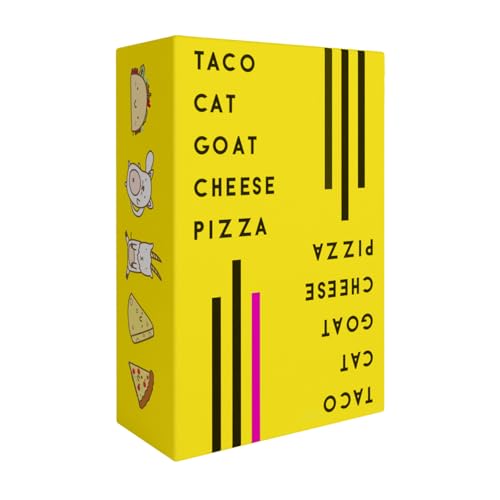 Taco Cat Goat Cheese Pizza Card Game, 2-8 Players
|
7.2/10 | Buy | |
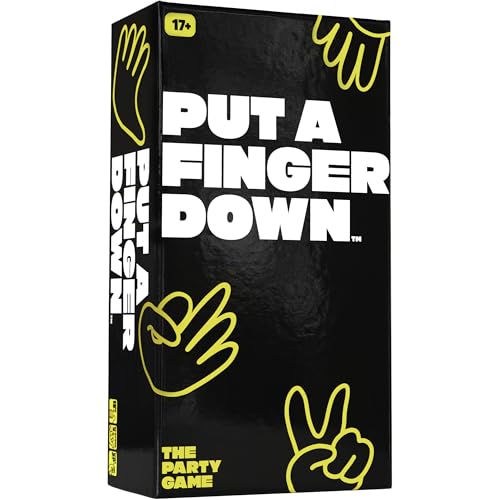 Hunch Games Put A Finger Down Card Game
|
7.1/10 | Buy | ||
|
First to Worst Party Game - Ranking Card Game for Groups
|
7.5/10 | Buy | ||
 Lucky Egg Grab The Mic Karaoke Board Game
|
6.8/10 | Buy | ||
 Big Potato You Can't Say UMM Party Game
|
6.5/10 | Buy | ||
 Moose Master 110-Card Party Game
|
6.1/10 | Buy | ||
 USAOPOLY Flip 7 Card Game
|
8.1/10 | Buy |
Hasbro Taboo Classic Party Game
A word-guessing party game where players race against time to get teammates to say target words without using forbidden clues. Updated with 212 cards featuring modern pop culture references, it works for 4+ players ages 13 and up at gatherings, game nights, or on the go.
Pros
- Fresh, contemporary card library keeps gameplay feeling current and relevant
- Flexible timer options with online scorepad tool for tech-savvy players
- Compact and lightweight for transport to parties or social events
- Large card library supports multiple play sessions without repetition
Cons
- No verified buyer reviews available to assess real-world durability or gameplay experience
- Requires at least 4 players, limiting appeal for smaller groups
- Physical timer and buzzer included, but web tools require smartphone access to enhance play
Big Potato Chameleon Social Deduction Game
A bluffing party game where one player secretly doesn't know the word everyone else does, and must be caught before escaping. Quick setup and 15-minute gameplay make it accessible for mixed-age groups, with multiple award recognition supporting its design quality.
Pros
- Fast-paced gameplay keeps energy high and sessions replayable
- Works across wide player range without complex rule overhead
- Hidden role mechanic creates genuine tension and laughter
- Proven award credentials indicate solid design fundamentals
Cons
- No user reviews available to confirm real-world player experience
- Limited to 8 players maximum, restricting larger group gatherings
- Social deduction relies heavily on player engagement, which varies by group dynamics
First to Worst Party Game - Ranking Card Game for Groups
A collaborative ranking and guessing game where players try to predict how others order everyday topics, from pineapple on pizza to cat videos. Simple mechanics and 300 cards make it accessible for groups aged 8 and up, though the experience hinges entirely on player personalities and group dynamics.
Pros
- No complex rules or components to set up, anyone can start playing immediately
- Large card deck (300 topics) provides substantial replayability for repeat players
- Designed explicitly to spark conversation and reveal how friends think, not just score points
- Works well across age ranges (8+) for family and mixed-generation gatherings
Cons
- Success depends heavily on player group chemistry and willingness to engage; quiet groups may find it less entertaining
- No reviews available yet to verify card quality, durability, or actual gameplay experience from buyers
- Limited to 2+ players, so performance with very small groups (2-3 people) remains unvalidated
Taco Cat Goat Cheese Pizza Card Game, 2-8 Players
A fast-paced party card game that plays in 10-15 minutes and requires minimal setup. Works for mixed-age groups looking for quick, laugh-out-loud entertainment without complex rules.
Pros
- Quick to learn and teach, minimal rules overhead
- Compact, take-anywhere format for travel or casual gatherings
- Fast game length keeps energy high without commitment
- Broad age appeal for mixed-group entertainment
Cons
- No verified user reviews available to assess long-term durability or play experience details
- Limited replay value may depend on group enjoyment of the core mechanic
- Card-based format durability unclear from specifications alone
Hunch Games Put A Finger Down Card Game
A social party card game built on the viral "put a finger down" trend, featuring 400 prompts designed to spark conversation and laughter in groups of 2 or more. Simple mechanics and flexible group sizes make it accessible for casual hangouts and larger gatherings alike.
Pros
- Simple rules mean anyone can jump in and play immediately without explanation
- 400 cards provide enough variety for repeated play without feeling repetitive
- Flexible for any group size, from pairs to large parties
- Special twist cards add surprise elements and encourage expressive reactions
- Compact size (8.5in x 4.5in) makes it portable for gatherings
Cons
- No user reviews available yet, so real-world durability and card quality remain unverified
- Relies heavily on group engagement and comfort level; less fun with reserved players
- Limited to the 400 cards included, so very frequent players may cycle through prompts repeatedly
First to Worst Party Game - Ranking Card Game for Groups
A collaborative ranking and guessing game where players try to predict how others order everyday topics, from pineapple on pizza to cat videos. Simple mechanics and 300 cards make it accessible for groups aged 8 and up, though the experience hinges entirely on player personalities and group dynamics.
Pros
- No complex rules or components to set up, anyone can start playing immediately
- Large card deck (300 topics) provides substantial replayability for repeat players
- Designed explicitly to spark conversation and reveal how friends think, not just score points
- Works well across age ranges (8+) for family and mixed-generation gatherings
Cons
- Success depends heavily on player group chemistry and willingness to engage; quiet groups may find it less entertaining
- No reviews available yet to verify card quality, durability, or actual gameplay experience from buyers
- Limited to 2+ players, so performance with very small groups (2-3 people) remains unvalidated
Lucky Egg Grab The Mic Karaoke Board Game
A fast-paced party game that trades singing ability for laughs, featuring 120 word cards and multiple game modes to keep groups of 2-10 entertained. Built for players who enjoy music and humor over vocal talent.
Pros
- Fast gameplay mechanics ensure constant engagement and quick turn times
- Multiple game modes and board configurations extend replay value
- Inclusive design that makes non-singers feel comfortable performing
- Complete all-in-one package with microphone, board, cards, and tokens included
Cons
- Limited to 120 word cards, which may require expansions for frequent players
- No verified buyer reviews available to validate gameplay experience claims
- Requires familiarity with song lyrics across different genres to fully enjoy
Big Potato You Can't Say UMM Party Game
A fast-paced party game that challenges players to describe items without using verbal fillers like 'umm' or 'err' while opponents listen for slip-ups. The opposing team rings a bell to catch forbidden sounds, making it a competitive and comedy-driven game night experience.
Pros
- Simple core mechanic that's immediately fun and engaging
- Scalable difficulty with optional challenges like voice changes and word restrictions
- Physical bell adds tactile feedback and emphasizes catches
- Suitable for both families and adult groups
- Fast rounds make it ideal for casual game sessions
Cons
- No customer reviews available to verify real-world play experience
- Relies on player honesty to catch verbal fillers, which can be inconsistent in casual play
- Bell-based catching mechanism may cause noise disputes in noise-sensitive environments
Moose Master 110-Card Party Game
A quick-setup card game designed to get groups laughing through simple rules and moose-themed humor. Best for casual game nights with 3-10 players who enjoy lighthearted party games without complex strategy.
Pros
- Fast setup and easy-to-learn rules suit casual game nights
- Works with groups of varying sizes (3-10 players)
- Portable format makes it travel-friendly
- Humor-focused gameplay encourages social interaction
Cons
- No verified buyer reviews available to confirm claims about replay value or actual humor appeal
- Limited to players who enjoy silly, moose-themed humor
- Game length and engagement depend heavily on group chemistry
USAOPOLY Flip 7 Card Game
Flip 7 is a press-your-luck card game where players race to 200 points by drawing cards without repeating numbers. Quick 20-minute rounds with action cards keep gameplay unpredictable, making it accessible for ages 8 and up with 3+ players.
Pros
- Simple rule set that new players grasp quickly
- Action and modifier cards create unpredictable turns and comeback opportunities
- Scales well with 3+ players without downtime
- Deck design with multiple copies of each number ensures balanced press-your-luck mechanics
Cons
- No player reviews available to evaluate real-world gameplay experience and longevity
- Limited to 20-minute rounds, so not ideal for extended gaming sessions
- Requires at least 3 players, limiting options for smaller groups
Party Games Buying Guide
Choosing a party game sounds simple until you’re standing in an aisle (or scrolling a product page) wondering whether it will actually land with your specific crowd.
The best party games share a handful of traits that have nothing to do with flashy packaging: they onboard quickly, they scale well across different group sizes and ages, and they generate genuine laughter without leaving anyone feeling excluded.
The subsections below break down the criteria that matter most when narrowing your options.
Player Count and Scalability

One of the most common buying mistakes is purchasing a game whose sweet spot is six to eight players for a household that usually plays in pairs or trios.
Always check the minimum and maximum player count on the box, but treat the minimum as the real constraint.
Most party games list two players as their floor but genuinely shine only with four or more, because social dynamics, bluffing, and group chaos are the engines that drive the fun.
Scalability also matters when your guest list is unpredictable. Games like the social deduction format in The Chameleon reward larger groups because the hidden-role tension compounds with more players at the table.
Card-based formats such as Taco Cat Goat Cheese Pizza handle a wide range naturally because the rules do not change as headcount grows.
If your gatherings regularly land anywhere from four to twelve people, prioritize designs that explicitly support that upper range rather than ones that cap out early.
For very large groups or family reunions, look for games that allow split teams or simultaneous participation rather than strict turn-based play.
Turn-based games with long downtime between player turns stall momentum at big tables and are usually a poor fit for a lively party atmosphere.
Think about backyard group games as a complement when you expect the event to spill outdoors too.
Rules Complexity and Learning Curve

Party games live and die by the time it takes to get everyone playing. If the rulebook requires fifteen minutes of explanation and two practice rounds before the fun starts, you will lose half your audience to their phones.
The best options in this category can be summarized in under two minutes of verbal explanation, with the first round itself serving as a gentle tutorial.
That said, “simple rules” does not mean shallow gameplay. Games like Taboo Classic have endured for decades precisely because the core mechanic (describe a word without using the obvious clues) is instantly understood yet never fully mastered.
Social deduction games such as The Chameleon layer in strategy under a simple surface, giving experienced players more depth without overwhelming newcomers. Look for designs where the ruleset fits on one card or a single folded sheet.
It is also worth considering whether the game includes a printed quick-start guide separate from the full rulebook.
Many modern party games now include a “how to play in 60 seconds” card specifically because designers know the first impression at the table is critical.
Age ratings are a practical proxy for complexity: games rated 8 and up typically onboard in one round, while those rated 12 and up may introduce a negotiation or bluffing layer that takes one full game to fully click.
Play Time and Session Pacing
Party contexts demand flexibility.
A game that clocks in at ten to fifteen minutes per round is vastly more versatile than one designed for ninety-minute sessions, because short rounds allow you to play multiple games in one evening and let the group decide organically when to stop.
Flip 7, for example, is designed around roughly twenty-minute sessions that naturally invite immediate rematches, which is a proven formula for keeping energy high throughout a gathering.
Consider whether a game has a defined endpoint or runs open-ended. Games with a clear score threshold or a set number of rounds give the group a natural stopping point, while open-ended formats can drag if the crowd energy dips.
For party settings, defined endpoints are generally preferable because they let you slot a game cleanly between food, drinks, and conversation without anyone feeling trapped mid-session.
Age Range and Inclusivity

Multigenerational gatherings are common, and a game that works for a twelve-year-old and a sixty-five-year-old simultaneously is genuinely hard to find.
Look for games whose mechanics depend on quick reflexes, wordplay, or social observation rather than niche pop culture knowledge or abstract strategic thinking.
Reflex games like Taco Cat Goat Cheese Pizza level the playing field because reaction speed is intuitive and does not advantage players who happen to share a specific cultural reference set.
Content sensitivity matters here too. Some party games rely on edgy or adult-oriented prompts that work beautifully with a group of close friends in their thirties but would make a family game night awkward.
Always check whether the game has a family edition or whether the base game is already clean enough for mixed-age play.
The age rating on the box is a useful first signal, but reading a handful of verified buyer reviews from families is a more reliable gauge.
If a portion of your group includes younger children who are still developing reading skills, look at games that use images, audio cues, or simple spoken commands rather than text-heavy cards.
Pairing a quick card game with a toddler-friendly activity for the youngest guests can help ensure everyone in a multigenerational household stays engaged throughout the evening.
Replayability and Variety

A party game that feels identical on the fifth play as it did on the first is the gold standard for frequent hosts.
Card variety is the main driver of replayability: the more unique prompts, scenarios, or card combinations a game includes, the longer it stays fresh.
First to Worst ships with a large card set built around ranking scenarios, which means the conversation it generates changes significantly from session to session even with the same group of players.
Social dynamics also regenerate replayability organically. Deduction and bluffing games like The Chameleon feel different every time because the human variables (who is a convincing liar, who cracks under pressure) shift the experience even when the cards repeat.
This is why social deduction formats have such strong staying power in the party game category despite often having smaller card pools than pure trivia or prompt-based formats.
If replayability is your top priority, also look at whether the publisher offers expansion packs.
A core game with available expansions gives you a growth path without buying an entirely new title, which matters if a particular game becomes a household staple.
The broader world of board games for game night also offers strong options if your group is ready to graduate to something with more mechanical depth between parties.
Portability and Setup Requirements

Party games are frequently played away from home: at a restaurant, a vacation rental, a campsite, or a friend’s place with limited table space.
Card-only games with a compact box are dramatically easier to transport and set up than games requiring a board, tokens, timers, and a specific surface size.
Put A Finger Down, for instance, fits in a coat pocket and requires nothing beyond the cards themselves, making it viable in almost any social environment.
Setup time is related but distinct from portability. Even a game that travels well can frustrate a group if sorting, shuffling, and distributing components takes five minutes before each round.
Look for designs with a single deck or self-contained card set that can be reshuffled and restarted in under thirty seconds.
Games that require a dedicated app, a Bluetooth speaker, or specific lighting conditions introduce friction that can derail an impromptu game night.
Why You Should Trust Us
ProductFind is an independent review platform with no brand affiliations and no manufacturer relationships that influence our rankings. Every product in this guide was evaluated by our editorial team using a consistent, multi-source research framework.
We score each option on our 0 to 10 PF Score scale, which synthesizes published product specifications, expert review consensus drawn from the tabletop gaming community, and verified buyer feedback collected from documented purchase records.
We do not conduct our own product trials; our evaluations are grounded in research, published data, expert review consensus, and verified buyer feedback.
This approach allows us to evaluate a broad range of products with consistent criteria rather than relying on the subjective experience of a single reviewer playing a single session.
When expert consensus and verified buyer sentiment align strongly on a product, that convergence is reflected in a higher PF Score.
When they diverge, we dig into why and note the context in our assessments so readers can weigh the tradeoffs themselves.
In the interest of full transparency: ProductFind may earn a commission if you purchase through a link in this guide.
That affiliate relationship has no bearing on which products are included, how they are ranked, or what PF Score they receive. Our editorial team selects and scores products independently, and commission rates are not a factor in any recommendation.
ProductFind does not sell products, process orders, or handle returns. For any purchase-related questions, please contact the retailer or manufacturer directly.
Final Thoughts
The party games in this guide cover a wide spectrum of play styles, group sizes, and price points, which means there is a strong pick here for almost every hosting scenario.
After synthesizing expert consensus and verified buyer feedback, here are our standout recommendations by category:
- Best Overall: Hasbro Gaming Taboo Classic Game earns the top position with the highest PF Score in this lineup, backed by decades of proven performance at game nights, universal brand recognition, and consistent praise from expert reviewers and buyers alike for its team-based word-guessing mechanics that reward creativity over niche knowledge.
- Best Social Deduction Game: The Chameleon is the strongest pick for groups that want bluffing, deduction, and genuine tension in a compact format. It earns a standout PF Score among social deduction titles and generates the kind of memorable moments that keep players coming back round after round.
- Best Fast-Paced Card Game: USAOPOLY Flip 7 delivers the highest PF Score among the card-only formats in this guide. Its press-your-luck mechanics and twenty-minute play time make it one of the most replayable options here, especially for groups who want to squeeze in multiple games in a single evening.
- Best Budget Pick: Taco Cat Goat Cheese Pizza is the most accessible entry point in the lineup, priced at the low end of the range while delivering genuinely high-energy, reflex-based gameplay that works across ages. Verified buyers consistently highlight it as an ideal icebreaker and travel companion.
- Best for Group Conversation: First to Worst stands out as the top ranking-and-guessing option in the guide, sparking the kind of spirited debate about everyday preferences that reveals surprising things about the people you thought you knew. It scores well for replayability thanks to its broad prompt variety.
If your group leans toward collaborative laughter over competition, the karaoke and performance-based formats in this guide offer a different kind of energy.
If you want to build out a full game night library, pairing a fast card game with a deeper board game for game night gives you flexible pacing options for any gathering.
Frequently Asked Questions
What makes a party game different from a regular board game?
Party games are specifically designed for social energy: they prioritize fast setup, minimal rules overhead, and mechanics that generate interaction, laughter, or friendly rivalry among a larger group.
Traditional board games often reward extended strategic thinking and work best with a fixed, smaller group of invested players.
Party games tend to be more forgiving of distracted or casual players and typically wrap up in under thirty minutes per round. That said, the line blurs with social deduction titles, which can function well as either.
If you want the best of both worlds, check out family board games that bridge both categories.
How many players do most party games support?
Most party games in this guide support between two and ten players, but the genuine sweet spot for the social energy the category promises is usually four to eight.
Some formats, particularly team-based games like Taboo, benefit from having an even number of players to balance teams.
Card-based reflex games like Taco Cat Goat Cheese Pizza are more flexible and work well at almost any count within the listed range.
Always check the box for both the printed minimum and the effective sweet spot, which is sometimes noted in the rulebook or on the publisher’s website.
Are these party games appropriate for kids and adults together?
Several options in this guide are genuinely multigenerational. Games rated 8 and up, including You Can’t Say UMM and Flip 7, use mechanics that do not rely on adult cultural references or reading-heavy prompts.
Taco Cat Goat Cheese Pizza is particularly strong for mixed-age groups because its reflex-based gameplay levels the playing field naturally.
Games rated 12 and up, such as The Chameleon, may introduce bluffing or deduction concepts that younger children find harder to follow, though many families report playing them successfully with children as young as nine or ten with minor rule adjustments.
What is the best party game for a large group of strangers or coworkers?
For groups where not everyone knows each other well, prioritize games with low content risk and mechanics that create shared moments rather than expose personal knowledge gaps.
Put A Finger Down and First to Worst work particularly well as icebreakers because they invite people to reveal preferences and reactions rather than compete on trivia or cultural knowledge.
Social icebreaker formats like these tend to generate conversation that continues after the game ends, which is the hallmark of a great party game for a mixed crowd.
If the event has an outdoor component, pairing a card game indoors with a giant Jenga set outside covers both settings effectively.
How do I choose between a card game and a board game format for a party?
Card-only games win on portability, setup speed, and flexibility of playing surface, making them the default choice for impromptu gatherings, travel, or events where table space is limited.
Board game formats add physical components like a game board, tokens, or a timer that can enhance immersion and structure, but they require more table space and a few extra minutes of setup.
For a planned game night at home with a dedicated table, either format works well. For a party with unpredictable space and flow, a compact card game is the safer bet.
Tabletop enthusiasts looking to invest in a deeper library should also browse strategy board games for nights when the group wants a longer, more structured experience.
Can these party games be replayed many times, or do they get stale quickly?
Replayability varies significantly by format. Social deduction games like The Chameleon regenerate fresh tension every session because the human variables change, even when the same cards appear.
Prompt-based games like First to Worst and Put A Finger Down have large card pools that delay repetition for many sessions.
Reflex games like Taco Cat Goat Cheese Pizza stay engaging through competitive familiarity: the more players know the deck, the faster and funnier the game gets.
The options in this guide were selected in part because verified buyers consistently report high repeat-play value, which is one of the strongest signals our research framework weights when evaluating party games.
About the author
Pat is a reviewer and writer for ProductFind who specializes in Board Games, Puzzles & Tabletop. Pat evaluates products through independent research: specifications, expert review consensus, and verified buyer feedback, and rates each one on the PF Score. Pat focuses on helping readers pick the right board games, puzzles & tabletop for their needs and budget.