The 9 Best Modeling Glues
Not all modeling glues work on every material. This guide matches the right adhesive chemistry, viscosity, and applicator to your kit type, from polystyrene cement to gap-filling CA.
 By Cassandra Kuhn
Updated July 23, 2026
By Cassandra Kuhn
Updated July 23, 2026
Finding the right adhesive for model building is surprisingly consequential. Use the wrong glue on a styrene kit and you risk melted detail, fogged clear parts, or joints that fail under the lightest stress.
The modeling glue market spans solvent-based plastic cements, thick gap-filling cyanoacrylates, and beginner-friendly brush-on formulas, each serving a different material, joint gap, and skill level.
Getting this choice right is the difference between a clean, seamless build and hours of frustrating repair work.
This guide cuts through the noise by drawing on published manufacturer specifications, expert review consensus from the scale modeling community, and verified buyer feedback from thousands of hobbyists.
ProductFind’s research team assessed each adhesive against a consistent set of criteria and scored it on our 0 to 10 PF Score system, so you can compare options quickly.
Whether you build plastic kits, resin figures, or mixed-material dioramas, the picks below represent the strongest choices available at every price tier. Scroll down to see our top recommendations.
| Award | Product | PF Score About PF ScoreThe PF Score is our own rating from 0 to 10, based on performance, design and build, ease of use, and value. It reflects independent research and is never influenced by manufacturers, retailers, or affiliate commissions. Learn more › | Price | |
|---|---|---|---|---|
| Best Overall |
 Starbond Medium CA Glue 2oz Pro Kit
|
8.9/10 | Buy | |
| Editor's Pick |
 Tamiya 87038 Extra-Thin Cement 40ml
|
8.6/10 | Buy | |
| Best Value |
 Tamiya 87038 Extra Thin Cement Glue 40ml 2-Pack
|
8.5/10 | Buy | |
| Top Rated |
 Tamiya 87038 Extra Thin Cement Glue 40ml 2-Pack
|
8.4/10 | Buy | |
 Revell 39608 Contacta Professional Mini Glue, 12.5g
|
7.4/10 | Buy | ||
 Bob Smith Industries Maxi-Cure Extra Thick 2oz CA Adhesive
|
7.2/10 | Buy | ||
 Gorilla Super Glue 12g with Brush and Precision Tip
|
7.1/10 | Buy | ||
 GRAS Testors Plastic Cement Glue + Pixiss Model Tool Kit
|
6.9/10 | Buy | ||
 Gorilla Super Glue Gel XL 25g
|
6.8/10 | Buy |
Starbond Medium CA Glue 2oz Pro Kit
Industrial-grade cyanoacrylate adhesive with a 10-15 second set time, designed for woodworking, hobby models, and quick repairs across wood, metal, ceramic, and plastics. Comes with precision microtips, extra nozzles, and anti-clog caps for controlled application.
Pros
- Versatile material compatibility covers most common adhesive needs
- Complete accessories kit (2 nozzles, 8 microtips, anti-clog cap) reduces need for separate purchases
- Established brand with 35+ years of production history and batch quality control
- Extended shelf life warranty provides confidence in product longevity
- QR code access to video tutorials for application guidance
Cons
- No verified customer reviews yet to assess real-world performance or durability claims
- Requires surface preparation on hard-to-bond materials, adding prep time
- 2 oz size may be limiting for large-scale projects requiring frequent reapplication
Tamiya 87038 Extra-Thin Cement 40ml
Tamiya's extra-thin cement is formulated for precision plastic model assembly, using capillary action to flow into tight gaps between fitted parts. The fine-tip applicator gives you control over glue placement, making it reliable for hobbyists building scale models and miniatures.
Pros
- Fine-tip applicator allows precise glue application in small spaces
- Extra-thin formula flows smoothly through gaps via capillary action
- 40ml size offers reasonable supply for multiple projects
- Clear formula won't leave visible residue on finished models
Cons
- No verified customer reviews available to assess real-world durability or user satisfaction
- Extra-thin consistency requires careful handling to avoid over-application or runs
- Small bottle size may deplete quickly on large-scale projects
Tamiya 87038 Extra Thin Cement Glue 40ml 2-Pack
Tamiya's extra thin cement glue is formulated for precision work on small, delicate plastic and resin models. The acrylic-based formula dries quickly and bonds well across multiple materials, making it a reliable choice for hobbyists and modelers.
Pros
- Extra thin consistency ideal for small-scale models and intricate work
- Fast drying time reduces project turnaround
- Multipurpose adhesive compatible with diverse materials
- Established brand reputation for craft supplies
Cons
- No verified buyer reviews available to confirm real-world performance claims
- Acrylic-based formula may have limited strength for heavy-duty structural bonds
- Thin formula requires careful application to avoid overflow and waste
Tamiya 87038 Extra Thin Cement Glue 40ml 2-Pack
A precision adhesive designed for detailed model work and hobby projects, featuring a fine 0.3mm tip for intricate applications. Comes as a two-tube pack with fast-drying cement formula suitable for plastic model building and crafts.
Pros
- Precision 0.3mm applicator tip enables intricate work on small-scale models
- Two-tube pack provides extended project support without frequent repurchasing
- Fast-setting cement formula bonds securely for reliable results
- Durable plastic construction prevents leaking during storage
Cons
- No verified buyer reviews available to assess real-world performance consistency
- Specific dry time and cure strength details not provided in specifications
- Fine tip may clog if cap is not sealed properly during storage
Revell 39608 Contacta Professional Mini Glue, 12.5g
Revell's Contacta Professional Mini is a compact precision adhesive bottle designed for detailed model work and assembly. The small 12.5g format with applicator tip makes it suited for hobbyists and modelers who need controlled glue application on intricate projects.
Pros
- Compact 12.5g bottle size fits easily in toolkits and storage
- Professional-grade formula for model assembly work
- Precision applicator tip for controlled glue dispensing
- Color-coded bottle (blue/black/yellow) for quick identification
Cons
- No customer reviews available to verify real-world performance
- Small capacity may require frequent replacement on larger projects
- Requires separate cleaning needle accessory (Quickifree) for maintenance
Bob Smith Industries Maxi-Cure Extra Thick 2oz CA Adhesive
An extra thick cyanoacrylate adhesive designed for a broad range of materials including wood, glass, metal, fiberglass, ceramics, and hard plastics. Best suited for users who need reliable bonding across multiple material types rather than specialized single-surface applications.
Pros
- Versatile material compatibility covers most common bonding needs
- Extra thick consistency helps prevent drips and runs
- Compact 2 oz bottle fits typical workshop or hobby kit
Cons
- No verified buyer reviews available to assess real-world performance
- Binding classified as toy in product data raises specification clarity questions
- Limited information on cure time and bond strength specifics
Gorilla Super Glue 12g with Brush and Precision Tip
A versatile cyanoacrylate adhesive that bonds multiple materials with fast 10-45 second setting time. The dual applicator system (brush and precision tip) offers control for detailed work, while the anti-clog cap reduces waste between uses.
Pros
- Dual applicator options (fine brush and precision tip) for flexibility in application
- Fast setting time of 10-45 seconds eliminates clamping for most projects
- Anti-clog cap design helps prevent bottle drying and extends product life
- Bonds diverse materials including glass, plastic, wood, metal, ceramic, rubber, and leather
- Impact-resistant formula creates durable bonds for demanding repairs
Cons
- No user reviews available to verify real-world performance and reliability
- 12-gram size is modest for heavy-use applications or multiple projects
- Cyanoacrylate adhesives have limited open time once applied, leaving little room for adjustment
GRAS Testors Plastic Cement Glue + Pixiss Model Tool Kit
All-in-one bundle pairing Testors plastic cement with a complete Pixiss tool set for beginners entering model building. Includes quick-drying glue, two applicator tubes, and 10+ tools with carrying case to handle assembly and finishing tasks.
Pros
- Complete starter package eliminates need to source tools and adhesive separately
- Quick-drying glue formula reduces project wait time between assembly steps
- Included precision tips enable detailed work on intricate model parts
- Tool variety covers model trimming, polishing, and finishing tasks
- Sturdy transparent storage box keeps components organized and accessible
Cons
- No verified buyer reviews available to assess real-world performance and durability of included tools
- Limited glue volume (1.76 fl oz total) may require repurchase for larger or multiple projects
- Unclear whether tool quality matches dedicated specialty model-building brands
Gorilla Super Glue Gel XL 25g
A no-run gel formula designed for precision repairs on vertical surfaces and tight spaces where liquid super glue drips. Fast-setting cyanoacrylate with impact-tough reinforcement bonds glass, plastic, wood, metal, and more in 10-45 seconds.
Pros
- No-run gel formula provides better control for precision repairs and vertical surfaces
- Metal pin anti-clog cap maintains seal and prevents bottle clogging over time
- Clear finish dries invisibly without foaming or visible residue
- Works on a wide range of materials for versatile household and DIY repairs
- No clamping required due to fast-setting cyanoacrylate formula
Cons
- No customer reviews available to verify real-world performance claims
- 25g size may be limiting for larger project applications requiring frequent use
- Cyanoacrylate adhesives have limited gap-filling capability compared to epoxy alternatives
Modeling Glues Buying Guide
Before you reach for the first bottle on the shelf, it pays to understand what separates a great modeling adhesive from a frustrating one. The core variables are adhesive chemistry, viscosity, material compatibility, and applicator precision.
Hobbyists who collect and build scale models often invest as much effort in their tools and consumables as in the kits themselves, much like collectors who spend time sourcing the right stamp collecting supplies or archival materials for their hobby.
Getting the adhesive formula right is equally foundational.
Adhesive Chemistry: Solvent Cement vs. Cyanoacrylate

The single most important decision is matching adhesive chemistry to your material.
Solvent-based plastic cements, such as Tamiya Extra Thin Cement and Revell Contacta Professional, work by dissolving the surface of polystyrene and fusing the two pieces at a molecular level.
This creates an extremely strong, permanent weld that becomes part of the plastic itself. No separate adhesive film is involved, which means joins are invisible when done correctly.
Cyanoacrylate adhesives (CA glues), such as the Starbond and Bob Smith Industries options in our list, work differently. They cure through a chemical reaction with surface moisture and create a rigid physical bond.
CA glues are the correct choice for resin parts, metal photo-etch, wood, and any mixed-material assembly where solvent cement would be ineffective or cause damage.
Gorilla Super Glue products also fall into this category and offer broad material coverage at an accessible price point.
Using a solvent cement on non-styrene materials such as resin or metal will accomplish nothing; the chemistry simply does not work.
Conversely, using CA glue on styrene produces a surface bond rather than a weld, which is weaker and more prone to stress fractures over time. Knowing which camp your kit falls into is the first decision to make.
Viscosity: Thin, Medium, and Gap-Filling
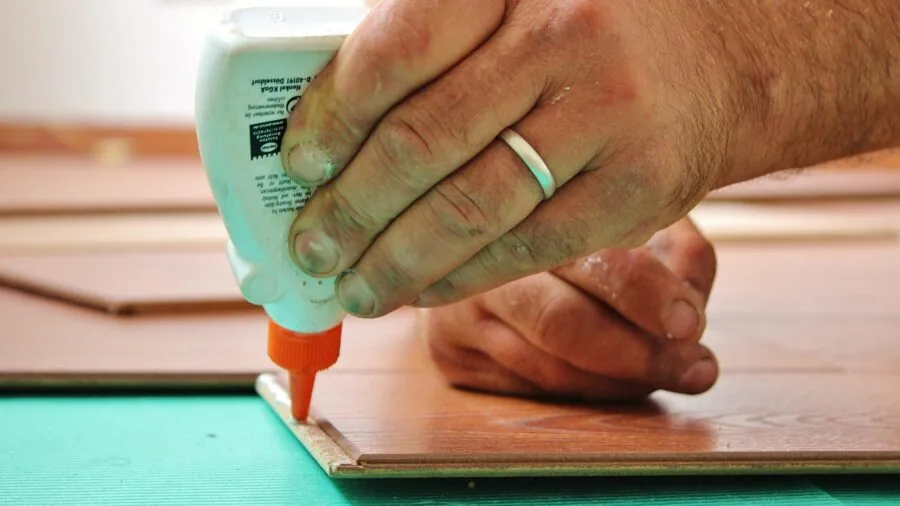
Within both chemistry categories, viscosity determines how the adhesive flows and where it is most useful. Thin formulas (low centipoise) are designed for capillary action.
You place the parts together, touch the applicator tip to the seam, and the adhesive wicks into the joint by itself.
Tamiya Extra Thin Cement is a textbook example: its ultra-fine brush tip delivers a controlled, minimal amount of cement along a tight polystyrene seam with very little room for error.
Medium-viscosity formulas, such as the Starbond Medium Super Glue Pro Kit, are the versatile all-rounders. They do not wick as aggressively as thin variants, which gives you a few extra seconds to position parts.
Medium CA is appropriate for most standard joints, detail parts, and quick repairs.
The Starbond kit’s anti-clog pin-cap and included precision microtips earn particular praise from the modeling community because the biggest failure mode of CA glue is the bottle clogging after a few uses.
Thick or gap-filling formulas, such as Bob Smith Industries Maxi-Cure Extra Thick, address situations where parts do not fit flush.
Warped resin castings, poorly engineered kit fits, and multi-material assemblies all benefit from a high-viscosity adhesive that can bridge gaps of up to 0.02 inches without running.
The trade-off is a longer cure window and a more visible glue line, so thick CA is best used where the joint will be hidden or filled and sanded afterward.
Applicator Design and Precision
Model building demands fine motor control, and the applicator is often what separates a professional result from an amateur one.
Brush-in-cap bottles, like Tamiya Extra Thin Cement’s signature design, allow you to deposit a thin, even coat along a seam with one fluid motion. The bottle itself acts as the reservoir, so there is no separate applicator to manage.
This format is widely regarded as the gold standard for polystyrene kits among experienced builders.
For CA glues, precision microtips and anti-clog nozzles are the equivalent feature. The Starbond Pro Kit ships with eight precision microtips and an anti-clog cap, addressing the chronic frustration of CA bottles that become unusable after the first session.
Gorilla Super Glue’s dual applicator (brush and nozzle) offers flexibility, with the brush covering broader surfaces and the nozzle handling tight spots.
These design details are worth scrutinizing before purchase, especially if you plan to use the adhesive across multiple sessions rather than in a single sitting.
Beginner-oriented kits such as the Testors Cement and Pixiss Model Tool bundle take a different approach by including the glue alongside complementary modeling tools.
For those assembling their first Gundam kit or starting in figure-building, this kind of packaged approach reduces the friction of sourcing each item separately.
The tradeoff is that the adhesive itself is a more basic formulation than a dedicated specialty bottle.
Material Compatibility and Kit Type
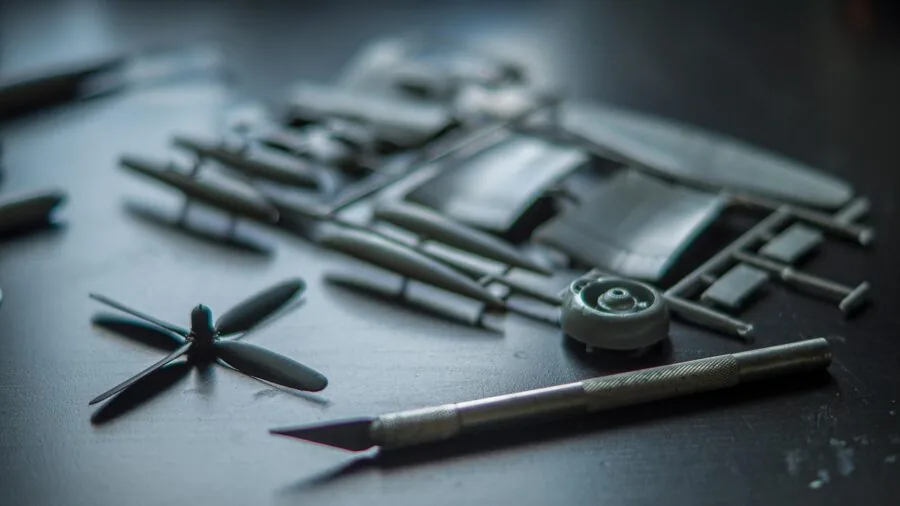
Polystyrene injection-molded kits, which cover the vast majority of plastic model cars, aircraft, armor, and ships, are best served by solvent cement. If your hobby primarily centers on these kits, Tamiya Extra Thin Cement should be your default adhesive.
It is the formula most consistently recommended by experienced builders in the scale modeling community and has been a benchmark product for well over a decade.
Resin kits require CA glue exclusively. Resin does not react with solvent cement, so solvent formulas are useless on these materials. Metal photo-etch, brass railings, and cast-metal detail parts similarly require a CA bond.
Mixed-material builds, which combine polystyrene, resin, and metal, typically involve both adhesive types at different stages of the build.
Keeping one bottle of thin CA and one bottle of plastic cement on your workbench is the standard practice for serious builders.
Wood, laser-cut MDF, and paper dioramas introduce yet another layer of compatibility. Standard CA glues bond well to wood, but the porous surface absorbs thin formulas quickly, sometimes requiring multiple applications.
Medium or thick CA tends to perform more predictably on wood substrates.
Fans of diorama and scenic modeling will find this is a situation where the gap-filling properties of a product like Bob Smith Industries Maxi-Cure are genuinely useful beyond their primary gap-bridging role.
Cure Time and Working Window

Cure time defines how long you have to position and adjust parts after applying the adhesive. For solvent cements, this window is determined by how quickly the solvent evaporates.
Tamiya Extra Thin has a shorter working window than thicker polystyrene cements, which can be an advantage (faster set) or a disadvantage (less time to align) depending on the complexity of the joint.
CA glues cure in seconds to minutes depending on viscosity and the presence of surface moisture. Thin CA glues cure in two to five seconds, giving almost no repositioning time.
Medium CA glues typically allow ten to fifteen seconds of adjustment, which is enough for most detail parts.
Thick CA glues can stay workable for thirty seconds or more, making them the right choice for large, complex assemblies where alignment is critical.
Accelerators, sold separately, can force CA glue to cure in under a second regardless of viscosity. They are useful when working overhead or on parts that will shift under their own weight during cure.
If you frequently work with CA glue, budgeting for an accelerator alongside your primary adhesive is a worthwhile investment that meaningfully speeds up your workflow.
Shelf Life, Storage, and Value

CA glue has a notoriously short shelf life once opened. Exposure to air, moisture, and heat degrades the formula quickly, and a bottle left open or stored improperly can solidify within weeks.
The anti-clog cap systems on the Starbond kits are specifically engineered to address this. Verified buyer reviews consistently identify clog-resistant caps as a quality-of-life feature that meaningfully extends the usable life of CA bottles.
Solvent cements are generally more shelf-stable because the active ingredient is a volatile solvent rather than a moisture-reactive monomer. Tamiya Extra Thin bottles sealed between sessions typically remain usable for many months.
Revell Contacta Professional’s small-format 12.5g tube is designed for single-project use and removes the shelf-life question almost entirely by encouraging you to use the full tube within a build session.
From a value standpoint, budget and premium options differ more in applicator quality and ancillary features than in raw adhesive performance.
Collectors who invest carefully in their hobby supplies, the way a numismatist might research coin collecting supplies before buying, tend to find that mid-tier adhesives with well-engineered applicators outperform cheap bottles with poor nozzle design regardless of the formula inside.
Why You Should Trust Us
ProductFind is an independent review publication. We do not manufacture, sell, or distribute any of the products we recommend.
Every recommendation on this page is the result of systematic research: we analyze published manufacturer specifications, assess expert review consensus from credentialed hobbyist communities and trade publications, and evaluate verified buyer feedback drawn from large purchasing populations.
We do not conduct our own product trials; our evaluations are grounded in research, published data, expert review consensus, and verified buyer feedback.
Each product in this roundup was scored on our 0 to 10 PF Score system using a consistent set of criteria applied equally across every candidate.
Those criteria include adhesive performance relative to stated specifications, applicator design quality, material compatibility breadth, value relative to price tier, and reliability as reported by verified purchasers over time. Products are ranked by PF Score, not by affiliate commission potential.
ProductFind may earn a commission if you purchase through a link in this article. That relationship does not influence which products appear in this guide, how they are ranked, or what scores they receive.
Our editorial positions are determined by research quality and scoring criteria, not by commercial relationships. We reassess recommendations as new products enter the market and as verified buyer feedback accumulates.
Final Thoughts
The modeling glues in this roundup cover the full range of hobbyist needs, from professional-grade CA kits to solvent cements trusted by competitive builders worldwide. Here is how the top picks break down by use case, each scored on our PF Score system:
- Best Overall: Starbond Medium Super Glue Pro Kit earns the top position in our research with the highest PF Score in this roundup. Its medium-viscosity formula, anti-clog pin-cap, and generous set of precision microtips make it the most versatile and builder-friendly CA glue in the group, drawing consistent praise from verified buyers across woodworking, resin, and scale modeling applications.
- Best for Polystyrene Kits: Tamiya Extra Thin Cement is the benchmark solvent cement for injection-molded plastic kits. Its fine-tip brush applicator and fast-wicking formula are the standard recommendation from experienced builders in the scale armor, aircraft, and automotive modeling communities. It scores at the top of the solvent cement category in our research.
- Best Value Multi-Pack: 2 Pack Tamiya Extra Thin Cement with Fine Tip delivers the same trusted formula as the single bottle at a lower per-unit cost, making it the practical choice for builders who go through cement regularly or want a backup bottle on the bench.
- Best for Gap Filling: Bob Smith Industries Maxi-Cure Extra Thick is the go-to recommendation when parts do not fit flush. Its high-viscosity formula bridges significant gaps in resin castings and mixed-material assemblies, and its performance in demanding applications is well-documented across the scale modeling community.
- Best Beginner Kit: Testors Cement and Pixiss Model Tool Kit bundles adhesive with foundational modeling tools, lowering the barrier for first-time kit builders. It is a pragmatic starting point for Gundam and figure kit newcomers before they invest in dedicated specialty adhesives.
Whichever direction your builds take, matching the adhesive to the material and the joint type will do more for your results than any other single variable. A well-chosen modeling glue is as foundational to a successful build as the kit itself.
Frequently Asked Questions
What is the difference between plastic cement and super glue for models?
Plastic cement (also called solvent cement) works by chemically dissolving polystyrene and fusing the two surfaces together at a molecular level, creating a weld rather than a bond.
Super glue, or cyanoacrylate (CA) adhesive, cures through a reaction with surface moisture and creates a physical bond on top of the material rather than inside it.
Plastic cement is superior for standard polystyrene kits; CA glue is essential for resin, metal, and mixed-material assemblies. Using the wrong type for the material means either no bond at all or a weaker joint prone to failure.
How do I stop my CA glue bottle from clogging?
The most effective solution is an anti-clog cap system, which is why the Starbond Pro Kit is consistently recommended by experienced hobbyists. Between uses, cap the bottle immediately after application.
Wiping the nozzle tip clean with a dry cloth before capping removes the residue that causes clogs. Storing CA glue upright in a cool, dry location also reduces degradation.
Replacing nozzle tips regularly, rather than trying to clear a clogged one, is faster and less wasteful.
Can I use modeling glue on resin kits?
Solvent cement does not work on resin; it requires polystyrene to function. For resin kits, CA glue is the correct adhesive.
Thin CA glue works well on tight-fitting resin joints, while thick or gap-filling CA, such as Bob Smith Industries Maxi-Cure, is better suited to warped or ill-fitting resin parts.
Always clean resin parts thoroughly before applying adhesive, as mold release agents left on the surface can prevent proper bonding.
Is Tamiya Extra Thin Cement safe to use indoors?
Tamiya Extra Thin Cement, like all solvent cements, contains volatile organic compounds that produce fumes during application and curing. Working in a well-ventilated space is strongly recommended.
Opening a window or using a small desk fan to direct fumes away from your face is adequate for most casual builders. Prolonged daily use in an enclosed space calls for additional ventilation measures.
The fumes dissipate quickly once the solvent evaporates, typically within a few minutes of application.
What modeling glue works best for beginners?
Beginners building standard plastic kits should start with Tamiya Extra Thin Cement for polystyrene assemblies. Its applicator design makes it forgiving in practice, and it is the adhesive most often recommended in beginner modeling communities.
For those starting with figure or Gundam kits that include beginner-oriented tooling, the Testors and Pixiss bundle provides a complete starting kit without requiring separate purchases.
As your builds become more complex and involve resin or metal parts, adding a medium-viscosity CA glue such as Starbond to your toolkit is the natural next step.
Hobbyists who enjoy collecting and assembling as a broader pastime often find overlap between careful supply selection here and the attention to detail involved in pursuits like organizing coin storage albums or other precision-oriented collections.
How long does modeling glue take to fully cure?
Initial set time and full cure time are different things.
Tamiya Extra Thin Cement achieves a workable initial bond in thirty to sixty seconds, but full cure strength develops over several hours as residual solvent evaporates from deeper in the joint.
CA glues set in two to thirty seconds depending on viscosity, but maximum bond strength is typically reached within twenty-four hours.
Avoid stressing joints or applying paint over fresh adhesive until full cure is complete, particularly for structural joins that will bear load during handling.
About the author
Cassandra is a reviewer and writer for ProductFind who specializes in Collectibles & Model Building. Cassandra evaluates products through independent research: specifications, expert review consensus, and verified buyer feedback, and rates each one on the PF Score. Cassandra focuses on helping readers pick the right collectibles & model building for their needs and budget.