The 12 Best Deck Building Games
Deck builders reward strategy, planning, and clever combos. This guide covers the top picks for solo players, families, and competitive groups across every budget.
 By Pat Wheeler
Updated July 23, 2026
By Pat Wheeler
Updated July 23, 2026

Deck-building games have evolved into one of the most compelling corners of tabletop gaming, rewarding players who enjoy strategic thinking, adaptive planning, and the satisfaction of watching a carefully constructed card engine fire on all cylinders.
Whether you’re drawn to cooperative adventures, head-to-head tactical battles, or richly themed worlds pulled from beloved franchises, there is a deck builder out there that fits exactly how you like to play.
The genre spans a wide range of complexity levels, player counts, and price points, which makes narrowing down the right choice genuinely tricky without reliable guidance.
This guide cuts through the noise by pulling together expert review consensus, verified buyer feedback, and published product data to help you find the right game for your table.
From accessible family-friendly picks to deep strategy titles, every option here was assessed against a consistent set of criteria covering gameplay depth, replayability, component quality, and value. Our top picks are ranked below to get you started right away.

Fantasy Flight Games Star Wars Deck Building Game
A head-to-head card game where players command either the Empire or Rebels, building decks and destroying opponent bases across 30-minute matches. Features over 50 iconic Star Wars characters and units with asymmetrical factions that reward different tactical approaches.
Pros
- Accessible learning curve balanced with meaningful strategic choices
- IP authenticity through recognizable Star Wars units and locations
- Quick playtime makes it accessible for casual and competitive play
- Distinct faction identities create replay value and varied strategies
Cons
- Limited to 2 players only, restricting group game flexibility
- No customer reviews available yet to validate long-term play experience
- Limited information on deck construction depth and card variety beyond 50 cards mentioned

Asmodee Splendor Board Game, 2-4 Players
Splendor is a gem-trading strategy game that combines economic engine-building with quick 30-minute sessions, making it accessible for families and serious gamers alike. Players race to 15 prestige points by collecting gem tokens and purchasing development cards, with enough strategic depth to reward planning without overwhelming newcomers.
Pros
- Straightforward rules with only three possible actions per turn make it quick to learn
- Interactive open-information design keeps all players engaged regardless of player count
- Perfect playtime for casual game nights without commitment to lengthy sessions
- Balanced gameplay encourages multiple viable strategies rather than single dominant path
Cons
- No user reviews available to confirm long-term quality or durability
- Limited to 4 players maximum, which excludes larger game groups
- Early game can feel similar across sessions since starting positions are identical

USAOPOLY Avatar Last Airbender Deck Building Game
A cooperative deck building strategy game officially licensed from Avatar: The Last Airbender, where 2-4 players team up to complete missions across the Four Nations. Features unlockable content with 7 progressive difficulty boxes and supports 60-minute gameplay sessions for ages 10 and up.
Pros
- Cooperative design ensures all players work toward shared objectives rather than competing
- Progressive unlockable content extends replay value and keeps challenges fresh
- Licensed Avatar property appeals directly to franchise fans seeking themed tabletop experiences
- Deck building mechanics offer strategic depth without overwhelming casual players
- Accommodates groups of 2-4 players flexibly for different group sizes
Cons
- No verified buyer reviews available yet, limiting real-world feedback on gameplay balance and component quality
- 60-minute playtime may vary significantly depending on group experience and decision-making speed
- Unlockable content structure means initial gameplay is limited until boxes are progressively discovered

Cryptozoic DC Deck-Building Game: Forever Evil
A villain-focused expansion that lets players command DC's most infamous characters like Harley Quinn and Deathstroke. The set emphasizes deck destruction and introduces Victory Point tokens for varied win conditions, making it engaging for 2-5 players ages 15+.
Pros
- Fresh villain perspective with new attack and defense card types
- Victory Point system reduces reliance on traditional deck bloat strategies
- Full compatibility across DC Deck-Building series allows extensive customization
- Designed for experienced players seeking strategic depth and player interaction
Cons
- No verified user reviews available to assess real-world gameplay balance
- Requires existing familiarity with DC Deck-Building Game mechanics
- Limited information on how villain powers compare in competitive balance
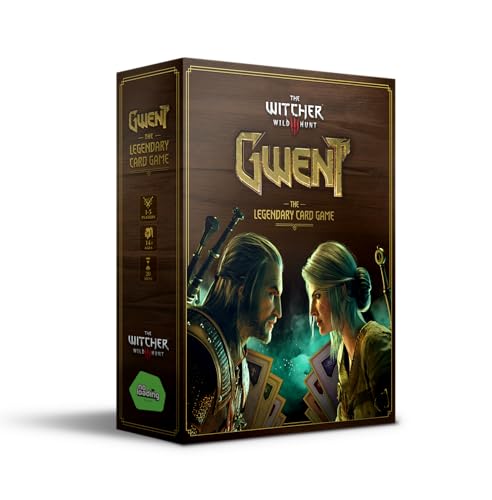
Hachette Gwent Card Game - 5 Faction Deck Set
The official tabletop adaptation of Gwent brings the video game's faction-based card battles to the physical table with over 400 cards and support for 1-5 players. Built around resource management and bluffing mechanics, it appeals to strategy game fans and those familiar with the original game universe.
Pros
- Official license ensures authentic card designs faithful to the source game
- All-in-one set with complete faction decks eliminates need for separate purchases
- Strategic depth combines resource timing, bluffing, and deck building elements
- Portable format and quick play time make it accessible for casual and competitive play
Cons
- No verified buyer reviews available to confirm product quality and gameplay balance in practice
- Requires familiarity with or interest in the Gwent video game universe for full appreciation
- Large card count may present learning curve for new players unfamiliar with faction mechanics

Renegade Transformers Deck-Building Game for 1-5 Players
A strategic deck-building game set in the Transformers universe offering both competitive and cooperative play modes. Combines accessible gameplay mechanics with premium components, suitable for ages 13 and up with 45-90 minute sessions.
Pros
- Versatile play modes accommodate different player preferences and group sizes
- Deck-building mechanics create strategic depth without excessive rules overhead
- Premium artwork and components designed for display and collection appeal
- Reasonable playtime ensures engaging sessions without extended downtime
Cons
- No verified customer reviews available to assess real-world gameplay balance or longevity
- Medium-sized box may require dedicated shelf space for board game collections
- Limited detail on replayability and campaign variability across multiple plays
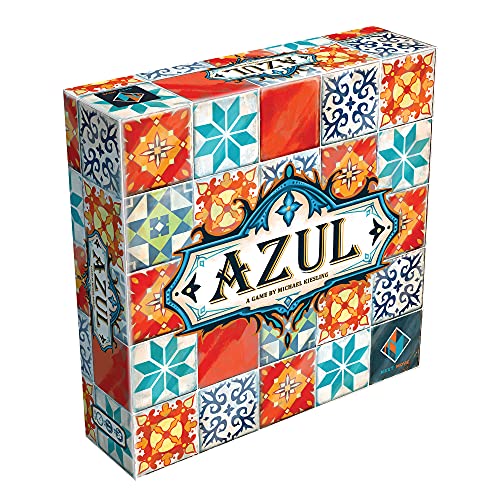
Asmodee Azul Board Game 2-4 Players
Azul is a tile placement strategy game that won the 2018 Spiel des Jahres, combining simple rules with engaging mosaic-building mechanics. It works equally well for casual family nights and experienced board gamers seeking tactical depth across 2 to 4 players.
Pros
- Accessible rules make it playable within minutes despite tactical complexity
- Excels in both 2-player competitive duels and multi-player games
- Draft and deny mechanics create satisfying strategic tension
- Portuguese mosaic theme brings visual appeal to gameplay
- Consistent replayability from randomized tile setups each round
Cons
- No user reviews available to validate quality claims or player experience
- Limited to 4 players maximum, excluding larger group play
- Box size (10.25 x 10.25 inches) may not fit compact shelves

CATAN Board Game 6th Edition
The classic strategy board game where players gather resources, build settlements and cities, and compete to reach 10 victory points across a modular hexagonal island. With a variable board layout that changes each game, CATAN delivers genuine replayability for family game nights and strategy-focused groups of 3-4 players.
Pros
- Modular board design ensures no two games play identically, driving genuine replayability
- Accessible rule set for ages 10+ while offering depth for experienced strategy players
- Trading mechanic encourages direct player interaction and negotiation
- Compact storage footprint relative to component count
Cons
- Limited to 3-4 players, excluding larger groups without expansions
- 60-90 minute playtime may feel lengthy for younger players at the lower age range
- No reviews provided to evaluate component durability or quality consistency in this listing

Unstable Games Here to Slay Card Game
A fantasy-themed strategy card game for 2-6 players that combines hero collection, monster battles, and magical items in 30-60 minute sessions. Designed for ages 10 and up with straightforward mechanics, it works well for family game nights and casual tabletop groups.
Pros
- Quick game length keeps sessions engaging without lengthy commitments
- Accessible rule set lowers barrier to entry for newer players
- High-quality card illustrations and custom dice components enhance gameplay experience
- Multiple expansion packs available for extended replayability
- Flexible player count accommodates various group sizes
Cons
- No verified buyer reviews available to confirm real-world gameplay depth and durability
- Limited to ages 10+ may exclude younger family members
- Expansions require additional purchases to extend content beyond base game

Asmodee Star Wars Deckbuilding Game Mandalorian Faction Pack
This expansion adds The Mandalorian faction to Star Wars: The Deckbuilding Game, featuring 50+ cards centered on bounty hunters and troopers with Force neutrality mechanics. It introduces a new 3-player mode and works as a standalone experience for Star Wars fans and strategy game players aged 12+.
Pros
- Strong thematic design tied directly to The Mandalorian source material
- New 3-player mode expands playability beyond the base 2-player experience
- Force neutrality mechanic creates distinct strategic identity compared to other factions
- Generous card count (50+) supports meaningful deck variety and replayability
Cons
- Requires base Star Wars Deckbuilding Game to play, making this a mandatory additional purchase
- No verified customer reviews available yet to assess real-world gameplay experience
- Limited to 30-minute playtime may feel constraining for players seeking longer strategy sessions

Thames & Kosmos The Gang Cooperative Poker Card Game
A cooperative twist on poker that replaces individual competition with team-based strategy and silent communication. Players signal hand strength through chip claims rather than bets, making it accessible to non-poker players while still offering depth through four difficulty modes and 20 challenge cards.
Pros
- Fresh cooperative take on poker eliminates cutthroat competition and allows full team participation
- Clever non-verbal communication system creates engaging deduction gameplay without requiring poker knowledge
- Quick 20-minute runtime with adjustable difficulty keeps it accessible for beginners while offering strategic depth for experienced players
- Award recognition and from established co-op game publisher builds credibility
- Compact size makes it portable for game nights and gatherings
Cons
- No verified buyer reviews available to confirm real-world playability and player satisfaction
- Reliance on non-verbal signaling may feel awkward for some groups or require practice to master the communication system
- Limited to 3-6 players, excluding larger party groups from simultaneous play

Rio Grande Games Moon Colony Bloodbath Strategy Card Game
A deck-building strategy game where 1-5 players compete to build the largest surviving moon colony through card draws that mix beneficial boosts with deadly setbacks. The engine-building mechanics and variable game events create replayable scenarios across 45-90 minutes, making it suitable for serious board gamers aged 14 and up.
Pros
- Variable card draws ensure different game outcomes and replayability
- Engine-building mechanics reward strategic planning and resource management
- Solo mode option makes it accessible for single-player sessions
- Moderate play duration fits in a typical game night without excessive time commitment
Cons
- High randomness from card draws can overshadow strategic decisions
- No existing verified buyer reviews available to assess real-world durability or component quality
- Niche theme and mechanics may appeal only to experienced board game enthusiasts
Deck Building Games Buying Guide
Choosing the right deck builder comes down to more than just picking a theme you like.
The best deck building games balance accessibility with strategic depth, and knowing what to look for before you buy can save you from shelving a game after two plays.
Whether you’re shopping for a family game night staple or a dedicated strategy experience, the criteria below will help you zero in on the right fit.
Player Count and Group Dynamics

One of the first things to nail down is how many people will regularly be at your table.
Some deck builders, like Star Wars: The Deckbuilding Game, are designed specifically as two-player head-to-head experiences and do not scale well beyond that. Others, like Here to Slay, comfortably handle two to six players and stay engaging throughout that range.
Cooperative deck builders deserve special attention for mixed groups. Games like Avatar: The Last Airbender: Aang’s Destiny allow everyone to work toward a shared goal, which dramatically lowers the friction that comes from one experienced player dominating a competitive game.
If your group includes newer players or family members who find direct competition stressful, cooperative formats tend to deliver a much more welcoming experience.
Solo play is another consideration worth factoring in early.
A growing number of deck builders support solo modes as a core feature rather than an afterthought, and if you expect to play alone frequently, checking whether a game’s solo mode is genuinely engaging versus merely functional matters a great deal for long-term satisfaction.
Complexity and Learning Curve

Deck builders vary enormously in how long it takes to get your first game off the ground.
Entry-level titles typically get you playing within fifteen minutes of opening the box, while more complex designs may require a full read-through of a rulebook before anything clicks.
Age ratings on the box are a rough guide, but the density of iconography, the number of card types, and how many interlocking systems exist all influence real-world complexity more reliably than the number printed on the packaging.
For groups new to the genre, prioritize games with clear iconography, streamlined turn structures, and gradual rule reveals.
Titles with a dedicated tutorial mode or scenario-based progression allow players to build understanding naturally over several sessions rather than front-loading all the rules at once.
Among strategy board games broadly, deck builders tend to sit at the middle of the complexity spectrum, but within the genre itself the range is dramatic.
Experienced gamers who want to engage with deeper systems should look for titles that reward long-term card synergy discovery.
Games where you can build multiple viable deck archetypes, rather than following a single optimal path, provide meaningfully greater strategic depth and tend to hold the interest of serious players for many more sessions.
Theme and Intellectual Property
Theme does more than provide aesthetic flavor in a deck builder.
A well-integrated theme shapes the mechanics, gives narrative context to card decisions, and strengthens the emotional investment players feel when their strategy comes together.
The DC Deck-Building Game leans on player familiarity with villain characters to make faction choices feel meaningful.
Gwent’s adaptation of the card game from The Witcher video game series brings a competitive structure that feels native to its source material rather than grafted on.
Licensed themes also carry a practical consideration: buy-in is faster when players already care about the franchise.
Groups who are fans of Avatar: The Last Airbender, Star Wars, or the DC universe will engage with those games more readily than they would with an equally well-designed abstract system.
For game nights with casual players, familiar intellectual property lowers the barrier to enthusiasm considerably.
That said, theme alone does not guarantee a quality experience. A strong license attached to shallow mechanics will disappoint after the novelty wears off.
Prioritize titles where reviewers and buyers consistently describe the theme as reinforcing the gameplay rather than simply decorating it.
Replayability and Variability

A deck builder that feels identical from session to session loses its appeal quickly.
Replayability depends on how much the game varies its available card pool, starting conditions, and available strategies between plays.
Games that randomize which cards are available each session, or that feature scenario-based campaigns with evolving challenges, tend to hold up far better over time than those with a fixed market row that you exhaust after a dozen plays.
Asymmetric player powers are another driver of replayability. When each player starts with a meaningfully different set of abilities or a unique starting deck, the same cards produce different decision trees depending on who is holding them.
This kind of variability is one reason why games with multiple playable factions or characters consistently earn higher long-term satisfaction ratings from verified buyers compared to symmetrical designs.
Expansion support is worth checking before committing to a base game. Many of the strongest deck builders in the market build their longevity on a steady stream of expansions that introduce new card types, mechanics, and scenarios.
If you are likely to stick with one game for years, a title with an active expansion library has a significant advantage over a standalone-only release.
Among the broader range of board games for game night, deck builders are among the most expansion-friendly genres available.
Component Quality and Table Presence

Card stock quality matters more in deck builders than in almost any other tabletop genre because the cards are handled constantly throughout every session.
Thin or slick cards shuffle awkwardly, wear faster, and feel less satisfying in hand.
Verified buyer feedback on deck builders frequently highlights card stock as a deciding factor in long-term satisfaction, and it is one of the attributes where premium titles from established publishers genuinely separate themselves from budget options.
Beyond the cards themselves, consider whether the game includes organized storage, card sleeves, and tokens or boards that keep the play area readable during complex turns.
Games with dense card text benefit enormously from clean graphic design and a consistent iconography system that reduces the need to re-read cards mid-turn.
Poor production choices in this area slow the game down and frustrate players even when the underlying mechanics are strong.
Price relative to component value is a legitimate factor at every budget level.
A game with robust card stock, clear tokens, and a sensible insert at a mid-range price delivers better value than a thin production at a similar or higher price point.
Read multiple buyer reviews focusing specifically on physical component feedback before committing to any title at the premium end of the price range.
Playtime and Session Length

Deck builders tend to list playtime estimates on the box, but these figures frequently understate real-world session length for first-time or infrequent players.
A game rated at thirty minutes may run closer to an hour when players are learning card interactions or debating strategy between turns.
Factor in a buffer of twenty to thirty percent over the printed estimate when planning game nights, especially with newer players.
Session length interacts directly with player count. Most deck builders slow down noticeably as you add players, partly because turn order creates waiting time and partly because the shared card market becomes more contested and requires more deliberation.
A two-player game that runs thirty minutes may stretch to ninety with four players if the design does not actively address downtime between turns.
If your group has limited time or inconsistent attention spans, lean toward titles that include a natural stopping point or a scenario structure that allows partial sessions to feel complete.
Campaign-style games can be deeply rewarding but require a committed group willing to pick up where they left off across multiple nights.
For spontaneous game nights, shorter self-contained deck builders typically see more table time over the long run.
Why You Should Trust Us
ProductFind is an independent review publication.
Every recommendation in this guide was produced through rigorous research synthesis rather than brand relationships or promotional arrangements.
We evaluate each product against a consistent, multi-factor framework covering gameplay mechanics, production quality, replayability, player experience across age groups, and overall value relative to comparable titles in the category.
Each game in this roundup received a PF Score on our 0 to 10 scale, derived from a structured analysis of published product specifications, expert review consensus drawn from across the tabletop gaming community, and verified buyer feedback gathered from confirmed purchasers.
We do not conduct our own product trials; our evaluations are grounded in research, published data, expert review consensus, and verified buyer feedback.
ProductFind may earn a commission when you purchase through links on this page. That affiliate relationship has no bearing on which products are included, how they are ranked, or what PF Score they receive.
Our editorial decisions are made independently of commercial considerations, and no manufacturer can pay to influence placement or scoring. We disclose this relationship in the interest of full transparency.
Final Thoughts
After a thorough review of all twelve titles in this roundup, the rankings reflect genuine differences in strategic depth, production quality, replayability, and suitability for different player groups. Here are the standout picks by category to help you make a final decision:
- Best Overall: Moon Colony Bloodbath earns the top spot with the highest PF Score in this roundup. Its engine-building structure, strong solo-to-five-player scaling, and strategic depth that rewards multiple plays make it the most complete package across the criteria we assessed.
- Best Franchise Deck Builder: Star Wars: The Deckbuilding Game delivers the strongest head-to-head experience among licensed titles, with tight two-player mechanics and a thematic card system that resonates well beyond Star Wars fans. Its PF Score places it among the strongest picks in this guide.
- Best for Casual and Family Groups: Splendor consistently earns praise for its accessible engine-building loop and clean production. Its straightforward gem-trading mechanics make it the most approachable entry point for players new to the genre, and it plays smoothly across a wide age range.
- Best Cooperative Experience: Avatar: The Last Airbender: Aang’s Destiny stands out for its cooperative play structure and strong thematic integration. Verified buyers frequently highlight it as the go-to choice for groups who prefer working together over competing directly.
- Best Budget Pick: Here to Slay offers the most accessible price point among dedicated deck card games in this roundup while still delivering genuine strategic engagement and support for up to six players, making it an excellent first purchase or gift.
Whatever your group’s size, experience level, or preferred theme, the deck building games in this guide represent the strongest options available at their respective price points and complexity levels.
Start with the pick that matches your table best, and use the buying guide above to refine your choice if you are weighing multiple options.
Frequently Asked Questions
What is the difference between a deck-building game and a trading card game?
In a deck-building game, every player builds their deck during the game itself using a shared pool of available cards. You start with a basic set of cards and gradually acquire better ones as play progresses.
Trading card games, by contrast, require players to build and bring their decks to the table before the game starts, often through purchasing booster packs or trading with other players.
Deck builders eliminate the pay-to-win dynamic and the pre-game collection barrier entirely, which makes them more accessible and easier to balance.
Are deck-building games good for beginners?
Many deck builders are excellent starting points for newcomers to strategy board games, especially those designed with streamlined rule sets and intuitive card iconography.
Titles like Splendor and Here to Slay are widely recommended for first-time players because their core loops are easy to grasp within a turn or two.
More complex designs are better reserved for players who already have a few sessions of experience with the genre’s core concepts.
How many players do most deck-building games support?
Most deck builders in this roundup support two to four players, which covers the majority of typical game night group sizes. A handful, including Here to Slay, extend to five or six players.
Two-player designs like Star Wars: The Deckbuilding Game are optimized specifically for head-to-head play and may feel unbalanced or underwhelming with larger groups.
Always check the recommended player count before purchasing if group size is a key consideration for your household.
Can deck-building games be played solo?
Solo play support varies widely across the genre. Some deck builders include dedicated solo modes as a designed-for experience, while others offer unofficial solo variants created by the community.
Moon Colony Bloodbath and several cooperative titles in this roundup support solo play as a genuine mode rather than an afterthought.
If solo play is a priority, check buyer feedback specifically about the solo experience before committing, since a mechanically solid multiplayer game does not automatically translate into a satisfying solo one.
Do I need expansions to get full value from a deck-building game?
No. Every title in this roundup is a complete, standalone experience in its base form. Expansions extend the game by adding new cards, mechanics, and scenarios, but they are optional enhancements rather than prerequisites.
For players buying their first deck builder, the base game typically provides sufficient depth to justify the purchase on its own.
Consider expansions only after you have played the base game enough to know you want more content rather than a different game entirely.
What age is appropriate for deck-building games?
Most deck builders in this guide carry age recommendations of ten and up, which reflects both reading ability and the strategic thinking required to make meaningful card decisions.
Simpler titles like Splendor and Here to Slay are frequently reported by verified buyers as approachable for confident readers as young as eight with adult guidance.
More complex designs, including Moon Colony Bloodbath and the DC Deck-Building Game, are better suited to teenagers and adults.
For mixed-age family board games sessions, matching the game’s complexity to the youngest engaged player at the table is the most reliable approach.
About the author
Pat is a reviewer and writer for ProductFind who specializes in Board Games, Puzzles & Tabletop. Pat evaluates products through independent research: specifications, expert review consensus, and verified buyer feedback, and rates each one on the PF Score. Pat focuses on helping readers pick the right board games, puzzles & tabletop for their needs and budget.