The 8 Best First Aid Kits
From minor cuts to roadside emergencies, the right first aid kit makes all the difference. Our research covers supply quality, OSHA compliance, and real-world usability across every price tier.
 By Kitty Lambert
Updated July 23, 2026
By Kitty Lambert
Updated July 23, 2026
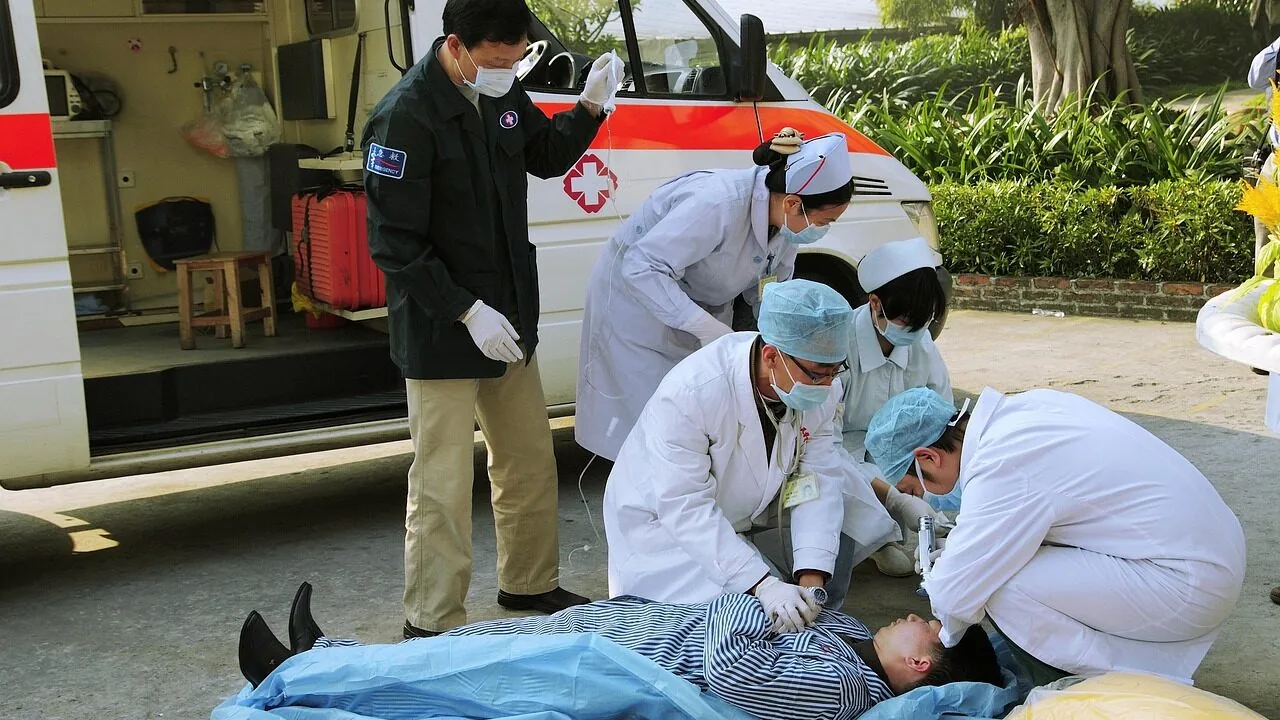
A well-stocked first aid kit is one of those purchases you hope never becomes urgent, yet cuts, burns, sprains, and minor medical emergencies happen every day at home, in the car, on the trail, and at the workplace.
Having the right supplies within arm’s reach can prevent a manageable situation from escalating into a far more serious one, and pairing your kit with practical habits like keeping disinfecting wipes and hand soap close at hand reinforces your overall household health readiness.
The market is flooded with options, from compact travel pouches to large OSHA-compliant workplace cabinets, and high piece counts alongside bold packaging make it genuinely difficult to separate a useful kit from an overpriced collection of filler supplies.
At ProductFind, we researched dozens of kits by analyzing manufacturer specifications, synthesizing expert review consensus across multiple authoritative publications, and weighing verified buyer feedback from thousands of real-world purchasers, evaluating supply quality, organizational design, compliance certifications, use-case fit, and long-term restockability to surface the most dependable options at every price point.
Our top picks below cover the full spectrum, from budget-friendly everyday carry pouches to comprehensive OSHA-compliant business kits.
| Award | Product | PF Score About PF ScoreThe PF Score is our own rating from 0 to 10, based on performance, design and build, ease of use, and value. It reflects independent research and is never influenced by manufacturers, retailers, or affiliate commissions. Learn more › | Price | |
|---|---|---|---|---|
| Best Overall |
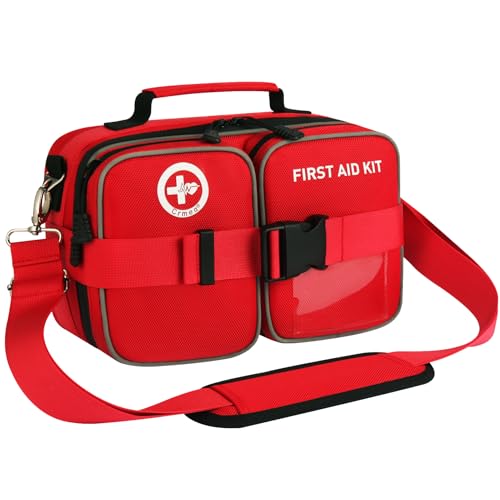 Crmea 516-Piece First Aid Kit with MOLLE Strap
|
8.2/10 | Buy | |
| Editor's Pick |
 Rhino Rescue 371-Piece First Aid Kit
|
8.1/10 | Buy | |
| Best Value |
 Poygik 420-Piece First Aid Kit
|
7.9/10 | Buy | |
| Top Rated |
 24/7 First Aid 100-Person OSHA Compliant Kit
|
7.8/10 | Buy | |
 First Aid Only 91248 50-Person OSHA-Compliant Kit
|
7.6/10 | Buy | ||
 M2 BASICS 300-Piece First Aid Kit with Carry Bag
|
7.4/10 | Buy | ||
 First Aid Only 298-Piece Emergency Kit
|
7.2/10 | Buy | ||
 SurviveX Large Pro First Aid Kit
|
6.8/10 | Buy |
Crmea 516-Piece First Aid Kit with MOLLE Strap
A comprehensive 516-item first aid kit designed for car, travel, and home use, featuring organized labeled compartments and professional-grade supplies like tourniquets and trauma shears. The waterproof 1680D bag with MOLLE attachment system makes it portable for camping and hiking, though the lack of verified buyer reviews limits real-world assessment.
Pros
- Extensive item count and labeled compartments reduce decision time during emergencies
- Durable waterproof construction protects sterile supplies from environmental damage
- MOLLE system and multiple carry handles offer flexible attachment for vehicles, gear, and travel
- Includes advanced items (tourniquets, trauma shears) beyond standard first aid kits
Cons
- No verified buyer reviews available (4.8 rating with 0 reviews), making durability and organization claims unvalidated
- 516-piece count may be inflated by including duplicates; actual unique item variety unclear
- Compact size (4.3 lbs) limits total capacity compared to larger professional kits
Rhino Rescue 371-Piece First Aid Kit
A comprehensive emergency medical kit with 371 supplies organized in a wall-mountable cabinet with tilting shelves and clear visibility. Designed for home and business use, it covers common injuries like cuts, scrapes, sprains, and minor burns.
Pros
- 371-piece supply count covers a wide range of minor injuries and emergencies
- Multi-compartment design with tilting shelves and transparent lid enables quick access during emergencies
- Wall-mountable case keeps supplies organized and easily retrievable
- Compact size (11.6" x 4" x 13") and lightweight at 3 lbs makes it portable for car, outdoor, or travel use
- Includes wound cleaning supplies like pads, soap wipes, and cotton swabs plus pain-reducing burn gel and instant cold pack
Cons
- No verified customer reviews available to confirm real-world durability or completeness of contents
- 4.9-star rating with zero reviews suggests the rating may not reflect actual user experience
- Product group listed as drugstore with health and beauty binding, which may indicate inconsistent categorization in the data
Poygik 420-Piece First Aid Kit
A comprehensive 420-piece first aid kit housed in a durable, waterproof backpack with labeled compartments for quick access during emergencies. Built for home, vehicle, and outdoor use with portable design and refillable components.
Pros
- Extensive 420-piece supply collection covers common first aid needs
- Labeled compartments and organized layout enable quick item location in emergencies
- Durable 1680D polyester material is tear-resistant and waterproof for outdoor durability
- Portable with MOLLE system, shoulder strap, and handles for multiple carrying options
- Refillable design allows customization and replacement of depleted items
Cons
- No verified buyer reviews available to confirm real-world usability and supply quality
- Product weight of 3 pounds may be cumbersome for lightweight hiking or extended backpacking trips
- Generic features without specification of exact supply types or quantities for individual items
24/7 First Aid 100-Person OSHA Compliant Kit
A wall-mountable first aid kit designed for OSHA compliance with 336 pieces covering bandages, antiseptics, gauze, and protective gear. Best suited for offices, schools, and vehicles needing supplies for multiple people.
Pros
- Comprehensive OSHA-compliant selection includes bandages, antiseptics, burn cream, gauze, gloves, scissors, and tweezers
- Organized compartment system keeps supplies visible and easy to locate
- Wall-mountable design saves floor space while remaining accessible
- Suitable for scaling from small homes to larger facilities needing multi-person coverage
Cons
- Case color varies by shipment with no color selection option
- No user reviews available to verify actual contents or durability
- Limited detail on exact quantities of each item type within the 336-piece total
First Aid Only 91248 50-Person OSHA-Compliant Kit
A comprehensive 260-piece first aid kit designed to meet OSHA standards, housed in a durable plastic case with organized compartments for quick access. Well-suited for offices, worksites, vehicles, and homes where preparedness for multiple people is required.
Pros
- Meets OSHA compliance requirements for workplace first aid kits
- Large 260-piece assortment covers a broad range of injury types
- Transparent case with individual compartments enables quick location of needed supplies
- Portable and compact at 9.75 x 7.75 x 2.88 inches with secure latches
- FSA and HSA eligible, reducing out-of-pocket costs
Cons
- No verified buyer reviews available to assess real-world durability or supply quality
- Sized for 50 people, making it less practical for single-person or small household use
- Fixed assortment may not align with specific workplace or personal medical needs
M2 BASICS 300-Piece First Aid Kit with Carry Bag
A practical 300-piece first aid kit spanning 40 item types, organized in a compact durable bag designed for families, vehicles, workplaces, and travel. Covers common injuries like cuts, scrapes, burns, and sprains with essential supplies including bandages, gauze, antiseptic wipes, gloves, and elastic wraps.
Pros
- Comprehensive 40-item variety covers most common minor injuries
- Durable fabric case with compartments keeps supplies organized and visible
- Lightweight and portable at 1.5 pounds, fits multiple storage locations
- Practical for families, commuters, teachers, coaches, and small business owners
Cons
- No customer reviews available to validate real-world durability or supply quality
- Limited information on storage shelf life or expiration dates of included items
- Cannot assess whether 300 pieces represents good value relative to supply usage rates
First Aid Only 298-Piece Emergency Kit
A compact, well-organized first aid kit with 298 pieces designed for home, car, office, and travel use. Comes in a soft-sided pouch with two layers and clear pockets for quick access to supplies like bandages, antiseptic towelettes, gauze, and burn cream.
Pros
- Well-organized two-layer design with clear pockets makes supplies easy to locate
- Portable size (9.25 x 3 x 7 inches) fits multiple storage locations without taking up much space
- Comprehensive selection covers common minor injuries from cuts to burns
- HSA and FSA eligible for flexible spending accounts
- Versatile for multiple settings: home, car, office, camping, and travel
Cons
- No verified customer reviews available to assess real-world durability or completeness of items
- Soft-sided pouch may offer less protection than hard-case alternatives if packed tightly with other items
- 298-piece count may include small quantities of each item, requiring restocking after frequent use
SurviveX Large Pro First Aid Kit
A comprehensive first aid kit designed for cars, travel, and outdoor adventures, treating 5-6 people with supplies organized by function in color-coded compartments. Features innovative zip stitch wound closure strips and Israeli-style emergency bandages for heavy bleeding.
Pros
- Organized by function with labeled compartments designed for rapid access during emergencies
- Includes advanced wound closure technology that avoids traditional stitches
- MOLLE and mounting compatibility allows flexible placement in vehicles or on gear
- Covers diverse medical scenarios from minor cuts to heavy bleeding and burns
- FSA/HSA eligible for eligible account holders
Cons
- No verified buyer reviews available to assess real-world durability or completeness
- Heavier at 4.41 pounds, less ideal for ultralight backpacking applications
- Limited information on expiration dates or replacement schedules for consumable items
First Aid Kits Buying Guide
Choosing a first aid kit is not as simple as grabbing the one with the highest piece count or the most eye-catching packaging.
A kit stuffed with low-quality supplies in a flimsy bag can be less useful in a real emergency than a smaller, well-organized kit with durable, purpose-built components.
The criteria below reflect what expert reviewers and experienced buyers consistently identify as the factors that separate a genuinely useful kit from one that merely looks impressive on the shelf.
Piece Count vs. Supply Quality

Manufacturers love to lead with piece count, and a 420-piece kit certainly sounds more impressive than a 100-piece kit.
But piece counts are routinely inflated by including dozens of redundant low-value items, think individual cotton swabs counted separately or single-use antiseptic packets included in bulk, that add volume without adding meaningful emergency coverage.
What matters far more is whether the core supplies are genuinely useful and well-made.
Look for kits that include a meaningful range of adhesive bandage sizes, sterile gauze pads, wound closure strips, antiseptic wipes, medical-grade adhesive tape, nitrile gloves, scissors, tweezers, and a CPR face shield.
Higher-quality kits use medical-grade materials for wound care items rather than the thin, single-ply versions that disintegrate on contact with moisture.
If the product listing does not specify material grades, verified buyer reviews are your most reliable signal of real-world supply quality.
As a general rule, prioritize quality of core wound care items over sheer volume of filler supplies.
A kit with 260 genuinely useful pieces from a reputable brand is a better investment than one with 500 pieces that are mostly duplicates of low-value items.
Verified buyer reviews from purchasers who have actually opened and used their kit under real conditions are consistently the most reliable source for assessing supply quality that specs alone cannot convey.
OSHA Compliance and Certification
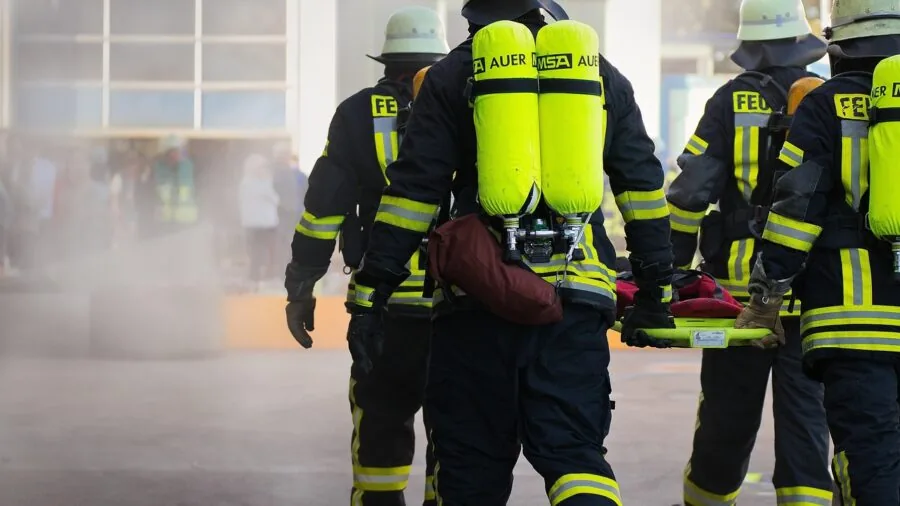
If you are purchasing a first aid kit for a workplace, vehicle fleet, or business environment, OSHA compliance is not optional. The U.S.
Occupational Safety and Health Administration requires employers to maintain first aid supplies that meet specific minimum standards under ANSI/ISEA Z308.1, and non-compliance can result in citations and fines.
An OSHA-compliant kit will be labeled clearly as such and will include the supply types and quantities that meet those independently reviewed thresholds.
For personal and home use, OSHA compliance is not a legal requirement, but it serves as a useful quality benchmark. A kit that meets workplace safety standards is almost certainly going to exceed the needs of a typical household.
Several kits in this roundup, including options from RHINO RESCUE and 24/7 First Aid, carry explicit OSHA-compliant labeling, which provides added confidence in their supply selection and minimum coverage thresholds.
If you run a home workshop, host frequent guests, or simply want assurance that your kit is comprehensively equipped, an OSHA-certified option is a sound choice regardless of legal obligation.
Beyond the label itself, check whether the kit specifies a person-coverage rating.
A kit rated for 25 or 50 people provides substantially more depth of supplies than one designed for a single user, and that depth translates directly to better coverage for larger families or home workshops where multiple people are regularly present.
Pairing a thorough first aid setup with a well-organized medicine cabinet nearby keeps your broader health supplies accessible and properly stored.
Case Design and Organization
In an emergency, fumbling through a disorganized bag to find the right bandage size costs precious seconds.
The best first aid kits use labeled compartments, color-coded sections, or transparent pockets so you can locate any item at a glance without dumping the entire bag on a counter.
Hard plastic cases with snap or easy-slide latches tend to offer better protection for the contents and are easier to open one-handed or under stress than zippered fabric bags.
Soft fabric pouches have their place, particularly for travel, hiking, and backpacking where weight and packability matter more than rigid protection.
Look for water-resistant or waterproof outer materials if the kit will be stored in a vehicle or used outdoors, where temperature swings and humidity can accelerate supply degradation.
MOLLE-compatible bags add useful versatility for outdoor and tactical contexts by allowing the kit to attach directly to packs and vests, a feature the Crmea kit handles well with its integrated shoulder strap.
For home use, a wall-mountable hard case or a clearly labeled, compartmentalized bag stored at a consistent and accessible location is ideal.
For the car, a compact kit that fits under a seat or in a glove box without being buried is far more practical than a large bag shuffled to the back of the trunk where it cannot be reached quickly.
Visibility and accessibility are just as important as what is inside the kit, and an organized interior that allows you to grab exactly what you need without searching is a feature worth prioritizing over raw piece count.
Use Case and Coverage Scope
No single first aid kit is the right answer for every situation. A compact travel-friendly pouch is ideal for tossing in a backpack or suitcase but would be inadequate as the sole kit for a 50-person workplace.
Conversely, a large OSHA-compliant business kit is overkill for a solo hiker who needs something lightweight and packable.
Before buying, define who the kit is for and where it will primarily be used, since that context shapes every other purchasing decision.
Families with children benefit from kits that include a broader range of bandage sizes and child-appropriate supplies. Outdoor enthusiasts should prioritize kits with blister treatment, moleskin, and wound closure strips for deeper cuts sustained far from medical care.
A reliable kit paired with quality ice packs covers the most common acute injuries at home, from sprained ankles to minor burns, with supplies that actually hold up when you need them.
Businesses should focus on OSHA certification and the person-coverage rating, which indicates the number of employees the kit is designed to serve.
For car-specific use, look for kits that balance compact dimensions with enough coverage for road emergencies: at minimum, bandages, gauze, antiseptic wipes, gloves, and a CPR face shield.
Drivers with longer commutes or those who frequently travel rural routes should consider a more comprehensive kit that also includes a thermal emergency blanket and wound closure strips, since access to professional care can be significantly delayed in those scenarios.
Expiration Dates and Restockability
First aid supplies are not indefinite. Antiseptic wipes dry out, adhesives lose their grip, and medications expire.
A kit that cannot be easily restocked becomes a liability over time because you may reach for it in an emergency only to find the supplies have degraded or been depleted without replacement.
Before purchasing, verify that the brand offers individual replacement items or refill packs, and that time-sensitive items clearly print their expiration dates on the packaging.
Established brands like First Aid Only and M2 BASICS have strong retail and online distribution, making it relatively straightforward to reorder specific items without having to purchase an entirely new kit.
For smaller or newer brands, check whether refill options exist before committing to a kit that may be difficult to maintain long-term.
Kits stored in vehicles or in spaces with significant humidity or temperature swings should be inspected more frequently than those kept in a climate-controlled home environment.
Setting a recurring calendar reminder every six to twelve months to audit your kit is a simple habit that can dramatically improve your emergency readiness.
Check expiration dates, replace anything that has been used, and consider complementing your first aid station with a hot water bottle for minor pain and muscle relief between kit restocks.
A kit you maintain is far more valuable than a kit you forget.
Value and Price Tier
First aid kits span a wide price range, from budget-friendly compact pouches suitable for light home use and travel to premium large-format kits with specialized trauma supplies.
Budget-tier kits cover the core essentials and are appropriate for supplementing an existing supply or for keeping in a backpack or glove box.
Mid-range kits offer the best balance of piece count, supply quality, and organizational design for most households and small businesses, and represent the sweet spot in our research for value-to-coverage ratio.
Premium kits at the higher end of the price spectrum can justify their cost with better-quality wound care components, more durable cases, and specialized supplies. However, the highest price does not always translate to the best practical value.
Our research found that some premium-priced kits underdeliver on real emergency coverage relative to well-designed mid-range competitors.
The SurviveX Large Pro kit in this roundup is an example where a high retail price earns a more modest rating than lower-priced alternatives, because the supply selection and value ratio do not fully justify the premium.
When assessing value, consider the cost per genuinely useful supply item rather than the cost per total piece count.
A kit that includes a broad range of high-quality bandages, multiple gauze sizes, wound closure strips, and durable tools at a mid-range price will serve you better in an actual emergency than a larger, more expensive kit padded with filler.
For FSA and HSA holders, check whether the kit carries eligibility designation, as purchasing with pre-tax dollars effectively reduces your out-of-pocket cost on an already reasonable investment.
The Crmea kit in this roundup is explicitly labeled FSA and HSA eligible, which is worth noting if pre-tax purchasing matters to you.
Why You Should Trust Us
ProductFind is an independent review publication. We do not sell products, manage fulfillment, or accept manufacturer sponsorships in exchange for favorable coverage.
Every kit in this roundup was evaluated using our consistent, research-driven methodology: we analyze published product specifications, synthesize expert review consensus from multiple authoritative sources, and incorporate verified buyer feedback from thousands of real-world purchasers, cross-referencing publicly available safety and compliance data throughout.
Each product is assigned a PF Score on a scale of 0 to 10, reflecting its overall performance across the criteria outlined in the buying guide above: supply quality, organizational design, compliance credentials, use-case fit, and long-term value.
We do not conduct our own product trials; our evaluations are grounded in research, published data, expert review consensus, and verified buyer feedback.
This research-synthesis approach allows us to assess a wide range of products consistently and without conflicts of interest tied to manufacturer relationships.
ProductFind may earn a commission if you purchase through a link in this article. That affiliate relationship has no influence on our rankings, scores, or editorial recommendations.
Products are ranked solely on the merit of our research-based assessment, not on commission rates or advertiser relationships. Our goal is to give you the clearest, most honest picture of each option so you can make a confident, well-informed purchase.
Final Thoughts
After synthesizing specifications, expert review consensus, and verified buyer feedback across the kits in this roundup, a clear hierarchy emerges.
Crmea and RHINO RESCUE lead the group in overall research-based performance, while 24/7 First Aid and Poygik stand out in their respective niches.
For buyers on a tighter budget, First Aid Only and M2 BASICS deliver solid everyday coverage without sacrificing the essentials. Here are our top category winners:
- Best Overall: Crmea 516 Piece Waterproof First Aid Kit earns the top rating in this roundup with its waterproof construction, FSA and HSA eligibility, MOLLE-compatible shoulder strap, and one of the largest genuinely organized supply counts in the group, making it an exceptional value for home, car, and outdoor use alike.
- Best for Home and Business: RHINO RESCUE 371pcs OSHA First Aid Kit earns a high rating for its OSHA-compliant supply selection, durable construction, and broad coverage that works equally well for households and workplaces.
- Best for Large Worksites: 24/7 First Aid OSHA Compliant 336-Piece Kit is purpose-built for multi-person environments with its hard plastic case, easy-slide latches, and 100-person coverage rating, making it a logical choice for businesses that need verifiable OSHA compliance.
- Best Mid-Range Value: Poygik Premium 420 Piece Large First Aid Kit delivers a broad supply list across home, car, camping, and office contexts at a mid-range price, earning a strong rating for versatility and practical coverage relative to cost.
- Best Budget Pick: First Aid Only 298 Piece All-Purpose Kit is a dependable, travel-friendly option covering the core essentials at an accessible price, ideal for backpacks, car glove boxes, and dorm rooms where compact size matters as much as coverage.
Whatever your priority, having any of these kits on hand is a meaningful step toward household and workplace preparedness. Revisit your kit at least once a year to restock depleted items and replace anything past its expiration date.
A kit you maintain is far more valuable than a kit you forget.
Frequently Asked Questions
What should every basic first aid kit include?
At a minimum, a functional first aid kit should contain assorted adhesive bandages in multiple sizes, sterile gauze pads, medical tape, antiseptic wipes, nitrile gloves, scissors, tweezers, a digital thermometer, and a CPR face shield.
Wound closure strips are a valuable addition for deeper lacerations, and kits intended for outdoor use should include blister treatment and moleskin as well. For car or travel kits, a small emergency thermal blanket is worth including.
If you are outfitting a kit for remote outdoor activities, wound closure strips and a broader gauze selection become especially important since professional care may be hours away. Quality over quantity in core wound care supplies is the priority.
Storing your kit alongside a pill cutter and any regularly needed medications in a consistent, accessible location makes your overall health station more practical for everyday use.
Do I need an OSHA-compliant first aid kit for my home?
OSHA compliance is a legal requirement for workplaces and businesses, not for private residences.
However, an OSHA-compliant kit is a useful quality benchmark even for home buyers, because it confirms the supply selection meets independently reviewed minimum safety standards covering supply types, quantities, and quality thresholds.
The compliance label effectively does the vetting work for you on minimum supply adequacy.
If you have a home workshop, host frequent guests, or simply want confidence that your kit is comprehensively equipped, choosing an OSHA-compliant option from brands like RHINO RESCUE or 24/7 First Aid is a sound decision regardless of legal obligation.
For broader home health organization, a well-chosen medicine cabinet pairs naturally with a dedicated first aid kit to keep your household supplies properly separated and easy to find.
How often should I replace or restock my first aid kit?
A good rule of thumb is to audit your first aid kit every six to twelve months. Check expiration dates on antiseptic wipes, medications, and adhesive items, and restock anything that has been used.
If the kit has been stored in a vehicle or exposed to significant heat and humidity, inspect supplies more frequently since extreme temperatures accelerate degradation of adhesives and antiseptics.
Many established brands offer refill packs or sell individual replacement items separately, which makes restocking straightforward without having to purchase an entirely new kit. Setting a recurring calendar reminder is the simplest way to stay consistent.
Treat this audit the same way you would a periodic check of other household safety items, building it into a broader home maintenance routine so nothing gets overlooked.
What is the difference between a first aid kit for home use and one for camping or hiking?
Home first aid kits prioritize convenience, organization, and coverage of everyday injuries like cuts, burns, and sprains. Outdoor and camping kits need to account for scenarios where professional medical care may be hours away.
That means including blister treatment, wound closure strips for deeper lacerations, insect sting relief, and supplies packed in a water-resistant or waterproof container that can withstand outdoor conditions.
Weight and packability matter more for hiking, so look for compact kits with high-quality essentials rather than large, heavy cases.
For any outdoor trip, a dedicated first aid kit should be treated as non-negotiable gear, not an afterthought.
Complementing your kit with quality ice packs at base camp covers the acute injury scenarios most likely to arise during strenuous activity, from rolled ankles to overheated joints, without adding significant pack weight when used at the trailhead.
Are first aid kits FSA or HSA eligible?
Many first aid kits and their component supplies qualify as FSA (Flexible Spending Account) or HSA (Health Savings Account) eligible expenses since they are used for medical purposes.
Eligibility can vary by product and by the specific rules of your plan administrator.
The Crmea 516-piece kit in our roundup is explicitly labeled as FSA and HSA eligible, which is worth noting if pre-tax purchasing is a priority for you.
If FSA or HSA eligibility matters, look for that designation in the product listing or confirm with your plan provider before purchasing.
Using pre-tax dollars to fund a quality first aid kit is a straightforward way to reduce your out-of-pocket cost on a genuinely important household safety investment.
Individual supply refills, including nitrile gloves and antiseptic wipes, are often FSA-eligible as well, which makes ongoing restocking more affordable over time.
How many pieces do I actually need in a first aid kit?
Piece count is a marketing number, not a quality indicator. A well-designed kit with 300 genuinely useful supplies will outperform a 500-piece kit inflated with redundant low-value items in nearly every real emergency.
Focus on whether the kit covers the core categories: wound care, antiseptics, bandaging, tools, and protective gear like gloves and a face shield.
For a single-person household or solo traveler, a compact kit in the 100 to 300 piece range is typically sufficient.
For families, larger groups, or workplace settings, a 300-piece or larger kit with a defined person-coverage rating is more appropriate.
The right size depends on your context and the genuine usefulness of the supplies inside, not on chasing the largest number on the label.
Families who prioritize household safety holistically may also find value in building a broader home health station that includes a reliable hot water bottle for everyday pain and recovery needs alongside their core first aid supplies.
About the author
Kitty is a reviewer and writer for ProductFind who specializes in Car Safety & Emergency. Kitty evaluates products through independent research: specifications, expert review consensus, and verified buyer feedback, and rates each one on the PF Score. Kitty focuses on helping readers pick the right car safety & emergency for their needs and budget.