The 8 Best Video Baby Monitors
Choosing a video baby monitor means weighing range, battery life, night vision, and privacy. Our research covers top picks from Infant Optics, HelloBaby, Momcozy, and VTech across every budget.
 By Cassandra Wilson
Updated July 23, 2026
By Cassandra Wilson
Updated July 23, 2026

Keeping a close eye on your baby while they sleep is one of the most instinctive things a new parent can do, and a reliable video baby monitor makes that possible without hovering over the crib all night.
The market has expanded dramatically in recent years, ranging from no-frills units with a small LCD screen to feature-rich monitors with HD cameras, long-lasting batteries, pan-tilt-zoom controls, and two-way audio.
With so many models competing for your attention, it can feel overwhelming to figure out which one actually delivers on its promises when it matters most.
This guide covers the best video baby monitors available right now, drawing on a thorough review of manufacturer specifications, expert review consensus across multiple publications, and verified buyer feedback from parents who use these devices daily.
Our approach is straightforward: we research, compare, and score each model on a consistent 0-to-10 PF Score so you can see at a glance which units earn their place.
Options from Infant Optics, HelloBaby, Momcozy, VTech, AnKeKe, and VTimes are all represented, spanning a wide range of budgets and feature sets. Scroll down to see our top picks ranked by PF Score.
| Award | Product | PF Score About PF ScoreThe PF Score is our own rating from 0 to 10, based on performance, design and build, ease of use, and value. It reflects independent research and is never influenced by manufacturers, retailers, or affiliate commissions. Learn more › | Price | |
|---|---|---|---|---|
| Best Overall |
 Infant Optics DXR-8 PRO 5" Baby Monitor, No WiFi
|
9.2/10 | Buy | |
| Editor's Pick |
 HelloBaby HB6560 6-Inch Baby Monitor, No WiFi
|
5.1/10 | Buy | |
| Best Value |
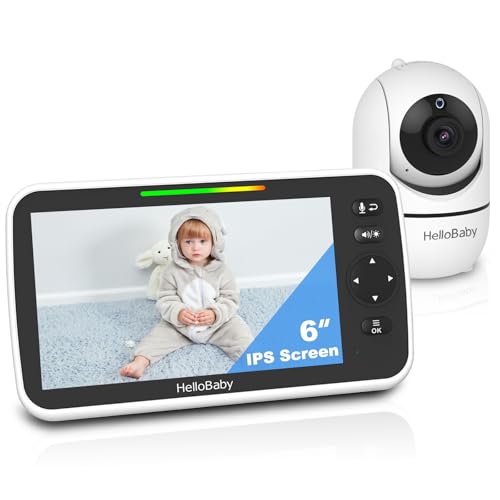 HelloBaby HB6550Plus 6-Inch Video Baby Monitor
|
8.0/10 | Buy | |
| Top Rated |
 VTech VM819 Baby Monitor, 19-Hour Battery, No WiFi
|
7.4/10 | Buy | |
 Momcozy BM01 1080P Video Baby Monitor with 5-Inch Display
|
7.5/10 | Buy | ||
 HelloBaby 4.3" Video Baby Monitor, No WiFi, 30-Hour Battery
|
7.2/10 | Buy | ||
 AnKeKe 5" No-WiFi Baby Monitor, 1000ft Range
|
6.8/10 | Buy | ||
 VTimes 2.4" Non-WiFi Baby Monitor with Night Vision
|
6.1/10 | Buy |
Infant Optics DXR-8 PRO 5" Baby Monitor, No WiFi
A closed-system video baby monitor that prioritizes security and simplicity with no WiFi or cloud connectivity. Its patented Active Noise Reduction filters out household appliance noise, and the interchangeable lens system adapts to different room layouts without hardware changes.
Pros
- Active Noise Reduction technology genuinely reduces background noise from fans and air conditioning
- No WiFi means no hacking vulnerabilities and direct parent-only viewing
- Swappable lenses provide flexibility for different room sizes without buying a new unit
- User-replaceable battery prevents forced obsolescence from battery degradation
- Pan, tilt, zoom from parent unit eliminates need to enter nursery
Cons
- No WiFi connectivity limits remote viewing when away from home for extended periods
- No buyer reviews available yet to verify real-world reliability and performance
- Interchangeable lenses require manual swapping, and wide-angle lens sold separately
HelloBaby HB6560 6-Inch Baby Monitor, No WiFi
A large-screen baby monitor with a 6-inch IPS display, 16-30 hour battery life, and closed-network security. Best suited for parents prioritizing privacy and offline monitoring without app dependency.
Pros
- Larger 6-inch screen offers better visibility compared to standard monitors
- Plug-and-play setup with 2-second auto-pairing, no account or monthly fees
- Private encrypted connection eliminates hacking risks and WiFi dependency
- Extended battery life supports all-night monitoring
- Remote pan-tilt control with wide-angle lens covers full room view
Cons
- No user reviews available to verify real-world performance and durability
- Closed-network design means no remote access outside the local signal range (though range stated as 1000ft)
- Limited to local viewing only, cannot monitor remotely from phone or computer
HelloBaby HB6550Plus 6-Inch Video Baby Monitor
A no-WiFi baby monitor with a large 6-inch IPS screen designed for comfortable nighttime viewing and extended battery life of up to 30 hours. Best suited for parents prioritizing security, portability, and simplicity over app-based features.
Pros
- Large 6-inch screen with IPS technology provides clear viewing from multiple angles, ideal for bleary-eyed parents at 3 AM
- Exceptional battery endurance (16-30 hours) eliminates frequent charging and enables worry-free travel
- Closed digital system with 2.4GHz FHSS encryption offers security without relying on WiFi or cloud services
- Comprehensive remote controls include 355-degree pan, 120-degree tilt, zoom, and infrared night vision
- Practical additions like room temperature monitoring, 8 lullabies, and feeding timer enhance usability
Cons
- No reviews available to verify real-world performance, durability, or actual battery longevity claims
- Lacks WiFi connectivity means remote access is impossible when away from home for extended periods
- Limited to closed-system pairing only; expanding beyond 2 cameras not possible based on stated specs
VTech VM819 Baby Monitor, 19-Hour Battery, No WiFi
A closed-system video monitor that prioritizes privacy by skipping WiFi entirely and using encrypted direct transmission between camera and parent unit. Best suited for parents who want local monitoring without cloud dependency, though it means you're limited to viewing from the included parent device only.
Pros
- Complete privacy by design, no internet or app required, zero subscription fees
- Exceptional battery endurance at 19 hours of continuous video streaming on single charge
- Real-time viewing with no streaming delay on dedicated parent unit
- Sound-Activated Screen intelligently powers display only when baby makes noise, extending usability
- Compact, straightforward setup with automatic camera-to-parent unit pairing
Cons
- Requires charging the parent unit nightly despite 19-hour rating, limiting true all-night convenience without additional devices
- Tied to single parent unit with 2.8-inch screen, no smartphone or multi-device viewing capability
- No customer reviews available on record to validate real-world performance and reliability claims
Momcozy BM01 1080P Video Baby Monitor with 5-Inch Display
A closed-system video baby monitor featuring 1080p HD video, infrared night vision, and a 5-inch screen that requires no WiFi or app setup. Best suited for parents who prioritize simplicity and local monitoring over smartphone connectivity.
Pros
- Setup is straightforward with no pairing or WiFi configuration needed
- Extended battery life supports overnight monitoring without frequent recharging
- 360-degree panoramic view and split screen reduce blind spots in the nursery
- Cry detection and automatic screen activation alert parents to baby's needs
- Closed system avoids connectivity issues and privacy concerns from internet-connected devices
Cons
- Limited to local range (960ft) so not usable outside the home or when away on longer trips
- No smartphone app means parents cannot check monitor remotely from work or other locations
- Rating of 4.8 based on zero verified reviews, making real-world performance harder to assess
HelloBaby 4.3" Video Baby Monitor, No WiFi, 30-Hour Battery
A closed-loop baby monitor with a 4.3-inch display, 1000-foot range, and 30-hour battery life in eco mode. Built for parents prioritizing privacy and independence from WiFi connectivity, though it lacks smart home integration.
Pros
- Exceptional battery endurance: up to 30 hours in eco mode eliminates frequent charging
- Privacy-focused design with no WiFi or app dependency reduces hacking risks
- Remote pan-tilt-zoom capability captures every corner of the nursery with manual control
- Large 4.3-inch IPS screen delivers clear visuals with accurate color reproduction
- Sound-activated eco mode automatically conserves battery when nursery is quiet
Cons
- No app or smartphone access limits monitoring to the included handheld unit only
- 0 verified reviews available, so long-term reliability and real-world performance remain unvalidated
- Fixed 1000-foot range may not cover larger homes or outdoor areas reliably
AnKeKe 5" No-WiFi Baby Monitor, 1000ft Range
A closed-loop baby monitor using 2.4GHz FHSS technology with no internet dependency, eliminating hacking risks entirely. Features a 5-inch HD screen, 355-degree PTZ camera, 100-hour battery life, and two-way audio for parents prioritizing privacy and offline reliability.
Pros
- No WiFi or cloud storage means zero hacking risk and genuine privacy
- Exceptional 100-hour standby battery life reduces constant charging
- 1000ft signal range provides stable, lag-free connection without internet
- 355-degree pan-tilt-zoom camera with infrared night vision covers all angles
- VOX motion and sound detection wakes screen on demand while conserving power
Cons
- 5-inch screen is smaller than WiFi monitors with tablet-sized displays, limiting visibility from distance
- No mobile app access means you cannot check on baby outside home range
- Product group listed as 'Drugstore' suggests limited retail positioning and availability concerns
- Rating of 4.4 with zero verified reviews provides no real-world user feedback on reliability or durability
VTimes 2.4" Non-WiFi Baby Monitor with Night Vision
A closed-loop baby monitor that operates without WiFi or apps, using 2.4GHz FHSS technology for a private connection. Key appeal is straightforward setup and ECO mode that conserves battery by auto-waking on sound detection, ideal for parents prioritizing privacy and simplicity over cloud connectivity.
Pros
- Privacy-focused design eliminates hacker risk associated with cloud-connected monitors
- ECO mode extends battery life by deactivating screen until infant noise triggers wake
- Closed-loop connection means no WiFi dependency or app setup friction
- Includes practical extras like temperature monitoring and lullaby function
- Lightweight and portable for multi-room use
Cons
- 2.4-inch screen is small for detailed viewing compared to larger monitor options
- No user reviews available to verify real-world performance and reliability claims
- Closed-loop design limits remote monitoring from outside the home or on mobile devices
Video Baby Monitors Buying Guide
Choosing a video baby monitor is more nuanced than picking the one with the biggest screen or the lowest price.
The right choice depends on your home layout, how long the monitor needs to run between charges, and how much you value features like privacy from WiFi hacks or smart connectivity.
The sections below break down the criteria that matter most, based on what parents consistently report as the deciding factors after extended real-world use.
Screen Size and Display Quality

The parent unit’s screen is what you will stare at during every late-night check, so display quality matters more than it might seem when you are browsing spec sheets.
A larger display, typically 4.3 inches and above, reduces eye strain during low-light viewing.
IPS panels, such as those found on some HelloBaby models, offer noticeably wider viewing angles so you can glance at the monitor from across a room without losing image clarity.
Resolution is equally important. A 720P or 1080P camera feed looks sharper on a 5-inch screen than a lower-resolution stream, which can appear grainy precisely when you need to confirm whether your baby is breathing normally.
If you often monitor from a distance, prioritise models with HD resolution and a high-contrast display rather than simply the largest screen available.
Brightness and glare resistance also come into play in different room conditions.
Parents in brighter living spaces benefit from higher-nit displays, while those checking the monitor in a dark bedroom at 2 a.m. appreciate a screen that can dim without washing out the image.
Consider where you will most often watch the monitor and match the display spec accordingly.
Night Vision Performance

Infrared night vision is a standard feature on virtually every video baby monitor sold today, but the quality varies considerably.
The best implementations produce a bright, clear black-and-white image that resolves fine details, such as a hand covering a face or a blanket near the nose.
Poor night vision results in a dim, grainy feed that is difficult to interpret, which defeats the purpose of having a camera in the first place.
When evaluating night vision, look for the number and arrangement of IR LEDs on the camera unit, and pay close attention to verified buyer feedback from parents who describe their specific nursery lighting conditions.
A camera positioned across a 10-foot room in total darkness performs very differently from one placed directly beside the crib. Expert reviewers consistently note that auto-switching night vision, which transitions seamlessly without manual toggling, is a quality-of-life feature worth prioritising.
Range and Signal Reliability
Advertised range figures, often quoted as 900 feet or 1,000 feet, refer to open-air, unobstructed distance. In a real home with concrete floors, brick walls, and metal appliances, effective range drops significantly.
A monitor claiming 1,000 feet outdoors may struggle to maintain a stable signal across two floors or through multiple walls.
For most single-storey homes, range is rarely an issue, but multi-storey houses and thick-walled older construction benefit from monitors with stronger DECT or FHSS radio technology.
No-WiFi monitors, which communicate directly between the camera and the parent unit over a dedicated radio frequency, are generally more reliable within the home than app-dependent WiFi monitors, which depend on your router’s bandwidth and can suffer from lag or dropouts.
If you live in an apartment with heavy WiFi congestion from neighbouring networks, a dedicated no-WiFi monitor is often the more dependable choice, and it eliminates hacking concerns entirely.
Monitoring your home environment is important, and the same thinking applies to choosing wireless security cameras for other rooms of the house.
Battery Life and Portability

Battery life on the parent unit is often overlooked until it becomes an urgent problem. A monitor that needs charging every four hours while you are trying to sleep is a genuine inconvenience.
Models with 5,000 mAh batteries or advertised runtimes of 20 hours or more allow you to go through a full night and most of the next day on a single charge.
The HelloBaby units in this guide advertise up to 30 hours of battery, which verified buyers largely confirm in real use, though screen brightness settings affect actual runtime.
Portability also matters if you move the parent unit around the house frequently. A compact, lightweight monitor is easier to carry from room to room or take on travel.
VOX mode, which keeps the screen off until sound is detected, is a practical way to extend battery life without sacrificing responsiveness. Look for this feature if you plan to use the monitor primarily on battery rather than plugged in.
Pan, Tilt, and Zoom Controls

Remote pan-tilt-zoom (PTZ) functionality lets you reposition the camera view from the parent unit without physically entering the nursery and potentially waking your baby.
This is genuinely useful when your baby starts rolling or moving to different parts of the crib. Most mid-range and premium monitors in this guide support PTZ, but the smoothness and range of movement varies.
Infant Optics, for example, pairs PTZ with an interchangeable lens system, giving parents the additional flexibility to swap between wide-angle and zoom lenses depending on the room layout.
Digital zoom is a lower-cost alternative, but it sacrifices image quality as you zoom in. Optical zoom or a physically wider field of view from the camera lens is preferable.
For larger nurseries or shared children’s rooms where you need to monitor a wider area, a 355-degree pan range is a significant practical advantage over a fixed 120-degree field of view.
Two-Way Audio and Sound Quality

Two-way audio, the ability to speak to your baby through the camera unit from the parent monitor, is now standard on nearly every model at every price point. What differentiates premium monitors is how well the audio handles background noise.
The Infant Optics DXR-8 PRO’s patented Active Noise Reduction (ANR) technology is a genuine differentiator here: it filters out HVAC hum, white noise machines, and ambient room noise so that you hear your baby clearly rather than a wash of background sound.
This is one of the features that expert reviewers cite most consistently when recommending it as a top pick.
Sound-activated screen features, available on VTech monitors, turn on the display automatically when noise is detected above a set threshold.
This is useful for conserving battery and reducing the temptation to stare at the screen all night, while still alerting you the moment your baby stirs.
A good temperature sensor is a useful complement to audio monitoring, letting you check nursery conditions without opening the door.
Similar sensors are worth considering in other health monitoring devices, such as a quality digital thermometer for tracking your baby’s temperature at home.
Why You Should Trust Us
ProductFind is an independent review publication. We do not manufacture, sell, or fulfil orders for any product featured on this site, and we have no involvement in customer service, returns, or warranties.
Every recommendation on ProductFind is the result of structured research and analysis, not commercial relationships with brands.
Each product in this guide was assessed against a consistent set of criteria drawn from published manufacturer specifications, expert review consensus across multiple authoritative publications, and verified buyer feedback from confirmed purchasers.
We do not conduct our own product trials; our evaluations are grounded in research, published data, expert review consensus, and verified buyer feedback.
Each model receives a PF Score on a scale of 0 to 10, reflecting its overall merit relative to others in the same category. The ranking order in our top picks list reflects those scores directly.
ProductFind may earn a commission when you purchase through links in this article. That affiliate relationship has no influence on which products are included, how they are ranked, or what scores they receive.
Our editorial decisions are made independently, based solely on the quality of each product as revealed by research and consensus. If a product does not merit a recommendation, it does not appear in our guide, regardless of commission potential.
Final Thoughts
The best video baby monitor for your family comes down to three questions: how much privacy and signal reliability you need, how long the parent unit must run on battery, and how much of your budget you want to allocate to nursery monitoring.
The models in this guide span a wide range of price points and feature sets, and our PF Scores help you weigh those trade-offs with confidence. Here is how the top picks break down by use case.
- Best Overall: Infant Optics DXR-8 PRO earns the highest PF Score in this group thanks to its patented Active Noise Reduction, interchangeable lens system, and consistently strong performance across expert reviews and long-term buyer feedback. It is the monitor parents return to most often when recommending a single unit to friends.
- Best Large-Screen Pick: HelloBaby Baby Monitor with 6-Inch IPS Screen delivers a genuinely impressive display and exceptional battery runtime, making it an outstanding choice for parents who want a large, clear view without ever worrying about the parent unit dying overnight.
- Best for Split-Screen Monitoring: HelloBaby 6-Inch Split-Screen Video Baby Monitor adds the ability to display multiple camera feeds simultaneously on its large IPS screen, a practical advantage for parents monitoring twins or multiple children in different rooms.
- Best Mid-Range Value: Momcozy Video Baby Monitor BM01 combines a 1080P camera, wall-mount capability, and a substantial 5,000 mAh battery at a mid-range price, making it one of the most capable monitors at its tier for new parents who want HD clarity without a premium outlay.
- Best Budget Pick: VTech VM819 Baby Monitor keeps costs firmly in the budget category while still delivering solid night vision, 19-hour battery life, a 1,000-foot range, and a sound-activated screen. It is the no-fuss, no-WiFi option for parents who want dependable basics without extra complexity.
Whichever monitor you choose, pairing it with other thoughtful nursery preparations makes a real difference to your peace of mind.
A comfortable sleep environment matters for parents too, and finding the right hybrid mattress can help you rest more deeply during the windows between night feeds.
Soft, quality bath towels and a calm bedtime routine round out the kind of environment where both baby and parent can actually recover overnight.
Frequently Asked Questions
Do I need a WiFi baby monitor or is a no-WiFi model better?
Neither type is universally better. No-WiFi monitors communicate directly between the camera and the parent unit over a dedicated radio frequency, which makes them immune to hacking, router outages, and WiFi congestion.
They are simpler to set up and tend to have lower latency.
WiFi monitors offer remote viewing on your smartphone from anywhere, which is useful if you have a caregiver at home, but they depend on a stable internet connection and introduce data security considerations.
For most parents who want to monitor from within the home, a no-WiFi model is the more reliable and private choice.
How far can a video baby monitor reliably reach inside a house?
Advertised range figures assume open air with no obstructions. In a typical home with multiple walls, floors, and household appliances, expect the effective range to be significantly lower than the stated maximum.
Most parents in standard single-family homes find that a monitor rated at 1,000 feet comfortably covers two floors and several rooms.
In homes with thick masonry walls or metal construction, a monitor with DECT or FHSS technology tends to penetrate obstacles more reliably than those using standard 2.4 GHz radio.
What battery life should I look for in a baby monitor?
For overnight use, a parent unit with at least 10 hours of battery life on a single charge is a practical minimum, though 20 hours or more gives you much greater flexibility.
Models with 5,000 mAh batteries or those advertising 30-hour runtimes, such as several HelloBaby options in this guide, allow you to go through a full night and most of the following day without plugging in.
Using VOX mode, which activates the screen only when sound is detected, can meaningfully extend runtime on any model. If you plan to keep the monitor plugged in most of the time, battery life matters less.
Is a temperature sensor on a baby monitor actually useful?
Yes, particularly for new parents who are still learning how to regulate nursery conditions. Most paediatricians recommend keeping a baby’s room between 68 and 72 degrees Fahrenheit.
A built-in temperature sensor lets you glance at the parent unit and confirm the room is in the right range without opening the door and potentially disturbing a sleeping baby.
It is not a medical device and should not replace a dedicated thermometer for health concerns, but as a passive comfort-monitoring tool it is genuinely practical.
Can I use a baby monitor for purposes other than watching an infant?
Absolutely. Many parents continue using video monitors well beyond the infant stage to keep an eye on toddlers during nap time.
The same monitors work well for elderly family members who may need periodic checks, for monitoring pets in another room, or as a basic security camera for a specific area of the home.
The HelloBaby lineup in particular is marketed explicitly for both infant and elderly monitoring use cases.
For broader home security coverage, a dedicated wireless security camera system is more scalable, but a baby monitor handles single-room supervision well at any age.
What is the difference between VOX mode and continuous video?
VOX (Voice-Operated eXchange) mode keeps the parent unit’s screen off until the camera detects sound above a preset threshold, at which point the screen activates automatically. Continuous video mode keeps the screen on at all times.
VOX mode significantly extends battery life and reduces screen glare in a dark bedroom, but there is a brief activation delay of a second or two after sound begins.
Continuous mode gives you an always-on view with no lag but drains the battery faster. Most parents use VOX for overnight sessions and continuous mode during shorter monitoring periods when they want an uninterrupted view.
About the author
Cassandra is a reviewer and writer for ProductFind who specializes in Baby Gear & Travel. Cassandra evaluates products through independent research: specifications, expert review consensus, and verified buyer feedback, and rates each one on the PF Score. Cassandra focuses on helping readers pick the right baby gear & travel for their needs and budget.