The 8 Best Tents
Choosing the right tent depends on how you camp, not just how many people sleep in it. Here are the strongest options across backpacking, family, and budget categories.
 By Vernon Jackson
Updated July 23, 2026
By Vernon Jackson
Updated July 23, 2026
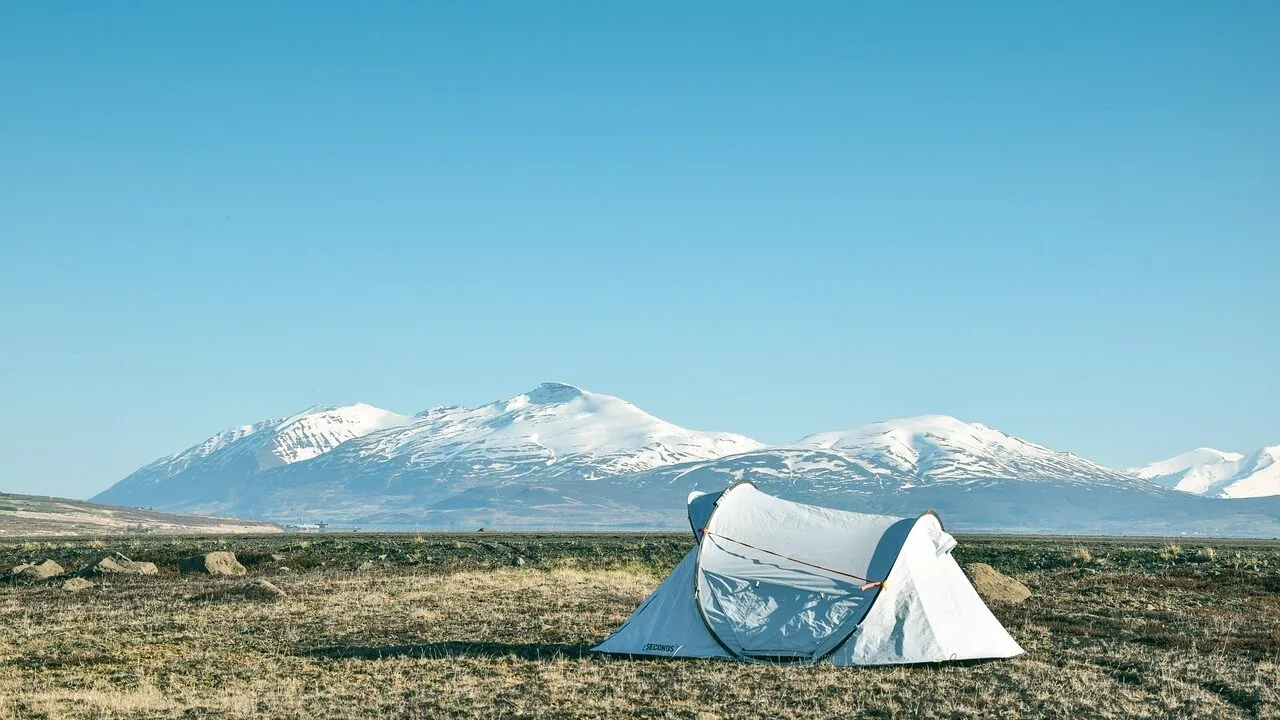
A good tent is the foundation of any successful camping trip, whether you’re pitching in a crowded car-camping site or deep in the backcountry.
The market has never been more crowded, with options ranging from ultralight backpacking shelters to sprawling family cabin tents built for weekend warriors who refuse to compromise on comfort.
Getting the choice wrong means soggy sleeping bags, frustrating setup sessions, and sleepless nights listening to wind rattle a flimsy rainfly.
Getting it right means arriving at the trailhead confident and sleeping well no matter what the weather throws at you.
At ProductFind, we cut through the noise by combining verified buyer feedback, published manufacturer specifications, and expert review consensus from across the outdoor gear community to identify the tents that genuinely deliver.
We evaluate each model against consistent criteria covering weather protection, livable interior space, setup ease, weight, and long-term durability, then assign a PF Score on our 0 to 10 scale.
Whether you need a spacious patio-ready base camp setup for a family reunion or a stripped-down shelter for solo trips, the picks below represent the strongest performers across every major camping style and budget range.
| Award | Product | PF Score About PF ScoreThe PF Score is our own rating from 0 to 10, based on performance, design and build, ease of use, and value. It reflects independent research and is never influenced by manufacturers, retailers, or affiliate commissions. Learn more › | Price | |
|---|---|---|---|---|
| Best Overall |
 Marmot Crane Creek 2P Tent
|
7.2/10 | Buy | |
| Editor's Pick |
 OneTigris JOVIAN 4-Person Dome Tent 2000mm Rainfly
|
7.9/10 | Buy | |
| Best Value |
 Coleman 6-Person Instant Tent with 1-Minute Setup
|
7.5/10 | Buy | |
| Top Rated |
 CORE 10-Person Cabin Tent with Room Divider
|
7.0/10 | Buy | |
 Coleman Sundome 4-Person Tent with Rainfly
|
7.4/10 | Buy | ||
 Coleman Evanston 6-Person Screened Camping Tent
|
7.2/10 | Buy | ||
 FanttikOutdoor Zeta C6 Pro 6-Person Instant Tent
|
6.8/10 | Buy | ||
 Naturehike Village 8-Person Instant Tent with Blackout Fabric
|
6.5/10 | Buy |
Marmot Crane Creek 2P Tent
A lightweight two-person backpacking tent with 32 sq ft of interior space, seam-taped weatherproofing, and aluminum poles for durability. Dual vestibules and D-shaped doors offer practical storage and easy access for camping and mountaineering in variable conditions.
Pros
- Compact weight-to-space ratio ideal for backpackers
- Dual vestibules and two doors eliminate gear congestion
- Durable aluminum poles with proven reliability
- Seam-taped construction handles rain and moisture effectively
Cons
- Footprint sold separately, adding extra cost
- No user reviews available to verify real-world durability or comfort claims
- Compact 2-person design offers limited interior headroom at 43 inches height
OneTigris JOVIAN 4-Person Dome Tent 2000mm Rainfly
A spacious four-person family tent with solid waterproofing (2000mm outer, 5000mm floor) and straightforward dome setup. Well-suited for car camping and casual backpacking, though its 12.3-pound weight may feel substantial for ultralight trips.
Pros
- Comprehensive included accessories eliminate need for separate purchases
- High waterproofing standards on both rainfly and floor protect against wet conditions
- Roomy interior accommodates families or groups without cramped quarters
- All necessary hardware and stakes provided for immediate deployment
Cons
- 12.3-pound weight is relatively heavy for backpacking-focused users
- No verified buyer reviews available to validate real-world durability claims
- Dome design may not suit campers preferring standing height or different tent shapes
Coleman 6-Person Instant Tent with 1-Minute Setup
This instant-setup tent deploys in about 60 seconds with pre-attached poles, making it ideal for families who prioritize convenience over complexity. WeatherTec construction and integrated rainfly provide solid weather protection for casual camping trips.
Pros
- Sets up in approximately one minute with no pole assembly required
- WeatherTec system with welded corners and inverted seams resists water infiltration
- Double-thick Polyguard 2X fabric offers durability across seasons
- Fits two queen-size air beds for comfortable family sleeping arrangements
- Integrated rainfly improves ventilation and reduces condensation
Cons
- No verified buyer reviews available to assess real-world durability and performance claims
- 24.6-pound weight makes it less portable for backpacking compared to traditional dome tents
- Pre-attached poles limit customization and repair options if poles become damaged
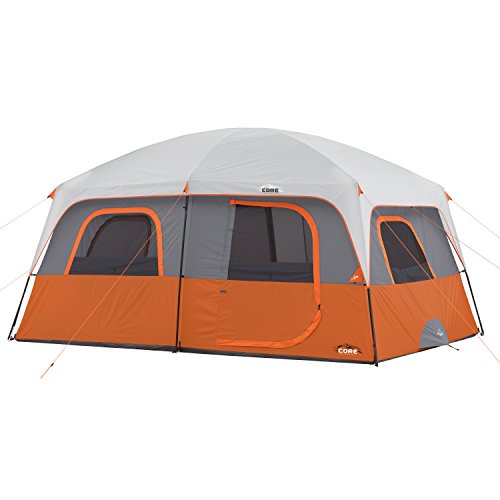
CORE 10-Person Cabin Tent with Room Divider
A spacious family tent designed for car camping with nearly straight walls, 86-inch center height, and room divider capability. H2O Block technology and sealed seams provide reliable weather protection for groups seeking privacy and comfort in a multi-room setup.
Pros
- Nearly straight-wall design maximizes usable interior space
- Weather-sealed construction with 1200mm fabric and fully taped rainfly
- Flexible configuration with removable room divider for privacy or open layout
- Built-in gear loft keeps accessories accessible without cluttering floor
- Ventilation system reduces condensation with ground-level and ceiling airflow
Cons
- 32-pound weight may be cumbersome for backpacking or frequent relocation
- 10-person capacity without gear is unrealistic for comfort; practical limit is 4-6 people
- No verified buyer reviews available to confirm real-world durability claims
Coleman Sundome 4-Person Tent with Rainfly
A straightforward dome tent that sets up in 10 minutes and handles moderate weather with a included rainfly and ventilation windows. Best for casual campers, festivals, and backyard use who prioritize quick assembly over ultralight design.
Pros
- Fast 10-minute setup with intuitive frame design
- Included rainfly provides weatherproofing without extra purchase
- Strong frame rated for 35+ mph winds
- E-Port feature lets you run power cords into the tent
- Large windows and ground vent prevent condensation buildup
Cons
- No verified buyer reviews available to validate real-world durability claims
- 9.1 pound weight makes it less ideal for backpacking long distances
- Limited to 4-person capacity, which may feel cramped with full-size sleeping arrangements
Coleman Evanston 6-Person Screened Camping Tent
A spacious family tent with a screened porch and weatherproof construction that sets up in 15 minutes. Best for car campers who prioritize ventilation and weather protection without complexity.
Pros
- Screened porch area provides ventilation and insect protection without sacrificing weather defense
- WeatherTec System with welded floors and protected seams delivers reliable water resistance
- Fast setup time and included rainfly make it practical for weekend trips
- Electrical port allows you to run power inside the tent for fans or charging
Cons
- No verified buyer reviews available to confirm real-world durability or performance claims
- 20.9-pound weight makes it less ideal for backpacking or backcountry camping
- Limited warranty coverage (1 year) is standard but offers minimal long-term protection
FanttikOutdoor Zeta C6 Pro 6-Person Instant Tent
A spacious 6-person camping tent that sets up in under 60 seconds with pre-installed poles, ideal for families and beginner campers. Features mesh windows on all sides, water-resistant fabric with drainage design, and can fit a queen air mattress, though the inner roof mesh requires an outer tent cover in rain.
Pros
- 60-second setup with pre-installed poles makes it accessible for beginners
- Four-sided mesh windows and ceiling vents provide excellent visibility and airflow
- Water-resistant exterior with tub-style base drainage and zipper drainage channel prevents leaks and pooling
- Spacious interior fits 6 people sleeping or 3 people with gear; accommodates queen air mattress
- Lightweight at 16.8 lbs with sturdy carbon steel frame; includes power cord entrance for external devices
Cons
- Inner tent roof is mesh and not waterproof, requiring outer tent use during rain
- Guy lines must be properly tensioned to prevent water pooling; loose setup can cause leakage
- No verified customer reviews available to validate real-world performance claims
Naturehike Village 8-Person Instant Tent with Blackout Fabric
A spacious cabin-style tent that sleeps up to 8 people and sets up in 60 seconds thanks to its pre-attached pole system. The blackout fabric with 99.9% UV blocking and built-in USB lighting make it practical for extended camping trips, though its 48-pound weight limits portability.
Pros
- Exceptional setup speed ideal for beginners and quick camping trips
- High-quality blackout fabric outperforms typical silver-coated alternatives in heat retention and weight
- Multiple ventilation points reduce condensation and provide unobstructed nature views
- Built-in lighting with USB charging eliminates need for separate lanterns
- Tall 6-foot interior height allows standing comfort inside
Cons
- At 48 pounds, heavy for backpacking or frequent travel between sites
- Requires external power bank for built-in lights (not included)
- No verified user reviews available to assess real-world durability and setup claims
Best Tents Buying Guide
Picking the right tent comes down to matching the shelter’s strengths to your specific camping style, group size, and the conditions you’ll face. The criteria below are the ones that consistently separate a great tent from a merely adequate one.
Working through each of them before you buy will save you from expensive surprises on the trail.
Tent Type and Intended Use

The single most important question is where and how you plan to camp. Backpacking tents prioritize weight and packed volume above all else.
Every gram matters when you’re covering miles on foot, so a lightweight two-person shelter like the Marmot Crane Creek is built around a minimalist pole system and compact stuff sack, not a cavernous interior.
Car camping and family tents operate on the opposite philosophy: because you drive to the site, you can accept heavier materials and more complex structures in exchange for standing room, dividing walls, and screened living areas.
Cabin-style tents with near-vertical walls, such as the CORE 10 Person model, deliver the livable square footage that families expect for multi-night stays. Three-season tents handle spring rain and autumn wind but are not engineered for snow loads.
If you camp in genuinely harsh shoulder-season conditions, look at four-season or all-season specifications, paying particular attention to pole count, guy-out points, and the denier rating of the floor fabric.
Matching tent category to use case prevents the most common buyer regret in this category.
Capacity and Livable Interior Space
Tent manufacturers rate capacity generously. A tent rated for four people will sleep four adults lying shoulder-to-shoulder with no room for gear.
A practical rule of thumb: buy one size up from your actual headcount if you want to store packs inside and move without disturbing your tentmates. A family of four is typically better served by a six or eight-person rating.
Pay close attention to peak height as well. A 60-inch (152 cm) or taller peak height means adults can dress standing up, a detail that feels trivial until you’ve hunched over a rainfly at 6 AM.
Floor dimensions matter too, but shape can be deceptive. Rectangular floor plans pack square footage more efficiently than tapered designs.
If the tent features separate sleeping rooms or a divider, factor in how the total square footage splits across the rooms.
Screened porches and vestibules add meaningful usable area without adding formal sleeping space, and they’re especially valuable for groups that want to leave muddy boots or wet rain gear out of the sleeping area.
Weather Protection and Waterproofing
Waterproofing is measured by hydrostatic head rating in millimeters. A rainfly rated at 1,500 mm to 2,000 mm handles moderate rain reliably in a three-season setting.
Floors need to be tougher because they face abrasion and pooled water simultaneously; look for floor ratings of 3,000 mm or higher, which is why the OneTigris JOVIAN’s 5,000 mm floor rating stands out in a crowded mid-range field.
Fully taped or factory-sealed seams prevent water from wicking through needle holes and are a key differentiator between budget and mid-range tents.
Beyond raw waterproof ratings, consider the rainfly coverage. A full-coverage rainfly that reaches close to the ground provides far better protection in wind-driven rain than a partial fly that only covers the top third of the tent body.
Guy lines and extra stake points allow you to tension the fly away from the inner tent, which maintains airflow and prevents condensation drip.
If you’re camping in areas prone to sudden storms, those extra anchor points and a sturdy pole system are non-negotiable, not optional extras.
Setup Ease and Pole System

Setup complexity ranges from nearly instant to genuinely challenging.
Instant or quick-pitch tents use pre-attached, hub-style poles that unfold from a central mechanism, allowing a solo camper to pitch the shelter in roughly 60 seconds, as the Coleman Instant Tent is specifically engineered to do.
These systems are a significant quality-of-life upgrade when you’re arriving at a site after dark or in deteriorating weather.
The tradeoff is that hub systems are heavier and bulkier than traditional clip-and-sleeve designs, and they can be harder to repair in the field.
Color-coded poles, clip attachments instead of sleeves, and freestanding designs all reduce setup friction. A freestanding tent holds its shape before you stake it, so you can reposition it once assembled.
Non-freestanding tents save weight but must be staked out precisely during setup, which can be frustrating on rocky or rooty ground.
For beginners or group camping situations, freestanding designs with clip-and-hook systems are consistently rated higher by verified buyers for stress-free pitching.
Ventilation and Condensation Management

Condensation is the invisible enemy of tent comfort. Even in a waterproof tent, moisture from breathing and perspiration accumulates on the inner walls overnight if ventilation is inadequate.
Look for tents with large mesh panels in the inner canopy, which allow warm moist air to escape into the space between the inner tent and the rainfly, where it can dissipate.
Two-door designs are particularly effective because you can crack open opposite doors and create cross-ventilation without exposing the interior to rain.
Top vents or fly vents, sometimes called air vents or ventilation ports, allow hot air to rise and escape even when the fly is fully deployed in rain.
This detail is often underweighted by first-time buyers but shows up repeatedly in long-term verified buyer reviews as the feature that separates a comfortable warm-weather tent from one that feels like a sauna by morning.
When comparing otherwise similar tents, the one with more mesh coverage and dedicated venting will almost always deliver better night-time comfort across three seasons.
Weight, Packability, and Value
For car camping, packability is a secondary concern as long as the tent fits in your trunk.
For backpacking, it becomes the primary constraint. Ultralight backpacking tents achieve their low weights through thinner fabrics, fewer poles, and minimal features, which means they require more careful site selection and more deliberate setup.
A two-person backpacking tent in the budget range will typically weigh two to three times more than a premium ultralight option and sacrifice packed size as well.
If you split the shelter between two hikers’ packs, weight distribution becomes more manageable.
Value is more nuanced than price alone.
A budget-priced tent that requires replacement after two seasons offers worse long-term value than a mid-range model built with higher-denier fabrics, reinforced corners, and factory-sealed seams that holds up over years of regular use.
Look at what verified buyers say after 12 to 24 months of ownership, not just after the first outing.
Pole replacement availability, manufacturer support, and the availability of a footprint or groundsheet for the specific tent shape all contribute to the total cost of ownership over time.
Pairing your camping kit thoughtfully, the way you’d pair a portable Bluetooth speaker with the right outdoor setting, is how experienced campers get the most out of every purchase.
Why You Should Trust Us
ProductFind is an independent review platform with no brand affiliations.
Every tent in this roundup was evaluated using a consistent, multi-source research methodology: we analyze published manufacturer specifications, synthesize expert review consensus from established outdoor and gear publications, and weigh verified buyer feedback gathered from confirmed purchasers who have used these shelters across multiple seasons and conditions.
We do not conduct our own product trials; our evaluations are grounded in research, published data, expert review consensus, and verified buyer feedback.
Each model receives a PF Score on a 0 to 10 scale, calculated by scoring it against a consistent set of criteria covering weather protection, interior livability, setup ease, ventilation, weight class, and overall durability relative to price.
The scores allow you to compare shelters across different categories and price tiers on a common footing. No single criterion dominates the score; instead, the weighting reflects what buyers across different camping styles consistently rank as most important.
ProductFind may earn a commission when you purchase through links on this page. That affiliate relationship has zero influence on which products appear in our roundups, how they are ranked, or what PF Score they receive.
Ranking is determined entirely by our research-based evaluation criteria. We recommend a product only when the evidence supports it.
Final Thoughts
The eight tents in this roundup cover the full spectrum of camping needs, from lightweight two-person shelters for fall backpacking trips to sprawling family cabin tents built for weekend car-camping comfort.
No single tent is the right choice for everyone, but each of the picks above earned its place based on consistent strengths identified across specifications, expert review consensus, and long-term buyer feedback.
Below are our standout category recommendations to help you land on the right shelter for your style.
- Best Overall: OneTigris JOVIAN 4 Person Camping Tent earns the top overall position with the highest PF Score in this roundup, combining a serious 5,000 mm waterproof floor, a 2,000 mm outer rainfly, and a straightforward three-season setup that works equally well for backpacking and base-camp use.
- Best Instant Setup Tent: Coleman Instant Camping Tent is the pick for campers who prioritize speed and convenience, with a pre-attached pole system that has the shelter standing in about 60 seconds, earning it one of the stronger PF Scores in the family-tent segment.
- Best Budget Pick: Coleman Sundome Camping Tent delivers reliable three-season protection and a genuine 10-minute setup at a price that makes it accessible for occasional campers, festival-goers, and families evaluation the waters before committing to a larger investment.
- Best Large Family Tent: Coleman Evanston Screened Camping Tent stands out for groups that want a screened-in porch area and a roomy interior, providing a comfortable communal space that keeps insects out without sacrificing airflow.
- Best Backpacking Shelter: Marmot Crane Creek 2P Tent is the choice for hikers who need a lightweight, durable two-person option that handles fall conditions without the bulk of a car-camping design, backed by Marmot’s reputation for quality construction in demanding environments.
Whichever direction you go, the right tent is the one that matches your actual camping style, not the most ambitious trip you imagine taking.
Start with your most common use case, prioritize the criteria that matter most to that context, and trust the verified buyer feedback that reflects real-world long-term ownership rather than first-impression enthusiasm.
Your campsite setup is only as good as the shelter at its center.
Frequently Asked Questions
What size tent do I actually need for my group?
The safest approach is to buy one capacity size above your actual headcount. A rated capacity from manufacturers assumes people sleeping shoulder-to-shoulder with no gear inside.
A family of four will be significantly more comfortable in a six-person tent, which leaves room for bags, shoes, and personal items without feeling cramped.
If you’re camping with children who share a sleeping bag or pad, you have slightly more flexibility, but for adults the upgrade is almost always worth it.
What does hydrostatic head rating mean, and how high should it be?
Hydrostatic head is the standard measure of waterproofing, expressed in millimeters. It represents the height of a water column the fabric can support before water begins to pass through.
For three-season camping, a rainfly rated at 1,500 mm to 2,000 mm handles typical rainfall reliably. Tent floors should be rated higher, ideally 3,000 mm or above, because they endure both abrasion from the ground and the weight of occupants pressing down.
Seam sealing or taping is equally important; even a high-rated fabric leaks at unsealed stitching under sustained rain.
Can I use a three-season tent in winter or heavy snow?
Most three-season tents are not engineered to handle significant snow load. Their mesh panels and lighter pole structures are optimized for ventilation and weight reduction, not structural rigidity under accumulated snow.
If you camp in conditions where overnight snowfall is likely, look specifically for four-season or all-season designations, which use heavier poles, fewer mesh panels, and more anchor points to handle the additional stress.
Using a three-season tent in genuine winter conditions risks pole failure and structural collapse, particularly if snow accumulates while you sleep.
Do I need a footprint or ground cloth under my tent?
A footprint, which is a cut-to-fit ground cloth that matches your tent’s floor dimensions, extends the life of your tent floor by absorbing abrasion from rocks and roots before it reaches the tent fabric.
It also adds an extra layer of waterproofing on wet ground. For car camping where the tent is used frequently, a footprint is a worthwhile investment that can significantly extend the usable life of the tent.
For occasional backpacking trips where weight is a concern, a generic polycro ground sheet that you cut slightly smaller than the tent floor offers similar protection at a fraction of the weight and cost.
How do I reduce condensation inside my tent?
Condensation forms when warm moist air from breathing contacts a cooler surface. The most effective countermeasure is airflow: crack both doors slightly if weather allows, or open fly vents to encourage air circulation through the tent.
Keeping the inner tent wall from touching the rainfly also matters; when the two layers contact each other, moisture transfers straight through.
Pitching in a spot with natural airflow, away from standing water or dense vegetation that traps humidity, makes a noticeable difference as well.
Wiping down interior walls with a camp towel before packing also prevents that musty smell from developing over multiple uses.
If you’re investing in a reliable outdoor setup, the same care you’d put into choosing quality lawn maintenance equipment for your yard applies to maintaining your camping gear season after season.
Is an instant tent as durable as a traditional pole tent?
Instant tents with hub-and-sleeve pole systems have improved considerably in durability over the past several years.
Their main vulnerability is the central hub mechanism, which can crack or seize after heavy use or if the tent is stored improperly while damp.
Traditional pole systems using individual shock-corded poles are easier to repair in the field since individual sections can be replaced. For casual car campers who prioritize setup convenience over repairability, modern instant tents are genuinely reliable.
For frequent campers or those heading to remote locations, traditional pole designs offer better long-term serviceability. Reviewing verified long-term buyer feedback is one of the best ways to assess hub durability for a specific model before you buy.
About the author
Vernon is a reviewer and writer for ProductFind who specializes in Camping & Hiking. Vernon evaluates products through independent research: specifications, expert review consensus, and verified buyer feedback, and rates each one on the PF Score. Vernon focuses on helping readers pick the right camping & hiking for their needs and budget.