The 11 Best Tandem Kayaks
Choosing a tandem kayak means balancing stability, capacity, and portability for two. Our research covers inflatables, sit-on-tops, and pedal-drive models to match every paddling style.
 By Olivia Shelton
Updated July 23, 2026
By Olivia Shelton
Updated July 23, 2026
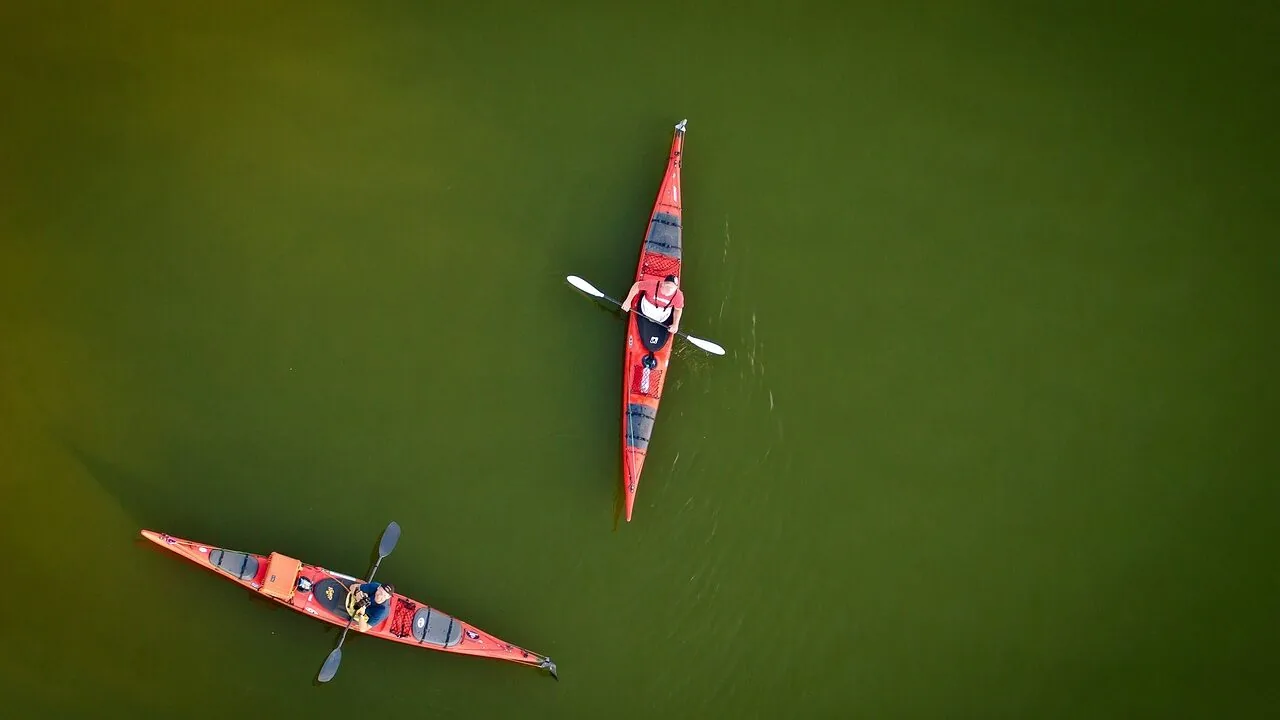
Paddling together is one of the most rewarding ways to enjoy the water, whether you are exploring a calm lake with a partner, fishing a river with a friend, or introducing kids to the outdoors.
A good tandem kayak balances stability, tracking, and load capacity in a way that single kayaks simply cannot match, and the market spans everything from packable inflatables to pedal-drive sit-on-tops built for serious anglers.
With so many shapes, materials, and price points to navigate, choosing the right model for your needs can feel overwhelming.
ProductFind researched the tandem kayak market by analyzing manufacturer specifications, synthesizing expert review consensus across multiple publications, and studying verified buyer feedback from confirmed purchasers.
We considered factors including hull material and durability, primary and secondary stability, weight capacity, tracking performance, ease of transport, and value for money.
The picks below represent our top recommendations across a range of budgets and paddling styles, starting with our highest-rated option.
| Award | Product | PF Score About PF ScoreThe PF Score is our own rating from 0 to 10, based on performance, design and build, ease of use, and value. It reflects independent research and is never influenced by manufacturers, retailers, or affiliate commissions. Learn more › | Price | |
|---|---|---|---|---|
| Best Overall |
 Pelican Argo 136XP 13ft Tandem Kayak
|
8.3/10 | Buy | |
| Editor's Pick |
 Intex 68309EP Excursion Pro K2 2-Person Kayak
|
7.8/10 | Buy | |
| Best Value |
 Weture 2-Person Inflatable Kayak, 507 lbs Capacity
|
7.9/10 | Buy | |
| Top Rated |
 BKC Brooklyn 12.5 Tandem Fishing Kayak, 600 lb Capacity
|
7.8/10 | Buy | |
 Perception Tribe Tandem 13.5ft Sit-On-Top Kayak
|
7.6/10 | Buy | ||
 Perception Tribe 13.5 2-Person Sit-On-Top Kayak
|
7.6/10 | Buy | ||
 Pelican River Gorge 130X 13ft Tandem Kayak
|
7.1/10 | Buy | ||
 Perception Rambler 13.5 Tandem Kayak
|
7.4/10 | Buy | ||
 Lifetime Kokanee 10'6" Sit-On-Top Kayak
|
7.2/10 | Buy | ||
 Intex Challenger K2 2-Person Inflatable Kayak
|
6.5/10 | Buy | ||
 BKC Brooklyn 13.5 Tandem Pedal Kayak, 680 lb Capacity
|
9.7/10 | Buy |
Pelican Argo 136XP 13ft Tandem Kayak
A 67-pound tandem kayak built for stability and comfort across skill levels, featuring a multi-chine hull design and lightweight Ram-X material. The Ergofit seating and adjustable footrests accommodate paddlers of different sizes, making it practical for couples or recreational paddling pairs.
Pros
- Proven hull design delivers smooth, stable ride for beginners and experienced paddlers
- Lightweight construction at 67 pounds eases transport and launching
- Adjustable seating and footrests accommodate different body types without additional gear
- Iris color provides distinctive aesthetic appeal
Cons
- No verified buyer reviews available to assess real-world durability or performance feedback
- Tandem-only capacity limits solo paddling versatility
- Limited information on storage capacity or weight load limits for specific use cases
Intex 68309EP Excursion Pro K2 2-Person Kayak
A budget-friendly inflatable kayak built with 3-ply SuperTough PVC for durability against abrasion and UV damage. Comes fully equipped with paddles, pump, rod holders, and camera mount, making it ready for casual paddling and fishing right out of the box.
Pros
- Durable SuperTough PVC material rated for structural strength and UV resistance
- All essential accessories included (paddles, pump, rod holders, camera mount)
- Good storage capacity with stainless steel D-rings for securing gear
- Spring-loaded valves for fast inflation and deflation
- Portable design with carry bag for convenient transport
Cons
- No verified buyer reviews available to validate real-world durability claims
- Weighs 44.67 pounds when packed, which may be cumbersome for solo transport
- Adjustable bucket seat may lack ergonomic comfort for extended paddling sessions
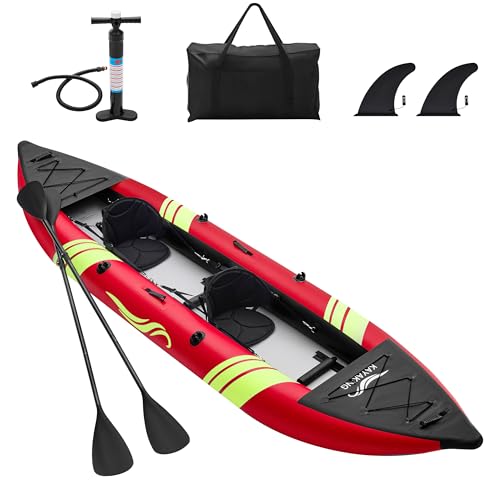
Weture 2-Person Inflatable Kayak, 507 lbs Capacity
A two-person touring kayak designed for casual paddlers and fishing enthusiasts, equipped with luminous safety strips, adjustable seats, and a complete accessory bundle. Best suited for lakes and calm rivers where stability and ease of transport matter more than performance.
Pros
- Complete kit includes paddles, pump, repair kit, and storage bag, minimizing additional purchases
- Luminous strips improve visibility for safety in varying light conditions
- 507 lbs weight capacity accommodates two adults with room for gear
- Removable fins and beginner-friendly design make it accessible for first-time kayakers
- Adjustable seats with backrests and waterproof storage pockets add comfort for longer paddles
Cons
- No verified buyer reviews available, making real-world performance difficult to assess
- Relatively heavy at 40.68 lbs when deflated, which may challenge solo transport despite portability claims
- Limited information on material durability and air retention over extended use
BKC Brooklyn 12.5 Tandem Fishing Kayak, 600 lb Capacity
A spacious 12.5-foot sit-on-top kayak designed for two to three paddlers or anglers, equipped with six rod holders and a motor-ready mount. The wide 34-inch beam and rotomolded hull prioritize stability for casting and rough water, while included padded seats and paddles suit recreational fishing on lakes and coastal areas.
Pros
- Generous rod holder setup (6 total) streamlines multi-line fishing and hands-free management
- Stable, wide beam design reduces tipping risk when casting or standing in rough conditions
- Includes essential gear (two paddles and padded seats) without extra cost
- Motor-mount compatibility extends range and control for serious anglers
Cons
- Trolling motor not included, requiring separate purchase and installation
- No customer reviews available to verify real-world durability or performance claims
- 68-pound weight makes solo transport and launching more demanding than single-person kayaks
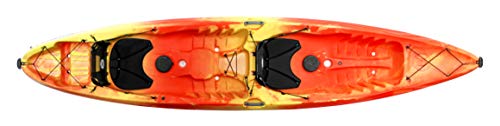
Perception Tribe Tandem 13.5ft Sit-On-Top Kayak
A two-person sit-on-top kayak built in the USA with adjustable seating, 500-pound capacity, and practical storage features. Best suited for recreational paddlers and beginners seeking comfort and stability on calm waters.
Pros
- Adjustable seating and molded knee/thigh areas fit a range of body types
- Generous storage with dual tank wells and central hatches plus bungee tie-downs
- Lightweight at 79 pounds with carry handles for easier transport and launch
- Scupper drainage holes support extended paddling seasons
Cons
- No verified buyer reviews available to validate real-world performance
- Scupper plugs sold separately, adding extra cost if needed for colder conditions
- 13.5-foot length may limit maneuverability in tight or narrow waterways
Perception Tribe 13.5 2-Person Sit-On-Top Kayak
A USA-made tandem kayak built for comfort and stability, featuring adjustable seating, generous storage with bungee tie-downs, and a 500-pound weight capacity. Well-suited for beginners and recreational paddlers looking for an easy-to-manage two-person option.
Pros
- Comfortable seating with molded knee and thigh support areas
- Ample storage capacity with dual central hatches plus tank wells
- Lightweight at 79 pounds for easier transport and handling
- Generous 500-pound combined weight limit for two adults or varied loads
- Adjustable footrests and seat frames accommodate different body sizes
Cons
- No customer reviews available yet to assess real-world durability and performance
- Scupper plugs sold separately, adding extra cost for water management
- 13.5-foot length may be challenging to transport without proper vehicle or storage space
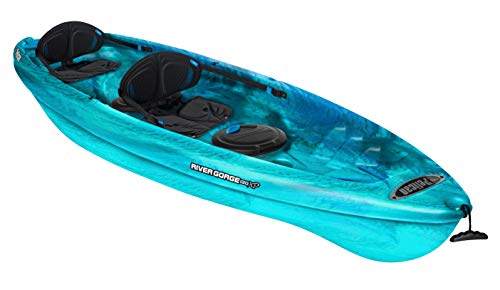
Pelican River Gorge 130X 13ft Tandem Kayak
A stable, two-person sit-on-top kayak designed for recreational paddling with a 500-pound capacity and reinforced hull for safety. The adjustable ERGOFIT G2 seating and multiple storage options make it practical for casual outings, though the lack of verified buyer reviews limits confidence in real-world durability claims.
Pros
- Stable hull design makes entry and exit easier than many competitors
- Additional flotation and scupper holes provide safety redundancy
- Lighter weight than comparable tandem kayaks improves portability
- Multiple storage solutions with quick-access hatch and bungee cords
- Molded middle seat accommodates children, pets, or extra gear
Cons
- No verified buyer reviews available to confirm durability and performance claims in actual use
- 13-foot length may be challenging to transport for solo paddlers despite 73-pound weight
- Limited information on how well the scupper hole design performs in choppy water conditions
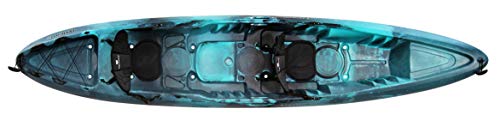
Perception Rambler 13.5 Tandem Kayak
A stable, versatile tandem kayak built for recreational paddlers of all skill levels across lakes, bays, and calm rivers. The 550-pound weight capacity and molded seating make it accessible for families or mixed-ability groups, though the 78-pound frame requires effort to transport.
Pros
- Versatile design handles lakes, ocean bays, light surf, and slow rivers
- High weight capacity and spacious seating accommodate families or mixed paddler sizes
- Large open storage with tie-down points for coolers and equipment
- Removable, padded seats with adjustable backrests provide comfort for extended paddles
- Stable 34-inch width suitable for beginners and experienced paddlers
Cons
- 78-pound weight is substantial for solo transport and launching without assistance
- No customer reviews available to validate real-world performance claims
- Limited information on durability or long-term maintenance requirements
Lifetime Kokanee 10'6" Sit-On-Top Kayak
A versatile 10'6" recreational kayak built from durable UV-protected polyethylene, designed for solo or tandem paddling with adjustable seating and multiple footrest positions. Best suited for casual paddlers and fishing enthusiasts seeking a stable, storage-friendly option.
Pros
- Versatile design works for one or two paddlers without additional setup
- Adjustable seating and footrests accommodate various body types and comfort preferences
- Deck hatch adds practical storage without compromising sit-on-top accessibility
- Durable UV-protected polyethylene resists sun damage and extends lifespan
Cons
- No verified buyer reviews available to confirm real-world performance claims
- 76-pound weight may be cumbersome for solo transport or smaller paddlers
- Single hatch storage is limited compared to multi-compartment designs
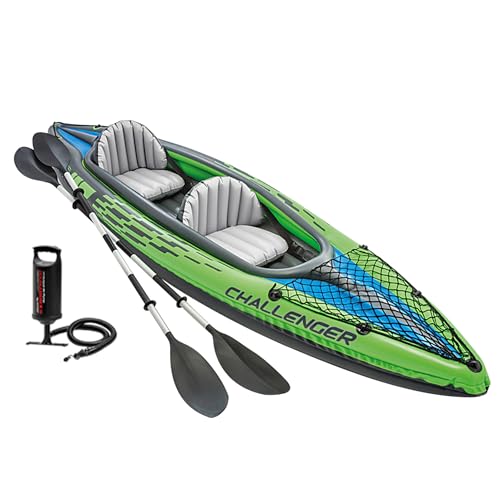
Intex Challenger K2 2-Person Inflatable Kayak
A budget-friendly inflatable kayak designed for two paddlers on calm lakes and mild rivers. Built with reinforced PVC and comes bundled with paddles and a pump, making it ready to launch without extra purchases.
Pros
- Complete package includes paddles and pump, no need to buy separately
- Spacious cockpit with adjustable seating accommodates different body sizes
- Removable skeg helps maintain straight course without additional steering effort
- SuperStrong PVC offers solid durability for recreational use
- Folds down compactly for storage and transport
Cons
- No verified buyer reviews available to confirm real-world durability claims
- Low-profile design limits performance in rough water or strong currents
- 32.67-pound weight makes solo setup and inflation physically demanding
BKC Brooklyn 13.5 Tandem Pedal Kayak, 680 lb Capacity
A two-person pedal kayak designed for fishing and leisure, offering hands-free propulsion and a 680-pound weight capacity to handle two adults plus gear. The 13.5-foot hull prioritizes stability for casting and standing, with a rudder system for directional control.
Pros
- Hands-free pedal propulsion reduces fatigue compared to traditional paddling
- Wide, stable beam designed for standing and casting without tipping
- Generous 680 lb capacity accommodates two adults, coolers, tackle, and camping gear
- Multiple storage options including two watertight hatches and rod holders
- Rudder steering provides sharp, responsive control for precise navigation
Cons
- No paddles included, requiring separate purchase for backup propulsion
- 4.5-star rating with zero verified reviews limits real-world buyer feedback
- Tandem design and 13.5-foot length may challenge solo transport and storage
Tandem Kayaks Buying Guide
Buying a tandem kayak is a bigger commitment than picking up most outdoor gear.
The range of designs on the market reflects genuinely different priorities: some paddlers need a boat they can deflate and carry in a duffel bag, while others want a rigid hull that tracks straight across open water all day.
Before you commit to any model, it helps to understand the key criteria that separate a great tandem kayak from one you will regret after the first season.
Hull Material and Durability

The material your kayak is made from determines its durability, weight, rigidity, and repairability.
Hardshell kayaks from brands such as Pelican, Perception, and Lifetime are typically molded from high-density polyethylene (HDPE) or proprietary materials like Pelican’s Ram-X, which offer excellent impact resistance and a stiff hull that holds its shape under load.
Polyethylene hulls are forgiving against rocks and shallow water, and they rarely need anything more than a rinse and UV protectant spray to last a decade or more.
Inflatable tandem kayaks use either standard PVC or upgraded SuperTough PVC formulations, and quality varies significantly. Entry-level models rely on thin-gauge PVC that is adequate for calm flatwater but vulnerable to punctures from abrasive surfaces.
Step up to a reinforced multi-layer construction and you get meaningfully better durability and rigidity.
Drop-stitch flooring, used in premium inflatables, allows the floor panels to be pumped to high pressures, creating a surface that feels nearly as firm as a hardshell and dramatically improves tracking.
If you plan to paddle anywhere with gravel beaches, rocky banks, or moving water, prioritize proven PVC thickness and seam quality over price alone.
BKC’s rotomolded polyethylene construction on its fishing-focused tandems sits at the more durable end of the sit-on-top category, while Intex uses its SuperTough PVC designation for its mid-range inflatables.
Weture’s 12.5-foot inflatable also layers in luminous safety strips, which add genuine utility for low-light paddling, a detail that shows thoughtful material design beyond the hull itself.
Stability and Tracking
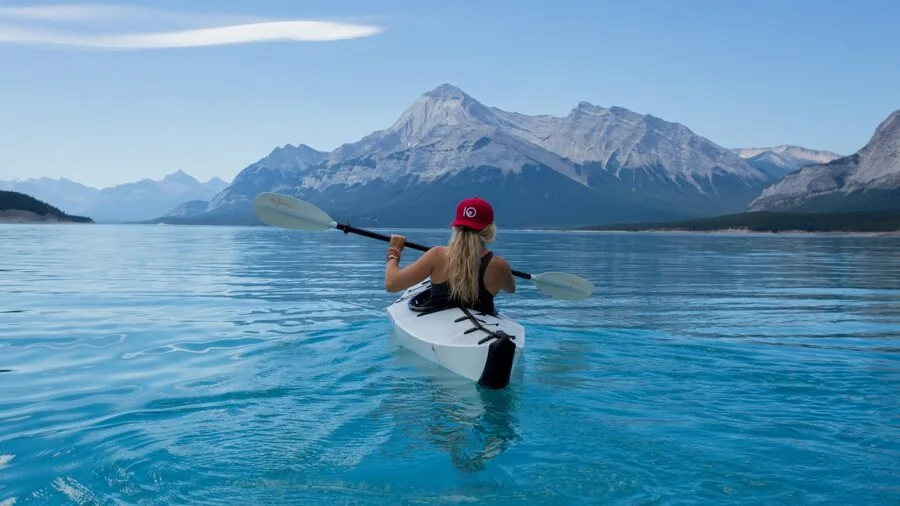
Stability in a kayak is split into two types: primary stability (how steady the boat feels sitting flat on calm water) and secondary stability (how confidently it handles when tilted, as in wave action or weight shifts).
Tandem kayaks tend to be wider than solo models by design, which increases primary stability and makes them more forgiving for beginners and recreational paddlers.
However, too wide a hull can sacrifice speed and make the boat difficult to track in a straight line.
Tracking refers to how well a kayak holds a straight course without constant correction.
Flat-bottomed recreational hulls like those found on the Pelican River Gorge and Perception Rambler prioritize initial stability over speed, making them ideal for calm lakes and slow rivers.
V-shaped or channel hulls cut through water more efficiently and require less paddling effort over long distances, but they demand more balance from beginners.
Removable tracking skegs, as found on the Intex Excursion Pro K2 and Weture models, let you tune the balance between maneuverability and straight-line tracking depending on your conditions.
For anglers who need to hold position while casting, or for paddlers covering significant distances, pedal-drive systems change the equation entirely.
The BKC 13.5 Tandem Pedal Kayak replaces traditional paddle effort with hands-free propulsion using dual flipper pedals, which is a meaningful ergonomic advantage for long sessions on the water.
Rudder steering on pedal models also improves directional control without the coordination demands of synchronized paddling.
Weight Capacity and Cockpit Ergonomics
Weight capacity on a tandem kayak is not simply about the combined body weight of two paddlers.
You need to account for paddling gear, fishing equipment, food and water for a full-day trip, safety items, and any gear secured in hatches or on deck.
A kayak rated for a given maximum capacity will begin to lose freeboard and stability well before that limit, so the general guidance from kayak manufacturers and paddling safety organizations is to load the boat to no more than 70 to 80 percent of its rated maximum.
The models in this roundup span a meaningful range of capacities, from around 400 lbs on the Intex Excursion Pro K2 up to 680 lbs on the BKC Pedal Kayak.
If you and your paddling partner are on the heavier side, or if you plan to carry significant gear, prioritize capacity accordingly and factor in the 70 to 80 percent practical limit.
Sit-on-top designs like those from Perception and BKC also benefit from open deck layouts that are easier to climb back onto if you capsize, which is a relevant safety consideration for beginners.
Seat comfort matters enormously on any paddle lasting more than an hour. Look for padded high-back seats with adjustable straps, which let both paddlers dial in their torso position independently.
Inflatable kayaks sometimes sacrifice seat quality to keep costs down, so read verified buyer feedback carefully on this point before purchasing. The BKC fishing tandems stand out for their padded seating at the sit-on-top category’s higher price points.
Portability and Storage

A 13-foot hardshell kayak weighs anywhere from roughly 55 to 80 pounds and requires a roof rack or trailer to transport.
That is not a trivial logistical requirement, especially if you live in an apartment or lack a dedicated vehicle with roof rails.
For paddlers without easy vehicle transport or storage space, inflatable tandem kayaks offer a practical alternative: they roll down to bag-sized bundles that fit in a car trunk, a closet, or a camper.
The Intex Excursion Pro K2 and Weture inflatable both pack into carry bags and can be set up with a hand pump in 15 to 20 minutes.
Hardshell sit-on-top tandems from Pelican, Perception, and Lifetime compensate with superior performance on the water and zero inflation wait time.
If you have secure outdoor storage and a vehicle that can handle a long hull, the rigidity advantage of a hardshell is worth the transport trade-off.
Paddle carry handles molded into the hull at front, middle, and rear make loading a tandem a two-person job that is manageable even without a hoist, and many models include integrated carry handles for portaging between launch points.
Storage on the water is a separate consideration: look for sealed bow and stern hatches if you want to keep dry bags or gear protected, and for cargo nets or bungee-cord decking if you prioritize quick-access stowage.
The Perception Tribe 13.5, for example, is well-regarded for its large rear storage area with integrated tie-down points, a practical advantage for day-trip gear.
Intended Use: Recreational, Touring, or Fishing

Tandem kayaks are not a single category in practice. Recreational tandems like the Pelican River Gorge and Perception Rambler are optimized for casual flat-water paddling: stable, easy to enter and exit, and forgiving for mixed-experience paddling partners.
They are the right choice for calm lakes, ponds, and slow-moving rivers where comfort and confidence matter more than speed or feature count.
Fishing tandems add rod holders, motor-mount plates, and gear organization features that make them genuinely functional workboats rather than simple recreational hulls.
The BKC 12.5 tandem includes six rod holders and is motor-ready, while the BKC Pedal Kayak adds a hands-free propulsion system that lets both occupants keep lines in the water simultaneously.
These features come at a premium price, but for dedicated anglers, that premium is justified by the functional advantage on the water.
Inflatable touring-oriented models, including the Weture 12.5-foot tandem, occupy a middle ground: they perform better than budget pool inflatables but still lack the rigid-hull efficiency of a hardshell on open water in wind or current.
They are best suited for calm conditions and paddlers who prioritize portability above all else.
If you plan to paddle in moving water or open coastal environments, research hull design and skeg options carefully, and consider whether a hardshell tandem better matches those demands.
Value, Accessories, and What Is Included
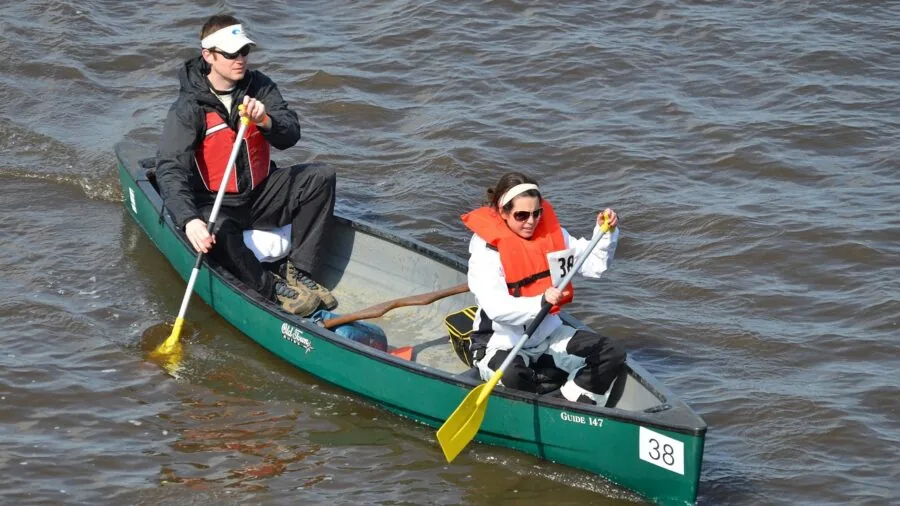
Entry-level tandem kayaks at a budget price point rarely include paddles, and when paddles are bundled, quality varies from barely functional to genuinely useful.
Inflatables often include a pump and paddles in the box, which lowers the barrier to a first paddle significantly, but check whether the included paddles are fiberglass-shaft or aluminum-shaft designs, since fiberglass is meaningfully lighter over a long day of paddling.
Mid-range hardshells typically do not include paddles, so budget an additional amount for a pair of quality two-piece aluminum or fiberglass paddles sized to your torso height.
Life jackets (PFDs) are a legal requirement on most waterways and are never included with kayaks; factor this into your total outlay, especially if you are buying for two people.
Investing in quality PFDs and a dry bag or two will make the difference between a safe, enjoyable outing and a stressful one, regardless of which hull you choose.
Why You Should Trust Us
ProductFind is an independent review publication. We do not sell kayaks, process orders, or handle returns or warranty claims on behalf of any manufacturer or retailer. Every recommendation on this page reflects our editorial judgment based on consistent, multi-source research.
Each kayak in this roundup was assessed using our PF Score system, a 0 to 10 scale applied across consistent criteria including materials and construction quality, stability and tracking performance, load capacity relative to design intent, ergonomics and seat quality, portability and storage, included accessories, and overall value.
Scores are derived from synthesizing manufacturer specifications, expert review consensus across multiple independent publications, and verified buyer feedback from confirmed purchasers.
We do not conduct our own product trials; our evaluations are grounded in research, published data, expert review consensus, and verified buyer feedback.
ProductFind may earn a commission when you purchase through links on this page. That affiliate relationship has no influence on our rankings, PF Scores, or editorial selections.
Products are recommended because they earned their position through our research process, not because of any commercial arrangement. We reassess categories regularly as new products enter the market and verified buyer data accumulates.
Final Thoughts
The tandem kayak market in 2026 covers an impressive range of designs, from packable inflatables well-suited to weekend adventurers to fully equipped pedal-drive fishing platforms built for serious anglers.
After analyzing specifications, expert review consensus, and verified buyer feedback across all eleven models in this roundup, here are our standout picks by category:
- Best Overall: BKC Upgraded 13.5 Tandem Pedal Kayak earns the top spot with the highest PF Score in our roundup, combining hands-free pedal propulsion, a generous 680 lb capacity, rudder steering, and a feature set that outpaces every other model across both recreational and fishing use cases.
- Best Hardshell Sit-In Tandem: Pelican Argo 136XP delivers a lightweight yet rigid Ram-X hull with class-leading stability for a sit-in design, earning the second-highest PF Score among hardshell options and representing a strong choice for paddlers who prefer an enclosed cockpit on lakes and calm rivers.
- Best Inflatable Tandem: Intex Excursion Pro K2 sets the standard for inflatable tandem performance at a mid-range price, with SuperTough PVC construction, adjustable bucket seats, removable skegs, and a 400 lb capacity that handles two adult paddlers comfortably on flatwater.
- Best Budget Inflatable Pick: Intex Challenger K2 offers the most accessible entry point in this roundup for paddlers who want a tandem kayak experience without a large financial commitment, with a streamlined hull design that punches above its weight class for calm-water paddling.
- Best for Fishing Pairs: BKC Brooklyn 12.5 Tandem Fishing Kayak stands out for its six rod holders, motor-ready hull, and substantial 600 lb capacity, making it a purpose-built fishing platform at a competitive price for the feature set it delivers.
Whichever direction your budget and paddling goals point, the most important step is matching the kayak’s design intent to your real-world use. A pedal-drive tandem is transformative for fishing but overkill for a casual weekend lake paddle.
An inflatable is a practical solution for apartment dwellers but a compromise in wind or current.
Use the buying guide above to narrow your criteria, then let the PF Scores guide you to the model that earns its keep on your water.
Frequently Asked Questions
Are inflatable tandem kayaks safe for two adults?
Yes, quality inflatable tandem kayaks are safe for two adults on calm flatwater when used within their rated weight capacity and in appropriate conditions.
Models with reinforced multi-layer PVC construction and drop-stitch flooring are meaningfully more puncture-resistant and rigid than entry-level designs.
Always carry a repair kit, wear PFDs, and avoid moving water or open coastal conditions unless the kayak is specifically rated for those environments. Inflatables perform best on lakes, ponds, and slow-moving rivers.
What weight capacity do I need for a tandem kayak?
Add the combined body weight of both paddlers to your estimated gear weight, then choose a kayak rated for at least 25 to 30 percent more than that total.
This buffer keeps the hull riding high enough in the water to maintain stability and tracking. For two average-sized adults with a day’s worth of gear, a capacity of 500 lbs or more is a practical starting point.
Anglers carrying rods, tackle boxes, and a cooler should prioritize models rated at 600 lbs and above, such as the BKC fishing tandems in this roundup.
Can one person paddle a tandem kayak solo?
Most tandem kayaks can be paddled solo, but the experience varies by design. A wide, long tandem hull is harder to control solo because the empty seat throws off the weight distribution and the boat can weather-vane in wind.
Paddling from the center seat, or loading gear into the empty cockpit for ballast, improves handling significantly. Some dedicated tandem designs include a solo-ready center seating position.
If you plan to paddle solo frequently, look for a model with a flexible seating arrangement or consider a solo kayak alongside a tandem for mixed-use versatility.
How long does it take to set up an inflatable tandem kayak?
Setup time depends on the pump type and hull volume. Most inflatable tandem kayaks take 10 to 20 minutes to inflate using a high-output hand pump, and slightly less with an electric pump. Deflation and rolling for storage typically takes 5 to 10 minutes.
The Intex models and Weture 12.5-foot tandem are designed for straightforward setup without special tools, though the process requires more physical effort with a hand pump than newcomers expect.
An electric pump accessory is a worthwhile investment if you plan to paddle frequently.
What is the difference between a sit-on-top and a sit-in tandem kayak?
Sit-on-top kayaks place paddlers on an open deck rather than inside an enclosed cockpit, which makes them easier to board, exit, and re-enter after a capsize, particularly in warm water. They are preferred for fishing, warm-climate paddling, and beginners.
Sit-in kayaks enclose the lower body, which keeps paddlers warmer and drier in cold or choppy conditions and often allows better paddle efficiency through hip engagement.
The Pelican Argo 136XP is a sit-in design suited to cooler conditions, while the Perception and BKC models in this roundup are sit-on-tops built for warm-weather versatility.
Do I need any accessories beyond the kayak itself?
At minimum, every paddler needs a properly fitted personal flotation device (PFD) and a paddle. Neither is optional from a safety or legal standpoint on most waterways.
Beyond those essentials, useful additions include a dry bag for electronics and valuables, a bilge pump for sit-in kayaks, a whistle or signaling device, and UV-protective spray for polyethylene hulls.
Anglers will want rod holders, a tackle tray, and an anchor system. If you are paddling an inflatable, keep a repair kit on the water at all times.
Planning your full accessory list before purchase helps you build an accurate total budget rather than being surprised by add-on costs after buying the hull.
About the author
Olivia is a reviewer and writer for ProductFind who specializes in Water Sports. Olivia evaluates products through independent research: specifications, expert review consensus, and verified buyer feedback, and rates each one on the PF Score. Olivia focuses on helping readers pick the right water sport for their needs and budget.