The 9 Best Aquarium Filters
Clean water starts with the right filter. This guide breaks down the top aquarium filters by tank size, filter type, and bioload so you can match the right unit to your setup without overspending.
 By John Mcdonalid
Updated July 23, 2026
By John Mcdonalid
Updated July 23, 2026
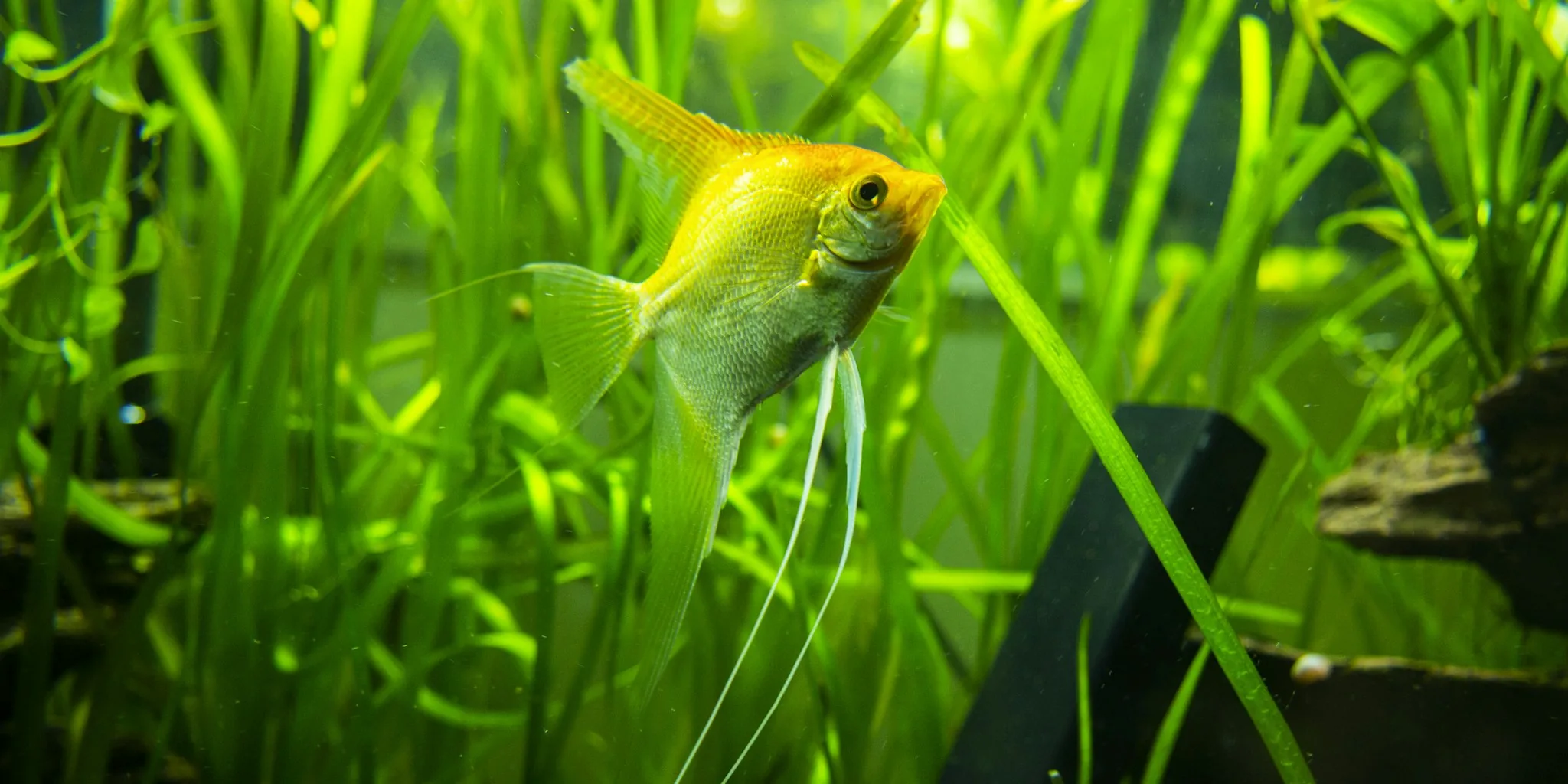
A reliable aquarium filter is the single most important piece of equipment in any fish tank setup.
It drives the nitrogen cycle, removes harmful ammonia and nitrite, eliminates debris, and keeps dissolved oxygen levels high enough for your fish to thrive. Without adequate filtration, even a beautifully aquascaped tank can crash within days.
Whether you are setting up a compact 20-gallon community aquarium or managing a sprawling 150-gallon predator tank, choosing the right filter type and capacity makes the difference between a stable ecosystem and a constant maintenance headache.
If you are still deciding on the tank itself, our guide to fish tanks for every home and budget is a good place to start before committing to a filtration system.
This guide covers the best aquarium filters across hang-on-back, canister, and internal styles, spanning tanks from 15 gallons up to 150 gallons.
ProductFind assembled this list through comprehensive research: we analyzed manufacturer specifications, weighed expert review consensus from across the aquarium hobby community, and studied verified buyer feedback to understand real-world reliability over months of continuous operation.
Every product below has been assigned a PF Score on our 0 to 10 scale. Whether your priority is whisper-quiet operation, biological filtration depth, ease of maintenance, or simply the lowest upfront cost, the picks below give you a clear starting point.
| Award | Product | PF Score About PF ScoreThe PF Score is our own rating from 0 to 10, based on performance, design and build, ease of use, and value. It reflects independent research and is never influenced by manufacturers, retailers, or affiliate commissions. Learn more › | Price | |
|---|---|---|---|---|
| Best Overall |
 Fluval AC50 Power Filter for 20-50 Gallon Tanks
|
8.5/10 | Buy | |
| Editor's Pick |
 Seachem Tidal 55 Gallon Aquarium Filter
|
8.4/10 | Buy | |
| Best Value |
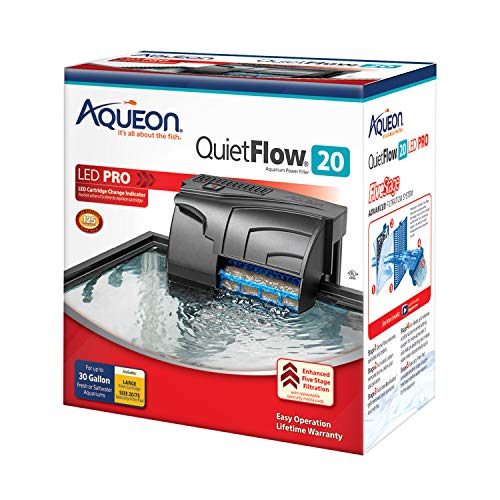 Aqueon QuietFlow 20 LED PRO 30-Gallon Filter
|
8.2/10 | Buy | |
| Top Rated |
 Seachem Tidal 110 Gallon Aquarium Filter
|
8.1/10 | Buy | |
 Tetra Whisper IQ 20-Gallon Power Filter, 130 GPH
|
7.3/10 | Buy | ||
 TARARIUM WP-490F Aquarium Filter 20-75 Gal
|
6.8/10 | Buy | ||
 Aulofee 8-Inch Submersible Aquarium Filter, 15-50 Gallon
|
6.7/10 | Buy | ||
 COOSPIDER 260GPH Aquarium Filter for 30-75 Gallon Tanks
|
6.4/10 | Buy | ||
 Coospider-Repta 300 GPH Internal Filter for 55-150 Gallon Tanks
|
6.1/10 | Buy |
Fluval AC50 Power Filter for 20-50 Gallon Tanks
Fluval's AC50 is a compact hang-on filter designed for small to mid-sized aquariums, offering straightforward mechanical filtration with included media. Best suited for hobbyists seeking a no-frills setup without advanced features or performance data to evaluate.
Pros
- Appropriate flow rate range for small to mid-sized community tanks
- Comes with media, reducing initial setup costs
- Established brand with long market history in aquarium filtration
Cons
- No customer reviews available, limiting real-world performance validation
- Limited feature set with no indication of advanced filtration capabilities like chemical or biological media support
- Minimal product documentation provided in listing
Seachem Tidal 55 Gallon Aquarium Filter
The Seachem Tidal 55 is a external canister filter designed for both freshwater and saltwater aquariums up to 55 gallons. It features a self-priming pump and adjustable intake flow, making it suitable for different tank setups and maintenance preferences.
Pros
- Works with both freshwater and saltwater tanks
- Self-priming pump eliminates manual priming hassles
- Adjustable intake flow control for customized filtration rates
- Self-cleaning impeller reduces maintenance frequency
- Compact dimensions fit under most standard aquarium stands
Cons
- No verified customer reviews available to assess real-world reliability and performance
- Limited information on filter media capacity and replacement costs
- Adjustable leveling device functionality not detailed in available specifications
Aqueon QuietFlow 20 LED PRO 30-Gallon Filter
A compact hang-on filter designed for aquariums up to 30 gallons, combining mechanical and chemical filtration with a focus on quiet operation. Multi-stage filtration targets ammonia, nitrites, and odors through dense floss, activated carbon, and a bio-holster system.
Pros
- Multi-stage filtration addresses particles, toxins, ammonia, and nitrites in one unit
- Diffuser grid design reduces splashing and noise during operation
- Activated carbon removes odors and water discoloration
- Compact dimensions (7.4 x 7.9 x 4.4 inches) fit tight spaces
Cons
- No verified buyer reviews available to assess real-world reliability and maintenance ease
- Filter replacement costs and availability not specified in product data
- Limited to 30-gallon tanks, unsuitable for larger setups
Seachem Tidal 110 Gallon Aquarium Filter
The Tidal 110 is a canister filter designed for 110-gallon tanks, featuring a bottom-to-top flow design and self-priming pump for consistent circulation. Its cartridge-free maintenance system and self-cleaning impeller appeal to aquarists seeking low-hassle upkeep.
Pros
- No filter cartridges required, reducing ongoing replacement costs
- Self-priming pump eliminates manual priming on startup
- Self-cleaning impeller helps reduce maintenance frequency
- Adjustable leveling device allows flexible installation
- Intake flow regulation lets you control water draw rate
Cons
- No verified buyer reviews available to assess real-world reliability
- Large footprint at 15 x 6 x 15 inches may require dedicated cabinet space
- Relatively heavy at 2.2 pounds, making installation and repositioning less convenient
Tetra Whisper IQ 20-Gallon Power Filter, 130 GPH
A compact, quiet filter designed for 20-gallon aquariums that uses submerged motor technology to eliminate priming hassle. The Stay Clean technology helps maintain pH balance, though monthly cartridge replacements are required for consistent performance.
Pros
- Quiet operation makes it suitable for living spaces and bedrooms
- Self-priming design eliminates startup complications
- Stay Clean technology reduces maintenance frequency by maintaining stable pH
Cons
- Requires monthly cartridge replacements, adding ongoing costs
- No customer reviews available to assess real-world reliability
- Filter cartridges sold separately, adding to total ownership expense
TARARIUM WP-490F Aquarium Filter 20-75 Gal
A multi-function aquarium filter combining mechanical filtration, UV sterilization, and air pump in one unit with auto-timer controls. Designed for tanks up to 75 gallons with adjustable bubble flow safe for fry and shrimp.
Pros
- 4-in-1 system eliminates need for separate equipment: bio-sponge filter, UV light, air pump, and wave maker
- Independent auto-timer controls for UV and pump with preset cycles (3, 6, 12, 24 hours) reduce maintenance
- Reusable bio-sponge filter and adjustable fine bubble output safe for sensitive fish, betta, and shrimp
- Quiet operation with option for near-silent use by disconnecting air tube
- Quick cleaning design with tool-free assembly and detachable components
Cons
- No verified customer reviews available to assess real-world reliability and performance consistency
- Limited information on UV bulb lifespan and replacement costs despite auto-timer bulb-saving feature
- Capacity range (20-75 gallons) may require verification for optimal performance at tank size extremes
Aulofee 8-Inch Submersible Aquarium Filter, 15-50 Gallon
A 6-in-1 internal filter system designed for small to medium tanks with adjustable flow control and a fish guard to protect smaller inhabitants. Operates quietly under 25dB and combines filtration, oxygenation, and circulation in one submersible unit.
Pros
- Multiple functions in one compact design reduces need for separate equipment
- Bottom fish guard and check valve address common maintenance and safety concerns
- Adjustable outlet and air valve allow fine-tuning for tank-specific needs
- Quiet operation makes it suitable for living spaces
- Reusable filter media reduces long-term replacement costs
Cons
- No verified buyer reviews available yet to confirm real-world performance
- Sponge media requires hand rinsing with tank water, which may be inconvenient for some users
- Limited to 15-50 gallon range, not suitable for larger aquarium setups
COOSPIDER 260GPH Aquarium Filter for 30-75 Gallon Tanks
A mid-range canister filter with a 260 GPH copper motor pump designed for tanks up to 75 gallons. It offers adjustable height compartments and reusable filter media, making it practical for freshwater, saltwater, and small pond setups.
Pros
- Solid flow rate of 260 GPH suits mid-sized tanks effectively
- Height-adjustable design and airflow control accommodate different setups
- Reusable filter media reduces long-term maintenance costs
- Multipurpose capability works for aquariums, ponds, and water features
- Straightforward disassembly for routine cleaning
Cons
- No verified buyer reviews available to confirm real-world reliability
- 4.5-star rating based on zero customer feedback raises credibility questions
- Limited information on noise level or heat output during operation
Coospider-Repta 300 GPH Internal Filter for 55-150 Gallon Tanks
A submersible filter designed for large aquariums and turtle tanks, offering dual-stage filtration with adjustable aeration and wave-making capability. Best suited for keepers managing 55-150 gallon setups who prioritize water clarity and oxygen circulation.
Pros
- Handles large tank volumes with 300 GPH flow rate
- Dual filtration stage targets both debris and odor control effectively
- Adjustable aeration and detachable components offer flexibility for different tank configurations
- Wave-making function promotes surface agitation and gas exchange
Cons
- No verified buyer reviews available to confirm real-world performance consistency
- Detachable design for shallow tanks suggests height limitations may require modification
- Limited information on maintenance frequency and sponge replacement costs
Aquarium Filters Buying Guide
Picking an aquarium filter is not as simple as grabbing the most powerful unit on the shelf. Overshooting flow rate can stress fish that prefer calmer water, while undershooting leaves ammonia building up between water changes.
The subsections below walk through every criterion that separates a genuinely great filter from one that will frustrate you six months from now.
Filter Type and Tank Compatibility
The three most common styles you will encounter are hang-on-back (HOB) power filters, canister filters, and internal submersible filters.
HOB units like the Aqueon QuietFlow 20 LED PRO and the Fluval AC50 hang on the tank rim and are easy to access for media changes, making them popular with beginner and intermediate hobbyists.
Canister filters like the Seachem Tidal line mount below or beside the tank, hold significantly more biological and mechanical media, and produce lower turbulence, which suits planted tanks and sensitive species.
Internal submersible filters sit entirely inside the tank. They are typically the most affordable option and work well as secondary filtration or in bare-bottom breeding setups, though their media capacity is limited compared to canisters.
If you are outfitting a turtle or koi pond setup indoors, a submersible unit rated for high bioloads is worth prioritizing over a standard HOB.
Tank shape also matters: tall hex tanks benefit from filters with adjustable intake lengths, while long shallow tanks may need two moderate-flow units rather than one high-flow model.
Always match the filter’s stated gallon rating to your actual tank volume.
Most manufacturers rate their units at the high end of performance under ideal conditions, so choosing a filter rated for a tank 20 to 30 percent larger than yours provides a meaningful safety margin, especially in heavily stocked systems.
Flow Rate and Turnover

Flow rate, measured in gallons per hour (GPH), determines how many times per hour all the water in your tank passes through the filter media.
The widely accepted guideline for most freshwater community tanks is a turnover rate of four to six times per hour.
A 50-gallon tank, for example, benefits from a filter delivering 200 to 300 GPH under real-world conditions, not just the peak figure printed on the box.
For tanks with messy inhabitants such as goldfish, cichlids, or large carnivores, pushing toward eight to ten turnovers per hour is prudent.
Conversely, tanks housing slow-moving species like bettas or discus need lower surface agitation, so a high-GPH filter should be baffled or pointed toward the glass to diffuse the outlet flow.
Some filters include an adjustable flow dial, which is a practical feature worth paying attention to when comparing models.
Filtration Stages: Mechanical, Biological, and Chemical
Effective filtration runs through three stages. Mechanical media, typically foam pads or floss, physically traps solid particles like uneaten food and fish waste.
Biological media, including ceramic rings, bio-balls, or matrix-style material, provides surface area for beneficial bacteria that convert toxic ammonia into nitrite and then into relatively harmless nitrate.
Chemical media, most commonly activated carbon, removes dissolved organics, odors, tannins, and some medications.
Canister filters excel at running all three stages sequentially in dedicated compartments, which is why they are the preferred choice for high-bioload systems and planted tanks requiring pristine water clarity.
HOB filters typically combine mechanical and biological media in a cartridge format, with a separate carbon insert. Look for models that let you customize media rather than locking you into proprietary replacement cartridges, which adds ongoing cost.
The Seachem Tidal line and Fluval AC50 both offer open media baskets that accept third-party media, a significant long-term advantage.
For tanks that are prone to algae or need a UV stage to control parasites, UV clarifier filters like the TARARIUM unit combine mechanical filtration with an integrated UV-C bulb.
These can meaningfully reduce free-floating algae and some pathogens, though they supplement rather than replace biological filtration.
Noise Level and Vibration

A filter that runs continuously 24 hours a day needs to be quiet enough to share a living space with.
HOB filters are the most common source of aquarium noise, typically producing a low hum or trickle sound as water falls back into the tank.
Units like the Tetra Whisper IQ are specifically engineered with sound-dampening chambers and suspended impellers to minimize vibration transfer to the tank glass.
In practice, verified buyers consistently note that the Whisper IQ is among the quietest HOB options at its price point, though it sacrifices some media capacity for that engineering.
Canister filters, because their pump operates below the waterline, tend to produce less airborne noise but can transmit vibration to cabinetry if not properly isolated.
Placing a soft mat under the unit and ensuring all tubing runs are free of air pockets largely solves this.
Internal submersible pumps hum at a frequency that many hobbyists find unobtrusive, but cheaper impeller designs can rattle after a few months of buildup, so regular cleaning is non-negotiable.
Ease of Maintenance
The best filter in the world fails if it is too inconvenient to clean regularly. HOB filters are generally the easiest to service: you lift the lid, rinse or replace the media, and you are done in under five minutes.
Canister filters require disconnecting hoses and carrying the unit to a sink, a process that takes closer to 20 to 30 minutes but only needs doing every four to eight weeks depending on bioload.
Internal filters are quick to remove but often fiddliest to disassemble for a thorough cleaning. Look for models with tool-free disassembly and clearly stacked media trays.
The Aulofee submersible unit includes a debris tray and check valve that simplify both cleaning cycles and media replacement without draining the tank.
If you keep multiple aquariums or have limited time, prioritizing filters with accessible media compartments will save meaningful effort over a year of maintenance.
Energy Efficiency and Long-Term Cost
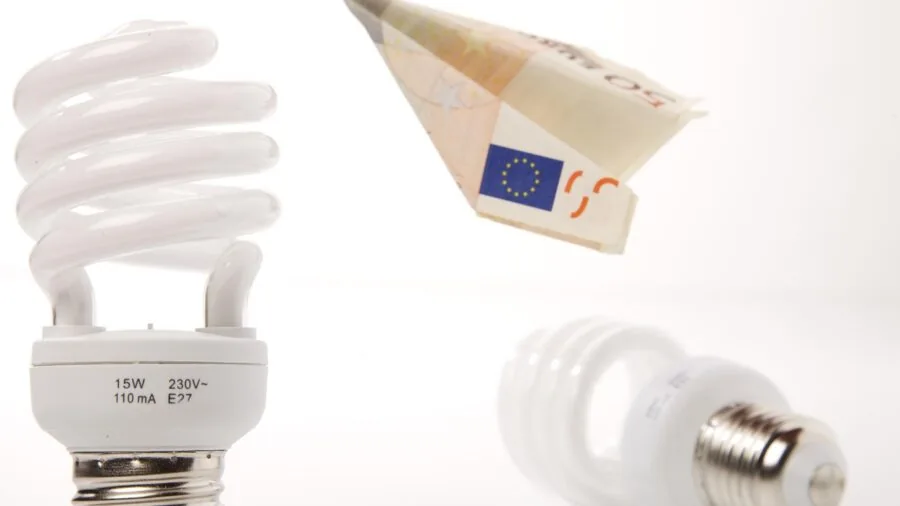
Aquarium filters run every hour of every day, so watt consumption adds up over a year. A filter drawing 10 watts more than a comparable alternative costs real money annually on your electricity bill, especially if you run several tanks.
Manufacturer wattage specs are a starting point, but verified buyer reviews often flag units that run hotter or draw more power than advertised once the impeller ages.
Beyond electricity, factor in the cost of replacement media. Proprietary cartridge systems can cost two to four times as much per year as filters that accept bulk ceramic rings or cut-to-fit foam.
The Seachem Tidal 55 and Tidal 110 both use open baskets compatible with third-party media from brands like Seachem Matrix or Fluval BioMax, keeping annual running costs low.
Budget internal and HOB filters with cheap cartridges often have a lower sticker price but higher lifetime cost once consumables are included.
Why You Should Trust Us
ProductFind is an independent review publication. We do not sell aquarium equipment, and we have no affiliation with any retailer or manufacturer featured in this guide.
Every product in our roundups is evaluated using a consistent, structured research framework and assigned a PF Score on a 0 to 10 scale.
Our methodology for aquarium filters draws on manufacturer-published specifications (flow rate, wattage, media capacity, tank size range), expert review consensus from the aquarium hobby community, and verified buyer feedback covering real-world reliability, noise, ease of maintenance, and media longevity.
We do not conduct our own product trials; our evaluations are grounded in research, published data, expert review consensus, and verified buyer feedback.
This approach lets us assess a broad range of products consistently, without the conflicts of interest that come with manufacturer-supplied samples or paid placements.
ProductFind may earn a commission if you purchase through links in this article. That affiliate relationship has no influence on which products are included, how they are ranked, or what PF Score they receive. Recommendations are driven entirely by research quality and product merit.
Final Thoughts
After synthesizing specifications, expert review consensus, and verified buyer feedback across all nine products, here is how our top picks shake out by use case.
If you are also exploring how your filter pairs with a complete setup, choosing the right fish tank first ensures your filtration choice is properly scaled from the start.
- Best Overall: Fluval AC50 Power Filter earns the top spot with the highest PF Score in this group, combining open-access media baskets, strong flow-rate-to-wattage efficiency, and a track record of reliability across a wide range of tank types from 20 to 50 gallons.
- Best for Mid-Size Community Tanks: Seachem Tidal 55 by Sicce stands out for its self-priming design, surface skimmer, and fully customizable media basket, making it the go-to recommendation for tanks up to 55 gallons where biological filtration depth matters.
- Best Budget HOB Filter: Aqueon QuietFlow 20 LED PRO delivers dependable mechanical and biological filtration for tanks up to 30 gallons at a budget-friendly price, with an LED indicator that signals when media needs attention, a practical touch for newer hobbyists.
- Best for Large Freshwater Tanks: Seachem Tidal 110 by Sicce scales up the Tidal platform to handle tanks up to 110 gallons, retaining the same open-basket flexibility and self-priming convenience in a higher-capacity housing suited to heavily stocked systems.
- Best for Quiet Operation on a Budget: Tetra Whisper IQ Power Filter is the right call for hobbyists who prioritize near-silent operation in a bedroom or living-room tank, with sound-shield technology that verified buyers consistently praise even if media volume is more modest than pricier HOB options.
For most hobbyists setting up a tank in the 20 to 55 gallon range, the Fluval AC50 or Seachem Tidal 55 will cover virtually every need without requiring an upgrade later. Larger tanks and high-bioload species benefit from the Tidal 110’s added capacity.
If budget is the primary driver, the Aqueon QuietFlow 20 LED PRO delivers solid, reliable filtration without a premium price tag.
Frequently Asked Questions
How often should I clean my aquarium filter?
Most HOB and internal filters benefit from a media rinse every two to four weeks, depending on how heavily the tank is stocked. Canister filters can typically go four to eight weeks between cleanings.
The key rule is to rinse mechanical media (foam, floss) in old tank water, not tap water, to preserve the beneficial bacteria colonies living in it.
Replacing all media at once wipes out your biological filtration and can trigger a mini nitrogen cycle, stressing your fish.
What does GPH mean and how much do I need?
GPH stands for gallons per hour and measures how much water a filter moves in that time. A common benchmark is four to six times turnover per hour for community freshwater tanks.
So a 40-gallon tank ideally runs a filter rated at 160 to 240 GPH under real-world conditions. Tanks with messy fish, heavy feeding, or high bioloads should target the higher end of that range or beyond.
Always account for head pressure loss if the intake draws from deep in the tank or the outlet runs upward, both of which reduce effective GPH from the rated figure.
Can I run two filters on the same tank?
Running two filters on a single tank is not only acceptable but often recommended for heavily stocked aquariums or large tanks.
Dual filtration provides redundancy: if one filter fails unexpectedly, the beneficial bacteria in the second unit keep the nitrogen cycle stable while you address the problem.
It also lets you place intakes and outlets at opposite ends of the tank, improving circulation and reducing dead spots.
Many hobbyists run a canister as primary filtration and a smaller internal or HOB unit as a biological backup, a setup that pairs well with dedicated pet care routines where consistency and equipment reliability go hand in hand.
Do I need a UV filter for my aquarium?
UV sterilizer units, like the TARARIUM with its built-in UV-C bulb, are useful for controlling green water algae blooms and reducing free-swimming pathogens and parasites in the water column.
They are particularly popular in koi ponds and goldfish setups prone to bacterial outbreaks. That said, UV filtration is a supplement to standard mechanical and biological filtration rather than a replacement.
If your tank water is clear, your livestock is healthy, and your maintenance schedule is consistent, a UV stage is a nice-to-have rather than an essential expense.
Is a canister filter worth the extra cost compared to a hang-on-back filter?
For tanks under 40 gallons with a moderate bioload, a quality HOB filter like the Fluval AC50 or Aqueon QuietFlow delivers excellent results at a lower upfront cost and easier maintenance.
Canister filters justify their higher price in tanks above 55 gallons, densely planted setups requiring minimal surface agitation, or systems stocked with messy species that demand deeper biological media capacity.
The Seachem Tidal line occupies a middle ground, offering canister-style media flexibility in a HOB form factor, which is why it consistently ranks among the top recommendations for mid-size tanks across expert review sources.
Will an aquarium filter work for a turtle tank?
Turtle tanks produce significantly more waste than fish tanks of the same volume, so filtration needs to be rated for two to three times the actual tank capacity.
Internal submersible filters designed for large bioloads, such as the Coospider unit rated for 55 to 150 gallons, are popular choices because they handle the high ammonia output turtles generate.
Ease of cleaning is especially important in turtle setups since media clogs faster. A filter with an accessible debris tray and a simple disassembly path saves considerable time during weekly maintenance, keeping the enclosure sanitary and your animals healthy.
Proper equipment care is just as important in reptile keeping as it is in any other pet grooming and care routine.
About the author
John is a reviewer and writer for ProductFind who specializes in Fish & Aquariums. John evaluates products through independent research: specifications, expert review consensus, and verified buyer feedback, and rates each one on the PF Score. John focuses on helping readers pick the right fish & aquarium for their needs and budget.