The 10 Best Enameled Cast Iron Dutch Ovens
From sourdough baking to low-and-slow braises, enameled cast iron Dutch ovens do it all. Our research covers enamel durability, heat retention, and value across budget and premium picks.
 By Jackson Lowe
Updated July 23, 2026
By Jackson Lowe
Updated July 23, 2026
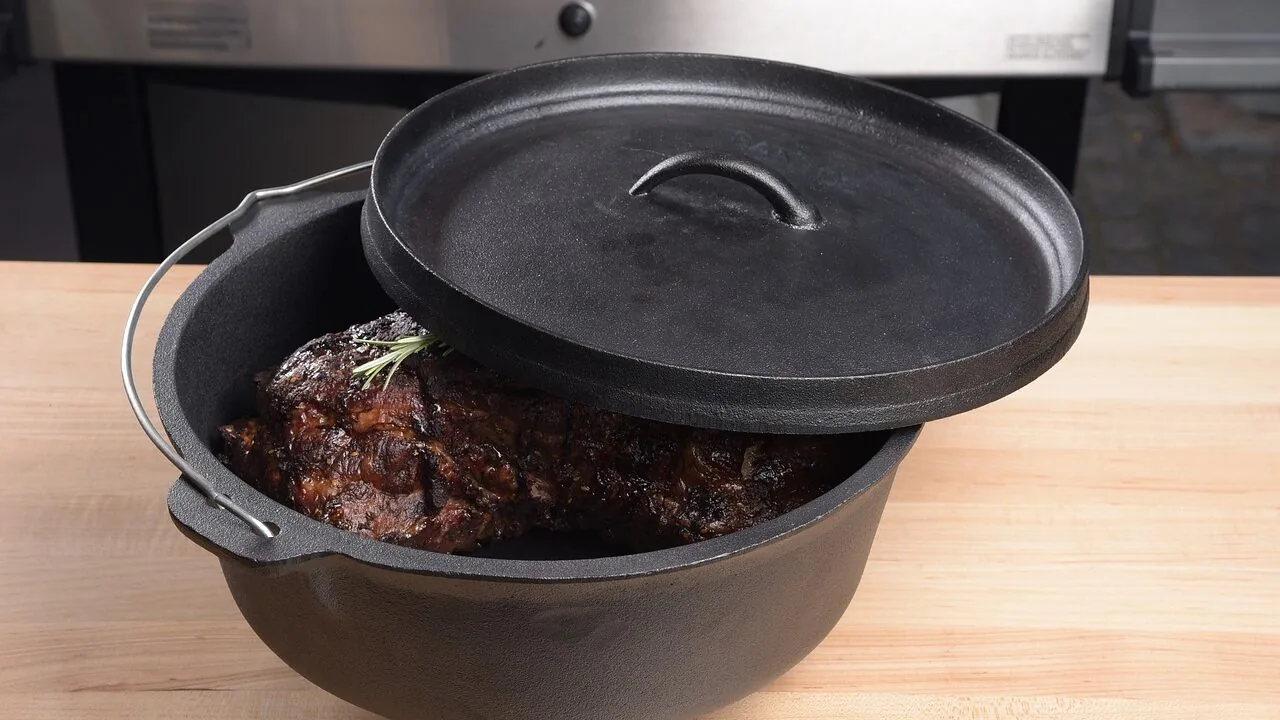
A good enameled cast iron Dutch oven might be the single most versatile piece of cookware you ever buy.
It sears a chicken thigh, braises a short rib, simmers a Sunday ragu, and bakes a crackling sourdough loaf, all in one heavy, beautiful pot that can go from stovetop to oven to dinner table without skipping a beat.
The category has exploded in recent years, with options ranging from premium French-made heirlooms to surprisingly capable budget entrants, making the buying decision genuinely tricky for anyone who just wants a reliable workhorse.
If you’re also building out your kitchen, our roundup of cookware sets for every kitchen and budget covers the broader picture alongside this guide.
At ProductFind, we research every recommendation through a rigorous synthesis of manufacturer specifications, expert review consensus from professional culinary sources, and verified buyer feedback gathered across thousands of real-world purchases. We do not conduct our own product trials.
Every pot in this list has been assessed against a consistent set of performance, durability, and value criteria and awarded a PF Score on a 0-to-10 scale.
Whether your budget is premium or lean, the picks below represent the strongest options available right now across capacity tiers, enamel quality, and cooking versatility.
| Award | Product | PF Score About PF ScoreThe PF Score is our own rating from 0 to 10, based on performance, design and build, ease of use, and value. It reflects independent research and is never influenced by manufacturers, retailers, or affiliate commissions. Learn more › | Price | |
|---|---|---|---|---|
| Best Overall |
 Le Creuset 4.5-Qt Enameled Cast Iron Dutch Oven
|
9.2/10 | Buy | |
| Editor's Pick |
 Le Creuset 6.5-Quart Enameled Cast Iron Dutch Oven
|
9.1/10 | Buy | |
| Best Value |
 Lodge 7.5-Quart Enamel Cast Iron Dutch Oven
|
8.4/10 | Buy | |
| Top Rated |
 Lodge 6-Quart Enameled Cast Iron Dutch Oven
|
8.2/10 | Buy | |
 Umite Chef 6-Quart Enameled Cast Iron Dutch Oven
|
7.5/10 | Buy | ||
 Mueller 6-Quart Enameled Cast Iron Dutch Oven
|
7.3/10 | Buy | ||
 Crock-Pot Artisan 7-Quart Round Dutch Oven
|
7.1/10 | Buy | ||
 Overmont 5.5-Quart Enameled Cast Iron Dutch Oven
|
7.0/10 | Buy | ||
 AHJ 3-Piece Enameled Cast Iron Dutch Oven Set
|
6.8/10 | Buy | ||
 Nuovva 6.4-Quart Enameled Cast Iron Dutch Oven
|
6.4/10 | Buy |
Le Creuset 4.5-Qt Enameled Cast Iron Dutch Oven
Le Creuset's signature enameled cast iron Dutch oven delivers reliable heat distribution and retention without requiring seasoning. The light-colored interior enamel and tight-fitting lid make it practical for stovetop and oven cooking up to 500°F, suited for home cooks who prioritize durability and ease of maintenance.
Pros
- Enameled surface resists staining, chipping, and cracking while eliminating seasoning maintenance
- Light interior enamel allows clear visibility of cooking progress
- Tight-fitting lid circulates steam effectively and reduces boil overs
- Versatile compatibility with all cooktop types and oven-safe to 500°F
- Dishwasher safe for convenient cleanup
Cons
- Premium price point compared to standard cast iron Dutch ovens
- No verified customer reviews available to assess real-world durability claims
- 9.5-pound weight may be cumbersome for frequent stovetop transfers
Le Creuset 6.5-Quart Enameled Cast Iron Dutch Oven
A premium enameled cast iron Dutch oven with superior heat distribution and a light interior enamel for easy food monitoring. Built for durability and all-cooktop compatibility, though it represents a significant investment for home cooks.
Pros
- No seasoning required, unlike traditional cast iron, making it immediately practical for any cook
- Light interior enamel eliminates guesswork when monitoring browning or sauce consistency
- Excellent heat distribution and retention suitable for braising, stewing, and slow cooking
- Versatile cooktop compatibility and high oven temperature rating expand cooking flexibility
- Durable enamel coating designed to withstand frequent use without deterioration
Cons
- No customer reviews available to assess real-world durability and long-term performance
- Premium pricing places this in the luxury category, making it less accessible for budget-conscious shoppers
- Heavy weight at 14.5 pounds may be challenging for some users during repeated lifting and handling
Lodge 7.5-Quart Enamel Cast Iron Dutch Oven
A heavy-duty enamel-coated cast iron Dutch oven built for braising, roasting, and slow cooking with even heat distribution and dual handles for easy transport. The colorful indigo finish and PFAS-free enamel make it practical for everyday stovetop-to-table cooking.
Pros
- Moisture-locking lid design ideal for braising, roasting, and slow cooking
- Dual assist handles make moving between stovetop, oven, and table easier
- PFAS-free enamel finish is non-toxic and smooth for quick cleanup
- Even heat retention and distribution across the cooking surface
- Heavy-duty cast iron construction built to last
Cons
- No verified buyer reviews available to assess real-world performance and durability
- Cast iron Dutch ovens are heavy, which some cooks may find difficult to handle
- Limited color options shown in available data, though indigo finish is offered
Lodge 6-Quart Enameled Cast Iron Dutch Oven
This Lodge Dutch oven combines the heat retention and durability of cast iron with an enamel coating that eliminates rust concerns and simplifies cleanup. At 6 quarts, it's spacious enough for bread baking, braising, and batch cooking, and handles stovetop and oven use up to 500 degrees Fahrenheit.
Pros
- No rust concerns or seasoning required thanks to enamel exterior
- Generous 6-quart capacity handles multiple servings and meal prep
- Versatile for stovetop, oven, marinating, and refrigerator storage
- Attractive color option complements kitchen aesthetics
- Established Lodge brand reputation for cast iron durability
Cons
- Weighs 14.88 pounds, making it heavy for extended handheld cooking
- No verified buyer reviews available to confirm real-world performance claims
- Hand washing recommended despite dishwasher-safe designation, adding maintenance steps
Umite Chef 6-Quart Enameled Cast Iron Dutch Oven
A heavy-duty enameled cast iron Dutch oven designed for stovetop-to-oven versatility, featuring an airtight lid with self-basting interior and lead-free enamel coating. Best suited for home cooks tackling bread baking, braising, and family-sized meals.
Pros
- Airtight seal with interior self-basting dots promotes even moisture distribution for tender results
- Certified food-safe enamel coating with no toxic materials, backed by heavy-duty construction
- Transitions seamlessly from stovetop searing to oven baking at temperatures up to 500°F
- Smooth, stain-resistant enamel interior simplifies cleanup and handles acidic ingredients
- Generous 6-quart size accommodates family meals and entertaining
Cons
- No verified buyer reviews available to confirm real-world performance or durability claims
- 14-pound weight makes handling demanding, especially when full or with oven mitts
- Premium-tier pricing may not justify the purchase for occasional home cooks
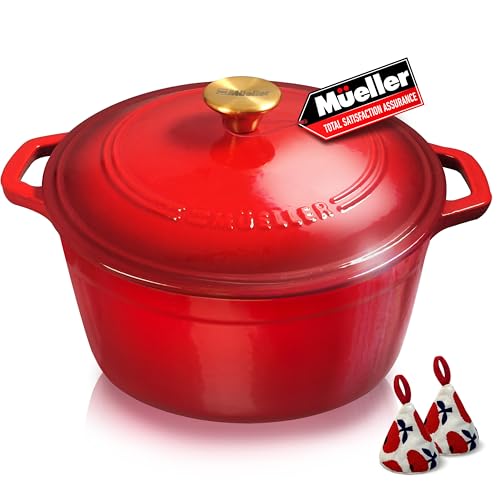
Mueller 6-Quart Enameled Cast Iron Dutch Oven
A versatile 6-quart cast iron Dutch oven with enamel coating suitable for stovetop, oven, and induction cooking. The tight-fitting lid and cast iron construction support even heat distribution and moisture retention for braising, baking, and slow cooking.
Pros
- High-capacity design accommodates large recipes and entertaining
- Induction compatible, broadening cooktop compatibility
- Natural non-stick interior that improves with use and proper seasoning
- Tight-fitting lid design seals moisture for braised and stewed dishes
- Heirloom durability with proper care and maintenance
Cons
- No verified customer reviews available to assess real-world performance and durability claims
- Requires hand washing and ongoing care to maintain enamel and seasoning despite dishwasher-safe claim
- 12.5-pound weight may be challenging for some users during handling and cleaning
Crock-Pot Artisan 7-Quart Round Dutch Oven
A heavy-duty enameled cast iron Dutch oven in slate gray, sized for family meals and batch cooking. The porcelain enamel finish is naturally nonstick and easy to clean, while cast iron construction ensures even heat distribution across slow cooking, braising, baking, and roasting tasks.
Pros
- Large 7-quart capacity handles batch cooking and family-size meals
- Cast iron construction retains and distributes heat evenly for consistent cooking
- Porcelain enamel coating provides natural nonstick properties without maintenance
- Versatile enough for stovetop, oven, and slow cooker applications
- Slate gray finish offers a neutral aesthetic
Cons
- Hand wash only, not dishwasher safe, which requires more maintenance effort
- 11-pound weight makes handling and storage demanding for smaller kitchens
- No verified buyer reviews available to assess real-world durability and user satisfaction
Overmont 5.5-Quart Enameled Cast Iron Dutch Oven
This heavy-duty enameled cast iron Dutch oven delivers even heat distribution and excellent heat retention across gas, electric, and ceramic stovetops. The arched lid features water-ripple condensation points designed to return moisture to food, and it's oven-safe to 500°F for versatile braising, roasting, and baking.
Pros
- Exceptional heat retention and even heat distribution for consistent cooking results
- Arched lid with micro-pressure design and condensation management to lock in flavor and moisture
- Versatile across stovetop types and oven-safe to 500°F, enabling diverse cooking techniques
- Food-grade enamel surface is PFOA and PFAS-free with low maintenance cleaning needs
- Well-equipped bundle includes recipes, protective heat-resistant accessories, and documentation
Cons
- No verified buyer reviews available to confirm real-world performance and durability claims
- Relatively heavy at 12 pounds, which may be challenging for some users during handling and storage
- Limited color option (grey only) for those seeking alternative aesthetic choices
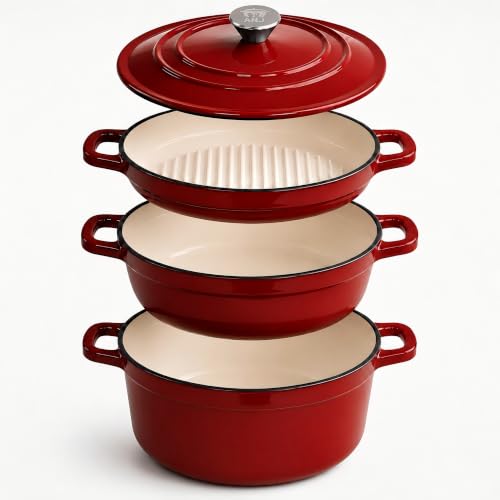
AHJ 3-Piece Enameled Cast Iron Dutch Oven Set
A nesting three-piece Dutch oven set in classic red that combines heat retention and space efficiency for bread baking, braising, and slow cooking. The enameled cast iron requires no seasoning and stacks compactly, though no verified buyer reviews are yet available to confirm real-world durability.
Pros
- Compact nesting design ideal for kitchens with limited cabinet space and apartments
- Enameled finish eliminates seasoning maintenance while resisting stains and scratches
- Covers all cooktop types including induction, with high 500°F oven rating
- Tight-fitting lids lock in moisture effectively for braising, slow cooking, and bread baking
- Comes with recipe guide and tutorial for new users
Cons
- No verified buyer reviews published yet, so durability and performance claims cannot be independently confirmed
- Relatively heavy at 26.45 pounds for the complete set may be cumbersome for some users
- Limited to classic red color option, reducing design flexibility for different kitchen aesthetics
Nuovva 6.4-Quart Enameled Cast Iron Dutch Oven
A low-maintenance enameled cast iron Dutch oven in dark blue, sized for family meals and batch cooking. The enamel coating eliminates seasoning requirements, while the 500°F oven-safe rating handles everything from bread baking to braising.
Pros
- Enamel surface eliminates the maintenance burden of seasoning bare cast iron
- High oven temperature rating supports bread baking, braising, and roasting
- Comes in four color options to match kitchen aesthetics
- Robust double handles and fitted lid design
- Versatile cooking from stovetop browning to oven slow-cooking
Cons
- No verified buyer reviews available to assess real-world durability and performance
- Weighs over 14 pounds, making it relatively heavy for daily handling
- Enamel coating requires careful use to avoid chipping, unlike traditional bare cast iron
Enameled Cast Iron Dutch Ovens Buying Guide
Choosing among the dozens of enameled cast iron Dutch ovens on the market requires looking past marketing copy and into the details that actually determine how the pot performs after two years of weekly use.
The six criteria below are the factors our research consistently identifies as the true differentiators between a pot that lasts a lifetime and one that chips, warps, or scorches within a season.
Enamel Quality and Chip Resistance
The enamel coating is the heart of any enameled cast iron Dutch oven.
It protects the bare cast iron from rust and acidic foods, provides a naturally low-stick cooking surface, and determines whether the pot still looks presentable after years of braising and bread baking.
High-quality enamel, like the triple-fired porcelain used by Le Creuset, bonds more deeply to the iron substrate and resists chipping even when subjected to thermal shock or metal utensil contact.
Budget enamel coatings can be thinner, less uniform, and more susceptible to crazing or flaking over time.
When evaluating enamel quality, look for brands that specify the number of enamel coats applied, the firing temperature, and whether the interior enamel is light-colored (which makes it easier to monitor fond development during searing).
Verified buyer feedback is particularly revealing here: patterns of early chipping at the rim or lid edge, after just a few months of normal use, are a reliable signal of below-average enamel durability.
Premium options from Le Creuset and Lodge consistently earn strong marks for long-term chip resistance, while some ultra-budget entrants show more variance in this area.
One practical note: even the best enamel can be damaged by sudden temperature changes. Always allow a hot Dutch oven to cool before submerging it in cold water, and avoid placing it directly on a heat source from frozen.
These habits extend enamel life dramatically regardless of which brand you choose.
Heat Retention and Distribution
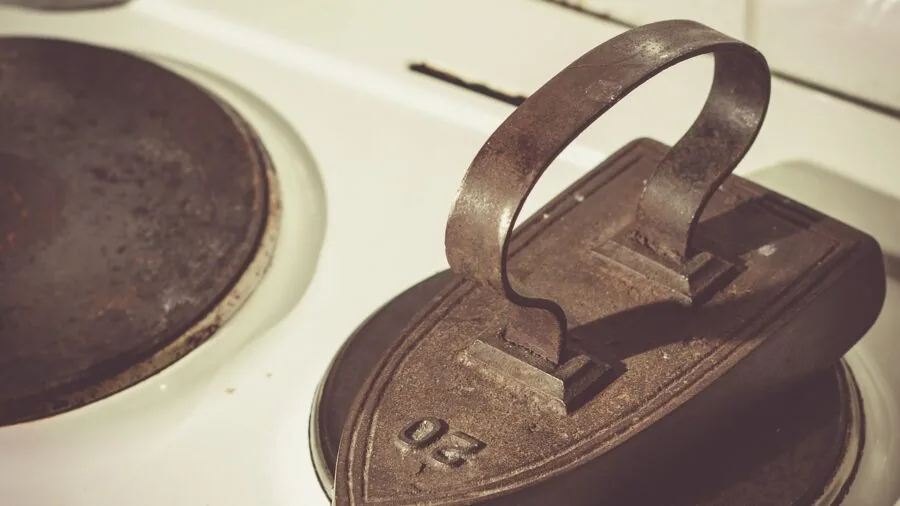
Cast iron’s legendary heat retention is the main reason the Dutch oven format has endured for centuries.
A properly made enameled cast iron pot absorbs heat slowly, holds it evenly across the base and walls, and releases it gradually into whatever you are cooking.
This thermal mass is what makes Dutch ovens so good at low-and-slow braises: once the pot is up to temperature, it maintains a steady simmer with minimal flame adjustment, resulting in more evenly cooked, tender results than a thin stainless or aluminum pot can achieve.
Wall thickness is a key proxy for heat distribution quality. Thicker walls mean more even temperature across the cooking surface, fewer hot spots, and better performance on radiant electric or induction cooktops where heat delivery is less forgiving.
Heavier pots (a 6-quart Dutch oven from a quality brand typically weighs between 11 and 14 pounds fully loaded) are not a liability: that weight is largely a function of the cast iron thickness that enables superior performance.
If lifting is a concern, consider a smaller capacity and plan for two batches rather than compromising on wall thickness.
Capacity and Form Factor
Dutch ovens are sold in a wide range of sizes, from compact 1-quart cocottes to generous 9-quart behemoths.
For most home cooks preparing meals for two to four people, a 5-quart to 6-quart round Dutch oven covers the widest range of tasks: it is large enough for a whole chicken or a 4-pound pork shoulder but still fits comfortably in a standard oven and is not unmanageable to carry to the table.
Families who batch-cook soups, stocks, or stews regularly may prefer moving up to a 7-quart or 7.5-quart format, like the Lodge 7.5-quart option in our list.
Round Dutch ovens are the classic choice and suit most tasks well. Oval formats are better matched to whole roasts or fish that benefit from a longer interior.
If oven real estate is a concern, measure your oven interior and lid height before buying: a loaded 7-quart pot with lid can be a tight fit in some apartment ovens.
For those who want flexibility without dedicating shelf space to multiple individual pots, a nested set like the AHJ 4-piece set in our lineup offers a practical alternative, though the trade-off is typically thinner walls and lower individual performance compared to a single dedicated Dutch oven.
Lid Fit and Self-Basting Design
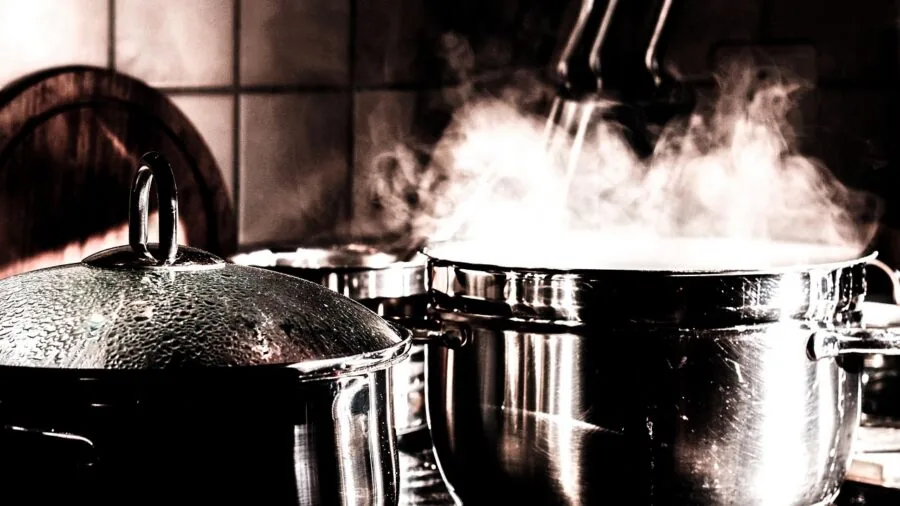
A well-fitting lid does more than keep steam inside: it determines whether a braise or stew bastes itself throughout cooking or dries out at the edges.
The best lids seat tightly enough to form a near-seal, trapping moisture and cycling condensation back down onto the food.
Some premium designs add condensation ridges or knobs on the interior of the lid to direct dripping moisture back towards the center of the pot rather than pooling at the rim.
For bread baking, lid fit is critical. No-knead and sourdough recipes rely on the trapped steam inside the covered Dutch oven during the first phase of baking to develop an open crumb and a crackly crust.
A poorly fitting lid allows that steam to escape, resulting in a denser, paler loaf.
Check verified buyer reviews specifically for bread-baking performance when this is a priority: several mid-range pots earn praise for this use case despite lower overall scores.
Oven-Safe Temperature Rating
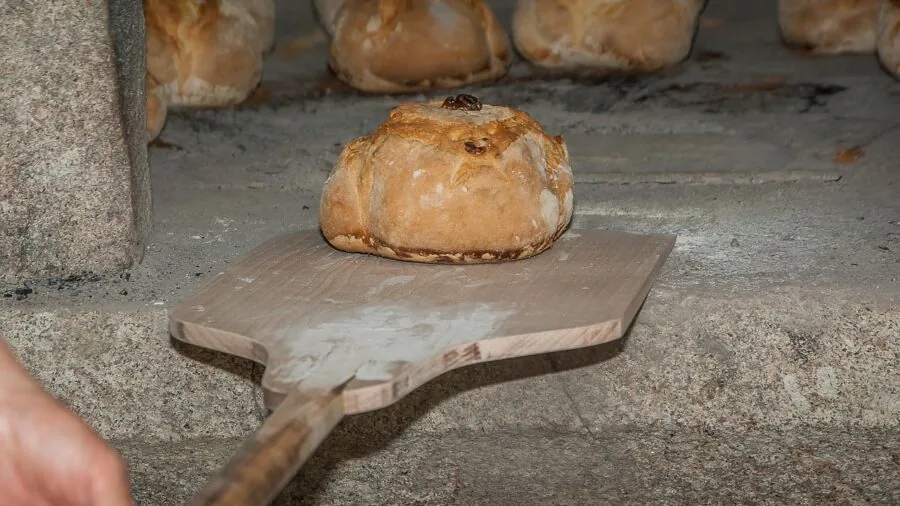
Most quality enameled cast iron Dutch ovens are rated oven-safe to 500 degrees Fahrenheit, which covers the full range of normal home cooking including high-heat bread baking.
The limiting factor is usually not the cast iron itself but the lid knob: older or budget designs use phenolic plastic knobs rated only to around 390 degrees Fahrenheit, which can crack or discolor at higher temperatures.
Le Creuset’s stainless steel knob is rated to much higher temperatures and is one reason the brand commands such loyalty from serious bakers.
If you plan to do a lot of bread baking at 475 degrees Fahrenheit or higher, verify the knob material and its specific temperature rating before purchasing.
Many budget Dutch ovens now advertise a 500-degree oven-safe rating for the body while quietly specifying a lower threshold for the knob. This is easy to overlook but matters practically.
In most cases, a stainless or cast iron knob is a meaningful upgrade over plastic, and some manufacturers sell replacement knobs separately if you want to retrofit a pot you already own.
Ease of Cleaning and Long-Term Maintenance

One of the primary advantages of enameled cast iron over bare cast iron is the dramatically simpler cleaning routine.
Enameled surfaces do not require seasoning, do not rust when wet, and are generally resistant to acidic foods like tomatoes, wine, and citrus. For day-to-day cleanup, warm water and a soft sponge handle most residue.
Stuck-on fond (the browned bits left after searing) typically releases after a short soak in hot water.
Most manufacturers technically permit dishwasher use but strongly recommend against it: the harsh detergents and high-heat drying cycles can dull the exterior glaze over time and may accelerate enamel wear on thinner-coated budget models.
Hand washing is always the safer choice for longevity. It is also worth noting that some discoloration of the interior enamel after heavy use is normal and does not affect cooking performance.
A paste of baking soda and water can remove most staining without damaging the enamel surface.
If you are comparing Dutch ovens against other stovetop-to-oven formats, our nonstick cookware sets guide covers pots and pans that prioritize effortless food release for different cooking styles.
Why You Should Trust Us
ProductFind operates as a fully independent editorial platform. We do not manufacture, sell, or take direction from any brand whose products appear in our reviews.
Every recommendation in this article was arrived at through a structured research process: we analyze manufacturer-published specifications, cross-reference expert review consensus from culinary and cookware authorities, and weight verified buyer feedback from confirmed purchasers to surface real-world durability and performance patterns that spec sheets alone cannot reveal.
We do not conduct our own product trials; our evaluations are grounded in research, published data, expert review consensus, and verified buyer feedback.
Each product is scored using our 0-to-10 PF Score, applied consistently across the same set of criteria for every Dutch oven in our database: enamel durability, heat retention and distribution, lid fit, oven-safe rating, cleaning ease, and overall value relative to price tier.
This scoring framework is what drives our rankings, not advertising relationships.
Transparency note: ProductFind may earn a commission if you purchase through a link in this article. That affiliate relationship has zero influence on PF Scores, rankings, or the selection of products we recommend.
Our editorial positions are determined independently of commercial arrangements. If a product does not earn a strong PF Score on its merits, it does not appear in our top picks, regardless of its affiliate potential.
Final Thoughts
The enameled cast iron Dutch oven market offers genuinely strong options across every price tier in 2026, from generational heirlooms to impressive budget performers. Here is how our top picks break down by use case and standout quality:
- Best Overall: Le Creuset Enameled Cast Iron Signature Round Dutch Oven, 4.5 qt., Deep Teal earns the top PF Score in this roundup on the strength of its triple-fired enamel, superior heat distribution, precise lid fit, and a decades-long track record confirmed by expert consensus and owner loyalty alike. It is a premium investment that consistently outperforms every alternative across the full range of cooking tasks.
- Best Large-Capacity Premium Pick: Le Creuset Enameled Cast Iron Signature Deep Round Oven, 6.5 qt., Sea Salt delivers the same Le Creuset enamel quality and performance in a deeper, larger format ideal for big batches of stew, whole-bird braises, and high-hydration sourdough loaves.
- Best Mid-Range Value: Lodge Essential Enamel Cast Iron Dutch Oven with Lid, 7.5 Quart, Indigo is the pick for cooks who want genuine cast iron quality and a generous capacity without the premium price. Lodge’s domestic manufacturing heritage and chip-resistant enamel make this an outstanding value in its tier.
- Best Compact Everyday Pick: Lodge Essential Enamel Cast Iron Dutch Oven, 6 Quarts, Island Spice Red is the slightly smaller Lodge sibling that suits most households cooking for two to four people, offering the same reliable enamel and heat retention in a more manageable form factor.
- Best Budget Pick: Umite Chef 6QT Enameled Cast Iron Dutch Oven with Lid and Cotton Potholders earns the strongest PF Score among the genuinely budget-priced entries in this roundup, offering competitive heat retention, an included accessory set, and solid verified-buyer satisfaction for everyday braising and baking.
No matter which pot you choose, pairing it with quality stainless steel cookware for tasks where the Dutch oven is overkill rounds out a kitchen that handles almost anything you can cook.
Frequently Asked Questions
What size Dutch oven is best for most home cooks?
For households of two to four people, a 5-quart to 6-quart Dutch oven handles the widest variety of tasks without being unwieldy.
It fits comfortably in most standard ovens, is large enough for a whole chicken or a substantial pork shoulder, and is deep enough for most sourdough recipes.
If you regularly cook for larger groups or want to batch-cook soups and stocks, moving up to a 7-quart or 7.5-quart model is worth the additional weight and cost.
Can I use an enameled cast iron Dutch oven on an induction cooktop?
Yes. Because the pot body is cast iron, which is ferromagnetic, enameled cast iron Dutch ovens are fully compatible with induction cooktops without any adapter.
In fact, the even heat distribution of cast iron can partially offset induction’s tendency to create hot spots directly above the coil, making the combination work well for braises and slow-cooked dishes.
Just bring the heat up gradually: induction delivers heat quickly and cast iron retains it, so starting on a lower setting and adjusting upward prevents scorching.
Is it worth spending more on a Le Creuset versus a budget Dutch oven?
It depends on how frequently you cook and how long you plan to keep the pot.
Le Creuset and similar premium brands carry a significantly higher price but offer enamel durability, lid precision, and long-term performance that budget options genuinely cannot match over a 10-to-20-year ownership horizon.
If you cook several times a week and expect to pass a Dutch oven down eventually, the premium is justifiable.
For occasional cooks or those new to the format, a mid-range Lodge or a budget Umite Chef provides a reliable introduction at a fraction of the cost, with the option to upgrade later.
Our research shows that even the strongest budget performers show more variation in enamel longevity over time compared to premium options.
Can I bake sourdough bread in an enameled cast iron Dutch oven?
Absolutely. A covered Dutch oven is widely considered the best home method for replicating the steam-injected environment of a professional bread oven.
The pot traps the moisture released by the dough during the initial bake, which keeps the crust extensible and allows maximum oven spring.
After removing the lid partway through baking, the dry oven heat crisps the exposed crust to a deep, crackly finish.
For this use, verify that your Dutch oven’s lid knob is rated to at least 450 to 500 degrees Fahrenheit, and always preheat the pot in the oven before adding the dough.
How do I remove stains from the interior enamel without damaging it?
Light staining from regular use is normal and does not affect cooking performance. For persistent discoloration, fill the pot with water, add a tablespoon of baking soda, and simmer gently on the stovetop for a few minutes before rinsing.
For more stubborn residue, a paste of baking soda and a small amount of water applied with a soft cloth and left to sit for 15 to 20 minutes before rinsing removes most marks without abrading the enamel surface.
Avoid steel wool, abrasive scrubbers, or harsh chemical cleaners, all of which can scratch or dull the enamel permanently.
What is the difference between a Dutch oven and a French oven?
The terms are largely interchangeable in modern usage. Historically, “Dutch oven” referred to a bare cast iron pot used over open fire, while “French oven” described the enameled, lidded version popularized by French cookware brands.
Today, most manufacturers use both terms to describe the same product: an enameled cast iron pot with a tight-fitting lid suitable for stovetop and oven use. Some brands use “cocotte” for smaller individual-serving versions of the same design.
When comparing products, focus on the actual specs rather than the name used on the label.
About the author
Jackson is a reviewer and writer for ProductFind who specializes in Cookware & Bakeware. Jackson evaluates products through independent research: specifications, expert review consensus, and verified buyer feedback, and rates each one on the PF Score. Jackson focuses on helping readers pick the right cookware & bakeware for their needs and budget.