The 11 Best Clothes Dryers
From smart full-size vented dryers to compact portables for apartments and RVs, these are the clothes dryers worth buying based on capacity, drying performance, and long-term reliability.
 By Adrian Wood
Updated July 23, 2026
By Adrian Wood
Updated July 23, 2026
A reliable clothes dryer is one of those appliances you don’t think about until it stops working or, worse, starts shrinking everything you own.
Whether you’re outfitting a full laundry room, squeezing a compact unit into an apartment, or simply need a portable option for an RV or dorm, the market in 2026 offers more choices than ever, ranging from large-capacity smart dryers with steam cycles to budget-friendly portable units that plug into a standard outlet.
Sorting through specs, brand claims, and user complaints on your own takes hours, and it’s easy to buy something that doesn’t fit your space, your venting situation, or your laundry habits.
If you’re also thinking about coordinating your laundry setup with other major household upgrades, pairing decisions matter.
At ProductFind, we cut through the noise by synthesizing manufacturer specifications, expert review consensus from verified appliance publications, and verified buyer feedback to surface the models that genuinely deliver.
Our lineup covers full-size electric and gas vented dryers from brands like GE, Kenmore, and Auertech, plus portable compact options from EUHOMY and Panda, and even passive drying alternatives for those who want to skip powered drying entirely.
Scroll down to see our ranked picks and find the right dryer for your situation.
| Award | Product | PF Score About PF ScoreThe PF Score is our own rating from 0 to 10, based on performance, design and build, ease of use, and value. It reflects independent research and is never influenced by manufacturers, retailers, or affiliate commissions. Learn more › | Price | |
|---|---|---|---|---|
| Best Overall |
 GE GFD65ESSVWW 7.8 cu. ft. Smart Electric Dryer
|
8.3/10 | Buy | |
| Editor's Pick |
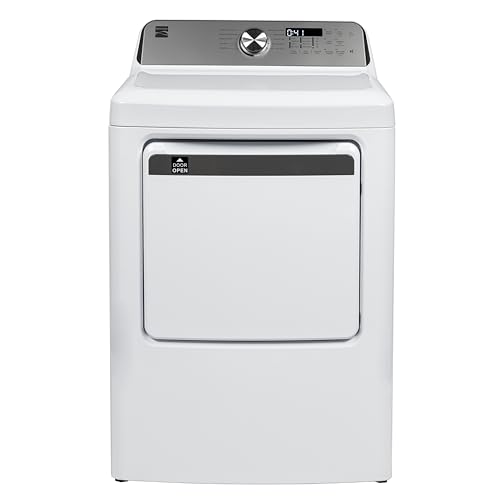 Kenmore 7.0 cu. ft. Front Load Electric Dryer
|
7.2/10 | Buy | |
| Best Value |
 Kenmore 8.0 cu. ft. Front Load Gas Dryer
|
6.9/10 | Buy | |
| Top Rated |
 Kenmore 7.0 cu. ft. Front Load Electric Dryer
|
6.9/10 | Buy | |
 Kenmore 8.0 cu. ft. Front Load Electric Dryer
|
6.8/10 | Buy | ||
 Auertech 3.6 Cu.Ft Electric Dryer with 12 Modes
|
6.3/10 | Buy | ||
 Panda Compact Dryer 3.5 cu.ft. 110V Portable
|
5.8/10 | Buy | ||
 Euhomy 3.5 Cu.Ft. Portable Dryer
|
5.5/10 | Buy | ||
 Euhomy 2.65 Cu.Ft Portable Dryer
|
5.2/10 | Buy | ||
 Sakugi Clothes Drying Rack 55.5" Foldable
|
3.2/10 | Buy | ||
 FILROUG 3-Tier Foldable Drying Rack
|
2.8/10 | Buy |
GE GFD65ESSVWW 7.8 cu. ft. Smart Electric Dryer
A large-capacity electric dryer with Wi-Fi connectivity and steam sanitizing features, backed by ENERGY STAR certification for efficiency. Best suited for households handling frequent, heavy laundry loads who value remote control convenience.
Pros
- Spacious 7.8 cu. ft. drum minimizes loads and laundry time
- Smart features enable remote start and monitoring from phone
- Steam and Sanitize cycles add functional versatility beyond basic drying
- ENERGY STAR certification supports lower utility bills
- Durable aluminized steel drum construction
Cons
- No verified customer reviews available to assess real-world reliability or performance consistency
- Premium feature set (Wi-Fi, steam, sanitize) adds cost compared to standard electric dryers
- Substantial 134-pound weight requires proper installation space and handling
Kenmore 7.0 cu. ft. Front Load Electric Dryer
This Kenmore electric dryer combines a spacious 7.0 cubic foot capacity with smart moisture sensors and 10 drying cycles to handle everything from everyday clothes to delicate fabrics. Its Wrinkle Guard option and Energy Saver mode address common drying frustrations, though the lack of verified buyer reviews leaves questions about real-world durability.
Pros
- Large 7.0 cu. ft. capacity allows clothes to move freely and dry thoroughly in fewer loads
- Smart moisture sensors prevent over-drying and help extend garment lifespan
- Wrinkle Guard tumbles clothes after cycle to minimize wrinkles and static
- Energy Saver mode reduces energy consumption by up to 7.6% versus normal cycle
- 10 drying cycles with 6 options cover specialty items like pillows and sleeping bags
Cons
- No verified buyer reviews available, making it difficult to assess long-term reliability or real-world performance
- LED touch controls may require learning curve compared to traditional button layouts
- Large footprint and 110+ pound weight require dedicated space and careful installation planning
Kenmore 8.0 cu. ft. Front Load Gas Dryer
This large-capacity gas dryer combines practical efficiency with fabric care features like steam refresh and smart moisture sensors. Best suited for households handling heavy laundry loads who want to reduce energy consumption without sacrificing drying performance.
Pros
- Extra-large 8.0 cubic foot drum accommodates oversized items like comforters and pillows
- Smart sensors adjust drying time based on moisture content, protecting delicate fabrics
- Steam refresh cycle offers quick wrinkle and odor reduction without rewashing
- Energy Saver option reduces consumption compared to standard cycles
- Diverse cycle selection handles specialty items beyond regular clothing
Cons
- No verified buyer reviews available to confirm real-world performance and reliability
- Premium capacity and features position this at a higher price point than basic models
- Large footprint (33.67 x 27 x 39.75 inches) requires significant laundry space
Kenmore 7.0 cu. ft. Front Load Electric Dryer
This Kenmore electric dryer combines a spacious 7.0 cubic foot capacity with smart moisture sensors and 10 drying cycles to handle everything from delicate fabrics to bulky household items. Wrinkle Guard tumbling and easy LED controls make it a straightforward choice for families managing varied laundry loads.
Pros
- Large 7.0 cu. ft. capacity allows clothes to move freely and dry thoroughly
- Smart sensors automatically detect moisture to prevent damage from over-drying
- Wrinkle Guard option reduces wrinkles by tumbling intermittently after completion
- 10 cycles cover diverse fabric types including special care for pillows, sleeping bags, and plush toys
- Simple LED touch controls display remaining time and cycle status
Cons
- No customer reviews available yet, limiting real-world performance insights
- No information on energy efficiency ratings or operating costs
- Limited details on noise level or vibration during operation
Kenmore 8.0 cu. ft. Front Load Electric Dryer
This ENERGY STAR certified dryer combines a spacious 8.0 cubic foot capacity with smart moisture sensors and steam refresh technology to handle large loads while protecting fabrics. The 12 cycles and wrinkle guard make it suitable for households managing varied fabric types and wanting to reduce drying time.
Pros
- Extra large capacity reduces number of loads needed for households
- Smart sensors adapt drying to prevent fabric damage and over-drying
- Steam refresh cycle efficiently handles quick wrinkle removal and odor control
- Energy Saver mode and ENERGY STAR certification lower utility costs
- Versatile cycle selection covers everything from delicates to non-washable items
Cons
- No customer reviews available to verify real-world performance and reliability
- LED display and touch controls may be less intuitive than traditional dial interfaces
- Wrinkle Guard and Steam Refresh features are limited to specific use cases rather than full-cycle integration
Auertech 3.6 Cu.Ft Electric Dryer with 12 Modes
A mid-capacity electric dryer offering 3.6 cubic feet of space with 12 customizable drying modes, including specialized settings for delicate fabrics and baby care. Designed for families and apartment dwellers who need reliable performance without excessive footprint.
Pros
- Wide door opening and accessible lint filter reduce handling friction with bulky loads
- Multiple fabric-specific drying modes protect delicate items and extend garment life
- Delay Start and timer features enable off-peak energy usage and scheduling flexibility
- Stainless steel drum resists rust and corrosion for durability
- Clear viewing window allows progress monitoring without opening the door
Cons
- No verified buyer reviews available yet, making real-world performance difficult to assess
- 4.5-star rating is based on zero reviews, limiting reliability of user feedback
- Limited information on noise levels, vibration, or long-term durability compared to competitors
Panda Compact Dryer 3.5 cu.ft. 110V Portable
A space-saving portable dryer designed for apartments and RVs, offering 13.2 lbs capacity with four drying modes and stainless steel construction. Plugs into standard household outlets without special wiring, making it practical for tight living situations.
Pros
- Compact footprint (23.5" W x 21" D x 27.25" H) ideal for apartments, condos, and RVs
- No installation complexity with standard 110V outlet compatibility
- Four customizable drying modes with energy-saving ECO and Sensor Dry options
- Wide-opening door with automatic safety shutoff
- Removable three-layer filter for straightforward maintenance
Cons
- No customer reviews available to verify real-world performance and durability claims
- Limited load capacity at 13.2 lbs means more frequent laundry cycles for larger households
- Vented design requires proper ventilation setup depending on installation location
Euhomy 3.5 Cu.Ft. Portable Dryer
A compact, 1500W portable dryer designed for apartments and dorms with a 26.4-pound capacity and four drying modes. Features front-load stainless steel drum with two-way flip function and LCD controls for flexible laundry needs in small spaces.
Pros
- Generous 3.5 cu.ft. capacity for a portable unit, fitting larger loads than typical compact dryers
- Intelligent mode automatically adjusts drying time based on humidity, reducing energy waste
- Two-way flip function and physical drum design work to remove wrinkles and keep clothes fluffy
- Wide door opening and transparent window provide good visibility and accessibility
- Multiple drying modes (Strong, Intelligent, ECO, Normal) suit different fabric types and load sizes
Cons
- Reaches only 140 degrees Fahrenheit maximum temperature, which may be insufficient for heavy-duty sanitizing or delicate heat-sensitive items
- Requires pre-spin drying of clothes for best results, adding an extra step to the laundry process
- No reviews yet available to verify real-world performance and durability claims
Euhomy 2.65 Cu.Ft Portable Dryer
A compact electric dryer designed for apartments, RVs, and tight spaces, featuring four drying modes (Strong, Intelligent, ECO, and Normal) with a 1400W motor and stainless steel drum. Best suited for those needing flexible laundry solutions without a full-size unit.
Pros
- Multiple drying modes offer flexibility for different fabric types and laundry loads
- Intelligent mode with automatic shutoff sensor eliminates guesswork
- Stainless steel drum and multilayer filter reduce snagging and capture lint effectively
- Portable design with ergonomic handles suits space-constrained living situations
- Includes exhaust hose and mounting brackets for multiple installation options
Cons
- No customer reviews available to validate real-world performance and reliability
- Requires standard 120V outlet, limiting placement flexibility in some spaces
- Manual warns against overloading and enclosed cabinet placement, which may reduce practical capacity
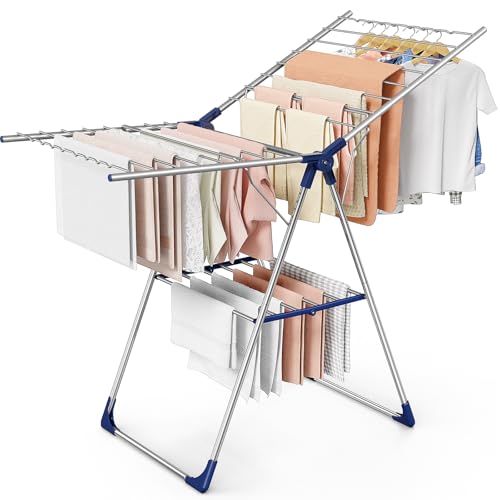
Sakugi Clothes Drying Rack 55.5" Foldable
A large-capacity standing drying rack designed for everyday laundry with tool-free assembly and compact storage. Features height-adjustable wings, stable triangular base, and works for both indoor and outdoor use.
Pros
- Quick assembly without tools or hardware, suitable for renters and first-time users
- Compact folded size (40.4" x 22.8") fits easily in storage spaces
- Stable design with triangle base and non-slip feet prevents tipping
- 3.5" spacing between rods supports airflow efficiency
- Dual indoor/outdoor capability adds flexibility to laundry routines
Cons
- No verified customer reviews available to assess real-world durability and performance
- Limited to light bedding only, not suitable for heavy comforters or duvets
- Rod spacing of 3.5" may not accommodate all clothing hangers
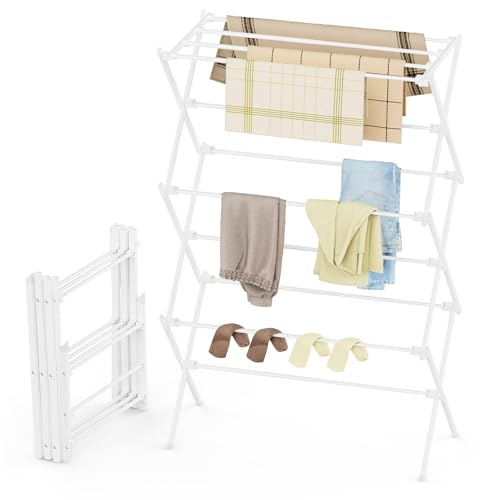
FILROUG 3-Tier Foldable Drying Rack
A compact, space-saving laundry rack with a foldable X-frame design and rust-resistant metal construction. Built to handle up to 20 pounds of clothes, it's practical for indoor or outdoor use without the bulk of permanent storage.
Pros
- Genuinely foldable and collapsible for apartment living or seasonal storage
- Rust-resistant coating extends durability in humid or outdoor conditions
- Non-slip base pads prevent sliding on hard floors
- Lightweight at 2.1 pounds yet supports up to 20 pounds of laundry
- Multiple hanging tiers maximize vertical space efficiency
Cons
- No customer reviews yet on record to validate real-world durability claims
- Limited weight capacity compared to heavier-duty commercial models
- Relatively narrow depth at 11.8 inches may limit bulky item placement
Clothes Dryers Buying Guide
Buying a dryer is more nuanced than it looks on the showroom floor. Capacity, fuel type, venting requirements, and smart features all interact with your specific living situation.
The subsections below walk through each decision point so you can match a machine to your actual needs, not just the flashiest spec sheet.
Capacity: Matching Drum Size to Your Household

Drum capacity is measured in cubic feet, and the right number depends almost entirely on how much laundry your household generates and how large the items are.
A single person or a couple washing mostly clothing can get by with a compact unit in the 2.5 to 3.6 cu. ft. range, which is exactly where portable dryers like the EUHOMY models in our list sit.
These work well in apartments, RVs, and dorms where a full-size unit simply won’t fit.
Families of three or more, or anyone who regularly dries bulky items like comforters, towels, or king-size bedding, should target 7.0 cu. ft. and above.
Undersizing a dryer forces you to run multiple cycles per load, which wastes time and energy and accelerates wear on the motor.
The Kenmore and GE full-size models in our roundup all sit in the 7.0 to 8.0 cu. ft. range, which is the sweet spot for most family households.
If you frequently wash heavy bath towels or large bedding sets, adequate drum space makes a significant difference in cycle time and fabric care.
For buyers who are torn between a dedicated dryer and a washer-dryer combo unit, keep in mind that combo appliances typically have smaller effective drying capacity than their wash capacity suggests, because wet clothes don’t fill the drum the same way dry clothes do.
A standalone full-size dryer almost always outperforms a combo unit on throughput for larger households.
Electric vs. Gas: Fuel Type and Installation Reality

The choice between an electric and a gas dryer is often decided before you even open a product page, because it depends on what’s already in your home.
If you have a 240-volt outlet in your laundry area, an electric dryer is plug-and-go. If you have a gas line with a shut-off valve, a gas dryer is a straightforward swap.
If your home has neither, installing a new gas line adds significant cost and requires a licensed professional.
In terms of performance, gas dryers generally heat up faster and run hotter than electric models, which can translate to shorter cycle times and lower per-load energy costs in regions where natural gas is cheaper than electricity.
The Kenmore 8.0 cu. ft. gas dryer in our lineup illustrates this trade-off clearly: it carries a higher sticker price than its electric sibling, but frequent users in gas-cheap markets often recoup that difference over several years of use.
If you’re unsure about your home’s setup, check the outlet behind your current dryer before purchasing. A four-prong, 240-volt outlet confirms electric compatibility. A capped gas line confirms gas readiness. Mismatching is a common and expensive mistake that first-time buyers make when upgrading.
Venting vs. Ventless: Know Your Space Before You Buy
Most traditional dryers, including all of the full-size Kenmore and GE units in our roundup, are vented models. They expel hot, humid air through an exhaust duct to the outside of your home.
Vented dryers are faster and less expensive to buy, but they require a duct run to an exterior wall, which rules them out for many apartments and interior laundry closets.
Compact portable dryers like those from EUHOMY and Panda also use an exhaust pipe, but the hose is flexible and can route through a window or sliding door, making them far more adaptable.
However, that flexibility comes with smaller capacity and longer cycle times for equivalent load sizes compared to full-size vented units.
Ventless heat-pump dryers are a growing category that are worth knowing about even though they’re not represented in our current picks. Heat-pump dryers condense moisture rather than expelling it, making them installable virtually anywhere with a drain.
They consume significantly less energy than conventional vented dryers but cost more upfront and take longer per cycle.
If energy efficiency is your top priority and you can absorb a longer cycle time, heat-pump technology is worth researching as a future consideration.
Sensor Drying and Cycle Controls: What Matters and What Doesn’t

Moisture sensors are one of the genuinely useful features in a modern dryer. Rather than running a fixed timed cycle, a sensor-equipped dryer measures the actual moisture level in the drum and stops when the load is dry.
This prevents over-drying, which is a major cause of fabric damage, static buildup, and shrinkage over time.
Any dryer you’re seriously considering should have at least basic moisture sensing, and it’s a feature that experts consistently flag as a must-have regardless of price point.
Beyond sensors, cycle variety matters less than most manufacturers would have you believe. The core cycles you’ll actually use are a normal or auto-dry cycle, a delicate or low-heat cycle, and an air fluff or no-heat option.
Specialty cycles like steam refresh, sanitize, and wrinkle release are genuinely useful additions if they’re implemented well, as they are on the GE 7.8 cu. ft. Smart Dryer at the top of our list.
But a machine with fifteen preset buttons and no moisture sensor is a worse buy than a simpler machine that actually stops at the right time.
The Auertech 3.6 cu. ft. dryer in our lineup takes an interesting middle path, offering twelve drying modes on a compact frame, which is useful for buyers who want cycle flexibility without committing to a full-size installation footprint.
Smart Features and Connectivity: Useful or Just Hype?

Wi-Fi connectivity and app control have moved from luxury to standard on mid-range and premium dryers.
The GE GFD65ESSVWW, our top-rated pick, includes smart features that let you monitor cycle status remotely, receive end-of-cycle alerts, and even sync with a compatible GE washer to automatically start the dryer when the wash cycle finishes.
For households where laundry runs while everyone is out, this kind of automation genuinely reduces the chance of leaving wet clothes sitting in the washer for hours.
That said, smart features are best treated as a convenience bonus rather than a primary purchase driver.
The appliance’s core drying performance, build quality, noise level, and long-term reliability matter far more than whether you can start it from your phone.
Expert review consensus consistently shows that connected dryers aren’t meaningfully more reliable than non-connected ones, and app support can be discontinued by manufacturers over time.
Buy the dryer that performs best for your needs, and treat app control as a welcome extra if it’s there.
Privacy is also worth a brief mention. Wi-Fi-connected appliances collect usage data, and it’s worth reviewing the manufacturer’s privacy policy before linking your dryer to your home network, particularly if you’re on a shared network with other smart home devices.
Portables and Drying Racks: When a Full-Size Machine Isn’t the Answer

Not everyone needs or can accommodate a full-size dryer. Apartment renters, RV travelers, and people in temporary housing often do better with a compact portable dryer or even a well-designed drying rack for delicates and lower-volume laundry.
Our list intentionally covers this range because the right product depends on your living situation, not just a preference for the biggest or most feature-rich machine.
The EUHOMY and Panda portable dryers in our roundup offer stainless steel drums, multiple drying functions, and exhaust hose venting in a footprint small enough to store in a closet.
They’re genuinely useful for people who do two to four loads per week.
The Sakugi and FILROUG drying racks at the lower end of our list are passive options that cost almost nothing to operate, fold flat for storage, and are ideal for air-drying delicates, activewear, or items that shouldn’t go anywhere near a heated drum.
Think of them as complementary to a dryer rather than a replacement, much like how quality bath towels often benefit from air drying to preserve their fiber integrity over time.
When evaluating portables, pay attention to rated wattage (which affects heat output and dry time), drum material (stainless steel resists odors and is easier to clean than plastic), and whether the exhaust hose includes a window adapter.
These small details separate a frustrating portable dryer experience from a practical one.
Why You Should Trust Us
ProductFind is an independent review publication. We have no affiliation with any manufacturer, retailer, or appliance brand, and our rankings are not influenced by advertising relationships or promotional consideration.
We do not conduct our own product trials; our evaluations are grounded in research, published data, expert review consensus, and verified buyer feedback.
Every product in this roundup was assessed against a consistent set of criteria relevant to the clothes dryer category: capacity relative to price tier, drying technology and sensor capability, fuel type and installation requirements, cycle flexibility, smart feature implementation, build quality signals from verified buyer reports, and manufacturer warranty terms.
Each model receives a PF Score on a scale of 0 to 10. That score reflects the weight of all available evidence, not a single data point.
The GE GFD65ESSVWW earned the highest PF Score in this roundup at 8.3 out of 10 based on its combination of smart features, steam and sanitize cycles, and consistent positive reception in expert appliance reviews.
Products at the lower end of our list, including the passive drying racks, are included because they genuinely serve specific user needs, not because they are premium recommendations.
ProductFind may earn a commission when you purchase through links in this article. That affiliate relationship does not affect our rankings, PF Scores, or editorial decisions. Our job is to help you buy smarter, not to push any particular product.
We update our roundups when new models enter the market or when sustained buyer feedback shifts our assessment of a product’s real-world performance.
Final Thoughts
The right clothes dryer depends on your space, your laundry volume, and how much you’re willing to spend upfront versus over time in operating costs.
Our research across this lineup surfaced a clear spread of options, and the following awards reflect where each product genuinely stands out.
- Best Overall: GE 7.8 cu. ft. Smart Front-Load Electric Dryer with Steam and Sanitize Cycle earned the highest PF Score in the roundup. It combines a large drum, steam and sanitize cycles, smart home connectivity, and strong expert consensus into the most well-rounded package across all tiers we evaluated.
- Best Mid-Range Electric Dryer: Kenmore 7.0 cu. ft. Front Load Electric Dryer in White delivers reliable everyday performance at a more accessible price point, making it the strongest value option among the full-size electric models in our list.
- Best Gas Dryer: Kenmore 8.0 cu. ft. Front Load Gas Dryer in Metallic Silver is the top gas-powered pick for households that already have a gas line and want faster heat-up times and larger capacity in a single machine.
- Best Compact Portable Dryer: Panda Compact Dryer 3.5 cu. ft. with Stainless Steel Tub leads the portable category with a solid stainless steel drum, four drying modes, and the highest PF Score among the compact portable options in our lineup.
- Best Budget Passive Option: Sakugi Clothes Drying Rack with Height-Adjustable Wings is the best choice for anyone who wants a zero-operating-cost solution for delicates, activewear, or supplemental air-drying alongside a powered dryer.
If you’re building out a full laundry setup, it’s worth thinking about the whole picture.
Large appliance decisions often interact, and readers who arrived here while researching home appliances more broadly may also find our coverage of refrigerators for every kitchen and budget and French door refrigerators useful companion reads when planning a full home refresh.
Frequently Asked Questions
How Do I Know What Dryer Capacity I Actually Need?
A general rule of thumb is that your dryer should have roughly twice the cubic footage of your washing machine. This gives wet clothes enough room to tumble freely, which is essential for even drying and reducing wrinkles.
For a household of one or two, a compact dryer in the 2.5 to 3.6 cu. ft. range handles most loads adequately.
Families of three or more should look for 7.0 cu. ft. and above, especially if you regularly wash bulky items like comforters or thick towels.
Is a Gas Dryer Worth the Higher Upfront Cost?
It depends on your local utility rates and how frequently you run laundry.
Gas dryers typically heat faster and cost less per cycle to operate than electric dryers in regions where natural gas is priced below electricity on an energy-equivalent basis.
Heavy users running multiple loads daily may recoup the upfront price difference over two to four years.
If you only do laundry once or twice a week, the operating savings are less compelling, and the electric option is usually the simpler, cheaper installation path.
Can a Portable Dryer Handle a Full Laundry Load?
Portable dryers with drums in the 2.5 to 3.6 cu. ft. range can handle a medium-sized load of everyday clothing, but they are not suited for large loads of towels, denim, or bedding.
Expect longer cycle times than a full-size vented dryer, particularly for heavier fabrics. Portable dryers work best when used alongside a compact washing machine of similar capacity, and they’re most practical for individuals or couples rather than families.
For delicates and items that shouldn’t go in a powered dryer at all, a drying rack paired with a portable dryer covers most laundry scenarios in a small-space living situation.
What Does a Steam Cycle Actually Do in a Dryer?
A steam cycle injects moisture into a hot drum to relax fabric fibers, which reduces wrinkles and can refresh lightly worn items without a full wash cycle.
On the GE GFD65ESSVWW, the steam function is combined with a sanitize cycle that uses elevated heat to reduce bacteria on items like workout clothes, bedding, and children’s garments.
Steam cycles are not a replacement for washing, but they’re genuinely useful for refreshing dry-clean-only items, reducing static, and de-wrinkling clothes that have been sitting in the drum.
Expert consensus rates steam as a worthwhile feature at the price point where it appears, rather than a marketing gimmick.
How Long Should a Clothes Dryer Last?
Most full-size electric and gas dryers are designed for roughly ten to thirteen years of service under normal household use.
The factors that most consistently shorten dryer lifespan are neglected lint filter cleaning, clogged or kinked exhaust ducts, and overloading the drum. Cleaning the lint filter after every single load is the single most impactful maintenance habit you can build.
Beyond that, having the exhaust duct professionally cleaned every two to three years significantly reduces the fire risk that blocked dryer vents create, while also keeping the motor from overworking.
Portable dryers in the compact category typically have shorter rated lifespans given their lighter-duty construction.
Should I Buy a Dryer That Matches My Washing Machine?
Aesthetically, matched pairs look cleaner in a laundry room, and some smart features, like automatic dryer start after a wash cycle completes, only work when the washer and dryer are from the same brand ecosystem.
Practically speaking, performance-wise, most full-size vented dryers dry clothes similarly regardless of brand, so matching isn’t a performance requirement.
If your current washing machine is from Kenmore and you’re replacing only the dryer, a Kenmore dryer will give you the cleanest integration.
If you don’t care about ecosystem features, the dryer that ranks highest for your needs is the better buy regardless of brand match.
About the author
Adrian is a reviewer and writer for ProductFind who specializes in Large Appliances & Laundry. Adrian evaluates products through independent research: specifications, expert review consensus, and verified buyer feedback, and rates each one on the PF Score. Adrian focuses on helping readers pick the right large appliances & laundry for their needs and budget.