The 11 Best Emergency Radios
When power and cell service fail, a capable emergency radio is your link to NOAA alerts and critical news. Find the right model for home prep, camping, or your go-bag.
 By Kenzi Vargas
Updated July 23, 2026
By Kenzi Vargas
Updated July 23, 2026
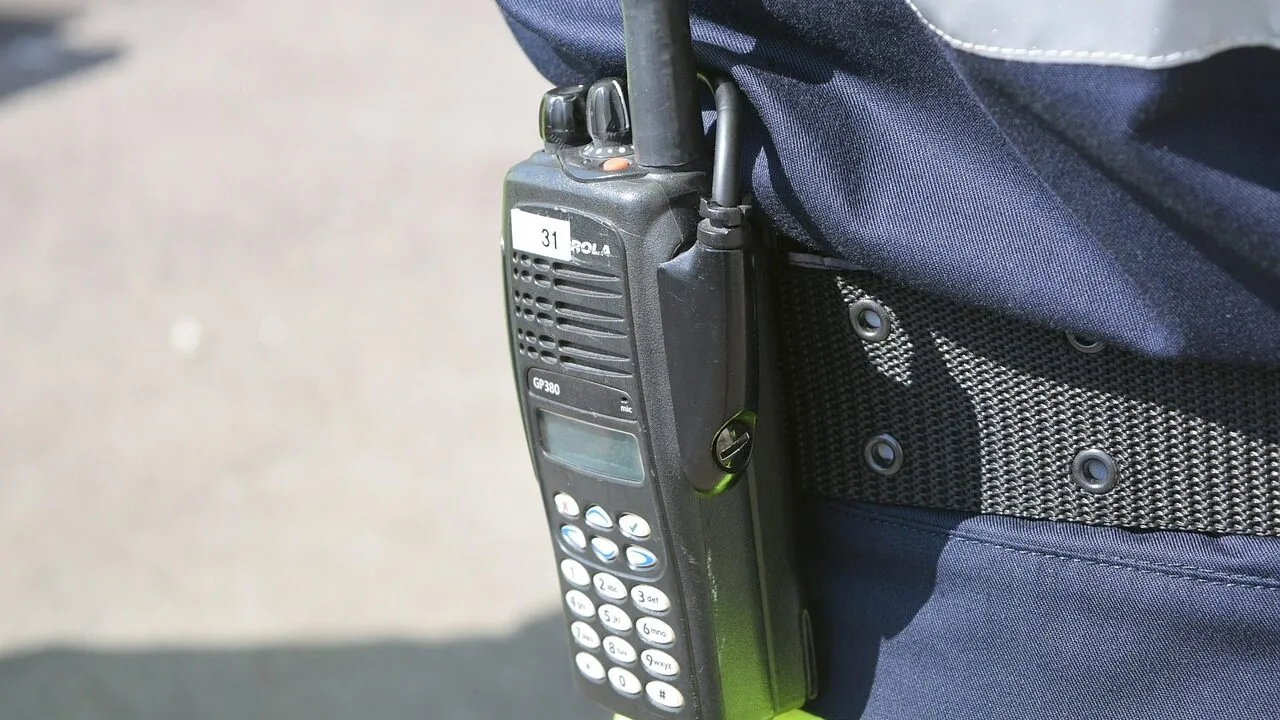
When the power goes out and cell towers go dark, a reliable emergency radio becomes your most important link to life-saving weather alerts, evacuation orders, and breaking news.
Unlike smartphones, emergency radios run on multiple power sources, including hand cranks, solar panels, and replaceable batteries, so they stay operational even after days without electricity.
Whether you are building a home preparedness kit, assembling a bug-out bag, or simply want peace of mind during hurricane season, choosing the right radio can make a genuine difference when it counts most.
At ProductFind, we evaluated every model in this guide through comprehensive research: cross-referencing published specifications, analyzing expert review consensus from across the industry, and weighing verified buyer feedback from thousands of real-world owners.
Models were scored on our 0 to 10 PF Score scale, covering NOAA reception quality, power versatility, battery capacity, build durability, and emergency features such as SOS alarms and integrated flashlights.
From the compact and proven Midland ER310 to the high-capacity Roxicosly weather radio, here are the emergency radios worth buying in 2026.

Midland ER310 Emergency Weather Radio with Hand Crank
A multi-function emergency radio combining NOAA weather alerts, AM/FM tuning, and multiple charging options including solar and hand crank power. Designed for preparedness-focused users who need reliable alerts and communication tools during power outages or severe weather events.
Pros
- Three independent charging methods ensure functionality during extended power loss
- NOAA weather auto-scan eliminates manual channel hunting
- Dual-mode flashlight with SOS beacon and brightness adjustment for versatile emergency signaling
- Compact 1-pound design remains portable for emergency kits or vehicles
- USB charging capability adds practical utility beyond radio function
Cons
- No verified customer reviews available to assess real-world reliability or durability
- Hand crank and solar charging rates not specified, so recharge time expectations unclear
- Requires 6 AA batteries separately for backup power option

Roxicosly 12000mAh Emergency Weather Radio with Solar Panel
A multi-powered emergency radio combining a 12000mAh battery, large solar panel, and hand crank generator to keep you informed and connected during blackouts and severe weather. Includes NOAA weather alerts, dual LED lights, SOS alarm, and phone charging capability in a compact waterproof design.
Pros
- Large 8500mm² monocrystalline solar panel captures more sunlight than standard models
- Efficient hand crank generator requires only 1 minute of cranking to power basic functions
- Confirmed 12000mAh battery avoids exaggerated capacity claims common in emergency radios
- IPX6 waterproof construction suitable for outdoor adventures and severe weather conditions
- Multiple brightness levels on both flashlight and reading lamp for flexible lighting needs
Cons
- Zero verified buyer reviews available to confirm real-world performance and durability
- No information provided about battery charging time via solar panel or USB, which affects practical emergency readiness
- Compact size and multiple features may make controls harder to navigate in dark emergency situations

Kaito KA500 6-Way Emergency Radio
A multi-powered emergency radio with hand crank, solar panel, and battery options for off-grid reliability. Covers AM, FM, shortwave, and NOAA weather alerts, plus includes USB charging, flashlight, and reading lamp for preparedness kits.
Pros
- Six power sources including hand crank, solar panel, USB, AC/DC adapter, and battery compartment for flexibility in emergency situations
- NOAA weather alert capability with 7 pre-programmed channels for real-time forecasts in USA and Canada
- Dual function as mobile device charger via 5V USB output port
- Water-resistant ABS construction suitable for both indoor and outdoor use
- Comprehensive frequency coverage including AM, FM, and 2-band shortwave for international reception
Cons
- No verified buyer reviews available, making real-world durability and performance claims difficult to validate
- 3 AA batteries required but not included in purchase
- Wall power adapter sold separately, adding extra cost

Raynic 5000mAh Emergency Weather Radio with Solar
A compact multi-band weather radio with automatic NOAA alerts designed for emergency preparedness and outdoor activities. It offers six charging methods, a bright LCD display, and dual light sources, making it practical for camping, hiking, and severe weather situations.
Pros
- Multiple power sources ensure reliability when grid power fails
- Automatic weather alerts mean you don't have to monitor broadcasts continuously
- Headphone jack allows silent listening without disturbing others
- Compact, lightweight design suitable for camping and travel
- Built-in emergency features (flashlight, SOS alarm, phone charging) in one device
Cons
- No verified customer reviews available to assess real-world durability and performance
- Three AAA batteries required for emergency backup but not included in package
- IPX3 water resistance only offers splash protection, not submersion capability
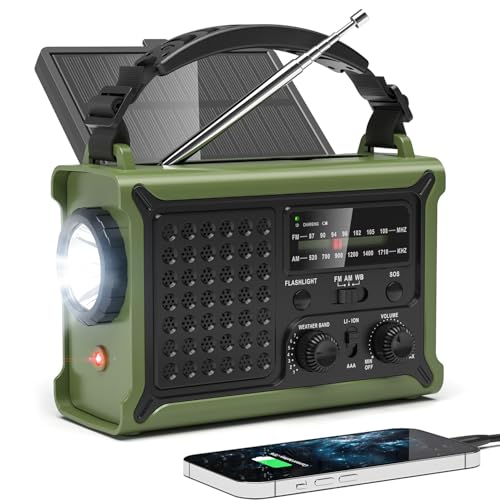
PPLEE 12000mAh NOAA Emergency Radio with Solar & Hand Crank
A multi-powered emergency radio that receives NOAA weather alerts and AM/FM stations, backed by a large 12000mAh battery and five charging methods including solar panel and hand crank. Built for families preparing for storms, outages, and outdoor trips with practical features like a 5W speaker and dual-mode flashlight.
Pros
- Multiple charging options ensure usability in prolonged outages or off-grid scenarios
- Large solar panel and efficient hand crank design reduce reliance on wall outlets
- Dual lighting modes (flashlight and reading lamp) cover different emergency needs
- Straightforward analog tuning knob and tactile buttons make operation accessible for seniors and non-technical users
- NOAA weather band reception keeps households informed during severe weather
Cons
- No customer reviews available yet to validate real-world performance and durability claims
- Hand crank charging requires sustained physical effort and delivers slower power than solar or USB in practice
- 5W speaker output may be insufficient for hearing alerts in noisy outdoor environments
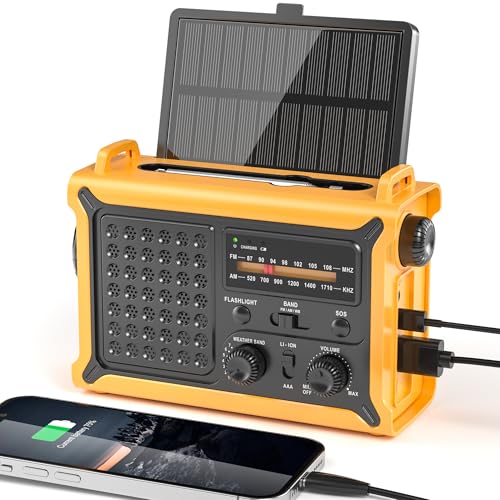
Mesqool 12000mAh Emergency Weather Radio with Solar & Hand Crank
A multi-powered emergency radio combining AM/FM/NOAA reception with solar charging, hand crank generator, and dual LED lights. Built for households and outdoor use with a large solar panel and upgraded crank mechanism for faster charging without relying on batteries alone.
Pros
- Large 8500mm² monocrystalline solar panel charges significantly faster than typical models, even in low-light conditions
- Hand crank generator with larger copper coil and reinforced magnet delivers nearly 2x charging efficiency compared to standard emergency radios
- Substantial 12000mAh lithium battery provides extended runtime across storms, blackouts, and extended outdoor trips
- Dual LED lights with adjustable brightness: focused flashlight beam (260 feet range) plus soft reading lamp for versatile emergency use
- Ergonomic design with large tuning knob, responsive buttons, and non-slip grip sized for comfortable operation even in darkness
Cons
- No verified user reviews available to confirm real-world performance claims about charging speeds and battery longevity
- Relatively large footprint (6.8 x 2.9 x 4.7 inches) may be less convenient for compact emergency kits compared to more portable models
- Requires full initial charge before first use to achieve optimal performance, adding setup time before deployment

Mesqool 12000mAh Solar Emergency Radio with Hand Crank
A multi-function emergency radio combining AM/FM/NOAA reception with a large 8500mm² solar panel, hand crank generator, and dual LED lights. Designed for storm preparedness and off-grid scenarios, it pairs weather monitoring with phone charging capability.
Pros
- Large solar panel captures significantly more sunlight than standard decorative panels, enabling faster charging in low-light conditions
- Hand crank mechanism reportedly delivers nearly 2x charging efficiency with smooth, low-effort operation
- Genuine 12000mAh battery capacity provides measurable multi-day runtime, avoiding inflated claims
- Dual LED lights with adjustable brightness serve both safety (long-range flashlight) and comfort (reading lamp) needs
- Sturdy ergonomic design with responsive controls suits emergency use and elderly users
Cons
- No verified customer reviews available to confirm real-world performance claims about charging speed and efficiency
- Hand crank 3-minute charging claim lacks third-party validation and may vary based on user effort and crank speed
- Requires full initial charge before first use, adding setup time before deployment in emergencies

OnLyee 12000mAh Emergency Radio with Solar & Hand Crank
A multipurpose emergency radio combining NOAA weather alerts, 12000mAh power bank, and multiple charging methods (solar panel, hand crank, USB-C). Best suited for hurricane prep, camping, and off-grid scenarios where reliable power and weather updates matter.
Pros
- Multiple charging options ensure functionality in extended power loss scenarios
- NOAA weather reception provides critical storm tracking independent of internet
- Built-in power bank capability makes it practical for phones and small devices
- IPX6 rating and compact size increase versatility for camping and travel
- 57mm speaker with DSP processing delivers clear audio across frequency ranges
Cons
- No verified buyer reviews available to confirm real-world battery longevity or charging speed from each power source
- Solar panel effectiveness depends entirely on weather conditions and sunlight availability
- Hand crank charging generates power slowly, requiring sustained cranking for meaningful battery gains
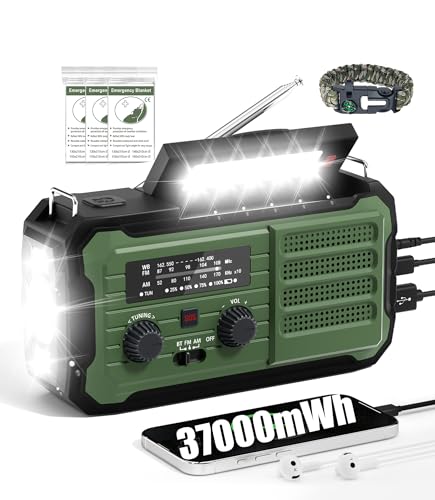
Vokida 37000mWh Emergency Weather Radio with Solar & Hand Crank
A multi-function emergency radio combining NOAA weather alerts, 37000mWh battery capacity, and three charging methods (hand crank, solar, USB) designed for power outages and outdoor use. Includes thermal blanket and paracord bracelet survival kit, though no verified buyer reviews are available to assess real-world reliability.
Pros
- High-capacity battery and multiple charging methods provide flexibility during extended outages
- Automatic weather scanning ensures alerts are received passively, even at night
- Complete survival bundle reduces need for separate purchases
- Includes functional accessories like flashlight, USB charging, and emergency signaling
Cons
- No verified buyer reviews available to confirm real-world performance and durability claims
- 4.1 rating appears to lack substantiated customer feedback
- Hand crank and solar charging realistically provide slow power replenishment compared to USB

FosPower A1 7400mWh Emergency Weather Radio
A portable emergency radio with integrated power bank, combining NOAA weather alerts with multiple charging methods (solar, hand crank, battery) and dual lighting. Best suited for emergency preparedness kits and outdoor enthusiasts who need reliable weather updates without grid dependency.
Pros
- Multiple power sources ensure functionality without grid access, ideal for extended outages or remote locations
- Integrated power bank adds genuine utility beyond radio reception for keeping devices charged
- Dual lighting options cover both ambient light and focused illumination needs
- Compact and lightweight for emergency bug-out bags or vehicles
- NOAA reception provides official emergency alerts and weather updates
Cons
- No verified customer reviews available to assess real-world reliability or durability in actual emergencies
- Hand crank and solar charging generate limited power incrementally, best used for maintenance rather than rapid recharging
- 2000mAh battery capacity is modest by modern power bank standards, sufficient mainly for partial phone charges

Panasonic RF-2400D Portable AM/FM Radio
A compact battery-powered radio with dual power options (AC adapter or 4 AA batteries) and digital tuning for reliable AM/FM reception. Best suited for emergency preparedness, camping, or backup power scenarios where portability and simplicity matter most.
Pros
- Dual power options with AC adapter and battery backup for flexible use
- Large fluorescent dial readable in low light conditions
- Digital tuner with AFC ensures stable, easy frequency locking
- Lightweight and compact design (1.52 lbs) for portability
- 3.5mm headphone jack allows private listening
Cons
- No user reviews available to verify real-world performance claims
- Limited to AM/FM bands only, no shortwave despite category listing
- Battery life specifications not provided in product data
Emergency Radios Buying Guide
Not every emergency radio suits every situation. A weekend camper has different needs than a homeowner preparing for a multi-day power outage, and a minimalist grab-and-go pack calls for a different form factor than a bedside alert station.
The criteria below reflect the factors that consistently separate capable, reliable radios from ones that disappoint when you need them most.
Think of this guide the same way you would approach planning for other aspects of household safety, such as selecting home security cameras or putting together a solid car emergency kit: a little informed research upfront saves real regret later.
NOAA Weather Band Reception and Alert Modes
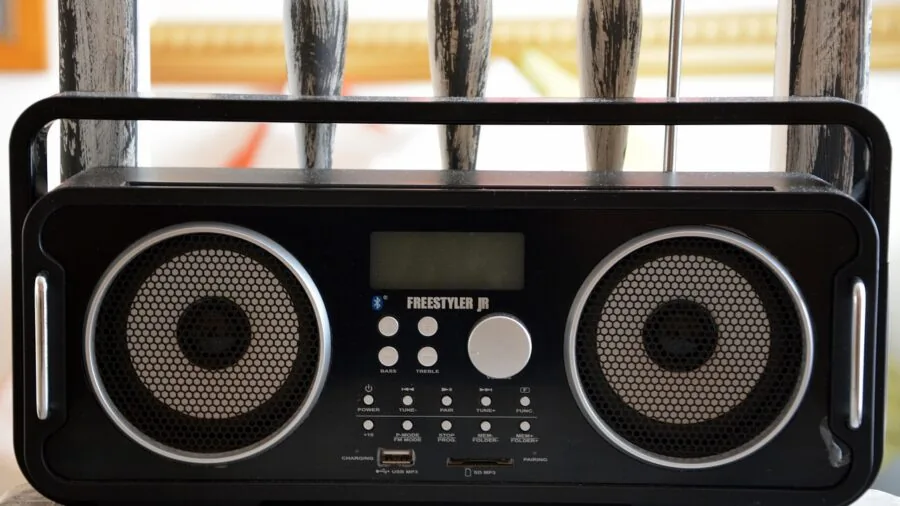
NOAA Weather Radio All Hazards (NWR) is the backbone of any serious emergency radio.
The network broadcasts continuous weather information and transmits alerts for hazardous conditions, including tornadoes, flash floods, and industrial accidents, across more than 1,000 transmitters covering all fifty states.
Any emergency radio worth buying must receive all seven NOAA weather frequencies (162.400 to 162.550 MHz) clearly and consistently.
Beyond basic reception, look for radios with automatic NOAA Weather Alert mode, which activates an audible alarm the moment a new alert is broadcast even when the radio is in standby.
More advanced units support S.A.M.E. (Specific Area Message Encoding) programming, letting you filter alerts down to your specific county so you are not woken at 2 a.m. by a storm warning three states away.
For home use, S.A.M.E. is a meaningful upgrade. For portable or travel use, broad-band NOAA scanning is typically sufficient.
AM and FM reception matters too, especially during prolonged emergencies when local stations carry evacuation and shelter-in-place instructions. Some models also include shortwave bands, which can receive international broadcasts during large-scale disasters.
The Kaito KA500, for example, covers AM, FM, shortwave, and NOAA, making it one of the most versatile receivers in the mid-range category.
Power Sources and Charging Versatility
The defining feature of a true emergency radio is that it keeps working when conventional power is unavailable.
Most quality units today offer at least three charging methods: a hand crank for guaranteed on-demand power, a solar panel for sustained outdoor use, and a built-in rechargeable battery topped off via USB or AC.
Some models, including the Midland ER310, add a dedicated battery compartment for standard AA or AAA cells, which provides a fourth fallback you can stock in advance.
Hand crank efficiency varies significantly between models. A few minutes of vigorous cranking on a well-engineered unit should produce 30 to 60 minutes of radio playback. On poorly designed units, the same effort yields far less.
Solar panel size is equally important: larger panels charge faster in direct sunlight, while small decorative panels on budget radios may be more marketing than function.
Look for verified buyer reports confirming real-world solar performance, not just rated wattage figures from spec sheets.
If the radio doubles as a power bank (a common feature on newer models from Raynic, Mesqool, OnLyee, and others), check the actual output amperage.
A 10,000 mAh battery paired with only a 1 A USB output will charge a smartphone painfully slowly.
Models advertising 12,000 mAh or more are appealing, but capacity figures from lesser-known brands should be cross-referenced against verified buyer feedback before taking them at face value.
Battery Capacity and Runtime
Battery capacity (measured in milliamp-hours) determines how long a radio runs on a single charge and how much power it can share with other devices.
For a radio used primarily for audio playback, even a modest internal battery can provide many hours of continuous use. For a device expected to charge smartphones during an extended outage, larger capacity matters considerably more.
The market has shifted toward higher nominal capacities, with many 2026 releases claiming 10,000 to 12,000 mAh. Treat these figures as a starting point rather than a guarantee.
Actual usable capacity depends on battery cell quality, discharge efficiency, and whether the manufacturer’s figure refers to the raw cell rating or measured output capacity.
Radios with independently corroborated runtime data, backed by multiple verified buyer accounts, consistently earn higher PF Scores in this category.
Emergency Features: SOS Alarm, Flashlight, and More

Most emergency radios sold today include an integrated LED flashlight, but quality varies enormously.
The best implementations offer multiple modes (high, low, and strobe or SOS flashing), a wide enough beam for practical navigation, and runtime that doesn’t drain the main battery within an hour.
A dedicated SOS beacon mode that flashes in the internationally recognized distress pattern (three short, three long, three short) adds genuine value for outdoor and disaster scenarios.
Some units add features like a reading lamp (a diffused top-facing light rather than a focused forward beam), an ultrasonic dog whistle for locating pets during evacuations, or a headphone jack for private listening.
The Midland ER310 includes all three of these extras, which is part of why it consistently ranks at the top of expert consensus roundups.
Less common but worth noting is a dual-LED setup that provides both a spotlight and area lamp from the same unit, as seen on the Roxicosly model.
For families with children or elderly members, the reading lamp and soft-start modes are practical daily conveniences that encourage keeping the radio charged and ready. A radio that gets used regularly is a radio you know will work in a crisis.
Durability and Weather Resistance

Emergency conditions are by definition rough. A radio that cracks when dropped or fails when splashed with rain undermines its entire purpose. Look for rubberized housing, reinforced corners, and clearly stated IP or IPX water resistance ratings.
IPX3 means the unit can handle light rain; IPX6 means it can withstand powerful water jets. The Roxicosly model, for example, carries an IPX6 rating, making it a strong candidate for outdoor-focused preparedness kits.
Build quality is one area where verified buyer feedback is especially informative. Spec sheets rarely mention the feel of plastic casing or how well hinged solar panels hold up after months in a go-bag.
Owner reviews from verified purchasers flagging premature crank failures or solar panel delamination are taken seriously in our PF Score methodology.
A radio that earns consistently positive long-term feedback from real owners carries more weight than one with impressive specs and no track record.
Size, Weight, and Use-Case Fit
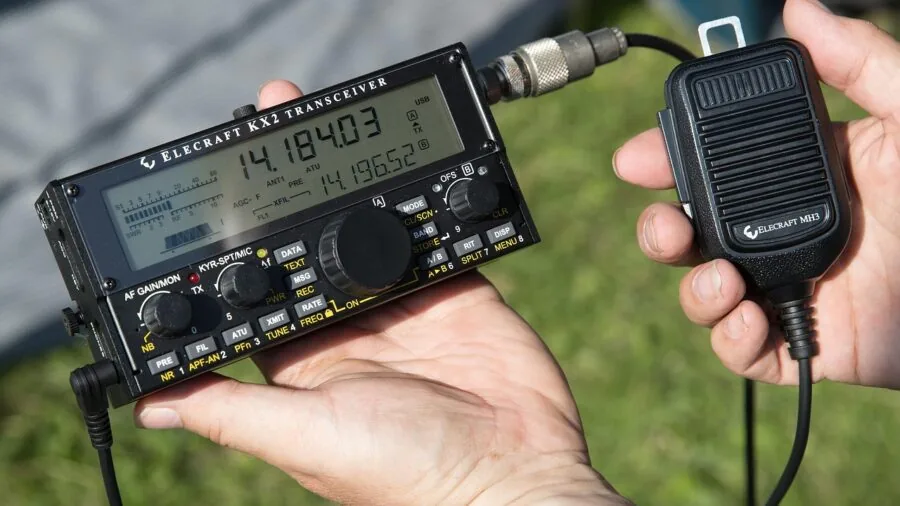
Emergency radios range from palm-sized units that slip into a jacket pocket to larger tabletop models designed for home alert stations.
Portable preparedness kits, like the emergency supplies you might pack alongside a portable car battery charger, demand compact, lightweight radios. Home preparedness shelves can accommodate larger units with bigger solar panels and higher battery capacities.
The FosPower A1 occupies the lightweight, budget-friendly end of the spectrum, while the Mesqool and PPLEE models lean toward the higher-capacity, feature-rich end.
Neither extreme is wrong; the right choice depends on where and how you intend to use the radio. A hiker or commuter building out a personal go-bag has very different needs from a homeowner stocking a basement shelter or garage.
Think through your primary scenario before prioritizing capacity over portability or vice versa.
Why You Should Trust Us
ProductFind is an independent review publication. We do not sell products, accept manufacturer samples in exchange for favorable coverage, or allow commercial relationships to influence our rankings.
Every model in this guide was evaluated through our structured research methodology: we analyze published technical specifications, assess expert review consensus drawn from across the industry, examine verified buyer feedback at scale, and reference published data on reliability and real-world performance.
We do not conduct our own product trials; our evaluations are grounded in research, published data, expert review consensus, and verified buyer feedback.
Each product receives a PF Score on a 0 to 10 scale reflecting consistent criteria applied across every model we assess.
For emergency radios, those criteria include NOAA reception quality, power source versatility, battery capacity and verified runtime, emergency feature depth (SOS, flashlight, alert modes), build quality and weather resistance, and overall value relative to peers in the same price tier.
Scores are updated when significant new verified buyer data or manufacturer revisions emerge.
ProductFind may earn a commission when you purchase through links in this article. That affiliate relationship has no bearing on PF Scores, rankings, or which products are included or excluded. Our recommendations are editorially independent.
Final Thoughts
After thorough research and scoring across all eleven models, the standouts in this lineup earn their rankings through real differentiators, not marketing claims. Here are the top distinctions by use case:
- Best Overall: Midland ER310 Emergency Crank Weather Radio earns the top PF Score in this roundup through a proven combination of multiple power sources, NOAA Weather Scan, SOS beacon, and a track record of expert consensus and verified buyer satisfaction that newer rivals have yet to match.
- Best Runner-Up: Roxicosly Emergency Weather Radio comes in a close second with its large solar panel, IPX6 water resistance, dual LED lighting, and real 12,000 mAh battery, making it the strongest choice for outdoor-focused preparedness.
- Best Multi-Band Value: Kaito KA500 5-Way Powered Emergency Radio is the only model in this guide covering AM, FM, shortwave, and NOAA together, ideal for preppers who want international broadcast capability alongside domestic weather alerts.
- Best Budget Pick: FosPower NOAA Emergency Weather Radio A1 delivers essential NOAA alerts, solar and hand crank charging, an SOS alarm, and a flashlight at the lowest price point in this lineup, making it the most accessible entry for first-time preparedness buyers.
- Best High-Capacity Portable: Raynic Emergency Weather Radio balances a large battery, AM/FM/SW/NOAA coverage, and a wide 57 mm speaker at a mid-range price, earning strong verified buyer marks for audio clarity and charging output.
If you are still deciding between preparedness tools, pairing a reliable emergency radio with a well-stocked car emergency kit covers the two most common scenarios where off-grid communication becomes critical.
For whole-home safety planning, outdoor security cameras and wireless security cameras complement an emergency radio setup by keeping you situationally aware before and after a weather event.
Frequently Asked Questions
What Makes an Emergency Radio Different from a Regular Portable Radio?
Emergency radios are designed to operate without grid power or charged batteries.
They typically include at least one self-powered charging method, most commonly a hand crank or solar panel, and they receive the NOAA Weather Radio band (162 MHz range) that standard consumer radios do not cover.
Many also include SOS alarms, USB charging outputs, and ruggedized housings built for rough handling during disaster conditions.
Do I Need a Radio with S.A.M.E. Alerts?
S.A.M.E. (Specific Area Message Encoding) lets you program your radio to only alert for specific counties or zones, filtering out alerts from distant areas.
For a bedside or home alert station, S.A.M.E. programming is genuinely useful because it prevents unnecessary nighttime alarms.
For a portable radio used during travel or camping, broad NOAA scanning without county filtering is usually sufficient since you are moving through different areas anyway.
How Useful Is the Solar Panel on an Emergency Radio?
Solar panels on emergency radios are most useful for slow, sustained top-off charging when the radio is placed in a sunny window or left outdoors during daylight.
Do not expect the compact solar panels on portable radios to charge the internal battery quickly from empty. Larger panels, like those on the Roxicosly model, charge meaningfully faster than the small strip panels found on budget units.
In a prolonged power outage with sunny conditions, solar charging can extend usable battery life significantly over several days.
Can an Emergency Radio Charge My Smartphone?
Many modern emergency radios include a USB output port that can charge smartphones and other small devices.
Models with larger battery capacities, such as the Mesqool, PPLEE, and Vokida units in this roundup, can deliver multiple partial phone charges from a single full battery.
Output speed varies; check that the USB port provides adequate amperage for your device before relying on this feature during an emergency.
Plan to use the radio’s phone-charging capability as a supplement to a dedicated portable car battery charger, not a replacement for one.
How Long Does a Hand Crank Charge Last?
Hand crank efficiency depends heavily on the gear ratio and generator quality inside the radio. As a general rule, one minute of cranking on a well-designed emergency radio produces roughly five to ten minutes of playback time.
Hand cranking is best understood as an emergency fallback to get a few minutes of critical information, not as a primary charging strategy for extended use.
For longer runtimes, solar charging and USB charging from a power bank are more practical.
Are Emergency Radios Worth Having If I Already Have a Smartphone?
Yes, and for a clear reason: smartphones depend on functioning cell towers and continuous battery power, both of which are unreliable during severe weather events and extended power outages.
NOAA weather alerts can reach an emergency radio with no cell signal, no Wi-Fi, and no grid power required.
WEA (Wireless Emergency Alerts) pushed to smartphones are useful but do not replace the continuous broadcast capability of a dedicated NOAA weather radio, which provides real-time updates rather than one-time push notifications.
About the author
Kenzi is a reviewer and writer for ProductFind who specializes in Home Safety & Security. Kenzi evaluates products through independent research: specifications, expert review consensus, and verified buyer feedback, and rates each one on the PF Score. Kenzi focuses on helping readers pick the right home safety & security for their needs and budget.