The 8 Best Breast Pumps
Choosing a breast pump shapes your entire postpartum routine. Our research covers electric, wearable, and manual options across Spectra, Medela, Momcozy, and more.
 By Daryl Arnold
Updated July 23, 2026
By Daryl Arnold
Updated July 23, 2026

Finding the right breast pump can genuinely reshape your postpartum experience, whether you are heading back to work, building a milk supply from scratch, or simply need the freedom to feed on your own schedule.
With dozens of models on the market spanning traditional electric double pumps, compact wearables, and no-fuss manual options, the choices can feel overwhelming before you have even left the hospital.
At ProductFind, we researched the breast pump category by analyzing published specifications, synthesizing expert review consensus from lactation professionals and parenting publications, and combing through verified buyer feedback across hundreds of real-world accounts.
Our evaluation covers models from Spectra, Lansinoh, Medela, Momcozy, eufy Security, NCVI, Paruu, and Mammanuwa, giving you a clear, honest picture of which pumps earn their place in your daily routine.
Read on for our ranked picks, then scroll down for the full buying guide to match the right pump to your needs.
| Award | Product | PF Score About PF ScoreThe PF Score is our own rating from 0 to 10, based on performance, design and build, ease of use, and value. It reflects independent research and is never influenced by manufacturers, retailers, or affiliate commissions. Learn more › | Price | |
|---|---|---|---|---|
| Best Overall |
 Spectra S1 Plus Portable Electric Breast Pump
|
9.2/10 | Buy | |
| Editor's Pick |
 Lansinoh NaturalWave Double Electric Breast Pump
|
8.3/10 | Buy | |
| Best Value |
 Medela Harmony Manual Breast Pump
|
8.1/10 | Buy | |
| Top Rated |
 Momcozy Wellness 1 Wearable Breast Pump
|
7.8/10 | Buy | |
 eufy Security S1 Heated Wearable Breast Pump
|
7.8/10 | Buy | ||
 Mammanuwa S32 Wearable Breast Pump
|
6.4/10 | Buy | ||
 Paruu P16 Wearable Breast Pump, 309mmHg Suction
|
5.2/10 | Buy | ||
 NCVI 8782 Double Electric Breast Pump
|
6.2/10 | Buy |
Spectra S1 Plus Portable Electric Breast Pump
A rechargeable portable breast pump that supports single or double pumping with suction levels designed to mimic natural breastfeeding. Comes as a 20-piece set with storage tote, milk bottles, and cooler, making it practical for working and on-the-go mothers.
Pros
- 20-piece set includes everything needed: pump, bottles, cooler, and organized tote bag for immediate use
- Rechargeable battery eliminates need for outlets or battery replacements during work or travel
- Adjustable suction levels intended to feel more comfortable and natural for breastfeeding mothers
- Dual pumping option saves time compared to single-pump-only models
- All parts contacting breast milk are BPA/DEHP free
Cons
- No verified customer reviews available to assess real-world performance and durability
- Limited information on battery life duration or charging time
- Relatively heavy at 8.6 pounds compared to some ultra-portable pumps, though includes tote for carrying
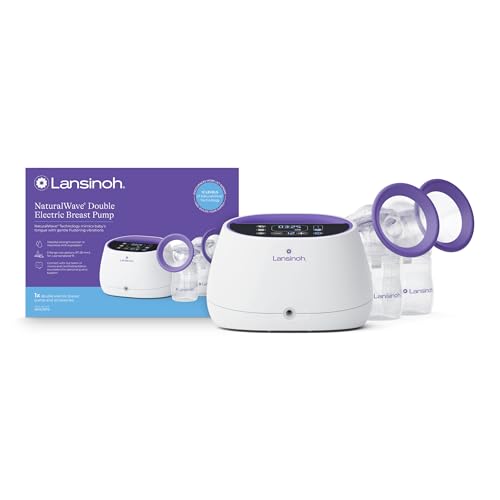
Lansinoh NaturalWave Double Electric Breast Pump
A hospital-strength double pump with NaturalWave technology that mimics baby's natural sucking patterns to encourage more let-downs. Features 12 speeds, five flange sizes, and rechargeable battery lasting 6+ sessions per charge, designed for comfort-focused pumping.
Pros
- Multiple flange sizes included ensures better comfort and fit for different users
- Rechargeable battery eliminates cord dependency for portable pumping
- Customizable pumping styles and speeds let users optimize sessions for their needs
- NaturalWave technology encourages natural milk expression patterns
Cons
- No verified buyer reviews available to assess real-world reliability or durability
- Battery life of 6+ sessions may require frequent charging for exclusive pumpers
- Higher price point as premium double electric pump
Medela Harmony Manual Breast Pump
A lightweight, portable manual pump designed for mothers who need flexibility between electric pumping sessions. The 360-degree rotating shield and two-phase expression mimic natural nursing while allowing milk to be expressed directly into a storage bottle.
Pros
- Compact and silent design makes it genuinely portable for on-the-go use
- Rotating shield reduces pressure and adjusts to individual anatomy
- Two-stage pumping action (stimulation then expression) is ergonomically intuitive
- Minimal parts keep setup and cleanup simple
- Includes storage bottle so expressed milk can go straight into fridge
Cons
- Manual pumping requires physical effort and takes longer than electric options
- No verified buyer reviews available to confirm real-world performance claims
- 5 oz bottle capacity may require multiple sessions for larger milk volumes
Momcozy Wellness 1 Wearable Breast Pump
A hands-free wearable pump with heated flange, gentle massage, and app control across 4 modes and 12 suction levels. Designed for comfort with SoftPuls technology that mimics natural baby sucking, plus up to 10 sessions per charge.
Pros
- Warm massage and SoftPuls pull-and-release motion reduce nipple discomfort compared to constant suction
- App customization lets you adjust warmth, massage intensity, and suction to your preferences
- See-through design and one-press milk collector minimize spills and speed up cleanup
- Strong battery life covers multiple sessions between charges
- Mimics natural sucking patterns to support effective let-down and milk emptying
Cons
- No verified buyer reviews available to assess real-world reliability or long-term durability
- App dependency required for full customization, which may be inconvenient without smartphone
- Higher price point positions it as premium option compared to traditional electric pumps
eufy Security S1 Heated Wearable Breast Pump
A hands-free wearable pump featuring HeatFlow technology designed to reduce clogs and increase milk output by 30% based on user feedback. Offers customizable pumping rhythms, strong 300 mmHg suction, and quiet operation at 46 dB, making it suitable for discreet use.
Pros
- Heat combined with strong suction may help prevent clogs and improve milk expression
- Quiet operation and compact size enable discreet in-bra pumping
- Multiple flange sizes accommodate different nipple dimensions
- Customizable settings allow personalized comfort and efficiency
- BPA-free materials and leakproof construction provide safety and convenience
Cons
- No verified customer reviews available to validate performance claims
- Product documentation notes suction or heating issues may require troubleshooting
- Compatibility with all breast pump accessories not specified in available data
Mammanuwa S32 Wearable Breast Pump
A lightweight, portable electric breast pump designed for discreet pumping with hands-free capability. Features Baby Mouth technology mimicking natural sucking angles, 4 modes, 9 adjustable levels, and comes in three flange sizes to accommodate different breast shapes.
Pros
- Genuinely portable design allows discreet pumping while working or traveling
- Three flange size options provide personalized fit for different body types
- Micro-vibration technology and customizable modes offer flexibility in pumping sessions
- BPA-free silicone is safe for both mother and baby
- Minimal parts design simplifies cleaning and maintenance
Cons
- No verified buyer reviews available to validate real-world performance and durability
- Requires proper sealing of silicone box to avoid leakage issues, per manufacturer guidance
- Limited information on battery life, charging time, or motor noise levels
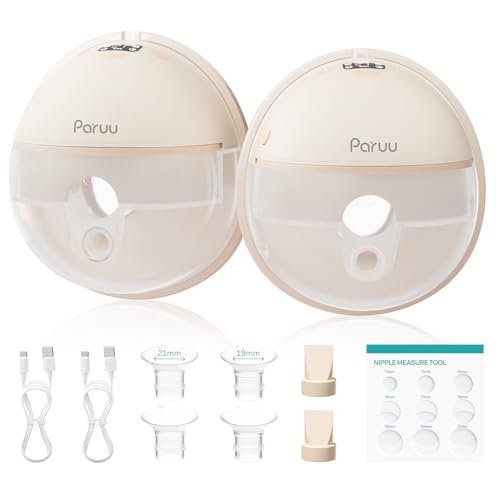
Paruu P16 Wearable Breast Pump, 309mmHg Suction
A compact, hands-free electric breast pump weighing just 240g with customizable suction across 4 modes and 12 levels. Designed for mothers seeking portability and discretion, it includes three flange sizes and an automatic 30-minute shutoff, though it has no verified buyer reviews yet.
Pros
- Highly portable and discreet wearable form factor allows pumping anywhere without using hands
- Wide suction customization with 4 modes and 12 levels accommodates different milk flow and comfort preferences
- Three included flange sizes with nipple measurement card helps ensure proper fit
- Simple 5-piece assembly with sealed milk collector prevents leaks
- 30-minute automatic shutoff adds safety and convenience
Cons
- No verified buyer reviews available to validate real-world performance and durability claims
- Requires regular maintenance of valve and diaphragm components, which if not properly installed affects suction quality
- Maximum suction strength of 309mmHg and effectiveness compared to larger electric pumps not independently verified
NCVI 8782 Double Electric Breast Pump
A portable double pump with 4 modes, 9 intensity levels, and a 2200mAh rechargeable battery designed for home, work, and travel use. Features anti-backflow protection, food-grade silicone construction, and quiet 40dB operation to avoid waking infants.
Pros
- Multiple charging options including power banks, computers, and car adapters for maximum flexibility
- Anti-backflow valve system with silicone diaphragm prevents milk from entering pump mechanism
- Quiet performance at 40dB reduces risk of waking sleeping babies
- Food-grade silicone materials with most components dishwasher safe for easy cleaning
- Extended battery life allows 3 sessions per full charge
Cons
- No verified customer reviews available to confirm real-world performance and durability claims
- Requires complete drying of components before use or suction power weakens and may damage unit
- Accessories like tubes and valves sold separately and need replacement over time for continued functionality
Breast Pumps Buying Guide
Not every pump is right for every person. Your pumping frequency, lifestyle, insurance coverage, and comfort preferences all shape which model will actually get used every day versus end up in the back of a drawer.
The sections below walk through the six factors that most consistently separate a pump you will love from one you will abandon.
Pump Type: Electric, Wearable, or Manual

The first decision is choosing between a traditional plug-in or rechargeable electric pump, a wearable (in-bra) pump, and a manual pump. Traditional double electric pumps, like the Spectra S1 Plus, remain the gold standard for efficiency.
They deliver the most consistent suction, the broadest range of customization, and the highest output per session, making them the logical anchor for anyone who pumps multiple times a day.
If you are exclusively pumping or working to establish a full supply, a quality electric model is almost always worth the investment.
Wearable pumps such as the Momcozy Wellness 1 and the eufy Security S1 let you move around freely during sessions, which is a genuine quality-of-life upgrade for parents who need to multitask.
Expert reviewers and verified buyers consistently note, however, that wearables tend to produce slightly less volume per session compared to seated electric pumps because of design constraints around motor size and flange geometry.
They work best as a secondary pump or for occasional use rather than as a sole pumping solution, though parents who pump infrequently or primarily at work may find them entirely sufficient.
Manual pumps like the Medela Harmony are ideal as travel companions or dedicated backups. They are quiet, require no power source, pack flat in a bag, and cost a fraction of electric options.
For someone who pumps occasionally or needs a lightweight option for a work trip, a well-designed manual pump can be surprisingly effective.
Many parents pair one with a reliable set of nursing pads to manage leaks between sessions when they are away from their primary pump.
Suction Strength and Customization

Suction strength is measured in millimeters of mercury (mmHg), and the range of adjustability matters as much as the peak number. Hospital-grade pumps typically reach 250 to 300+ mmHg, while consumer pumps land in the 200 to 280 mmHg range.
The Paruu P16 claims a maximum of 309 mmHg, though independent expert reviewers note that real-world output depends heavily on flange fit and motor consistency, not peak spec alone.
More important than peak suction is whether you can independently control suction strength and cycle speed.
The Spectra S1 Plus separates these two settings, a feature that lactation consultants consistently praise because it lets you dial in comfort without sacrificing output.
Models with multiple phases, specifically a stimulation (letdown) phase with rapid, lighter suction followed by an expression phase with slower, stronger draws, better mimic a baby’s natural nursing pattern.
This two-phase approach is associated with faster milk ejection and more comfortable sessions across verified buyer reports.
Pay attention to how many levels each mode offers. More granularity means a better chance of finding your personal sweet spot, which can shift from session to session depending on engorgement level and time of day.
The Lansinoh NaturalWave pump specifically earns praise for its NaturalWave technology, which is designed to replicate natural nursing rhythms more closely than standard two-phase cycling.
Flange Fit and Comfort
A poorly fitting flange, the funnel-shaped piece that fits over your nipple, is one of the leading causes of pump discomfort and reduced output.
Most pumps ship with one or two standard sizes, but your anatomy may require a different diameter.
Common sizes range from 19 mm to 28 mm, and some brands, including Paruu, include multiple flange inserts in the box so you can adjust fit at home without buying additional accessories.
Soft, flexible silicone flanges tend to be more comfortable than rigid plastic equivalents, especially during longer sessions.
Wearable pumps have made strides here by designing flanges that cup the breast more naturally, and the eufy S1’s HeatFlow system and the Momcozy Wellness 1’s heated flange both aim to encourage milk ejection through warmth, which verified buyers report can reduce the time needed to trigger letdown.
If you are unsure of your size, many lactation consultants offer flange-fitting assessments, and most hospital systems provide this support in the first weeks postpartum.
As a practical guide, your nipple should move freely in the tunnel with roughly 1 to 3 mm of clearance on each side.
Nipple diameters commonly range from 12 mm to 30 mm, meaning many people need to purchase a custom size beyond the standard 24 mm or 25 mm flange that ships in the box.
Pairing proper flange sizing with a well-fitted postpartum care kit from day one can make the early weeks significantly more manageable.
Battery Life and Portability

For anyone pumping away from home, whether at work, while traveling, or simply moving between rooms, a rechargeable battery is a meaningful convenience rather than a luxury.
The Spectra S1 Plus has a built-in rechargeable battery that provides multiple sessions per charge, which is precisely what distinguishes it from the otherwise identical Spectra S2 Plus that requires a wall outlet at all times.
If you are often on the move, prioritize models with USB-C charging, since that is likely the same cable already in your bag.
Wearable pumps are inherently portable but carry smaller batteries to keep weight down. Check the rated battery life per charge and match it against how many sessions per day you plan to need.
A wearable pump worn in-bra often pairs well with a full-size electric pump at home, giving you maximum output for dedicated sessions and true hands-free convenience when you are out.
Many parents also find that tracking hydration reminders using a light movement routine and wellness habits helps sustain supply during demanding workdays.
Noise Level

Noise matters more than it might seem at first. If you pump at the office, in a shared bedroom, or while your baby sleeps nearby, a quieter motor is a significant practical advantage.
The Spectra line is widely praised for near-silent operation in verified buyer reviews, while some budget-priced wearables produce more mechanical noise than their marketing suggests.
When in doubt, user-generated video reviews often give a more honest sense of real-world sound levels than any manufacturer specification.
Noise also serves as a useful proxy for motor quality. A pump that runs loudly may be working its motor harder than necessary, which can raise legitimate questions about long-term durability.
This is one area where investing in a well-established brand with a track record tends to pay dividends over the months of regular use most pumping parents experience.
Ease of Cleaning and Maintenance

Breast pump parts that contact milk must be cleaned after every session, which adds up to many washes per day over months of use.
Look for pumps with fewer total parts, dishwasher-safe components, and closed-system or anti-backflow designs that prevent milk from entering the tubing.
Anti-backflow valves, standard on the Spectra S1 and the NCVI model, reduce the risk of mold in tubing and make the cleaning routine significantly less tedious over time.
Wearable pumps tend to have more compact, enclosed assemblies that can be harder to fully clean. Some models require disassembly of small silicone membranes and valves that are easy to lose or damage if you rush the process.
Before committing to a pump, look for a disassembly walkthrough online to make sure the cleaning process fits your daily reality.
Valves and membranes are the most wear-prone parts and typically need replacing every one to three months with regular use, so check that affordable replacement kits are available for your chosen model.
Keeping a dedicated station near the sink with all cleaning supplies organized makes pump maintenance feel far less like a chore.
Some parents also use quick-clean microwave steam bags between full washes, which lactation professionals generally endorse as a safe and efficient approach during the newborn period.
Pairing a solid cleaning routine with quality nursing pads and a comfortable pumping bra creates a full setup that works seamlessly from day one.
Why You Should Trust Us
ProductFind is an independent review publication with no commercial relationship with any brand featured in this guide. We do not accept free products, sponsored placements, or manufacturer payments of any kind in exchange for coverage or favorable rankings.
Every product evaluated here was assessed using a consistent, structured methodology: we analyze published technical specifications, synthesize consensus from expert reviewers and lactation professionals, and assess verified buyer feedback drawn from large pools of confirmed purchasers.
Each product is then assigned a PF Score on a scale of 0 to 10, reflecting its overall performance across the criteria most relevant to its category.
We do not conduct our own product trials; our evaluations are grounded in research, published data, expert review consensus, and verified buyer feedback.
This research-synthesis approach lets us evaluate a broader range of products more consistently than any single-source review method, while remaining free from the biases that can arise when evaluation samples are supplied directly by brands.
If a product scores poorly on our criteria, it appears lower in the rankings or is excluded entirely, regardless of its commission rate or brand prominence.
ProductFind may earn a commission when you purchase through links on this page. That affiliate relationship has no influence on our rankings, scores, or product selection. Our recommendations are based entirely on evaluated merit, and our editorial decisions are made independently of any commercial considerations.
Final Thoughts
After evaluating the full field against consistent criteria, a handful of standout picks clearly rise above the rest depending on what you need most from a pump. Here is a summary of our top awards based on PF Score and verified strengths across the category.
- Best Overall: Spectra Baby S1 Plus Premier Portable Rechargeable Electric Breast Pump earns the top spot in this roundup. Its rechargeable battery, independently adjustable suction and speed controls, and near-silent operation make it the most consistently recommended double electric pump for everyday use, with the highest PF Score in this group.
- Best Mid-Range Electric Pump: Lansinoh NaturalWave Double Electric Breast Pump earns strong marks for its NaturalWave cycling technology, which is designed to replicate a baby’s natural nursing rhythm more closely than standard two-phase pumps. It is a compelling choice for parents who want reliable performance at a mid-range price point.
- Best Manual Pump: Medela Harmony Manual Breast Pump is the clear leader in its category. Lightweight, no-fuss, and trusted by lactation professionals, it earns its place as the ideal backup or travel companion. Its simplicity is its greatest strength, comparable to the way well-executed basics in any category consistently outperform complicated alternatives.
- Best Wearable Pump: Momcozy Wellness 1 Wearable Breast Pump and the eufy Security Heated Wearable Breast Pump S1 share this distinction with matching PF Scores. The Momcozy Wellness 1 stands out for its app-controlled settings and heated flange technology, while the eufy S1 differentiates itself with its HeatFlow system for warmth-assisted letdown. Your choice between them comes down largely to brand ecosystem preference and which heat delivery method feels more intuitive for your routine.
- Best Budget Electric Pump: NCVI Electric Breast Pump 8782 offers an anti-backflow design, multiple modes, and nine suction levels at an accessible entry-level price. It is a reasonable starting point for occasional pumpers or those who want a dedicated backup unit without committing to a premium budget.
No matter which pump you choose, fit, consistency, and routine matter as much as the hardware itself.
Pairing the right pump with proper flange sizing, a good pumping bra, and a reliable cleaning setup puts you in a strong position from the very first session.
If you are also building out your full postpartum toolkit, postpartum care kits are worth exploring early, and cloth diapers are another area where research upfront saves significant frustration later.
Frequently Asked Questions
Will My Insurance Cover a Breast Pump?
In the United States, the Affordable Care Act requires most insurance plans to cover at least one breast pump per pregnancy.
Coverage details vary by plan, including whether you receive a pump directly, a rental, or reimbursement for an out-of-pocket purchase. Contact your insurer or check your member portal before buying to confirm which models are on the approved list.
Many plans include the Spectra S1 Plus or a comparable double electric model as a standard covered option, so it is worth verifying before spending out of pocket.
How Often Should I Replace Pump Parts?
Valves and membranes are the most wear-prone components and typically need replacing every one to three months with regular daily use. Flanges and bottles last longer but should be inspected periodically for cracks, discoloration, or warping.
A noticeable drop in suction strength is often the first sign that a small part has worn out rather than the motor itself, so replacing worn accessories is always worth trying before concluding that the pump has failed.
Most brands sell replacement part kits, and keeping a spare set on hand prevents disruption to your pumping schedule.
Can a Wearable Pump Be My Only Pump?
For many parents, a wearable pump works well as a primary option, but the answer depends on your output goals and pumping frequency.
Wearable models generally produce less volume per session than a full-size double electric pump because of constraints around motor size and flange geometry.
If you are exclusively pumping or trying to establish a full supply, a traditional electric pump will typically yield more consistent results.
If you pump occasionally or primarily need a hands-free option at work, a wearable like the Momcozy Wellness 1 or eufy S1 can absolutely serve as your main pump.
Many parents who use period underwear and similar low-maintenance everyday essentials apply the same logic to their pump: the most convenient tool you will actually use consistently beats the most powerful one sitting in a closet.
What Is the Difference Between Pump Suction Modes?
Most electric pumps offer at least two phases: a stimulation (letdown) phase with rapid, lighter suction to trigger milk flow, and an expression phase with slower, stronger suction to draw milk out efficiently.
Some models, including those from Spectra, allow you to adjust suction strength and cycle speed independently within each phase, giving you significantly more control over comfort and output.
This granularity is worth prioritizing because the ideal setting varies considerably from person to person and even from session to session depending on engorgement level, time of day, and fatigue.
If you find that a single setting never feels quite right, independent controls are the feature most likely to solve that problem.
Can I Reuse My Pump for a Second Pregnancy?
Most manufacturers classify their consumer breast pumps as single-user devices for hygiene reasons, and insurance plans typically cover one pump per pregnancy.
If you plan to reuse a pump from a previous pregnancy, replace all milk-contact parts including flanges, valves, membranes, bottles, and tubing before using it again.
The motor housing itself can generally be reused safely, but any component that has contacted milk should be treated as single-use across separate pregnancies.
Since insurance coverage resets with each pregnancy in most plans, verifying your benefits early is the simplest path to a fresh, fully covered setup.
How Do I Know What Flange Size I Need?
Flange sizing is based on nipple diameter, not breast size. The correct flange allows your nipple to move freely in the tunnel without rubbing against the sides and without pulling in excess areola tissue.
A lactation consultant can measure you accurately, or you can use a soft measuring tape at home. As a practical guide, your nipple should fit the tunnel with roughly 1 to 3 mm of clearance on each side.
Most standard pumps ship with a 24 mm or 25 mm flange, but nipple diameters commonly range from 12 mm to 30 mm, meaning many people need to purchase a custom size separately.
Some brands, including Paruu, bundle multiple flange insert sizes in the box, which can reduce that extra step and cost.
For broader guidance on managing the postpartum period comfortably, gentle feminine washes formulated for postpartum skin and menstrual cups for when your cycle returns are both worth researching before you need them.
About the author
Daryl is a reviewer and writer for ProductFind who specializes in Feeding. Daryl evaluates products through independent research: specifications, expert review consensus, and verified buyer feedback, and rates each one on the PF Score. Daryl focuses on helping readers pick the right feeding for their needs and budget.