The 11 Best Nitrile Gloves
Nitrile gloves span a wide range of thicknesses, certifications, and use cases. Here are the picks worth buying for food prep, medical work, and heavy-duty tasks.
 By Daniel Payne
Updated July 23, 2026
By Daniel Payne
Updated July 23, 2026
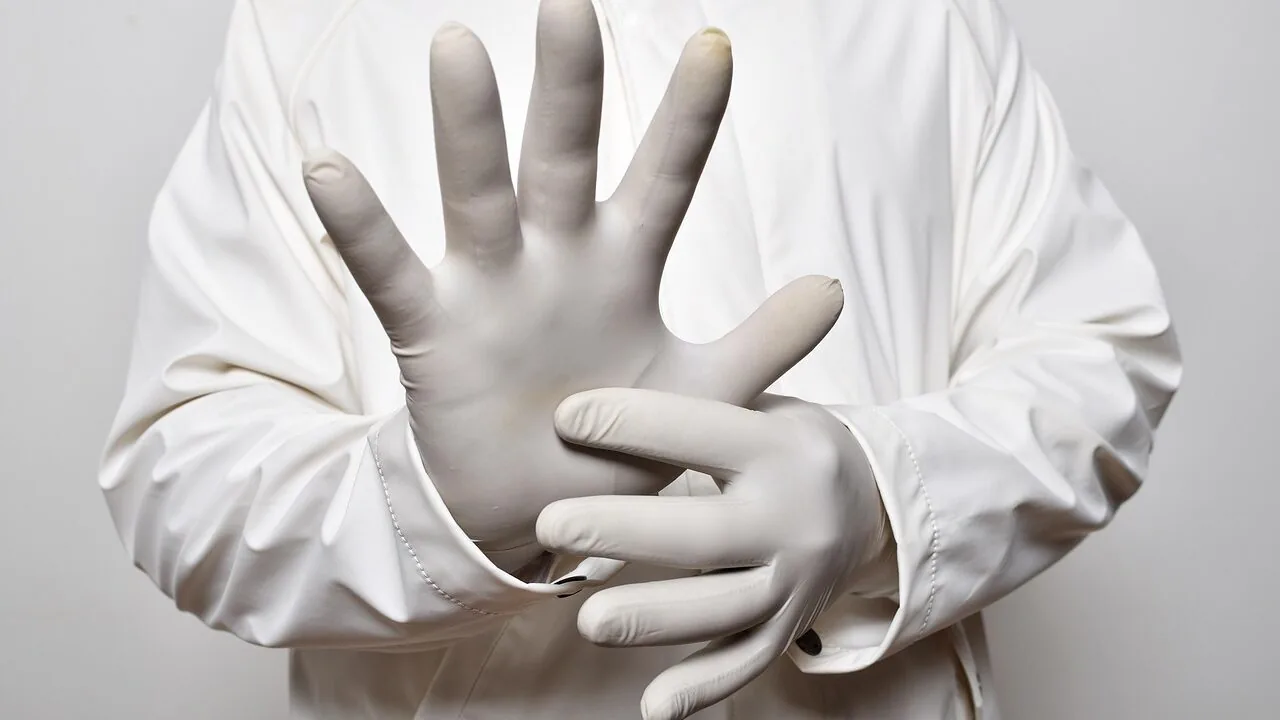
Nitrile gloves have quietly become one of the most versatile pieces of protective gear in both professional and household settings.
Mechanics, home cooks, caregivers, tattoo artists, estheticians, and lab technicians all depend on a reliable barrier between their hands and the world, yet the market is flooded with options spanning wildly different thicknesses, mil ratings, and certifications.
Picking the wrong box is a real possibility, and the consequences range from wasted money to compromised safety.
The ProductFind editorial team researched nitrile gloves by synthesizing manufacturer specifications, expert review consensus from occupational health and professional sources, and verified buyer feedback from thousands of confirmed purchases.
Brands including MedPride, TitanFlex, Inspire, Supmedic, Medguy, SwiftGrip, Schneider, and London Labs all made the shortlist. Scroll down for our ranked picks, then read the buying guide below to match the right glove to your specific needs.

Schneider Medical Nitrile Exam Gloves, Large (100-Pack)
Medical-grade black nitrile gloves designed for exam, food handling, and household tasks without latex or powder irritants. Textured fingertips and 3 mil thickness balance protection with tactile sensitivity for detailed work.
Pros
- Latex and powder-free formulation eliminates common allergen concerns
- Textured fingertips enhance grip for precision medical and lab work
- Lightweight material reduces fatigue during extended use
- Suitable across multiple industries: medical, dental, food service, and household cleaning
Cons
- No verified customer reviews available to confirm real-world durability or fit consistency
- 3 mil thickness is relatively thin, may not suit applications requiring maximum puncture resistance
- Large size only in this listing, limiting options for different hand sizes
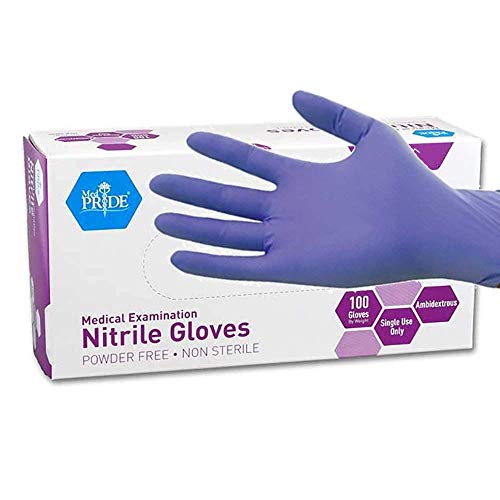
MedPride Nitrile Exam Gloves Large 100-Pack
Medical-grade nitrile gloves designed for healthcare professionals and multipurpose use. Powder-free and latex-free construction minimizes skin irritation, while textured fingers provide reliable grip during procedures.
Pros
- Medical-grade construction with proven durability against latex and other glove types
- Latex and powder-free design reduces irritation risk for extended wear and sensitive skin
- Textured fingerprints enhance grip and control during medical and professional tasks
- Versatile use across healthcare, food prep, labs, and cleaning applications
- Economical 100-pack format reduces per-unit cost
Cons
- 4.4 rating with zero verified reviews limits real-world feedback on durability and fit consistency
- No sterile certification noted, limiting use for certain medical procedures requiring sterility
- Single size per order requires separate purchase if multiple sizes needed

TitanFlex 6-mil Black Nitrile Exam Gloves, Large 100-ct
Heavy-duty 6-mil black nitrile gloves certified for medical exams and food handling, with latex-free construction for users with sensitivities. Multipurpose design suits healthcare, food service, and industrial tasks, though no verified customer feedback is available yet.
Pros
- Superior puncture resistance compared to latex or vinyl alternatives
- Dual certification for both medical exams and food handling
- Latex-free formulation reduces allergic reactions
- Textured design prevents slipping in wet environments
Cons
- No verified customer reviews available to assess real-world durability
- Black color may obscure visibility of small punctures or contamination
- Large size only, limiting options for users needing different fits

SwiftGrip Fuchsia Nitrile Gloves 100ct, 3-Mil
Powder-free, latex-free nitrile gloves in a vibrant fuchsia color, designed for food handling, cleaning, and beauty work. The 3-mil thickness balances protection with dexterity for light-duty tasks across home, office, and professional settings.
Pros
- Genuinely latex-free with puncture-resistant nitrile material
- Food-grade and powder-free, suitable for direct food contact
- Waterproof and lightweight for extended wear without fatigue
- Wide size range (XS to XL) and color options for different preferences
- Economical bulk options reduce per-unit cost for regular users
Cons
- 3-mil thickness is on the lighter side; may tear during heavy-duty or sharp-object handling
- No verified customer reviews available yet, limiting real-world feedback on durability
- Color options advertised (black, blue, white, etc.) but specific availability unclear from listing
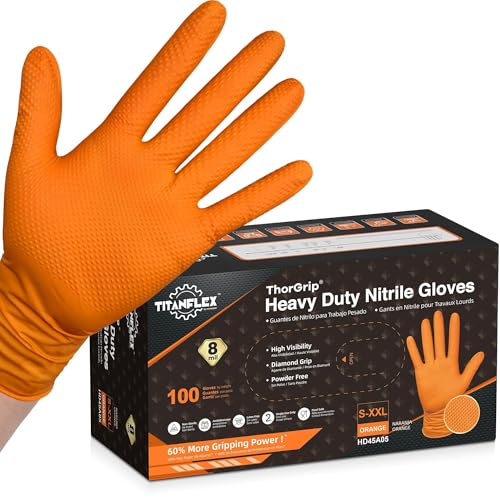
TitanFlex 8-mil Heavy Duty Nitrile Gloves, XL
Heavy-duty orange nitrile gloves designed for mechanics, automotive work, and industrial tasks. The 8-mil thickness and diamond texture grip provide enhanced puncture resistance and control in oily or wet conditions.
Pros
- Significantly thicker construction delivers superior puncture resistance compared to standard disposable gloves
- Diamond texture with liquid-channeling design maintains grip in wet, oily, or greasy conditions
- Latex-free formulation reduces allergic reactions while maintaining flexibility and durability
- High visibility orange color aids quick identification of contaminants or damage in workshops and industrial sites
- Broad chemical resistance suitable for automotive fluids, oils, and petroleum products
Cons
- No verified buyer reviews available to confirm real-world durability claims
- Thicker 8-mil material may reduce fine tactile sensitivity for precision work requiring delicate touch
- Premium thickness and durability positioning may carry higher cost per glove compared to standard alternatives

Inspire Black Nitrile Disposable Gloves, Large (Box of 100)
Heavy-duty nitrile exam gloves designed for medical, food service, and industrial use. Puncture-resistant with textured fingertips and touchscreen compatibility, offering reliable protection across multiple applications.
Pros
- Durable nitrile construction resists punctures and tears while maintaining flexibility and tactile sensitivity
- ISO-certified professional-grade gloves suitable for medical, food service, cleaning, and industrial work
- Textured fingertips and touchscreen compatibility add practical utility for varied tasks
- Powder-free and latex-free reduces allergen concerns in sensitive environments
Cons
- No verified buyer reviews available to assess real-world durability and comfort claims
- Product specifications list color as blue, creating inconsistency with the black gloves described in the title
- Limited size range information provided beyond mention of Small through XXL availability

Inspire Black Nitrile Gloves 6 Mil Heavy Duty
Heavy-duty 6-mil nitrile gloves designed for medical, industrial, and household use with textured fingertips and touch screen compatibility. Exam-grade material offers puncture resistance and dexterity, trusted across healthcare, food service, and maintenance applications.
Pros
- Versatile across medical, industrial, food handling, and household tasks
- Durable 6-mil thickness provides reliable puncture protection
- Touch screen compatible and textured grip enhance usability
- Latex and powder-free reduces allergenic risk
- Trusted by professionals in emergency services and healthcare
Cons
- No verified customer reviews available to assess real-world durability claims
- Limited size availability shown (Large only in data provided)
- Heavy-duty thickness may reduce fine tactile sensitivity compared to thinner alternatives

Inspire Cobalt Blue Nitrile Disposable Gloves, Large (Box of 100)
Exam-grade nitrile gloves designed for medical, food service, and household use. Puncture-resistant with textured fingertips and touch screen compatibility, offering reliable protection across multiple industries.
Pros
- Durable, puncture-resistant nitrile material reduces accidental tears during use
- Certified exam-grade quality suitable for medical professionals and food service
- Latex-free and powder-free formulation reduces allergic reactions and contamination
- Touch screen compatible, practical for modern work environments
- Versatile across medical, food preparation, cleaning, and mechanical applications
Cons
- No verified customer reviews available to assess real-world durability claims
- Limited size options shown; availability in other sizes unclear from product data
- Non-sterile designation may limit use in certain medical procedures requiring sterile gloves

Supmedic Nitrile Exam Gloves 3.5 Mil, 100 Pack Medium
Powder-free nitrile gloves rated for medical, food prep, and general cleaning tasks with 40% thicker material than standard food gloves. Micro-textured fingertips and latex-free construction suit users needing allergen-safe protection across multiple applications.
Pros
- Thicker construction provides better durability and barrier protection than basic food service gloves
- Allergen-safe design eliminates latex and powder concerns for frequent users
- Textured fingertip grip maintains control with wet or oily surfaces
- Versatile across medical clinics, food prep, cleaning, and auto repair applications
- 100-count bulk pack offers economical supply for households or small facilities
Cons
- No verified buyer reviews available to validate real-world durability or fit consistency
- Single size medium only, limiting options for users needing small or large fits
- Category listed as chemotherapy gloves but primary positioning emphasizes general-use applications, creating potential clarity gap

Medguy 4 Mil Nitrile Exam Gloves, Large (100-Count)
Powder-free, latex-free nitrile gloves rated 4.8 stars, designed for medical, food service, and general cleaning use. The 4 mil thickness balances protection with tactile sensitivity, though no verified buyer reviews are available to confirm real-world durability.
Pros
- Food-safe and latex-free composition minimizes allergy concerns
- Manufacturer clearly marks MFG and EXP dates (YYYY-MM-DD format) for shelf-life transparency
- Suitable across multiple industries: healthcare, food service, cleaning, and beauty applications
- Bulk 100-count option offers value for frequent users or small businesses
- Described as stretchy and soft for improved tactile control
Cons
- No verified buyer reviews available despite 4.8-star rating, limiting real-world feedback on durability and fit
- 4 mil thickness is standard but may not provide maximum puncture resistance for heavy-duty tasks
- Limited size range information; only Large size listed in current data
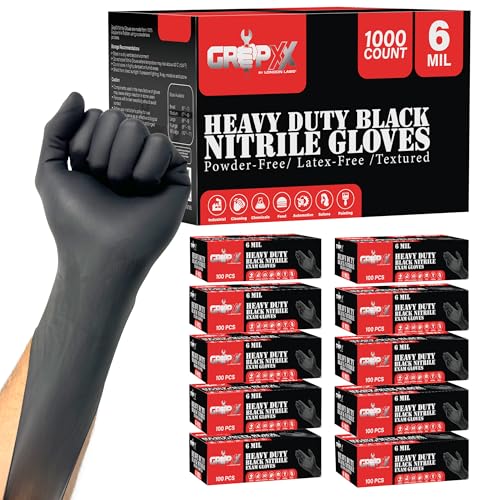
London Labs 6 Mil Black Nitrile Gloves, 1000-Count Bulk
Heavy-duty black nitrile gloves at 6 mil thickness designed for mechanics, food prep, and general industrial use. Latex and powder-free construction suits sensitive users, with touchscreen compatibility and six size options across a bulk case.
Pros
- Thick enough for heavy-duty tasks without excessive bulk
- Latex-free option benefits users with sensitivities or allergies
- Wide application range across multiple industries
- Touchscreen functionality adds practical convenience
- Bulk pricing structure offers value for frequent users
Cons
- No verified buyer reviews available to assess real-world durability claims
- Black color may show residue or powder residue more visibly than other colors
- Bulk 1000-count commitment may not suit occasional or light-duty users
Nitrile Gloves Buying Guide
Choosing the right nitrile glove is not simply a matter of grabbing the cheapest box of 100. Thickness, fit, regulatory certification, and intended use all interact in ways that matter the moment something goes wrong.
Whether you need a light exam glove for food prep or a heavy-duty option for chemical handling, the sections below walk through each key decision point so you can buy with confidence rather than guesswork.
If you pair glove use with other hygiene habits, quality hand soaps are a natural complement for daily cleaning routines.
Thickness and Mil Rating

Mil rating is the single most misunderstood specification on a glove box. One mil equals one-thousandth of an inch, and this number tells you a great deal about what the glove was designed to do.
Thin gloves in the 3 to 3.5 mil range, such as the Supmedic Violet Blue in our list, are engineered for high-volume medical and food-service tasks where tactile sensitivity is paramount.
They flex easily, resist hand fatigue during long shifts, and let you feel exactly what you are handling without sacrificing basic barrier protection.
Mid-range gloves at 4 to 4.5 mil strike a practical balance for everyday cleaning, medical exam work, and light food preparation.
Step up to 6 mil or heavier and you enter heavy-duty territory suited for mechanics, chemical handling, and environments where puncture and abrasion resistance genuinely matter.
The TitanFlex industrial orange 8 mil option and the Inspire Black 6 mil chemical-resistant glove are purpose-built for exactly these scenarios. Thicker gloves sacrifice some dexterity but provide meaningfully better protection against tears and chemical permeation.
A practical rule: match thickness to risk level. Light kitchen prep or general household cleaning calls for a 3 to 4 mil glove. Handling concentrated solvents, oils, or biological hazards warrants 6 mil or above.
Even the toughest disposable nitrile glove should be replaced at the first sign of a tear, since any breach in the nitrile material propagates quickly into full glove failure.
Keeping a well-stocked first aid kit nearby is a sound precaution for any task where puncture risk is real.
Certification and Intended Use

Not every nitrile glove on the market is created equal from a regulatory standpoint. Exam-grade gloves, often labelled as medical exam gloves, must meet ASTM D6319 standards, which set minimum acceptable quality levels (AQL) for pinhole defects and dimensional consistency.
These are the gloves appropriate for clinical, dental, and laboratory settings where barrier reliability is non-negotiable. MedPride, Schneider Medical, and Medguy all carry exam-grade designations on their respective products.
Chemotherapy-rated gloves, sometimes listed under ASTM D6978, provide an additional layer of assurance that the glove material resists permeation by specific hazardous drug compounds over a defined exposure period.
If your work involves handling cytotoxic drugs or similar substances, a standard exam glove is not sufficient.
The Inspire Cobalt Blue and the Supmedic Violet Blue both list chemotherapy glove categorizations, but you should always verify current certification data directly with the manufacturer before relying on any glove in a regulated healthcare environment.
Industrial or non-sterile gloves, the category covering TitanFlex and certain Inspire lines, are designed for mechanical, automotive, and general industrial tasks rather than clinical use. They often carry food-safe certifications but lack the stricter AQL requirements of exam-grade products.
Understanding which regulatory tier your task demands will save you money when a lighter specification is adequate and prevent serious errors when higher certification is genuinely required.
Good hand protection works best as part of a broader hygiene protocol, and disinfecting wipes are a practical complement before and after gloving up in household or professional settings.
Fit, Sizing, and Comfort
A glove that does not fit correctly undermines everything else on the specification sheet. Too loose and you lose tactile control, creating a frustrating bunching of material in the palm.
Too tight and you accelerate hand fatigue, reduce circulation, and increase the risk of tearing the fingertip seams during a routine task. Most brands in our list offer Small through XL, and some extend to XXL for industrial applications.
Nitrile sizing is not standardized across manufacturers, so checking each brand’s sizing chart before purchasing is essential.
Textured fingertips are worth seeking out if your work involves gripping slippery surfaces, small instruments, or tools.
The TitanFlex industrial orange glove features a raised diamond texture specifically engineered for mechanic work, while lighter exam gloves from Medguy and MedPride use a micro-texture suited to food prep and clinical tasks.
Smooth fingertip options trade grip for a more neutral tactile feel, preferred in delicate procedural work where precision matters more than traction.
Cuff length and cuff finish also affect comfort in extended-wear scenarios. Most disposable nitrile gloves feature a beaded or rolled cuff at standard length, which helps prevent the glove from rolling down the wrist during use.
If your work involves liquids, chemicals, or food products that could splash onto your forearm, consider whether a longer-cuff option is warranted.
For estheticians and hair stylists, the SwiftGrip pink glove’s lighter construction makes it a comfortable choice for longer sessions where hand fatigue is a concern.
Chemical and Puncture Resistance

One of the core reasons nitrile displaced latex in many professional settings is its superior resistance to oils, greases, fuels, and a broad range of industrial chemicals.
Nitrile polymers form a tighter molecular barrier against petroleum-based substances than natural rubber latex, making nitrile the default choice for automotive mechanics, laboratory technicians, and anyone handling cleaning solvents regularly.
However, chemical resistance is not absolute and varies significantly with glove thickness and the specific chemical involved.
For household cleaning tasks, a standard 4 mil glove offers adequate protection against common products like bleach-based cleaners and degreasers.
When working with concentrated solvents, automotive fluids, or adhesives, stepping up to the Inspire Black 6 mil chemical-resistant glove or the TitanFlex 8 mil industrial option is the prudent choice.
Always consult a manufacturer’s chemical resistance chart for the specific substance you are handling if there is any doubt. No disposable nitrile glove is rated for extended immersion in highly aggressive chemicals, regardless of thickness.
Puncture resistance scales with thickness but also with the quality of the nitrile compound itself. Budget thin gloves from lower-tier manufacturers can fail almost instantly when pressed against a sharp edge.
The brands in our evaluated list were assessed partly on verified buyer reports of real-world puncture performance, which is one reason options with broader positive consensus across professional buyer communities earned stronger positions in our rankings.
For shop environments where sharp edges and tool hazards are constant, a sturdy shop stool and a good pair of heavy-duty gloves together form the foundation of a safer workspace.
Powder-Free Construction and Interior Finish
Every product in this roundup is powder-free, and that is intentional. The FDA banned powdered medical gloves from the U.S. market under 21 CFR 878 due to documented risks including respiratory sensitization and post-surgical adhesion formation.
Powder-free gloves are now the universal standard for medical, food service, and most industrial applications. The slightly tacky interior of a quality powder-free glove may feel unfamiliar at first, but most users adapt within a few sessions.
Some budget powder-free gloves use a chlorination process to reduce interior stickiness, which can marginally affect the durability of the nitrile compound over time.
Higher-quality options use polymer coatings or improved nitrile formulations to achieve the same easy donning without chlorination trade-offs.
If you notice a glove feels unusually brittle or tears easily at the cuff during donning, the chlorination level may be a contributing factor alongside inherent material quality.
This is one reason verified buyer feedback on donning ease carries meaningful weight in our evaluation process.
Value, Quantity, and Cost Per Glove

Nitrile gloves are priced as a commodity, which means the cost-per-glove metric is often more useful than the sticker price of the box.
A 100-count box at a budget price point and a bulk case of 1,000 can both represent excellent or poor value depending on the actual quality of the glove inside.
The London Labs bulk case targets high-volume buyers in the automotive and food service sectors where per-unit cost is paramount, while individual 100-count boxes from Schneider, Medguy, or SwiftGrip cater to household and light professional users who prioritize convenience over volume pricing.
When budgeting, factor in the task frequency and the consequence of glove failure. A box of budget 3 mil gloves used for light kitchen work represents sensible value.
Skimping on thickness for chemical handling or clinical tasks is a false economy that can result in real harm.
Our scoring weighted value-for-performance rather than raw price, which is why some moderately priced options outranked cheaper alternatives in the PF Score rankings.
Pairing gloves with a reliable medicine cabinet stocked with basic care supplies rounds out a practical home health setup.
Why You Should Trust Us
ProductFind is an independent editorial publication. We do not sell the products we review, and we have no financial relationship with any manufacturer that influences our rankings.
Every nitrile glove in this roundup was evaluated using a consistent, structured methodology: we analyzed published manufacturer specifications, synthesized consensus from occupational health professionals and expert reviewers, and weighted verified buyer feedback from confirmed purchasers across major retail channels.
Each product receives a PF Score on a 0 to 10 scale, reflecting its overall performance across the criteria most relevant to real-world buyers in this category: material quality and mil rating, certification compliance (ASTM D6319, ASTM D6978, and relevant FDA standards), fit and comfort, chemical and puncture resistance, and value relative to performance.
We do not conduct our own product trials; our evaluations are grounded in research, published data, expert review consensus, and verified buyer feedback.
ProductFind may earn a commission when you purchase through links in this article. That affiliate relationship has zero influence on PF Scores, rankings, or which products appear in the roundup.
Products are included and ranked solely on the merit of our research findings. We are committed to transparency: if a product’s real-world reputation shifts significantly based on new buyer feedback or updated specifications, we update our evaluations accordingly.
Final Thoughts
After evaluating eleven nitrile gloves across use cases ranging from medical exam work and food service to heavy industrial and chemical handling, a set of standout picks emerged for different buyer needs.
Here are our editorial recommendations by use case, each anchored to its PF Score ranking.
- Best Overall: TitanFlex Disposable Nitrile Exam Gloves (6 mil, Black) earns the top PF Score in our roundup by combining heavy-duty 6 mil construction, exam-grade barrier reliability, food-safe certification, and a latex-free formula that performs across a genuine range of professional and home applications.
- Best Budget Pick: MedPride Powder-Free Nitrile Exam Gloves deliver solid exam-grade performance at an accessible per-glove price, making them the practical default for high-volume household and light clinical use where cost efficiency is the priority.
- Best for Lightweight Daily Use: Medguy Powder-Free Nitrile Exam Gloves (4 mil, Blue) offer a comfortable 4 mil construction at a budget-friendly per-box price, earning one of the stronger PF Scores in the lighter-glove tier for buyers who prioritize dexterity and all-day wearability over heavy-duty protection.
- Best Heavy-Duty Industrial Glove: TitanFlex Heavy Duty Industrial Orange Nitrile Gloves (8 mil) stand apart for mechanical and chemical handling tasks, with raised diamond texture grip and a robustly thick nitrile compound built to resist the kind of abrasion and puncture risk that lighter exam gloves cannot handle.
- Best for Chemical Resistance: Inspire Black Nitrile Gloves Heavy Duty 6 Mil are purpose-built for chemical-resistant applications, carrying a dedicated Chemical Resistant Gloves classification and a 6 mil compound that makes them a reliable choice for lab, industrial cleaning, and concentrated chemical exposure.
Whichever option fits your needs, the right nitrile glove is one matched to your actual task requirements, not simply the cheapest box on the shelf.
Use the buying guide above to anchor your decision to the specifications and certifications that genuinely matter for your situation.
And if you regularly work with sharp objects or hazardous materials, pairing quality gloves with a fully stocked first aid kit is a straightforward precaution worth taking.
Frequently Asked Questions
What is the difference between nitrile and latex gloves?
Nitrile gloves are made from a fully synthetic rubber compound that contains no natural latex proteins, making them the safe choice for anyone with a latex allergy.
Beyond allergy considerations, nitrile offers superior resistance to oils, greases, and many industrial chemicals compared to natural rubber latex.
Latex gloves retain some advantages in elasticity and tactile feel for precision clinical tasks, but nitrile has largely replaced latex as the professional standard due to its broader chemical compatibility and zero latex-allergy risk.
All eleven products evaluated in this roundup are explicitly latex-free.
How thick should nitrile gloves be for food prep?
For most food preparation tasks, a 3 to 4 mil glove provides adequate protection while maintaining the tactile sensitivity needed to handle ingredients and tools safely. Gloves in this range are also comfortable enough for extended kitchen sessions.
If you are handling raw meat, poultry, or fish in a high-volume food service context, a 4 to 4.5 mil food-safe nitrile glove is a sensible step up.
The key is to change gloves frequently rather than relying on one pair for multiple tasks, since cross-contamination risk is behavioural as much as it is material. Complement glove use with disinfecting wipes for surface hygiene between tasks.
Are nitrile gloves safe for people with latex allergies?
Yes. Nitrile is a fully synthetic material that contains no natural rubber latex proteins, so it does not trigger Type I latex hypersensitivity reactions.
However, a small subset of individuals may develop a Type IV delayed hypersensitivity response to chemical accelerators used in the nitrile curing process, such as thiurams or carbamates.
If you experience skin reactions to standard nitrile gloves, look for accelerator-free or low-accelerator nitrile formulations, which are available through medical supply channels.
A well-organized medicine cabinet that includes your preferred glove type is a practical way to keep protective supplies accessible at home.
How many nitrile gloves do I actually need to buy at once?
It depends on use frequency and application. A 100-count box suits most household users for several weeks to a few months of regular use.
Professional environments with high daily glove turnover, such as tattoo studios, automotive shops, or food service operations, benefit from bulk cases of 1,000 or more for both cost efficiency and supply continuity.
For emergency preparedness and home first aid use, maintaining at least one sealed box as part of your supplies is a sensible starting point.
A properly stocked first aid kit often includes a small supply of gloves for exactly this reason.
Can I reuse nitrile gloves?
Disposable nitrile gloves are designed for single use.
Reusing them introduces several problems: the nitrile material degrades with repeated exposure to chemicals, the structural integrity of the glove weakens after initial use and removal, and reuse creates contamination risk if the exterior surface has been exposed to pathogens or hazardous materials.
In clinical, food service, and industrial settings, single-use disposal after each task or session is the standard protocol. If you are concerned about environmental impact, purchasing larger-count boxes reduces packaging waste per glove pair compared to smaller quantities.
What does powder-free mean and why does it matter?
Powder-free means the interior of the glove has not been dusted with cornstarch or similar agents to ease donning.
The FDA banned powdered medical gloves from the U.S. market due to documented health risks including respiratory sensitization and inflammatory responses in surgical patients. All gloves in this roundup are powder-free, reflecting the current industry standard.
Modern powder-free nitrile gloves use interior coatings or controlled manufacturing processes to make them easy to put on without the risks associated with powder.
For household cleaning tasks, this also means you avoid leaving residue on surfaces you are trying to clean, which pairs well with effective hand soaps for a thorough hygiene routine after gloves come off.
About the author
Daniel is a reviewer and writer for ProductFind who specializes in Lab & Scientific. Daniel evaluates products through independent research: specifications, expert review consensus, and verified buyer feedback, and rates each one on the PF Score. Daniel focuses on helping readers pick the right lab & scientific for their needs and budget.