The 8 Best Umbrellas
Rain, wind, or both: the right umbrella handles it without snapping or soaking you. We researched eight models across stick, folding, and inverted styles to find the picks worth carrying every day.
 By Earl Daniels
Updated July 23, 2026
By Earl Daniels
Updated July 23, 2026

A reliable umbrella is one of those everyday essentials that most people only think about when they are already soaking wet.
Whether you commute through unpredictable weather, travel frequently, or simply want a dependable option on hand, choosing the right umbrella makes a real difference: not just in how dry you stay, but in how long the umbrella actually lasts.
Cheap canopies invert and stay inverted; flimsy ribs snap after a few gusty days; handles crack under regular use.
The market is full of options across stick, folding, and inverted styles, at price points ranging from budget-friendly to premium, and the differences in real-world performance are substantial.
To help you cut through the noise, our team at ProductFind researched the umbrella category thoroughly, synthesizing manufacturer specifications, expert review consensus from across the web, and verified buyer feedback from thousands of confirmed purchasers.
We narrowed our focus to eight models that represent the best available value across form factors and budgets.
If you are looking for windproof daily carry, a compact travel option, or an inverted design that keeps water off your car seat, our top picks below cover every scenario.
| Award | Product | PF Score About PF ScoreThe PF Score is our own rating from 0 to 10, based on performance, design and build, ease of use, and value. It reflects independent research and is never influenced by manufacturers, retailers, or affiliate commissions. Learn more › | Price | |
|---|---|---|---|---|
| Best Overall |
 Totes Auto Open 48" Stick Umbrella with Wood Handle
|
8.2/10 | Buy | |
| Editor's Pick |
 Totes Signature Clear Bubble 51" Umbrella
|
7.8/10 | Buy | |
| Best Value |
 TUMELLA 42-Inch Windproof Travel Umbrella
|
7.1/10 | Buy | |
| Top Rated |
 Raintrend Double Canopy Automatic Folding Umbrella
|
6.8/10 | Buy | |
 QWB 46-Inch Inverted Umbrella with Carabiner Handle
|
6.6/10 | Buy | ||
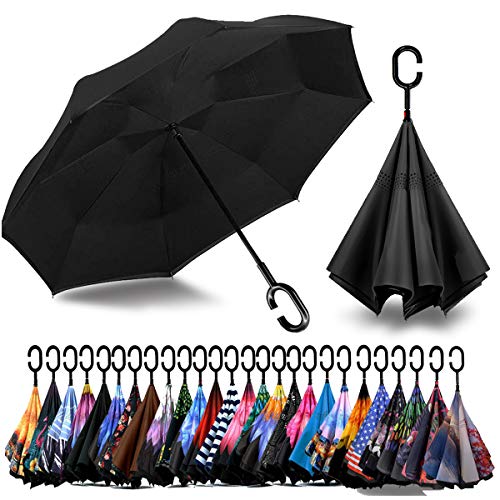 SIEPASA 49-Inch Reverse Umbrella with C-Handle
|
6.5/10 | Buy | ||
 Gorilla Grip 42-Inch Compact Travel Umbrella
|
6.3/10 | Buy | ||
 Weatherman Premium Collapsible Travel Umbrella 55 MPH
|
5.2/10 | Buy |
Totes Auto Open 48" Stick Umbrella with Wood Handle
A classic auto-open stick umbrella with a genuine wood J-hook handle and water-repellent canopy designed for one-handed operation. Best suited for commuters and those who value traditional style with practical weather protection.
Pros
- Auto-open mechanism provides genuine convenience in sudden downpours
- Genuine wood handle adds durability and timeless visual appeal
- 48-inch canopy width offers substantial coverage for person and small bags
- Lifetime warranty backs the product against material or workmanship defects
- Water-repellent coating reduces moisture retention on fabric
Cons
- No verified buyer reviews available to confirm real-world performance or durability
- Wood handle may require occasional maintenance to preserve appearance
- Single color option (black only) limits aesthetic customization
Totes Signature Clear Bubble 51" Umbrella
A transparent umbrella that keeps you dry while maintaining visibility of your surroundings, ideal for city commuting and travel. The 51-inch arc and automatic open button prioritize functionality over style, backed by a lifetime warranty.
Pros
- Clear design lets you see your surroundings while staying protected from rain
- Automatic open mechanism works with one hand, convenient for busy commutes
- Wide 51-inch coverage adequate for personal protection plus a small bag
- Lifetime warranty provides long-term peace of mind against defects
- Low maintenance requires only air drying and occasional damp cloth wipe
Cons
- No customer reviews available to validate real-world durability or water-resistance claims
- Clear plastic canopy may show water spots, dust, and dirt more visibly than opaque designs
- Limited information on wind resistance despite being marketed as windproof
TUMELLA 42-Inch Windproof Travel Umbrella
A lightweight compact umbrella engineered to withstand winds up to 100 MPH with a full fiberglass rib frame and one-handed automatic open/close mechanism. Built for commuters and travelers who need reliable weather protection in a portable 11.5-inch package that fits standard carry-on luggage.
Pros
- All-fiberglass rib construction provides superior durability compared to hybrid fiberglass-metal designs
- Generous 42-inch coverage with one-handed operation ideal for multitasking scenarios
- Extremely compact and lightweight for daily commutes or packing into bags
- Sun-resistant fabric on solid colors plus UPF50+ coating on patterned designs
- Extensive color and design selection with immersive 360-degree print coverage
Cons
- No verified buyer reviews available to assess real-world durability claims or wind resistance performance
- High-density sun protection fabric may reduce visibility during rain in some design patterns
- Dependence on proper care and storage to maintain durability as stated by manufacturer
Raintrend Double Canopy Automatic Folding Umbrella
Raintrend's compact umbrella combines automatic open/close with a sturdy double canopy design and 9-rib construction, making it practical for commuters and travelers. The windproof build and lightweight frame fit easily into bags, though the lack of verified buyer feedback limits confidence in real-world durability claims.
Pros
- Double canopy and 9-rib structure designed for wind resistance
- Compact size fits backpacks, briefcases, and car glove compartments
- Automatic mechanism for convenient one-handed use
- Lifetime warranty provides long-term coverage
- 210T waterproof fabric coating for weather protection
Cons
- No verified customer reviews to validate durability or performance claims
- Wooden handle may be less durable than alternative materials in frequent use
- Product dimensions appear to have data entry issues, making actual size unclear
QWB 46-Inch Inverted Umbrella with Carabiner Handle
This reverse-folding umbrella keeps wet surfaces inside when closed, preventing drips on clothes and car seats. It features a carabiner clip for easy attachment to bags or belts, 10 reinforced fiberglass ribs rated for 40 km/h winds, and reflective strips for visibility.
Pros
- Reverse folding mechanism eliminates wet drips on clothes and car interiors
- Carabiner clip handle prevents loss and attaches to multiple surfaces
- Lightweight and compact for travel and daily commute
- Reflective safety strips provide visibility in low-light conditions
- Windproof construction rated for moderate wind speeds
Cons
- No verified customer reviews available to confirm real-world durability claims
- Limited to 46-inch canopy size compared to some full-size umbrella options
- Automatic push-button mechanism may require periodic maintenance
SIEPASA 49-Inch Reverse Umbrella with C-Handle
This inverted umbrella features a reverse opening design that folds wet layers inward to keep floors and cars dry. The C-shaped handle frees your hands in the rain, and it stands upright when closed for easy storage.
Pros
- Reverse/inverted design prevents water from dripping onto floors and vehicles
- C-shaped handle allows hands-free carrying of bags, babies, or phones
- Eight steel ribs provide structural support and enable the umbrella to stand independently when closed
- Non-automatic manual operation with embedded button reduces risk of poking bystanders
- Large 49-inch canopy offers generous coverage
Cons
- No customer reviews available to verify real-world durability and performance claims
- Manual operation requires deliberate button pressing, slower than automatic deployment
- Relatively heavy at 1 pound compared to standard compact umbrellas
Gorilla Grip 42-Inch Compact Travel Umbrella
A lightweight stick umbrella designed for travelers, collapsing to 11.5 inches and weighing under a pound. One-click open/close, water-resistant 190 Pongee fabric, and UV protection make it practical for daily carry, though durability claims depend on real-world use beyond the product specs.
Pros
- Genuinely compact and lightweight design makes it suitable for travel without adding bulk
- Automatic one-click operation provides convenience during sudden rain
- Water-resistant 190 Pongee canopy is more durable than standard polyester
- Reinforced fiberglass ribs and wind resistance rating indicate solid construction for everyday weather
- Soft-touch handle design reduces hand fatigue during extended use
Cons
- No verified customer reviews available to assess real-world durability or performance
- Wind resistance claimed at 23 mph may be modest compared to premium umbrellas in severe storms
- Stick design offers less portability than compact folding models, though still travel-friendly
Weatherman Premium Collapsible Travel Umbrella 55 MPH
Weatherman's compact umbrella combines industrial-grade fiberglass construction with practical commuter features like one-touch auto-open and 360-degree reflective trim. Engineered by meteorologist Rick Reichmuth, it's built to handle high winds and daily urban use without the bulk.
Pros
- Fiberglass frame withstands winds up to 55 mph and resists inversion
- One-touch automatic open with manual close for quick deployment
- 360-degree reflective trim enhances visibility in low-light conditions
- Water-repellent fabric dries quickly after use
- Ergonomic handle reduces hand fatigue during extended carrying
- Lifetime guarantee backed by meteorologist design expertise
Cons
- No user reviews available yet to validate real-world performance claims
- Manual close mechanism may feel slower than full auto models for frequent users
- Fiberglass frame, while durable, may be heavier than aluminum alternatives
Umbrellas Buying Guide
Picking the right umbrella comes down to more than just whether it opens. Below are the factors that consistently separate a frustrating purchase from one you will actually reach for every time it rains.
Whether you are pairing your choice with a quality men’s rain jacket for full storm coverage or just grabbing something compact to toss in a bag, these criteria apply across the board.
Frame Construction and Wind Resistance

The frame is the single most important factor in umbrella longevity. Ribs made from fiberglass flex under wind load rather than snapping, which is why premium models from brands like Weatherman use fiberglass exclusively.
Steel ribs are heavier and more rigid, and while they resist bending under moderate conditions, they are more prone to failure in sustained gusts.
Vented double-canopy designs add a secondary layer that allows wind to pass through rather than accumulating pressure underneath, which dramatically reduces inversion events.
When evaluating wind resistance, look for umbrellas that specify a evaluated MPH rating in the product description.
Claims of “windproof” without a specific figure are marketing language; a frame that genuinely handles strong gusts will usually back that claim with a number.
The Weatherman Collapsible, for example, advertises resistance up to 55 MPH winds, which is a meaningfully specific claim backed by its fiberglass build.
For everyday urban use in moderate conditions, a quality vented canopy over a fiberglass or reinforced steel frame is sufficient without the premium price.
Also check the number of ribs. Eight-rib construction is the standard for entry-level umbrellas; moving to ten or more ribs distributes force more evenly and reduces the chance of any single rib taking a fatal bend.
Budget models at lower price points almost always use eight ribs, while mid-range and premium options often step up to ten.
Canopy Size and Coverage

Canopy diameter determines how much of you actually stays dry. A compact folding umbrella with a 38-inch canopy is adequate for a single adult in light rain; once wind enters the picture, you will want something closer to 42 to 48 inches.
Stick umbrellas with larger canopies are better suited to families, couples sharing coverage, or anyone who wants genuine protection in a downpour.
Inverted and reverse-fold designs, like those from SIEPASA and QWB TUMAAOTU, often prioritize coverage alongside the practical benefit of keeping drips contained when you close them indoors.
Keep in mind that canopy diameter is measured across the open frame tip to tip, not the actual coverage area. The effective coverage is smaller because the canopy slopes downward at the edges.
For reference, a 42-inch canopy umbrella covers roughly the same area as an outstretched arm from shoulder to fingertip.
Manufacturers sometimes state “arc” measurements which inflate the apparent number; if a spec sheet gives two figures, the smaller one is typically the more relevant flat diameter.
Open and Close Mechanism
Auto-open mechanisms are now standard on most mid-range and premium umbrellas, allowing one-button deployment with a single hand. This matters more than it sounds when you are juggling a bag, keys, or a coffee on the way out the door.
Auto-open plus auto-close (often called “one-touch open/close”) is a meaningful convenience upgrade available on compact folding models like the Raintrend and GORILLA GRIP, letting you retract the canopy with the same button press.
Stick umbrellas, including the Totes Auto Open models, typically offer auto-open with a manual close, which requires a deliberate two-step action to collapse.
Reliability of the mechanism matters as much as the feature itself. Cheap spring-loaded buttons feel flimsy immediately out of the box and fail within a season. Look for buyer feedback that specifically addresses long-term mechanism performance, not just first-impression reviews.
If a model has hundreds of reviews praising its opening action but a meaningful cluster of reviews reporting button failure within a year, that pattern is a genuine signal.
Portability and Packed Size

Compact folding umbrellas collapse to roughly 10 to 12 inches in length and weigh well under a pound, making them easy to drop into a backpack, purse, or carry-on.
The GORILLA GRIP, for instance, explicitly targets this use case with its under-1-lb weight.
Stick umbrellas, while offering a better grip and larger canopy, are longer in their collapsed state and typically require a dedicated umbrella loop on a bag or a separate sleeve.
Neither is objectively better; the right choice depends on whether you carry a bag large enough to accommodate a stick design.
Inverted or reverse-fold umbrellas occupy their own category. Their inside-out close keeps the wet side contained, which is a genuine advantage getting into a car or entering a building.
The tradeoff is that they are almost always stick-style and therefore less portable than a compact folder.
If your primary use case is a commute that involves getting in and out of a vehicle, an inverted design from SIEPASA or QWB TUMAAOTU solves a specific problem elegantly.
For pure portability and slip-in-a-bag convenience, a compact folder like the TUMELLA or Raintrend is the better choice.
Handle Design and Comfort

Handle shape affects how long you can comfortably hold the umbrella in sustained rain.
Classic J-hook handles, as seen on the Totes Auto Open Wooden Stick, allow you to hang the umbrella over your wrist or a hook and are the standard for traditional stick designs.
Ergonomic straight handles distribute grip pressure more evenly and are common on compact folders.
C-shaped handles, featured on the SIEPASA inverted umbrella, allow a hands-free carry over the forearm, which is useful when loading groceries or using your phone in a light drizzle.
Material matters too. Rubberized or foam grips provide better traction in wet conditions; plain plastic or lacquered wood handles, while more attractive, can become slippery with wet hands.
The Totes Clear Bubble uses a curved handle with a deluxe finish that prioritizes aesthetics, which makes it a natural fit for weddings, events, and occasions where appearance counts alongside function.
For purely utilitarian daily carry, prioritize grip texture over visual appeal.
Water Repellency and Canopy Fabric

Most umbrella canopies use polyester treated with a durable water-repellent (DWR) coating that causes rain to bead and run off rather than soaking through. The quality of this treatment varies significantly.
Budget umbrellas often use lighter polyester with a thinner coating that degrades after a single season, especially with regular exposure to heavy rain.
Premium fabrics maintain their DWR performance longer and may use tighter weaves that improve wind resistance alongside water repellency.
Clear bubble canopies, like the Totes Signature Clear Bubble, use PVC rather than polyester fabric. PVC is inherently waterproof rather than water-repellent, meaning there is no coating to degrade.
The tradeoff is that PVC panels can crack in cold weather after extended use, and the dome shape creates a greenhouse-like heat buildup in direct sun. For rainy-day and event use in temperate conditions, bubble umbrellas are excellent.
For year-round performance across varied climates, a quality polyester canopy with a durable DWR finish is more versatile.
Why You Should Trust Us
ProductFind is an independent review platform. Every product in this roundup was evaluated using our structured research methodology: we analyzed manufacturer specifications, cross-referenced expert review consensus from across the web, and examined verified buyer feedback from confirmed purchasers.
We do not conduct our own product trials; our evaluations are grounded in research, published data, expert review consensus, and verified buyer feedback.
Each umbrella was then scored on our PF Score scale from 0 to 10, reflecting a consistent set of criteria including frame construction, wind resistance, canopy coverage, mechanism reliability, portability, and overall value for the price.
Our scoring is designed to surface the best option for most people, not the most expensive or the most heavily marketed. ProductFind may earn an affiliate commission when you purchase through links on this page.
That relationship does not influence our rankings, scores, or which products appear in this roundup. Our recommendations are determined entirely by the quality of our research and the criteria above, not by commission rates.
We review the umbrella category on an ongoing basis and update recommendations as new models reach the market or when buyer feedback reveals meaningful changes in real-world performance.
Final Thoughts
After synthesizing specifications, expert review consensus, and verified buyer feedback across eight models, here is how our picks break down by use case and standout quality:
- Best Overall: Totes Auto Open Water Repellent Stick Umbrella earns the top PF Score in this roundup. Its auto-open mechanism, classic J-hook wooden handle, and reliable water-repellent canopy deliver a consistently high-performing experience that justifies its position as the default recommendation for most buyers.
- Best for Events and Weddings: Totes Signature Clear Bubble Umbrella combines a fully transparent dome canopy with a refined curved handle, making it the most visually distinctive option here and an ideal companion for formal occasions where appearance matters as much as protection.
- Best Compact Travel Pick: TUMELLA Strongest Windproof Travel Umbrella strikes the best balance between compact packed size and genuine wind resistance in the folding category, making it the go-to for frequent travelers who need reliability in a bag-friendly package.
- Best Budget Option: Raintrend Premium Windproof Travel Umbrella offers auto-open/close convenience and a large canopy at an accessible price, making it a sensible choice for anyone who wants a dependable everyday folder without a significant upfront investment.
- Best Inverted Design: QWB TUMAAOTU Inverted Umbrella with Carabiner Handle solves the wet-drip problem elegantly with its reverse-fold construction and hands-free carabiner handle, making it a practical pick for drivers and commuters who get in and out of vehicles regularly.
Whatever your needs, pairing a quality umbrella with other wet-weather essentials makes a real difference. Men’s rain jackets and a reliable travel mug round out a practical commuter kit that keeps you comfortable from door to door.
Frequently Asked Questions
What is the difference between a stick umbrella and a folding umbrella?
Stick umbrellas have a fixed-length shaft and do not collapse beyond a basic fold of the canopy.
They typically offer a longer handle, a larger canopy, and a more traditional look, but they are less convenient to carry in a bag.
Folding umbrellas collapse the shaft itself into multiple sections, reducing the packed length to something that fits in a backpack or handbag.
The tradeoff is that folding mechanisms add complexity, and lower-quality compact folders can feel less sturdy than a well-built stick design.
How do I know if an umbrella is genuinely windproof?
Look for two things: a specified MPH wind resistance rating in the product description, and a vented double-canopy or fiberglass rib construction. Vents allow air to escape upward rather than building pressure that inverts the canopy.
Fiberglass ribs flex rather than snap under lateral load. If a listing only says “windproof” with no supporting spec or construction detail, treat that as a general marketing claim rather than a performance guarantee.
Verified buyer reviews are the best secondary check: if buyers consistently mention the umbrella surviving storm conditions without inverting, that pattern is meaningful.
Are inverted umbrellas worth it?
Inverted or reverse-fold umbrellas close inward rather than outward, keeping the wet side contained inside the folded canopy.
This is genuinely useful for getting into cars, entering buildings, or any situation where you want to avoid dripping on the floor or your clothes. The main limitation is that inverted designs are almost always stick-style, which reduces portability.
If your daily routine involves frequent transitions between outdoors and a vehicle, an inverted design is well worth considering. For pure portability, a quality compact folder remains more practical.
How do I care for an umbrella to make it last longer?
After use in rain, open the umbrella fully and allow it to air dry completely before closing it for storage. Storing a wet umbrella in its sleeve accelerates mildew growth on the canopy fabric and can corrode metal ribs.
Avoid leaving umbrellas in hot car trunks for extended periods, as heat degrades both DWR coatings on polyester canopies and PVC panels on bubble designs.
If the canopy fabric loses its water-beading properties over time, a DWR re-treatment spray available at outdoor retailers can partially restore performance without replacing the umbrella.
Is a more expensive umbrella always better?
Not always, but premium pricing does correlate with meaningful quality differences in frame materials, mechanism durability, and canopy fabric.
The Weatherman Collapsible, the highest-priced option in this roundup, uses a fiberglass frame engineered for extreme wind resistance that genuinely outperforms cheaper steel-rib alternatives in sustained gusts.
However, for the majority of buyers who encounter moderate rain and occasional wind rather than storms, a well-built mid-range option like the Totes Auto Open Stick delivers reliable daily performance without the premium outlay.
Spending more makes the most sense if you are hard on gear, live in a particularly stormy climate, or want a design you expect to keep for many years.
About the author
Earl is a reviewer and writer for ProductFind who specializes in Accessories. Earl evaluates products through independent research: specifications, expert review consensus, and verified buyer feedback, and rates each one on the PF Score. Earl focuses on helping readers pick the right accessorie for their needs and budget.