The 8 Best Kids Keyboards
From toddler toy pianos to lighted-key learning keyboards, finding the right instrument depends on key size, teaching features, and how seriously your child wants to play. Here are the picks that deliver.
 By Minnie Knight
Updated July 23, 2026
By Minnie Knight
Updated July 23, 2026
Choosing a keyboard for a child sounds simple until you realize how many options exist across wildly different price points, key counts, and feature sets.
A keyboard that works beautifully for a seven-year-old taking lessons may frustrate a curious three-year-old, while a budget toy piano might bore a preteen who wants to play real songs.
The right instrument can spark a genuine love of music; the wrong one collects dust within weeks.
At ProductFind, we researched the kids keyboard market by analyzing manufacturer specifications, synthesizing expert review consensus across the category, and reviewing verified buyer feedback from thousands of confirmed purchases.
Our picks span toddler-friendly toy pianos, mid-range lighted-key learning keyboards, and more structured instruments suitable for kids ready to follow a formal curriculum.
Whether you need something budget-friendly or a step-up model from brands like Yamaha, Vangoa, Eastar Kido, and Hricane, the ranked list below covers the strongest options available right now.
If you also want to set up a creative space for your child, pairing a keyboard with volume-safe kids headphones makes practice sessions quieter for everyone in the house.
| Award | Product | PF Score About PF ScoreThe PF Score is our own rating from 0 to 10, based on performance, design and build, ease of use, and value. It reflects independent research and is never influenced by manufacturers, retailers, or affiliate commissions. Learn more › | Price | |
|---|---|---|---|---|
| Best Overall |
 Yamaha YPT280 61-Key Portable Keyboard
|
8.7/10 | Buy | |
| Editor's Pick |
 Vangoa 37-Key Kids Piano, Solid Wood
|
7.8/10 | Buy | |
| Best Value |
 Eastar Kido 44-Key Kids Digital Piano with Stand
|
7.6/10 | Buy | |
| Top Rated |
 Vangoa VGK611 61-Key Portable Keyboard for Kids
|
7.5/10 | Buy | |
 Hricane 61-Key Lighted Keyboard for Beginners
|
7.3/10 | Buy | ||
 MusicForset 61-Key Kids Piano Keyboard with Mic
|
6.3/10 | Buy | ||
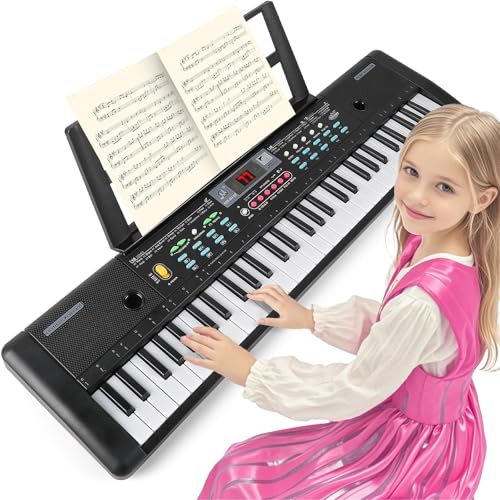 TWFRIC 61-Key Kids Keyboard Piano with Microphone
|
6.2/10 | Buy | ||
 Raimy 37-Key Kids Electronic Keyboard Piano
|
5.8/10 | Buy |
Yamaha YPT280 61-Key Portable Keyboard
A lightweight beginner keyboard with 61 full-sized keys, built-in songs, and ear-training games to support early music learning. Smart Chord feature simplifies playing complex chords with one finger, making it accessible for players of all ages.
Pros
- Full-sized keys provide proper finger positioning for beginners learning technique
- Diverse library of built-in songs enables practice and learning across popular, classical, and children's music
- Quiz Mode with ear-training games adds interactive learning dimension beyond basic playing
- Smart Chord simplifies chord playing for beginners without limiting to simple triads
- Complete package includes necessary accessories like music rest and power adapter
Cons
- No verified buyer reviews available to assess real-world reliability and user satisfaction
- Limited to 61 keys, which may feel constraining as players progress beyond beginner level
- Specifications do not indicate advanced features like weighted keys or MIDI connectivity that intermediate players might need
Vangoa 37-Key Kids Piano, Solid Wood
A compact wooden keyboard with 37 keys designed for young learners ages 3 and up. Features dual power options, rounded child-safe edges, and comes with a dust cover and illustrated songbook to support early music education.
Pros
- Child-friendly design with rounded edges and easy on/off controls
- Flexible power options allow play anywhere without being tethered to an outlet
- Comes fully equipped with protective cover and learning materials
- Compact size makes it suitable for smaller spaces and easy storage
- Encourages cognitive development and introduces music fundamentals early
Cons
- No verified buyer reviews available to assess real-world reliability and build quality
- Assembly requires adult assistance and involves hidden screw holes that need careful piercing
- Batteries not included, requiring separate purchase for portable use
Eastar Kido 44-Key Kids Digital Piano with Stand
A compact wood keyboard designed for young beginners, offering 20 tones, 40 nursery rhymes, and learning cards to support early music education. Built-in speakers and wireless connectivity provide flexibility, though the limited 44-key range suits only starter-level play.
Pros
- Solid wood construction with smooth edges meets child safety standards (CPC certified)
- Rich feature set includes 20 tones, 40 nursery rhymes, 40 rhythms, and learning cards to support progression
- Dual built-in speakers deliver stereo sound for immersive listening
- Lightweight and portable with battery power for playing anywhere
- Intuitive button layout and adjustable volume make learning accessible for toddlers and young children
Cons
- 44 keys and three-and-a-half-octave range limit advancement beyond basic beginner stage
- No verified customer reviews available to assess real-world durability or long-term satisfaction
- Headphones sold separately despite being listed as a learning feature
Vangoa VGK611 61-Key Portable Keyboard for Kids
A budget-friendly beginner keyboard with LED-lit keys and three teaching modes designed specifically for children's smaller hands. It packs 350 timbres, 30 demo songs, and learning features like note display and tempo control, making it accessible for young learners starting their music journey.
Pros
- Teaching features specifically designed for beginners, with lighted keys guiding note progression and adjustable tempo
- Large sound library with 350 timbres, 8 percussion sounds, and LED note display reduces reliance on sheet music stickers
- Ergonomic design with appropriately-sized keys and comfortable spacing for children's hands
- Flexible power options: battery-powered or cable charging with silent practice via earphone jack
- Comprehensive warranty coverage and detailed manual support
Cons
- No verified buyer reviews yet, so real-world durability and reliability feedback is unavailable
- Unweighted keys mean the feel differs from acoustic pianos, potentially requiring adjustment when transitioning to full instruments
- Limited by 61 keys compared to standard 88-key keyboards, restricting the range of pieces learners can play as they advance
Hricane 61-Key Lighted Keyboard for Beginners
A budget-friendly 61-key keyboard with illuminated keys designed to help beginners learn through visual guidance. Packed with 200 tones, 200 rhythms, 70 demo songs, and teaching modes, it doubles as an interactive learning tool for kids and adults.
Pros
- Lighted keys significantly help beginners visualize correct finger placement and learn faster
- Comprehensive sound library with 200 tones, 200 rhythms, and 70 demo songs keeps practice engaging
- Dual keyboard mode enables interactive parent-child learning experiences
- Includes useful accessories like keyboard stickers and microphone out of the box
- Lightweight and portable design at 2.5kg makes it suitable for travel or small spaces
Cons
- No verified buyer reviews available to assess real-world reliability and durability
- Learning curve for navigating multiple functions through LCD display may overwhelm complete beginners
- Lights can only be toggled on or off, lacking customizable brightness or color options
MusicForset 61-Key Kids Piano Keyboard with Mic
A budget-friendly keyboard for young learners that packs 8 tones, 6 demos, and recording capabilities into a portable 70cm frame. Best suited for children ages 3+ exploring music basics through play, though note that it requires AA batteries (not included) for standalone use.
Pros
- Multiple sound options: 8 tones, 5 rhythms, 5 animal/percussion sounds keep play engaging
- Record and playback function lets kids capture and replay their performances
- Dual power: USB cable included or runs on 3 AA batteries for flexibility
- Lightweight and compact at 1 pound and 70cm wide, easy to move between rooms or transport
- Child-safe construction from high-quality plastic appropriate for ages 3+
Cons
- No user reviews available to validate real-world durability or build quality claims
- Batteries not included, requiring separate purchase for wireless use
- Limited to basic beginner features; lacks weighted keys or sustain pedal found on higher-end models
TWFRIC 61-Key Kids Keyboard Piano with Microphone
A beginner-friendly 61-key keyboard designed for children ages 3-9, featuring 16 tones, 10 rhythms, recording capabilities, and a built-in microphone for singing and performance. Built from non-toxic ABS plastic and portable enough for travel or home use.
Pros
- Rich feature set including 16 tones, 10 rhythms, and 6 demos supports varied learning and play
- Dual microphone capability allows kids to sing while playing, building confidence and performance skills
- Lightweight and portable with AC adapter or battery power options, suitable for travel
- Non-toxic ABS construction with smooth edges meets safety standards for ages 3 and up
- Record and playback functions enable independent practice and progress tracking
Cons
- No reviews available to verify real-world durability or sound quality claims
- Microphone location hidden in foam packaging may cause initial confusion for users
- Power adapter and 6 AA batteries sold separately, requiring additional purchases
Raimy 37-Key Kids Electronic Keyboard Piano
A compact, battery-powered keyboard designed for young children with 37 keys, 11 demo songs, and multiple sound modes. Features eco-friendly materials and portable design, though it requires AA batteries and lacks advanced learning features for older kids.
Pros
- Child-safe materials with smooth edge design and non-toxic ABS plastic construction
- Diverse sound library with 11 songs, 8 tones, 4 percussion, and 4 samba sounds for creative exploration
- Compact and lightweight with battery operation, easy to transport for learning anywhere
- Record and playback feature encourages music experimentation and motor skill development
- Automatic sleep function helps conserve battery power
Cons
- Requires 3 AA batteries that are not included with purchase
- Limited to 37 keys, may feel restrictive as children advance musically
- No reviews available yet to verify real-world durability and sound quality
Kids Keyboards Buying Guide
Buying a keyboard for a child involves trade-offs that adults rarely think about at first. Key size, polyphony, learning features, portability, and build quality all interact in ways that depend heavily on the child’s age, physical size, and musical goals.
The subsections below walk through each factor so you can match specs to your child’s real situation rather than just picking the most features per dollar.
Key Count and Key Size
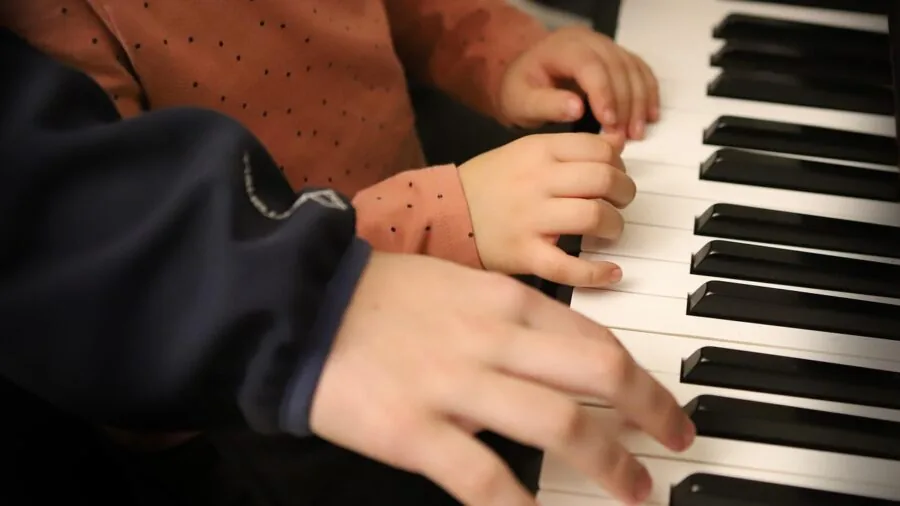
Key count is often the first number parents notice, but it needs to be read alongside key size.
Standard full-size keys (the same width as an acoustic piano) matter a great deal for children who will transition to a real piano or take formal lessons.
Mini keys are physically narrower and feel easier for small hands to reach, but they teach incorrect hand positioning from the start, which can create bad habits that take months to undo later.
For toddlers aged two to four who are exploring sound and rhythm rather than learning repertoire, 25 to 37 mini keys on a toy-style piano are perfectly appropriate.
For children aged five and up who are beginning structured practice, 44 to 61 full-size or near-full-size keys give room to play real melodies and simple two-hand pieces without immediately running out of range.
A 61-key instrument covers five octaves, which is enough for most beginner and intermediate repertoire up through early grade school music.
Seventy-six or 88 keys are rarely necessary for young beginners and add bulk and cost without meaningful benefit at this stage. Focus on full-size keys over a high key count whenever the two are in tension.
Also consider the physical build: solid wood or MDF bodies, like those found on the Vangoa 37-key and Eastar Kido 44-key models, absorb impacts better than thin plastic shells, which matters when young children are involved.
Lighted Keys and Teaching Modes
Lighted-key technology illuminates the next note or chord a child needs to play, acting as a visual cue that helps beginners connect the concept of sheet music to physical action on the keyboard.
For self-directed learners or children practicing without a teacher present, this feature dramatically lowers the frustration barrier.
Several keyboards in our ranked list, including the Vangoa VGK611 and the Hricane 61-key model, include lighted keys specifically to support this style of learning.
Teaching modes vary by brand but typically include three-stage lesson systems: listen, then play the right hand, then play both hands together.
Built-in song libraries matter here because the quality and variety of those songs determines how long the feature stays engaging. A library of 50 songs may feel exhaustive in week one but limiting by month three.
Look for keyboards that offer at least 100 built-in songs if you want the on-board teaching system to have long-term value.
The Yamaha YPT280 goes further with a dedicated Quiz Mode that actively quizzes the child on notes, which adds a game-like learning layer that sustains engagement better than passive play-along modes alone.
If your child is already taking lessons with a teacher, lighted keys become less critical and weighted or semi-weighted action becomes more important because it more closely simulates an acoustic piano.
For younger beginners with no teacher, lighted keys and structured teaching modes are among the single most useful features on any kids keyboard.
Sound Quality and Voices
Voice count is one of the most inflated numbers in keyboard marketing. A keyboard advertising 255 voices technically has more variety than one with 100, but a child will use a small handful of those voices regularly.
What matters more is the quality of the core piano voice, because that is what nearly all beginner practice uses.
Yamaha’s proprietary AWM (Advanced Wave Memory) sampling technology, present in the YPT280, produces piano tones that sound noticeably more realistic than the basic PCM samples found in budget models.
That realism helps children internalize what a piano actually sounds like, which matters for ear training.
Speaker quality is equally important and consistently overlooked. Thin, tinny speakers make the instrument unpleasant to play at any volume. Check for speaker wattage when it is disclosed; even a modest improvement in driver size produces a noticeably fuller sound.
All keyboards in our ranked list include a headphone jack, which is worth prioritizing because it allows children to practice without disturbing other household members.
Pairing a keyboard with quality children’s headphones is one of the easiest ways to encourage more frequent, longer practice sessions.
Power Options and Portability
Kids keyboards are typically powered by AC adapter, batteries, or USB.
Battery power provides flexibility for travel, outdoor use, or rooms without nearby outlets, but running costs add up quickly on heavy use, and battery performance can degrade the volume and tone quality noticeably on instruments with higher power draws.
An AC adapter is the most practical choice for a keyboard that lives in one place, like a bedroom or living room.
USB power has become increasingly common and is convenient for families who already have USB chargers everywhere in the home. The Hricane 61-key model supports both USB and battery power, giving it flexibility that suits different home setups.
For younger children, lightweight construction is also important because a heavy instrument is harder to carry to a lesson or reposition in a small bedroom.
If portability matters significantly to you, factor in the listed weight alongside key count when comparing models.
Build Quality and Age Appropriateness
Children are not gentle with instruments. Plastic hinges, exposed circuit boards, and fragile key mechanisms fail under real-world use by kids who bang, drop, and occasionally sit on their belongings.
Keyboards marketed as toys (typically priced at the low end of the market) use thinner plastics and lower-tolerance key mechanisms.
That is acceptable for very young children who are just exploring sounds and will outgrow the instrument in a year anyway. It is not acceptable for a six-year-old learning scales who will use the instrument daily.
Wood-body instruments like the Vangoa 37-key and Eastar Kido Kido 44-key model cost more but hold up significantly better over time and produce a cleaner acoustic resonance that plastic cannot replicate.
For parents who want a keyboard that lasts from age five through the early teen years without requiring replacement, investing in a wood or MDF-shell model upfront is usually more economical than buying two cheaper instruments.
This kind of long-horizon value thinking applies across kids activity purchases, just as it does when selecting craft kits for kids that grow with a child’s skill level rather than expiring after a single use.
Included Accessories and Bundle Value
Many kids keyboards are sold as bundles that include a stand, stool or bench, microphone, headphones, and music rest.
A microphone is a significant motivator for young children who love to sing while they play; keyboards like the TWFRIC 61-key and MusicForset 61-key toy piano models include one specifically to encourage that dual use.
A music rest is a small but practical inclusion that signals the manufacturer intends the keyboard to be used alongside printed sheet music or a tablet.
Evaluate bundles by the quality of the included accessories, not just by whether accessories exist. A flimsy microphone that distorts immediately or a stand that wobbles adds frustration rather than value.
Stands matter especially for instruments that will be used in a standing or adjustable-height position as the child grows.
The Eastar Kido 44-key model ships with a stand as part of its package, which adds meaningful practical value for families who do not want to source accessories separately.
Think about long-term usability: accessories that last as long as the keyboard itself justify the bundle premium. Similarly, activities like kids paint sets and musical instruments both benefit from bundled supplies that match the skill level of the intended user.
Why You Should Trust Us
ProductFind is an independent review publication. We do not manufacture, sell, or distribute any of the products we evaluate, and we have no commercial relationship with any of the brands featured in this article.
Every product in our ranked list is assessed using a consistent research framework that draws on manufacturer specifications, expert review consensus gathered from across the category, and verified buyer feedback from confirmed purchasers.
We do not conduct our own product trials; our evaluations are grounded in research, published data, expert review consensus, and verified buyer feedback.
Each product is assigned a PF Score on a scale of 0 to 10.
That score reflects a weighted analysis of real-world performance signals including sound quality, build durability, learning feature effectiveness, value relative to category peers, and the consistency of buyer satisfaction across a statistically meaningful number of reviews.
Scores are calculated independently of price and brand recognition, which is why a product from a boutique brand can outscore a more familiar name if the evidence supports it.
ProductFind may earn a commission when you purchase through links in this article. That affiliate relationship has no influence on which products are included, how they are ranked, or what PF Score they receive.
Our rankings are determined entirely by the quality of the evidence, not by commission rates.
We update our research periodically as new buyer feedback accumulates and new models enter the market, so the information you are reading reflects our most current evaluation of the category.
Final Thoughts
The kids keyboard market spans a wide range of quality and purpose, from simple toy pianos designed for sensory exploration to genuine entry-level instruments capable of supporting years of real musical development.
Based on our research, here are the standout picks across different needs and budgets.
- Best Overall: Yamaha 61-Key Portable Keyboard YPT280 earns the highest PF Score in this group thanks to Yamaha’s proprietary sound engine, a genuine Quiz Mode that actively reinforces note learning, and a reputation for build quality that is unmatched in the beginner keyboard category. For families who want one instrument that grows with a child from first notes through early intermediate lessons, this is the most defensible choice.
- Best for Early Learners (Structured Play): Vangoa 37-Key Wood Digital Piano for Kids stands out for its solid wood construction and age-appropriate 37-key layout. The combination of genuine build quality and a design calibrated for younger hands makes it the strongest option for children aged four to seven who need a real instrument rather than a toy.
- Best Mid-Range Step-Up: Eastar Kido 44-Key Digital Piano bridges the gap between toy piano and full-featured learning keyboard. Its wood body, included stand, and 44-key layout give it a long useful lifespan, and its PF Score reflects consistently strong buyer satisfaction relative to its price tier.
- Best Budget Learning Keyboard: Vangoa VGK611 61-Key with Lighted Keys delivers full-octave range, lighted key guidance, and a microphone at a budget-friendly price point. It earns a strong PF Score for its category and is an excellent starting point for parents who want a full 61-key experience without the premium price of brand-name instruments.
- Best Value with Teaching Modes: Hricane 61-Key Lighted Keyboard impresses with its LCD display, dual power options, and structured teaching modes, making it one of the most feature-complete options at its price point. Verified buyer feedback consistently highlights the flexibility of USB or battery power as a practical convenience for active families.
Whichever model fits your budget and your child’s age, the most important thing is choosing an instrument calibrated to where your child actually is today, not where you hope they will be in two years.
A great match will get played; a mismatch will not.
Pair the keyboard with a creative environment that encourages exploration, whether that means dedicated practice time, engaging activity books, or other hands-on creative tools that build focus and fine motor skills alongside music.
Frequently Asked Questions
How Many Keys Does a Kids Keyboard Need?
For toddlers under four, 25 to 37 keys is sufficient for sensory play and basic melody exploration. For children aged five and up who are beginning structured practice, 44 to 61 keys covers the full range of beginner and early intermediate repertoire.
Sixty-one keys (five octaves) is the most versatile choice because it allows both hands to work simultaneously on real songs without running out of room.
Avoid 88-key instruments for young children; the extra keys add cost and physical size without meaningful learning benefit at the beginner stage.
Are Lighted Keys Actually Helpful for Children Learning Piano?
Yes, especially for self-directed learners who practice without a teacher present. Lighted keys give children an immediate visual cue for which note to play next, which reduces the cognitive load of simultaneously reading music and locating keys.
This makes early practice sessions less frustrating and encourages children to continue playing independently between lessons.
The main trade-off is that children can become reliant on the lights and resist learning to read music notation; if formal lessons are in the plan, gradually turning off the guided feature helps prevent that dependency from forming.
What Is the Difference Between a Toy Piano and a Kids Learning Keyboard?
Toy pianos are designed for sensory exploration and imaginative play. They typically have mini keys, limited polyphony, no teaching modes, and basic sound chips that produce simple tones.
They are appropriate for children under four and for older children who are not seriously pursuing music. Learning keyboards are built around educational features: lighted keys, structured lesson modes, built-in song libraries, microphone jacks, LCD displays, and better audio output.
They are designed to teach real musical concepts and can accompany a child through several years of beginner to intermediate development. The price gap between the two categories reflects that functional difference clearly.
Can a Kids Keyboard Be Used with Piano Learning Apps?
Many popular piano learning apps, including Simply Piano, Flowkey, and Playground Sessions, work with any keyboard that produces MIDI output or acoustic sound that the device microphone can detect.
Keyboards with a USB MIDI output or a standard MIDI port offer the most reliable connectivity. Budget keyboards without MIDI can still work with apps that use the device’s microphone to listen for notes, though latency can be an issue.
If app integration is a priority, check the connectivity specs before purchasing. Combining a capable keyboard with a portable monitor or tablet display creates a tidy, dedicated practice station that keeps lessons organized.
What Age Is Right to Start Learning Keyboard?
Most music educators suggest that structured keyboard lessons become productive around age five or six, when children have sufficient fine motor control, attention span, and the ability to follow sequential instructions.
That does not mean younger children should not have access to an instrument; exploratory play on a toy piano from age two onward builds familiarity with pitch, rhythm, and cause-and-effect that makes formal learning easier later.
The key distinction is between providing an instrument for free exploration, which can start very early, and enrolling a child in a curriculum, which is more effective after age five.
Many of the products in our ranked list are explicitly designed to serve both phases at different settings.
Creative exploration activities like age-appropriate craft kits complement early musical exposure by building the same fine motor and concentration skills that keyboard practice develops.
Is a Wood Body Keyboard Worth the Extra Cost?
For children who will use the instrument regularly over multiple years, yes.
Wood and MDF bodies absorb impact better than thin plastic, produce slightly warmer acoustic resonance, and resist the cosmetic damage (cracking, warping, discoloration) that plastic bodies accumulate over time.
The additional investment at purchase is typically offset by not needing to replace the instrument as quickly. For a toddler who may lose interest in six months, a budget plastic keyboard is a more sensible starting point.
For a child aged five or older who has already shown sustained curiosity about music, the wood-body upgrade is usually worth it.
About the author
Minnie is a reviewer and writer for ProductFind who specializes in Kids Arts, Crafts & Musical. Minnie evaluates products through independent research: specifications, expert review consensus, and verified buyer feedback, and rates each one on the PF Score. Minnie focuses on helping readers pick the right kids arts, crafts & musical for their needs and budget.