The 8 Best Binoculars
Sharp optics, bright low-light performance, and rugged weatherproofing separate a great binocular from a frustrating one. Here are the top picks across every price tier.
 By Jerry Gutierrez
Updated July 23, 2026
By Jerry Gutierrez
Updated July 23, 2026

A good pair of binoculars can completely transform how you experience the outdoors, whether you are scanning a treeline for warblers at dawn, tracking a bull elk across a canyon, or watching a ballgame from the upper deck.
The difference between a quality optic and a mediocre one shows up immediately in image brightness, edge sharpness, and the eye strain you feel after an hour of use.
With dozens of models spanning a wide range of prices and specifications, narrowing down the right pair is genuinely difficult without a clear framework.
At ProductFind, we researched and compared the top-selling and most-reviewed binoculars by synthesizing manufacturer specifications, expert review consensus across optics publications, and verified buyer feedback from thousands of confirmed purchases.
Our goal is to cut through marketing language and give you a straightforward, trustworthy shortlist. The top picks below represent the strongest options across every budget and use case, from serious birding and hunting to casual travel sightseeing.
| Award | Product | PF Score About PF ScoreThe PF Score is our own rating from 0 to 10, based on performance, design and build, ease of use, and value. It reflects independent research and is never influenced by manufacturers, retailers, or affiliate commissions. Learn more › | Price | |
|---|---|---|---|---|
| Best Overall |
 Vortex Crossfire HD 10x42 Binoculars
|
8.2/10 | Buy | |
| Editor's Pick |
 Nikon PROSTAFF P3 10x42 Binoculars
|
8.4/10 | Buy | |
| Best Value |
 Celestron Nature DX 8x42 Binoculars
|
8.1/10 | Buy | |
| Top Rated |
 Bushnell Trophy XLT 10x42 Binoculars with Harness
|
5.8/10 | Buy | |
 Sogries 10-30x50 Zoom Binoculars
|
5.3/10 | Buy | ||
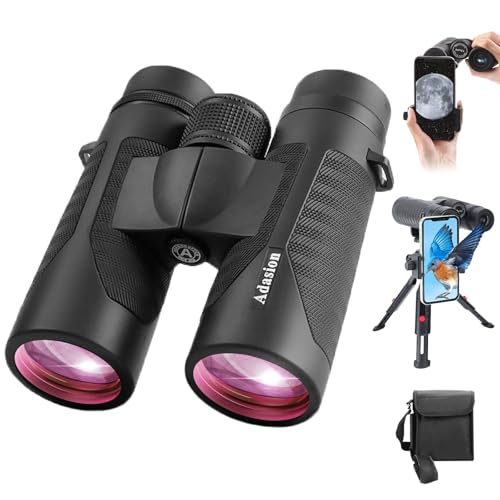 Adasion 12x42 HD Binoculars with Phone Adapter
|
5.8/10 | Buy | ||
 FLYANT 20x50 High-Power Binoculars
|
4.8/10 | Buy | ||
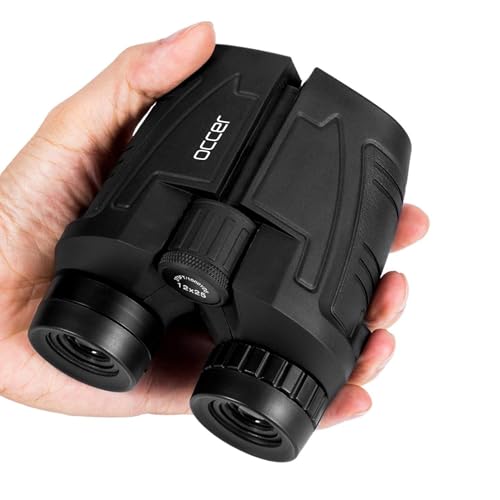 Occer 12x25 Compact Binoculars
|
5.1/10 | Buy |
Vortex Crossfire HD 10x42 Binoculars
The Crossfire HD 10x42 delivers sharp, color-accurate optics across the field with fully multi-coated lenses and roof prism design for durability. Built for hunting, birding, or general observation with weather sealing and a lifetime warranty backing every unit.
Pros
- Exceptional optical clarity and edge-to-edge sharpness across viewing area
- Waterproof and fogproof construction built to handle harsh conditions
- Compact and lightweight at 1.4 pounds, tripod-compatible for stable viewing
- Lifetime warranty is fully transferable and covers repairs or replacement
- Multi-coated lenses cut chromatic aberration for true color reproduction
Cons
- No customer reviews available yet to validate real-world performance
- Roof prism design is more compact but may have slightly narrower field of view than porro prism alternatives
- Rubber armor grip may wear over extended heavy use despite durability claims
Nikon PROSTAFF P3 10x42 Binoculars
Full-size binoculars built for serious outdoor use, combining 10x magnification with a 42mm objective lens for bright, detailed views across wide landscapes. Waterproof, fog-proof construction and 15.7mm eye relief make them reliable for extended viewing in variable conditions, including eyeglass wearers.
Pros
- Strong light-gathering capability from 42mm objectives suits low-light conditions
- Wide 367-foot field of view reduces scanning effort across landscapes
- Durable waterproof, fog-proof housing handles rough outdoor environments
- Generous eye relief benefits extended use and eyeglass compatibility
- Relatively lightweight for full-size binoculars, easing portability
Cons
- No verified buyer reviews available to validate real-world performance claims
- Full-size frame heavier than compact alternatives, though still portable
- Limited information on optical coatings or specific glass quality beyond basic specifications
Celestron Nature DX 8x42 Binoculars
Compact 8x42 binoculars built for birding and hiking, with fully multi-coated optics and phase-coated BaK-4 prisms that deliver sharp, color-accurate views. Waterproof, fogproof, and tripod-adaptable design makes them a solid mid-range choice for outdoor enthusiasts seeking stability without bulk.
Pros
- Lightweight at 1.75 pounds, portable for extended outdoor use
- Rugged rubber-armored housing withstands bumps and weather
- Wide field of view and 8x power offer practical balance for bird and wildlife spotting
- Tripod-adaptable design reduces arm fatigue on longer sessions
- Lifetime warranty backs the product with US-based support
Cons
- Tripod adapter not included, requires separate purchase
- No customer reviews yet to validate real-world performance
- Fixed 8x magnification limits versatility for both close and very distant subjects
Bushnell Trophy XLT 10x42 Binoculars with Harness
A bundled optics package pairing Bushnell's Trophy XLT 10x42 binoculars with a deluxe harness. Fully multi-coated optics and nitrogen-purged construction deliver clear, waterproof performance suited for hunters and outdoor enthusiasts who want integrated neck relief.
Pros
- All-in-one bundle eliminates need to buy harness separately
- Nitrogen purged and O-ring sealed for reliable waterproof/fog-proof performance
- Multi-coated optics deliver crisp, bright images across the field
- Compact and lightweight design at 25 ounces reduces fatigue
- Fast focus mechanism speeds up target acquisition
Cons
- No verified customer reviews available to assess real-world durability or optical quality claims
- 10x magnification can be demanding for handheld use without image stabilization
- Limited color options with only RealTree AP Green camo finish available
Sogries 10-30x50 Zoom Binoculars
Professional-grade zoom binoculars with 10-30x magnification and 50mm objective lens, delivering sharp HD images across sports, wildlife, and stargazing. Best suited for stationary use with a tripod due to weight and the need for stability at higher magnifications.
Pros
- Excellent optical clarity with BAK-4 prisms and multi-coated glass for high-contrast, true-color images
- Flexible magnification range (10-30x) covers most viewing scenarios from sports to astronomy
- Strong low-light performance with anti-fog coating for dawn, dusk, and twilight use
- Fully waterproof and shock-resistant with rubber armor for durability
- Accommodates both glasses and non-glasses wearers with adjustable eyecups
Cons
- Relatively heavy at 2.1 pounds, requiring tripod use for stable viewing and limiting portability
- Not suitable for complete darkness or night vision applications
- No reviews available yet to verify real-world optical performance or build quality durability
Adasion 12x42 HD Binoculars with Phone Adapter
These 12x42 binoculars combine solid magnification with practical accessories like a phone adapter and tripod, making them versatile for bird watching, travel, and outdoor sports. The BAK4 prism and 42mm objective lens deliver bright, clear images in varied lighting conditions, though the lack of verified buyer reviews limits confidence in real-world durability.
Pros
- 12x magnification with wide 367-yard field of view covers most outdoor activities
- BAK4 prism and fully multi-coated optics enhance light transmission and image clarity
- Includes phone adapter and adjustable tripod for stable photography and video
- Lightweight at 1.2 lbs with carrying case, practical for extended outdoor use
- Adjustable eyecups and 13.6-19.6mm eye relief accommodate glasses wearers
Cons
- No verified customer reviews on record, making it difficult to assess long-term reliability or real-world optical performance
- IP55 water resistance is adequate but not fully weatherproof compared to higher IP-rated alternatives
- Phone adapter quality and compatibility consistency not confirmed by user feedback
FLYANT 20x50 High-Power Binoculars
A compact 20x magnification binocular with a 26mm eyepiece and BAK4 prism designed for long-distance viewing up to 1000 yards. The multilayer coatings and ergonomic focus wheel target bird watchers and outdoor enthusiasts seeking clear, stable images without extended eye strain.
Pros
- Strong light transmission and image brightness from BAK4 prism and FMC anti-reflective coating
- Large 26mm eyepiece design minimizes dizziness and eye fatigue for prolonged viewing
- Durable waterproof construction suitable for harsh outdoor conditions
- Sensitive focus wheel enables sharp, single-image adjustment with minimal effort
- Textured rubber handles provide secure grip without slipping
Cons
- Not fully submersible in water despite waterproof rating, limiting use in extreme wet conditions
- No verified buyer reviews available to confirm real-world performance claims
- High 20x magnification may require steadier hands or tripod for extended comfortable viewing
Occer 12x25 Compact Binoculars
A budget-friendly 12x25 binocular designed for casual outdoor use, bird watching, and travel. Features adjustable eyecups for glasses wearers, BAK4 prisms, and a compact form factor, though it lacks professional-grade optics.
Pros
- Large 15mm eyepieces provide wider field of view compared to compact travel binoculars
- Flexible eyecup design accommodates both glasses and non-glasses users comfortably
- Compact and lightweight at under one pound, easy to carry for extended outdoor activities
- Waterproof construction makes it practical for varying weather conditions
Cons
- No verified buyer reviews available to validate real-world optical performance and durability claims
- Low light capability explicitly noted as unsuitable for completely dark conditions, limiting night use
- ABS plastic construction suggests durability may not match premium binoculars at higher price points
Best Binoculars Buying Guide
Choosing the right binoculars comes down to matching the optic to your specific activity, environment, and budget.
A birder who spends mornings in dim forest light has very different needs from a stadium sports fan or a boater scanning a harbor.
Understanding the core specifications and how they interact will help you avoid paying for features you will never use, or worse, buying something that falls short in the conditions you actually encounter.
The guide below walks through every factor that meaningfully affects real-world performance.
Magnification and Objective Lens Diameter

The two numbers printed on every binocular, such as 8×42 or 10×50, tell you the most important things about how it will perform. The first number is magnification: an 8x binocular makes objects appear eight times closer.
The second is the diameter of the objective lenses in millimeters, which determines how much light enters the optic.
Higher magnification sounds appealing, but it also amplifies hand tremor, reduces field of view, and demands steadier hands or a tripod to be usable.
For most general outdoor use, birding, and wildlife observation, 8×42 and 10×42 configurations strike the best balance. The 42 mm objective gives you bright images in low light without making the binocular overly heavy.
Compact models in the 25 mm range like the Occer 12×25 are lighter and easier to carry but sacrifice noticeable brightness in dusk or dense shade. High-zoom designs like 10×50 and 20×50 gather more light but grow bulky quickly.
If you need long-range reach without bulk, a true 10×42 porro or roof-prism design will typically outperform a zoom binocular at equivalent price points.
Variable zoom binoculars such as the Sogries 10x30x50 offer flexibility but introduce optical compromises: image quality degrades noticeably at the high end of the zoom range because the internal lens elements must make larger adjustments than a fixed-power design.
For casual travel or sightseeing these trade-offs are acceptable, but serious birders and hunters should treat zoom as a convenience feature, not a performance feature.
Prism Type and Glass Quality
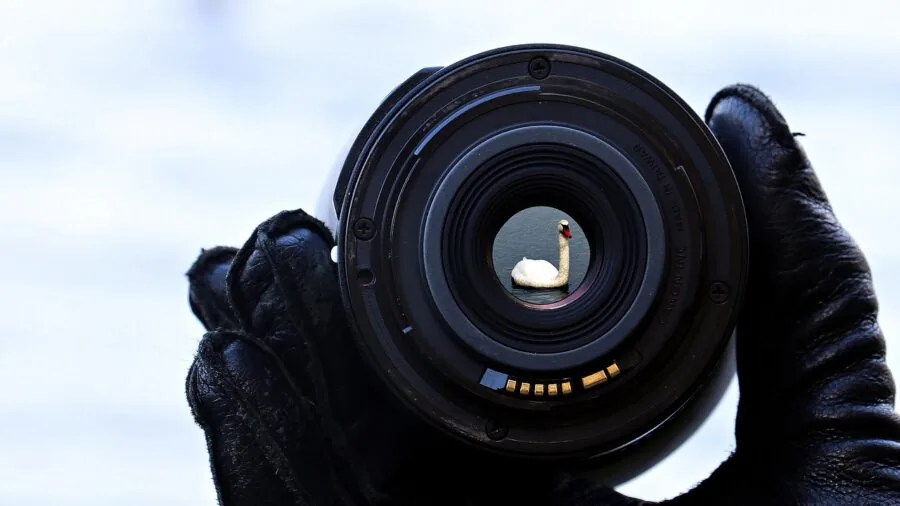
Inside every binocular is a prism system that folds the light path and corrects the image orientation. The two main types are Porro prisms and roof prisms.
Porro designs (recognized by their offset barrel shape) traditionally deliver excellent depth of field and brightness at lower manufacturing cost.
Roof prisms (straight-barrel designs) are more compact and rugged but require tighter tolerances and phase-correction coatings to match Porro optical quality at the same price.
Glass grade matters just as much as prism shape. BaK-4 glass (barium crown glass) is the standard for premium binoculars and produces sharper, brighter edge-to-edge images compared to BK-7.
Both the Celestron Nature DX and the Vortex Crossfire HD use BaK-4 prisms, which is part of why they outperform similarly priced competitors in side-by-side optical comparisons.
Budget models that claim BaK-4 without supporting it with high-quality coatings often fall short of the promise.
Lens coatings are equally critical. The spectrum runs from coated (one layer on some surfaces) to fully multi-coated (multiple anti-reflection layers on all glass surfaces).
Fully multi-coated optics like the Nature DX and Nikon PROSTAFF P3 transmit significantly more light and reduce chromatic aberration, the color fringing you see on high-contrast edges.
This translates directly to image clarity in real use, especially in the early morning or late evening hours when most wildlife activity peaks.
Field of View
Field of view (FOV) describes how wide a swath of landscape you see through the eyepieces at a given distance, usually expressed in feet at 1,000 yards or as an angular degree.
A wider field of view makes it dramatically easier to locate moving subjects like birds in flight or deer bounding through brush. It also reduces the disorientation of scanning across a panoramic scene.
As magnification increases, field of view narrows. An 8x binocular will almost always offer a wider field of view than a 10x model of comparable quality.
The Celestron Nature DX 8×42, for example, delivers a wide 7.4-degree field of view, which expert reviewers consistently cite as one of its headline advantages for fast-moving bird species.
Hunters who glass open terrain may prefer the reach of 10x but should look for models that maintain at least a 6-degree field of view to keep tracking workable.
Eye relief is a related specification that matters especially to eyeglass wearers. Long eye relief (17 mm or more) lets you see the full field of view while wearing glasses.
The Nikon PROSTAFF P3 is specifically noted by Nikon for its long eye relief, making it one of the more spectacle-friendly options in the mid-range category. Always check this number if you wear corrective lenses.
Low-Light Performance

Low-light performance is where premium glass separates itself most obviously from budget alternatives. The key metric is exit pupil, calculated by dividing the objective diameter by the magnification. A 10×42 binocular produces a 4.2 mm exit pupil; an 8×42 produces 5.25 mm.
In dim conditions the human eye dilates to roughly 5 to 7 mm depending on age, so a larger exit pupil means more light reaches your retina and subjects appear noticeably brighter.
Beyond exit pupil math, the quality of lens coatings and prism glass determines how efficiently the binocular transmits the light it collects.
Fully multi-coated models with high-grade BaK-4 prisms can achieve light transmission rates above 90 percent, while entry-level budget models may fall to 70 percent or below.
For dawn and dusk hunting, serious birdwatching, and marine use, this difference is not marginal: it can mean the difference between identifying a subject and seeing only a silhouette.
Compact 25 mm models like the Occer 12×25 are honestly at a disadvantage here regardless of marketing copy about low-light vision.
Durability, Weatherproofing, and Build Quality

Waterproofing and fog-proofing are non-negotiable features for any binocular used outdoors.
Waterproof models are O-ring sealed to prevent moisture intrusion, while fog-proofing (typically achieved by purging the interior with nitrogen or argon gas) prevents internal fogging when moving from a cold environment to a warm one.
Models without these features are suitable only for dry indoor use and will fail quickly in real field conditions.
Rubber armoring on the exterior provides grip and shock resistance from drops and impacts.
The Vortex Crossfire HD, Celestron Nature DX, and Nikon PROSTAFF P3 are all rubber-armored, waterproof, and fog-proof, which is one reason they dominate positive verified buyer feedback in demanding use-case categories.
The Vortex VIP warranty, which covers the Crossfire HD unconditionally for life regardless of cause, is an additional durability argument that no other brand in this price range can match.
Weight and ergonomics also affect how long you can comfortably use a binocular. Full-size 42 mm models weigh roughly 600 to 750 grams and benefit from a neck harness rather than a simple strap for extended sessions.
A comfortable outdoor setup matters when you are glassing for hours at a time.
Compact models are lighter and fit in a jacket pocket but require steadier hands to get the best image because small movements are amplified more visibly through narrower objectives.
Value and Price-to-Performance
The binoculars market has clear performance tiers. Entry-level models from brands like Occer and FLYANT in the budget range offer basic functionality for casual use but cannot match the glass quality, coatings, or build standards of established optics brands.
They are reasonable starter options for children or occasional sightseers who are not yet committed to the hobby.
The mid-range sweet spot, occupied by Vortex, Celestron, and Nikon in this list, delivers professional-grade optics at prices accessible to serious hobbyists.
Expert review consensus consistently places the Vortex Crossfire HD, Celestron Nature DX, and Nikon PROSTAFF P3 among the strongest value propositions in full-size binoculars.
For hunters who want added features like a harness bundle, the Bushnell Trophy XLT Bone Collector Edition offers an all-in-one package, though its optical performance trails the top three.
Just as choosing the right smartwatch means matching features to your actual lifestyle, the same principle applies here: pay for the optics quality you will actually notice, not the magnification number on the label.
Why You Should Trust Us
ProductFind is an independent review publication with no brand affiliations or manufacturer relationships that influence our rankings. Every binocular in this list was evaluated using a consistent, multi-factor methodology.
We assess each model against the criteria that matter most in real-world use: optical clarity and glass grade, prism type and coating quality, field of view, low-light capability, weatherproofing, build durability, and long-term value.
Each product receives a PF Score on a 0 to 10 scale reflecting our synthesis of all available evidence.
We do not conduct our own product trials; our evaluations are grounded in research, published data, expert review consensus, and verified buyer feedback.
Our sources include manufacturer specification sheets, optics-focused publications, and aggregated verified purchase reviews from buyers who have used these products in the field.
This approach lets us draw on a breadth of real-world experience that no single reviewer could replicate alone.
ProductFind may earn a commission if you purchase through a link on this page. That affiliate relationship has zero influence on our scores, rankings, or which products appear in this guide.
We include or exclude products based strictly on research quality and merit. We do not accept payment for placement, and our editorial team operates independently of our commercial relationships.
We do not sell products, handle orders, or manage warranties; for any purchase support, contact the retailer or manufacturer directly.
Final Thoughts
After a thorough review of specifications, expert consensus, and verified buyer feedback, a clear picture emerges: the best binoculars for most people are full-size 42 mm models with BaK-4 prisms, fully multi-coated lenses, and proper weatherproofing.
The top performers in this guide each earn their spot through measurable optical and mechanical advantages, not marketing.
- Best Overall: Vortex Crossfire HD 10×42 Binoculars earn the top spot with the highest PF Score in this group, backed by HD optical glass, fully multi-coated lenses, BaK-4 prisms, rugged rubber armor, and Vortex’s unconditional lifetime warranty. Expert reviewers and verified buyers consistently rate it the strongest value in full-size mid-range optics.
- Best for Birding: Celestron Nature DX 8×42 Binoculars stand out for their wide 7.4-degree field of view and fully multi-coated optics, making fast-moving subjects easier to acquire and track. Birding communities frequently recommend this model as the benchmark entry into serious optics.
- Best Mid-Range Alternative: Nikon PROSTAFF P3 10×42 Binoculars deliver Nikon’s optical heritage with long eye relief, wide field of view, and waterproof fog-proof construction at a competitive mid-range price point. An excellent choice for eyeglass wearers and those who prefer the Nikon ecosystem.
- Best Budget Pick: Occer 12×25 Compact Binoculars represent the most accessible entry point for casual users, kids, and first-time buyers who need a lightweight and portable option for concerts, sports, and occasional nature walks where ultimate optical performance is not the priority.
- Best Bundle Value: Bushnell Trophy XLT 10×42 Binoculars (Bone Collector Edition) add a deluxe binocular harness to a full-size hunting optic, making the package practical for hunters who want a ready-to-use kit without sourcing accessories separately.
If you are equipping yourself for serious outdoor pursuits, investing in the Vortex or Celestron tier will pay dividends in image quality and long-term reliability.
Budget models have a role for casual use, but the optical gap between price tiers is genuine and immediately visible through the eyepiece.
Whichever model you choose, pairing it with the right accessories and knowing your primary use case will give you years of rewarding use in the field.
Frequently Asked Questions
What magnification should I choose for bird watching?
Most birding experts and verified field users recommend 8×42 as the ideal configuration for bird watching. The lower magnification provides a wider field of view that makes it much easier to locate and follow fast-moving birds through trees and brush.
An 8×42 also has a larger exit pupil than a 10×42, which means brighter images in the low-light conditions common during the golden hour when bird activity peaks.
Many experienced birders find that a well-maintained outdoor space and a reliable 8×42 are the only tools they need for a productive morning.
Are expensive binoculars really worth it compared to budget options?
For casual, occasional use, budget binoculars are adequate. For any serious outdoor activity, the optical difference between a budget model and a properly specified mid-range binocular from Vortex, Celestron, or Nikon is immediately and consistently noticeable.
Higher-quality glass, better coatings, and BaK-4 prisms produce sharper images with truer color rendition, especially in low light.
The durability gap is equally significant: rubber armoring, proper O-ring waterproofing, and nitrogen fog-proofing keep a quality binocular functional for decades, while budget models frequently fail in field conditions within a season or two.
The investment calculus is similar to any quality outdoor gear: buy well once, or buy twice.
What does fully multi-coated mean on binoculars?
Lens coatings are anti-reflection treatments applied to glass surfaces to increase the amount of light that passes through rather than bouncing back as glare.
“Fully multi-coated” means that every glass surface in the entire optical path, including prism faces and internal elements, has received multiple layers of anti-reflection coating.
This is the highest standard and results in the brightest, highest-contrast image with the least chromatic aberration. Lesser standards like “coated” (one layer on some surfaces) or “multi-coated” (multiple layers on some surfaces) transmit measurably less light.
When comparing binoculars at similar price points, fully multi-coated should be treated as a baseline requirement rather than a premium feature.
Can I use binoculars with eyeglasses?
Yes, but you need to check the eye relief specification before buying. Eye relief is the distance between the eyepiece and the point at which you can see the full field of view.
For eyeglass wearers, you typically need at least 15 to 17 mm of eye relief to see the complete image without clipping the edges.
Most quality binoculars also feature twist-up or fold-down eyecups that allow you to adjust the eye relief distance for comfortable use with or without glasses.
The Nikon PROSTAFF P3 is specifically noted for its long eye relief, making it a frequently recommended choice for spectacle wearers in expert optics reviews.
What is the difference between waterproof and water-resistant binoculars?
Water-resistant binoculars have some protection against light splashes but are not sealed against sustained moisture exposure.
Waterproof binoculars use O-ring seals throughout the body to prevent water intrusion even when submerged briefly, and they are also nitrogen or argon purged to prevent internal fogging.
For any outdoor use, waterproof and fog-proof should be considered essential rather than optional. Rain, morning dew, condensation from temperature changes, and accidental drops near water are all real-field scenarios that a water-resistant model will not survive intact.
If you are also investing in other outdoor tech, the same logic applies: durability matters as much for wearable devices as it does for optics.
Do I need a tripod adapter for binoculars?
For handheld use at 8x or 10x magnification, most people do not need a tripod.
However, if you are using a model at 12x or higher, especially a zoom binocular at its maximum power, hand tremor becomes a significant image-stability problem and a tripod adapter makes a material difference.
Many full-size binoculars include a threaded tripod adapter port under the front objective cover for exactly this purpose.
The Adasion 12×42 HD bundle even includes a phone adapter and tripod, which is convenient for users who want hands-free extended viewing sessions during travel, stargazing, or long wildlife observation stints.
About the author
Jerry is a reviewer and writer for ProductFind who specializes in Hunting & Shooting Sports. Jerry evaluates products through independent research: specifications, expert review consensus, and verified buyer feedback, and rates each one on the PF Score. Jerry focuses on helping readers pick the right hunting & shooting sport for their needs and budget.