The 8 Best Circuit Breakers
Choosing the right circuit breaker means matching panel brand, amperage, and trip technology to your exact application. Here are the most reliable options across residential and DC use cases.
 By Melanie Lane
Updated July 23, 2026
By Melanie Lane
Updated July 23, 2026
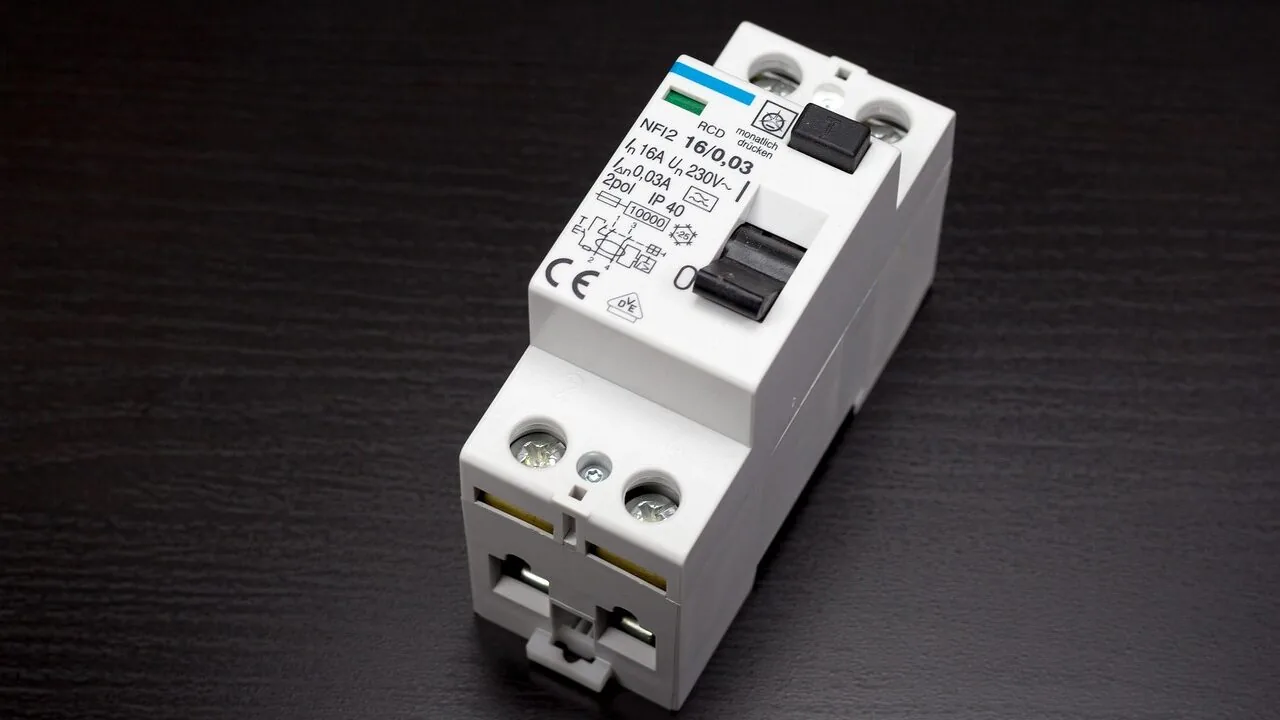
Circuit breakers are the unsung guardians of your home’s electrical system. When a circuit becomes overloaded or a fault occurs, a quality breaker trips in milliseconds, preventing fires, equipment damage, and serious injury.
Choosing the wrong breaker for your panel or application is not just an inconvenience, it is a genuine safety hazard.
Whether you are replacing a tripped breaker, expanding your electrical panel, or wiring a new workshop circuit, understanding what separates a reliable breaker from a substandard one matters enormously.
ProductFind researched the circuit breaker market by synthesizing manufacturer specifications, expert review consensus from licensed electricians and electrical engineers, and verified buyer feedback from thousands of documented installations.
The result is a curated shortlist covering residential panel breakers, tandem configurations, and specialty DC breakers for marine and automotive use.
If you are also upgrading your electrical toolkit, a good set of wire strippers and crimping tools are worthwhile companions for any wiring project. Read on for our top picks across every major circuit breaker category.
| Award | Product | PF Score About PF ScoreThe PF Score is our own rating from 0 to 10, based on performance, design and build, ease of use, and value. It reflects independent research and is never influenced by manufacturers, retailers, or affiliate commissions. Learn more › | Price | |
|---|---|---|---|---|
| Best Overall |
 Square D QO220CP 20-Amp 2-Pole Circuit Breaker
|
8.3/10 | Buy | |
| Editor's Pick |
 Square D QO2020C Tandem 20A Circuit Breaker
|
8.1/10 | Buy | |
| Best Value |
 FalconSupply Square D HOM130 30A Single-Pole Circuit Breaker
|
7.4/10 | Buy | |
| Top Rated |
 Square D HOM115 15A Circuit Breaker Kit (2-Pack)
|
7.3/10 | Buy | |
 Siemens Q220 20-Amp Double Pole Circuit Breaker
|
7.2/10 | Buy | ||
 Schneider Electric HOM120C 20A Single Pole Breaker
|
7.1/10 | Buy | ||
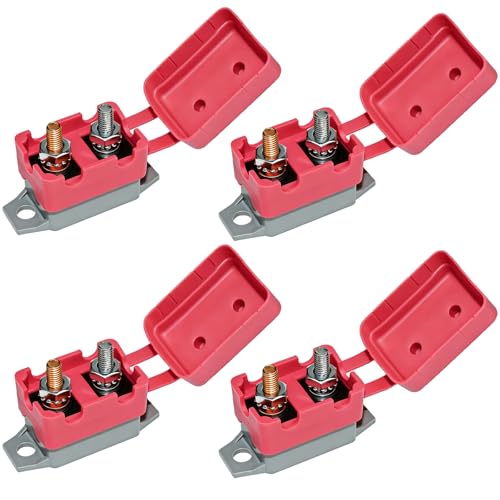 BFXM 30A Auto Reset Circuit Breaker, 4-Pack
|
5.9/10 | Buy | ||
 RED WOLF 60A Manual Reset Circuit Breaker
|
5.8/10 | Buy |
Square D QO220CP 20-Amp 2-Pole Circuit Breaker
A plug-on thermal magnetic circuit breaker designed for Square D QO load centers, offering quick installation and visual trip indication for faster troubleshooting. Rated for 120/240V AC with 10kA breaking capacity, it's suitable for residential and light commercial electrical systems.
Pros
- Simple plug-on installation reduces labor time compared to screw-in breakers
- Visual Visi-Trip indicator saves troubleshooting time during maintenance
- Thermal magnetic technology provides reliable protection against overloads and short circuits
- Compact 2.92 x 1.48 x 3.5 inch footprint fits efficiently in load centers
- Broad compatibility with multiple Square D panel types
Cons
- No user reviews available to assess real-world reliability and long-term performance
- Requires compatible Square D load center, limiting use in other panel brands
- 10kA breaking capacity may be insufficient for higher-demand commercial applications
Square D QO2020C Tandem 20A Circuit Breaker
A dual-pole miniature circuit breaker designed for QO panel compatibility, offering both thermal overload and magnetic short-circuit protection in a compact plug-in format. Best suited for electricians and homeowners upgrading or maintaining electrical panels that support tandem breakers.
Pros
- Saves valuable DIN rail space in electrical panels by combining two breakers
- Provides both thermal and magnetic protection in a single device
- Simple plug-in mounting reduces installation time
- Compatible with Square D QO panel ecosystem
Cons
- Only works with QO panels that explicitly allow tandem breakers, limiting compatibility
- No customer reviews available to verify real-world performance and durability
- Requires checking local NEC code adoption before installation, adding planning steps
FalconSupply Square D HOM130 30A Single-Pole Circuit Breaker
An OEM-authentic Square D Homeline 30 Amp single-pole breaker designed for residential branch circuits up to 120V. This kit includes the breaker plus installation accessories, making it suitable as a direct replacement for compatible Homeline load centers.
Pros
- Authentic OEM part with factory-new condition and CSA/UL certification
- Complete installation kit with dielectric grease and fasteners included
- Broad wire gauge compatibility (14-8 AWG) simplifies installation options
- Industry-standard Homeline series trusted for residential load centers
Cons
- Requires expertise to install safely in a live load center panel
- Single-pole configuration limits use to 120V circuits only, not 240V applications
- No customer reviews available to assess real-world reliability or installation experience
Square D HOM115 15A Circuit Breaker Kit (2-Pack)
Genuine OEM Square D Homeline circuit breakers in a 2-pack bundle with installation accessories. Designed for 120V residential branch circuits and direct replacement in Homeline load centers, though installation should be handled by a qualified electrician.
Pros
- Genuine OEM parts ensure proper fit and performance in Homeline systems
- Complete kit includes necessary installation materials and hardware
- UL Listed and ANSI Certified for code compliance
- Thermal-magnetic design handles both sustained overcurrents and short circuits
Cons
- Not compatible with Square D QO-series panels, limiting application range
- No customer reviews available to assess real-world reliability
- Installation requires licensed electrician expertise and proper safety procedures
Siemens Q220 20-Amp Double Pole Circuit Breaker
A straightforward 20-amp double pole circuit breaker designed for Siemens load centers, offering plug-in installation and insta-wire convenience. Best suited for homeowners and electricians maintaining existing Siemens electrical systems.
Pros
- Quick installation with insta-wire feature reduces labor time
- Direct compatibility with Siemens PL and ES load centers eliminates adapter needs
- Adequate 10,000 AIC rating for typical residential overload and short-circuit protection
- Accepts multiple wire gauges (#14-8 AWG) for flexible wiring configurations
Cons
- Only compatible with specific Siemens enclosure types, limiting cross-brand use
- No verified customer reviews available to assess real-world reliability or longevity
- 10,000 AIC rating may be insufficient for commercial or high-demand applications
Schneider Electric HOM120C 20A Single Pole Breaker
A straightforward 20-amp single-pole circuit breaker for residential panels, built with copper construction and designed for plug-in installation in Homeline-compatible boxes. Solid choice for standard home electrical protection without unnecessary features.
Pros
- Durable copper materials ensure long-term performance
- Easy plug-in installation requires no special tools
- Space-efficient design fits standard electrical enclosures
- Direct compatibility with Homeline breaker systems
Cons
- No user reviews available to verify real-world performance
- Limited to 20A capacity, unsuitable for high-demand circuits
- Single-pole configuration restricts use to single circuits only
BFXM 30A Auto Reset Circuit Breaker, 4-Pack
A four-pack of 12V-24V DC auto-reset circuit breakers designed for RV, marine, and automotive applications. Each unit includes a red waterproof cover and features thermal overload protection without requiring fuse replacement.
Pros
- Comes with protective red covers and mounting hardware for immediate use
- Thermal auto-reset function eliminates need for manual fuse replacement
- Durable materials resist rust, corrosion, and environmental exposure
- Double-threaded stud terminals allow stacking for multi-circuit configurations
Cons
- No verified buyer reviews available to assess real-world performance
- Rating is based on zero customer feedback, making durability claims unvalidated
- Limited documentation on reset timing or trip specifications
RED WOLF 60A Manual Reset Circuit Breaker
A waterproof 60-amp inline circuit breaker designed for marine, automotive, and solar applications. Features manual reset push-button operation that doubles as a kill switch, eliminating the need for replaceable fuses in DC 12V-48V systems.
Pros
- Waterproof construction with corrosion-resistant design suitable for wet environments
- Manual reset eliminates recurring fuse replacement expenses
- Functions as both protective breaker and kill switch in one component
- Supports wide voltage range (DC 12V-48V) for diverse applications
- Passed professional electrical performance and aging tests
Cons
- No verified buyer reviews available yet to confirm real-world reliability
- Mounting requires panel or firewall installation, not a universal drop-in solution
- Limited documentation on compatibility with specific vehicle or marine systems
Circuit Breakers Buying Guide
Not every circuit breaker is interchangeable. Panel compatibility, trip technology, amperage rating, and pole configuration all determine whether a breaker will protect your circuits reliably for decades or create a frustrating callback situation.
The subsections below walk through each critical decision point so you can match the right breaker to your exact application.
Panel Compatibility and Load Center Brand
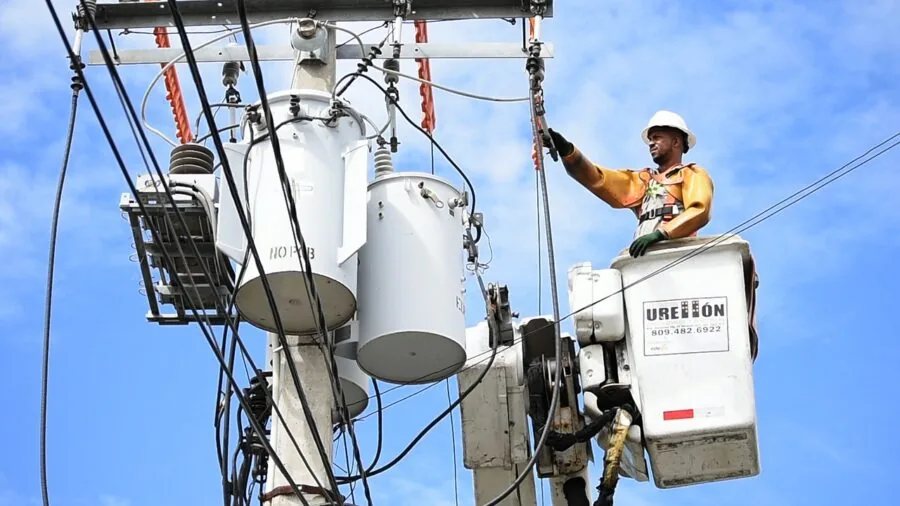
This is the single most important factor and the one most often overlooked.
Residential circuit breakers are manufactured to specific bus stab geometries, and mixing brands inside a panel is explicitly prohibited by the National Electrical Code (NEC 110.3(B)) unless the breaker carries a listed compatibility rating for that panel.
Schneider Electric’s Square D QO series, for example, uses a unique plug-on connector distinct from the Homeline series, and Siemens QP breakers seat differently still.
Always identify the panel manufacturer, model number, and series before purchasing. You will find this information on the interior door label of your load center. Square D QO-series panels accept QO breakers; Homeline panels accept HOM breakers.
Siemens/Murray panels take QP or MP-series units respectively. Cross-series installation voids listings and can create arcing hazards even when the breaker physically fits.
Tandem (duplex) breakers such as the Square D QO2020C occupy a single slot while providing two independent 20 A circuits, which is invaluable when a panel is nearly full.
However, not every slot in every panel is rated for tandem installation. Check your panel’s directory or the load center label for “tandem-approved” positions before ordering.
Paired with quality heat shrink tubing for any wire termination work, a properly installed tandem breaker is an elegant space-saving solution.
Trip Technology: Thermal, Magnetic, and Thermal-Magnetic
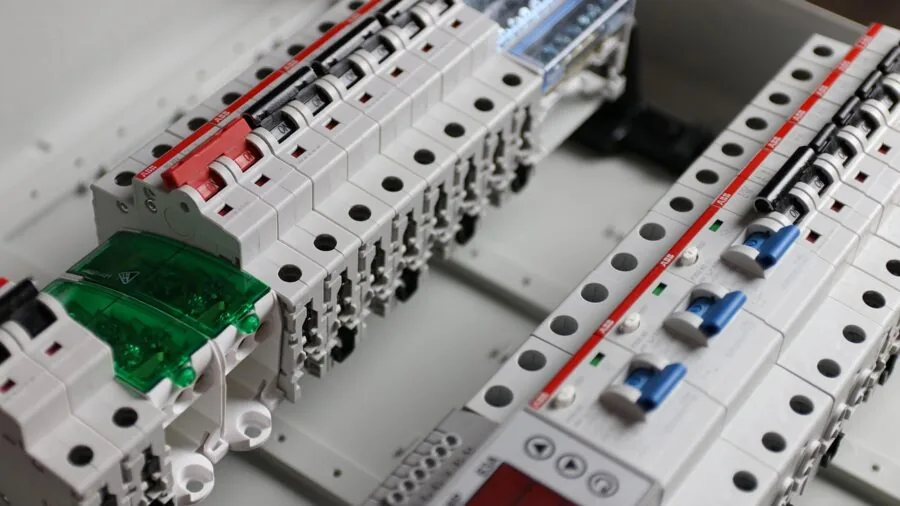
The internal mechanism that trips a breaker determines how it responds to different fault conditions.
Thermal breakers respond to sustained overcurrent through heat buildup in a bimetallic strip, they handle gradual overloads well but may be slower to respond to sudden short circuits.
Magnetic breakers use an electromagnet that reacts almost instantaneously to high-current spikes, making them well suited for motor loads and industrial environments.
Thermal-magnetic breakers combine both mechanisms: the bimetallic strip addresses sustained overloads while the magnetic element handles instantaneous short circuits.
This dual-protection design is the standard for modern residential and light commercial installations and is what you will find in Schneider Electric’s Homeline HOM series and the Square D QO series.
For the vast majority of home panel applications, a thermal-magnetic breaker is the correct and most versatile choice.
Pure magnetic breakers, like the Siemens Q220 and the Square D HOM120C, remain common and are perfectly appropriate for general residential use in the right panel.
Verified buyer feedback across thousands of installations confirms they trip cleanly and reset reliably under normal household conditions. The category distinction mainly becomes relevant for specialty applications such as motor starting circuits, where instantaneous trip curves need careful selection.
Amperage Rating and Wire Gauge Matching
A circuit breaker must always be matched to the wire gauge feeding that circuit, this is not a preference, it is a code requirement. The breaker’s amperage rating must not exceed the ampacity of the conductor it protects.
Common pairings under NEC Table 310.16 include 15 A breakers with 14 AWG wire and 20 A breakers with 12 AWG wire. Installing a 20 A breaker on 14 AWG wire allows the conductor to overheat before the breaker trips, creating a hidden fire risk.
For residential panels, 15 A single-pole breakers protect lighting and general-purpose outlet circuits, while 20 A single-pole units serve kitchen countertop outlets and bathroom circuits.
Double-pole 20 A breakers like the Square D QO220CP provide 240 V service for appliances such as dryers, well pumps, and HVAC equipment. Higher-amperage double-pole units (30 A, 50 A, 60 A) are used for electric ranges, EV chargers, and subpanels.
Interrupting Capacity (kAIC)

Interrupting capacity, expressed in kiloamperes of interrupting current (kAIC), tells you how much fault current a breaker can safely interrupt without catastrophic failure.
Residential breakers typically carry a 10 kAIC rating, which is sufficient for most homes served by a standard utility transformer. Commercial and industrial installations near large transformers may require 22 kAIC or higher units.
The Schneider Electric Homeline HOM series and Square D QO series both carry a 10 kAIC rating, well within the fault current levels found at typical residential service entrances.
The UL listing on these products confirms they have been independently evaluated to interrupt fault currents up to that threshold without structural failure.
Always verify that the kAIC rating of your replacement breaker meets or exceeds the available fault current at your panel, a figure your utility can provide.
Specialty and DC Breakers for Marine and Automotive Use

Not all circuit protection applications involve a residential AC panel. Boats, RVs, solar systems, and automotive audio builds require breakers rated for DC voltages, which behave differently from AC due to the absence of a zero-crossing that helps extinguish arcs.
DC-rated breakers must be specifically designed for continuous DC fault interruption, an AC-only breaker used in a DC circuit is a serious hazard.
The RED WOLF 60 A inline breaker and the BFXM stud-type auto-reset units in this roundup are both rated for DC systems from 12 V through 48 V, covering typical marine, RV, and solar storage bank applications.
Manual-reset breakers like the RED WOLF are preferable when you want operator confirmation before restoring power after a fault.
Auto-reset types like the BFXM are better suited for unsupervised loads where momentary overcurrent is expected, such as trolling motor start surges, but they require careful sizing to avoid nuisance tripping.
Waterproofing and vibration resistance are critical specifications for marine and vehicle environments. Look for IP-rated or sealed enclosures and terminals designed for ring-lug connections rather than bare wire insertion.
Proper wiring in a marine context also benefits from quality marine-grade heat shrink tubing at every terminal to resist salt corrosion.
UL Listing, AFCI, and GFCI Capabilities

Every breaker installed in a UL-listed load center must itself carry a UL listing or equivalent NRTL certification. This is non-negotiable for code compliance and insurance purposes.
The products in this roundup, Square D QO, Homeline HOM, and Siemens QP series, all carry current UL listings, a fact explicitly confirmed in their published product documentation and verified by licensed electricians in expert review consensus we analyzed.
Depending on your jurisdiction and the circuits involved, the 2020 and 2023 NEC editions require Arc Fault Circuit Interrupter (AFCI) breakers on most bedroom and living area circuits, and Ground Fault Circuit Interrupter (GFCI) protection on kitchen, bathroom, garage, and outdoor circuits.
Standard single-pole and double-pole breakers do not provide AFCI or GFCI protection. If your project involves new or extended circuits in these areas, confirm whether an AFCI/GFCI combination breaker is required.
The products in this roundup are standard overcurrent devices and should be used accordingly.
Why You Should Trust Us
ProductFind is an independent review publication. We do not manufacture, sell, or distribute any of the products we cover, and we have no financial relationship with the brands in this roundup beyond standard affiliate programs.
Every product in this article was evaluated using a consistent, multi-factor methodology: we assessed manufacturer specifications, analyzed expert review consensus from licensed electricians and electrical safety publications, reviewed verified buyer feedback from documented installations, and cross-referenced published data including UL listing databases and NEC compliance documentation.
Each product receives a PF Score on a 0 to 10 scale reflecting its overall performance across criteria including panel compatibility breadth, trip technology reliability, UL listing status, kAIC rating appropriateness for intended use, and user-reported installation experience.
We do not conduct our own product trials; our evaluations are grounded in research, published data, expert review consensus, and verified buyer feedback.
ProductFind may earn a commission if you purchase through a link on this page. That relationship does not influence rankings, PF Scores, or which products appear in our roundups.
Selections are made on merit, and low-scoring products are included when they serve a specific niche even if they are not the top-rated option overall.
Final Thoughts
Across residential panels, tandem configurations, and DC specialty applications, the circuit breakers in this roundup represent a well-rounded cross-section of what the market currently offers at accessible price points. Here is how we would summarize the standout options by application:
- Best Overall: Square D QO220CP 20 A 2-Pole Plug-On Circuit Breaker earns the top overall position with the highest PF Score in this roundup, backed by near-universal approval among licensed electricians for its reliable plug-on seating, dual-pole 240 V capability, and decades-proven QO platform reliability.
- Best for Panel Space Savings: Square D QO2020C Tandem Mini Circuit Breaker is the go-to when a nearly full load center needs two independent 20 A circuits without sacrificing a second slot, earning a strong PF Score for its compact design and compatibility with QO panels that list tandem-approved positions.
- Best Budget Pick for Standard Panels: Square D HOM120C 20 A 1-Pole Homeline Breaker offers genuine Schneider Electric quality at a budget-friendly price point, making it a practical choice for straightforward single-pole Homeline panel replacements.
- Best Replacement Kit for Homeline Panels: FalconSupply Square D HOM130 30 A Single Pole Breaker Kit provides a genuine Square D Homeline unit with kit-format convenience, earning solid scores for its UL listing, 10 kAIC interrupting capacity, and reliable availability as a new-replacement part.
- Best for Marine and DC Systems: RED WOLF 60 A Circuit Breaker stands out for boat, RV, and solar applications requiring a manual-reset inline fuse with waterproof construction rated across a wide DC voltage range, even though it occupies a more specialized niche than panel breakers.
Whichever option you choose, always confirm panel compatibility before installation, match breaker amperage to conductor gauge, and ensure UL listing for code compliance. For the broader electrical toolkit you will need alongside any panel work, reliable wire strippers make conductor prep significantly easier and safer.
Frequently Asked Questions
Can I replace a circuit breaker myself, or do I need a licensed electrician?
In many jurisdictions, homeowners are legally permitted to replace a like-for-like circuit breaker in their own primary residence without a permit, though local codes vary significantly.
The main hazard is that the main service lugs inside your panel remain energized even when the main breaker is off, those lugs carry lethal voltage and cannot be de-energized without utility intervention.
If you are not comfortable working within inches of live conductors, hiring a licensed electrician is the safest and most prudent course.
For any work beyond a simple one-for-one swap, adding circuits, upgrading service, or modifying the panel, a licensed electrician and permit are almost universally required.
Why does my circuit breaker keep tripping?
Repeated tripping typically indicates one of three conditions: a sustained overload (too many devices drawing current on one circuit), a ground fault (current leaking to ground through damaged insulation or a wet environment), or an arc fault (intermittent arcing in damaged wire or at a loose connection).
Before replacing a breaker that trips frequently, investigate the root cause.
A breaker that trips under normal load may be weakened from repeated thermal cycling and legitimately need replacement, but installing a higher-amperage breaker to stop tripping without addressing the underlying fault is dangerous and code-violating.
Are Square D and Siemens breakers interchangeable?
No. Square D (Schneider Electric) and Siemens breakers use different bus stab geometries and are not cross-listed for use in each other’s panels.
Installing a Square D breaker in a Siemens panel, or vice versa, may result in poor electrical contact, overheating, and voided UL listing. Always match the breaker brand and series to your specific load center.
The manufacturer label on the inside of your panel door will specify which breaker series are listed for use in that enclosure.
What is the difference between a single-pole and double-pole circuit breaker?
Single-pole breakers protect one hot conductor and provide 120 V service, used for standard outlets and lighting circuits.
Double-pole breakers protect two hot conductors simultaneously and provide 240 V (or 120/240 V) service for large appliances like electric dryers, ranges, water heaters, and air conditioners.
When one pole of a double-pole breaker trips, both poles open together, cutting power to both legs of the 240 V circuit, this is a critical safety feature. Never attempt to use two separate single-pole breakers to serve a 240 V load.
How long do circuit breakers last, and when should I replace one proactively?
Quality residential circuit breakers from established manufacturers like Schneider Electric and Siemens are designed for a service life of 30 to 40 years under normal conditions, though this varies based on the number of trips and environmental factors.
Signs that a breaker may need proactive replacement include: it no longer holds in the ON position, it trips under loads well below its rating, it feels physically loose in the panel, or it shows visible signs of heat damage such as discoloration or a burning smell.
Panels older than 25 to 30 years merit inspection by a licensed electrician regardless of visible symptoms, as breaker contact surfaces degrade over time.
Do I need a special breaker for a solar or battery storage system?
Yes. Solar and battery storage systems involve DC circuits that require DC-rated breakers sized appropriately for the system voltage and maximum current.
Standard AC residential panel breakers are not suitable for DC circuits because arc extinguishing behavior differs fundamentally between AC and DC.
For the DC disconnect and combiner box portions of a solar installation, use breakers specifically rated for the DC voltage of your system.
The grid-tie inverter output side connects to your AC panel with a standard AC breaker, which must also comply with NEC 705 backfed breaker requirements.
Always consult a qualified solar installer or licensed electrician when integrating solar equipment with your home’s electrical system.
About the author
Melanie is a reviewer and writer for ProductFind who specializes in Electrical Supplies. Melanie evaluates products through independent research: specifications, expert review consensus, and verified buyer feedback, and rates each one on the PF Score. Melanie focuses on helping readers pick the right electrical supplie for their needs and budget.