The 8 Best Dehydrators
From compact home units to commercial-grade stainless steel machines, finding the right food dehydrator means matching capacity, temperature range, and build quality to how you actually cook.
 By Freddie Hansen
Updated July 23, 2026
By Freddie Hansen
Updated July 23, 2026
A food dehydrator is one of those kitchen appliances that quietly earns its counter space over years of use.
Whether you’re preserving a summer harvest of tomatoes and herbs, making your own beef jerky at a fraction of store prices, or whipping up fruit leather for kids’ snacks, a good dehydrator handles all of it with minimal effort.
Unlike an air fryer or a toaster oven that can dehydrate in a pinch, a dedicated dehydrator offers precise low-temperature control, multiple trays, and consistent airflow that those appliances simply can’t match for long drying sessions.
Shopping for the right dehydrator is harder than it looks. Capacity, wattage, temperature range, material quality, and ease of cleaning all vary dramatically across price points, and marketing copy rarely tells the full story.
At ProductFind, we researched every model on this list by analyzing published specifications, synthesizing expert review consensus, and combing through verified buyer feedback to surface the options that genuinely deliver.
Whether you need a compact entry-level unit or a commercial-grade stainless steel workhorse, the picks below represent the strongest choices across every tier.
| Award | Product | PF Score About PF ScoreThe PF Score is our own rating from 0 to 10, based on performance, design and build, ease of use, and value. It reflects independent research and is never influenced by manufacturers, retailers, or affiliate commissions. Learn more › | Price | |
|---|---|---|---|---|
| Best Overall |
 Cosori 5-Tray Food Dehydrator, 95-165°F
|
8.8/10 | Buy | |
| Editor's Pick |
 Magic Mill 10-Tray Premium Food Dehydrator
|
8.2/10 | Buy | |
| Best Value |
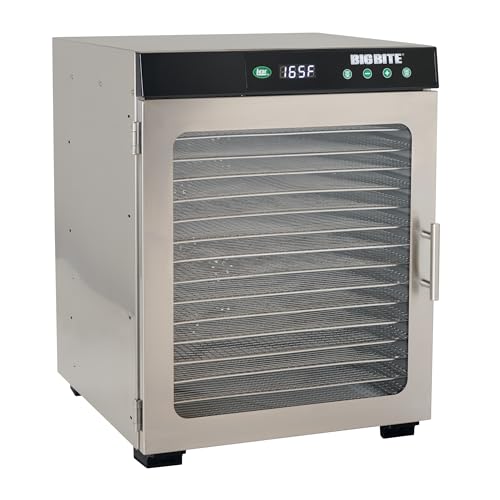 LEM BigBite 16-Tray Stainless Steel Dehydrator
|
7.6/10 | Buy | |
| Top Rated |
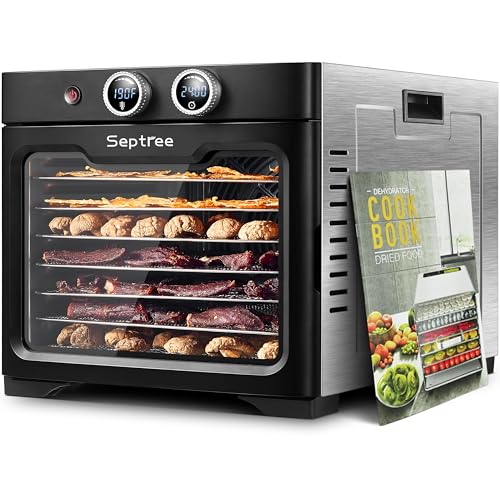 Septree 8-Tray Stainless Steel Food Dehydrator
|
7.4/10 | Buy | |
 SUCISENI HFD-12SP 12-Tray Food Dehydrator
|
7.1/10 | Buy | ||
 Ausegia 8-Tray Commercial Dehydrator, 9 sq ft
|
6.8/10 | Buy | ||
 Ausegia 12-Tray Commercial Food Dehydrator, 1200W
|
6.4/10 | Buy | ||
 Septree 18-Tray Commercial Food Dehydrator
|
6.2/10 | Buy |
Cosori 5-Tray Food Dehydrator, 95-165°F
A compact dehydrator with five BPA-free trays and precise temperature control from 95 to 165°F, ideal for jerky, fruits, and herbs. Operates quietly at under 47 dB and includes adjustable tray spacing for different ingredient sizes.
Pros
- Temperature control precise to 1°F increment, supporting safer food preservation at higher heat settings
- Adjustable tray heights accommodate thick-cut ingredients and flexible storage needs
- Quiet performance below 47 dB allows operation without disruption
- Expandable tray system lets you add capacity without replacing the unit
- Solid build quality designed for durability
Cons
- No verified buyer reviews available to assess real-world performance and reliability
- Limited to 5 trays in base model; additional trays sold separately increase overall cost
- 350W power means slower dehydration than higher-wattage competitors
Magic Mill 10-Tray Premium Food Dehydrator
A 700W stainless steel dehydrator with 10 XL trays and rear-mounted fan circulation for even drying without manual tray rotation. Digital controls span 95-167°F with a 48-hour timer, plus dishwasher-safe trays and quiet operation suited for jerky, fruits, vegetables, and herbs.
Pros
- Even drying across all trays without manual rotation saves time
- Flexible temperature range and long timer accommodate various foods from jerky to herbs
- Food-grade stainless steel and BPA-free construction
- Quiet performance makes extended run times less disruptive
- All removable parts are dishwasher safe for easy maintenance
Cons
- No verified buyer reviews available to confirm real-world performance and durability claims
- Large footprint at 18x14x13 inches requires significant counter or storage space
- 48-hour timer and Keep Warm function are digital-only with no mechanical backup option
LEM BigBite 16-Tray Stainless Steel Dehydrator
A large-capacity dehydrator with 19 sq. ft. of drying space and dual rear fans for even airflow across meat, vegetables, and fruits. Digital controls and a glass door make it accessible for home food preservation, backed by a five-year warranty.
Pros
- Horizontal airflow design and dual fans promote even drying across all trays
- Stainless steel construction with glass door is durable and allows visibility without opening
- Large capacity with 19 sq. ft. of space suits batch dehydrating for families
- Removable, dishwasher-safe trays simplify cleanup
- Comprehensive warranty and lifetime support demonstrate manufacturer confidence
Cons
- No verified buyer reviews available to assess real-world reliability or long-term performance
- 32.85-pound weight and large footprint (15.94 x 20.27 x 15.94 inches) require significant counter or storage space
- High power consumption at 1200 watts may increase electricity costs for frequent use
Septree 8-Tray Stainless Steel Food Dehydrator
This commercial-grade dehydrator features eight food-grade stainless steel trays with 13.88 square feet of drying space, suitable for jerky, fruits, vegetables, and herbs. Precise temperature control from 68-194°F and a 24-hour timer enable flexible drying schedules with minimal noise and automatic shutoff protection.
Pros
- Large drying capacity with stainless steel construction rated food-safe
- Precise temperature control and extended timer enable batch processing without monitoring
- Even heat distribution reduces need for tray rotation or manual intervention
- Quiet operation suitable for overnight drying
- Includes accessories (silicone sheets, gloves, storage containers, recipe book)
Cons
- No verified buyer reviews available to assess real-world reliability and user experience
- Dimensions (18.11 x 13.78 x 13.58 inches) require significant counter or storage space
- Higher wattage (800W) may increase electricity costs for extended use
SUCISENI HFD-12SP 12-Tray Food Dehydrator
A large-capacity stainless steel dehydrator with 11 sq ft of drying space, precise temperature control (85-195°F), and a 24-hour timer suited for home food preservation and small commercial operations. The quiet operation under 50 dB and easy-to-clean design appeal to serious home cooks.
Pros
- Large drying capacity makes it practical for batch processing jerky, fruits, and vegetables
- Fine-tuned temperature and timer controls accommodate diverse ingredients
- Quiet enough for overnight use without noise concerns
- Transparent door with interior light eliminates need to open frequently during operation
- Simplified cleaning with removable, dishwasher-safe components
Cons
- No verified buyer reviews available, making real-world performance difficult to assess
- Heavy unit at 24.25 pounds with substantial countertop footprint (17 x 12.4 x 19.7 inches)
- Learning curve required to dial in optimal settings for different food types
Ausegia 8-Tray Commercial Dehydrator, 9 sq ft
A large-capacity stainless steel dehydrator with 8 trays and digital controls ranging from 70-190°F, designed for simultaneous drying of meat, fruit, herbs, and vegetables. Includes silicone pads, fruit roll trays, and accessories, making it suitable for small-scale commercial or serious home food preservation.
Pros
- Significant drying capacity with 8 large trays (12.6x12.6 inch each) for batch processing
- All metal construction eliminates concerns about plastic warping or degradation from heat
- Comprehensive accessory package reduces need for additional purchases
- Quiet operation suitable for overnight use without disturbing household
- Precise digital temperature control with wide range for different food types
Cons
- No verified customer reviews available to assess real-world durability or performance consistency
- Substantial footprint and weight may require dedicated counter or storage space
- Initial learning curve with temperature and timing presets despite digital controls
Ausegia 12-Tray Commercial Food Dehydrator, 1200W
A large-capacity stainless steel dehydrator designed for commercial or high-volume household use, with 12 trays covering 22.67 sq ft of drying space. Digital controls offer precise temperature (70-190°F) and timer adjustments (30 min to 24 hours), plus safety features like auto-shutdown and overheat protection.
Pros
- Substantial usable area (22.67 sq ft) makes it practical for batch processing meats, fruits, vegetables, and herbs
- Precise digital temperature and timer control down to 30-minute intervals
- Horizontal airflow system and double vents promote even drying across all trays
- Durable food-grade stainless steel with transparent door for easy monitoring
- Built-in safety features including automatic shutdown and overheat protection
Cons
- High power consumption (1200W) and large footprint may challenge standard kitchen layouts
- No verified user reviews available to confirm real-world performance claims
- 120V 60Hz requirement limits use to USA and Canada only
Septree 18-Tray Commercial Food Dehydrator
A large-capacity stainless steel dehydrator designed for serious home users and small businesses, offering 34.42 sq ft of drying space with digital temperature control from 70-190°F. Comes fully equipped with trays, fruit roll sheets, hanging racks, and accessories for jerky, produce, and herbs.
Pros
- Extensive accessory bundle eliminates need for separate purchases
- Large drying capacity ideal for households processing bulk quantities or small commercial operations
- Dishwasher-safe trays and glass front door simplify monitoring and cleaning
- Quiet operation and 24/7 capability suit both active and passive dehydrating schedules
- Wide temperature range accommodates jerky, fruits, herbs, and vegetables
Cons
- No verified buyer reviews available to assess real-world durability and performance consistency
- Substantial footprint (21.46 x 17 x 29.53 inches) requires significant counter or storage space
- Requires careful attention to temperature and timing across 18 trays to prevent uneven results
Best Dehydrators Buying Guide
Picking the right dehydrator comes down to matching the machine’s strengths to how you actually plan to use it. A weekend jerky maker has very different needs from someone preserving bulk garden harvests or a small-scale commercial operator.
The criteria below break down every factor worth weighing before you buy.
Capacity and Tray Configuration
Tray count and usable surface area are the two numbers that actually matter for capacity, and they don’t always move together.
A machine with twelve trays but small tray dimensions may offer less usable area than a six-tray unit with wide, deep shelves.
Check the total square footage of drying surface, not just the tray count, especially if you plan to run large batches of jerky or sliced fruit.
Expandability is worth factoring in. Some mid-range stackable dehydrators let you add trays as your needs grow, while most box-style units are fixed.
If you’re processing serious volumes, commercial-oriented machines with twelve or more trays give you the throughput to justify the larger footprint and higher upfront cost. For casual home use, five to ten trays is usually plenty.
Temperature Range and Precision
Different foods require very different drying temperatures. Herbs and flowers dry best at the lowest settings, around 95°F, while meat and poultry for jerky need to reach at least 160°F to stay food-safe, according to USDA guidelines.
A machine with a narrow or inaccurate temperature range forces compromises that affect both food safety and final texture.
Digital thermostats with one-degree increment control outperform simple dial systems in consistency. Budget models sometimes run hotter or cooler than the dial indicates, which leads to uneven drying or over-dried batches.
Verified buyer feedback consistently flags this as one of the most common failure points in cheaper dehydrators, so it’s worth prioritizing digital precision if you’ll be drying meat regularly.
Airflow Design: Horizontal vs. Vertical
Airflow direction has a direct impact on how evenly your food dries. Horizontal rear-fan designs push air across every tray simultaneously, which means you generally don’t need to rotate trays mid-cycle.
This is the preferred layout in most higher-end and commercial units. Vertical bottom-fan or top-fan designs are more compact and affordable, but the trays closest to the heating element dry faster, so rotating trays every few hours is usually necessary.
If you’re making multiple food types at once, horizontal airflow also reduces flavor transfer between trays, a genuine practical advantage. For casual single-food drying sessions, vertical stackable units work perfectly well and take up less storage space when not in use.
Material Quality: Stainless Steel vs. BPA-Free Plastic

Tray material directly affects longevity, ease of cleaning, and food safety. Full stainless steel trays are the gold standard for durability and are far easier to clean thoroughly after sticky fruit leather or fatty meats.
They also resist odor absorption over time, which matters if you cycle through garlic, fish, and fruit in the same machine. Most commercial and prosumer units use stainless steel throughout, contributing to their higher price tags.
BPA-free polypropylene trays are the norm in budget and mid-range home units. They’re lighter and often dishwasher-safe, which is genuinely convenient, though they can warp or stain with heavy use over time.
If you’re buying a plastic-tray unit, confirm the trays are top-rack dishwasher safe, since hand-cleaning fine mesh can be tedious after a jerky session.
Timer, Controls, and Ease of Use

A built-in digital timer with automatic shutoff is genuinely useful for long overnight drying runs. Without one, you’re relying on remembering to check the machine, and over-drying is a real risk with lean meats or thin fruit slices.
Look for a timer range of at least 24 hours; some models extend to 48 hours or more, which is helpful for low-temperature herb and flower drying.
Control panel design matters more than spec sheets suggest. Backlit LCD displays are easier to read than basic LED readouts, and clearly labeled buttons reduce setup friction for first-time users.
Some units include preset programs for common foods, which is a nice-to-have for beginners but not essential for experienced users who prefer manual control.
Noise Level and Footprint

Dehydrators run for hours at a time, often overnight, so noise is a real quality-of-life factor. Fan noise varies significantly across models.
Rear-fan horizontal units tend to run quieter than front-mounted fans, and higher-wattage commercial units can be noticeably loud compared to home machines.
If you’re running a dehydrator in an open-plan kitchen or a small apartment, checking user reviews specifically for noise complaints is worthwhile before buying.
Footprint and storage also matter for everyday kitchens. Box-style machines can’t be disassembled, so they need dedicated shelf space.
Stackable round units can be broken down and stored in a cabinet when not in use, making them a better fit for smaller kitchens. Consider both the in-use footprint and the storage footprint before committing to a large commercial-style unit.
Why You Should Trust Us
ProductFind is an independent review publication with no brand affiliations and no products of our own to sell.
Every dehydrator on this list was evaluated using our structured research methodology: we analyze published manufacturer specifications, synthesize consensus from expert reviewers across the category, and weight verified buyer feedback to surface real-world performance patterns that spec sheets miss.
We do not conduct our own product trials; our evaluations are grounded in research, published data, expert review consensus, and verified buyer feedback.
Each product receives a PF Score on a scale of 0 to 10, calculated against a consistent set of criteria applied equally across every model in the category. Scores reflect overall value, performance reliability, and user satisfaction relative to price tier.
ProductFind may earn a commission if you purchase through a link on this page, but affiliate relationships have zero influence on PF Scores, rankings, or which products appear in our lists.
Our recommendations are editorially independent and driven entirely by research quality.
Final Thoughts
After evaluating every model across capacity, temperature precision, build quality, and real-world usability, here’s where each pick stands out most clearly.
- Best Overall: Cosori Food Dehydrator earns the top spot with the highest PF Score in this group. It delivers precise temperature control up to 165°F, five BPA-free trays, and a compact footprint that suits most home kitchens, all at an accessible price that makes it the strongest all-around value in the category.
- Best for Home Enthusiasts: Magic Mill Premium Food Dehydrator is the pick for cooks who want more capacity and professional-grade control without stepping into commercial pricing. Ten large stainless steel trays, a 48-hour digital timer, and a wide temperature range from 95°F to 167°F make it exceptionally versatile for everything from fruit leather to beef jerky.
- Best Mid-Range Workhorse: LEM Products BigBite 16-Tray Dehydrator hits a sweet spot between home and commercial scale. Sixteen stainless steel trays and robust construction make it a serious choice for hunters, homesteaders, and anyone processing large batches of jerky or dried produce regularly.
- Best Budget-Friendly Upgrade: Septree 8-Tray Food Dehydrator punches above its price tier with eight stainless steel trays, a 24-hour digital timer, and a high maximum temperature of 194°F, giving home users meaningful capacity and safety margins at a mid-range price.
- Best for Large-Batch Processing: Ausegia Commercial 12-Tray Dehydrator offers an impressive usable area and a high maximum temperature of 190°F, making it a capable option for small-scale food businesses or serious home preservers who need sustained high-volume output.
If you’re exploring other kitchen preservation and cooking tools, pairing a dehydrator with capable air fryer toaster ovens or upgrading your storage setup with one of the better refrigerators on the market can round out a well-equipped kitchen.
For feeding pets with homemade dried treats, our guide to wet dog foods is also worth a read alongside this one.
Frequently Asked Questions
How long does it take to dehydrate food?
Drying times vary widely depending on the food type, slice thickness, moisture content, and the temperature you’re using.
Thin fruit slices may be done in four to eight hours, while thick cuts of jerky can take anywhere from six to twelve hours. Herbs and flowers at low temperatures sometimes need eighteen hours or more.
Most machines with 24-hour or 48-hour timers can handle even the longest runs without supervision.
Is it safe to make jerky at home in a dehydrator?
Yes, provided you follow food safety guidelines. The USDA recommends that meat reach an internal temperature of 160°F and poultry reach 165°F during the drying process to eliminate pathogens.
Some dehydrators with a maximum temperature below 160°F may require you to finish jerky in a conventional oven before or after dehydrating.
Always use a food thermometer to confirm safe internal temperatures, and choose a machine that can reliably reach and hold the temperatures required for meat drying.
What’s the difference between a home dehydrator and a commercial one?
Commercial dehydrators are built for higher volume, longer duty cycles, and more demanding use. They typically offer more tray capacity, higher wattage for faster drying, full stainless steel construction throughout, and more robust fans.
Home units prioritize compact footprint, quieter operation, and lower price. For most households, even a mid-range home dehydrator offers more capacity than you’ll regularly use.
Commercial-scale options make sense for hunters processing large venison batches, homesteaders preserving bulk garden harvests, or small food businesses.
Can I dehydrate food without a dedicated dehydrator?
Some air fryer toaster ovens include a dehydrate mode and can handle small batches adequately, particularly for fruit chips or herbs.
However, they rarely maintain the precise low temperatures (below 120°F) that true dehydrators reach, and their limited tray space makes large batches impractical.
For occasional use, a dual-function oven can work, but anyone serious about food preservation will find a dedicated dehydrator worth the investment.
How do I clean a food dehydrator?
Stainless steel trays are the easiest to clean: most can be wiped down with warm soapy water or placed in the dishwasher.
BPA-free plastic trays are often dishwasher-safe on the top rack, but always check the manufacturer’s instructions since high heat can warp some plastics.
Fine mesh inserts require a bit more attention; soaking them before scrubbing helps loosen sticky residue from fruit leather or sugary marinades. The dehydrator housing itself should only be wiped with a damp cloth; never submerge the base unit.
How long does dehydrated food last?
Properly dehydrated and stored food can last significantly longer than fresh produce. Jerky stored in an airtight container at room temperature typically lasts one to two months; vacuum-sealed jerky can last up to six months.
Dried fruits and vegetables stored in sealed containers away from light and heat can remain good for six months to a year or longer. The key variables are moisture content at the time of sealing, storage temperature, and packaging quality.
Oxygen absorbers and vacuum sealing extend shelf life considerably.
About the author
Freddie is a reviewer and writer for ProductFind who specializes in Kitchen Appliances. Freddie evaluates products through independent research: specifications, expert review consensus, and verified buyer feedback, and rates each one on the PF Score. Freddie focuses on helping readers pick the right kitchen appliance for their needs and budget.