The 12 Best Drone Batteries
Flight time lives or dies on the battery. Our research covers genuine DJI packs, LiHV micro cells, and third-party spares so you can pick the right one for your drone.
 By Myrtle Hudson
Updated July 23, 2026
By Myrtle Hudson
Updated July 23, 2026
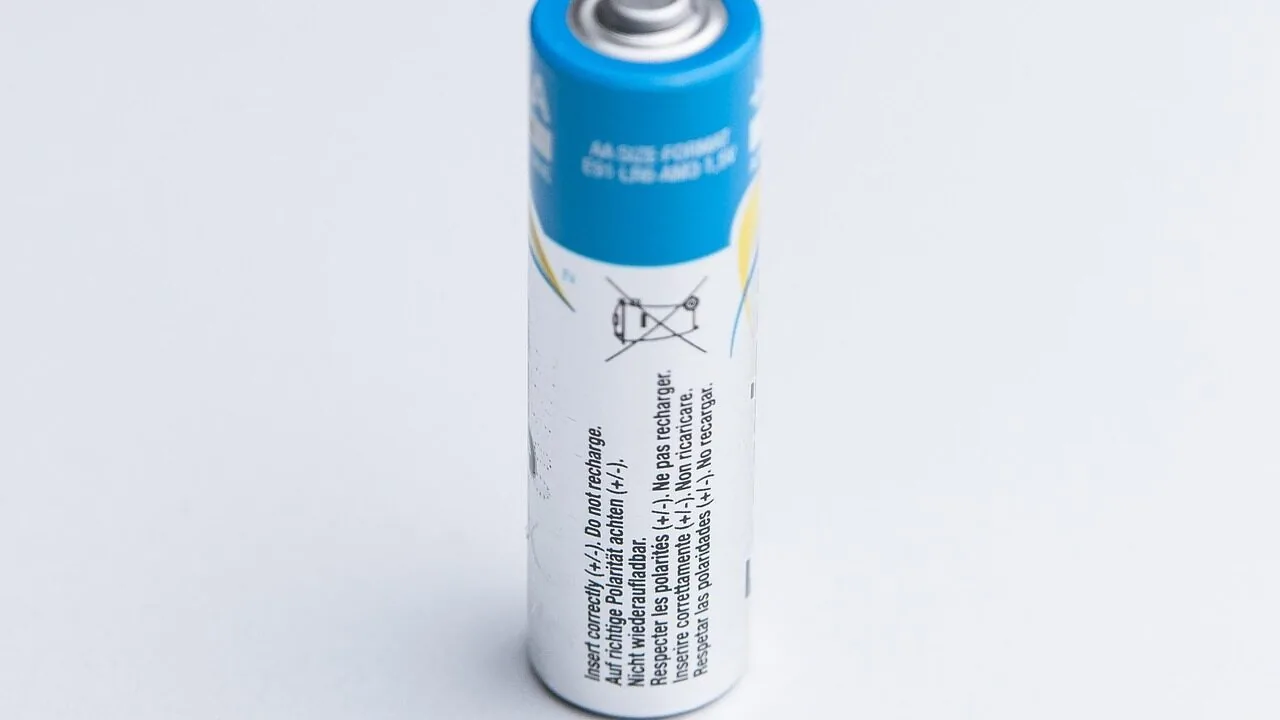
A drone battery is the single component that determines how long you stay in the air, and choosing the wrong one can cut a flight session short or, worse, leave you with a dead pack mid-shoot.
Whether you fly a compact consumer drone like the DJI Mini series, a workhorse camera platform like the Phantom line, or a fast FPV micro quad, the market is flooded with options ranging from genuine intelligent flight batteries to budget third-party LiPo packs, and knowing which to trust matters enormously.
Flight time, voltage stability under load, charge cycle longevity, and safety certification all vary wildly between brands, and marketing numbers rarely tell the full story.
This guide covers the best drone batteries across the major categories: DJI-compatible intelligent flight packs, budget-friendly spares for mid-range consumer drones, high-discharge LiHV cells for Tiny Whoop and FPV micro builds, and third-party replacements for legacy platforms like the Yuneec Q500.
ProductFind researched each option by synthesizing manufacturer specifications, expert review consensus, and verified buyer feedback so you get a clear, unbiased picture before spending.
Our ranked picks are listed directly below, followed by a detailed buying guide covering every factor worth weighing before you add a pack to your cart.

DJI Mini 3 Series Intelligent Flight Battery
A replacement battery for DJI's Mini series drones, offering up to 38 minutes of flight time on the Mini 3 and 34 minutes on the Mini 3 Pro. Compatible across Mini 4 Pro, Mini 3 Pro, and Mini 3 models, though performance is reduced on the Mini 4 Pro with increased total weight.
Pros
- Substantial flight time of 34-38 minutes depending on drone model
- Works across three different DJI Mini drone variants
- Intelligent battery technology for optimized performance
Cons
- Performance and flight time reduced when used with Mini 4 Pro
- Using this battery on Mini 4 Pro exceeds the 249g weight limit, requiring compliance with local regulations
- No user reviews available to confirm real-world performance claims

DJI Mavic Mini Intelligent Flight Battery 2400mAh
A genuine replacement battery for DJI Mavic Mini series drones, delivering up to 30 minutes of flight time per charge. Essential for extended flying sessions, though compatibility is limited to the original Mavic Mini lineup only.
Pros
- Provides up to 30 minutes of flight time per charge
- Genuine DJI component ensures reliability and safety
- Compact design matches Mavic Mini specifications
- Black finish complements drone aesthetic
Cons
- Only compatible with DJI Mavic Mini series, not Mini 2 or newer models
- No customer reviews available to verify real-world performance claims
- Requires verification of exact Mavic Mini variant before purchase
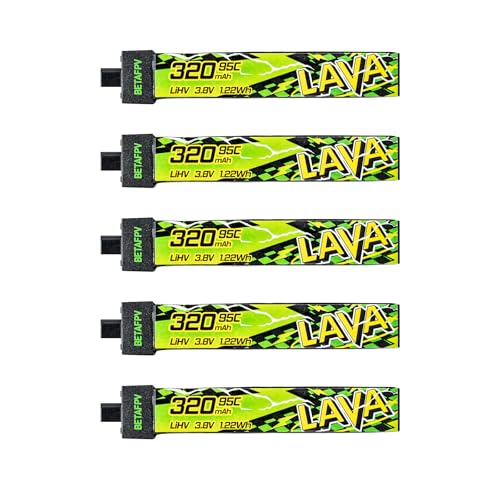
BETAFPV Lava II 1S 320mAh LiHV Battery
High-discharge LiHV battery pack designed for 1S tiny whoop drones, featuring 95C output and proprietary Z-Folding cell technology for extended cycle life. Best suited for pilots flying Air65, Meteor65 Pro, or Cetus FPV kits who need responsive power in a compact form.
Pros
- Significant power boost from 95C discharge rate improves responsiveness and acceleration
- Longer flight times than conventional cells while maintaining same compact size
- 0.2V voltage advantage under load provides more consistent thrust delivery
- Z-Folding technology extends battery lifespan compared to standard wound cells
- BT2.0 connector works seamlessly with popular 1S whoop platforms
Cons
- No verified buyer reviews available to confirm real-world performance consistency
- Pack of five may be overkill for casual pilots or those still evaluating the platform
- Compatibility limited to BT2.0 connector equipped drones, not universal across all 1S models

Holy Stone HS600 Intelligent Modular Battery
Replacement battery for Holy Stone HS600 drones offering up to 32 minutes of flight time per charge. Designed as an intelligent modular component for extended flying sessions without purchasing a new aircraft.
Pros
- Extended 32-minute flight time per battery charge
- Intelligent modular design for easy swapping
- Rechargeable for repeated use
- Direct compatibility with HS600 drone model
Cons
- No customer reviews available to assess real-world reliability or longevity
- Replacement battery only, requires HS600 drone base unit
- Limited specification details provided regarding charge time and cycle lifespan

YATEOO 2400mAh Battery 2-Pack with Bi-Directional Charger for DJI Mini
A third-party battery solution for DJI Mini drones that pairs two 2400mAh cells with a charger capable of sequential charging and power bank functionality. Best suited for pilots seeking affordable backup batteries without official warranty considerations.
Pros
- Two-battery package with integrated charger provides immediate backup capacity for extended flight sessions
- Bi-directional charging functionality adds versatility as portable power for personal devices during outdoor use
- Smart chip manages sequential charging based on battery state, eliminating manual prioritization
- Comprehensive safety protections address common battery failure modes
Cons
- No user reviews available to verify real-world performance and reliability claims
- Dormant batteries require activation in the drone before the charger can detect and charge them, adding an extra setup step
- Charging times up to 240 minutes for full three-battery rotation depend on input configuration and charger availability
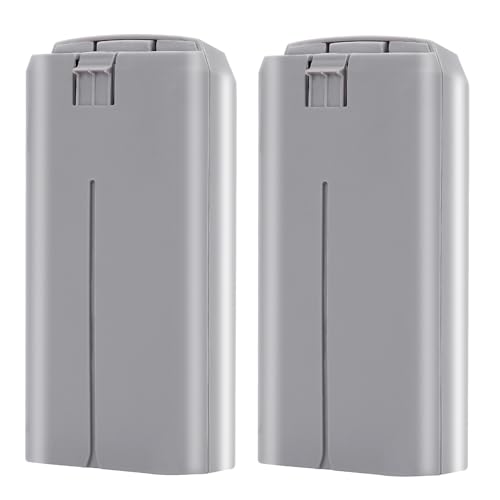
Dalkat Dalee 2-Pack Mini 2/SE/4K Battery 2400mAh
Third-party replacement battery for DJI Mini series drones offering up to 31 minutes of flight time per charge. Includes intelligent battery management with 12-layer protection and comes with a one-year warranty, though it lacks verified user reviews.
Pros
- Wide compatibility across DJI Mini series models (Mini 2, Mini SE, Mini 4K, Mini 2 SE)
- Comprehensive safety features including 12-layer protection and multiple certifications (ROHS, CE, UL)
- Operates in extended temperature range from -10°C to 40°C
- No memory effect, supporting flexible charging patterns
- Two batteries included for back-to-back flying sessions
Cons
- No verified buyer reviews available to assess real-world reliability and performance claims
- Not compatible with older DJI Mavic Mini or Air series drones, limiting backwards compatibility
- Manufacturer explicitly recommends 2-3 low-altitude test flights before high-altitude use, suggesting caution with new units

Dowwnel 7500mAh 11.1V LiPo Battery for Yuneec Q500
Extended-capacity replacement battery delivering 25-28 minutes of flight time per charge, compared to 18-20 minutes with stock batteries. Designed for Yuneec Q500 series drones with 3S 11.1V compatibility and includes two units for extended missions without downtime.
Pros
- Significant flight time increase makes extended aerial filming and commercial operations more practical
- Two batteries included provide flexibility for continuous use without waiting for recharge cycles
- Built-in safety management system protects against common failure modes
- Durable design rated for 1.5x industry average lifespan under proper care
- Drop-in replacement with no voltage or connector modifications required
Cons
- No verified buyer reviews available to confirm real-world performance claims
- 4.5-star rating lacks context without customer feedback on reliability or longevity
- Compatibility limited to specific Yuneec Q500 models, not universal across drone brands

DJI Mini 4 Pro Battery 2-Pack, 2590mAh
A two-battery bundle for DJI Mini 4 Pro users seeking extended flight sessions, offering up to 34 minutes of flight time per charge. These original DJI batteries maintain the drone's sub-249g weight classification, making them practical for frequent pilots.
Pros
- Original DJI component ensures full compatibility with Mini 4 Pro
- Two-pack doubles flight time capacity for back-to-back operations
- Maintains aircraft weight under 249g regulatory threshold
- Intelligent battery management system integrated
Cons
- No customer reviews available to verify real-world performance claims
- 34-minute flight time is manufacturer estimate, actual duration varies with conditions and flying style
- Limited information on battery lifespan and degradation over charge cycles

Suangrc K600GPS 2200mAh Drone Battery
A rechargeable 2200mAh battery designed specifically for the K600GPS drone, offering up to 22 minutes of flight time per charge. The modular design makes swapping batteries straightforward, appealing to drone operators seeking extended flight sessions without complicated setup.
Pros
- 2200mAh capacity delivers extended flight time of up to 22 minutes per charge
- Modular design enables quick and easy battery replacement
- Rechargeable for repeated use, reducing long-term costs
- Compact dimensions and lightweight at 0.11 lbs for minimal impact on drone performance
- Engineered specifically for K600GPS compatibility
Cons
- No customer reviews available to verify real-world performance claims
- Limited compatibility restricted to K600GPS model only
- Flight time estimate of 22 minutes depends on flight conditions and piloting style

North Star 1595 3.7V 1800mAh Li-po Battery (3-Pack)
A three-pack replacement battery set designed for multiple RC drone models including the E88, E99, and P series. Built with high energy density and fast charge-discharge capabilities, these batteries prioritize durability and practical everyday use across compatible devices.
Pros
- Multi-model compatibility eliminates guesswork for drone owners with multiple devices
- Three-pack value provides backup batteries for uninterrupted flying sessions
- High energy density and fast charge-discharge support demanding flight operations
Cons
- No verified buyer reviews available to confirm real-world performance claims
- Compatibility list is extensive but requires manual verification against your specific drone model
- Limited information on charging time estimates or cycle life durability
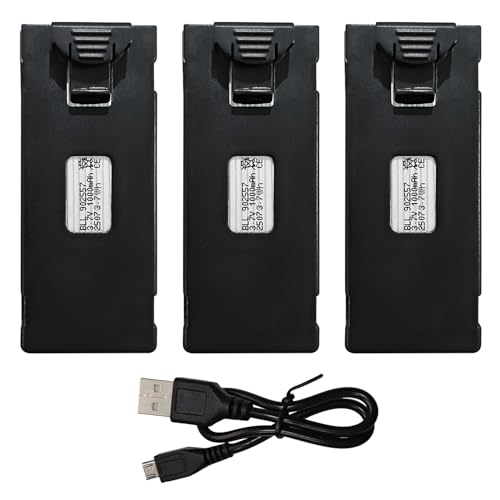
Sea Jump 3-Pack Drone Battery Set
This three-piece battery pack is designed for a wide range of compact RC drones and quadcopters, featuring lightweight construction and built-in protection circuits. Compatible with numerous popular drone models, it's a practical replacement or backup power solution for drone enthusiasts.
Pros
- Broad compatibility across 30+ drone models including E88, E99, P8, K10max, and others
- Lightweight design helps maintain flight performance and battery life
- Low internal resistance supports consistent power delivery
- Internal protection mechanism safeguards against damage during use
- Includes charging cable and three batteries in one package
Cons
- No verified buyer reviews available to confirm real-world performance and longevity
- Compatibility requires matching voltage, size, and plug type, demanding careful verification before purchase
- Limited product information about specific battery capacity and runtime specifications

BYRUYI Phantom 4 Series 5870mAh Battery (2-Pack)
A 5870mAh replacement battery pack designed for DJI Phantom 4 series drones, offering up to 30 minutes of flight time per charge. Features real-time app integration, built-in safety protections, and LED status indicators for convenient monitoring.
Pros
- Delivers advertised 30-minute flight duration on full charge
- Seamless DJI GO 4 app connectivity with remaining power and flight time calculations
- Comprehensive protection system prevents overcharging, overdischarging, and unsafe storage degradation
- LED indicators and sensors provide clear real-time battery status feedback
- Two-pack bundle offers better value for extended flight sessions
Cons
- No customer reviews available to verify real-world performance claims
- Compatibility limited to Phantom 4 series only, not backward or forward compatible with other DJI models
- As third-party batteries, may have shorter lifespan compared to official DJI alternatives
Drone Batteries Buying Guide
Picking the right drone battery is not as simple as grabbing the pack with the biggest number on the label.
Capacity, chemistry, discharge rating, connector type, and compatibility with your specific aircraft all interact in ways that affect real-world flight time and safety. Use the criteria below to match a battery to your actual flying style rather than spec-sheet promises.
If you are still deciding which drone platform to build your kit around, our guide to drones for beginners is a useful starting point before committing to a battery ecosystem.
Battery Chemistry: LiPo, LiHV, and Li-Ion
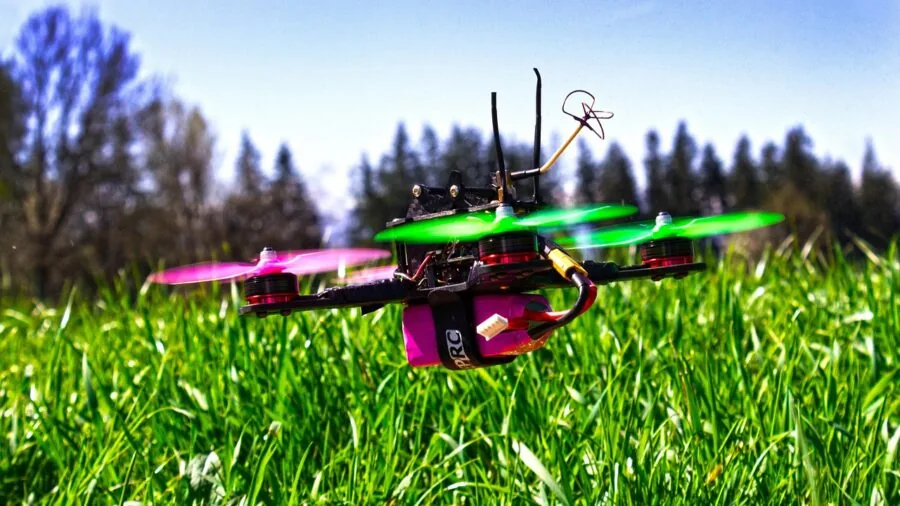
Most drone batteries use lithium polymer (LiPo) chemistry, which balances energy density, discharge rate, and weight well enough for the majority of flying applications.
Standard LiPo cells charge to 4.20V per cell and offer a good blend of capacity and output.
LiHV (high-voltage lithium polymer) cells push that ceiling to 4.35V per cell, squeezing out extra energy from the same physical size, which is why packs like the BETAFPV Lava II 1S are popular for Tiny Whoop builds where every milliwatt-hour counts.
Li-ion chemistry, by contrast, prioritizes energy density over peak discharge rate.
DJI uses a proprietary Li-ion-based intelligent flight battery architecture in several of its consumer lines, which is why the Mini 3 Series Intelligent Flight Battery can deliver extended flight windows while keeping the aircraft under the 249-gram regulatory threshold.
For aggressive FPV flying or freestyle maneuvers that demand high-current bursts, LiPo remains the preferred chemistry because it sustains voltage under load better than Li-ion at the discharge rates those flight styles require.
Never mix chemistries on the same charger without verifying that the charger explicitly supports both. Charging a LiHV cell on a standard LiPo profile, or vice versa, accelerates cell degradation and in worst cases creates a fire risk.
Always match your charger profile to the chemistry printed on the battery label.
Capacity (mAh) and Real-World Flight Time

Capacity measured in milliamp-hours (mAh) is the most visible spec on any drone battery listing, but it is only one part of the flight-time equation.
A 3850 mAh pack like the DJI Mini 3 Series Intelligent Flight Battery can deliver around 51 minutes of flight on the Mini 3 in optimal conditions, while a 2400 mAh pack for the same aircraft class may yield 31 minutes.
The difference reflects not just raw capacity but also how efficiently the aircraft and battery management system draw current.
Third-party batteries sometimes claim higher mAh figures than their genuine counterparts, but verified buyer feedback across multiple platforms consistently shows that those numbers are often inflated.
A nominally larger capacity pack from an unknown brand may actually deliver fewer minutes of flight than a genuine battery because the cells inside cannot sustain their rated voltage as discharge progresses.
When evaluating third-party options, look for packs with independently verified cycle counts and consistent reviews rather than headline mAh alone.
Discharge Rate and C-Rating
The C-rating on a LiPo battery describes how quickly it can safely discharge relative to its capacity. A 1000 mAh pack rated at 50C can theoretically deliver 50 amps continuously.
For freestyle FPV quads and racing builds, a high C-rating matters enormously because full-throttle maneuvers pull sustained high current.
The BETAFPV Lava II cells carry a 95C rating, which is appropriate for the aggressive flight profiles of brushless Tiny Whoop and micro quad platforms.
Consumer camera drones like the DJI Mini series or the Holy Stone HS600 operate at far lower discharge rates and do not require a high C-rating.
Their intelligent battery management systems regulate current draw to protect cell health over many charge cycles.
For camera pilots, prioritizing a pack with a robust battery management system (BMS) that reports cell health, charge count, and temperature to the app is more valuable than chasing a high C-rating.
Connector Type and Compatibility
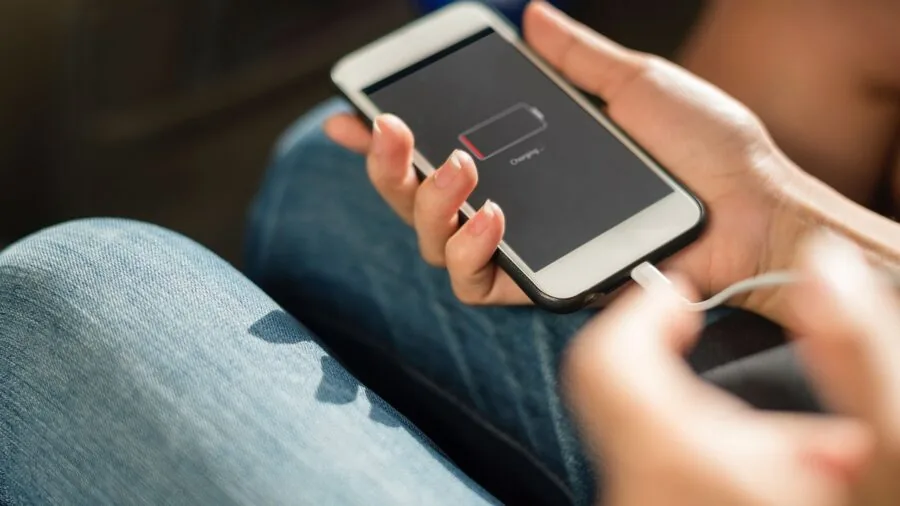
Connector type determines both whether a battery physically fits your drone and how much resistance is introduced into the power circuit.
DJI intelligent flight batteries use proprietary multi-pin connectors that communicate with the aircraft’s battery management system, so genuine or officially licensed replacements are required for full BMS functionality.
Using a third-party pack with a non-communicating connector may disable features like remaining flight time estimates, low-battery warnings, and auto-landing triggers.
FPV and micro quad batteries use standardized connectors. The BT2.0 connector found on BETAFPV’s Lava II packs is the current benchmark for 1S micro applications, offering lower resistance than the older PH2.0 standard and handling higher burst currents cleanly.
For larger FPV builds, XT60 and XT30 are the community standards.
Always verify that the connector on any replacement battery matches your aircraft’s power board, as adapters add weight and resistance that erode the performance gains you are trying to achieve.
OEM vs. Third-Party Replacements

Genuine OEM batteries from brands like DJI come with verified cell quality, integrated BMS communication, and manufacturer support. The price premium is real, but so is the reliability.
Third-party replacements from established drone accessory brands, such as Dalkat Dalee or YATEOO for DJI Mini 2 and Mini 4K compatibility, occupy a middle ground: they use verified-capacity cells and report reasonable flight times in buyer feedback, but they typically lack the full BMS communication that enables in-app health monitoring.
Budget multi-packs from generic brands occupy the lowest tier and carry the most risk. Inconsistent cell quality, absent over-discharge protection, and inflated capacity claims are recurring themes in verified buyer feedback for this category.
If budget is the primary concern, look for third-party options with documented discharge curves, clearly stated cell grades, and return windows that give you time to assess real flight performance.
DRONEMANHUB’s two-pack for the DJI Mini 4 Pro, for example, uses genuine DJI parts according to its product listing, which places it in a higher-confidence bracket than generic alternatives at a similar price tier.
Storage, Charging, and Longevity
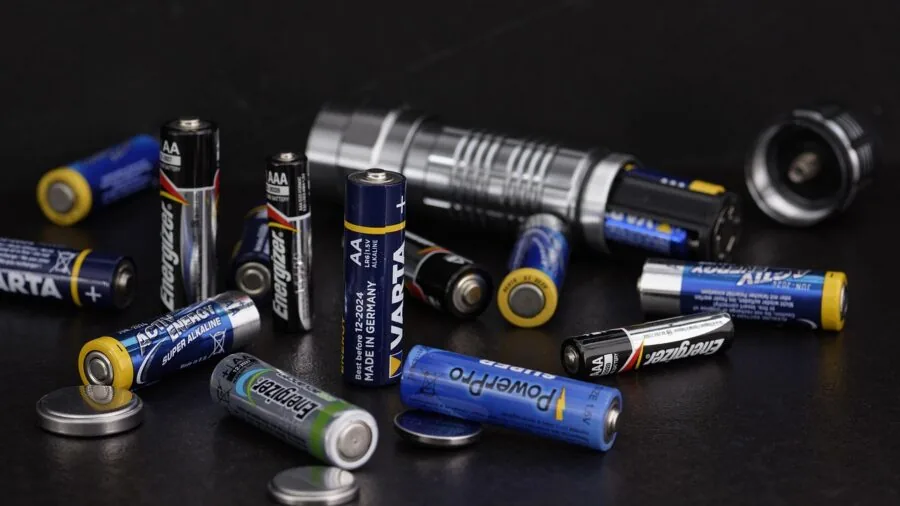
How you store and charge your drone batteries has as large an impact on their lifespan as the chemistry itself. LiPo and LiHV packs should never be stored fully charged or fully depleted for extended periods.
The optimal storage voltage for a LiPo cell is approximately 3.80V to 3.85V per cell, and many intelligent flight batteries, including those in the DJI ecosystem, have a built-in storage discharge mode that automatically brings cells to this voltage if the pack sits unused for several days.
Charge rate also affects longevity. Charging at 1C (one times the capacity) is the standard safe rate for most consumer drone batteries.
Some packs, like the YATEOO bundle that includes a bi-directional fast charger, support higher charge rates for convenience, but regularly charging at maximum speed accelerates cell wear.
For pilots who own multiple packs and use a charging hub, alternating between slow overnight charges and fast field charges is a reasonable compromise between convenience and long-term cell health.
Why You Should Trust Us
ProductFind is an independent review platform. We do not sell products, accept manufacturer samples in exchange for favorable coverage, or allow affiliate relationships to influence our rankings.
Every product in this roundup was assessed using a consistent research methodology that draws on published manufacturer specifications, expert review consensus from across the drone and RC community, and verified buyer feedback from confirmed purchasers.
We do not conduct our own product trials; our evaluations are grounded in research, published data, expert review consensus, and verified buyer feedback.
Each product receives a PF Score on a 0 to 10 scale, reflecting a weighted assessment of performance, reliability, value, and how well the product delivers on its stated claims relative to alternatives in the same category.
The DJI Mini 3 Series Intelligent Flight Battery earns the highest PF Score in this roundup at 9.1 out of 10 because the convergence of manufacturer data, expert consensus, and buyer experience consistently supports its flight-time claims and BMS reliability.
ProductFind may earn a commission when you purchase through links on this page. That relationship does not affect our rankings, scores, or editorial recommendations. Our picks are chosen on the basis of research quality and product merit, not commission rates.
Final Thoughts
Across the full range of drone batteries in this roundup, a clear picture emerges: genuine intelligent flight batteries designed for your specific aircraft consistently outperform generic alternatives on the metrics that matter most, while specialized LiHV packs deliver exceptional value within their intended micro-drone niche.
Here are the standout picks from our research, each matched to a specific need.
- Best Overall: DJI Mini 3 Series Intelligent Flight Battery, the top-scoring pack in this roundup, earns its place through exceptional flight-time extension, full BMS communication, and broad compatibility across the Mini 4 Pro, Mini 3 Pro, and Mini 3 platforms.
- Best for FPV Micro Builds: BETAFPV Lava II 1S 320mAh LiHV Battery delivers a 95C discharge rating and BT2.0 connectivity that the FPV micro community has adopted as a reliable standard for 1S Tiny Whoop builds.
- Best for Mid-Range Consumer Drones: DJI Mavic Mini Intelligent Flight Battery remains a dependable genuine spare for Mavic Mini pilots who want the security of OEM cell quality and BMS integration at an accessible price point.
- Best Third-Party Value for DJI Mini 2 Series: Dalkat Dalee 2-Pack Intelligent Flight Battery for DJI Mini 2 and SE offers verified flight times up to 31 minutes per charge and a two-pack configuration that meaningfully extends a session without the OEM price.
- Best for Extended Sessions with Holy Stone: Holy Stone HS600 Drone Battery provides a 32-minute flight window in a rechargeable pack purpose-built for the HS600 platform, making it the logical first spare for Holy Stone owners.
Whatever category you fly in, the single most effective upgrade you can make to your kit is owning at least two batteries for every aircraft.
One charges while the other flies, and you effectively double your time in the air without changing a single other component.
Frequently Asked Questions
How Many Charge Cycles Can a Drone Battery Handle Before Performance Drops?
Most quality LiPo drone batteries are rated for 200 to 400 charge cycles before capacity noticeably degrades. DJI intelligent flight batteries display a cycle count in the companion app, making it easy to track when a pack is approaching end of life.
Generic batteries often lack this reporting, so pilots have to track cycles manually or watch for shortened flight times as a proxy.
Degradation accelerates when packs are stored fully charged, over-discharged below safe voltage thresholds, or charged at consistently high rates. Following manufacturer storage and charging guidelines can meaningfully extend usable cycle life beyond the rated minimum.
Are Third-Party Drone Batteries Safe to Use?
Quality third-party batteries from reputable drone accessory brands with verifiable buyer feedback are generally safe when used within their rated parameters. The risk profile rises sharply with anonymous generic packs that lack over-discharge protection, cell-balance monitoring, or transparent capacity verification.
Brands like Dalkat Dalee, YATEOO, and BETAFPV have established track records in verified buyer communities that distinguish them from no-name alternatives.
For any LiPo or LiHV pack, never charge unattended, never charge a swollen or damaged cell, and always use a charger designed for the specific chemistry.
A well-organized workspace matters less than a fireproof LiPo charging bag if you are storing or charging multiple packs at once.
What Does the C-Rating on a Drone Battery Actually Mean?
The C-rating is a multiplier that tells you the maximum safe continuous discharge current relative to the pack’s capacity. A 1000 mAh battery with a 50C rating can deliver up to 50 amps continuously (50 multiplied by 1 amp-hour).
Higher C-ratings matter most for high-throttle FPV flying, where motors demand large current bursts. For camera drones that cruise at moderate throttle, a lower C-rating is sufficient and does not indicate an inferior product.
Can I Use a Higher-Capacity Battery Than the Stock Pack in My Drone?
In some cases, yes, but with important caveats. DJI offers Plus variants of its intelligent flight batteries (such as the extended pack for the Mini 3) that are officially supported and increase flight time significantly.
Installing an aftermarket pack with a much higher mAh rating than stock can shift the aircraft’s center of gravity, exceed the motor load assumptions in the flight controller firmware, or simply not fit the battery bay physically.
For legacy platforms like the DJI Phantom 4 series, the BYRUYI 5870 mAh pack targets users who want extended range beyond the stock configuration, but buyers should verify weight compliance and confirm the aircraft’s firmware will accept a non-OEM pack without triggering warnings.
Always check the drone manufacturer’s compatibility notes before switching to a higher-capacity option.
How Should I Store Drone Batteries Between Flying Sessions?
Store LiPo and LiHV packs at their storage voltage, approximately 3.80V to 3.85V per cell, in a cool, dry location away from direct sunlight and flammable materials.
Many DJI intelligent flight batteries handle this automatically by discharging to storage voltage after a set idle period, but manual discharge to storage voltage is best practice for packs that lack this feature.
A dedicated LiPo-safe storage bag or metal container adds a meaningful layer of protection for larger collections.
Avoid leaving packs in a hot car or in cold outdoor conditions for extended periods. Extreme temperatures accelerate chemical degradation and can cause cells to expand, which is an early warning sign that a pack should be retired.
Good battery hygiene is one of the few areas in drone ownership where a small habit has a large impact on the total cost of flying over time.
About the author
Myrtle is a reviewer and writer for ProductFind who specializes in Drones & RC. Myrtle evaluates products through independent research: specifications, expert review consensus, and verified buyer feedback, and rates each one on the PF Score. Myrtle focuses on helping readers pick the right drones & rc for their needs and budget.