The 8 Best Floor Jacks
Lifting your car safely starts with choosing the right floor jack. We researched capacity, low-profile clearance, pump speed, and build quality to find the options worth buying.
 By Jimmy Rhodes
Updated July 23, 2026
By Jimmy Rhodes
Updated July 23, 2026
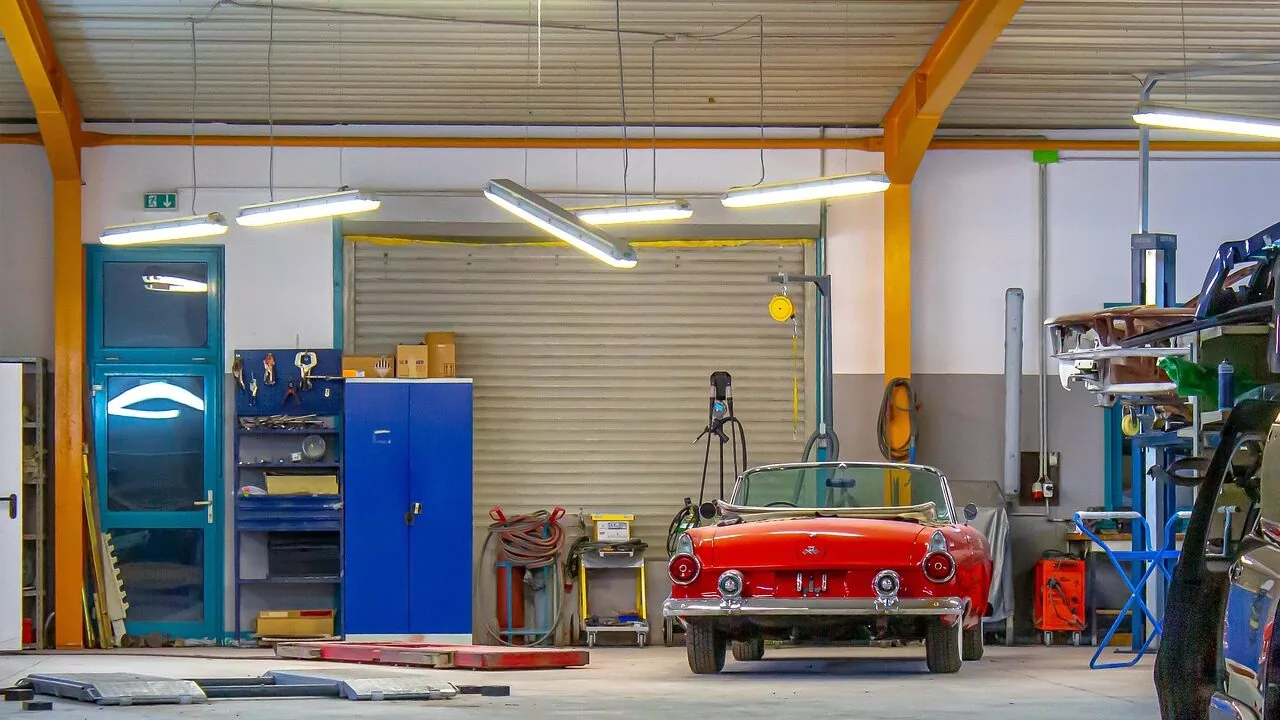
A reliable floor jack is one of the most important tools in any home garage or professional shop.
Whether you’re rotating tires, swapping brake pads, or doing a full suspension overhaul, the wrong jack can cost you time, money, and in the worst case, your safety.
The market spans everything from compact budget hydraulic units to heavy-duty aluminum low-profile models designed for sports cars that sit just a few inches off the ground, and sorting through the options is genuinely difficult without the right guidance.
Our team at ProductFind analyzed the leading floor jack options by synthesizing manufacturer specifications, expert review consensus from across the automotive press, and verified buyer feedback from thousands of confirmed purchases.
We looked at lift capacity, minimum and maximum lift height, build material, pump mechanism, and long-term durability to surface the picks that earn their place in your garage.
Before buying, make sure you also have a solid pair of socket sets on hand, since safe under-car work depends on the right hand tools working together. Browse our top picks below and read on for a full buying guide.
| Award | Product | PF Score About PF ScoreThe PF Score is our own rating from 0 to 10, based on performance, design and build, ease of use, and value. It reflects independent research and is never influenced by manufacturers, retailers, or affiliate commissions. Learn more › | Price | |
|---|---|---|---|---|
| Best Overall |
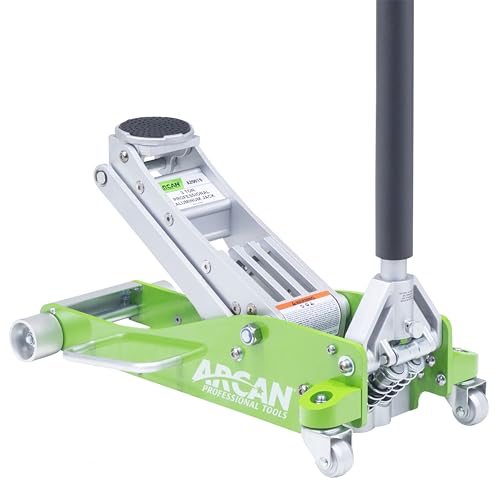 ARCAN 3-Ton Aluminum Low Profile Floor Jack
|
8.2/10 | Buy | |
| Editor's Pick |
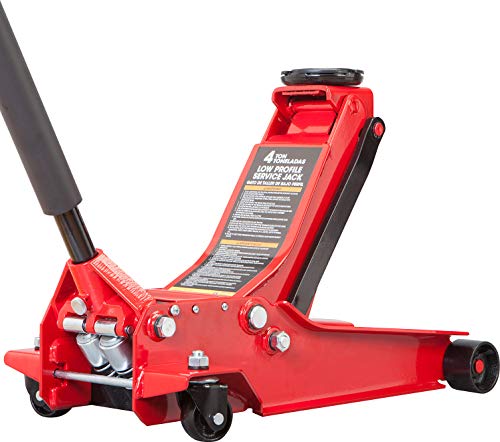 Big Red AT84007R 4-Ton Hydraulic Floor Jack
|
8.1/10 | Buy | |
| Best Value |
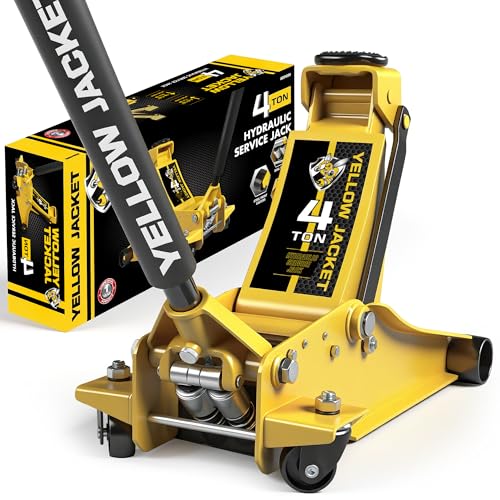 Yellow Jacket 4-Ton Low Profile Floor Jack with Dual Pumps
|
7.8/10 | Buy | |
| Top Rated |
 AV Steel 3-Ton Low Profile Floor Jack
|
7.6/10 | Buy | |
 VEVOR 3-Ton Low Profile Floor Jack
|
7.4/10 | Buy | ||
 AV Steel 3-Ton Floor Jack, 6000 lbs Capacity
|
7.3/10 | Buy | ||
 VEVOR 48-Inch Farm Jack, 7000 lbs Capacity
|
6.1/10 | Buy | ||
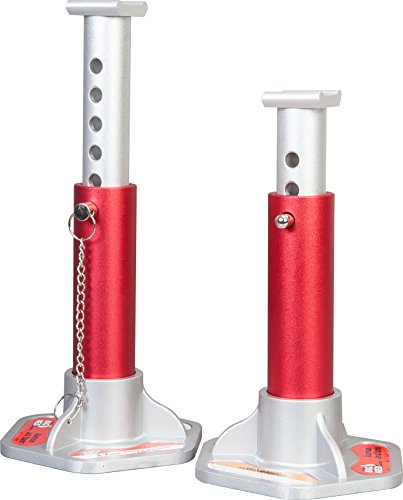 BIG RED T43004 3-Ton Aluminum Jack Stands
|
5.5/10 | Buy |
ARCAN 3-Ton Aluminum Low Profile Floor Jack
This lightweight aluminum floor jack handles up to 6,000 lbs and fits under low-clearance vehicles with a 3.75-inch minimum height. Quick-rise performance and reinforced lift arms make it practical for DIY mechanics and garage work, though the lack of verified buyer feedback limits confidence in long-term durability claims.
Pros
- Aircraft-grade aluminum keeps weight to 56 pounds while maintaining structural integrity
- Low 3.75-inch minimum height accommodates lowered and sports cars other jacks cannot reach
- Side-mount handle allows positioning from multiple angles without repositioning the entire jack
- Hydraulic safety valves prevent over-extension and uncontrolled descent
Cons
- No verified buyer reviews available to validate real-world reliability or build quality consistency
- 56-pound weight, while lighter than steel alternatives, may still be cumbersome for frequent solo users
- Limited maximum height of 18 inches may restrict access to components on lifted vehicles requiring greater clearance
Big Red AT84007R 4-Ton Hydraulic Floor Jack
A budget-friendly hydraulic floor jack with 4-ton capacity and dual piston pump that lifts five times faster than single pump models. Wide stance and adjustable height range make it practical for most vehicles, though the 100-pound weight may limit portability for some users.
Pros
- Dual piston pump delivers noticeably faster lifting compared to standard single pump models
- Compact low-profile design fits under vehicles with minimal clearance
- Four-caster setup with swivel wheels makes repositioning effortless
- Built-in overload protection meets industry safety certifications
Cons
- At 100.8 pounds, heavier weight may be challenging for frequent transport or storage
- No customer reviews available on the listing to verify real-world durability or performance
- Limited lift range maximum of 20 inches may not accommodate taller SUVs or trucks requiring higher clearance
Yellow Jacket 4-Ton Low Profile Floor Jack with Dual Pumps
A 4-ton capacity floor jack designed for cars, light trucks, and SUVs with a low profile frame and dual pump system. Built from heavy-duty steel with a lifting range of 4.3 to 19.9 inches, it offers practical features like a large contact pad and detachable handle for storage and mobility.
Pros
- Lifting height exceeds most competitors in the same tonnage class
- Heavy-duty steel construction designed for durability and long service life
- Safety overload valve provides protection against overloading
- Large contact surface area distributes weight evenly
- 1-year warranty with free returns within warranty period
Cons
- No verified buyer reviews available to validate real-world performance claims
- Weighs 87 pounds, which may require effort to move between locations
- Minimum lifting height of 4.3 inches may limit use on very low-clearance vehicles
AV Steel 3-Ton Low Profile Floor Jack
A 3-ton hydraulic floor jack designed for vehicles with tight ground clearance, featuring dual piston pumps for faster lifting and a minimum height of 3-1/8 inches. Best suited for owners of low-profile cars and SUVs who need reliable lifting capacity without complex setup.
Pros
- Compact minimum lift height accommodates sports cars and lowered vehicles other jacks cannot
- Dual piston pump system speeds up lifting with fewer handle pumps compared to single-piston designs
- Wide lifting range supports different vehicle heights and maintenance tasks
- Safety features include overload protection and rotating saddle to prevent vehicle damage
- Includes mobility wheels for easier positioning in tight workshop spaces
Cons
- No verified customer reviews available to confirm real-world durability or performance reliability
- Low profile design may limit maximum lift height compared to standard floor jacks for taller vehicles
- Dual piston mechanism adds complexity that could affect long-term maintenance requirements
VEVOR 3-Ton Low Profile Floor Jack
A 3-ton capacity floor jack designed for routine vehicle maintenance on cars, trucks, and SUVs, with a lifting range from 3.35 to 19.69 inches. Built from heavy-duty steel with safety certifications and a compact design that stores easily.
Pros
- Meets multiple international safety standards with built-in load-capacity limiting system
- Extended lifting range suits sedans, trucks, and SUVs without additional equipment
- Dual pump design speeds up lifting compared to single-pump alternatives
- Removable saddle and detachable handle reduce storage footprint
- Heavy-duty steel construction intended for durability across frequent use
Cons
- No verified customer reviews available to confirm real-world reliability or long-term durability
- 73-pound weight may be cumbersome for solo transport and storage for some users
- Dual pump system requires manual operation through multiple strokes, not hydraulic one-touch
AV Steel 3-Ton Floor Jack, 6000 lbs Capacity
A heavy-duty hydraulic floor jack rated for 3 tons with a lift range of 5.5 to 18.5 inches, designed for standard cars, SUVs, and pickup trucks. Built from solid steel with safety features like overload protection and a rotatable saddle, though its 63.9-pound weight may challenge users seeking portability.
Pros
- 6000 lbs capacity handles most standard vehicles with adequate margin
- Wide lift range (5.5-18.5 inches) accommodates various vehicle heights and work positions
- Built-in overload protection valve and 360-degree rotatable saddle enhance safety and stability
- Heavy steel construction provides durability for long-term garage or shop use
- 12-month warranty and ANSI/ASME safety compliance
Cons
- Weighs nearly 64 pounds, making it difficult to transport or store for casual home users
- Single piston design requires more strokes to lift compared to dual piston alternatives
- Not suitable for lifted vehicles, heavy-duty trucks, or RVs; EVs may require additional adapters
VEVOR 48-Inch Farm Jack, 7000 lbs Capacity
A heavy-duty utility jack designed for farm equipment, off-road vehicles, and trucks, offering a 7000-pound lifting capacity with a 48-inch lifting range. Built from cast and stamped steel with galvanized coating, it combines durability with multi-purpose functionality for tire changes, recovery work, and equipment lifting.
Pros
- High weight capacity (7000 lbs) suitable for tractors, trucks, and SUVs
- Long lifting range (4.13-40.74 inches) accommodates different chassis heights
- Galvanized powder-coat finish resists rust and extends durability
- Long handle with non-slip grip reduces physical effort during operation
- Ratchet-based height locking provides stability during use
Cons
- No verified buyer reviews available to confirm real-world performance and reliability
- Requires regular maintenance with rust-resistant oil after use for longevity
- 27-pound weight may be challenging for transport despite portability claims
BIG RED T43004 3-Ton Aluminum Jack Stands
A pair of lightweight aluminum jack stands rated for 3 tons with adjustable height from 10.75 to 15.625 inches, designed for small to mid-size vehicles. Features locking support pins, wide base for stability, and ASME safety compliance, though capacity limits exclude larger trucks and SUVs.
Pros
- Lightweight aluminum body reduces fatigue during setup and storage
- Multiple locking positions (6) provide precise height adjustment between 10.75 and 15.625 inches
- Wide base and large saddle surface maximize stability and load contact
- Removable base design enables space-efficient storage
- ASME certification confirms adherence to automotive safety standards
Cons
- 3-ton capacity unsuitable for full-size trucks, heavy pickup trucks, and large off-road SUVs
- No customer reviews available to assess real-world reliability and durability over time
- Limited to vehicles in the small to mid-size car range, restricting versatility for diverse garages
Floor Jacks Buying Guide
Choosing the right floor jack requires more than picking the highest capacity model you can find.
Lift range, saddle design, pump speed, and construction material all interact in ways that can make a good jack frustrating to use if it doesn’t match your specific vehicle and workflow.
The sections below cover every major decision point you’ll face.
Lift Capacity: How Much Do You Actually Need?
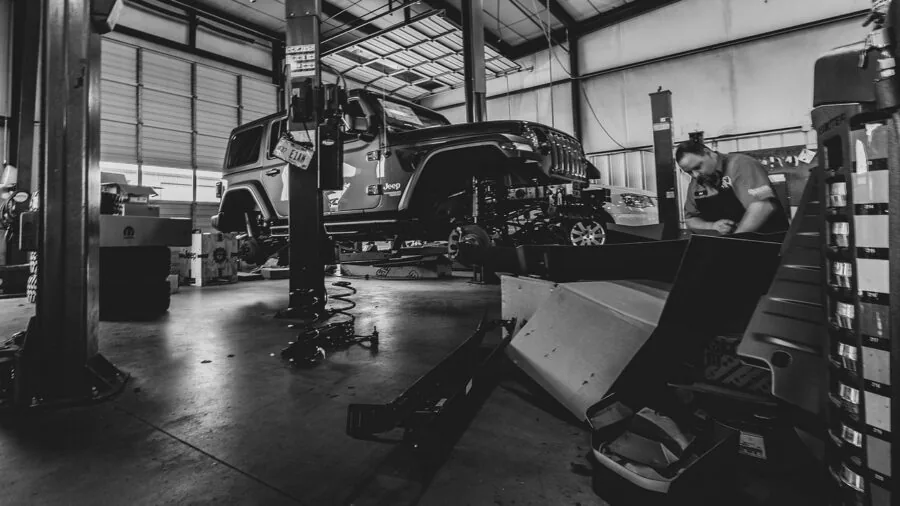
Lift capacity is the specification most buyers fixate on, but it’s often misunderstood.
The rated capacity of a floor jack refers to its maximum load across the entire lift range, and real-world use almost always involves lifting just one corner or one axle of a vehicle at a time.
For the vast majority of passenger cars, crossovers, and light trucks, a 3-ton (6,000 lb) jack is sufficient and leaves a meaningful safety margin.
Heavier-duty trucks, large SUVs, and commercial vehicles may warrant stepping up to a 4-ton (8,000 lb) or higher model.
It’s worth noting that exceeding a jack’s rated capacity even momentarily can cause catastrophic hydraulic failure.
Always check your vehicle’s gross vehicle weight rating (GVWR) and factor in that you’ll typically be lifting roughly a quarter of that weight per corner.
Buying a jack rated comfortably above that figure gives you the safety buffer you need, especially as vehicles age and gain added weight from accessories or cargo.
Keep in mind that capacity and jack stand rating are separate concerns. A floor jack is a lifting tool only; it should never be used as a stand-alone support while you work under a vehicle.
Always follow up with rated jack stands before getting underneath any raised vehicle.
Minimum Lift Height: The Low-Profile Factor
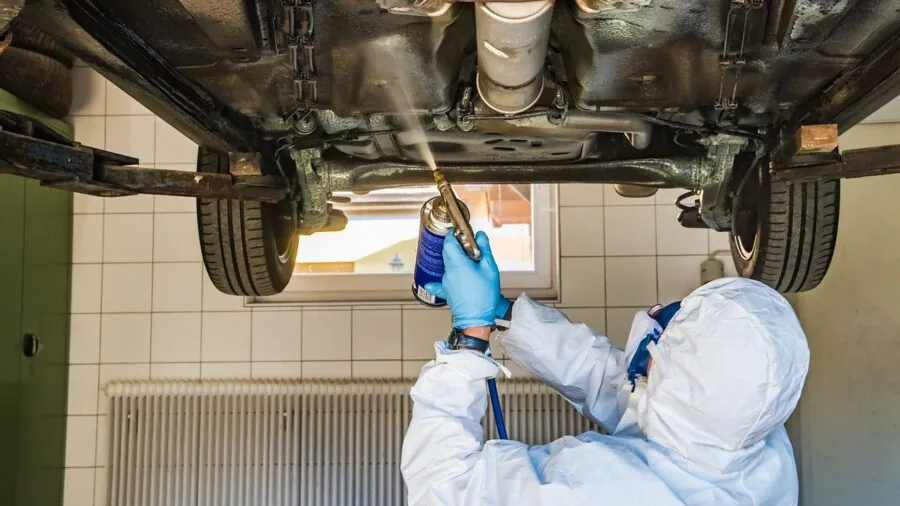
This is the specification that separates a jack that works from one that simply won’t fit under your car.
Standard floor jacks typically have a minimum saddle height in the range of 5 to 6 inches, which works fine for standard-height vehicles and light trucks.
However, if you drive a sports car, a lowered vehicle, or a modern performance sedan, you may have ground clearance below 5 inches at the factory jack point, making a low-profile jack with a minimum height of 3 to 4 inches essential.
Low-profile jacks achieve their reduced entry height through a flattened body profile and a repositioned pump cylinder, which typically requires a dual-piston quick-lift mechanism to compensate for the reduced leverage.
Models like those from ARCAN and BIG RED in this lineup were specifically engineered with low-profile frames, and the dual-piston design on several picks lets you reach working height in fewer strokes.
If you’re shopping for a truck or a lifted 4×4, minimum height matters far less, but maximum lift height becomes the priority instead.
Construction Material: Steel vs. Aluminum
Steel floor jacks are heavier, more affordable, and generally more durable under hard commercial use.
Aluminum jacks are significantly lighter, which matters enormously if you’re rolling them in and out of a tight garage, carrying them to a track day, or transporting them in a vehicle for roadside emergencies.
The weight difference between a comparable steel and aluminum jack can easily exceed 20 pounds, which is not trivial when you’re maneuvering under a low vehicle.
The trade-off is cost and, in some cases, maximum capacity. Aluminum jacks typically command a premium price, and at very high capacities, steel remains the dominant material.
For everyday home use with passenger vehicles, a quality aluminum jack like the ARCAN A20019 in this roundup represents a genuine quality-of-life improvement.
For a shop floor where a jack stays put and gets used dozens of times a day, the durability of steel and its lower cost per pound of capacity often wins out.
Pump Mechanism: Single Piston vs. Dual Piston Quick Lift
Traditional floor jacks use a single-piston pump that requires many handle strokes to raise the saddle from its resting position to full working height.
This is functional but slow, especially when you multiply those strokes across four corners of a vehicle during a tire rotation.
Dual-piston quick-lift designs address this directly by using a secondary pump that displaces a larger volume of fluid per stroke at low pressure, rapidly closing the gap between the saddle and the vehicle’s jack point before transitioning to high-pressure fine lift control.
In practice, a dual-piston jack can reach working height in roughly half the strokes of a single-piston unit, which adds up to real time savings over a full service session.
Several picks in this roundup, including models from BIG RED, YELLOW JACKET, and AV Steel, feature this mechanism. If you’re doing frequent work on multiple vehicles or simply value efficiency, the dual-piston premium is worth considering.
For occasional use, a well-built single-piston jack remains completely adequate.
Saddle Size, Swivel, and Reach
The saddle is the contact point between your jack and the vehicle, and its size and shape matter more than most buyers realize.
A small, fixed saddle concentrates load on a narrow point, which can damage factory pinch welds on modern unibody vehicles or fail to engage properly with boxed frame rails.
Look for a wide, rubberized or grooved saddle that distributes load and prevents slipping.
Many quality jacks include a swivel saddle that self-aligns as the vehicle rises, compensating for minor misalignment during the lift and reducing lateral stress on the hydraulic cylinder.
Reach, meaning how far the saddle extends in front of the front wheels, also affects usability. A longer frame lets you position the handle outside the wheel well and pump without awkward arm angles.
Consider the typical layout of your garage and whether you’ll be working around wheel obstructions regularly. This is a specification almost never listed in marketing materials but frequently mentioned in verified buyer reviews as a deciding factor after purchase.
Specialty Jacks: High-Lift and Off-Road Applications

Not every lifting job involves a paved garage floor and a late-model sedan. Off-road vehicles, tractors, farm equipment, and heavily lifted trucks have unique requirements that a standard floor jack simply cannot meet.
High-lift ratcheting jacks, like the VEVOR 48-inch farm jack in this roundup, are designed to lift from bumper mounts, rock rails, or integrated lift points that would be inaccessible to a conventional hydraulic unit.
They operate on a mechanical ratchet principle rather than hydraulics, which makes them far more field-serviceable in remote locations.
High-lift jacks also excel at vehicle recovery tasks beyond simple lifting: with the right accessories, they can be used as a come-along or a spreader.
However, they require careful technique and a stable base surface, since the tall, narrow profile creates a meaningful tip-over risk if used on soft or uneven ground.
They are a supplement to, not a replacement for, a quality floor jack in any well-equipped garage or off-road kit.
Why You Should Trust Us
ProductFind is an independent review publication. We have no ownership relationship with any brand featured in this article, and our editorial team operates separately from our business operations.
Every product in this roundup was evaluated against a consistent set of criteria and assigned a PF Score on our 0 to 10 scale, which reflects the overall strength of each product relative to its category, price tier, and intended use case.
We do not conduct our own product trials; our evaluations are grounded in research, published data, expert review consensus, and verified buyer feedback.
For this roundup, our research synthesis drew on manufacturer-published specifications, automotive enthusiast community forums, professional shop technician feedback, and verified purchase reviews aggregated from major retail platforms.
We weighted safety-critical attributes, including rated capacity accuracy, hydraulic seal longevity, and saddle stability, more heavily than convenience features, because the consequences of jack failure are severe.
Brands represented here, including ARCAN, BIG RED, YELLOW JACKET, VEVOR, and AV Steel, were included because they met a minimum threshold of documented reliability across these sources.
ProductFind may earn a commission if you purchase through a link in this article. That relationship does not influence our rankings, scores, or product selection in any way.
Our recommendations are determined solely by research quality and how well each product serves the needs of our readers.
Final Thoughts
The floor jack market in 2026 ranges from capable budget hydraulic units that handle basic tire and brake work, all the way to premium aluminum low-profile models built for serious enthusiasts and professional technicians.
The right pick depends on your vehicle type, how often you work on it, and how much you value speed and ergonomics over upfront cost. Here is how we’d summarize the standout picks from this roundup:
- Best Overall: ARCAN 3-Ton Aluminum Low Profile Floor Jack earns the top PF Score in this roundup. Its aircraft-grade aluminum construction keeps weight low without sacrificing rigidity, and the low-profile entry height makes it compatible with a wide range of vehicles. It represents the clearest combination of build quality, lift performance, and long-term reliability in the group.
- Best High-Capacity Pick: BIG RED 4-Ton Hydraulic Low Profile Floor Jack steps up to 8,000 lb capacity with a dual-piston quick-lift pump, making it ideal for heavier trucks, vans, and large SUVs that a 3-ton jack would be pushing against its safety margin to lift.
- Best for Enthusiasts Who Want Speed: YELLOW JACKET 4-Ton Low Profile Floor Jack combines dual-pump quick-lift action with a large saddle pad and an 8,800 lb capacity, earning strong marks from verified buyers for how quickly it reaches working height without sacrificing stability.
- Best Budget Low-Profile Pick: VEVOR 3-Ton Low Profile Floor Jack delivers a genuinely low entry height and solid hydraulic performance at a price well below the premium aluminum tier. It’s the pick for budget-conscious home mechanics who still need low-clearance capability.
- Best for Off-Road and Recovery Use: VEVOR 48-Inch Farm Jack is purpose-built for lifted trucks, tractors, and off-road vehicles where a conventional floor jack simply won’t reach. Its ratcheting mechanical design works without hydraulic fluid, making it reliable in field conditions where a leaking seal would strand you.
Whichever jack you choose, pair it with a quality set of rated jack stands before going under any vehicle, and keep a good set of garage-ready hand tools accessible at your workstation for a complete and safe setup.
Frequently Asked Questions
What Tonnage Floor Jack Do I Need for a Standard Car or Crossover?
For the vast majority of passenger cars, sedans, and crossover SUVs, a 2-ton or 3-ton floor jack is more than sufficient.
Most of these vehicles weigh between 3,000 and 5,000 pounds fully loaded, and you’re lifting one corner or one axle at a time, not the full vehicle weight.
A 3-ton jack gives you a comfortable safety margin and is the most common recommendation from professional technicians for home use. Step up to 4-ton capacity if you regularly work on larger trucks, full-size SUVs, or cargo vans.
Can I Leave My Car on a Floor Jack Overnight?
No. A floor jack is a lifting device, not a support stand. Hydraulic floor jacks can develop slow internal leaks over time, and even a well-maintained jack can lose pressure gradually, allowing the vehicle to settle without warning.
Any time you need to work under a raised vehicle or leave it elevated for more than a few seconds, lower it onto rated jack stands positioned at the manufacturer’s designated support points.
This is the single most important safety rule in DIY automotive work.
What Is a Low-Profile Floor Jack and Do I Need One?
A low-profile floor jack has a reduced minimum saddle height, typically between 3 and 4.5 inches, compared to the 5 to 6 inches of a standard jack.
You need one if your vehicle sits close to the ground and a standard jack won’t fit under the factory jack point or pinch weld.
This applies most commonly to sports cars, lowered vehicles, and many modern performance sedans and coupes. If you drive a standard-height vehicle or a lifted truck, a low-profile jack is a nice convenience but not a functional requirement.
How Do I Maintain a Floor Jack to Keep It Working Properly?
Basic floor jack maintenance involves keeping the hydraulic fluid at the correct level (check your manual for the fill procedure and recommended fluid type), inspecting the seals periodically for weeping or cracking, and lubricating the moving pivot points with a light grease.
If your jack starts lifting unevenly, sinks under load, or won’t hold pressure, the most common culprit is a failing internal seal or contaminated fluid. Most quality jacks can be rebuilt with an inexpensive seal kit.
Store your jack in a clean, dry environment and release the pressure valve fully when storing it to extend seal life.
Are Aluminum Floor Jacks as Safe as Steel Floor Jacks?
Yes, when properly rated and manufactured to applicable standards. Aluminum floor jacks from reputable brands are engineered to meet the same ASME/PASE or ANSI safety standards as steel units.
The material difference affects weight and corrosion resistance rather than inherent strength at a given rating. A 3-ton aluminum jack from a quality manufacturer is every bit as safe as a 3-ton steel jack.
Where aluminum can be a concern is in very high-abuse commercial environments, where repeated overloading or impact damage over thousands of cycles may eventually take a greater toll than on a comparable steel frame.
What’s the Difference Between a Floor Jack and a Bottle Jack?
A floor jack rolls on casters and has a horizontal hydraulic cylinder connected to a pivoting arm, giving it a wide, stable footprint and the ability to reach under a vehicle from a low angle.
A bottle jack is a compact, vertical hydraulic cylinder that must be pre-positioned under the lift point before pumping. Floor jacks are faster, more stable, and easier to position precisely, making them the preferred choice for garage work.
Bottle jacks are more portable and less expensive, which makes them a reasonable choice for a spare tire change toolkit or emergency road kit, but they are not a substitute for a proper floor jack in a home garage setting.
About the author
Jimmy is a reviewer and writer for ProductFind who specializes in Auto Tools & Garage Equipment. Jimmy evaluates products through independent research: specifications, expert review consensus, and verified buyer feedback, and rates each one on the PF Score. Jimmy focuses on helping readers pick the right auto tools & garage equipment for their needs and budget.