The 12 Best Glass Baby Bottles
Glass baby bottles resist odors, handle sterilization without degrading, and avoid the chemical concerns of plastic. Here are the top-rated options for newborns and beyond.
 By Daryl Arnold
Updated July 23, 2026
By Daryl Arnold
Updated July 23, 2026

Glass baby bottles have earned a loyal following among parents who want a feeding option free from plastics, synthetic coatings, and the chemical concerns that come with them.
Borosilicate glass resists odors, stains, and flavor transfer, making it easier to be confident about what goes into your newborn’s mouth.
It also holds up to high-temperature sterilization without degrading, which matters a great deal during those early months when hygiene is everything. The category has grown considerably, with brands like Dr.
Brown’s, Tommee Tippee, NUK, Pigeon, MAM, Lansinoh, and Evenflo all competing to offer the most practical combination of anti-colic venting, durable construction, and breast-like nipple design.
Choosing between them is harder than it looks. Vent systems vary widely in how well they actually reduce gas and fussiness. Nipple shapes differ enough to affect whether a breastfed baby will accept the bottle at all.
And not every bottle is equally easy to clean or reassemble at 3 a.m.
To help narrow the field, ProductFind researched each option through a synthesis of published specifications, expert review consensus across parenting and baby-product publications, and verified buyer feedback from parents who have used these bottles daily.
The result is a ranked list of the glass baby bottles worth your attention right now, organized from highest to lowest PF Score.
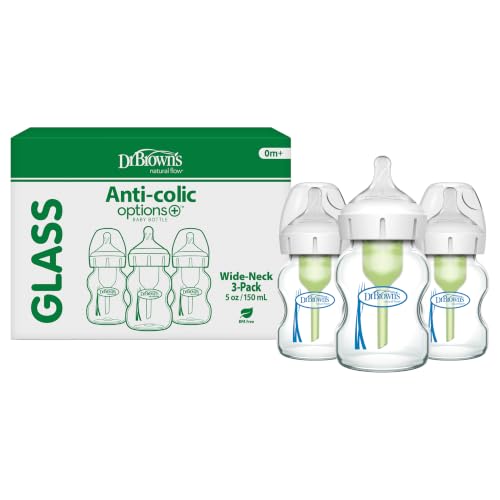
Dr. Brown's Natural Flow 5 oz Glass Baby Bottle, 3-Pack
Glass anti-colic bottles with an internal vent system designed to reduce colic, spit-up, and gas while supporting a natural latch. Best for parents seeking a durable, sustainable option that adapts as their baby grows.
Pros
- Anti-colic design with clinically proven internal vent system to reduce digestive discomfort
- Glass material preserves nutrients and is fully recyclable for sustainability-focused parents
- Removable vent system allows bottle to grow with baby without switching products
- Wide-neck design and compatibility with multiple sterilization methods offer flexibility
Cons
- No verified buyer reviews available to assess real-world durability or user satisfaction
- Glass construction is heavier and more fragile than plastic alternatives, increasing breakage risk
- Multiple components (internal vent system, nipple, collar) require thorough cleaning and assembly

Dr. Brown's Anti-Colic Options+ 8oz Glass Bottle 4-Pack
Glass anti-colic bottles designed to reduce colic, spit-up, and gas through a clinically proven internal vent system. The borosilicate construction resists temperature shock, while the breast-like nipple supports natural feeding transitions for parents seeking durable, nutrient-preserving alternatives to plastic.
Pros
- Anti-colic vent system is clinically proven to reduce common feeding issues
- Durable borosilicate glass resists heat and thermal shock for long-term use
- Breast-like nipple design supports natural feeding and easier bottle-to-breast transitions
- Vacuum-free feeding allows babies to control their own pace
- Nutrient-preserving design aids digestion for better sleep
Cons
- Glass construction is heavier and breakable compared to plastic alternatives, requiring careful handling
- No verified buyer reviews available to validate real-world performance claims
- Higher price point typical of glass bottles limits accessibility for budget-conscious families

Tommee Tippee Silicone Coated Glass Baby Bottles, 5oz, Pack of 2
Glass baby bottles with shatter-proof silicone coating designed for easy breast-to-bottle transitions. Built-in anti-colic valve and soft-touch finish make them practical for parents seeking durable, non-absorbent feeding options.
Pros
- Durable borosilicate glass that doesn't absorb smells or flavors, ideal for long-term use
- Easy-grip silicone coating provides safety and comfort without sacrificing durability
- Anti-colic valve supports natural feeding patterns for babies transitioning from breastfeeding
- Scratch and stain resistant surface keeps bottles looking clear over time
Cons
- No verified buyer reviews available to confirm real-world performance and durability claims
- 5oz size may be smaller than some parents prefer for older infants
- Glass construction requires more careful handling than all-plastic alternatives despite shatter-proofing

Tommee Tippee Natural Start 9oz Glass Bottles, Pack of 3
Medical-grade glass bottles designed to mimic breastfeeding with a natural latch nipple and self-sterilizing capability in three minutes. Includes travel jar lids and cup rings to transition from bottle to open cup drinking, making it a complete feeding solution for parents seeking glass alternatives to plastic.
Pros
- Durable medical-grade glass is BPA and phthalate-free with stain resistance
- Self-sterilizing in microwave within three minutes for convenient cleaning
- Natural latch silicone nipples reduce air intake and nipple confusion when switching between breast and bottle
- 100% leakproof design when properly assembled, even when inverted
- Grows with baby through three feeding stages with included travel lids and cup rings
Cons
- No verified customer reviews available to assess real-world durability and parent satisfaction
- Glass construction, while durable, is heavier and more fragile than plastic alternatives for on-the-go use
- Requires proper assembly of multiple components (screw ring, nipple, cap) to achieve leakproof seal, adding complexity to feeding routine

NUK Simply Natural 4 oz Glass Bottles, 3-Pack
Glass baby bottles designed to reduce colic with a flexible nipple that mimics breastfeeding. Durable, easy to clean, and suited for parents seeking a chemical-free feeding option.
Pros
- Advanced anti-colic design targets common infant feeding issues
- Nipple shape mimics breastfeeding for easier transition between breast and bottle
- Durable glass resists odors and stains better than plastic alternatives
- BPA-free construction meets safety standards
- Dishwasher safe for convenient cleaning
Cons
- Glass construction is heavier and more fragile than plastic bottles, increasing breakage risk
- Limited 3-pack size may not provide enough bottles for full-time bottle feeding
- No verified buyer reviews available to confirm real-world performance claims

Lansinoh Glass 5oz Baby Bottles, 4-Pack with Slow Flow Nipples
Lansinoh's borosilicate glass bottles feature a clinically proven anti-colic air ventilation system and soft, flexible nipples designed to ease breast-to-bottle transitions. The set includes four 5-ounce bottles with slow flow nipples (Size S) suited for newborns through 3 months.
Pros
- Anti-colic air ventilation system designed to limit air intake during feeding
- Soft, flexible nipples with wide slope promote natural latch for breastfed babies
- Durable borosilicate glass is easy to clean and safe for boiling
- BPA and BPS free construction
- Nipples available in multiple flow rates to support baby's development stages
Cons
- Glass material is fragile and requires careful handling compared to plastic alternatives
- No customer reviews available to verify real-world performance and durability
- Requires boiling before first use, adding preparation time

Evenflo Balance+ 6 oz Glass Baby Bottles, 6-Pack
Thermal-proof glass bottles designed for newborns and early feeders, featuring a wide neck for easy filling and cleaning. Clear construction with measurement markings lets you track intake, and the 6-pack ensures you always have a clean bottle ready.
Pros
- Durable thermal-proof glass construction handles temperature shifts safely
- Wide neck opening simplifies filling, cleaning, and formula preparation
- Transparent body with measurement markings enables accurate intake tracking
- 6-bottle set provides backup bottles and reduces daily washing demands
Cons
- No verified buyer reviews available to assess real-world performance and durability over time
- Glass construction requires careful handling to avoid breakage during cleaning or daily use
- Limited to 6 fl oz capacity, which may require frequent refills as baby grows

Pigeon Glass Nursing Bottle 5.4oz Wide Neck
Pigeon's borosilicate glass bottle combines research-backed design with soft silicone nipples to ease breast-to-bottle transitions. The wide neck makes cleaning straightforward, though the smaller 5.4oz capacity suits newborns more than growing infants.
Pros
- Glass material is durable, non-toxic, and safe for sterilization by multiple methods
- Nipple design with latch-on curve mimics breastfeeding for easier transition
- Wide neck opening reduces hassle when cleaning and preparing bottles
- Comes as a 2-pack with extra SS nipples, good value for new parents
Cons
- 5.4oz capacity is quite small for babies beyond the newborn stage, may require frequent refills
- No customer reviews available yet, limiting real-world feedback on durability and performance
- Higher price point compared to standard plastic bottles, though glass offers longevity trade-off

MAM 6oz Pure Glass Anti-Colic Bottle 3-Pack
European-made borosilicate glass bottles designed to reduce colic through an anti-colic nipple that mimics breastfeeding. The durable, temperature-resistant construction works across all MAM nipple sizes as your baby grows, making them practical for combination feeding.
Pros
- Shatter-resistant borosilicate glass won't absorb stains or odors over time
- Anti-colic nipple design allows air flow to reduce infant discomfort
- Compatible with all MAM nipple sizes, eliminating need to repurchase bottles as baby develops
- Thermal shock resistant for safe refrigeration and heating
- Exceeds American and European safety standards
Cons
- No verified customer reviews available to assess real-world durability and user satisfaction
- Glass construction is heavier than plastic alternatives, less portable for travel
- Initial investment higher than standard plastic bottles, though three-pack included
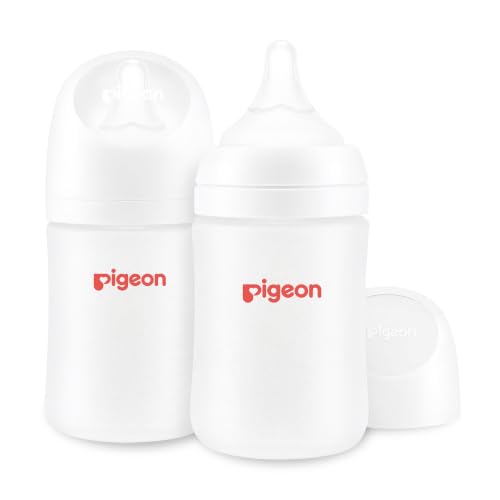
Pigeon 5 oz Glass Bottle with Silicone Coating, Pack of 2
Glass bottle with protective silicone coating designed for newborns and up, featuring a soft, flexible nipple based on natural baby feeding movements. Wide neck design makes cleaning straightforward, though the 5 oz capacity suits younger infants better than older babies.
Pros
- Silicone coating provides durability and drop protection while maintaining glass benefits
- Soft nipple with latch-on guidance curve supports natural feeding mechanics
- Wide neck opening simplifies cleaning and nipple insertion
- Comes as a 2-pack with matching nipples, good starter set value
Cons
- 5 oz capacity is relatively small, requiring frequent refills as baby grows
- No customer reviews available to verify real-world durability or comfort feedback
- Limited information on how silicone coating ages or performs long-term with daily use

Gulicola 5oz Glass Baby Bottle 2-Pack with Slow Flow Nipple
Borosilicate glass bottles designed for newborns transitioning between breast and bottle feeding, featuring anti-colic vents and soft nipples that mimic natural breastfeeding. Wide-neck design simplifies cleaning and sterilization across multiple methods.
Pros
- Borosilicate glass construction is durable, heat-resistant, and free of harmful chemicals
- Soft nipple design supports natural latch for breastfed babies switching to bottles
- Anti-colic vents address a common feeding concern for sensitive newborns
- Wide neck opening simplifies cleaning without specialized brushes
- Versatile sterilization options fit various household setups
Cons
- Only 5oz capacity may require frequent refilling for hungrier or older infants
- No verified buyer reviews available to assess real-world durability or performance consistency
- Limited to slow flow rate, offering no flexibility for babies developing faster feeding abilities

Evenflo Classic Glass 4 Oz Baby Bottles, Pack of 6
Glass baby bottles designed for easy feeding and cleaning with a simple three-piece construction. Compatible with most standard breast pumps and made from BPA-free, food-grade materials.
Pros
- Minimal parts reduce cleaning complexity and loss of small components
- Direct pumping capability saves time for nursing parents
- Glass material is durable, recyclable, and free from harmful chemicals
- Ergonomic grip design makes feeding more comfortable for both parent and baby
Cons
- Glass construction is heavier and more fragile than plastic alternatives, requiring careful handling
- No verified buyer reviews available to confirm real-world performance and durability
- 4 oz capacity limits suitability for older infants with larger appetites
Glass Baby Bottles Buying Guide
Glass baby bottles sit at the intersection of safety, practicality, and feeding science.
The specs on a box rarely tell the full story, so understanding what actually matters in daily use helps you avoid bottles that look great on paper but frustrate parents and babies alike.
The sections below cover the criteria our research consistently flagged as most important.
Anti-Colic Venting System

The most meaningful difference between glass baby bottles in this category is how each one handles air.
Without a functioning vent, a feeding baby swallows air along with milk, contributing to gas, discomfort, and the prolonged crying episodes associated with colic. The internal vent tube design used by Dr.
Brown’s is the most studied approach: it creates a vacuum-free flow path that routes air from the nipple through a separate channel, venting it to the back of the bottle rather than mixing with the liquid.
Clinical studies cited by the brand show a measurable reduction in colic-related symptoms when this system is used consistently.
Other venting approaches locate the vent in the nipple collar or at the base of the nipple itself, which keeps part counts lower and simplifies cleaning. Tommee Tippee uses a valve-in-collar approach in several of their glass lines.
NUK incorporates a one-piece anti-colic vent that sits inside the bottle without adding extra washing steps. Neither approach is inherently inferior to the internal vent tube, but the tradeoff is typically between maximum air separation (Dr.
Brown’s model) and convenience of cleaning (collar or nipple-based vents). For newborns with significant gas issues, a more robust internal vent is worth the extra cleaning effort.
For parents managing multiple daily feeds with limited time, a simpler integrated vent is a reasonable alternative.
Verified buyer reviews frequently cite vent effectiveness as the single factor most correlated with repeat purchase.
Bottles that look promising but fail to deliver consistent vacuum-free flow tend to accumulate negative feedback from parents within the first few weeks of use, making this criterion a reliable filter in our research.
Glass Type and Durability

Not all glass is created equal in the context of baby bottles. Most quality options in this category use borosilicate glass, a formulation with low thermal expansion that handles temperature changes without cracking.
It is the same type of glass used in laboratory glassware and quality glass food storage containers, prized for its resistance to thermal shock when moving from a cold refrigerator to warm water for heating.
Standard soda-lime glass costs less to manufacture but is more vulnerable to breakage under repeated heating and cooling cycles.
Shatter resistance is a real concern, especially as babies grow stronger and begin gripping and throwing bottles. Several brands in this roundup address this with a silicone sleeve or silicone outer coating.
The Pigeon Silicone Coating bottle and the Tommee Tippee Silicone Coated Glass design wrap the glass core in a protective silicone layer that cushions impact and significantly reduces the likelihood of complete shattering on a hard floor.
These designs add some grip and make the bottle warmer to the touch than bare glass, which can be a plus for baby and parent alike. The tradeoff is a higher price point and slightly more surface area to clean.
For parents who want pure glass simplicity, uncoated borosilicate options from Dr. Brown’s, NUK, and Evenflo remain the most popular. The key is handling with care during early use and inspecting for chips or cracks, particularly around the neck and base, after any significant drop.
Nipple Shape and Flow Rate
For breastfeeding parents, nipple shape is a make-or-break feature. Bottles designed to mimic the natural latch of the breast, with a wide base that requires the baby to open their mouth broadly, are less likely to interfere with breastfeeding technique.
NUK Simply Natural and Tommee Tippee Natural Start both incorporate a wide, breast-like nipple contour with multiple flow holes that aim to replicate the varied release of breast milk.
This multi-hole design requires the baby to regulate milk flow through tongue and jaw movement rather than passive suction, which research suggests may reduce nipple confusion in combination-fed infants.
Flow rate is controlled by hole size and nipple material firmness. Almost every brand in this roundup includes a Level 1 or Slow Flow nipple with newborn-oriented packs, appropriate for 0 months and up.
Parents should expect to move up to a faster flow as the baby grows, typically around 3 to 4 months, to avoid excessive sucking effort.
Most of these bottles use standard or compatible nipple sizing within the same brand line, so upgrading flow rate does not require buying a completely new bottle system.
Silicone nipples are standard across this category. They are softer, more durable, and odor-resistant compared to older latex options.
Buyer feedback consistently points to nipple longevity and resistance to tearing as important factors when evaluating long-term value, particularly for families planning to use the same bottle through multiple feed stages.
Ease of Cleaning and Assembly

Glass bottles are inherently easier to clean thoroughly than plastic ones because the non-porous surface does not absorb odors or residue. However, the complexity of the vent system significantly affects how practical cleaning is over hundreds of daily washes. Dr.
Brown’s internal vent assembly, while highly effective, requires washing a vent insert and reservoir with a small brush on top of the standard nipple and collar components.
This is a known tradeoff that parents either adapt to quickly or find persistently frustrating. A dedicated bottle brush set simplifies this considerably.
Bottles with simpler constructions, such as the Pigeon Glass Nursing Bottle or the MAM Pure Glass design, have fewer pieces and dry faster between feeds.
The MAM bottle is notable for its self-sterilizing feature shared with the Tommee Tippee Natural Start: the design allows microwave steam sterilization in the bottle itself using a small amount of water, which removes the need for a separate sterilizer unit for quick cycles.
This convenience is genuinely useful for parents traveling or with limited counter space.
All of the bottles in this roundup are top-rack dishwasher safe with the nipple components removed, though hand washing is recommended for nipples and vent inserts to preserve shape and function.
Buyers in verified purchase reviews frequently note that narrow-neck designs are harder to dry fully than wide-neck versions, a practical consideration worth factoring into daily workflow.
Bottle Size and Pack Configuration

Glass baby bottles in this roundup range from 4 oz to 9 oz in capacity. Newborns typically consume 2 to 3 oz per feed in the first few weeks, making smaller 4 to 5 oz bottles a practical starting point.
As feeds increase in volume around 2 to 3 months, moving to 8 or 9 oz bottles avoids the need to refill mid-feed.
Several brands offer starter packs at 4 to 5 oz and larger continuation packs, allowing parents to invest gradually rather than buying all sizes upfront.
Pack count affects cost per bottle meaningfully.
The Evenflo Classic Glass 6-pack offers the highest unit count at the most accessible price point in this roundup, making it a reasonable choice for families who want multiple bottles on rotation without a large upfront commitment per unit.
Premium options like the Lansinoh 4-count set and the Evenflo Balance+ 6-pack fall at the upper end of this category’s price range and are better suited to parents who have already identified that glass fits their feeding routine and want to expand a working system.
Mixing bottle sizes from the same brand is easier when nipples and collars are interchangeable across the product line, which is worth confirming before purchasing.
BPA-Free and Safety Certifications

Every bottle in this roundup is manufactured without BPA and without phthalates, the two chemical concerns most frequently cited by parents when evaluating feeding equipment. This is now a baseline expectation across the category rather than a differentiating feature.
However, the broader benefit of choosing glass over plastic remains relevant: glass does not leach any synthetic compounds under heat, and it does not degrade chemically with repeated sterilization the way some plastics can over time, even those that are technically BPA-free.
Parents researching toxin-free feeding often evaluate bottles alongside other household items. Choices about materials in baby products and everyday household storage, whether for glass food containers or feeding equipment, reflect the same underlying priorities: durability, inertness, and long-term safety.
For glass baby bottles specifically, the absence of chemical migration under heat is one of the most evidence-backed reasons to choose them over plastic alternatives.
Why You Should Trust Us
ProductFind is an independent review publication. We do not accept products from brands for review, and our editorial team has no commercial relationship with any manufacturer featured in this roundup.
Every bottle in this article was evaluated through a consistent framework that includes published technical specifications, expert review consensus drawn from parenting publications and pediatric feeding resources, and verified buyer feedback from confirmed purchasers across major retail platforms.
Each product receives a PF Score on a scale of 0 to 10.
This score reflects how well a product performs across our evaluation criteria for its category: anti-colic venting effectiveness, glass quality and durability, nipple design and flow accuracy, ease of cleaning, pack value, and safety certification.
Scores are assigned through comparative analysis of the available evidence, not through subjective preference or brand affiliation. We do not conduct our own product trials; our evaluations are grounded in research, published data, expert review consensus, and verified buyer feedback.
ProductFind may earn a commission if you purchase through links in this article. This affiliate relationship does not influence which products are included, how they are ranked, or what PF Score they receive.
Our recommendations are determined entirely by the quality of the evidence, and we update our assessments as new products enter the market and buyer feedback accumulates.
Final Thoughts
The glass baby bottle category rewards careful consideration because the right choice depends heavily on your baby’s specific needs, your feeding setup, and how much cleaning complexity you are willing to accept.
Our research points to a clear hierarchy across the bottles in this roundup. Here are the standout designations based on PF Scores and the distinct strengths each product brings:
- Best Overall: Dr. Brown’s Natural Flow Anti-Colic Options+ Wide-Neck Glass Baby Bottle (5 oz, 3 Pack) earns the top PF Score in this roundup through its clinically supported internal vent system, wide-neck design for easier filling and cleaning, and a track record of consistent performance in verified buyer feedback across a broad population of parents.
- Best Runner-Up: Dr. Brown’s Anti-Colic Options+ Narrow Glass Baby Bottle (8 oz, 4 Pack) is the narrow-neck, larger-capacity version of the same proven vent system. It earns a near-identical PF Score and is the natural choice for parents who have already committed to the Dr. Brown’s ecosystem and need a higher-volume bottle for older infants.
- Best Shatter-Resistant Design: Tommee Tippee Silicone Coated Glass Baby Bottles (5 oz, 2 Pack) pairs a glass core with a protective silicone exterior that absorbs impact without the bottle shattering on a hard floor. It earns a strong PF Score and is the right call for families who want the purity of glass with a meaningful safety net against drops.
- Best for Breastfed Babies: Tommee Tippee Natural Start Glass Baby Bottles (9 oz, 3 Pack) offers the widest breast-like nipple base and a self-sterilizing design that simplifies the cleaning workflow. Its PF Score reflects strong buyer satisfaction among combination-feeding parents who prioritize a natural latch transition.
- Best Value Glass Bottle: Evenflo Feeding Classic Glass Twist Bottles (4 oz, 6 Pack) delivers the highest unit count at the most accessible price in this roundup. It is a practical starting point for parents new to glass who want to trial the format across multiple daily feeds before committing to a premium option.
Whichever bottle fits your situation, the shared advantage of choosing glass is a feeding vessel that does not degrade chemically, holds up to repeated sterilization, and keeps every feed as clean as the first.
The picks above represent the strongest options available in the category based on our research as of 2026.
Frequently Asked Questions
Are glass baby bottles actually safer than plastic ones?
From a materials standpoint, glass has a clear advantage: it does not leach chemicals under heat, does not absorb odors or staining compounds, and does not degrade with repeated sterilization.
Even BPA-free plastics can release other compounds when exposed to high temperatures over time, which is a concern that does not apply to borosilicate glass. For parents prioritizing a chemically inert feeding surface, glass is the most defensible choice available.
The primary tradeoff is weight and the risk of breakage, both of which are manageable with silicone-sleeved designs or careful handling.
Do glass baby bottles actually reduce colic?
The bottle itself does not reduce colic, but the venting system inside it can. When a baby feeds from a bottle without an effective vent, negative pressure builds and causes the baby to gulp air alongside milk.
That swallowed air contributes to gas discomfort and the extended crying associated with colic. Internal vent tubes, collar-based valves, and nipple-integrated vents all attempt to break this vacuum and allow air-free flow.
The clinical evidence is strongest for internal vent tube designs, which is a key reason Dr. Brown’s consistently ranks at the top of this category in expert review consensus.
Can I use glass baby bottles for breastmilk storage?
Yes, and glass is particularly well suited to this use. It does not absorb fat or protein from breastmilk the way plastic can, which means less waste and a more accurate transfer of nutrition from storage to feed.
Glass is also non-reactive to temperature changes in ways that matter for milk: it goes safely from refrigerator to warm water bath without any leaching concern. Several bottles in this roundup, including the Tommee Tippee Natural Start and the Dr.
Brown’s Options+ designs, include travel lid or cover accessories that make them practical for short-term storage between expressing and feeding. For longer-term glass-based food storage beyond milk, dedicated sealed containers are a better fit.
How many glass baby bottles do I actually need?
Newborns feed 8 to 12 times per day in the early weeks, but most parents do not need one bottle per feed if they are washing regularly.
A working rotation of 4 to 6 bottles covers most feeding schedules while leaving room for washing cycles.
If you are combination feeding or exclusively pumping and do not want to wash after every feed, 6 to 8 bottles keeps you ahead of the cycle.
Packs of 3 are the most common configuration at a moderate price per unit; the Evenflo Classic 6-pack and the Evenflo Balance+ 6-pack are the only options in this roundup that deliver a full rotation in a single purchase.
Are glass baby bottles compatible with standard bottle accessories and sterilizers?
Most glass baby bottles in this category fit standard electric steam sterilizer baskets and bottle drying racks without modification. Wide-neck designs have become the dominant format, and their collars are interchangeable within brand lines.
The MAM Pure Glass and Tommee Tippee Natural Start designs support microwave self-sterilization directly in the bottle, removing the need for a separate sterilizer altogether.
For standard sterilizer compatibility, check whether the bottle diameter and height fall within your sterilizer’s stated capacity. Narrow-neck glass bottles like the Dr. Brown’s Options+ narrow design occasionally need a different rack configuration than wide-neck counterparts in the same unit.
When should I replace glass baby bottle nipples?
Silicone nipples should be inspected before every feed and replaced at the first sign of thinning, tearing, stickiness, or discoloration.
Even without visible damage, most pediatric feeding specialists recommend replacing nipples every 2 to 3 months with regular use, as repeated sterilization and mechanical stress degrade silicone elasticity over time.
A compromised nipple can collapse during feeding, restrict flow unexpectedly, or in rare cases tear and pose a choking risk.
Buying replacement nipples in the same brand line as your bottle ensures collar and vent compatibility is maintained throughout the bottle’s lifespan.
About the author
Daryl is a reviewer and writer for ProductFind who specializes in Feeding. Daryl evaluates products through independent research: specifications, expert review consensus, and verified buyer feedback, and rates each one on the PF Score. Daryl focuses on helping readers pick the right feeding for their needs and budget.