The 10 Best Golf Irons
From forged players' irons to forgiving game-improvement sets, picking the right irons depends on your swing speed, handicap, and how you miss. Here are the top picks.
 By Bernard Nguyen
Updated July 23, 2026
By Bernard Nguyen
Updated July 23, 2026
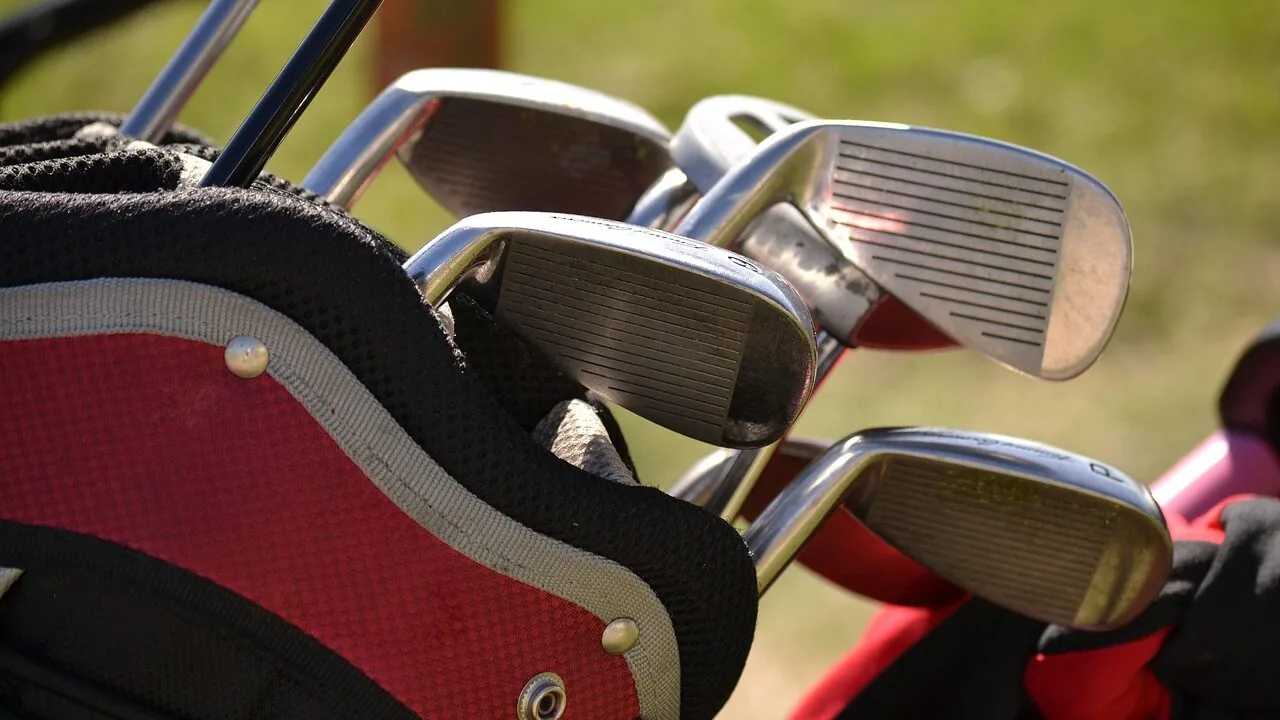
Choosing the right set of irons can genuinely transform your game.
Whether you’re a scratch player chasing workability and shot-shaping precision or a high-handicapper who needs maximum forgiveness on off-center strikes, the iron market in 2026 offers more purpose-built options than ever before.
With technology ranging from hollow-body cavity backs to precision-milled blades, the gap between a good set and a great set has never been more meaningful for your scorecard.
At ProductFind, we cut through the marketing noise by researching each model against a consistent set of criteria: published specifications, expert review consensus from equipment editors and club-fitting professionals, and verified buyer feedback from golfers who’ve actually played these irons on the course.
Our analysis covers options from premium brands like TaylorMade, Callaway, and Srixon alongside budget-friendly alternatives, so you can find the right fit at the right price.
If you’re also building out the rest of your bag, our golf clubs buying guide and our breakdown of golf drivers for every swing speed are worth reading alongside this one.
Here are our top picks across every skill level and budget.
| Award | Product | PF Score About PF ScoreThe PF Score is our own rating from 0 to 10, based on performance, design and build, ease of use, and value. It reflects independent research and is never influenced by manufacturers, retailers, or affiliate commissions. Learn more › | Price | |
|---|---|---|---|---|
| Best Overall |
 TaylorMade P790 Irons 4-PW Steel Shaft Stiff
|
9.1/10 | Buy | |
| Editor's Pick |
 TaylorMade P7MC Iron Set 4-PW
|
8.6/10 | Buy | |
| Best Value |
 Srixon ZXi 7 Iron Set 4-PW Steel Stiff
|
8.4/10 | Buy | |
| Top Rated |
 Srixon ZXiR HL Iron Set 5-PW/AW
|
8.3/10 | Buy | |
 Callaway Paradym AI Smoke HL Iron Set 6-PW
|
8.2/10 | Buy | ||
 TaylorMade Qi Gunmetal Iron Set 5-PW-AW
|
7.8/10 | Buy | ||
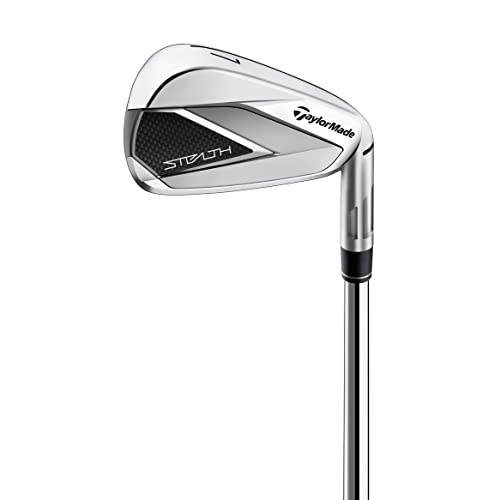 TaylorMade Stealth Iron Set 5-PW Left Hand Steel
|
7.2/10 | Buy | ||
 Yamato Golf Iron Set 6-Piece (5-PW) Right-Handed
|
6.3/10 | Buy | ||
 PGM NSR III 7-Piece Iron Set, Graphite Shaft R Flex
|
6.1/10 | Buy | ||
 MAZEL 9-Piece Golf Iron Set with Steel Shafts
|
4.2/10 | Buy |
TaylorMade P790 Irons 4-PW Steel Shaft Stiff
TaylorMade's 2025 P790 irons feature a new 4340M forged face that's 20% stronger than previous generations, delivering faster ball speeds and up to 24% larger sweet spot. Strategic CG positioning provides lower launch in long irons and higher spin control in scoring clubs for consistent gapping across the set.
Pros
- New 4340M face material delivers 20% increased strength and faster ball speeds
- Sweet spot expansion up to 24% improves forgiveness on off-center hits
- FLTD CG positioning tailored for each iron provides optimal launch and spin throughout the set
- Enhanced forged feel and responsive impact sensation from SpeedFoam Air integration
Cons
- No verified buyer reviews available to confirm real-world performance claims
- Premium price point typical of high-end tour iron sets may limit accessibility for casual golfers
- Individual head optimization may require professional fitting to maximize benefits
TaylorMade P7MC Iron Set 4-PW
Tour-inspired muscle cavity irons forged from 1025 carbon steel with a machined face for precision shotmaking. Designed for skilled players seeking a blend of feel, consistency, and subtle forgiveness with classic compact styling.
Pros
- Forged construction delivers solid, consistent strike feel valued by skilled golfers
- Machined face geometry enables precise shot shaping and control
- Tour-inspired shaping with clean address profile and progressive offset
Cons
- Minimal forgiveness compared to game-improvement irons, better suited for single-digit handicaps
- Premium positioning reflects tour-level craftsmanship and materials
- No user reviews available to assess real-world durability or performance variance
Srixon ZXi 7 Iron Set 4-PW Steel Stiff
Tour-level players iron set built for precision and workability with Srixon's i-FORGED technology and progressive groove design. Compact muscle-back profile demands consistent swing mechanics but rewards shot-making control across all clubs.
Pros
- Advanced i-FORGED technology combines strength with softer steel for superior feel and feedback
- Progressive groove system with laser milling ensures consistent spin across the full set
- Tour V.T. Sole delivers reliable turf interaction without sacrificing club speed
- Compact muscle-back design maximizes shot-shaping capability for skilled players
Cons
- Players iron profile requires consistent swing mechanics and is not forgiving on off-center strikes
- No verified buyer reviews available to confirm real-world performance feedback
- Narrow sole and compact blade design may challenge golfers with higher handicaps
Srixon ZXiR HL Iron Set 5-PW/AW
Srixon's ZXiR HL irons are engineered for moderate to slower swing speed golfers, combining a high-launch design with the new i-ALLOY steel construction for softer feel and improved forgiveness. The MainFrame technology and Tour V.T. sole provide consistent performance across varying turf conditions.
Pros
- Specially tuned specs help increase spin and stopping power around greens
- Enhanced forgiveness from milled pattern that saves weight and boosts MOI
- Premium feel from i-ALLOY steel construction with maintained durability
- Tour-proven sole geometry optimizes bounce and notch design for consistent contact
Cons
- No verified buyer reviews available to assess real-world performance
- High launch design may not suit golfers with faster swing speeds
- Limited information on how i-ALLOY steel performs long-term versus traditional steel
Callaway Paradym AI Smoke HL Iron Set 6-PW
Callaway's Paradym AI Smoke HL irons leverage AI-designed smart faces to balance distance, control, and precision across the set. The cavity-back construction blends modern performance technology with classic iron design, making it suitable for golfers seeking distance-focused irons with forgiving characteristics.
Pros
- AI-driven face design targets enhanced distance and control across the set
- Cavity-back construction provides forgiveness on off-center hits
- Complete set configuration (6-PW, AW) covers essential iron yardages
- Steel shaft option appeals to golfers preferring traditional swing dynamics
Cons
- No customer reviews available to verify real-world performance claims
- Limited customization options beyond standard shaft and grip specifications
- Right-hand configuration only, excluding left-handed golfers
TaylorMade Qi Gunmetal Iron Set 5-PW-AW
TaylorMade's Qi iron set combines hollow-body and cavity-back construction to optimize distance across the lineup. The gunmetal PVD finish delivers modern aesthetics alongside the performance upgrades, making it a solid choice for golfers seeking consistent play through the mid-irons.
Pros
- Innovative construction blends hollow-body forgiveness with cavity-back consistency
- Modern gunmetal finish stands out aesthetically and functionally
- Head-by-head optimization suggests each iron is tuned for its specific loft
Cons
- No verified buyer reviews available yet to validate real-world performance claims
- Limited specifications provided for shaft weight, MOI, or offset details
- Approach wedge inclusion may not match all golfers' traditional iron set expectations
TaylorMade Stealth Iron Set 5-PW Left Hand Steel
TaylorMade's Stealth irons combine Cap Back design with toe wrap construction to deliver forgiveness and distance across the set. Built for mid-to-high handicappers seeking improved consistency and a higher ball flight without sacrificing feel.
Pros
- Engineered for forgiveness with sweet spot spanning common impact points
- Low center of gravity promotes higher launch and better carry distance
- Soft damping system delivers improved feel while maintaining face flexibility
- Proven Thru-Slot Speed Pocket technology reduces mis-hit penalties
Cons
- No verified customer reviews available to assess real-world performance
- Premium pricing tier typical for TaylorMade game improvement sets
- Specifications list shows right-hand stiff flex in inventory, confirming left-hand option availability but limited sizing detail
Yamato Golf Iron Set 6-Piece (5-PW) Right-Handed
A six-piece iron set covering mid-range and approach shots with stainless steel construction and ergonomic grip. Designed for right-handed golfers of varying skill levels seeking a complete iron solution.
Pros
- Covers critical yardage gaps with 5-iron through pitching wedge setup
- Durable stainless steel shaft resists corrosion
- Ergonomic grip design reduces hand fatigue during rounds
- All-in-one set simplifies equipment selection
Cons
- No customer reviews available to verify real-world performance claims
- Limited weight specification (0.8 lbs total seems unusually light for six irons, raising durability questions)
- No information on shaft flex options or club head design details that affect playability
PGM NSR III 7-Piece Iron Set, Graphite Shaft R Flex
PGM's NSR III iron set combines a low center of gravity design with saddle-backed clubfaces to help golfers of all levels achieve more consistent contact and forgiveness. The lightweight 65-gram graphite shafts provide good stability, making this set accessible for beginners while remaining useful for intermediate players.
Pros
- Lightweight graphite construction reduces fatigue during practice and play
- Extended hitting area from deep undercut design improves forgiveness on off-center shots
- Balanced approach for skill levels from beginner to intermediate
Cons
- No verified buyer reviews available to confirm real-world performance claims
- Limited information on exact yardage gaps between club specifications
- R Flex designation may not suit slower-swing golfers or those requiring Senior flex
MAZEL 9-Piece Golf Iron Set with Steel Shafts
A complete 9-piece iron set (1-9 irons plus pitching and sand wedges) designed for right-handed golfers seeking forgiveness and distance. The hollow body mid-irons and stainless steel construction aim to balance consistency with playability across skill levels.
Pros
- Full iron lineup eliminates need for separate purchases
- Hollow body mid-irons deliver forgiveness on off-center hits
- Large face and deep grooves designed for improved accuracy
- Rubber grip with shock absorption reduces impact vibration
Cons
- No verified buyer reviews available to confirm real-world performance claims
- Limited customization options (fixed as 5-iron only based on title)
- No mention of break-in period or shaft flex options in specs
Golf Irons Buying Guide
Irons are the workhorses of your bag, used for approach shots, scrambling, and everything in between. Getting the selection right means understanding which design philosophy suits your ball-striking consistency, your typical miss, and the courses you play most often.
The sections below walk through the criteria that matter most when evaluating any iron set.
Iron Type: Cavity Back, Hollow Body, or Blade

The most fundamental question in iron selection is forgiveness versus workability. Cavity-back irons redistribute mass to the perimeter of the club head, enlarging the effective sweet spot and producing straighter, higher shots on mishits.
They suit the majority of recreational golfers and even many low-handicappers who prioritize consistency over shaping ability.
Hollow-body irons represent a middle ground increasingly favored in players’ irons.
A hollow construction allows manufacturers to position internal weights precisely, delivering a combination of ball speed, distance, and feel that neither a pure cavity back nor a blade can fully replicate.
The TaylorMade P790, for example, uses a SpeedFoam Air interior that is a direct result of this design philosophy.
Muscle-back or blade irons are designed for single-digit handicappers who want precise feedback on every strike and the ability to shape shots in both directions.
The smaller head, thin top line, and minimal offset reward well-timed contact but are brutally honest about off-center hits. Unless your ball-striking is highly consistent, a blade is likely to cost you strokes rather than save them.
Shaft Material and Flex

Steel shafts are heavier, promote better control and a lower trajectory, and suit players with faster, more consistent swing speeds. They also tend to provide cleaner feedback at impact.
Most irons from TaylorMade, Srixon, and Callaway at the premium tier are offered in steel as the default, and for good reason: steel helps experienced players repeat their swing more reliably.
Graphite shafts are lighter and can help golfers with moderate swing speeds generate extra clubhead speed. They also dampen vibration more effectively, which is valuable for players dealing with joint sensitivity or fatigue.
The PGM NSR III, for example, ships with graphite shafts specifically to appeal to golfers who benefit from that lighter-weight feel.
Flex rating is equally critical. A shaft that is too stiff will produce low, weak shots that leak to the right for right-handed golfers; one that is too flexible will balloon high and lose directional consistency.
As a general starting point: swing speeds below 85 mph usually benefit from regular flex, 85 to 95 mph from stiff, and above 95 mph from extra stiff. Club-fitting data published by major OEMs consistently reinforces this guidance.
Set Composition: Which Irons Do You Actually Need?
Most modern iron sets are sold in configurations that run from a 4-iron or 5-iron through a pitching wedge (PW) or approach wedge (AW), sometimes extending to a sand wedge (SW).
A longer set gives you more coverage in the 170-to-210-yard range, but long irons are also the hardest clubs in the bag to hit consistently.
Many mid-to-high handicappers benefit more from replacing their 4- and 5-irons with hybrid clubs and investing in a tighter short-iron setup instead.
Sets like the TaylorMade Stealth Iron Set (5-PW, AW, SW) and the Callaway Paradym AI Smoke HL (6-PW, AW) reflect this consumer preference: they start the set at a more playable iron and include utility wedges that help fill distance gaps.
If you’re assembling a complete bag from scratch, consider pairing a quality iron set with dedicated wedges and hybrids rather than defaulting to the longest iron in the package.
Forgiveness and Distance Technology
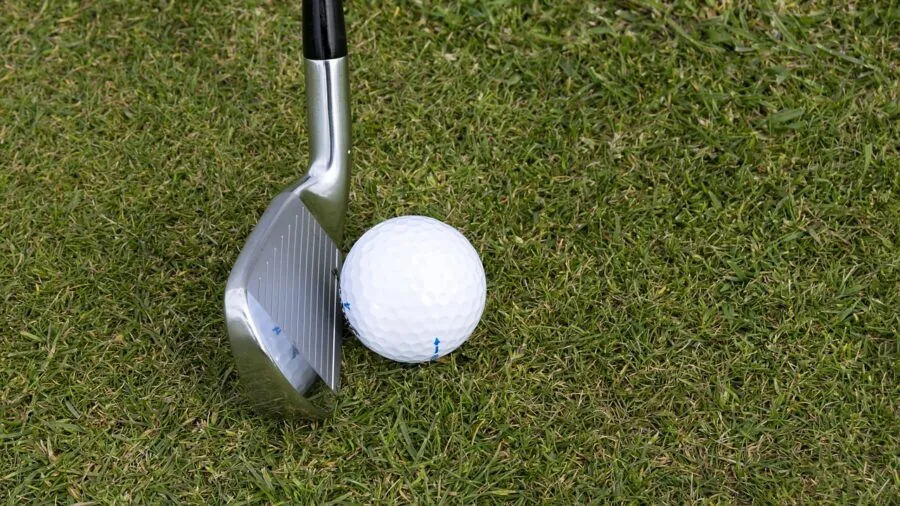
Modern iron technology has made forgiveness quantifiable. Variable-thickness face designs, speed-pocket slots cut into the sole, and internal tungsten weighting are all engineering tools that maintain ball speed on hits struck away from the geometric center of the face.
Callaway’s AI-designed faces and TaylorMade’s SpeedFoam technology are two high-profile examples backed by published launch-monitor data showing measurable ball speed retention on mishits compared to earlier generations.
Distance-focused irons achieve their numbers partly through stronger lofts: a modern 7-iron may be lofted at 30 to 32 degrees versus the traditional 34 to 36 degrees.
This produces longer carry figures in marketing comparisons but compresses your set’s total gapping, which can create awkward yardage gaps near the green.
When evaluating a set, look at the full loft progression from 5-iron to pitching wedge, not just the headline 7-iron distance number.
Feel and Feedback at Impact

Feel is subjective, but it directly influences how quickly you can make swing corrections during a round.
Forged irons, such as the Srixon ZXi series and TaylorMade P7MC, are constructed from softer carbon steel that compresses slightly at impact, producing the soft, solid sensation that experienced golfers chase.
The grain structure of a forged head also transmits more granular vibration feedback, making it easier to distinguish a flush strike from a slight heel or toe miss.
Cast irons are typically harder at impact and can feel slightly boardier, though modern foam-fill technologies have narrowed this gap considerably.
For golfers who are still developing their swing and won’t immediately distinguish the feedback, a cast game-improvement iron’s additional forgiveness is usually a better trade-off than chasing the feel of a forged blade they’re not yet ready to play.
Budget and Value Tiers
The iron market spans an enormous price range, from entry-level sets under a modest budget to premium forged sets at the top of the market.
Entry-level sets from brands like MAZEL and Yamato offer acceptable performance for beginners or infrequent players who want to learn the game without a major investment.
The trade-off is consistency of manufacturing tolerances, which affects shot-to-shot distance control more than occasional golfers will notice but which serious players will find limiting.
Mid-range sets from established OEM brands typically deliver the best value for improving golfers.
The Callaway Paradym AI Smoke HL and TaylorMade Qi Gunmetal sit in this tier, offering genuine technology filtered down from tour-level research at a price that is accessible without being entry-level.
At the premium end, the TaylorMade P790 and P7MC and the Srixon ZXi 7 represent full investments in performance technology and build quality, justified for dedicated players who will get years of use from a well-fitted set.
Why You Should Trust Us
ProductFind is an independent review publication.
Every iron set in this article was evaluated using our structured PF Score system, which rates each product on a scale of 0 to 10 based on a consistent set of criteria applied uniformly across every pick.
We do not conduct our own product trials; our evaluations are grounded in research, published data, expert review consensus, and verified buyer feedback.
Our research draws on manufacturer-published specifications, independent equipment reviews from qualified golf journalists and club-fitting professionals, launch-monitor data cited in published sources, and aggregated feedback from verified purchasers.
We apply the same evaluation framework whether we’re assessing a budget entry-level set priced for beginners or a premium forged players’ iron. No brand relationship, sponsorship, or product sample influences our rankings.
ProductFind may earn an affiliate commission if you purchase through a link on this page, but our editorial recommendations, PF Scores, and rankings are determined entirely by the merits of each product and are never adjusted based on commercial relationships.
Our goal is to give you the clearest, most honest picture of which irons are genuinely worth your money.
Final Thoughts
Across every skill level and budget, this list covers the irons that earned the highest PF Scores in our research. Here is how our top picks break down by purpose:
- Best Overall: TaylorMade Golf 2025 P790 Irons earned the highest PF Score in this group. The hollow-body construction, SpeedFoam Air interior, and precision steel shaft combine workability with distance in a way that suits a wide range of ball strikers, earning it the top position across our research criteria.
- Best Players’ Iron: TaylorMade Golf P7MC Iron Set is built for single-digit handicappers who prioritize shot-shaping feel and feedback over maximum forgiveness. Its strong PF Score reflects consistent praise from equipment reviewers and verified buyers with the game to fully exploit a muscle-back design.
- Best for Improving Mid-Handicappers: Srixon ZXi 7 Iron Set combines forged feel with progressive design, offering more forgiveness in the longer irons and more precision in the scoring clubs. Verified buyer feedback highlights its consistent distance gapping as a particular strength.
- Best for High-Handicappers Who Want Real Technology: Callaway Golf Paradym AI Smoke HL Iron Set brings AI-optimized face architecture into a genuinely accessible price tier. Expert review consensus points to its high, forgiving ball flight and confidence-inspiring address profile as standout qualities for golfers still building consistency.
- Best Budget Pick: PGM Golf Clubs NSR III Golf Iron Set offers a complete graphite-shaft package at a price that makes sense for beginners and occasional golfers. It won’t compete with premium OEM technology, but for someone learning the game on a restricted budget, it provides a playable, complete set without a premium price tag.
Whatever your handicap or budget, the iron set you’ll actually improve with is the one matched to your current ball-striking level, fitted to your swing speed, and comfortable enough to commit to over hundreds of rounds.
Use the buying guide above to narrow your criteria, then let the PF Scores and individual product details guide your final decision.
Frequently Asked Questions
How many irons should be in a complete set?
Most sets sold today run from a 5-iron or 6-iron through a pitching wedge, with some including an approach wedge and sand wedge. Under the Rules of Golf, you may carry up to 14 clubs total.
A typical modern bag uses five or six irons, one or two wedges beyond the set, two or three woods, and one or two hybrids.
Many mid-to-high handicappers replace their longest irons with hybrids for better playability; building your bag with this flexibility in mind is smarter than defaulting to the full set configuration shown on a product page.
Do I need to get professionally fitted for irons?
A professional club fitting is one of the highest-return investments a serious golfer can make. Fitting variables including shaft length, lie angle, shaft weight, and flex can each materially affect your accuracy and distance consistency.
Even a one-degree lie angle correction can be the difference between shots that hold the target line and shots that consistently miss left or right.
Major OEM brands like TaylorMade, Callaway, and Srixon all operate fitting networks, and many retailers offer complimentary fittings with a set purchase.
That said, if you are a beginner who is still developing fundamental mechanics, an off-the-shelf set in a standard length and regular flex is a perfectly sensible starting point.
Spending on a full fitting before your swing has stabilized is less productive than it would be once you’ve played regularly for a season or two.
What is the difference between forged and cast irons?
Forged irons are machined from a single billet of soft carbon steel, a process that creates a grain structure known for soft feel and precise feedback at impact.
Cast irons are produced by pouring molten metal into a mold, which allows for more complex head geometry and more aggressive perimeter weighting but typically produces a firmer feel.
Forged irons like the Srixon ZXi and TaylorMade P7MC are generally preferred by better players, while cast game-improvement irons dominate the mid-to-high handicapper segment.
Modern foam-fill technology in cast hollow bodies has narrowed the feel gap significantly, so the distinction matters less than it did a decade ago.
When should I replace my iron set?
Iron technology evolves more slowly than driver technology, so there is no need to upgrade every generation. A well-maintained set of quality irons can remain competitive for five to ten years or longer.
The most practical reasons to replace irons are: a meaningful improvement in your handicap that your current irons can no longer support, visible groove wear that reduces spin control on approach shots, or a fitting session that reveals your set’s specifications no longer match your current swing characteristics.
If you’re considering a new set and also need to rebuild other parts of your bag, our roundup of complete golf club sets covers broader equipment considerations alongside irons.
Are game-improvement irons only for beginners?
No. Many mid-handicap and even some low-handicap golfers play game-improvement or super-game-improvement irons by choice.
The priority for any golfer should be consistency and confidence over the course of 18 holes, and the forgiveness built into a modern game-improvement iron can support that goal regardless of skill level.
The Callaway Paradym AI Smoke HL, for example, is an iron that lower handicappers have chosen specifically for its high launch and long-iron forgiveness while sacrificing very little workability in the scoring irons.
Choosing the right iron category is about matching your miss pattern and performance priorities, not about what your handicap “should” demand.
Should I choose steel or graphite shafts for my irons?
For most male golfers with moderate to fast swing speeds, steel shafts offer better control and more consistent feedback, which is why the majority of premium iron sets from TaylorMade, Srixon, and Callaway are built on steel as the default option.
Graphite iron shafts are a strong choice for seniors, women, and golfers with slower swing speeds who benefit from the lighter weight and reduced vibration at impact.
If you are unsure which material suits your swing, a brief session with a launch monitor at any fitting center will give you clear data to make that decision confidently.
About the author
Bernard is a reviewer and writer for ProductFind who specializes in Golf. Bernard evaluates products through independent research: specifications, expert review consensus, and verified buyer feedback, and rates each one on the PF Score. Bernard focuses on helping readers pick the right golf for their needs and budget.