The 11 Best Golf Launch Monitors
Ball flight data changes how you practice. Our picks cover radar, camera, and hybrid launch monitors from Rapsodo, Garmin, FlightScope, and Bushnell across every budget.
 By Bernard Nguyen
Updated July 23, 2026
By Bernard Nguyen
Updated July 23, 2026

Golf launch monitors have moved from exclusive fitting bays and tour vans to every golfer’s practice bag, and for good reason.
Whether you’re trying to dial in carry distance, understand why your drives keep leaking right, or build a full indoor simulator setup, real-time ball flight data removes the guesswork from improvement.
The market now spans everything from radar pucks you can grab for around the price of a decent set of irons to professional-grade photometric systems that rival what your club pro uses at fitting day.
Knowing where to start, and what numbers actually matter for your game, is the hardest part.
At ProductFind, we cut through the noise by analyzing published specifications, synthesizing expert review consensus from across the industry, and weighing verified buyer feedback to surface the options that genuinely deliver.
Our list covers Doppler radar monitors, photometric camera systems, smartphone-integrated devices, and hybrid GPS handhelds, all sourced from brands like FlightScope, Garmin, Rapsodo, Bushnell, PRGR, and Shot Scope.
Scroll down to see our ranked top picks and find the right launch monitor for your swing, space, and budget.
| Award | Product | PF Score About PF ScoreThe PF Score is our own rating from 0 to 10, based on performance, design and build, ease of use, and value. It reflects independent research and is never influenced by manufacturers, retailers, or affiliate commissions. Learn more › | Price | |
|---|---|---|---|---|
| Best Overall |
 FlightScope Mevo Gen2 Portable Launch Monitor
|
8.8/10 | Buy | |
| Editor's Pick |
 Rapsodo MLM2PRO Launch Monitor with 3 Pro V1 Balls
|
8.6/10 | Buy | |
| Best Value |
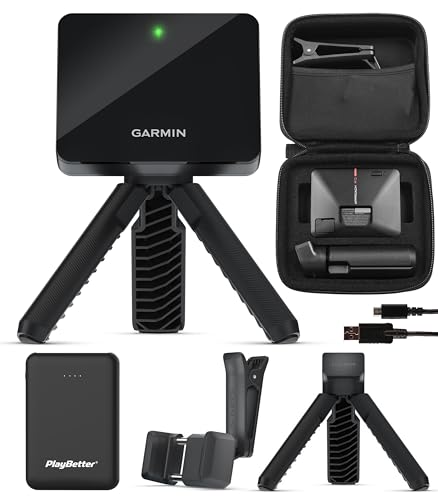 Garmin Approach R10 Launch Monitor with Charger Bundle
|
8.2/10 | Buy | |
| Top Rated |
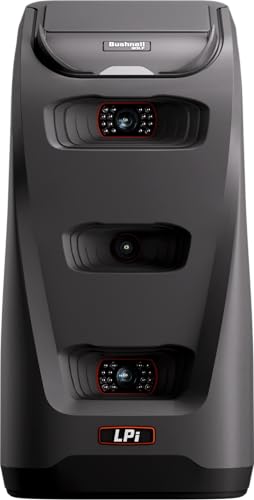 Bushnell Launch Pro i Golf Launch Monitor
|
7.8/10 | Buy | |
 Rapsodo Mobile Launch Monitor for iPhone/iPad
|
7.5/10 | Buy | ||
 PRGR HS 130-A Portable Launch Monitor
|
7.3/10 | Buy | ||
 Garmin Approach G82 Golf GPS with Launch Monitor
|
7.1/10 | Buy | ||
 BLACK T SHOT5 Portable Golf Launch Monitor
|
7.0/10 | Buy | ||
 Shot Scope LM1 Portable Launch Monitor
|
6.8/10 | Buy | ||
 Bushnell Launch Pro Circle B Edition Launch Monitor
|
6.5/10 | Buy | ||
 TAGCMC Portable Golf Launch Monitor
|
6.8/10 | Buy |
FlightScope Mevo Gen2 Portable Launch Monitor
A portable golf simulator and launch monitor using 3D Doppler radar to capture 18 swing data parameters, compatible with 8 E6 Connect courses and playable indoors or outdoors. Built-in front camera records swings with automatic overlays of ball speed, carry distance, and flight path visualization, while the 6-hour battery supports extended practice sessions.
Pros
- Accurate and consistent swing data from radar-based tracking across indoor and outdoor environments
- Compact and lightweight enough for range or backyard setup without sacrificing features
- Shot Tracer overlay with clubhead speed, ball speed, and carry distance directly on video
- Range ball setting optimizes accuracy when using facility balls at driving ranges
- Multi-camera capability (up to 4 simultaneous recordings) enhances coaching potential
Cons
- No verified buyer reviews available yet to assess real-world reliability and user satisfaction
- Premium pricing typical of portable launch monitors limits accessibility for casual golfers
- Limited to 8 courses in simulation bundle, which may feel restrictive compared to some competitors
Rapsodo MLM2PRO Launch Monitor with 3 Pro V1 Balls
A dual-camera, Doppler radar launch monitor that captures 15 key swing metrics for serious golfers wanting simulator play at home. Includes 45 days of premium access to 30,000+ courses and swing analysis tools, plus three Titleist Pro V1 balls.
Pros
- Comprehensive shot tracking with Doppler radar and dual-camera setup provides reliable data across multiple metrics
- Substantial content library of 30,000+ simulator courses with variable tee boxes and game formats for different skill levels
- Dual functionality as both launch monitor and swing trainer with frame-by-frame analysis capabilities
- Extended 45-day premium trial lets users explore features before ongoing subscription commitment
- Includes three quality golf balls for immediate use
Cons
- No verified buyer reviews available yet, limiting real-world performance feedback
- Premium features require ongoing subscription after trial period ends
- Requires smartphone/mobile device integration for app-based functionality
Garmin Approach R10 Launch Monitor with Charger Bundle
A portable launch monitor that delivers key swing metrics, video analysis, and access to 43,000+ virtual courses. Designed for golfers who want to track performance and practice anywhere without leaving home.
Pros
- Comprehensive swing metrics capture helps identify specific areas for improvement
- Integrated video recording with shot dispersion chart adds analytical depth
- Extensive course library enables varied virtual practice without course fees
- Complete accessory bundle eliminates need for separate purchases
- Long battery life supports extended practice sessions
Cons
- No verified buyer reviews available to confirm real-world performance and durability
- Requires compatible smartphone for full functionality including video analysis
- Portability advantage may be limited by need for tripod setup and adequate space
Bushnell Launch Pro i Golf Launch Monitor
Camera-based launch monitor built for indoor golf simulation with three-camera infrared system that claims tour-level accuracy without radar algorithms. Includes essential accessories and a 14-day Gold software trial, making it one of the more accessible entry points to home simulator setups.
Pros
- Camera-based measurement eliminates algorithm dependency common in radar monitors
- Complete package out of the box with alignment tools and cables included
- Flexible software subscription options allow gradual feature expansion
- Affordable entry point for indoor golf simulation compared to premium alternatives
Cons
- Ball and club data require active paid software subscription
- No verified buyer reviews available to assess real-world performance reliability
- Requires proper setup space and lighting for camera-based accuracy to function effectively
Rapsodo Mobile Launch Monitor for iPhone/iPad
A portable launch monitor that connects to iPhone or iPad to deliver tour-level swing metrics including ball speed, club speed, and launch angle. Combines shot tracking with video playback and swing analysis for home and outdoor practice.
Pros
- Delivers professional-grade launch monitor metrics for serious golfers
- Seamless iOS integration provides instant feedback and portable practice
- Video analysis with swing tracers helps visualize ball flight and refine technique
- GPS shot scatter mapping enables data-driven training sessions
- Lightweight and compact design at under 1 pound
Cons
- Limited to iPhone and iPad only, excludes Android users
- No verified buyer reviews available to assess real-world reliability and accuracy claims
- Requires consistent mobile device connectivity for full functionality
PRGR HS 130-A Portable Launch Monitor
A budget-friendly doppler radar launch monitor that measures club head speed, ball speed, smash factor, and distance without requiring Wi-Fi or apps. Designed for golfers seeking swing training data at a fraction of premium launch monitor prices.
Pros
- Accurate doppler radar technology comparable to premium units
- Unique ability to measure club head speed without a ball, ideal for dedicated speed training
- Simple operation with no Wi-Fi, Bluetooth, or app dependency
- Portable and lightweight at 0.3 pounds
- Works across multiple sports beyond golf
Cons
- No reviews provided to verify real-world performance consistency
- Limited feature set compared to high-end monitors with advanced analytics
- Battery-only power limits extended use scenarios without battery changes
Garmin Approach G82 Golf GPS with Launch Monitor
A 5-inch touchscreen golf GPS that combines course navigation for 43,000+ preloaded courses with an integrated launch monitor for swing analysis at the range. Designed for golfers who want both on-course guidance and detailed performance metrics in a single portable device.
Pros
- Dual functionality combines GPS navigation and launch monitor in one device, eliminating need for separate equipment
- Comprehensive swing data at the range, from ball speed to putting metrics, supports measurable improvement
- Extended battery life in GPS mode keeps device running full rounds without recharging
- Integration with smartphone app and optional club tracking sensors expands utility and data insights
Cons
- No user reviews yet available to assess real-world reliability and performance consistency
- Requires separate Garmin Golf membership purchase for enhanced features like green contours and aerial imagery
- Radar mode battery life drops significantly to 8 hours, limiting extended range practice sessions
BLACK T SHOT5 Portable Golf Launch Monitor
A compact Doppler radar device that measures real distance, ball speed, club head speed, and smash factor without requiring app setup or Bluetooth connectivity. Designed for golfers wanting practical swing data on the range or course with minimal complexity.
Pros
- Instant activation and use without connectivity delays
- Large screen reduces need to check phone during practice sessions
- Focuses on actionable metrics rather than overwhelming golfers with data
- Portable enough for regular bag rotation and travel
- Addresses inflated screen distances common in golf simulators
Cons
- No customer reviews available to verify real-world accuracy and durability
- Limited to five data points, which may restrict analysis for serious swing coaches
- No app connectivity means data cannot be stored, logged, or analyzed over time
Shot Scope LM1 Portable Launch Monitor
A compact launch monitor that tracks ball speed, club speed, and smash factor in real time for both indoor and outdoor use. Designed for golfers seeking immediate swing feedback without the bulk of traditional systems.
Pros
- Compact and lightweight at 3 pounds, easy to transport to range or course
- Tracks multiple metrics simultaneously: ball speed, club speed, smash factor, and distance
- App-based lifetime session history allows long-term swing data review
- Speed training mode targets specific performance goals
- Dual indoor/outdoor capability expands practice options
Cons
- No verified buyer reviews available to confirm real-world reliability and accuracy consistency
- Limited information on setup ease and app interface usability from independent sources
- Requires smartphone connectivity for full feature access and data logging
Bushnell Launch Pro Circle B Edition Launch Monitor
A three-camera launch monitor designed for golfers seeking Tour-level accuracy both indoors and outdoors. Delivers complete ball and club data, though club metrics require a paid subscription beyond the included 14-day trial.
Pros
- Camera-based measurement eliminates reliance on radar algorithms for more consistent readings
- Full versatility between indoor simulator setups and outdoor range practice
- Comes with all essential accessories needed to start using immediately
- Rangefinder integration adds value for players already using compatible Foresight Sports devices
Cons
- Club head speed data requires paid subscription after trial period expires
- No verified buyer reviews available to assess real-world reliability or setup ease
- Rangefinder sold separately, limiting LINK features without additional purchase
TAGCMC Portable Golf Launch Monitor
A smartphone-connected swing analyzer that tracks spin rate, launch angle, and swing speed with environmental sensors for real-time condition adjustment. Works indoors or outdoors with 3D simulation and no subscription required.
Pros
- Built-in environmental sensors automatically calibrate shot data to real conditions
- No subscription model keeps ongoing costs low
- Multi-platform support (iOS, Android, HarmonyOS) with multilingual interface
- Expandable swing metrics provide pro-level analysis for skill progression
- Versatile use cases from home simulator setup to outdoor range training
Cons
- No verified buyer reviews available to assess real-world reliability and accuracy claims
- Requires smartphone compatibility, adding dependency on external device
- Limited information on setup complexity or app interface intuitiveness
Golf Launch Monitors Buying Guide
Shopping for a golf launch monitor in 2026 means navigating a genuinely wide spectrum of technology, price points, and use cases.
The right device for a scratch golfer building a basement simulator differs dramatically from what a high-handicapper needs to track progress on the range.
The six criteria below are the ones that consistently separate a well-matched monitor from an expensive paperweight.
Pair your launch monitor research with quality golf clubs to make sure the data you’re collecting reflects equipment that’s actually fitted to your game.
Measurement Technology: Radar vs. Camera
The single biggest architectural choice in any launch monitor is whether it uses Doppler radar, a photometric camera, or a combination of both.
Doppler radar monitors emit a microwave signal and measure the frequency shift of the returning wave to calculate ball speed, club head speed, and launch direction.
They excel outdoors where there is enough ball flight to gather data, tend to be compact, and handle a wide range of swing speeds reliably.
Most of the radar units in this roundup, including offerings from PRGR, Black T, and FlightScope’s Mevo line, fall into this category.
Photometric systems use high-speed cameras to photograph the ball and club face at the moment of impact.
They are generally more accurate at shorter distances, which makes them superior for indoor use where the ball only travels a few feet before hitting a screen.
Camera-based monitors from Bushnell, for instance, can capture spin axis and spin rate directly rather than estimating them, which matters enormously for shot shape analysis.
If your primary goal is an accurate indoor simulator experience, photometric or hybrid technology is worth the additional investment.
If you mostly practice outdoors at a driving range, a quality radar unit will serve you well at a lower price point.
Some monitors combine both approaches to fill the gaps each technology has individually. Understanding which method a device uses, and where its limitations lie, should be the very first question you ask before buying.
Data Parameters: Which Numbers Actually Matter
Launch monitors advertise parameter counts the way smartphones advertise megapixels, but not all numbers are equally useful for improvement.
The core parameters every serious golfer should prioritize are ball speed, club head speed, smash factor, launch angle, spin rate, carry distance, and total distance.
These seven metrics together explain roughly 90 percent of what is happening at impact and during ball flight.
Entry-level radar units like the PRGR HS-130A focus almost exclusively on this core set, which is a pragmatic choice for golfers who just want to benchmark swing speed and distance.
Mid-range and premium monitors add parameters such as side spin, spin axis, attack angle, dynamic loft, face angle, path, and shot shape.
FlightScope’s Mevo Gen2 reports up to 18 swing data parameters, which approaches what a fitter would need for comprehensive club matching.
For most recreational golfers, the marginal value of measuring attack angle diminishes quickly unless they are working with a coach who can interpret and act on the data.
Think about how you will actually use the information before paying a premium for a longer parameter list.
Spin rate accuracy deserves a special mention. Radar monitors that estimate rather than directly measure spin can show variance of several hundred RPM, which can skew club recommendations meaningfully.
If spin data is critical to your fitting or practice goals, prioritize a device that directly measures or validates spin through secondary sensors.
Indoor vs.
Outdoor Performance
Not every launch monitor performs equally well in both environments, and many buyers discover this limitation only after purchase. Outdoor use generally favors radar technology because the device can track a ball through its full or partial arc.
Indoor use, where the ball hits a screen after just a few feet of travel, requires the monitor to calculate flight parameters from a very small data window, making camera-based or close-range radar systems far more reliable.
Some radar units, including early iterations of popular mid-range models, have struggled with missed shots indoors when the ball fails to travel far enough for the sensor to lock on.
Always check whether the specific model you are considering has been validated for indoor use by the manufacturer, and look at verified buyer reviews from people using it in simulator setups rather than only outdoor reviews.
FlightScope’s Mevo Gen2 specifically addresses indoor reliability with tuned sensitivity settings, which is part of why it ranks highly in this category.
If you plan to use your monitor both on the range and at home on a simulator, look for devices that explicitly support both modes and have a strong track record in buyer feedback for each context.
The best golf drivers deserve an equally capable monitor to capture their full performance potential indoors and outdoors.
Simulator Compatibility and Software Ecosystem

A launch monitor is only as useful as the software running alongside it.
Most mid-range and premium devices connect to a smartphone or PC app that displays shot data, tracks trends over time, and optionally renders virtual golf courses for simulator play.
The breadth and quality of that software ecosystem is a major differentiator between similarly priced hardware options.
Rapsodo’s MLM2PRO, for example, bundles proprietary app access with built-in video capture and slow-motion analysis, which creates a richer feedback loop than raw numbers alone.
For simulator enthusiasts, compatibility with third-party simulation platforms matters enormously. E6 Connect and GSPro are the two most widely used platforms at the consumer level.
The FlightScope Mevo Gen2 bundles E6 courses out of the box, which meaningfully reduces the total cost of building a home simulator around it.
Check whether courses and simulation features require a separate subscription, a one-time fee, or are included before finalizing your budget. A device with a closed software ecosystem can become frustrating if the app is poorly maintained or discontinued.
Garmin’s Approach line takes a different philosophical approach, embedding GPS course data and a color touchscreen directly into the handheld, which can reduce dependence on a separate paired device.
This makes units like the Approach G82 self-contained and travel-friendly even if they sacrifice some depth of ball flight analytics compared to dedicated launch monitors.
Portability, Setup, and Ease of Use
A launch monitor that requires a tripod, a charging cable, a paired phone, and a two-minute calibration sequence before every session will gather dust quickly.
Portability encompasses both physical size and how frictionless the workflow is from bag to first swing.
Entry-level devices like the Shot Scope LM1 and the PRGR HS-130A are designed to be grabbed, placed, and used with almost no setup, making them excellent range companions that you will actually bring along.
Battery life is a genuinely practical consideration that marketing materials often understate. A monitor with a four-hour battery is fine for most range sessions but becomes limiting on a simulator setup that runs for an evening.
Always check user-reported battery life under continuous use rather than relying solely on manufacturer claims.
The same discipline applies to connectivity: Bluetooth pairing reliability varies widely between devices and operating systems, and dropped connections during a session are one of the most common complaints in verified buyer reviews across this category.
Consider also the placement requirements for your specific use case. Most radar monitors need to be set behind the ball at a precise angle and distance. Camera-based systems may require side or overhead mounting.
If your practice space has constraints, these placement requirements can determine which technology works for you regardless of price.
Value for Money Across Budget Tiers

The golf launch monitor market divides naturally into three budget tiers. Entry-level devices in the lower price band are radar-only, measure a handful of core parameters, and prioritize simplicity.
They are ideal for golfers who want distance and swing speed feedback without building a simulator.
The PRGR HS-130A, Shot Scope LM1, and Rapsodo Mobile Launch Monitor all live in this tier and deliver meaningful value for golfers who are primarily range users.
The mid-range tier unlocks video capture, expanded parameter sets, simulator compatibility, and refined accuracy. The Rapsodo MLM2PRO and Garmin Approach R10 bundle represent this tier, offering a meaningful step up in analytical depth without crossing into professional pricing territory.
These devices suit the dedicated amateur who practices regularly and wants to track improvement over time.
Premium devices like the FlightScope Mevo Gen2 and Bushnell Launch Pro occupy the high end of the consumer market. They offer data accuracy and software ecosystems that approach professional fitting standards.
At this price level, buyers should expect a device that will remain current for many years, integrate with high-end simulation platforms, and require minimal compromise on data quality.
Think of it the way you would consider any significant sporting equipment investment, similar to how a dedicated golfer evaluates premium drivers: the right tool at the right level is the one that matches your actual commitment to the game.
Why You Should Trust Us
ProductFind operates as an editorially independent review publication.
Every product in this roundup was assessed using a consistent, structured research framework that draws on published manufacturer specifications, expert review consensus gathered from across the golf equipment industry, and verified buyer feedback from confirmed purchasers.
We do not conduct our own product trials; our evaluations are grounded in research, published data, expert review consensus, and verified buyer feedback.
Each device receives a PF Score on a 0 to 10 scale that reflects its overall merit within the category, factoring in measurement accuracy, feature depth, software ecosystem quality, portability, and value for money.
Products are ranked by PF Score, and the scoring is applied uniformly across the entire field regardless of brand or price.
A higher-priced device does not automatically receive a higher score; the FlightScope Mevo Gen2 earns its top ranking because the evidence across multiple criteria supports it, not because of its retail price.
ProductFind may earn an affiliate commission if you purchase through a link on this page. That commercial relationship has no bearing on scores, rankings, or editorial decisions.
We include products because the research supports recommending them, and we flag limitations honestly. Our goal is to give you the clearest possible picture of how each device performs so you can make a confident decision.
ProductFind does not sell products, handle orders, or provide post-purchase support; for those needs, please contact the retailer or manufacturer directly.
Final Thoughts
After synthesizing specifications, expert review consensus, and verified buyer feedback across every device in this roundup, a few clear leaders emerge. Below are our editorial awards for this field, each tied to the product’s PF Score and what it does better than its competition.
- Best Overall: FlightScope Mevo Gen2 Portable Golf Launch Monitor earns the top spot by combining 18 data parameters, built-in E6 simulation courses, GPS overview, shot tracer, and reliable indoor-outdoor performance into a single device that sets the benchmark for this price tier. Its PF Score of 8.8 is the highest in this roundup.
- Best Mid-Range Pick: Rapsodo MLM2PRO Mobile Launch Monitor is the standout choice for golfers who want video capture, shot analysis, and simulator capability without stepping into premium pricing. Its PF Score of 8.6 reflects excellent feature density for the investment.
- Best Bundled Value: Garmin Approach R10 Golf Launch Monitor Bundle offers a well-rounded experience for golfers who want Garmin’s ecosystem reliability, strong battery life, and simulator-ready connectivity. The PlayBetter bundle adds meaningful accessories that ease the path to a home setup, backing a PF Score of 8.2.
- Best Camera-Based Indoor Monitor: Bushnell Golf Launch Pro i Circle B Edition delivers tour-level photometric accuracy optimized for indoor use, making it the right call for serious simulator builders who prioritize spin and impact data precision. It holds a PF Score of 7.8.
- Best Entry-Level Radar Unit: Rapsodo Mobile Launch Monitor remains a compelling starting point for iPhone and iPad users who want smartphone-integrated ball flight data without a significant outlay. Its PF Score of 7.5 reflects solid core performance at an accessible price.
Whatever your budget or skill level, the most important step is matching the device’s technology and feature set to how you actually practice. A well-chosen launch monitor is one of the most durable investments a golfer can make in their long-term improvement.
Frequently Asked Questions
What is a golf launch monitor and do I actually need one?
A golf launch monitor is a device that measures and reports data about your club and ball at the moment of impact and during ball flight.
It captures metrics like ball speed, launch angle, spin rate, carry distance, and club head speed. If you are serious about improving your game, having objective data after every swing is far more reliable than feel alone.
Even a basic entry-level monitor removes the guesswork from distance gaps between clubs and helps you understand why certain shots miss in a consistent direction.
For golfers who practice regularly, it is one of the most practical improvement tools available alongside quality golf clubs.
What is the difference between a radar launch monitor and a photometric one?
Radar monitors use Doppler technology to track the ball by measuring changes in signal frequency. They are compact, versatile, and generally more affordable.
Photometric monitors use high-speed cameras to photograph the ball and club face at impact, which allows direct measurement of spin and face angle rather than calculated estimates.
Camera-based systems tend to be more accurate in indoor simulator environments where the ball travels only a short distance. Radar systems tend to excel outdoors. Hybrid systems combine both approaches for more complete data in all conditions.
Can I use a golf launch monitor indoors to build a home simulator?
Yes, many of the devices in this roundup are designed to work indoors. You will need at minimum an impact screen, a projector, and a mat in addition to the monitor itself.
The key question is whether the specific launch monitor you choose is optimized for indoor use, since some radar units struggle when the ball does not travel far enough for reliable tracking.
Camera-based monitors and those explicitly rated for indoor use by the manufacturer, like the FlightScope Mevo Gen2 and the Bushnell Launch Pro, are the safer choices for dedicated simulator builds.
Simulator-compatible monitors typically connect to software platforms that render virtual courses and display your shot in real time. A compact setup can fit in a single car-garage bay, making it a realistic project for many golfers.
How many data parameters do I need from a launch monitor?
For most recreational golfers, a monitor that captures ball speed, club head speed, smash factor, launch angle, carry distance, and spin rate covers the vast majority of useful feedback.
Entry-level devices that focus on this core set are often more than sufficient for range practice and basic distance mapping.
Additional parameters like attack angle, face angle, and dynamic loft become valuable if you are working closely with a coach or pursuing detailed club fitting.
The honest answer is that more parameters are only useful if you understand what to do with the numbers, so consider your actual practice habits before paying for a longer data list.
Are budget launch monitors accurate enough to trust?
Budget radar monitors are accurate enough for relative comparisons between clubs and for tracking swing speed trends over time, which covers the most common reasons a recreational golfer wants a monitor.
Their absolute accuracy for parameters like spin rate is lower than premium systems, meaning a single number should be treated as a useful approximation rather than a laboratory measurement.
If you are making club purchasing decisions based on the data or working with a fitter, investing in a mid-range or premium monitor will give you more reliable absolute figures.
For everyday practice and distance benchmarking, a well-regarded budget option delivers genuine, actionable feedback.
Do golf launch monitors work with any smartphone or just specific models?
Compatibility varies significantly by device. The original Rapsodo Mobile Launch Monitor is a notable example that is restricted to iPhone and iPad only, which is an important limitation for Android users.
The Rapsodo MLM2PRO broadens compatibility, and most Garmin devices use their own companion apps available on both major platforms.
Always verify operating system requirements and minimum phone specifications before purchasing, particularly if you plan to use the monitor’s video capture or real-time shot visualization features, since those functions can be demanding on older devices.
Check the manufacturer’s current compatibility list rather than relying solely on the listing description, as app updates can shift requirements over time.
About the author
Bernard is a reviewer and writer for ProductFind who specializes in Golf. Bernard evaluates products through independent research: specifications, expert review consensus, and verified buyer feedback, and rates each one on the PF Score. Bernard focuses on helping readers pick the right golf for their needs and budget.