The 8 Best Home Security Systems
Protecting your home starts with picking the right system. Our research covers integrated alarm kits from Ring and SimpliSafe plus solar camera options with no subscription fees.
 By Debra Russell
Updated July 23, 2026
By Debra Russell
Updated July 23, 2026

Home security has never been more accessible or more capable.
Whether you live in a rental apartment or a sprawling suburban home, today’s wireless systems let you layer motion sensors, door and window contacts, indoor cameras, and professional monitoring together without drilling a single hole or signing a multi-year contract.
The shift toward DIY-friendly, no-contract monitoring has driven serious competition among brands like Ring, SimpliSafe, aosu, ANSQUE, and Vivideye, giving shoppers genuinely good options across a wide range of budgets.
Pair a solid alarm system with smart home upgrades like smart plugs for automating lights and outlets and you get a layered approach to home safety that costs far less than a professionally installed system.
This guide cuts through the noise. Our team at ProductFind analyzed published specifications, synthesized expert review consensus from across the security industry, and weighed verified buyer feedback to surface the most reliable picks available right now.
We cover integrated alarm kits from Ring and SimpliSafe as well as standalone solar-powered camera kits for buyers who want flexible, subscription-free coverage.
Read on for our top picks below, then scroll to the buying guide for the criteria that matter most when choosing a home security system.
| Award | Product | PF Score About PF ScoreThe PF Score is our own rating from 0 to 10, based on performance, design and build, ease of use, and value. It reflects independent research and is never influenced by manufacturers, retailers, or affiliate commissions. Learn more › | Price | |
|---|---|---|---|---|
| Best Overall |
 Ring Alarm 14-Piece Kit with 2 Outdoor Cam Plus
|
8.6/10 | Buy | |
| Editor's Pick |
 SimpliSafe Gen 3 11-Piece Wireless Security System
|
6.9/10 | Buy | |
| Best Value |
 Ring Alarm 8-Piece Kit (Refurbished)
|
8.6/10 | Buy | |
| Top Rated |
 SimpliSafe 7-Piece Wireless Outdoor Camera System
|
7.9/10 | Buy | |
 SimpliSafe 9-Piece Wireless Security System with HD Camera
|
8.9/10 | Buy | ||
 Vivideye 4MP Solar Security Camera System with 360° PTZ
|
6.8/10 | Buy | ||
 aosu 4-Camera Solar Wireless System with 360° Pan & Tilt
|
7.1/10 | Buy | ||
 ANSQUE 4-Camera Wireless Security System, 360° PTZ
|
6.1/10 | Buy |
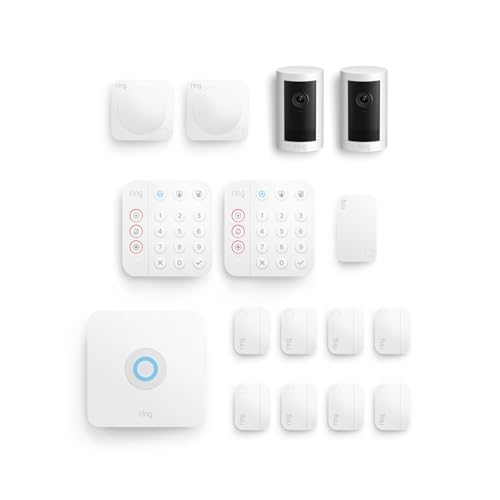
Ring Alarm 14-Piece Kit with 2 Outdoor Cam Plus
This comprehensive bundle pairs Ring's 14-piece alarm system with two outdoor cameras, designed for 2-4 bedroom homes seeking multi-point coverage. Includes base station, keypads, contact sensors, motion detectors, and range extender for flexible deployment across larger properties.
Pros
- Complete 14-piece system covers doors, windows, and motion detection in one purchase
- Dual outdoor cameras provide video surveillance alongside alarm functionality
- Mobile notifications and Ring app integration for centralized monitoring
- Voice control compatible with Alexa when paired with Ring Protect subscription
- Expandable with additional sensors and accessories for growing security needs
Cons
- Ring Protect Plan subscription required for remote arming and professional monitoring, sold separately
- No verified customer reviews available to assess real-world reliability and user experience
- Professional monitoring and Wi-Fi backup features locked behind additional subscription cost
SimpliSafe Gen 3 11-Piece Wireless Security System
A no-contract home security setup that combines wireless sensors, an indoor HD camera, and optional 24/7 professional monitoring without requiring installation expertise. Entry and motion detection work alongside two-way audio for real-time intruder communication, appealing to renters and homeowners seeking straightforward DIY protection.
Pros
- Installation is genuinely simple and requires no technical skills
- Entry sensors customize per-door alerts and support silent notifications for sensitive areas
- Professional monitoring available without long-term contracts or hidden fees
- Base station maintains protection during power or internet outages with battery and cellular backup
- Two-way camera audio enables direct communication with intruders during active monitoring
Cons
- Video verification for faster police response requires the separate Fast Protect Monitoring plan
- Professional monitoring services and cellular backup are optional add-ons that increase total cost
- System is US-only for sales and support
Ring Alarm 8-Piece Kit (Refurbished)
A refurbished security system designed for small homes and apartments, this kit bundles essentials like a base station, keypad, contact sensors, and motion detector. Works with Alexa and Ring Protect subscription for professional monitoring, though subscriptions and additional sensors cost extra.
Pros
- All essential components included in one kit, no need to buy sensors separately for basic setup
- Refurbished pricing offers significant savings versus new models with same limited warranty
- Seamless integration with Alexa ecosystem and existing Ring devices for unified control
- Mobile app provides real-time alerts and system monitoring from anywhere
Cons
- Professional monitoring and remote arming require separate Ring Protect Plan subscription
- Designed specifically for small homes; larger properties may need additional sensors at extra cost
- No customer reviews available to assess real-world reliability of refurbished units
SimpliSafe 7-Piece Wireless Outdoor Camera System
A DIY home security setup built around an outdoor camera with 140-degree field of view, 1080p HD, and color night vision. SimpliSafe offers optional professional monitoring without contracts, making it accessible for homeowners who want flexibility and remote control via smartphone.
Pros
- Simple out-of-box setup with no technical expertise required
- Flexible monitoring: optional professional service with no contract lock-in
- Wide 140-degree field of view and color night vision with spotlight for clear 24/7 visibility
- Dual installation options (wireless or wired) accommodate different home layouts
- AI-powered Active Guard feature identifies threats and connects to live security agents
Cons
- Professional monitoring and Active Guard features require additional paid subscription plans
- Active Guard functionality requires wired power connection, limiting placement flexibility
- No user reviews available yet to assess real-world reliability and customer satisfaction
SimpliSafe 9-Piece Wireless Security System with HD Camera
A no-frills home security system that prioritizes ease of installation and smartphone control, with optional professional monitoring and video verification for faster police response. Best suited for renters and homeowners who want wireless setup without long-term contracts.
Pros
- Straightforward setup requires no wiring or drilling, ideal for renters
- Affordable monitoring option with no contract lock-in
- Battery backup and cellular connection maintain protection during outages
- Motion sensors cover up to 35 feet with pet tolerance up to 60 lbs
- Built-in privacy shutter on camera gives explicit control over recording
Cons
- Video verification feature requires the more expensive Fast Protect Monitoring plan, not included in base service
- No user reviews available to assess real-world reliability or long-term durability
- Cellular backup requires professional monitoring subscription, limiting offline functionality
Vivideye 4MP Solar Security Camera System with 360° PTZ
Wire-free solar-powered outdoor camera system with 4MP color night vision, 360-degree pan-tilt-zoom control, and local 128GB storage that requires no monthly subscription. Best for homeowners seeking hassle-free wireless security without ongoing fees.
Pros
- Lifetime no subscription model saves money long-term compared to cloud-dependent systems
- True wireless installation with solar charging eliminates battery maintenance and wiring hassle
- Dual-band WiFi connectivity and self-adaptive pairing simplifies initial setup
- AI detection with adjustable sensitivity range (16-29 ft) helps reduce false alarms
- Alexa voice control integration for hands-free monitoring
Cons
- No verified buyer reviews available yet to validate real-world performance and reliability claims
- Solar charging effectiveness depends on installation location and seasonal sunlight availability
- 4-channel hub requirement means expandability may require additional hardware investment
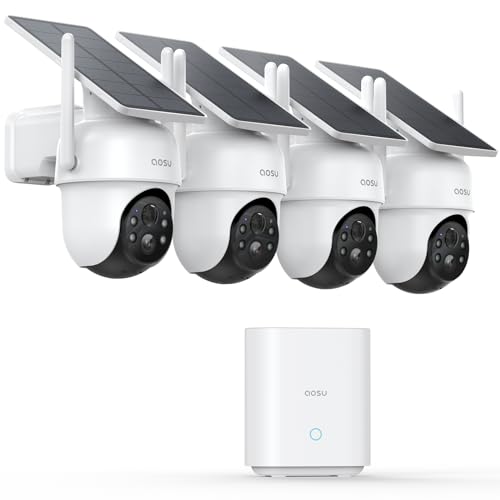
aosu 4-Camera Solar Wireless System with 360° Pan & Tilt
A solar-powered 4-camera outdoor security kit that eliminates subscription fees through local encrypted storage and offers 360-degree coverage with auto motion tracking. Best suited for homeowners seeking low-maintenance, always-on surveillance without recurring costs.
Pros
- Eliminates ongoing subscription fees while maintaining encrypted cloud backup through aosuBase
- Solar charging reduces battery maintenance and provides sustained operation even during cloudy weather
- Full 360-degree pan and tilt coverage with automatic subject tracking captures more events than fixed cameras
- Supports simultaneous 4-camera live streaming on one screen for comprehensive monitoring
- 2K resolution and 4-LED night vision deliver clear footage in both day and low-light conditions
Cons
- No verified customer reviews available yet, making real-world reliability difficult to assess
- Requires adequate daily sunlight (3 hours minimum) which may limit placement options in heavily shaded locations
- Setup involves drilling installation, which may not appeal to renters or those avoiding wall damage
ANSQUE 4-Camera Wireless Security System, 360° PTZ
Solar-powered wireless security kit with 360-degree PTZ cameras, AI auto-tracking, and local storage eliminates subscription fees. Best for homeowners wanting comprehensive outdoor coverage without ongoing service costs.
Pros
- Eliminates recurring subscription costs, saving up to $200 annually
- AI-powered human detection with automatic tracking across blind spots
- 2K night vision with 7-layer glass lens and 40-foot detection range
- Solar panel charges reliably in cloudy, shaded conditions
- Quad-view app shows all four cameras simultaneously
Cons
- Product has zero verified reviews, making real-world reliability unconfirmed
- Requires minimum 2 hours daily sunlight exposure for continuous operation
- No mention of weatherproof rating or temperature operating limits
Home Security Systems Buying Guide
Choosing a home security system involves far more than picking the brand with the best-looking app.
Coverage zone, monitoring model, camera quality, smart home compatibility, and long-term subscription costs all factor into whether a system will still feel like a good investment two years after purchase.
The sections below break down each criterion so you can match the right system to your actual living situation.
System Type: Alarm Kit vs. Camera-Only Kit
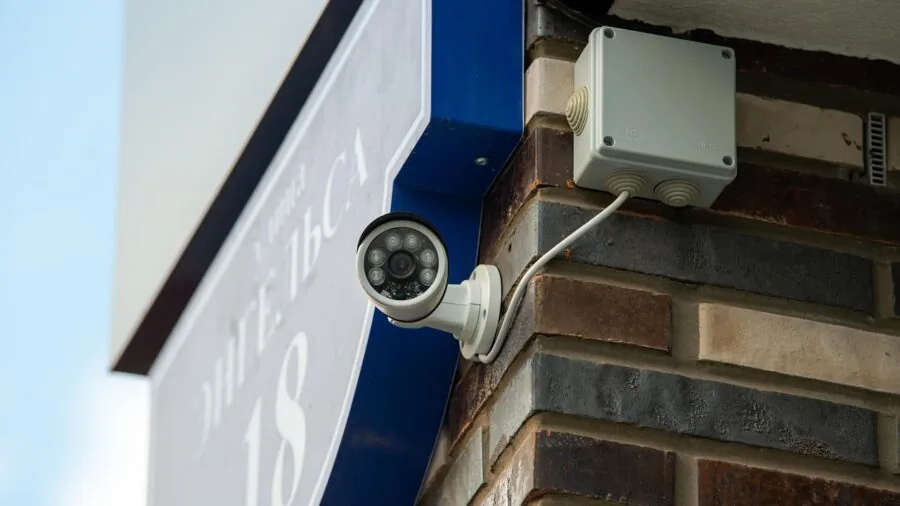
The most fundamental decision is whether you need a full alarm ecosystem or a camera-focused outdoor surveillance kit.
Integrated alarm kits like those from Ring and SimpliSafe combine a base station, keypad, door and window contact sensors, motion detectors, and optional cameras into a single coordinated system.
When a sensor triggers, the base station sounds a siren and, if you subscribe to professional monitoring, dispatches police or fire services. This layered approach protects against intrusion even when your cameras are not pointed at the right angle.
Camera-only kits from brands like aosu, ANSQUE, and Vivideye skip the siren and sensors entirely and focus on recording and streaming video from multiple outdoor angles.
These work well as a supplement to an existing alarm system or for renters who need flexible, removable hardware.
They also tend to have no mandatory subscription at all since footage is stored locally on an SD card or included storage. The tradeoff is that a camera alone cannot trigger a siren or call for help automatically.
If you are starting from scratch with no existing equipment, lean toward a full alarm kit. If you already have sensors on your doors and just want better outdoor visibility, a solar-powered camera kit may be the smarter add-on.
Thinking about smart home integration at the same time is worth it since devices like smart light switches can automatically turn on exterior lights when a camera detects motion, adding a deterrent layer without any extra cost.
Professional Monitoring vs. Self-Monitoring
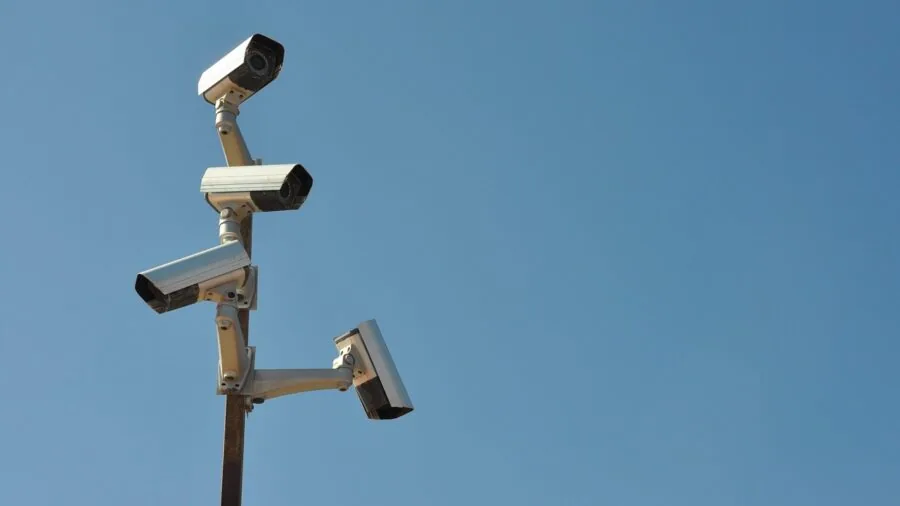
Professional monitoring means a staffed response center receives your alarm signal and contacts you, then emergency services if you do not respond. Both Ring Alarm and SimpliSafe offer this on a monthly, no-contract basis.
The cost is modest relative to traditional alarm companies that lock you into multi-year agreements with early termination fees.
For households where no one is reliably home during the day, professional monitoring adds a genuine safety net that self-monitoring alone cannot replicate.
Self-monitoring means the app notifies you directly when a sensor trips or a camera detects motion. You then decide whether to call the police yourself.
This works fine for tech-comfortable users with reliable smartphone access throughout the day, and it is completely free beyond the cost of the hardware.
Ring and SimpliSafe both allow self-monitoring without any subscription, which is a major advantage over older wired systems that required a paid plan to function at all.
Consider your lifestyle honestly. If you travel frequently or have a second home, professional monitoring is worth the monthly fee. If you work from home and keep your phone nearby, self-monitoring with real-time push alerts may be perfectly sufficient.
Either way, verify that the system you choose allows you to switch between the two modes without penalties or hardware changes.
Sensor Coverage and Piece Count
Security system kits are sold by piece count, but the number alone is less important than what those pieces protect. A nine-piece kit might include one motion sensor, one keypad, one base station, and six door and window sensors.
That could be exactly right for a two-bedroom apartment with a single entry door and a back door, or woefully insufficient for a large house with a garage door, multiple ground-floor windows, and a sliding glass patio door.
Map your entry points before you buy.
Both Ring and SimpliSafe sell individual sensors separately, so you are not locked into the piece count in the box. However, buying add-ons individually is more expensive per piece than buying a larger kit upfront.
If you know your home has more than a handful of entry points, it is usually smarter to step up to a larger kit and avoid the per-sensor premium later.
SimpliSafe’s eleven-piece Gen 3 kit with an included indoor camera is a good example of a kit sized for a medium-to-large home.
For outdoor camera kits, four cameras is the typical starting point for whole-home perimeter coverage: front door, back yard, driveway, and a side entrance.
The 360-degree pan-and-tilt designs from aosu and ANSQUE can substitute for two fixed-angle cameras in some layouts, reducing total hardware needed.
Factor in your Wi-Fi signal strength outdoors since solar-powered cameras still need a reliable wireless connection to stream and record.
Camera Resolution and Night Vision
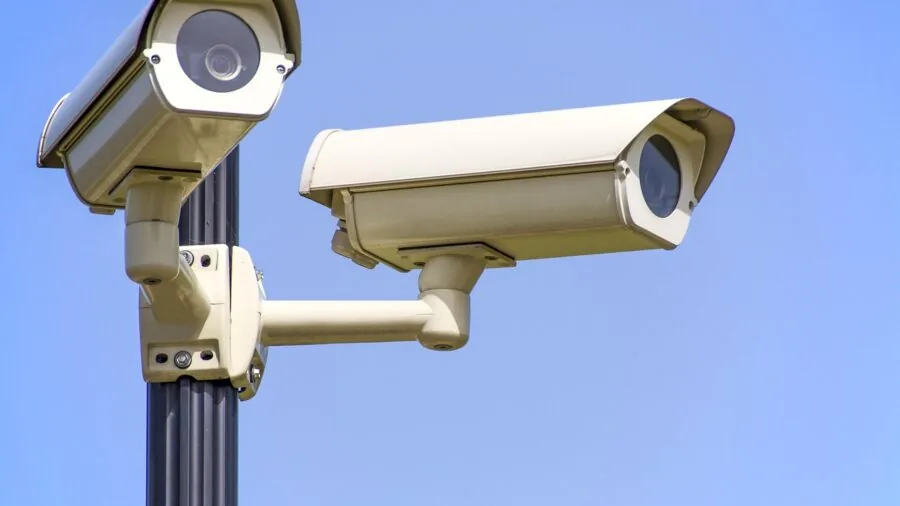
Camera resolution determines whether recorded footage is actually usable for identification purposes. Full HD captures readable license plates and facial features at moderate distances.
The step up to 2K or higher adds meaningful detail when you need to identify a person or vehicle at the far edge of the frame, a real-world scenario that happens more often than manufacturers acknowledge in their marketing.
All of the camera products in this roundup record at 2K or better, which puts them in a usable range for identification.
Night vision quality varies more than resolution specs suggest. Traditional infrared night vision produces black-and-white footage that can miss color cues like clothing or vehicle color.
Color night vision, which uses a brighter sensor and sometimes a supplemental LED, captures footage in color even in low-light conditions. The aosu and ANSQUE kits both advertise color night vision, which is a genuine advantage for identification purposes.
Check sample footage from real-world reviews, not just the promotional renders, before deciding.
Ring’s outdoor cameras that bundle with the fourteen-piece alarm kit use a different form factor than the standalone camera kits, and they are designed to work natively within the Ring app ecosystem.
If you are already invested in Ring doorbells or Ring indoor cameras, that ecosystem coherence simplifies setup and reduces the number of apps you manage daily.
Think of it the same way you might think about pairing smart light bulbs with a compatible smart home hub: compatibility saves frustration over time.
Power Source: Battery, Solar, and Wired
Alarm system base stations and keypads typically plug into a standard outlet with a backup battery that keeps the system running during a power outage.
Door and window sensors run on replaceable coin-cell batteries that last one to three years depending on how frequently they trigger. This is important to factor in for large installations since dozens of sensors mean occasional battery maintenance.
Both Ring and SimpliSafe use standard battery formats that are easy to source.
Outdoor cameras have more options. The Vivideye and aosu kits in this roundup rely on solar panels combined with an internal rechargeable battery, making them effectively wire-free once installed.
This eliminates the need to run power cables outdoors, which matters in rental situations or for cameras mounted high on eaves.
The ANSQUE kit advertises up to 365-day battery life on a single charge under typical conditions, which is a bold claim worth checking against real-world user reports in verified reviews before assuming it applies to your climate and usage pattern.
Wired cameras, which are not represented in this particular roundup, deliver more consistent performance because they are never limited by battery charge, but they require more involved installation. For most renters and first-time security buyers, solar-plus-battery or standard rechargeable designs are the practical starting point.
Smart Home Compatibility and App Ecosystem

If you use Amazon Alexa or Google Assistant, both Ring Alarm and SimpliSafe integrate natively with both platforms.
You can arm or disarm the system with a voice command, check sensor status through a smart display, and build routines that trigger other smart devices when the alarm state changes.
This kind of integration is genuinely useful and not just a marketing checkbox.
Pairing a security system with devices like a color-changing smart bulb that flashes red when the alarm triggers adds a visual alert layer on top of the siren.
The camera-only kits from aosu, ANSQUE, and Vivideye operate through their own brand apps and do not currently integrate into the broader Alexa or Google Home ecosystems in the same seamless way.
This is not a dealbreaker for buyers who just want standalone surveillance, but it does mean managing a separate app. If ecosystem consolidation matters to you, stick with Ring or SimpliSafe hardware throughout your setup.
App reliability is harder to assess from a spec sheet but shows up clearly in long-term verified buyer feedback. Look for consistent reports of stable push notifications, low false-alarm rates from motion detection, and reliable remote arm and disarm.
An app that freezes during a real emergency is worse than no app at all. This is one of the areas where expert review consensus and owner feedback over time are more informative than any manufacturer specification.
Why You Should Trust Us
ProductFind is an independent editorial review site. We do not sell security systems, handle installations, or have any commercial relationship with the brands we cover.
Every product in this roundup was evaluated by our research team using a consistent, documented methodology built around four data pillars: published hardware specifications, expert review consensus drawn from security and smart home coverage across the industry, verified buyer feedback from confirmed purchasers, and manufacturer-published data on monitoring terms and equipment compatibility.
We do not conduct our own product trials; our evaluations are grounded in research, published data, expert review consensus, and verified buyer feedback.
Each product receives a PF Score on a scale of 0 to 10, calculated against a consistent rubric that weights reliability, coverage, monitoring value, app quality, smart home compatibility, and long-term ownership cost.
A higher PF Score reflects a stronger aggregate signal across all of those dimensions, not just one standout feature.
ProductFind may earn a commission if you purchase through a link in this article. That affiliate relationship has no influence on rankings, PF Scores, or which products are included or excluded.
Our editorial team makes all selection decisions independently, and commission rates are not factored into any score or recommendation.
Final Thoughts
The home security market in 2026 offers something genuinely useful at nearly every budget level, from entry-level wireless camera kits to comprehensive multi-sensor alarm systems with optional professional dispatch.
After synthesizing specifications, expert review consensus, and verified buyer feedback across all eight products in this roundup, here are the standout picks by use case.
- Best Overall: Ring Alarm 14-Piece Kit with Ring Outdoor Cam Plus earns the top spot with the highest PF Score in this roundup, combining a comprehensive alarm sensor package with bundled outdoor cameras in a single cohesive ecosystem. It is the most complete out-of-box solution for buyers who want alarm protection and outdoor video surveillance without mixing brands or apps.
- Best Mid-Range Alarm Kit: SimpliSafe 11-Piece Wireless Home Security System Gen 3 is the pick for buyers who prefer SimpliSafe’s monitoring infrastructure and want a generously sized sensor set with an indoor camera included. Its Gen 3 hardware represents a meaningful upgrade in reliability and setup simplicity over earlier SimpliSafe generations.
- Best Value Alarm Kit: Ring Alarm 8-Piece Kit delivers Ring’s proven platform at a more accessible price point. The like-new condition brings the cost down further, making it an excellent entry point for first-time security buyers who want optional professional monitoring without a long-term contract.
- Best Solar Camera Kit: aosu Security Cameras Outdoor Wireless 4-Camera Kit stands out among the camera-only options for its 360-degree pan-and-tilt coverage, 2K color night vision, and completely subscription-free operation powered by solar energy. It suits renters or buyers who want perimeter surveillance without any monthly fees.
- Best Budget Camera Option: Vivideye Security Cameras Wireless Outdoor 2-Camera Kit is the most affordable entry point in this roundup, supporting both 5G and 2.4G Wi-Fi, offering local 128GB storage, and including color night vision. For buyers who need basic two-angle outdoor coverage without subscriptions, it provides solid value at a budget-friendly price point.
Whichever direction you go, the biggest upgrade you can make alongside a new security system is adding reliable smart lighting.
Automating your exterior lights to respond to motion events from your security cameras costs very little and adds a visible deterrent that cameras alone cannot provide.
A layered approach combining alarm sensors, outdoor cameras, and smart lighting gives you overlapping coverage that is much harder to circumvent than any single device.
Frequently Asked Questions
Do I need a subscription to use a home security system?
No. Both Ring Alarm and SimpliSafe function without any paid subscription. You can arm and disarm the system, receive push notifications, and access camera footage through the app entirely for free.
A subscription is only required if you want professional monitoring, where a staffed response center contacts you and emergency services when an alarm triggers.
The camera-only kits from aosu, ANSQUE, and Vivideye store footage locally and require no subscription at all.
Can I install a home security system myself?
Yes. Every product in this roundup is designed for DIY installation with no professional help required. Ring and SimpliSafe use wireless sensors with adhesive mounting hardware that attaches to door frames and windows without drilling.
Solar-powered outdoor cameras mount with a single screw or surface bracket. Most users report completing a basic setup within one to two hours.
If you can set up a smart plug or install a thermostat, you can handle a modern wireless security system.
How many sensors do I actually need?
A good starting point is one sensor for every exterior door, one motion sensor covering each main living area, and sensors on ground-floor windows that are accessible from outside. For a typical two-bedroom apartment, a seven-to-nine-piece kit is usually sufficient.
For a single-family home with a garage, basement door, and multiple ground-floor windows, a fourteen-piece kit or an eleven-piece kit supplemented with individual sensor purchases is more realistic. Map your entry points before ordering to avoid either over- or under-buying.
Are solar-powered security cameras reliable year-round?
Solar-powered cameras work well in most climates for most of the year, but performance in winter months and regions with frequent cloud cover deserves attention.
In low-light winter conditions, a camera that claims months of battery life on solar may recharge more slowly than it discharges, eventually requiring a manual USB recharge.
Look for kits that include a large internal battery to buffer against shorter solar days.
Verified buyer reviews from customers in northern climates or cloudy regions are the most useful data point here since manufacturer claims are typically based on ideal solar conditions.
Will a home security system work with my smart home setup?
Ring Alarm and SimpliSafe both support Amazon Alexa and Google Assistant natively, allowing voice commands for arming, disarming, and status checks. Ring integrates particularly tightly with other Ring and Amazon devices.
The camera-only kits from smaller brands operate in their own app ecosystems and have more limited smart home integration.
If you are building a broader smart home setup that includes smart bulbs or other connected devices, prioritizing a system with strong Alexa or Google Home support simplifies automation and reduces app fragmentation.
What is the difference between a dome camera and a bullet camera for home use?
Bullet cameras have a cylindrical body that mounts on a wall or eave bracket and points in a fixed direction. They are more visible, which acts as a deterrent, and typically offer longer-range viewing angles.
Dome cameras have a rounded, lower-profile housing that is harder to tamper with and covers a wider field of view, making them less directional. For most residential outdoor use the practical difference is modest.
Pan-and-tilt designs like those in the aosu and ANSQUE kits effectively combine the coverage advantages of both by allowing the camera to rotate remotely or automatically track motion across a 360-degree arc.
About the author
Debra is a reviewer and writer for ProductFind who specializes in Smart Home. Debra evaluates products through independent research: specifications, expert review consensus, and verified buyer feedback, and rates each one on the PF Score. Debra focuses on helping readers pick the right smart home for their needs and budget.