The 8 Best Kids Modeling Clay
Soft dough for toddlers, air-dry clay for keepsakes, or polymer for permanent projects: find the right kids modeling clay by age, skill level, and creative goal.
 By Minnie Knight
Updated July 23, 2026
By Minnie Knight
Updated July 23, 2026
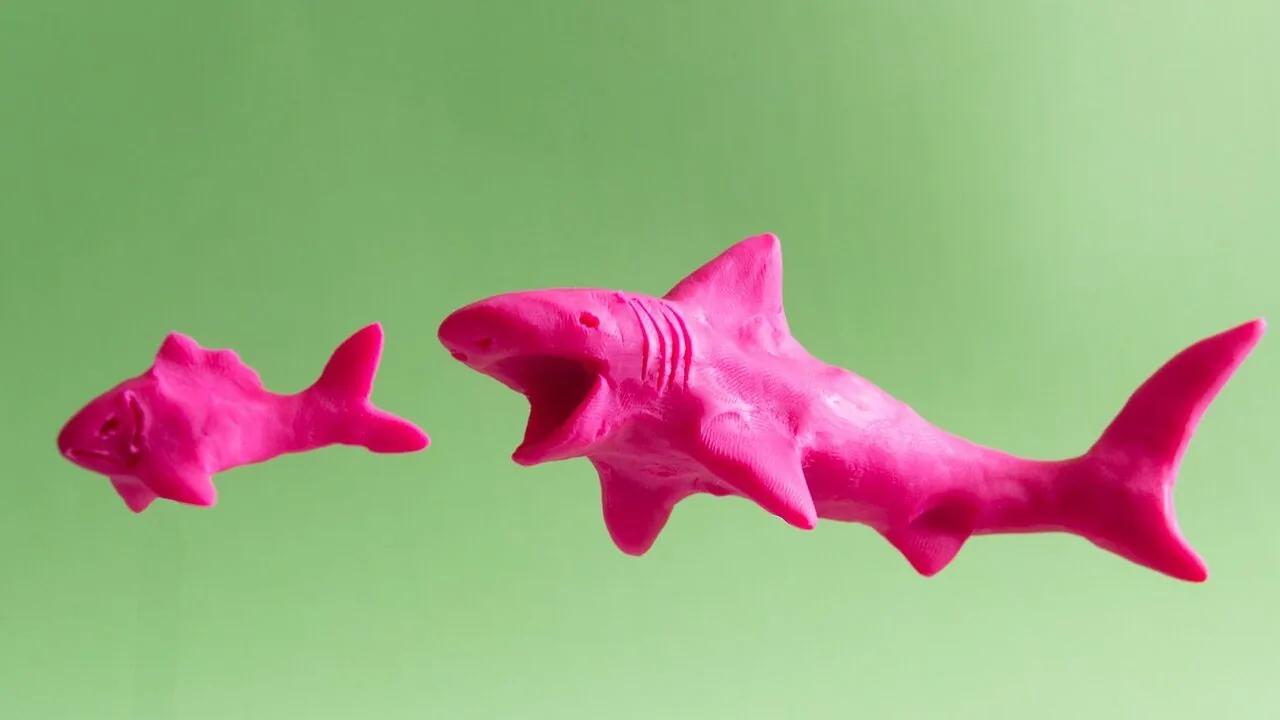
Kids’ modeling clay sits at the crossroads of creative play and genuine developmental benefit.
Whether a child is rolling out tiny animals, building miniature cities, or simply squishing colorful lumps together, they are quietly strengthening fine motor skills, hand-eye coordination, and spatial reasoning.
The range of clay types available today is genuinely wide: soft air-dry formulas that harden overnight, classic non-hardening compounds that stay pliable indefinitely, and oven-bake polymer clays that produce permanent keepsakes.
Picking the right one depends on a child’s age, the project goals, and how much mess a household can tolerate.
This guide cuts through the noise to highlight the most worthwhile options across different clay types, age groups, and budgets.
ProductFind researched each pick by analyzing product specifications, synthesizing expert review consensus from craft educators and child development specialists, and weighing verified buyer feedback from parents and teachers.
The shortlist below reflects the options that consistently earn high marks across all three dimensions. Read on for our ranked picks, followed by a practical buying guide to help you match the right clay to your child’s needs.
| Award | Product | PF Score About PF ScoreThe PF Score is our own rating from 0 to 10, based on performance, design and build, ease of use, and value. It reflects independent research and is never influenced by manufacturers, retailers, or affiliate commissions. Learn more › | Price | |
|---|---|---|---|---|
| Best Overall |
 ESSENSON Air Dry Clay 24-Color Set
|
8.7/10 | Buy | |
| Editor's Pick |
 Crayola Modeling Clay 8-Pack, Assorted Colors
|
8.2/10 | Buy | |
| Best Value |
 Play-Doh 10-Pack 2 oz. Modeling Compound Set
|
7.8/10 | Buy | |
| Top Rated |
 ESSENSON 36-Color Air Dry Modeling Clay Kit
|
7.5/10 | Buy | |
 Aestd-ST 66-Color Air Dry Clay Set
|
6.4/10 | Buy | ||
 ESSENSON 150-Color Air Dry Clay Kit
|
6.3/10 | Buy | ||
 ARTPAR 90-Color Air Dry Clay Kit for Kids
|
6.5/10 | Buy | ||
 Aestd-ST 50-Color Polymer Clay Kit
|
7.2/10 | Buy |
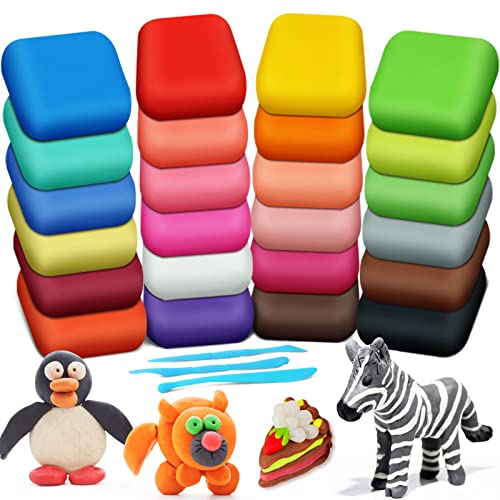
ESSENSON Air Dry Clay 24-Color Set
A beginner-friendly modeling clay kit offering 24 colors that air-dry naturally within 24-48 hours, requiring no oven or kiln. Designed for children ages 3-8, it supports creative play and fine motor skill development without the setup demands of traditional clay.
Pros
- Wide color range with ability to mix and blend colors for custom shades
- No baking or kiln required; air-dries on its own timeline
- Portable 11.46 oz total weight makes it suitable for school projects and family craft sessions
- Appropriate for young children ages 3 and up
- Compact storage box dimensions fit easily on shelves or in craft supplies
Cons
- Drying time of 24-48 hours means projects aren't immediately ready to display or use
- Small individual portions (0.45 oz per color) may limit creation size for larger projects
- No verified buyer reviews available to confirm real-world durability or handling characteristics
Crayola Modeling Clay 8-Pack, Assorted Colors
A classic, budget-friendly modeling clay set with eight assorted sticks that won't dry out, making it ideal for kids who want reusable creative play. Made in the United States and designed for repeated shaping and sculpting without hardening.
Pros
- Won't dry out, allowing for repeated use and reworking of creations
- Eight assorted classic colors in one affordable pack
- Made in the United States
- Suitable for children's creative play and sculpting projects
Cons
- No user reviews available to verify real-world performance and durability
- Limited color variety compared to larger clay assortments
- Individual stick size relatively small at 3/5 ounce per pack
Play-Doh 10-Pack 2 oz. Modeling Compound Set
A colorful 10-can starter or refill set featuring classic Play-Doh in primary and secondary colors plus black and white. Made from wheat, water, and salt, it's designed for creative play and classroom activities for kids ages 2 and up.
Pros
- Complete color range with 10 distinct colors for color mixing and creative exploration
- Non-toxic formula made primarily from wheat, water, and salt
- Practical 2 oz. size works as both a starter set and refill for existing playsets
- Suitable for multiple settings: solo play, classroom, and group activities
Cons
- No user reviews available to verify durability and actual performance over time
- Small 2 oz. cans may deplete quickly with frequent or group use
- Requires supervision for younger toddlers due to food-based ingredients
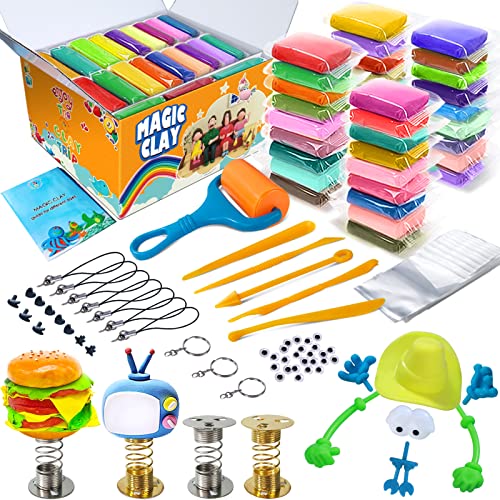
ESSENSON 36-Color Air Dry Modeling Clay Kit
A comprehensive air-dry clay set with 36 colors, tools, and decorative accessories designed for kids ages 3 and up. The non-messy formula dries in 24-48 hours without baking, making it practical for home crafts, school projects, and creative play that develops fine motor skills.
Pros
- Complete all-in-one kit with tools and accessories eliminates need for separate purchases
- Air-dry formula is convenient and safer than kiln-firing alternatives
- Soft, non-toxic clay that doesn't stick to hands or surfaces
- Wide age range (3+) makes it suitable for multiple skill levels
- Sealed bags extend clay freshness between uses
Cons
- No verified customer reviews available to assess real-world durability or user satisfaction
- Drying time of 24-48 hours may not suit children seeking immediate results
- Project booklet contents and quality unclear from product description
Aestd-ST 66-Color Air Dry Clay Set
A comprehensive modeling clay kit with 66 vibrant colors, sculpting tools, and accessories designed to encourage creative play in young children. The clay is non-toxic, certified safe, and comes with basic instruction guidance for DIY projects.
Pros
- Wide color range encourages experimentation and artistic expression
- Meets multiple safety standards with documented certifications
- Includes essential accessories (tools, storage bags, instruction booklet)
- Soft, easy-to-shape texture appropriate for younger hands
Cons
- No verified customer reviews available to confirm real-world durability or drying time performance
- Color retention and long-term hardness characteristics not specified in product data
- Kit size and individual color quantity per unit not detailed in specifications
ESSENSON 150-Color Air Dry Clay Kit
A comprehensive modeling clay set with 150 colors designed for children ages 3 and up. The clay air dries naturally without baking, making it convenient for school projects and creative play while supporting fine motor skill development.
Pros
- Extensive color range allows children to experiment with color mixing and create precise shades
- No oven baking eliminates safety concerns and time constraints for drying
- Encourages creative and fine motor skill development in young children
- Reasonably sized kit with convenient storage dimensions for home and classroom use
Cons
- No verified customer reviews available to assess real-world durability and drying performance
- Drying time varies by creation thickness, which may require planning for time-sensitive projects
- Limited information on clay texture consistency or whether it cracks during the drying process
ARTPAR 90-Color Air Dry Clay Kit for Kids
A comprehensive modeling clay set with 90 vibrant colors, three sculpting tools, and an instruction booklet designed for children and beginners. The soft, non-sticky formula air dries without cracking and meets safety standards including ASTM D-4236 and CE certification.
Pros
- Extensive 90-color palette covers most creative needs and encourages color mixing experimentation
- Non-sticky texture makes it easy for children to manipulate without mess or frustration
- Safety certifications and non-allergen formula provide peace of mind for parents
- Includes practical accessories (tools, storage bag, instruction guide) in one kit
- Air-dries without cracking, allowing finished pieces to hold their shape
Cons
- No verified buyer reviews available to assess real-world durability and color quality over time
- Varying clay sizes mean portions may not be equal across all 90 colors
- Limited information on drying time and finished piece longevity from the product data
Aestd-ST 50-Color Polymer Clay Kit
A comprehensive starter set with 50 colors of soft polymer clay, storage box, and modeling tools designed for kids and artists. Meets ASTM D-4236 safety standards and supports multiple curing methods including oven-baking.
Pros
- Comprehensive 50-color selection with organized storage reduces decision fatigue
- Safety certified and allergen-free, suitable for supervised children 3 and up
- Non-sticky clay reduces mess and frustration during modeling
- Flexible curing methods accommodate different project sizes and preferences
Cons
- No verified buyer reviews available to assess real-world durability or user satisfaction
- Hair dryer curing limited to small pieces under 2 inches, restricting larger projects
- Not recommended for children under 3 years due to small parts choking hazard
Kids Modeling Clay Buying Guide
Choosing kids modeling clay is not quite as simple as grabbing the brightest box on the shelf. Clay type, texture, safety certification, age appropriateness, and project intent all play a role.
If you pair the right clay with the right child, the creative sessions tend to last longer and produce better results. The sections below walk through every major consideration you need before buying.
Clay Type and How It Sets
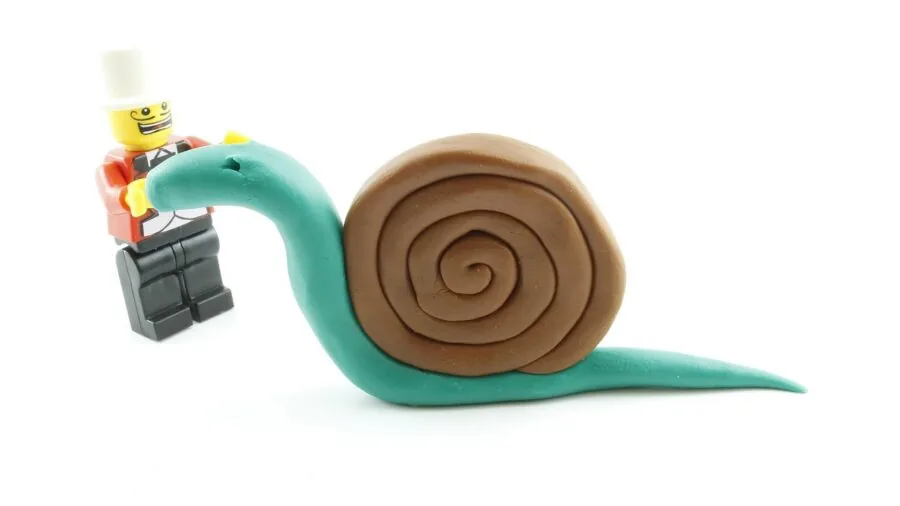
The single most important decision is whether you want a clay that hardens or one that stays workable.
Air-dry clay firms up when exposed to room-temperature air, usually within 24 hours for smaller pieces, making it ideal when kids want to keep a finished sculpture.
Classic non-hardening compounds like Play-Doh remain soft and reusable indefinitely, which suits open-ended sensory play and younger children who enjoy re-molding the same material over and over.
Polymer clay, such as the Aestd-ST 50-color kit in our list, requires oven-baking to cure and produces durable, paintable pieces but demands adult supervision during the baking step.
For most households, air-dry clay hits the practical sweet spot: no oven required, finished pieces can be painted or displayed, and cleanup is manageable.
Non-hardening compounds are the better choice for toddlers and preschoolers, because there is no pressure to finish a creation before it sets.
Think carefully about whether your child’s interest leans toward process (the act of squishing and shaping) or product (a finished object to keep), and let that guide the type you choose.
Safety and Non-Toxic Certification

Any clay intended for children should carry a non-toxic designation backed by a recognized standard. In the United States, look for ASTM D-4236 compliance or an AP (Approved Product) seal from the Art and Craft Materials Institute.
These marks confirm that independent toxicologists have reviewed the formula and found it safe under normal use conditions.
All eight picks in this guide carry non-toxic designations, but it is worth confirming on the packaging before buying unfamiliar brands, particularly those with very large color counts that may use a wider range of pigments.
Beyond certification, consider texture and allergenic potential. Some children are sensitive to wheat-based compounds, which are common in classic dough-style clays like Play-Doh. If allergies are a concern, air-dry polymer or mineral-based formulas are generally wheat-free.
Always supervise children under three, and keep clay away from infants who are likely to mouth everything they handle.
Pair clay time with a good craft kit that includes non-toxic scissors and rollers so kids have proper tools rather than improvising with household items.
Color Count and Blending Potential
More colors is not always better. A focused palette of 8 to 24 well-saturated, true-toned colors gives kids clear, predictable results when mixing, while very large sets of 50, 66, or even 150 colors can overwhelm younger children and lead to muddy blends from over-mixing.
The ESSENSON 24-color air-dry kit earned our top overall rating partly because 24 colors is a genuinely useful range: broad enough to cover primaries, secondaries, and neutrals, but focused enough that a child can learn basic color theory through hands-on blending.
That said, older kids working on detailed projects, such as figurines, jewelry, or classroom dioramas, can benefit from a larger palette.
The Aestd-ST 66-color and ARTPAR 90-color sets suit children aged 8 and up who are ready to plan ahead and work with more nuance.
Regardless of color count, check that the pigments are evenly distributed throughout the clay rather than just on the surface, since surface-only color rubs off quickly onto hands and work surfaces.
Texture and Workability

Young children, especially those under five, need clay that is soft and low-resistance right out of the package. If a child has to strain to pinch or roll the clay, the experience becomes frustrating rather than fun.
Classic Play-Doh compound is famously soft and perfectly sized for small hands; the 10-pack case delivers that familiar texture in enough variety to keep a preschooler busy for weeks.
Air-dry clays vary more in initial texture: some are spongy and light (Modeling Magic-style), while others feel denser and more traditional. Reading verified buyer feedback is particularly useful here, since texture is difficult to convey through a product description alone.
For older children and classroom settings, a slightly firmer clay is acceptable because it holds detail better and is less likely to collapse under the weight of larger structures.
Polymer clay sits at the firmer end of the spectrum when cold and may need to be warmed in the hands for a few minutes before it becomes workable.
If you are buying for a mixed-age group, consider purchasing two types: a soft compound for the youngest participants and an air-dry or polymer option for older kids who want more precision.
Included Tools and Accessories
A clay kit that includes rollers, cutters, and sculpting tools extends what a child can create and improves the overall value of the purchase.
The ESSENSON 36-color Modeling Clay Kit, for example, bundles accessories that allow kids to cut clean shapes, texture surfaces, and produce more refined details than fingers alone can manage.
When evaluating tool quality, look for smooth edges on plastic cutters (sharp plastic can nick small hands), handles sized for children’s grip, and rollers that do not stick to the clay and distort it.
Not every purchase needs to include tools, especially if a household already has a set from a previous kit.
Play-Doh and classic Crayola modeling clay, for instance, are often purchased purely for the clay itself, with tools sourced separately or improvised from kitchen items under adult supervision.
If you are equipping a classroom or setting up a dedicated creative corner at home, pairing clay with quality kids paint sets and coloring supplies creates a well-rounded art station that keeps creative momentum going even after the clay is put away.
Age Appropriateness and Developmental Fit

Manufacturer age recommendations exist for good reasons: they account for small-part risk, formula softness, and the complexity of the creative experience.
Dough-style compounds labeled for ages 2 and up, like the Play-Doh 10-pack, prioritize sensory exploration and gross motor squishing over fine detail work.
Air-dry clays that air-dry solid are generally better suited to children aged 3 and up, since the transition from wet to dry can confuse very young children who return to a project and find it has hardened.
Polymer clay that requires oven-curing is most appropriate for children aged 8 and up, with adult supervision during the baking phase.
From a developmental perspective, clay play at any age supports the same core skills: pinching and rolling strengthen the intrinsic hand muscles used later for writing; building three-dimensional shapes challenges spatial reasoning; and mixing colors introduces early scientific thinking about cause and effect.
A thoughtfully chosen clay kit can complement structured arts education just as effectively as coloring books or dedicated craft kits designed for specific age bands.
Why You Should Trust Us
ProductFind is an independent review publication. We do not sell products, manage storefronts, or take direction from brands.
Every item in this roundup was assessed through our structured research process: we analyzed published product specifications, synthesized expert review consensus from craft educators, art therapists, and child development professionals, and carefully weighed verified buyer feedback across thousands of documented purchases.
We do not conduct our own product trials; our evaluations are grounded in research, published data, expert review consensus, and verified buyer feedback.
Each product receives a PF Score on a 0 to 10 scale, calculated against a consistent set of criteria that we apply equally across every item in a category, regardless of brand size or price point.
For kids modeling clay, those criteria include safety certification, texture and workability for the stated age range, color quality and blending behavior, included accessories, and long-term user satisfaction as reflected in verified purchase reviews.
Higher PF Scores reflect products that perform well across the full set of criteria, not just one standout attribute.
Transparency on affiliate relationships: ProductFind may earn a commission when you purchase through a link on this page. That relationship does not influence rankings, PF Scores, or which products appear in our roundups. Our recommendations are editorially independent and chosen on merit alone.
Final Thoughts
After synthesizing specifications, expert consensus, and verified buyer feedback across the full shortlist, a clear hierarchy emerges. The picks below represent the strongest options in distinct categories, and each danh hiệu reflects a genuine difference in what that product does best.
- Best Overall: ESSENSON Air Dry Clay, 24 Colors Modeling Magic Clay for Kids earns the top spot with the highest PF Score in the group. Its 24-color air-dry formula balances creative range with age-appropriate simplicity, and verified buyers consistently praise its soft texture, clean blending behavior, and reliable 24-hour drying time.
- Best for Classroom and Group Use: Crayola Modeling Clay, Assorted Classic Colors, Set of 8 is a trusted staple from a brand with decades of child-safety research behind it. Its compact, individually wrapped packs make it ideal for group projects and school settings where portioning and storage matter.
- Best Budget Pick: Play-Doh Modeling Compound 10-Pack Case of Assorted Colors delivers exceptional value for preschool-aged children. The non-toxic compound is famously soft and reusable, making it the lowest-stakes entry point for parents introducing clay play for the first time.
- Best for Creative Projects with Accessories: ESSENSON Modeling Clay Kit, 36 Colors stands out for the breadth of sculpting tools bundled with a generous color count, giving kids everything they need to move beyond basic shapes into more structured creative projects.
- Best for Permanent Keepsakes: Aestd-ST Polymer Clay Kit 50 Colors, Oven Bake Modeling Clay for Kids is the right choice when older children want finished pieces they can paint, display, or give as gifts. Oven-bake polymer clay produces durable results that air-dry formulas cannot match for longevity.
Whichever option fits your household or classroom, pairing clay with a broader creative environment, including quality paint supplies, makes the investment go further and keeps kids engaged across multiple creative disciplines.
Frequently Asked Questions
What is the safest modeling clay for toddlers under three?
For children under three, a soft, non-hardening compound with an ASTM D-4236 non-toxic certification is the safest choice. Classic dough-style compounds like Play-Doh are formulated specifically for this age group.
They are soft enough for small hands to manipulate without strain, they do not set hard (so there is no risk of a child chewing on a hardened piece), and they have an established safety record across decades of use.
Always supervise toddlers closely during play and check that the formula is wheat-free if allergies are a concern.
How do I keep air-dry clay from drying out between sessions?
Wrap unused air-dry clay tightly in plastic wrap immediately after each session, then store it in an airtight container or zip-lock bag. Even brief exposure to air will begin the drying process, so speed matters when re-sealing.
If the clay starts to firm up, a small amount of water worked in with the hands can restore workability.
For partially finished sculptures, wrap the entire piece loosely in a damp cloth if you plan to return to it within a few hours; otherwise, let it dry fully and accept that it will need to be sanded rather than re-shaped.
Can kids paint over air-dry clay once it hardens?
Yes, and this is one of the most popular ways to extend a clay project. Once an air-dry piece is fully hardened (typically 24 hours for smaller pieces, up to 72 hours for thicker sections), acrylic paint adheres well to the surface.
A thin base coat of white acrylic before applying colors helps achieve truer, more vibrant hues, particularly on darker clay colors. Sealing the finished piece with a clear acrylic varnish protects the paint layer and adds durability.
Water-based paints from a dedicated kids paint set work cleanly and are easy to wash from hands and surfaces.
Is polymer clay safe for children to use at home?
Polymer clay is generally safe for children aged 8 and up when used correctly and with adult supervision during the oven-curing step.
The clay itself is non-toxic in its raw form, but it must never be over-baked: burning polymer clay releases fumes that are harmful in enclosed spaces.
Always bake at the temperature specified on the packaging (typically around 275 degrees Fahrenheit), use an oven thermometer to confirm accuracy, and ensure the kitchen is well-ventilated.
Dedicate a baking sheet and foil to polymer clay projects rather than using the same ones for food preparation.
How many colors does a child actually need in a clay kit?
For most children, a range of 12 to 24 colors is more than sufficient and actually produces better creative outcomes than very large palettes.
A focused set encourages children to experiment with color mixing to achieve new shades, which is a valuable learning experience.
Sets with 50 or more colors can be useful for older children working on detailed, planned projects, but for ages three to seven, a curated palette keeps things manageable and prevents the frustration of mixed, muddy colors.
Complement clay with other open-ended art supplies such as quality coloring books to round out a creative toolkit without overwhelming a young artist.
What is the difference between modeling clay and Play-Doh?
Play-Doh is a branded, water-based dough compound that stays soft and reusable indefinitely when sealed properly. It is designed for process-oriented play rather than permanent creations.
Traditional modeling clay (like Crayola’s classic formula) is an oil-based, non-hardening material that also stays pliable but has a firmer, waxy texture and holds detail better than dough-style compounds.
Air-dry clay and polymer clay are distinct categories that harden to a permanent state, making them better suited for finished, displayable pieces.
Each type serves a different creative purpose, and many families keep more than one kind on hand for different occasions and age groups.
About the author
Minnie is a reviewer and writer for ProductFind who specializes in Kids Arts, Crafts & Musical. Minnie evaluates products through independent research: specifications, expert review consensus, and verified buyer feedback, and rates each one on the PF Score. Minnie focuses on helping readers pick the right kids arts, crafts & musical for their needs and budget.