The 8 Best Masticating Juicers
Cold press or centrifugal? Chute size or motor type? Choosing a masticating juicer comes down to the details that affect daily use. Here are the top picks, ranked.
 By Freddie Hansen
Updated July 23, 2026
By Freddie Hansen
Updated July 23, 2026
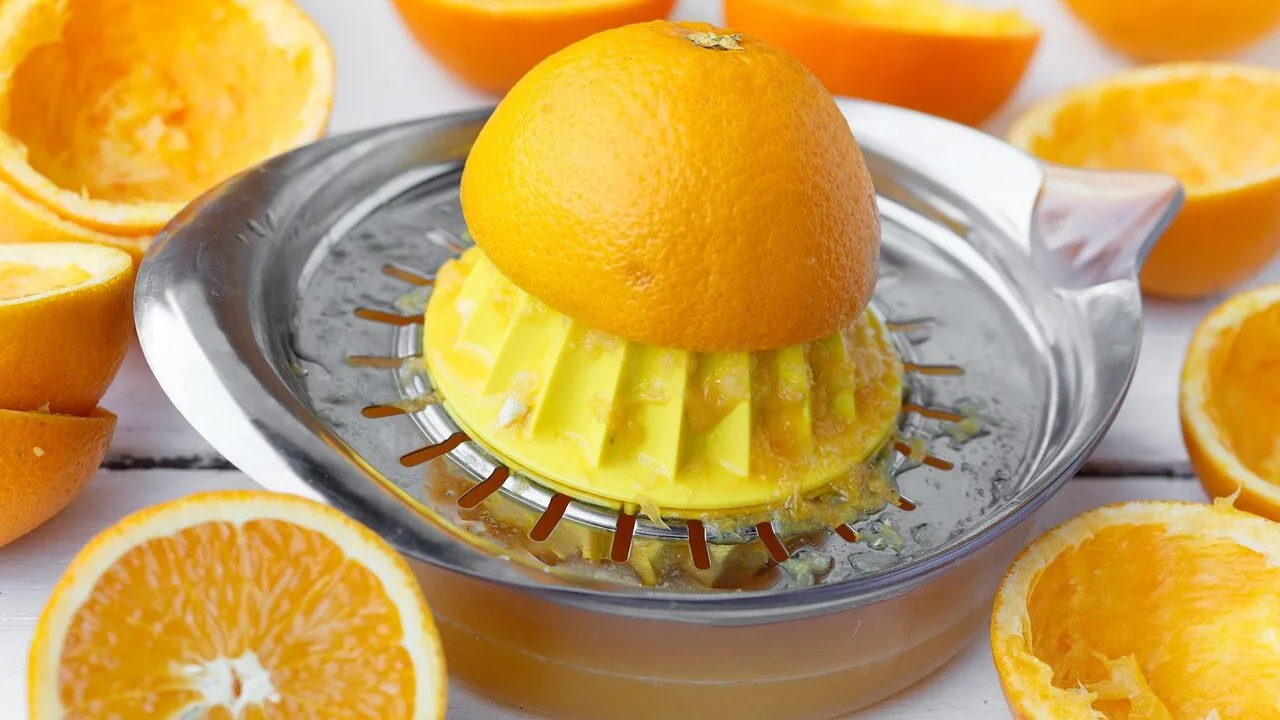
Cold press juicers have earned their place on kitchen counters for good reason: they extract significantly more juice from fruits and vegetables than centrifugal machines, operate at whisper-quiet speeds, and preserve more of the enzymes and nutrients that high-heat spinning blades tend to destroy.
If you have ever noticed your freshly made juice turning brown within minutes or tasting flat, oxidation from a high-speed machine is almost certainly the culprit.
A masticating juicer solves that by crushing and pressing produce slowly, keeping heat and oxidation to an absolute minimum, which means brighter flavour, better nutritional retention, and juice that stores well for up to 72 hours.
Choosing the right masticating juicer is not as straightforward as picking the one with the biggest motor or the widest chute, though both of those factors matter.
Feed chute diameter, auger material, strainer versatility, noise output, and how easy the machine actually is to disassemble and rinse all play a role in whether a juicer ends up living on your counter or gathering dust in a cabinet.
ProductFind researched this category by analysing published specifications, synthesising expert review consensus across authoritative sources, and weighing verified buyer feedback from confirmed purchasers.
The result is a shortlist of the most capable single-auger masticating juicers available right now, ranked from strongest to most value-oriented so you can find your match quickly.
| Award | Product | PF Score About PF ScoreThe PF Score is our own rating from 0 to 10, based on performance, design and build, ease of use, and value. It reflects independent research and is never influenced by manufacturers, retailers, or affiliate commissions. Learn more › | Price | |
|---|---|---|---|---|
| Best Overall |
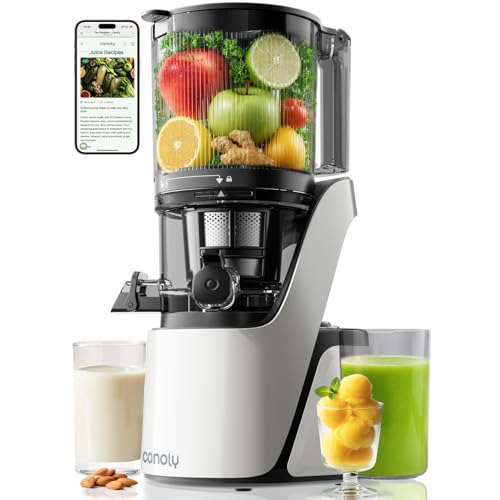 Canoly C16 Cold Press Juicer, 6-Inch Feed Chute
|
7.8/10 | Buy | |
| Editor's Pick |
 AMZCHEF 6.5-Inch Cold Press Masticating Juicer
|
7.6/10 | Buy | |
| Best Value |
 TUUMIIST Cold Press Juicer, 6.5" Chute, 100oz Hopper
|
7.3/10 | Buy | |
| Top Rated |
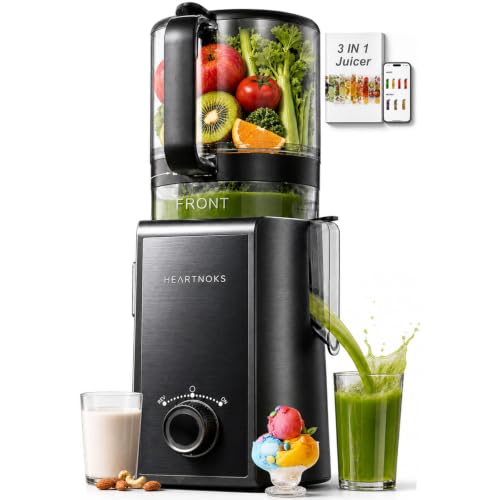 Heartnoks 3-in-1 Cold Press Juicer with 6.5" Feed Chute
|
6.9/10 | Buy | |
 EanOruus 3-in-1 Cold Press Juicer, 100oz Capacity
|
6.8/10 | Buy | ||
 Anybear 200W Masticating Juicer with 4.3" Feed Chute
|
6.5/10 | Buy | ||
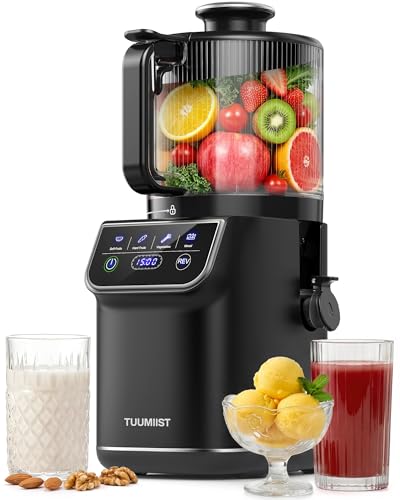 TUUMIIST 3-in-1 Cold Press Juicer, 6.5" Chute
|
6.3/10 | Buy | ||
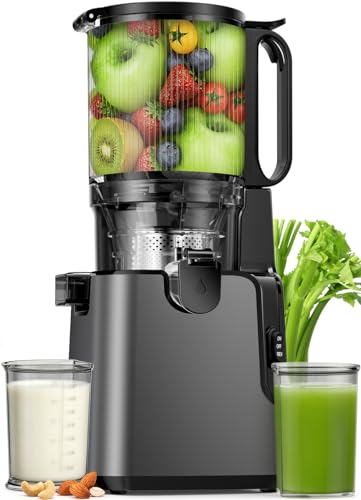 YPONE 5.8" Masticating Juicer, 400W Cold Press
|
6.2/10 | Buy |
Canoly C16 Cold Press Juicer, 6-Inch Feed Chute
A versatile masticating juicer with a 6-inch wide chute that handles whole fruits and vegetables without pre-cutting, plus dual strainers for juice, sorbet, and nut milk. The quiet 35dB motor and large 90oz capacity suit families or meal-prep routines, though no verified buyer reviews yet exist to assess real-world durability.
Pros
- Wide 6-inch feed chute reduces chopping time for whole fruits and large vegetables
- Quiet operation at 35dB suitable for early morning or family homes
- Large 90oz hopper enables efficient batch juicing and meal prep
- Multi-function capability (juice, sorbet, nut milk) in one machine
- 15-year motor warranty provides confidence in longevity
Cons
- No verified customer reviews available to confirm performance reliability
- Heavier unit at 13.89 pounds may pose storage or mobility concerns
- Premium pricing typically reflects multi-function capability, not budget-friendly for basic juicing
AMZCHEF 6.5-Inch Cold Press Masticating Juicer
A versatile 3-in-1 masticating juicer that makes fresh juice, nut milk, and frozen sorbets with a wide 6.5-inch chute to minimize prep work. The 600W motor and reverse function help reduce clogging, though there are no verified buyer reviews yet to confirm real-world durability.
Pros
- Wide feed chute handles larger fruits and vegetables with less prep work
- Multi-function capability saves countertop space versus separate appliances
- Non-clogging design with reverse function for smoother operation
- Detachable components make assembly and cleaning straightforward
Cons
- No verified customer reviews available yet to validate performance claims
- Compact dimensions may limit capacity for high-volume juicing sessions
- Reverse function and clogging claims lack buyer confirmation
TUUMIIST Cold Press Juicer, 6.5" Chute, 100oz Hopper
A masticating juicer with a large feed chute that fits whole apples, 100oz capacity hopper for batch juicing, and versatility for juice, nut milk, and sorbet. Designed for families prioritizing nutrient preservation and convenience.
Pros
- Large feed chute saves significant prep time for whole apples and larger produce
- Generous 100oz hopper capacity ideal for family meal prep without frequent reloading
- Single strainer versatility reduces parts inventory and cleaning complexity
- Slow 60 RPM extraction preserves nutrients better than high-speed juicers
- Quick-release mechanism with dedicated brush streamlines daily cleanup
Cons
- No verified buyer reviews available to assess real-world performance and durability
- 350W motor is moderate power, may require longer processing time for dense vegetables
- Limited information on juice yield consistency compared to competing models
Heartnoks 3-in-1 Cold Press Juicer with 6.5" Feed Chute
A versatile cold press juicer that handles juice, nut milk, and sorbet in one machine, featuring a wide feed chute to minimize prep work. The 300W motor and slow extraction method aim to maximize juice yield while keeping cleanup straightforward.
Pros
- Wide feed chute significantly reduces chopping and prep time
- Multi-function capability covers juice, plant-based milk, and sorbet
- Designed for quick water rinsing with minimal cleanup effort
- Cold press method extracts more juice while preserving nutrients
- Reliable 300W motor built for consistent daily use
Cons
- No verified customer reviews available to assess real-world durability or performance consistency
- Limited information on noise level during operation
- Unclear how well it performs with leafy greens or wheatgrass compared to twin-auger models
EanOruus 3-in-1 Cold Press Juicer, 100oz Capacity
A masticating juicer designed for high-volume prep with a 6.5-inch chute that accepts whole fruits and a 100-ounce hopper. It handles juice, nut milk, and sorbet with interchangeable strainers and a quiet AC motor, though it lacks verified buyer feedback to confirm real-world durability.
Pros
- Large 6.5-inch chute accepts whole fruits and vegetables without cutting
- 100-ounce capacity ideal for families or meal prep
- Interchangeable strainers enable juice, nut milk, and sorbet making
- Quiet AC motor rated for daily heavy-duty use
Cons
- No verified buyer reviews available to assess long-term reliability or actual performance consistency
- Heavy at 12.13 pounds with substantial footprint, limiting counter space flexibility
- AC motor may consume more energy than comparable single-speed models
Anybear 200W Masticating Juicer with 4.3" Feed Chute
A mid-range cold press juicer designed for whole fruit and vegetable processing with a large feed chute that minimizes prep work. The 180nm high-torque motor operates at low speed to preserve nutrients, backed by a 5-year warranty.
Pros
- Large 4.3-inch feed chute reduces prep time by fitting whole produce without cutting
- Low-speed 65 RPM extraction minimizes oxidation and flavor degradation
- Simple one-piece filter design and quick disassembly make cleanup straightforward
- Comprehensive 5-year warranty provides long-term protection
- Compact medium-size footprint (7.8 x 6.65 x 15.3 inches) fits standard countertops
Cons
- No verified buyer reviews available to confirm real-world performance claims
- 200W motor is modest compared to some competing models in the single-auger category
- Product rating of 4.8 is based on zero actual customer reviews, limiting reliability assessment
TUUMIIST 3-in-1 Cold Press Juicer, 6.5" Chute
A masticating juicer designed for whole fruit processing with a 6.5-inch chute that minimizes prep work. The touchscreen controls three functions—juice, nut milk, and sorbet—while claiming 95% juice yield and quiet operation under 60dB.
Pros
- Wide chute eliminates tedious pre-chopping, reducing morning prep time
- Cold press extraction preserves enzymes and nutrients with minimal oxidation
- Quiet operation and auto-reverse function prevent jams and disruption
- Large 100oz capacity and quick 3-minute rinse streamline meal prep workflows
- Versatile three-in-one functionality for juice, nut milk, and sorbet
Cons
- No verified customer reviews available to validate performance claims
- 10-pound weight and 15.98-inch height may require significant counter or storage space
- Cold press masticating juicers typically process slower than centrifugal models, though yield is higher
YPONE 5.8" Masticating Juicer, 400W Cold Press
A slow-speed masticating juicer designed to handle whole fruits and vegetables with minimal prep. The 5.8-inch chute and 55rpm extraction claim high nutrient retention, making it suitable for households seeking nutrient-dense juices and plant-based milk alternatives.
Pros
- Large feed chute eliminates most pre-cutting of produce
- Low-speed operation at 55rpm minimizes heat and oxidation for juice quality
- Versatile 2-in-1 design handles juice, nut milk, and soy milk
- Dual strainers reduce clogging with minimal residue
- Compact 3-part design simplifies cleaning and assembly
Cons
- No verified customer reviews available to validate performance claims
- Heavy at 9.74 pounds, may be difficult for frequent relocation between storage and countertop
- Large footprint (7.87 x 3.94 x 11.81 inches) requires dedicated counter or cabinet space
Masticating Juicers Buying Guide
Single-auger masticating juicers sit in a competitive middle ground between entry-level centrifugal machines and high-end hydraulic press juicers. Getting the most from your purchase means understanding which specifications actually translate to real-world performance and which are marketing noise.
This guide walks you through the criteria that matter most, so you can invest confidently whether you are juicing leafy greens daily or blending weekend citrus sessions with nut milk runs.
Feed Chute Diameter and Self-Feeding Design
Feed chute size is one of the most practical specs you can compare before buying. A wider opening means fewer cuts, which speeds up prep time significantly, especially when you are running whole apples, whole cucumbers, or large beets.
Chutes in the 6 to 6.5 inch range let you drop in whole or halved produce without pausing to chop into small pieces, which is a genuine quality-of-life upgrade during busy mornings.
Smaller chutes around 4 to 4.3 inches require more pre-cutting and tend to slow the overall workflow, although they are sometimes paired with more compact footprints that suit smaller kitchens.
Self-feeding or gravity-assisted chute designs take convenience a step further by pulling produce down into the auger without constant manual pushing.
This is particularly useful for soft fruits like strawberries and citrus segments that tend to slip around when you try to push them with a tamper.
If you plan to juice high volumes or prefer a more hands-off process, look for a model that advertises a self-feeding mechanism alongside its wide chute, rather than treating the two features as synonymous.
Motor Type and Power Output
Masticating juicers use two main motor types: brushed DC motors and brushless AC motors. Brushless AC motors run cooler, last longer, and handle tough fibrous produce like carrots, beets, and celery with less strain.
They are also quieter under load, which matters if you are juicing before the rest of the household is awake.
Brushed motors are cheaper to produce and perfectly adequate for soft fruit and leafy greens, but they can struggle with hard root vegetables over extended sessions and tend to have shorter operational lifespans.
If longevity and daily hard vegetable use are priorities, an AC brushless motor is the specification to seek out.
Wattage is a useful but imperfect proxy for power. A 350W to 400W motor rating generally signals that a machine can handle harder produce without stalling, while ratings below 200W indicate a machine better suited to softer ingredients.
However, wattage alone does not determine juice yield. The auger design, strainer gap spacing, and pressing pressure all interact with motor output to determine how much juice actually ends up in your glass versus remaining in the pulp.
Pairing a capable motor with a well-engineered auger is what separates high-yield machines from mediocre ones.
Strainer Versatility and Multi-Function Capability
Many modern masticating juicers include multiple strainer screens that expand what the machine can do beyond standard juice. A fine strainer is used for clear, smooth juice. A coarser strainer allows more pulp through, producing a thicker, fibre-rich result.
Some models include a blank or solid strainer designed to make nut milks and frozen sorbets by redirecting the crushed produce through a different outlet entirely.
This 3-in-1 capability is particularly valuable if you want to replace multiple appliances with a single countertop unit, or if you regularly make oat milk, almond milk, or frozen desserts alongside your morning juice.
The trade-off is that additional strainers add to cleanup time and storage requirements. If you are certain you will only ever make juice, a single-strainer machine is simpler, easier to maintain, and often more affordable.
But if versatility is on your radar, investing in a 3-in-1 model from the outset is more economical than buying a dedicated nut milk bag or sorbet maker separately.
Just verify that the sorbet and nut milk functions are genuinely capable rather than a checkbox feature that underperforms in practice.
Verified buyer feedback is an especially useful signal here, since marketing language around these functions tends to oversell the result.
Juice Yield and Pulp Dryness

Juice yield is the metric that masticating juicers are specifically designed to win on over centrifugal machines.
A well-engineered slow juicer should leave pulp that is noticeably dry to the touch, indicating that most of the liquid has been extracted on the first pass.
Wet pulp, by contrast, means juice is being left behind, which increases cost-per-glass and makes the machine feel underpowered for its price.
When evaluating models, look for expert consensus on pulp dryness with specific produce types, particularly leafy greens and citrus, since these are the most challenging categories and the ones where performance differences are most pronounced.
Some masticating juicers allow you to run pulp through a second time to recover residual juice. This is a useful feature if maximum yield is critical, though it doubles the time spent at the machine.
Higher-end auger designs with tighter pressing gaps reduce the need for second passes by extracting more on the first run.
Produce density matters too: hard vegetables like carrots and beets tend to yield higher volumes regardless of machine quality, while wheatgrass and leafy greens are far more discriminating about auger geometry and pressing pressure.
Ease of Cleaning and Disassembly
Cleaning is the most cited reason people stop using their juicer. A machine that takes 20 minutes to fully disassemble, scrub, and reassemble after every use will find itself pushed to the back of the cabinet within weeks.
Look for juicers that break down into as few parts as possible, with components that separate without tools and rinse clean under running water without requiring a separate brush for every crevice.
The number of fine-mesh strainer holes is a key friction point: densely perforated screens trap pulp fibres that require dedicated brushing, while wider-spaced or self-cleaning strainer designs rinse out far more quickly.
Dishwasher-safe components are worth looking for if you want to minimise hands-on cleaning time, but verify which specific parts are rated for the dishwasher versus hand-wash only.
The auger and body housing are typically hand-wash components, while collection bowls and juice cups are more often dishwasher-safe.
A complete rinse immediately after use, before pulp has time to dry onto mesh surfaces, dramatically cuts cleaning effort regardless of machine design.
Some manufacturers include a cleaning brush in the box specifically sized to their strainer pattern, which is a small but genuinely useful inclusion to note.
Build Quality, Noise Output, and Safety Features

Masticating juicers are inherently quieter than centrifugal machines because the auger rotates at 40 to 100 RPM rather than 10,000 RPM or more. That said, noise levels vary meaningfully between models.
Machines rated around 35 to 45 decibels operate at near-conversation volume, while noisier units in the 60 to 65 decibel range are noticeable but not disruptive.
Motor hum, gear rattle, and chute vibration all contribute to overall noise output, and these are difficult to assess from specifications alone. Expert review consensus and verified buyer comments are the most reliable sources for real-world noise assessment.
BPA-free construction is now standard across reputable masticating juicers and should be treated as a baseline expectation rather than a premium feature.
For parts that contact produce and juice directly, look for Tritan copolyester or food-grade polycarbonate housing with stainless steel auger options for added durability.
Safety lock mechanisms that prevent the machine from operating unless the feed chute assembly is correctly seated are a practical feature that reduces both spills and motor strain from improper assembly.
Warranty length is a reasonable proxy for manufacturer confidence in their own components: longer warranties, particularly on the motor, signal a brand willing to stand behind long-term durability claims.
Just as you would with a capable air fryer or a precision espresso machine, investing in build quality upfront saves on replacement costs over time.
Why You Should Trust Us
ProductFind is an independent editorial site. We do not sell products, take brand sponsorships, or accept payments for placement.
Every masticating juicer in this roundup was selected and ranked using our structured research methodology: we analyse published specifications, synthesise expert review consensus from authoritative sources across the category, and weigh verified buyer feedback from confirmed purchasers to build a complete picture of real-world performance.
We do not conduct our own product trials; our evaluations are grounded in research, published data, expert review consensus, and verified buyer feedback.
Each product is scored on our 0 to 10 PF Score scale, which applies a consistent set of weighted criteria across every model in the category.
For masticating juicers, those criteria include juice yield, motor quality and durability, feed chute usability, strainer versatility, ease of cleaning, noise output, build material quality, and value relative to price.
The PF Score allows direct apples-to-apples comparison across models at very different price points, and it is what determines ranking order in our top picks list above.
ProductFind may earn an affiliate commission if you purchase a product through a link on this page. That commercial relationship has no bearing on our rankings, scores, or editorial decisions.
Our recommendations are determined solely by research quality and PF Score outcomes, not by commission rates or brand relationships. We update our research periodically as new models enter the market and as buyer feedback accumulates on existing ones.
Final Thoughts
The masticating juicer market at this price tier is genuinely competitive, and most of the models in our list deliver solid cold-press performance.
Where they differ is in the details that affect long-term satisfaction: how fast prep and cleanup go, how much juice they actually recover from a bunch of kale, and whether the machine still feels premium after six months of daily use.
The picks below reflect our research consensus, each earning its designation based on consistent strengths identified across specifications, expert analysis, and verified buyer experience.
- Best Overall: Canoly C16 Cold Press Juicer earns the top spot with the highest PF Score in this roundup, combining a powerful AC brushless motor, a 6-inch wide self-precut feed chute, three interchangeable strainers, and a genuinely quiet operating profile that sets it apart from every other model here.
- Best Value for Features: AMZCHEF 3-in-1 Cold Press Juicer delivers a 6.5-inch self-feeding chute and a full 3-in-1 strainer set at a mid-range price, making it the pick for buyers who want maximum capability without reaching for a premium budget.
- Best for Larger Batches: TUUMIIST Cold Press Juicer Machine stands out for its 6.5-inch feed chute and high-yield extraction credentials, earning strong expert consensus marks for consistent performance across both hard vegetables and soft fruits.
- Best for Compact Kitchens: Anybear Cold Press Slow Juicer offers a notably smaller footprint alongside an upgraded auger and Tritan-grade BPA-free construction, making it the most practical choice for users short on counter space who still want cold-press quality.
- Best Budget Entry Point: YPONE 2-in-1 Cold Press Juicer covers the basics competently at the lowest price in this roundup, with a 5.8-inch chute and nut milk capability, suited to occasional juicers who want to explore cold-press without a significant upfront commitment.
Whichever model you choose, pairing a masticating juicer with a well-organised kitchen setup makes a real difference to how consistently you use it.
The same principle applies to every countertop appliance you invest in, whether that is a toaster oven that earns its counter space or a multi-function air fryer toaster oven that replaces several single-purpose gadgets.
Simplicity of daily use is always the deciding factor between an appliance you reach for every morning and one that collects dust.
Frequently Asked Questions
What is the difference between a masticating juicer and a centrifugal juicer?
A centrifugal juicer uses rapidly spinning blades to shred produce, which is fast but generates heat and causes rapid oxidation that degrades both flavour and nutrient content.
A masticating juicer uses a slowly rotating auger to crush and press produce, preserving more enzymes and allowing the juice to store for longer before browning.
Masticating machines also handle leafy greens and fibrous ingredients significantly better, and they operate much more quietly.
How long does cold-press juice last compared to centrifugal juice?
Because masticating juicers minimise heat and oxidation during extraction, the juice they produce typically stays fresh in a sealed container in the refrigerator for up to 48 to 72 hours without significant flavour or colour degradation.
Centrifugal juice begins oxidising almost immediately and is best consumed within 24 hours. Storing your cold-press juice in an airtight glass jar filled to the brim, which limits air contact, extends freshness further.
Can masticating juicers handle leafy greens and wheatgrass?
Yes, and this is one of the key advantages masticating machines have over centrifugal juicers.
The slow auger action wrings liquid effectively from fibrous, low-water-content ingredients like kale, spinach, parsley, and wheatgrass that would pass through a centrifugal machine with minimal yield.
Performance does vary between models, and a machine with a well-designed auger and tight pressing geometry will extract noticeably more from greens than a budget unit with a looser strainer gap.
Is a wider feed chute always better?
A wider chute reduces prep time meaningfully, which improves the odds that you will use the machine consistently rather than skipping it when mornings are rushed. However, chute width alone does not determine juice quality.
A machine with a 6.5-inch chute and a poorly engineered auger can underperform a machine with a 4-inch chute and a precision pressing system.
For most home users, a chute in the 6-inch range strikes the best balance between prep convenience and manageable machine size, while anything narrower than 5 inches will require regular cutting of most common produce.
Do masticating juicers work for nut milks?
Models that include a blank or solid strainer alongside their standard juice screens can produce nut milks by pressing soaked almonds, cashews, or oats and redirecting the liquid through a separate outlet.
The results are thicker and creamier than nut milks strained through a cloth bag, though the process is slower than blending.
If nut milk is a regular priority rather than an occasional experiment, verify through buyer feedback that the specific model you are considering delivers on this function consistently, since capability varies considerably even within the 3-in-1 category.
How difficult are masticating juicers to clean?
Cleaning time depends heavily on the specific model. Simple two or three piece disassembly designs with wide-mesh strainers can be rinsed clean in under five minutes.
Complex machines with densely perforated screens, multiple small gaskets, and narrow internal channels require closer to 10 to 15 minutes of attentive scrubbing.
The single most effective habit regardless of machine design is rinsing immediately after use, before pulp fibres have time to dry onto mesh surfaces.
Most manufacturers include a dedicated cleaning brush sized to their strainer pattern, and using it promptly after each session makes the entire process far less laborious.
About the author
Freddie is a reviewer and writer for ProductFind who specializes in Kitchen Appliances. Freddie evaluates products through independent research: specifications, expert review consensus, and verified buyer feedback, and rates each one on the PF Score. Freddie focuses on helping readers pick the right kitchen appliance for their needs and budget.