The 10 Best Pitching Machines
From backyard youth practice to college-level training, the right pitching machine depends on ball type, speed range, and pitch variety. Here are the top picks for every tier.
 By Lydia Ray
Updated July 23, 2026
By Lydia Ray
Updated July 23, 2026
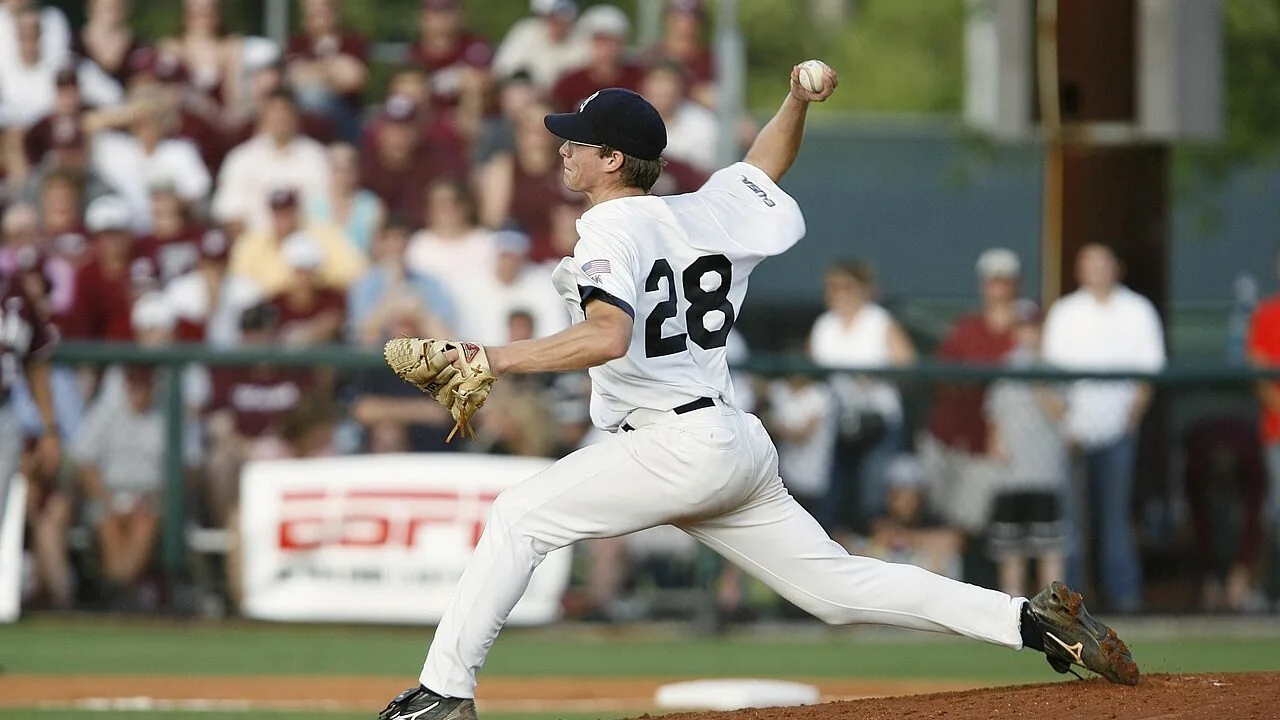
A good pitching machine does something no human arm can reliably replicate: it shows up every day, throws strikes on demand, and never has a sore shoulder.
Whether you are coaching a youth recreation team, running a high school varsity program, or helping a competitive travel ball player sharpen their swing, the right machine creates the kind of consistent, repeatable at-bats that build real muscle memory.
The pitching machine market, however, spans an enormous range from lightweight manual launchers that retail for well under the price of a quality glove all the way up to professional three-wheel units used by college programs and MLB training facilities, and the differences in performance between those categories are enormous.
At ProductFind, we researched every model on this list by analyzing published specifications, synthesizing expert review consensus from coaches and equipment specialists, and weighing verified buyer feedback from players and programs who use these machines daily.
Our goal is straightforward: cut through the marketing noise and match you with the machine that actually fits your skill level, budget, and training goals. The picks below represent our top-ranked selections across every major tier of the market.
| Award | Product | PF Score About PF ScoreThe PF Score is our own rating from 0 to 10, based on performance, design and build, ease of use, and value. It reflects independent research and is never influenced by manufacturers, retailers, or affiliate commissions. Learn more › | Price | |
|---|---|---|---|---|
| Best Overall |
 Jugs BP3 3-Wheel Pitching Machine, 45-75 mph
|
9.3/10 | Buy | |
| Editor's Pick |
 Sports Attack Hack Attack Pitching Machine
|
9.2/10 | Buy | |
| Best Value |
 Jugs mini3 3-Wheel Pitching Machine
|
9.1/10 | Buy | |
| Top Rated |
 Sports Attack Junior Hack Attack Softball Pitching Machine
|
8.7/10 | Buy | |
 PowerNet Launch F-lite Pitching Machine, 40-90 MPH
|
8.4/10 | Buy | ||
 Heater Sports Combo Pitching Machine, Up to 60 MPH
|
7.2/10 | Buy | ||
 Heater Jr. Pitching Machine, 15-48 MPH
|
6.5/10 | Buy | ||
 Heater Sports Slider Lite 360 Pitching Machine
|
6.2/10 | Buy | ||
 Louisville Slugger Blue Flame Manual Pitching Machine 18-45 MPH
|
5.5/10 | Buy | ||
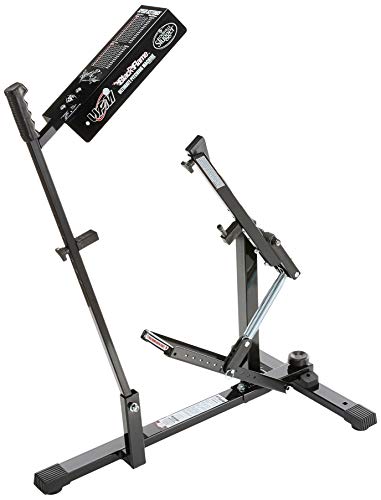 Louisville Slugger Black Flame Manual Pitching Machine 50 MPH
|
5.2/10 | Buy |
Jugs BP3 3-Wheel Pitching Machine, 45-75 mph
A premium 3-wheel pitching machine designed for serious softball training, throwing 8 different pitch types with digital speed control from 45-75 mph. The BP3 combines micro-adjustment targeting with changeup capability and durable pneumatic tires, making it suited for competitive programs and advanced players seeking realistic pitcher simulation.
Pros
- Throws 8 different pitches with single-dial selection, providing varied training without equipment swaps
- Changeup and preset hitting circuits simulate real game scenarios better than standard fastball-only machines
- Grip-Tite pneumatic tires offer superior accuracy and durability versus solid tires, resisting melting and cracking
- Advanced micro-adjustment system enables precise targeting for skill development
- 45-75 mph range covers intermediate to advanced competitive levels
Cons
- No verified buyer reviews available to assess real-world reliability and long-term performance
- Premium positioning likely places it at a higher price point than entry-level machines
- Requires electrical power and may demand significant space for outdoor or indoor setup
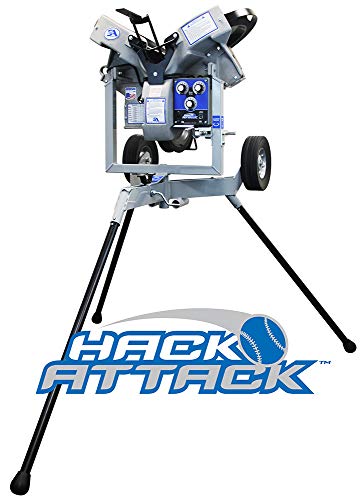
Sports Attack Hack Attack Pitching Machine
A three-wheel pitching machine engineered for serious athletes and college/professional teams, delivering pitches up to 100 MPH with curveballs, sliders, and split-finger varieties. The pivoting head switches between pitching and ground ball drills, while three-dial controls allow quick speed and pitch-type adjustments.
Pros
- Versatile pitch variety and speed range suitable for advanced training and game preparation
- Pivoting head design enables comprehensive defensive drills beyond just batting practice
- Three-dial control system allows quick adjustments without complex setup
- Compact footprint at 41 x 30 x 43 inches and 25 pounds for established training facilities
- Designed specifically for college and professional-level athlete development
Cons
- No verified buyer reviews available to assess real-world durability and long-term performance
- Premium positioning suggests higher investment than entry-level alternatives
- Requires standard baseballs, which adds ongoing consumable costs during heavy use
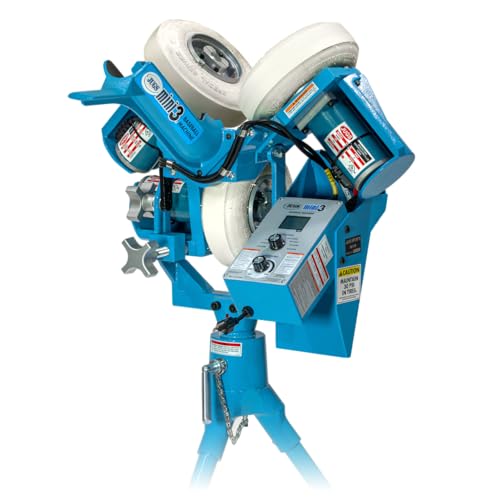
Jugs mini3 3-Wheel Pitching Machine
A lightweight, portable pitching machine weighing just 95 lbs that fits in most car trunks, designed for coaches and teams on the move. Offers 8 selectable pitches at speeds from 30-80 mph with a clear hitter's eye view and 360-degree adjustability for both offensive and defensive drills.
Pros
- Highly portable for coaches who need mobile training equipment
- Versatile pitch selection covers most common throwing types
- Clear ball delivery view improves batter focus and safety
- Vertical and rotational adjustability accommodates multiple drill setups
Cons
- No verified buyer reviews available to assess real-world reliability and durability
- Speed range maxes out at 80 mph, which may be limiting for advanced baseball training
- Limited information on maintenance requirements or wheel durability over time
Sports Attack Junior Hack Attack Softball Pitching Machine
A softball-specific pitching machine designed for youth through professional training, capable of throwing 60+ MPH fastballs with adjustable pitch varieties including risers, drops, and screwballs. The pivoting head accommodates ground balls, line drives, and fly balls up to 175 feet, making it suitable for competitive team environments.
Pros
- Adjustable pitch control allows simulation of real-game scenarios for improved reaction time and hand-eye coordination
- Versatile throwing head pivots instantly for multiple ball types and distances up to 175 feet
- Built for durability and reliability in intensive training settings
- Engineered specifically for softballs, ensuring optimal performance
Cons
- No verified customer reviews available to assess real-world reliability and performance consistency
- Weighs 75 pounds, which may require dedicated storage and setup space
- Limited information on maintenance requirements and parts availability
PowerNet Launch F-lite Pitching Machine, 40-90 MPH
A dual-sport pitching machine that handles both baseball and softball with interchangeable tripod bases and adjustable speed settings from 40 to 90 MPH. Built for consistent batting practice and fielding drills at home or on the field, though it requires PowerNet's proprietary balls to maintain warranty coverage.
Pros
- Versatile for both baseball and softball with easy base leg swaps
- Speed range covers beginner to advanced practice levels
- Calibrated for consistent strike placement and fielding drill setups
- Complete package includes machine and practice balls
Cons
- Requires exclusive PowerNet brand balls; using other brands voids warranty and may degrade performance
- Bucket for ball storage sold separately
- No verified customer reviews available to assess real-world durability or ease of use
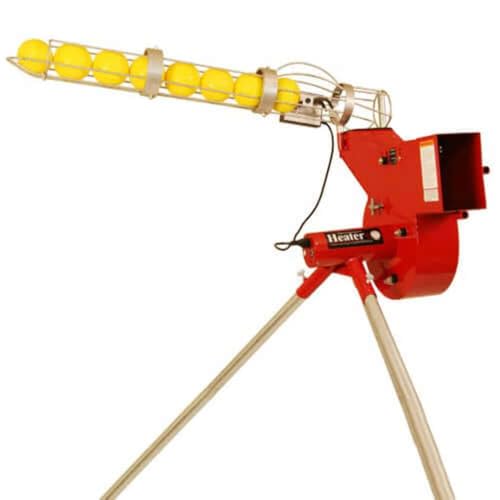
Heater Sports Combo Pitching Machine, Up to 60 MPH
This versatile pitching machine handles both baseballs and softballs with adjustable speeds up to 60 MPH, making it suitable for players across skill levels. The variable speed control and adjustable pitch height allow customization for different drill types, though there are no verified buyer reviews available to assess real-world reliability.
Pros
- Handles multiple ball types without requiring separate machines
- Wide speed range accommodates different practice intensities and skill levels
- Adjustable pitch angles enable targeted skill development for various hit types
- Auto ball feeder streamlines practice sessions and reduces manual feeding
Cons
- No verified buyer reviews available, limiting real-world performance insights
- 70-pound weight may require dedicated space and could be difficult to relocate
- Limited information on durability, motor reliability, or long-term maintenance requirements
Heater Jr. Pitching Machine, 15-48 MPH
A compact pitching machine built for youth baseball training, featuring a 1/4 HP motor, 12-ball automatic feeder, and adjustable speeds from 15 to 48 MPH. The enclosed tripod stand and air-filled tires provide stability for backyard practice sessions.
Pros
- Adjustable speed range accommodates different skill levels and pitch types
- Hands-free 12-ball automatic feeder enables continuous training without manual feeding
- Enclosed design with safety features for backyard use around kids
- Stable tripod construction keeps machine firmly positioned during practice
Cons
- Limited to 12-ball capacity before manual reload needed
- No customer reviews available yet to assess real-world durability and performance
- Relatively heavy at 23.45 pounds, limiting ease of transport despite portability claim
Heater Sports Slider Lite 360 Pitching Machine
A budget-friendly pitching machine that delivers fastballs and curveballs up to 80 MPH with a pivot head design for realistic training. Lightweight and portable with sturdy steel construction, making it accessible for players of various skill levels.
Pros
- Pitch variety allows training against multiple pitch styles
- Lightweight and portable design suits backyard and facility use
- Sturdy steel frame with rubber tips provides stability on different surfaces
- 80 MPH speed range challenges hitting mechanics effectively
- Affordable option for baseball training without compromising durability
Cons
- No verified customer reviews available to confirm real-world reliability
- 46-foot distance may require adequate space for safe operation
- Limited information on adjustment ease or maintenance requirements
Louisville Slugger Blue Flame Manual Pitching Machine 18-45 MPH
A portable, no-battery pitching machine that throws baseballs, softballs, and light balls at adjustable speeds from 18 to 45 mph. Endorsed by Babe Ruth League and Pony Baseball, it's designed for coaches and serious players who want consistent strike practice without electricity.
Pros
- Completely self-powered with manual operation, no electricity or batteries needed
- Versatile multi-ball compatibility including hardballs, softballs, plastic balls, and soccer/volleyballs
- Official machine of major youth baseball organizations, lending credibility for coaching
- Lightweight and portable design under 25 pounds for field-to-field movement
- Throws accurate strikes, fly balls, and grounders for varied skill drills
Cons
- Manual operation requires physical effort to use repeatedly, potentially tiring for extended sessions
- No verified user reviews available to confirm real-world durability or ease of speed adjustment
- Limited specifications detail on exact throwing consistency and calibration requirements
Louisville Slugger Black Flame Manual Pitching Machine 50 MPH
A no-electricity pitching machine that throws baseballs up to 50 MPH and softballs to 44 MPH, switching between strikes, fly balls, and ground balls with interchangeable parts. Built for coaches and serious youth players who want consistent reps without electrical setup or ongoing maintenance.
Pros
- Works anywhere without electricity, batteries, or outlets—ideal for remote fields and backyards
- 3-in-1 versatility covers hitting and fielding drills with quick component swaps
- Manual operation requires no maintenance and assembles in under 10 minutes
- Official machine for Babe Ruth League and Pony League Baseball and Softball
- Adjustable speed and height settings accommodate youth through high school players
Cons
- No buyer reviews yet despite 4.8 rating, limiting real-world performance validation
- Manual operation demands consistent user technique to achieve accuracy—not fully automated
- Limited to 50 MPH baseballs and 44 MPH softballs, below advanced/college-level game speeds
Pitching Machines Buying Guide
Choosing a pitching machine is more complicated than simply picking the fastest or the cheapest option.
Machine type, ball compatibility, speed range, pitch variety, portability, and power source all interact differently depending on who is swinging and what they are trying to accomplish.
The sections below walk through each of the key criteria you should weigh before committing to a purchase.
Machine Type: Arm-Style, Single-Wheel, Two-Wheel, and Three-Wheel
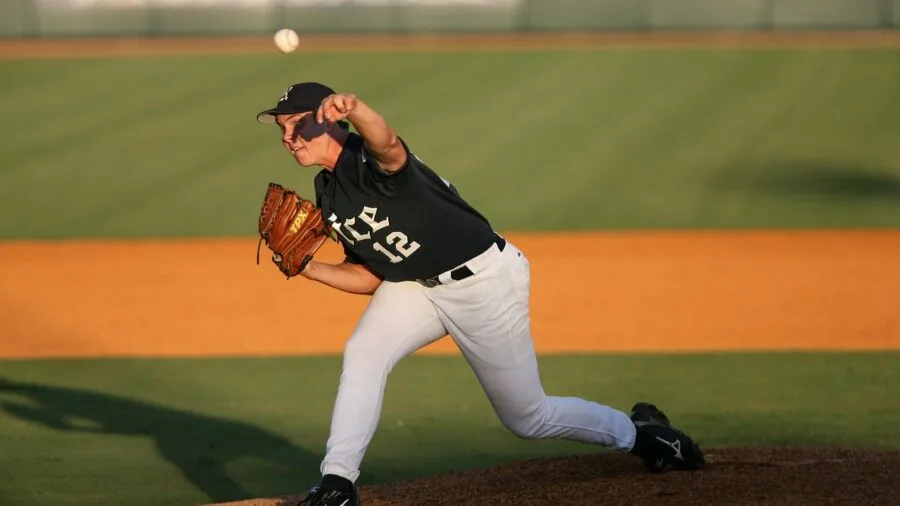
The mechanical design of a pitching machine determines almost everything else about its performance ceiling. Arm-style machines use a rotating mechanical arm to release the ball and are among the simplest, most durable designs available.
They are appropriate for fundamental fastball repetition at the youth level, but they cannot produce breaking ball movement, the ball exits with predictable backspin regardless of arm angle, making them limited for any player who needs to practice against pitch variety.
Single-wheel machines are a step up in versatility and typically more affordable than dual- or triple-wheel designs. They can generate solid velocity but offer limited spin variety, generally a fastball or modest topspin.
Two-wheel machines raise the ceiling considerably: by running the two wheels at different speeds, operators can create curveballs, sliders, and risers in addition to fastballs, making them a practical choice for competitive high school and travel ball players.
Three-wheel designs like the Hack Attack and Jugs BP3 represent the gold standard.
With three independently controlled wheels, these machines can replicate virtually every pitch in a pitcher’s arsenal at game-realistic speeds and release heights, which is why they are the dominant choice at the college and professional level.
For families shopping for backyard or recreational use, a single-wheel or arm-style machine is usually sufficient and far more budget-friendly.
For serious competitive programs, the investment in a two- or three-wheel machine pays dividends in the quality and specificity of practice.
If your household also has a basketball player, pairing dedicated sports equipment upgrades with something like a portable basketball hoop can turn a backyard into a genuine multi-sport training space.
Speed Range and Pitch Variety
Speed range matters far more than maximum speed alone. A machine that tops out at 90 MPH is only useful if it can also dial down to the 30 to 40 MPH range appropriate for young players developing fundamental timing.
Look for smooth, reliable adjustability across the entire speed range rather than a machine that performs well only at one end of its dial.
Pitch variety is the other half of that equation. For youth and recreational players, a consistent fastball is all that is needed to build a reliable swing.
For high school and college-level hitters, practicing against curveballs, changeups, sliders, and risers is essential preparation for live competition. Two-wheel and three-wheel machines address this need; arm-style and most single-wheel machines do not.
The Jugs BP3, for example, is specifically engineered to deliver eight distinct pitch types at the turn of a dial, which is a meaningful training advantage over a machine limited to straight pitches.
When evaluating speed claims in product listings, treat manufacturer maximums as a ceiling, not a routine operating point. Running most machines consistently at their top speed shortens motor life.
The more useful number is the comfortable mid-range operating speed, which is where players will spend the vast majority of their practice time.
Ball Compatibility: Baseball, Softball, and Training Balls
Not every pitching machine is compatible with every ball type, and using the wrong ball can damage the machine or produce wildly inconsistent results.
Most machines specify whether they are designed for regulation baseballs, regulation softballs (which come in 11-inch and 12-inch variants), or training-specific balls such as dimple balls or reduced-impact foam balls.
Budget-tier machines in particular are often calibrated for lighter training balls and will underperform or malfunction with regulation leather balls.
Multi-sport households or programs that run both baseball and softball practices benefit most from machines explicitly rated for both ball types.
The Heater Sports Combo machine and several of the Jugs and Sports Attack models on our list handle both disciplines, which can significantly reduce equipment costs for teams with players in multiple leagues.
Always verify ball compatibility with the manufacturer before purchasing, particularly if you plan to use regulation balls at any speed.
Automatic Ball Feeders and Operational Workflow
A machine without an automatic ball feeder requires a second person to load balls between pitches, which limits the number of swings a solo player can take in a given session.
For youth practices where a coach is already present, manual loading is manageable. For solo players or programs trying to maximize reps per hour of practice time, an automatic feeder is a significant operational advantage.
Feeder capacity varies widely. Entry-level feeders may hold a dozen balls, while professional-grade units can accommodate several dozen.
Feeder interval, the time between pitches, is equally important; too fast and hitters cannot reset between swings, too slow and practice sessions drag. Look for adjustable interval controls on any machine where feeder speed matters to your training workflow.
Also consider how the machine is loaded during practice. Top-loading designs are generally easier and faster to use than side-loading alternatives, particularly when a player is self-feeding during solo work.
Reliability of the feeder mechanism is one of the most commonly cited pain points in verified buyer reviews, so prioritizing brands with established track records in this area, Jugs and Sports Attack are frequently cited by coaches as the most dependable, is a sound approach.
Portability and Power Requirements
Pitching machines range from lightweight manual units that fold flat for storage to heavy professional systems that require a cart to move between fields.
If you are coaching a travel team or need to transport the machine regularly, weight, breakdown design, and whether the unit fits in a standard vehicle are all practical considerations that specifications alone do not always make clear.
Power source is closely related. The Louisville Slugger Blue Flame and Black Flame are fully manual, they require no electricity whatsoever, which makes them uniquely portable for fields without power access.
Most electric machines run on standard 110V AC power, which is widely available at organized fields but may not be accessible in backyard or park settings without an extension cord or generator.
Battery-powered options exist in the mid-range market and offer a useful middle ground for coaches who need portability without the weight of a generator.
For high-end three-wheel machines like the Jugs BP3 and Hack Attack, portability is a secondary concern; these units are typically purchased by established programs with dedicated cages or fields.
But for individuals and small programs, verifying the power requirements and actual transport weight before purchasing can prevent a frustrating post-purchase discovery.
Durability, Warranty, and Long-Term Value
A pitching machine used in a serious training environment runs for hours per day, day after day.
Motor quality, frame construction, and the robustness of the wheel assembly are the components most likely to determine whether a machine lasts one season or a decade.
Professional-grade machines from Jugs and Sports Attack are built to commercial standards and carry warranties that reflect that; budget-tier machines typically use lighter-duty motors and plastics that show wear much sooner under heavy use.
Warranty terms are a useful proxy for manufacturer confidence in the product.
Jugs, for instance, is consistently cited by athletic directors and program coaches as having one of the most responsive service organizations in the industry, which matters considerably when a machine goes down mid-season.
Budget machines often carry shorter warranties and have fewer service options, which increases the total cost of ownership for programs that rely on the equipment heavily.
Think of the purchase price as only part of the equation. Ball wear, motor replacement costs, and potential downtime all factor into the true long-term value of any machine.
For recreational and backyard use where demands are lower, a mid-range machine from PowerNet or Heater Sports offers genuine value.
For institutional or competitive program use, the premium investment in a Jugs or Hack Attack unit typically pays for itself over time in reliability and performance consistency.
Why You Should Trust Us
ProductFind is an independent review publication. We do not sell pitching machines, represent any manufacturer, or have any commercial relationship that influences our rankings.
Every product on this list was evaluated through our structured research process: we analyze published specifications, synthesize expert review consensus drawn from coaches, sports equipment specialists, and athletics professionals, and weigh verified buyer feedback from players and programs with documented experience using these machines in real training environments.
Each product receives a PF Score on a 0 to 10 scale based on consistent criteria applied equally across every model in the category.
We do not conduct our own product trials; our evaluations are grounded in research, published data, expert review consensus, and verified buyer feedback.
This approach allows us to cover a broad range of price points and use cases without the bias that can affect evaluations conducted by parties with a financial stake in the outcome.
ProductFind may earn a commission when you purchase through links on this page. That affiliate relationship has no effect on which products are included, how they are ranked, or what PF Score they receive.
Our editorial positions are determined by research quality and product merit, not by commission rates. If a product does not meet our standards, it does not appear in our recommendations regardless of any commercial relationship.
Final Thoughts
The best pitching machines in 2026 span a wide performance and price spectrum, and the right choice depends almost entirely on who is swinging and how seriously they are training. Here is how our top picks break down by use case and distinction:
- Best Overall: Jugs BP3 Softball Pitching Machine with Changeup earns the top overall position with the highest PF Score in our research. Its three-wheel design, eight-pitch capability at realistic delivery height, and institutional-grade build quality set it apart from every other machine on this list. It is the standard against which serious training equipment is measured.
- Best for Advanced Baseball Training: Hack Attack Baseball Pitching Machine by Sports Attack is the definitive three-wheel baseball machine for competitive programs. Its pitch variety, velocity range, and reputation among college and professional programs make it the go-to choice for hitters who need to practice against game-realistic movement.
- Best Mid-Tier Baseball and Softball Machine: Jugs mini3 Baseball Pitching Machine brings Jugs’ proven engineering into a more compact footprint, earning a PF Score that places it firmly among the elite options on this list. It is an excellent choice for programs that want Jugs reliability without the full footprint of the BP3.
- Best for Competitive Softball Programs: Junior Hack Attack Softball Pitching Machine delivers Sports Attack’s three-wheel performance specifically optimized for softball, making it the strongest dedicated softball option in our research outside of the Jugs BP3.
- Best Mid-Range Pick for Individual Players: PowerNet Launch F-lite Baseball and Softball Pitching Machine punches well above its price tier with 90 MPH capability and dual-sport compatibility, earning a strong PF Score for buyers who want meaningful performance without a professional-grade budget.
- Best Budget Pick for Recreational Use: Heater Sports Junior Baseball Pitching Machine is the most appropriate choice for youth and backyard training at an accessible price point, offering variable speed and adjustable angle in a portable, kid-friendly design.
No single machine is the right answer for every buyer. A youth recreation coach and an NCAA program director have fundamentally different requirements, and spending more than your training demands justify simply does not improve player development.
Use the buying guide above to match the machine to the actual skill level and training volume it will serve, and the investment will pay off in consistent, productive practice time.
Frequently Asked Questions
What type of pitching machine is best for a youth player just starting out?
For young players in early development, a single-wheel or arm-style machine at a lower speed range is the most appropriate starting point.
These machines deliver consistent, hittable fastballs that help build fundamental swing mechanics without overwhelming a young hitter with movement or velocity they are not ready for. Portability and ease of setup are also practical priorities for youth use.
Manual machines like the Louisville Slugger Blue Flame are a popular entry point because they require no power source and are straightforward to operate during informal backyard practice.
The same philosophy applies to other youth sports gear: the right equipment for a beginner is rarely the most advanced option available.
Can I use a baseball pitching machine for softball, or do I need a separate machine?
Some machines are designed specifically for one ball type, while others are rated for both. The key variables are wheel groove width and ball speed calibration.
Regulation softballs, especially 12-inch balls, require wider wheel grips than a standard baseball machine provides. Several machines on our list, including the Heater Sports Combo and both Sports Attack models, are explicitly rated for both disciplines.
Always verify ball compatibility with the manufacturer’s documentation before purchasing, since using the wrong ball in a machine not designed for it can damage the wheel assembly and produce dangerously inconsistent pitch direction.
Do I need an automatic ball feeder, or can I get by without one?
It depends on your practice setup. If a coach or parent is always present to load balls between pitches, a machine without an automatic feeder is workable and saves money.
For solo players who want to maximize their reps per session, an automatic feeder is a meaningful quality-of-life upgrade.
Programs running multiple players through a batting cage rotation also benefit significantly from feeder-equipped machines, since manual loading creates bottlenecks that eat into practice time.
Feeder reliability is one of the most scrutinized features in verified buyer reviews, so prioritizing brands with proven feeder mechanisms is worth the extra research before purchasing.
How much should I expect to spend on a quality pitching machine?
The market spans from budget-friendly manual launchers appropriate for recreational youth use all the way to institutional-grade three-wheel machines priced for serious programs. In general terms, machines in the budget tier are suitable for T-ball through early recreational play.
Mid-range machines from brands like PowerNet and Heater Sports serve competitive youth and high school players who need more speed range and pitch variety without a professional investment.
At the high end, machines from Jugs and Sports Attack are priced for programs that demand commercial-grade durability, pitch variety, and service support.
There is a meaningful performance gap between each tier, so the right budget is the one that matches the actual level of competition the player is preparing for.
Just as you would size basketball hoops to the age and skill level of the players using them, matching machine capability to training level is the most important purchasing principle here.
Is a three-wheel pitching machine worth the premium over a two-wheel model?
For serious competitive players and programs, yes. Three-wheel machines offer a fundamentally wider pitch repertoire, more realistic release points, and superior consistency at high velocities compared to two-wheel designs.
The third wheel stabilizes the ball through the delivery sequence in a way that two-wheel machines cannot replicate, which is why three-wheel units dominate at the college and professional level.
For recreational or developing players who primarily need fastball repetition, the premium is harder to justify.
A well-built two-wheel machine from a reputable brand delivers excellent training value for competitive youth and high school hitters at a meaningfully lower investment point than the top-tier three-wheel options.
What maintenance does a pitching machine typically require?
Routine maintenance for most machines centers on a few key areas: keeping the wheel surfaces clean and free of debris that degrades grip consistency, inspecting the feeder mechanism regularly for wear, and storing the machine properly to protect motors and electronics from moisture.
Professional-grade machines from brands like Jugs are built with serviceability in mind and have established parts and service networks. Budget machines are less serviceable and more likely to require full replacement when a component fails.
Checking the manufacturer’s maintenance documentation before purchasing gives you a realistic picture of the ongoing care the machine will need, which factors meaningfully into total cost of ownership over a full season of regular use.
About the author
Lydia is a reviewer and writer for ProductFind who specializes in Team Sports. Lydia evaluates products through independent research: specifications, expert review consensus, and verified buyer feedback, and rates each one on the PF Score. Lydia focuses on helping readers pick the right team sport for their needs and budget.