The 10 Best Plyometric Boxes
Foam or wood, beginner or advanced: choosing the right plyometric box shapes how safely and effectively you can build explosive power. Here are the top picks across every category.
 By Chad Owens
Updated July 23, 2026
By Chad Owens
Updated July 23, 2026

Plyometric boxes are one of the most effective tools for building explosive power, improving agility, and adding intensity to any conditioning routine.
Whether you’re chasing a higher vertical jump, training for a sport, or simply looking to break through a plateau in your home gym, a quality plyo box delivers versatility that few pieces of equipment can match.
From classic box jumps and step-ups to elevated push-ups and depth drops, the right platform opens up dozens of movements that challenge your fast-twitch muscle fibers in ways that traditional weightlifting alone cannot replicate.
With dozens of options on the market spanning foam, wood, and stackable designs, narrowing down which plyometric box actually fits your goals, space, and budget takes more than a quick scroll.
At ProductFind, we researched this category by synthesizing published specifications, expert review consensus from certified strength and conditioning coaches, and verified buyer feedback to surface the picks that consistently deliver on safety, durability, and training value.
Each product in our list carries a PF Score on a 0 to 10 scale. Our top-rated picks are organized below to help you get started immediately.
| Award | Product | PF Score About PF ScoreThe PF Score is our own rating from 0 to 10, based on performance, design and build, ease of use, and value. It reflects independent research and is never influenced by manufacturers, retailers, or affiliate commissions. Learn more › | Price | |
|---|---|---|---|---|
| Best Overall |
 REP 3-in-1 Plyo Box 24 inch
|
8.6/10 | Buy | |
| Editor's Pick |
 REP Soft Plyo Box 20 inch, 3-in-1 Height
|
8.4/10 | Buy | |
| Best Value |
 HANDBODE 3-in-1 Plyo Box, 20"/24"/30" Foam
|
7.6/10 | Buy | |
| Top Rated |
 HANDBODE 3-in-1 Plyo Box, 20/24/30 inches
|
7.5/10 | Buy | |
 Zoomster 3-in-1 Foam Plyometric Jump Box 30 inch
|
7.4/10 | Buy | ||
 HANDBODE 3-in-1 Plyometric Box, 16-20 Inch
|
7.3/10 | Buy | ||
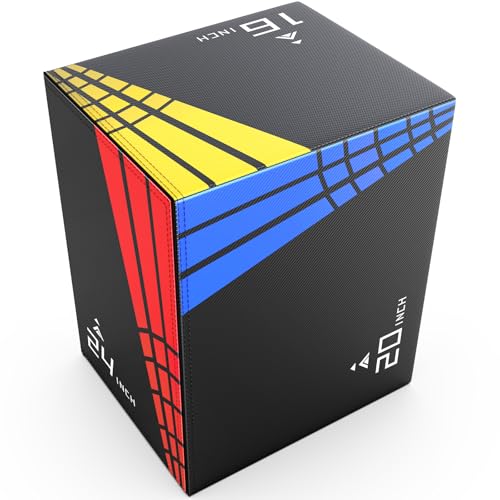 GIKPAL Foam Jump Box 16in
|
7.2/10 | Buy | ||
 VEVOR 3-Piece Plyometric Jump Box Set (12/18/24 Inch)
|
6.9/10 | Buy | ||
 Amazon Basics 3-in-1 Wooden Plyo Box, 16 inch
|
6.2/10 | Buy | ||
 VEVOR 3-in-1 Plyometric Jump Box 16/14/12 Inch
|
5.8/10 | Buy |
REP 3-in-1 Plyo Box 24 inch
A soft foam plyometric box with three adjustable heights (16, 20, 24 inches) designed for box jumps, step-ups, and full-body conditioning. Ships fully assembled and features a non-slip vinyl cover for safe, stable training in home gyms or studios.
Pros
- Adjustable heights accommodate beginners through advanced athletes without buying multiple boxes
- Non-slip surface and foam construction reduce injury risk during high-impact jumps
- Ready to use immediately with no assembly needed
Cons
- No verified buyer reviews available to validate real-world durability or long-term performance
- Limited information on foam density specifications or weight capacity limits
- 3-in-1 design requires rotating the box between height changes rather than quick adjustments
REP Soft Plyo Box 20 inch, 3-in-1 Height
A foam-based jumping platform with three adjustable heights (16, 20, 24 inches) designed for safer plyometric training across all fitness levels. The dense foam core and anti-slip vinyl cover prioritize joint protection and stability during box jumps, step-ups, and functional conditioning work.
Pros
- Three height options in one box, accommodating beginners through advanced athletes
- Soft foam design eliminates sharp corners and reduces shin scrapes and landing injuries
- Textured vinyl exterior provides reliable grip and prevents sliding during intense workouts
- Compact and portable, suited for small spaces and easy stacking in shared facilities
Cons
- No verified buyer reviews available to assess real-world durability or long-term wear
- Foam construction may compress over time with heavy, repeated impact from high-level athletes
- Limited to soft foam platform format, unlike hybrid or wood options some users prefer
HANDBODE 3-in-1 Plyo Box, 20"/24"/30" Foam
A lightweight foam plyo box with three adjustable heights for progressive plyometric training. The high-density foam design prioritizes joint protection and grip stability, making it practical for home gyms with limited space.
Pros
- Versatile three-height design accommodates different fitness levels without buying multiple boxes
- Lightweight and portable, ideal for apartments and small home gyms
- Foam construction absorbs landing impact better than rigid wood or metal alternatives
- Durable high-density foam rated for 350 lbs with minimal maintenance
Cons
- No customer reviews available to verify real-world durability and comfort claims
- Foam material may compress over time with frequent heavy-impact use, potentially affecting height consistency
- Limited information on warranty or long-term foam degradation expectations
HANDBODE 3-in-1 Plyo Box, 20/24/30 inches
A lightweight foam plyometric box with three adjustable heights and a 350-pound weight capacity, designed for explosive training at home. The high-density foam core and non-slip PVC surface make it safer for joints while remaining easy to maintain.
Pros
- Three height options in one box eliminate need for multiple pieces
- High-density foam construction reduces impact on joints and shins during repetitive jumping
- Durable PVC surface resists sweat and provides stable footing without slipping
- Lightweight at 16 pounds but supports up to 350 pounds of weight
Cons
- No verified customer reviews available to assess real-world durability or user satisfaction
- Rotation mechanism for switching heights not detailed, potential concerns about stability between configurations
- Limited information on foam longevity and whether it compresses over extended use
Zoomster 3-in-1 Foam Plyometric Jump Box 30 inch
High-density foam jump box with three adjustable heights (20", 24", 30") and 450-lb weight capacity, designed for HIIT, plyometric training, and strength work. Lightweight at 16 lbs with a textured PVC cover for grip, though it lacks built-in handles for transport.
Pros
- Stable despite foam construction, suitable for dynamic movements and weighted exercises
- Textured anti-slip surface keeps box in place and reduces foot slippage during use
- Lightweight design (16 lbs) allows quick repositioning without fatigue
- Three-in-one heights eliminate need for multiple boxes in small spaces
- High weight capacity (450 lbs) accommodates varied body types and loaded training
Cons
- No handles included, making transport inconvenient despite low weight
- Zero verified buyer reviews available to confirm real-world durability claims
- Foam construction may eventually compress with very frequent intense use, affecting height accuracy
HANDBODE 3-in-1 Plyometric Box, 16-20 Inch
A foam-based plyo box that rotates between three heights (16, 18, and 20 inches) to scale jump training intensity. The soft, non-slip surface protects shins better than wood alternatives, making it suitable for cross-training, cardio, and rehab work.
Pros
- Rotatable design allows progressive training without buying multiple boxes
- Foam construction is gentler on the body than traditional wooden plyo boxes
- Non-slip surface provides consistent grip during explosive movements
- Compact and portable at 29 pounds
Cons
- Tipping risk on the 30-inch side if you don't land in the center
- Not suitable for wet or slick surfaces, limiting outdoor use
- No verified buyer reviews available to assess long-term durability claims
GIKPAL Foam Jump Box 16in
Soft foam plyometric box designed for home gym use, offering comfort during jump training without hard edges. Supports multiple exercises like box jumps, step-ups, and split squats in a compact 20x24x16 inch footprint.
Pros
- Cushioned foam surface provides comfort during plyometric training
- Supports multiple exercise variations with one box
- Lightweight and portable for home gym setups
- Suitable for both beginners and regular users
Cons
- No verified customer reviews available to assess long-term durability
- Soft foam may compress over time with heavy or frequent use
- Limited size option at 16 inch height may not suit all users
VEVOR 3-Piece Plyometric Jump Box Set (12/18/24 Inch)
A stackable plyo box set with three adjustable heights designed for varied jump training, step-ups, and strength work. Built with a 500-pound capacity and anti-slip surfaces, it suits beginners through advanced users in home gym settings.
Pros
- Multiple heights accommodate different fitness levels and workout variations without purchasing separate boxes
- Strong construction with 500-pound weight capacity and welded steel frame provides stable platform for high-intensity training
- Anti-slip textured surface and rubber pads reduce injury risk during dynamic movements
- Compact storage through stacking or disassembly makes it practical for space-limited home gyms
Cons
- No user reviews available to verify real-world durability or assembly difficulty claims
- Combined weight of 39.7 pounds may make frequent repositioning cumbersome for solo users
- Set is fixed at these three heights with no adjustability within each box
Amazon Basics 3-in-1 Wooden Plyo Box, 16 inch
This wooden plyometric box offers three adjustable heights (16, 14, and 12 inches) to scale workouts from beginner to advanced levels. Built with FSC-certified wood and a 450-pound weight capacity, it's designed for home gym training with smooth edges and built-in handles for easy repositioning.
Pros
- Three-height versatility reduces need for multiple boxes and accommodates strength progression
- Solid 450-pound capacity supports most users and exercises like box jumps, step-ups, and dips
- FSC certification confirms responsible forestry sourcing
- Built-in handles and smooth edges improve usability and safety during workouts
- Simple assembly with pre-drilled holes saves setup time
Cons
- No customer reviews available yet to validate real-world durability and performance claims
- Wooden construction may require periodic maintenance to preserve finish and prevent splinters over time
- Indoor-only design limits portability for outdoor training or garage gyms with moisture exposure
VEVOR 3-in-1 Plyometric Jump Box 16/14/12 Inch
A three-height plyo box built with durable 1000D non-slip fabric and recycled cotton fill, designed for step-ups, jumps, and strength conditioning across fitness levels. No assembly needed and ready for home gym use, though buyer feedback is unavailable to validate real-world durability claims.
Pros
- Multiple height options accommodate beginners through advanced athletes
- Durable non-slip surface with 1000D grip pattern rated for consistent use
- Zero setup time with one-piece construction and quick-clean zipper design
- Substantial 220-pound weight capacity supports intense plyometric training
Cons
- No verified user reviews available to confirm durability and performance in practice
- Single color option (black only) limits aesthetic customization
- Relatively heavy at 12.57 pounds, which may limit portability for some users
Plyometric Boxes Buying Guide
Choosing the right plyo box is not simply a matter of picking the tallest or the cheapest option.
Material, height flexibility, surface grip, weight capacity, and storage footprint all influence whether a box will serve you safely and effectively over the long term.
The sections below break down each key factor so you can match a box to your actual training needs rather than marketing claims.
Material: Foam vs. Wood vs. Stackable Sets

The biggest decision in this category is material, and it directly affects both safety and longevity.
Foam boxes, such as the REP and HANDBODE models in our list, are constructed from high-density EPE or similar closed-cell foam and covered with a non-slip vinyl or fabric shell.
The primary advantage is forgiveness: if you catch a shin on the edge during a missed rep, the foam compresses rather than cutting into your leg.
This makes foam the preferred choice for beginners, athletes training at high intensity where fatigue-induced misses are common, and anyone working out alone at home.
Wooden plyo boxes, like the Amazon Basics and VEVOR stackable wood set in our roundup, offer a harder, more rigid surface that many experienced athletes prefer for the tactile feedback it provides on landing.
Wood is also generally more affordable at entry-level price points and holds up well to heavy, repeated use in a garage gym setting.
The trade-off is that a missed jump onto a wooden edge can cause abrasions or bruising, so they are better suited to trained athletes with consistent jumping technique.
Stackable three-piece sets (typically sized at 12, 18, and 24 inches or similar) give you multiple height options without a large single footprint, which is a practical choice for smaller training spaces.
Foam 3-in-1 boxes split the difference by offering three usable height orientations in one unit, eliminating the need to stack separate pieces.
If you value a compact setup with built-in height variety and maximum shin safety, a quality foam 3-in-1 is usually the most sensible starting point.
If budget is the primary concern and technique is solid, a wooden stackable set delivers the most height options per dollar spent.
Height and the 3-in-1 Orientation System

Most foam plyo boxes sold today use a 3-in-1 design, meaning a single box can be oriented three different ways to produce three distinct jump heights.
A box labeled “20/24/30 inch,” for example, provides a low, medium, and high platform depending on which face you set upright.
This is particularly valuable early in a training program when your jump height and strength are still developing, because you can progress across multiple heights without buying additional equipment.
It also keeps storage simple: one box instead of three stacked pieces.
When evaluating height ranges, consider your current training level honestly. Beginners typically start comfortably at 16 to 20 inches. Intermediate athletes often train in the 20 to 24 inch range. Advanced jumpers working on maximum height may need 30 inches or above.
A box that tops out at your current maximum leaves no room to progress, so favor models whose highest orientation exceeds where you are today.
Our highest-rated picks from REP top out at 24 inches in a single foam unit, while several HANDBODE and Zoomster options reach 30 inches, making them better suited to athletes who have already built a solid plyometric base.
Surface Grip and Edge Safety
The landing surface of a plyo box matters enormously for safety and confidence under fatigue. Look for a non-slip top surface, either a textured vinyl cover on foam boxes or a rubber mat affixed to a wooden top.
A slick surface on landing can cause your feet to slide, which is dangerous at any height.
Most quality foam boxes in our list use a combined non-slip mat on the jumping surface and a firmer base material underneath to prevent the box itself from sliding across a smooth floor during repeated reps.
Edge construction is equally important. Foam models with reinforced edges maintain their shape under repeated impact rather than compressing and rounding out over time, which could destabilize your landing platform.
When reading verified buyer feedback, edge durability is one of the most common long-term complaints for budget foam models, so it is worth checking reviews that specifically mention months or years of use rather than only first-impression impressions.
For wooden boxes, look for smooth-sanded or rounded top edges rather than sharp corners, and confirm the surface has an anti-slip finish rather than bare plywood.
Weight Capacity and Structural Stability

Weight capacity is a specification that many buyers overlook until it becomes relevant. Foam plyo boxes are often rated between 300 and 500 pounds, which covers the vast majority of athletes. However, the stated capacity typically assumes static load, not dynamic impact.
When you land from a box jump, the force applied to the surface spikes significantly above your body weight for a fraction of a second.
As a general rule, choose a box rated comfortably above your body weight to account for dynamic loading, particularly if you plan to jump from height rather than simply step up and down.
For wooden stackable sets, stability depends heavily on how the pieces interlock or whether they are used independently. A set that stacks without a positive locking mechanism can shift during use, which is a safety risk.
Verify that any stackable wood box set either has a non-slip base on each piece or includes a mechanism to secure pieces together.
Our VEVOR wooden stackable set is used as separate individual boxes rather than stacked simultaneously, which sidesteps this concern entirely.
Storage Footprint and Portability

A plyo box that is too large to move easily or that dominates a small training space will be used less, which defeats the purpose of owning one.
Foam 3-in-1 boxes are typically bulky but surprisingly lightweight given their size, making them easy to move to a corner when not in use.
A 20x24x30-inch foam box weighs roughly 15 to 20 pounds in most cases, manageable for a single person to carry.
Wooden stackable sets take up more cumulative floor space when all pieces are out, but individual pieces can be stored flat against a wall or stacked in a corner.
If you are building out a home gym and space is genuinely tight, consider pairing a compact plyo box with other space-efficient conditioning equipment.
A plyo box stacked against a wall next to folding treadmills or an under-desk cardio setup allows you to maintain a full conditioning toolkit in a small footprint.
Think through your entire training layout before committing to a large stackable set if square footage is limited.
Price Range and Value Tiers

The plyo box market spans a wide range from budget-friendly entry-level wood options to mid-range premium foam models.
Budget wooden boxes offer basic function for step-ups and lower-intensity jumps, and they are a reasonable starting point for someone who wants to experiment with plyometric training before committing to a more substantial investment.
Mid-range foam 3-in-1 boxes from established brands like REP, HANDBODE, and Zoomster represent the sweet spot for most home gym athletes, combining safety, height versatility, and durability at accessible price points.
Premium options, including REP’s top-scoring 24-inch foam box, justify their higher cost through better foam density, more refined edge construction, and stronger brand-backed quality assurance.
Avoid making price your sole filter. A cheap foam box with poor edge reinforcement will degrade quickly and become a safety hazard.
Conversely, the most expensive option is not automatically the safest or most effective for your specific height and weight.
Use the PF Scores and the criteria above to identify the tier that matches your actual training demands rather than defaulting to the lowest or highest price point.
Why You Should Trust Us
ProductFind is an independent review publication. We do not sell the products we evaluate, and we have no relationship with any retailer’s customer service, return processes, or warranty programs. Every recommendation on this page is the result of structured research, not commercial arrangements.
Each plyometric box in this roundup was assessed using our consistent PF Score methodology, a 0 to 10 rating scale applied uniformly across the category.
Our evaluation draws on published product specifications, expert review consensus from certified strength and conditioning professionals, verified buyer feedback from confirmed purchasers, and publicly available performance data.
We do not conduct our own product trials; our evaluations are grounded in research, published data, expert review consensus, and verified buyer feedback.
ProductFind may earn a commission if you purchase through links on this page. That affiliate relationship has no influence on which products are included, how they are ranked, or what PF Score they receive.
Rankings are determined entirely by our research criteria. We surface the products we believe deliver the most value for real athletes and home gym users, regardless of margin or brand spend.
Final Thoughts
After synthesizing specifications, expert consensus, and verified buyer feedback across all ten models, a clear hierarchy emerges.
Foam 3-in-1 boxes from REP dominate the top of our PF Score rankings for good reason: they combine superior foam density, reliable non-slip surfaces, and genuinely useful height versatility into formats that suit the broadest range of home gym athletes.
Mid-tier picks from HANDBODE and Zoomster fill the gap for athletes who want to reach higher jump heights without the premium price of the REP lineup.
Budget wooden options from Amazon Basics and VEVOR serve beginners and casual users well, provided expectations around surface durability and edge safety are calibrated accordingly.
Here are our standout picks by category, each linked for easy reference:
- Best Overall: REP 3 in 1 Soft Plyo Box (24 inch) earns the top PF Score in this roundup through its combination of high-density foam construction, three usable height orientations, and consistently strong verified buyer satisfaction across extended use periods.
- Best Mid-Size Foam Box: REP Soft Plyo Box (20 inch) is the ideal choice for intermediate athletes who want the same REP build quality in a slightly lower profile that suits a wider range of starting jump heights.
- Best for Tall Jump Training: HANDBODE 3-in-1 Plyo Box in EPE Foam (20/24/30 inch) reaches the highest orientation in this group and earns a strong PF Score, making it the go-to pick for experienced athletes targeting 30-inch box jumps with the comfort of foam edge protection.
- Best Budget Pick: Amazon Basics 3-in-1 Wooden Plyo Box delivers three usable heights at the lowest price point in our lineup, with a 450-pound stated weight capacity that suits most users despite its entry-level positioning.
- Best Stackable Wood Set: VEVOR Plyometric Jump Boxes (12/18/24 inch set) gives coaches and athletes who want discrete individual box heights the most flexible training configuration in the wooden category.
Whatever your training level, adding a plyo box to your routine is one of the most cost-effective ways to develop explosive strength and conditioning.
If you are building out a full home cardio and conditioning setup, consider how a plyo box pairs alongside other equipment: home treadmills and under-desk cardio units complement plyometric training well for active recovery and aerobic base work between power sessions.
Frequently Asked Questions
What is the difference between a foam and a wooden plyo box?
Foam plyo boxes are built from high-density closed-cell foam and compress slightly on impact, which significantly reduces injury risk if you catch a shin on the edge during a missed rep.
Wooden plyo boxes are rigid and durable, preferred by experienced athletes for the firm tactile feedback on landing, but they are less forgiving on misses.
Foam models are generally recommended for home gym users and beginners; wood is a solid choice for trained athletes with consistent technique who prioritize durability at a lower cost.
What height plyo box should a beginner start with?
Most certified strength coaches recommend beginners start between 16 and 20 inches, depending on their baseline athleticism and jumping confidence.
A 3-in-1 foam box that offers multiple orientation heights lets you begin at the lower setting and progress upward as your power, landing mechanics, and confidence improve.
Starting too high too soon increases injury risk, particularly to the ankles and knees on landing.
How do I know if a plyo box is safe for my body weight?
Check the manufacturer’s stated weight capacity and choose a box rated comfortably above your body weight.
Keep in mind that dynamic impact during landing applies a brief force spike well above your static body weight, so a box rated at exactly your body weight may not have adequate safety margin.
For most athletes, a box rated at 400 pounds or above covers the practical range. Verified buyer feedback from heavier athletes is also a useful indicator of real-world structural performance beyond what spec sheets convey.
Can I use a plyo box for exercises other than box jumps?
Yes, and this versatility is one of the core reasons plyo boxes offer strong value. Common exercises beyond box jumps include step-ups, Bulgarian split squats, elevated push-ups, tricep dips, depth drops, and burpee box jump-overs.
A stable, appropriately sized box can essentially function as an adjustable bench for lower-body and upper-body accessory work, making it one of the more multi-purpose pieces of conditioning equipment you can add to a home gym.
Are stackable plyo box sets better than a single 3-in-1 box?
It depends on your priorities. A 3-in-1 foam box offers three heights in one compact unit with no assembly needed between sets, which is ideal for solo home gym training where minimizing transitions matters.
Stackable sets, like the VEVOR three-piece wood set, give you fully independent boxes at each height so multiple athletes can train simultaneously, or you can use different heights for different exercises in the same session without reorienting.
For a personal home gym, a 3-in-1 is usually more practical. For a small group training space or a garage gym with multiple users, a stackable set may be the better investment.
How does plyometric training fit into a broader conditioning program?
Plyometric exercises develop fast-twitch muscle fibers and neuromuscular power, qualities that complement but do not replace aerobic conditioning work.
Most coaches program plyo work two to three times per week with adequate rest between sessions, typically alongside strength training days rather than on dedicated cardio days.
For the aerobic base work between plyometric sessions, sustained low-impact movement on a space-saving folding treadmill or a standard home treadmill pairs well with a plyo-focused strength program without overtaxing the same fast-twitch pathways.
About the author
Chad is a reviewer and writer for ProductFind who specializes in Cardio & Conditioning Equipment. Chad evaluates products through independent research: specifications, expert review consensus, and verified buyer feedback, and rates each one on the PF Score. Chad focuses on helping readers pick the right cardio & conditioning equipment for their needs and budget.