The 8 Best Recumbent Exercise Bikes
Comfort, joint health, and consistent cardio in one machine. Discover which recumbent bikes deliver the best ride quality, seat support, and durability for home use.
 By Chad Owens
Updated July 23, 2026
By Chad Owens
Updated July 23, 2026

Recumbent exercise bikes offer a uniquely accessible path to cardiovascular fitness.
By positioning the rider in a reclined seat with back support and pedals out front, they eliminate the lumbar strain and saddle discomfort that keep many people off upright bikes.
That makes them a genuinely smart choice for older adults, people recovering from injury, those managing chronic back or knee pain, and anyone who simply wants a low-impact cardio option they will actually use consistently.
Unlike traditional treadmills, which demand full weight-bearing effort, recumbent bikes let you build aerobic capacity and leg strength while keeping stress on your joints to a minimum.
This guide cuts through the noise in a crowded category.
We researched options from budget-friendly entry models to commercial-grade machines, drawing on manufacturer specifications, expert review consensus, and verified buyer feedback to identify the bikes that genuinely deliver on comfort, durability, and long-term usability.
Whether you are shopping for a no-frills home option or a premium connected machine, the picks below represent the strongest choices across every price tier. Scroll down for our full list of top-ranked recumbent exercise bikes.
| Award | Product | PF Score About PF ScoreThe PF Score is our own rating from 0 to 10, based on performance, design and build, ease of use, and value. It reflects independent research and is never influenced by manufacturers, retailers, or affiliate commissions. Learn more › | Price | |
|---|---|---|---|---|
| Best Overall |
 3G Cardio Elite RB X Recumbent Bike
|
9.2/10 | Buy | |
| Editor's Pick |
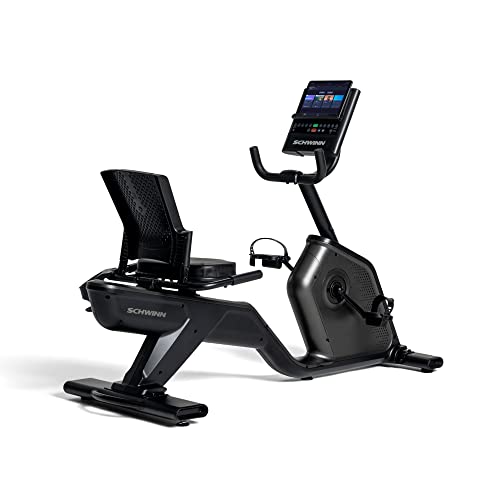 Schwinn Fitness 290 Recumbent Bike
|
8.4/10 | Buy | |
| Best Value |
 MERACH Recumbent Exercise Bike with Bluetooth App
|
8.1/10 | Buy | |
| Top Rated |
 MERACH Recumbent Exercise Bike with Bluetooth App
|
7.2/10 | Buy | |
 YOSUDA Recumbent Bike 350 lb Capacity
|
7.1/10 | Buy | ||
 pooboo W216 Recumbent Bike, 400LBS Capacity
|
7.0/10 | Buy | ||
 Sunny Health & Fitness Smart Recumbent Bike with Resistance Bands
|
6.8/10 | Buy | ||
 MERACH S08 Recumbent Exercise Bike
|
6.5/10 | Buy |
3G Cardio Elite RB X Recumbent Bike
A compact recumbent bike built for home use with commercial-grade durability, FreeSync Bluetooth connectivity, and an adjustable seat designed for users up to 350 lbs. The narrow pedal spacing and mesh backrest emphasize comfort over features, making it solid for steady-state cardio without premium app ecosystems.
Pros
- Exceptional adjustability for varied user heights and body types
- Space-efficient design rolls through doorways with built-in wheels
- Comprehensive warranty and accessible US-based customer support
- Works with popular fitness apps via Bluetooth without membership lock-in
- Ergonomic narrow pedal spacing reduces joint strain
Cons
- No verified customer reviews available to validate real-world comfort claims
- 16 resistance levels may feel limited compared to higher-end recumbent models
- Compact size means smaller overall footprint, potentially less stability during intense workouts
Schwinn Fitness 290 Recumbent Bike
A home recumbent bike with JRNY app integration offering 200+ virtual courses and 13 built-in workouts on a 7-inch LCD display. Designed for stationary cardio with adaptive workout features and terrain resistance control on select courses.
Pros
- Free 2-month JRNY membership included for accessing premium content
- Terrain Control Technology provides dynamic resistance during elevation changes on select workouts
- Large variety with 200+ virtual courses plus 13 built-in programs
- Mobile app integration allows workouts on phone or tablet
- 7-inch display tracks multiple fitness metrics and goals
Cons
- No customer reviews available to validate real-world performance and durability
- Terrain Control Technology only functions with select Explore the World workouts requiring active JRNY membership
- Weighs 110 pounds and requires significant floor space, limiting portability and placement options
MERACH Recumbent Exercise Bike with Bluetooth App
A full-body recumbent bike that goes beyond leg-only workouts with adjustable handles and a seat that accommodates users up to 6'5". Connects via Bluetooth to the MERACH app for workout tracking and integrates with popular fitness platforms, making it a quiet option for home use.
Pros
- Adjustable handles enable arm and upper body engagement, not just leg work
- Extremely quiet operation suitable for shared living spaces
- Wide user height range accommodation from compact to tall users
- Integrated Bluetooth connectivity with multi-platform app compatibility
- Sturdy 330 LBS weight capacity with no reported stability issues
Cons
- No verified customer reviews available to assess real-world durability or user satisfaction
- Heavy at 111 LBS with substantial footprint (60.2 x 26.8 inches), requiring dedicated space
- App features dependent on smartphone pairing for full functionality
MERACH Recumbent Exercise Bike with Bluetooth App
A recumbent bike designed for seniors and home users, featuring an 8-level resistance system, ergonomic seat with multiple adjustment positions, and Bluetooth connectivity to track workouts via the MERACH app. The quiet dual-belt drive and pre-assembled design make it accessible for users seeking low-impact cardio without assembly hassle.
Pros
- Quiet operation due to dual-belt drive system, suitable for shared living spaces
- Multiple seat and backrest adjustments accommodate various body types and inseam lengths
- Heart rate monitoring with handlebar sensors to track workout intensity
- Frosted handlebars reduce sweat slippage compared to standard plastic grips
- MERACH app with FantomFit gamification adds engagement beyond basic metrics
Cons
- No verified customer reviews available to assess real-world durability or app reliability
- Weight capacity of 330 pounds may limit use for heavier individuals
- Recommended for heights 5'2" to 5'10" only, excluding taller or shorter users
YOSUDA Recumbent Bike 350 lb Capacity
A joint-friendly recumbent bike designed for seniors and users with mobility concerns, featuring a sturdy steel frame, quiet operation, and seat adjustment for users 4'9" to 6'2". The 16 resistance levels and padded seat make it accessible for beginners while offering enough challenge for consistent training.
Pros
- Designed specifically for seniors and rehab use with joint-protective positioning
- High weight capacity and durable construction for long-term reliability
- Infinitely adjustable seat with quick-knob system accommodates a wide height range
- Quiet magnetic resistance allows exercise without disturbing others
- Most components pre-assembled with clear instructions and video support
Cons
- No verified customer reviews available to assess real-world durability or comfort feedback
- Limited resistance range (60 lbs max) may plateau for advanced users seeking higher intensity
- Fixed dimensions (45 x 20 x 39 inches) require significant floor space in home settings
pooboo W216 Recumbent Bike, 400LBS Capacity
A dual-motion recumbent bike with arm cranks for full-body workouts, designed for seniors and home users who need stability and quiet operation. Features an ergonomic backrest, 8 resistance levels, and smart app connectivity to track progress.
Pros
- Dual-motion capability allows flexible training options for full-body engagement without forced synchronization
- Extensive adjustability in seat position, handlebar height, and pedal straps fits a wide range of body types
- Quiet belt drive system makes early morning or late evening workouts neighbor-friendly
- 15LB flywheel with bidirectional motion offers versatile workout angles
- 80% pre-assembled with transport wheels and handle simplifies setup and relocation
Cons
- No verified buyer reviews available yet to confirm real-world durability and comfort claims
- Dual-motion arm crank system adds complexity and may require learning curve for optimal independent limb training
- LCD monitor tracks basic metrics only; no mention of preset workout programs or advanced training features
Sunny Health & Fitness Smart Recumbent Bike with Resistance Bands
A low-impact recumbent bike designed for comfort and accessibility, featuring app integration with 1,000+ trainer-led workouts and built-in resistance bands for upper body work. The magnetic belt-drive system runs quietly across 16 resistance levels, making it suitable for seniors and those seeking joint-friendly cardio.
Pros
- Comprehensive free app ecosystem eliminates subscription costs while offering extensive workout variety
- Dual functionality combines cardio and upper body training through integrated resistance bands
- Quiet operation and smooth magnetic resistance make it suitable for home use without noise complaints
- Thoughtful design features like wide seat, padded backrest, and easy entry/exit prioritize user comfort and accessibility
Cons
- No verified customer reviews available to assess real-world durability or long-term performance
- At 64 pounds and 46+ inches wide, the recumbent bike requires significant floor space and assembly effort
- Resistance bands are fixed at 20LB capacity, limiting progression for users seeking heavier upper body resistance
MERACH S08 Recumbent Exercise Bike
A compact recumbent bike designed for low-impact home workouts with 8 resistance levels and real-time heart rate tracking via the MERACH app. Best suited for seniors and those seeking joint-friendly cardio exercise.
Pros
- Versatile resistance range suitable for warm-ups and intense cardio in a single bike
- Bluetooth app connectivity provides comprehensive workout tracking and data logging
- Lightweight construction at 57.3 pounds makes repositioning feasible for home use
- Heart rate sensor enables intensity management for cardiovascular training
- Minimal assembly time reduces friction for immediate use
Cons
- 4.9 rating with zero verified reviews limits independent user feedback validation
- No mention of seat comfort or ergonomic adjustability beyond general description
- Compact dimensions may limit seat adjustability options for users of varying heights
Recumbent Exercise Bikes Buying Guide
Choosing a recumbent bike involves more than picking the one with the most features or the lowest price.
The right machine depends on your fitness goals, your body dimensions, the space you have available, and how seriously you plan to train.
The sections below walk through the criteria that matter most, based on what consistently separates great bikes from disappointing ones across thousands of verified buyer reviews and published expert evaluations.
Seat Comfort and Adjustability
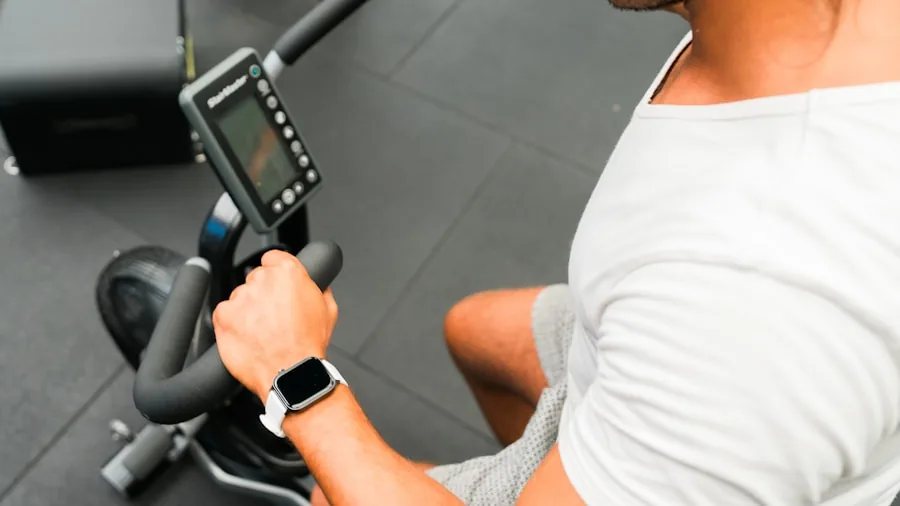
The seat is the single most important component on a recumbent bike, and it deserves more scrutiny than most buyers give it.
A poorly padded or badly shaped seat will end a workout early every single time, no matter how powerful the motor or how polished the app experience.
Look for high-density foam padding, a contoured backrest that supports the natural curve of your lower spine, and a seat that can slide smoothly along its rail without requiring tools.
Seat adjustment range is critical if multiple people in your household will use the bike, or if you fall outside an average height. Pay attention to inseam compatibility rather than just listed height ranges.
Some budget bikes claim wide adjustment but offer only a narrow usable range before pedaling mechanics feel awkward.
Models with four-way adjustment, like the 3G Cardio Elite RB X, allow both horizontal and vertical fine-tuning, which is a meaningful upgrade for taller riders or anyone with mobility limitations that make mounting difficult.
Step-through height is equally worth checking if you have limited hip mobility or use the bike for rehabilitation.
A low step-through frame design allows you to sit down and mount the pedals without lifting your leg high, which is a practical daily-use consideration that spec sheets often understate.
Resistance System and Range

Nearly all recumbent bikes in the consumer market now use magnetic resistance rather than friction-based systems. Magnetic resistance is quieter, requires less maintenance, and delivers smoother, more consistent pedal feel across the entire resistance range.
When comparing bikes, focus less on the number of resistance levels and more on whether the transitions between levels feel gradual and usable.
A bike with 16 well-spaced magnetic resistance levels is more practical than one advertising 32 levels that feel nearly identical between steps.
For fitness-oriented users who plan to do interval training or progressive workouts, resistance range matters. Entry-level bikes like the YOSUDA and MERACH S08 are well-suited to light cardio and active recovery.
Mid-range and premium options from Schwinn Fitness and 3G Cardio offer resistance that challenges even experienced cyclists.
If you are buying for rehabilitation or gentle daily movement, a wide resistance range is less critical than smooth, predictable pedal action at low levels.
Display, Connectivity, and App Integration
The display and connectivity landscape has shifted significantly in recent years. Basic LCD consoles that show speed, time, distance, and calories remain common on budget models, and they are perfectly adequate for straightforward cardio sessions.
However, Bluetooth connectivity and dedicated app integration have become increasingly standard even at mid-range price points, opening up structured workout programs, real-time heart rate tracking, and progress logging.
The Schwinn Fitness 290 connects to the Schwinn app as well as popular third-party platforms, giving it a breadth of compatibility that appeals to users already invested in a fitness ecosystem.
MERACH bikes in this roundup use their own proprietary app, which offers guided workouts and performance tracking that verified buyers consistently rate as intuitive and well-designed for home use.
If app connectivity is important to you, check whether the bike supports FTMS Bluetooth protocol, which allows compatibility with a wider range of third-party fitness apps beyond the brand’s own platform.
For users who prefer simplicity, models with a clean LCD readout and no app dependency are genuinely easier to maintain and operate. The absence of firmware updates and account management can be a feature, not a limitation, depending on your workflow.
Weight Capacity and Frame Durability

Manufacturer weight capacity ratings are a useful proxy for overall frame robustness, not just a ceiling for heavy users.
A bike rated to 350 lb or 400 lb is generally built with thicker steel tubing and stronger welds than one rated to 250 lb, which translates to less frame flex, less noise under load, and longer service life regardless of the rider’s actual weight.
If you plan to use a bike daily or for vigorous sessions, look for a capacity rating comfortably above your own weight.
The 3G Cardio Elite RB X carries a 350 lb capacity and a commercial-grade build that places it in a different durability class from most home-use models.
The pooboo recumbent bike leads this roundup in rated capacity at 400 lb, which speaks to its reinforced frame construction.
At the budget end, capacity ratings are lower and frame materials are lighter, which is an acceptable trade-off for casual, lower-intensity use but worth factoring in if longevity is a priority.
Footprint and Assembly

Recumbent bikes are longer than upright bikes by design, typically extending 50 to 65 inches in length. Measure your available space carefully, including clearance around the machine for safe mounting and dismounting, before purchasing.
Some models include transport wheels that make repositioning easier, which is worth confirming if you plan to move the bike between rooms or store it when not in use.
Unlike folding treadmills that pack away vertically, recumbent bikes do not fold, so dedicated floor space is a genuine requirement.
Assembly complexity varies widely. Most bikes in this category arrive partially assembled and require 30 to 90 minutes to complete. Verified buyers frequently note that clear instructions and pre-labelled hardware make a substantial difference to the assembly experience.
Budget models tend to have simpler assembly but fewer alignment options. Premium models like the 3G Cardio Elite RB X benefit from professional delivery and assembly options, which are worth considering given the machine’s weight and complexity.
Additional Features Worth Considering

Several ancillary features separate good bikes from great ones in day-to-day use. A large, easy-to-reach water bottle holder and a media shelf or tablet holder reduce friction during longer workouts.
Heart rate monitoring via handlebar pulse sensors or Bluetooth chest strap compatibility is standard on most mid-range and premium models, and it is genuinely useful for keeping intensity in a target zone rather than just pedaling by feel.
The Sunny Health and Fitness Smart Recumbent Bike includes resistance bands, adding an upper-body component that standard recumbent bikes lack. The MERACH recumbent cross trainer model features multi-position adjustable handlebars designed specifically for full-body engagement.
These are meaningful differentiators if you want a broader workout than lower-body cardio alone. For users focused purely on leg rehabilitation or low-stress aerobic conditioning, the extra upper-body components are not necessary and simpler bikes serve the purpose better.
If you are building a broader home fitness setup, pairing a recumbent bike with an under-desk treadmill for light activity during the workday is a practical combination many home athletes find effective.
Why You Should Trust Us
ProductFind is an independent review platform with no brand affiliations or manufacturer relationships that influence our recommendations.
Every product in this roundup was evaluated using our structured research methodology: we analyze published specifications, assess expert review consensus from fitness and equipment publications, and weigh verified buyer feedback from confirmed purchasers across major retail channels.
We do not conduct our own product trials; our evaluations are grounded in research, published data, expert review consensus, and verified buyer feedback.
Each product is scored on our PF Score scale of 0 to 10 using a consistent set of criteria applied uniformly across the category.
For recumbent exercise bikes, those criteria include seat comfort and adjustability, resistance quality and range, frame durability relative to price, display and connectivity features, assembly experience, and overall value.
Products are ranked in descending order of PF Score so the strongest overall picks appear first.
ProductFind may earn a commission when you purchase through links on this page. That affiliate relationship has no bearing on which products we select, how we rank them, or what scores they receive.
Our editorial process is independent of our commercial arrangements, and no brand can pay for a higher ranking or a more favorable review.
We include products across a range of price points because the right bike for one person is not the right bike for another, and our goal is to help you find the best match for your specific situation rather than to push any single product.
Final Thoughts
The recumbent exercise bike market spans a wide range of quality, features, and intended use cases, and the picks in this guide cover that full spectrum. Here is how we break down the standout choices by category:
- Best Overall: 3G Cardio Elite RB X Recumbent Exercise Bike earns the top PF Score in this roundup with its commercial-grade build, oversized four-way adjustable seat, FreeSync FTMS Bluetooth connectivity, and 350 lb weight capacity. It is the most complete recumbent bike here by a significant margin.
- Best Mid-Range Pick: Schwinn Fitness 290 Recumbent Bike delivers an excellent balance of performance and connectivity at a mid-range price, with broad app compatibility and a smooth, reliable ride that satisfies serious home fitness users.
- Best for Full-Body Workouts: MERACH Recumbent Cross Trainer distinguishes itself with multi-position adjustable handlebars that extend the workout beyond lower-body cardio, along with solid Bluetooth app integration and a strong build quality for its price tier.
- Best for Seniors and Rehab Users: MERACH Light Commercial Recumbent Bike combines a well-padded seat, accessible LCD display, Bluetooth app support, and a user-friendly design that makes it a consistently recommended choice for older adults and those using a recumbent bike for low-impact rehabilitation.
- Best Budget Pick: YOSUDA Recumbent Exercise Bike offers a 350 lb capacity and 16-level magnetic resistance at an entry-level price, making it the most capable budget option in this roundup for users who want reliable basic performance without a large financial commitment.
Whatever your fitness level or intended use, a recumbent bike is one of the most sustainable long-term cardio investments you can make for a home gym.
The low-impact nature of the movement means these machines tend to see consistent use rather than sitting idle, which is ultimately the measure that matters most.
If you are building out a broader home cardio setup, pairing a recumbent bike with a full-size treadmill gives you complementary training options for both high-impact and joint-friendly sessions.
Frequently Asked Questions
Are recumbent exercise bikes good for people with back pain?
Yes, recumbent bikes are among the most back-friendly cardio machines available. The reclined seating position with lumbar back support distributes body weight more evenly than upright bikes or running, reducing compressive load on the spine.
Many physical therapists recommend them for patients with lower back pain as a way to maintain cardiovascular fitness and leg strength without aggravating the spine.
If you have a specific injury or condition, consult your healthcare provider before starting any exercise program, but recumbent bikes are widely regarded as a low-risk option for most types of back pain.
How do recumbent bikes compare to upright exercise bikes for calorie burn?
Upright bikes typically engage the core and upper body slightly more than recumbent bikes, which can translate to marginally higher calorie expenditure at equivalent effort levels.
However, the practical difference is smaller than many people assume, and it is largely offset by the fact that recumbent bike users often sustain longer and more consistent sessions due to greater comfort.
For most people, the best cardio machine is the one they will use regularly, and recumbent bikes consistently score high on long-term adherence among home fitness users.
Models with upper-body resistance bands, like the Sunny Health and Fitness Smart Recumbent Bike, can further close any calorie-burn gap by adding arm engagement to the workout.
What resistance level should a beginner start with on a recumbent bike?
Most fitness professionals recommend beginners start at a low resistance level, typically level 1 to 3 on a 16-level bike, and focus on pedaling smoothly and consistently for 15 to 20 minutes.
As cardiovascular fitness and leg strength improve over several weeks, resistance can be gradually increased. The goal early on is to establish a sustainable habit and learn proper pedaling mechanics rather than to maximize intensity.
For rehabilitation users, follow the specific guidance of your physical therapist, who will typically recommend very light resistance and a defined cadence range.
How much space do I need for a recumbent exercise bike?
A typical recumbent bike requires a floor footprint of roughly 55 to 65 inches in length and 22 to 28 inches in width. Add approximately 24 inches of clearance on each side and behind the machine for safe mounting, dismounting, and comfortable use.
More compact models, such as the 3G Cardio Elite RB X with its 49-inch length, are designed specifically for tighter spaces without sacrificing usability.
Always measure your room before purchasing and confirm the listed machine dimensions rather than relying on general category estimates. Unlike folding treadmills that can be stored vertically, recumbent bikes require dedicated permanent floor space.
Do recumbent exercise bikes work the same muscles as outdoor cycling?
Recumbent bikes primarily engage the quadriceps, hamstrings, glutes, and calves, which are the same primary muscle groups used in outdoor cycling.
The reclined position shifts slightly more emphasis to the glutes and hamstrings compared to upright outdoor cycling, while reducing core activation. The movement is smooth and low-impact, making it well-suited for building muscular endurance in the lower body.
Users looking for cross-trainer functionality can consider models with moving handlebars, like the MERACH recumbent cross trainer, which adds latissimus dorsi and shoulder engagement to replicate a more complete cycling-and-rowing hybrid motion.
Is a more expensive recumbent bike significantly better than a budget model?
In most cases, yes, but the meaningful differences depend on how and how often you plan to use the bike.
Budget models from YOSUDA or MERACH S08 deliver reliable entry-level performance for light daily cardio and are well-suited to users who ride at low-to-moderate intensity a few times per week.
Premium models like the 3G Cardio Elite RB X justify their higher price with superior seat comfort, more durable frame construction, smoother resistance mechanisms, and better long-term reliability under frequent or intense use.
For rehabilitation, senior daily use, or users who plan to ride for 45 or more minutes at a time, investing in a mid-range or premium bike typically pays off in comfort, consistency, and machine longevity.
About the author
Chad is a reviewer and writer for ProductFind who specializes in Cardio & Conditioning Equipment. Chad evaluates products through independent research: specifications, expert review consensus, and verified buyer feedback, and rates each one on the PF Score. Chad focuses on helping readers pick the right cardio & conditioning equipment for their needs and budget.