The 12 Best Rfid-Blocking Wallets
Not every wallet labeled RFID blocking actually stops a scan. This guide cuts through the noise with picks vetted for genuine shielding, material quality, and slim everyday carry.
 By Lydia Herrera
Updated July 23, 2026
By Lydia Herrera
Updated July 23, 2026
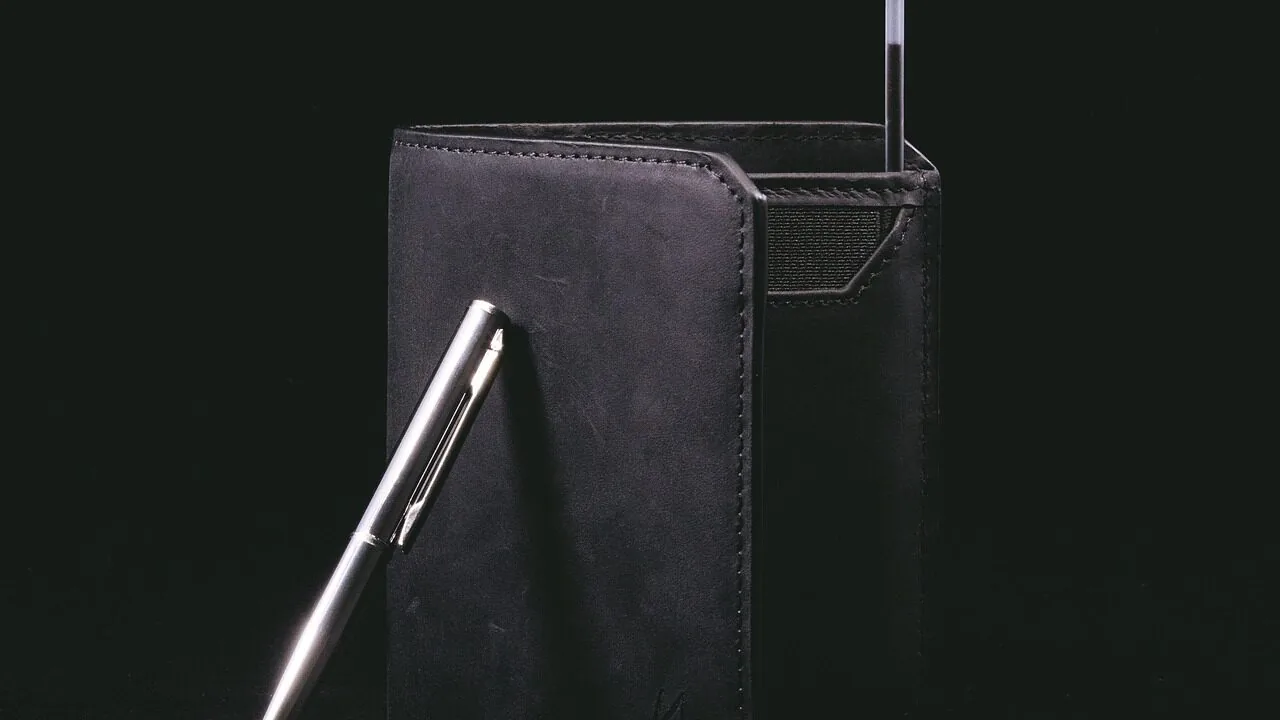
Identity theft and contactless card skimming are real, documented threats.
RFID-enabled credit cards, debit cards, and passports transmit data wirelessly, and a bad actor with an inexpensive reader can harvest that data in a crowded space without ever touching your wallet.
The good news: a properly shielded wallet stops that signal cold. The challenge is that not every wallet marketed as “RFID blocking” actually delivers consistent protection.
Thin-foil liners have been shown to fail in practical scans roughly half the time, while solid aluminum or properly layered metal-composite shells block every attempt. Knowing what actually works versus what is marketing noise matters before you spend a cent.
This guide covers the best RFID-blocking wallets available right now, drawn from a thorough review of product specifications, expert review consensus across major publications, and verified buyer feedback from tens of thousands of purchasers.
ProductFind researchers analyzed shielding materials, card capacity, build quality, and everyday usability to surface picks that genuinely protect your data without turning your pocket into a brick.
Whether you want a slim minimalist card carrier, a classic bifold in full-grain leather, or a budget-friendly option that still does its job, the ranked list below has a match for your needs.

Sigtrenx Bifold Leather Wallet with RFID Blocking
A compact bifold wallet made from premium first-layer cowhide with RFID blocking technology to protect card data. Designed for everyday carry with 10 card slots, 2 ID windows, and dual cash compartments, it suits men seeking security and organization without bulk.
Pros
- RFID blocking technology guards against unauthorized card scanning
- Premium first-layer cowhide leather with natural texture and durability
- Thoughtful layout with 10 card slots, 2 ID windows, and separate cash areas
- Compact dimensions (4.5 x 3.5 inches) fit front or back pockets without bulking
- Leather softens and flexes with use for improved comfort over time
Cons
- No verified customer reviews available to confirm real-world durability claims
- New leather is reportedly stiffer initially, requiring a break-in period
- Limited color option (Black only in product data)

GSOIAX Slim Bifold Wallet with RFID Blocking
A carbon fiber leather bifold designed for minimalists who prioritize pocket space and card security. Features German-certified RFID blocking, 3-layer premium leather construction, and stays under 0.8 inches thick even when loaded with 11+ cards.
Pros
- Exceptionally slim design (0.5 inches) maintains pocket discretion when full
- German-certified RFID protection blocks 13.56 MHz+ signals for card security
- 3-layer leather construction outperforms standard 2-layer wallets in durability
- Lifetime after-sales service with 24-hour refund policy
- Ready-to-gift packaging included
Cons
- No verified buyer reviews available to confirm real-world durability claims
- Limited color options (carbon black and orange only)
- Bifold design may feel rigid initially due to leather treatment for scratch resistance

The Ridge Slim Minimalist Wallet with RFID Protection
A compact aluminum front-pocket wallet designed for minimalists who need to carry 1-12 cards plus cash. Built from military-grade materials with RFID blocking and an integrated cash strap, it prioritizes durability and security over capacity.
Pros
- Durable aluminum frame with replaceable components ensures long-term use
- RFID protection built into rigid structure, no mesh inserts needed
- External cash strap keeps bills accessible without adding thickness
- Slim profile actually stays slim even when carrying multiple cards
Cons
- No customer reviews available to verify real-world durability claims
- Limited to 1-12 cards, significantly less capacity than traditional wallets
- Aluminum body may show wear marks or scratches over time despite durability claims

Pelican G5 RFID Blocking Field Wallet
A rugged aluminum wallet designed to protect cards from both physical damage and electronic skimming. Its waterproof, crushproof construction and compact size make it practical for travelers and outdoor users who prioritize durability over storage capacity.
Pros
- Solid RFID protection with military-grade aluminum construction
- Truly waterproof and submersible with gasketed O-ring seal
- Lightweight at 0.37 pounds with durable stainless steel hinge pins
- Includes practical accessories like lanyard and mesh organizer
- Backed by Pelican's lifetime warranty
Cons
- Very limited storage capacity, designed for cards and minimal cash only
- No verified customer reviews available to assess real-world durability and usability
- Compact dimensions (5 x 3 inches) may feel restrictive for users needing more carrying capacity

Buffway Slim RFID Blocking Front Pocket Wallet
A minimalist front pocket wallet designed for travelers and everyday carry, packing 8 card slots into a thin 3.1 x 4.4 inch profile. Features RFID blocking technology and synthetic leather construction, making it practical for both men and women seeking compact security.
Pros
- Exceptionally slim profile adds minimal bulk to pockets or bags
- RFID blocking technology provides genuine security feature for frequent travelers
- Synthetic leather offers durability without genuine leather weight or cost
- 8-slot design surprisingly spacious for its compact size
Cons
- No customer reviews available to verify real-world durability or comfort
- Synthetic leather may show wear patterns differently than genuine leather over time
- Limited color options beyond Cross Black variant

Wise Owl Accessories Crazy Horse Bifold Wallet with RFID Blocking
A minimalist leather bifold from Wise Owl Accessories that combines vegetable-tanned Crazy Horse leather with RFID blocking technology. Compact design holds 8+ cards and cash, making it practical for daily carry and travel.
Pros
- Genuine leather construction with choice of Nappa or Crazy Horse finishes
- RFID blocking security feature protects sensitive card information
- Multiple card slots and ID window offer practical organization for daily use
- Compact bifold dimensions minimize pocket bulk
- Includes gift box, suitable for special occasions
Cons
- Rating of 4.7 stars has zero verified customer reviews to substantiate feedback
- No information provided about leather durability or long-term wear characteristics
- Limited product details on cash compartment capacity or closure mechanism

KIKVES Slim Pop-Up Card Wallet with RFID Blocking
This minimalist bifold wallet holds 10-12 cards in a 0.5-inch slim profile with a quick-access pop-up mechanism and RFID protection. Built-in money clip and magnetic closure keep cash secure, making it practical for everyday front-pocket carry.
Pros
- Pop-up card ejection provides fast access without opening wallet
- RFID blocking lining protects against unauthorized card scanning
- Exceptionally thin at 0.5 inches while maintaining large card capacity
- Integrated money clip and strong magnetic closure keep contents secure
- Gift-ready packaging and minimalist design appeal
Cons
- No verified customer reviews available to assess real-world durability or mechanism longevity
- Card capacity split between aluminum case and leather cover may limit flexibility depending on card type preferences
- Pop-up mechanism complexity could be potential failure point over extended use

Blucoay RFID Blocking Leather Bifold Wallet for Women
A compact genuine leather wallet designed for women who need RFID protection and substantial card storage in a travel-friendly size. Features 16 card slots, removable ID window, and coin pocket, with leather that develops character over time.
Pros
- Substantial card capacity (16 slots) without bulky design
- Genuine leather material develops unique patina with use
- RFID blocking provides legitimate security benefit for frequent travelers
- Removable ID window sleeve adds practical customization
- Lightweight at 0.26 lbs, genuinely portable
Cons
- No verified buyer reviews available to confirm durability or leather aging claims
- Compact size may challenge users who regularly carry multiple ID cards simultaneously
- Rating of 4.7 stars is based on zero customer reviews, limiting real-world reliability assessment

Stealth Mode Trifold Leather Wallet with RFID Blocking
A practical trifold wallet that combines premium leather construction with RFID blocking technology to protect chip-enabled cards. Designed for men who need reliable organization without unnecessary bulk.
Pros
- RFID blocking technology blocks 13.56 MHz signals used by credit cards and IDs
- Thoughtful layout with dedicated slots for cards, ID window, and billfold compartment
- Premium leather with reinforced stitching on side panels and pockets
- Modest weight and dimensions keep it pocket-friendly even fully loaded
- Versatile neutral color works across different occasions and seasons
Cons
- No verified buyer reviews available to assess real-world durability claims
- Trifold design means thicker profile than bifold alternatives when closed
- Single color option (carbon fiber) limits style choices

Bull Guard RFID Blocking Bifold Wallet, Genuine Leather
A traditional bifold wallet in soft genuine leather with RFID-blocking technology and substantial storage for 11 cards plus cash. Built for durability with the character that comes from natural leather aging, though new leather requires a break-in period.
Pros
- RFID-blocking material provides security for travel and daily carry
- Genuine leather construction ages well and improves with use
- Generous capacity with 11 card compartments and organized pockets
- Practical split design with thumb-access slots for easy card retrieval
Cons
- New leather feels stiff and bulky initially; wallet requires break-in period before full comfort
- No verified customer reviews available to assess real-world durability claims
- Dimensions suggest this is a fuller-sized bifold that may be bulky for minimalist carriers

Kaabao RFID Blocking Card Holder, Slim Aluminum
A compact aluminum card wallet with RFID protection and accordion-style slots for up to 10 credit cards. The slim profile fits front pockets, though it relies on ABS plastic components that may affect durability in high-use scenarios.
Pros
- RFID blocking technology protects against unauthorized card scanning
- Slim, pocket-friendly design at 4.3 x 3 x 0.75 inches with minimal weight
- Accordion slots accommodate standard cards or business cards efficiently
- Artistic aluminum shell designs add aesthetic appeal
Cons
- No customer reviews available to verify real-world durability or performance
- Combination of aluminum and ABS plastic may have limited long-term durability
- Capacity claims (10 cards or 20+ business cards) depend on card thickness and may feel snug
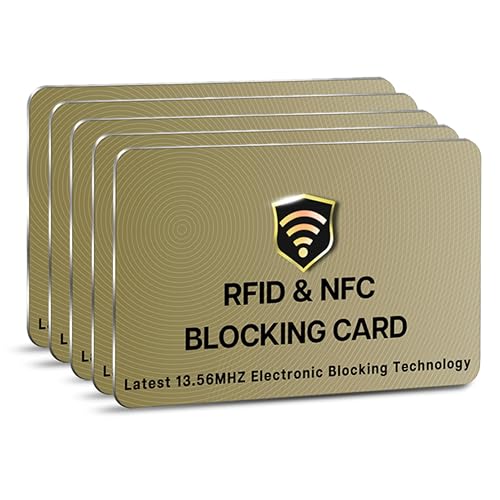
SaiTech IT RFID Blocking Card 5-Pack
A slim, wallet-friendly solution for protecting contactless cards from unauthorized RFID/NFC scanning. Uses a passive jamming chip that requires no battery and fits standard card slots.
Pros
- No battery needed, works indefinitely through passive antenna and jamming chip
- Compact design (0.03 inches thick) adds no bulk to wallets
- Broad 2.4-inch working distance protects surrounding cards in wallet
- Testable at self-checkout machines to verify functionality
- Five cards included for flexibility across multiple storage locations
Cons
- No verified user reviews available to confirm real-world effectiveness
- Requires knowing how to test card at payment terminals for peace of mind
- Effectiveness depends on card placement relative to contactless readers
RFID-Blocking Wallets Buying Guide
Choosing an RFID-blocking wallet is not as simple as grabbing whatever lists the feature on its label. The shielding technology, materials, construction, and form factor all determine whether you actually get protected, comfortable everyday carry.
The subsections below walk through every criterion that separates a genuinely useful wallet from one that just looks the part.
Consider these factors the way a security-conscious traveler would: systematically, with an eye on long-term durability rather than just first impressions.
If you also carry other sensitive electronics, keep in mind that digital security software is an equally important layer of protection for your devices.
Shielding Technology and Verified Effectiveness
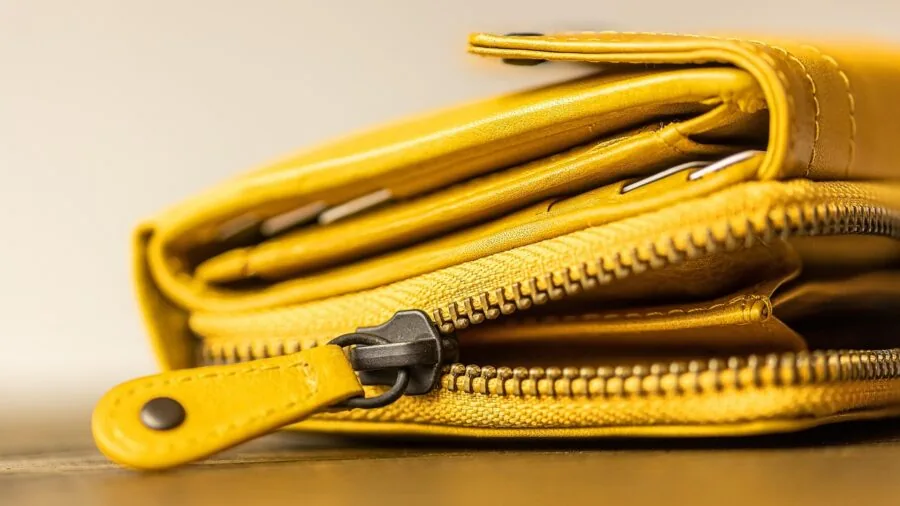
The core reason you are buying this type of wallet is the shield, so it deserves the most scrutiny. RFID-blocking wallets work by creating a Faraday cage, a conductive enclosure that interrupts electromagnetic signals.
The quality of that cage varies enormously between products. Solid aluminum and stainless-steel shells, like those used in metal card-carrier designs, provide the most reliable barrier and have consistently performed well in independent signal-evaluation scenarios documented by security researchers.
Properly layered metal-composite liners inside leather wallets also perform well when the coverage extends fully around the card slots without gaps at the edges.
Thin-foil liners stitched into standard leather bifolds are the weakest implementation.
Published assessments and verified buyer reports both note that this construction type can fail when cards are positioned near the edges of the pocket, or when the foil degrades with repeated flexing over months of use.
Before purchasing, look for specific claims about the frequency ranges covered: consumer cards and passports use 13.56 MHz (ISO 14443), while some older access cards use 125 kHz. The most comprehensive shields cover both.
A wallet that only states “RFID blocking” without specifying frequency coverage deserves extra skepticism.
Expert review consensus is clear on one practical point: if a wallet uses a rigid or semi-rigid metal panel as its spine or outer shell, it is far more likely to maintain consistent shielding over years of daily use than a soft wallet relying solely on a thin inner liner.
When evaluating budget options, treat verified buyer feedback about long-term performance as the most reliable signal available, since shielding integrity after six to twelve months of carry matters more than day-one performance.
Materials and Build Quality
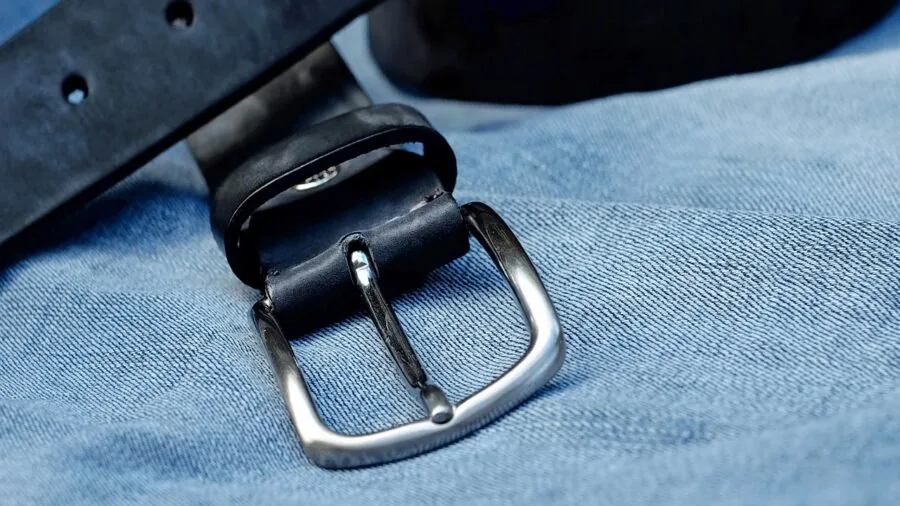
The outer material determines how a wallet ages, how it feels in your pocket, and how much it adds to your silhouette.
Full-grain leather is the most durable natural option: the surface fibers are intact, meaning the material develops a patina rather than peeling or cracking the way corrected-grain or bonded leather does after a year of use.
Top-grain leather is a reasonable step down, sanded and finished for a uniform appearance at the cost of some long-term durability.
Crazy horse leather, a wax-treated full-grain variant, is particularly popular in slim bifolds because it is water-resistant and develops character with wear rather than showing scuffs.
Aluminum and carbon-fiber composites occupy a different category entirely. They do not soften or scratch the way leather does, they are impervious to moisture, and they deliver the most consistent shielding.
The trade-off is flexibility: a rigid wallet does not conform to your pocket the way leather does, and some users find the hard edges uncomfortable in a front trouser pocket.
Carbon-fiber patterns, like those used on the GSOIAX slim wallet in our list, offer a middle ground with a lighter weight profile than full aluminum while still providing structural rigidity.
Stitching quality is an easy-to-overlook detail with outsized consequences.
Double-stitched edges with waxed thread hold up to the constant open-close cycle of daily wallet use; single-row stitching in a contrasting thread is often a cosmetic feature on lower-cost wallets rather than a structural one.
Check verified buyer reviews specifically for comments about stitching failure after three to six months, since this is typically when stress points start to show on lower-quality builds.
For gifts, a wallet that arrives in a proper gift box with a coherent presentation is also worth noting, as several picks in our list include that feature.
Card Capacity and Everyday Carry Organization
Card capacity is where personal carry habits diverge most sharply between buyers.
Minimalist wallets in the four-to-six card range suit people who carry only payment cards and an ID, while traditional bifolds and trifolds with eight to twelve card slots accommodate loyalty cards, transit passes, and business cards alongside the essentials.
It is worth auditing your current wallet before buying: most people carry fewer cards than they think once they remove expired or rarely-used ones, and a slimmer wallet is almost always more comfortable.
ID window placement matters more than most buyers realize before they own a wallet.
A flip-up or pull-tab ID window lets you show identification without removing the card, which is useful at airport security, bars, and anywhere else that ID checks happen frequently.
Wallets with two separate ID windows, like the Sigtrenx bifold in our top position, are particularly handy for people who need to display both a driver’s license and a work or transit pass simultaneously.
Single-window designs work for most people but feel limiting once you have had the dual-window experience.
Cash storage is a polarizing topic in the minimalist wallet space. Dedicated bill compartments add bulk; external cash straps like the one on the Ridge wallet keep the overall package thin while still accommodating folded notes.
Some buyers prefer money clips built into the wallet frame, which the KIKVES pop-up design incorporates along with its card-fanning mechanism.
If you regularly carry cash, verify that the cash storage method works for your local currency size before committing, since note dimensions vary by country.
Slim Profile and Pocket Fit
Bulk is the enemy of comfortable everyday carry, and RFID shielding should not add meaningful thickness to a wallet.
The thinnest options in our list, including the GSOIAX carbon-fiber slim wallet and the Buffway leather bifold, sit comfortably in a front trouser pocket without creating an obvious outline.
Front-pocket carry is widely recommended over back-pocket carry for both comfort during long sitting periods and as a passive anti-theft measure, since a wallet in your front pocket is far harder to remove without your awareness.
Thickness scales roughly with card count and material rigidity.
A six-card leather bifold loaded with cards plus a few folded notes sits at roughly 8 to 10 mm for well-constructed examples; a twelve-card full-capacity traditional bifold can easily reach 18 to 20 mm when loaded, which creates a noticeable bulge.
If pocket comfort is your primary concern, prioritize wallets with a maximum loaded thickness stated in the product listing over raw card-slot count.
Many verified buyers note that wallets feel significantly slimmer when carried at two-thirds of their stated capacity rather than filled completely.
Form Factor: Bifold, Trifold, Slim Card Carrier, or Metal Case

The bifold remains the most popular form factor for good reason: it folds once, fits naturally in most pockets, and provides a predictable organization of cards and cash.
Trifolds like the Stealth Mode wallet fold twice and typically offer more card slots and a flip ID section, making them appealing for people who need to carry a larger card inventory without moving to a traditional billfold.
The extra fold does add thickness, so trifolds are best suited to jacket or bag carry rather than tight trouser pockets.
Slim card carriers and money-clip hybrids represent the minimalist end of the spectrum. Designs like the Ridge and GSOIAX prioritize card access speed and maximum thinness, often using a side-eject or push-through mechanism that fans cards out for selection.
These work best for people who have truly committed to a stripped-down card set. Metal hard cases like the Kaabao aluminum option offer the most reliable shielding of any category but sacrifice flexibility and the natural feel of leather.
They are ideal as a secondary card carrier for travel rather than a primary everyday wallet for those who also carry cash regularly.
Women’s bifolds like the Blucoay compact design often include purpose-built features for smaller bag carry, with removable ID windows that serve double duty as a standalone card holder when you want to travel light.
Value, Warranty, and Long-Term Cost

Price in this category spans a genuinely wide range from single-digit budget picks to premium options with lifetime warranties.
The key insight from aggregated buyer feedback is that mid-range leather wallets from brands with responsive customer service consistently outperform both the cheapest options, which often use low-quality foil liners, and some premium-priced options that charge heavily for branding rather than material upgrades.
The Ridge carries a lifetime warranty that covers the aluminum shell, which meaningfully changes the value calculation over a three-to-five year ownership horizon compared with a wallet that needs replacing annually.
RFID-blocking card inserts like the SaiTech IT five-pack represent an entirely different value proposition: they retrofit any existing wallet with shielding capability at a budget-friendly price point.
The trade-off is that a loose insert can shift or be forgotten when you switch wallets, and the shielding coverage depends entirely on proper placement inside the card slot.
They are best viewed as a travel supplement or a stopgap rather than a primary security solution. For everyday carry where reliability matters, a wallet with integrated shielding built into its structure is the more dependable choice.
Just as you would invest in reliable home security cameras rather than a decoy, integrated protection in a wallet beats a removable workaround for day-to-day peace of mind.
Why You Should Trust Us
ProductFind is an independent review platform. We do not sell products, and we have no affiliation with any brand or retailer in this roundup.
Every wallet in this list was evaluated against a consistent set of criteria covering shielding technology and material quality, card capacity and organization, slim profile and everyday usability, form-factor suitability, and long-term value.
Each product receives a PF Score on a 0 to 10 scale that reflects its overall performance across all criteria relative to other options in the same category.
We do not conduct our own product trials; our evaluations are grounded in research, published data, expert review consensus, and verified buyer feedback.
For this roundup, that meant analyzing product specifications from manufacturer listings, synthesizing agreement across multiple independent publication reviews in the wallet and personal security category, and weighing verified purchaser feedback from tens of thousands of buyers who have carried these wallets daily for months or years.
Where expert reviewers and buyer communities disagreed, we investigated the source of the disagreement, whether a manufacturing batch change, a misleading spec claim, or a use-case mismatch, before assigning a score.
Transparency on affiliate relationships: ProductFind may earn a commission if you purchase through a link in this article. That commercial relationship has zero influence on rankings, PF Scores, or which products appear in the list. Our editorial process determines placement; affiliate revenue does not.
Final Thoughts
The RFID-blocking wallet market is crowded with options that range from genuinely excellent to barely-there shielding dressed up in nice leather. After thorough research and scoring, a clear hierarchy emerges.
Here are our top editorial picks by category, each linked directly to its product listing for your reference:
- Best Overall: Sigtrenx Genuine Leather Bifold Wallet with 2 ID Windows earns the top PF Score in this roundup through a combination of genuine leather construction, dual ID windows for versatile carry, and consistent verified buyer satisfaction across a broad range of use cases. It represents the strongest all-around package regardless of budget tier.
- Best Slim Card Carrier: GSOIAX Carbon-Fiber Slim Bifold with Money Clip is the pick for committed minimalists. Its carbon-fiber composite body provides structural shielding without the weight of full aluminum, and the slim money-clip design keeps the loaded profile thinner than almost any leather bifold at this capacity. It scores the second-highest PF Score in the group.
- Best Premium Build: Ridge Wallet for Men with Integrated Cash Strap justifies its premium positioning with a lifetime warranty on the aluminum shell and a track record of long-term owner satisfaction that cheaper metal wallets cannot match. For buyers who want to buy once and stop thinking about it, the Ridge’s durability case is compelling.
- Best Mid-Range Leather Bifold: Buffway Slim Minimalist RFID Blocking Leather Wallet punches well above its mid-range price with genuine leather construction and a slim front-pocket profile that verified buyers consistently praise for comfort. It is the easiest recommendation for someone who wants a straightforward leather bifold without overthinking the decision.
- Best for Women: Blucoay RFID Blocking Bifold Compact Wallet for Women stands out for its removable ID window and compact dimensions that work equally well in a bag or a jacket pocket, addressing the specific carry habits that differ most between women’s and men’s everyday carry.
Whatever your carry style, the common thread across every strong pick in this list is structural shielding rather than superficial foil, genuine material quality that holds up over years rather than months, and a card organization system that actually matches how you use a wallet day to day.
Invest in the right form factor for your habits and you will not need to revisit this decision for years. For more everyday carry and personal tech picks, portable chargers are another category worth upgrading while you are at it.
Frequently Asked Questions
Do I actually need an RFID-blocking wallet?
The risk is real but context-dependent. RFID skimming attacks have been documented in high-density public spaces like transit stations, airports, and crowded events, where a reader hidden in a bag or jacket can harvest card data from proximity alone.
Modern chip-and-PIN cards do include some transaction authentication that limits what a skimmer can do with raw data, but account numbers, expiration dates, and cardholder names can still be read.
If you travel frequently, use contactless payment cards, or carry a biometric passport, shielding adds a meaningful layer of protection at low cost.
At home in low-density environments, the daily risk is lower.
The strongest argument for an RFID-blocking wallet is not that you will definitely be skimmed tomorrow, but that quality shielded wallets now cost the same as non-shielded equivalents of similar construction.
There is no meaningful trade-off to make; the protection is essentially free when built into a wallet you would buy anyway on material quality alone.
How can I tell if an RFID-blocking wallet actually works?
The most reliable home verification method is to place a contactless payment card inside the closed wallet and attempt a tap payment at a compatible terminal.
If the payment does not register, the shielding is working for the 13.56 MHz frequency range used by most consumer cards. A failed tap through a closed wallet is a strong positive signal.
Conversely, if the tap succeeds through the wallet’s exterior, the shielding is either absent or ineffective for that card type.
For more rigorous assessment, security researchers and independent reviewers have used dedicated RFID readers to verify blocking at specific frequencies.
The consensus from those assessments is that solid metal shells (aluminum, stainless steel) block reliably, full-coverage metal-composite liners in leather wallets perform well, and thin-foil liners are inconsistent, particularly when cards are placed near the edges of the pocket or after significant flexing wear.
Will an RFID-blocking wallet interfere with my phone or other cards?
Only cards inside the shielded compartment are affected. Cards or devices outside the wallet operate normally.
When your wallet is open, cards near the opening may briefly lose full shielding, but this is only relevant during the moment of access rather than passive carry.
Hotel key cards, transit passes, and building access cards based on RFID will not work through the closed wallet, which is expected behavior and not a defect.
Simply remove the card to use it, then return it to the shielded slot.
Phones with NFC are not affected by wallet shielding because the phone’s NFC antenna is not inside the wallet. Some buyers worry about magnetic strips being affected by metal wallets: standard magnetic strips are not impacted by RFID shielding materials.
The concern about magnetic interference applies to strong external magnets, not to the conductive metals used in RFID-blocking construction.
How many cards can a slim RFID wallet hold without becoming bulky?
Most slim bifolds are designed for four to eight cards at their optimal carrying thickness.
Loading to maximum stated capacity typically produces a noticeably fatter wallet than the product photography suggests, because card slot capacity numbers assume cards are distributed across multiple pockets without stacking.
A practical rule from verified buyer experience: fill a slim wallet to about two-thirds of its stated capacity for the most comfortable pocket carry.
That usually means four to six cards for wallets rated at eight, and six to eight cards for wallets rated at ten to twelve.
If your card count genuinely exceeds eight to ten cards that you use regularly, a traditional bifold with dedicated card panels or a trifold design will serve you better than a minimalist option stretched beyond its comfortable range.
The Stealth Mode trifold and the BULL GUARD bifold in our list are built specifically for higher card counts without sacrificing structural integrity.
Digitizing rarely-used loyalty cards into a phone wallet app is also worth considering before sizing up: most people find they can reduce their physical card carry significantly once they audit what they actually reach for each week.
Pairing a secure physical wallet with strong antivirus software on your phone rounds out a sensible personal security setup when you also store digital cards on your device.
Are RFID-blocking card inserts a good alternative to a purpose-built wallet?
Card inserts like the SaiTech IT blocking cards offer a low-cost way to add shielding to any existing wallet, which makes them appealing as a travel backup or a gift for someone who is attached to a wallet they already own.
For primary everyday protection, they have meaningful limitations: placement matters enormously, a shifted insert can leave cards partially exposed, and the inserts add a small amount of thickness to each slot they occupy.
If you are starting fresh or replacing a worn wallet, an integrated-shield design is the more reliable and ultimately more cost-effective solution.
The performance gap between a well-built shielded wallet and a standard wallet plus inserts is most apparent during active use, when cards shift position in slots and inserts do not always shift with them.
Treat inserts as a supplement or a temporary measure rather than a permanent replacement for structural shielding.
What is the best form factor for travel specifically?
For international travel, a slim bifold or card carrier with full-coverage shielding is the highest-priority consideration, since airports, transit systems, and tourist-heavy areas represent the highest-density environments where contactless skimming is most feasible.
A dual-ID-window design like the Sigtrenx is particularly useful for travel because it can hold a driver’s license and a passport card or travel ID simultaneously, reducing how often you need to dig through your bag.
The Pelican G5 field wallet is built with durability-first travel use in mind, with a rugged outer construction suited to outdoor and adventure travel where a standard leather bifold would not hold up.
Front-pocket carry is strongly recommended during travel regardless of wallet style. Beyond the shielding a good wallet provides, front-pocket placement makes pickpocketing significantly harder in crowded destinations.
Pairing a slim shielded wallet with a separate neck pouch or a compact power bank for your phone creates a practical, low-profile travel carry system that keeps your most critical items secure and accessible without drawing attention.
About the author
Lydia is a reviewer and writer for ProductFind who specializes in Wallets & Small Leather Goods. Lydia evaluates products through independent research: specifications, expert review consensus, and verified buyer feedback, and rates each one on the PF Score. Lydia focuses on helping readers pick the right wallets & small leather good for their needs and budget.