The 9 Best Robot Vacuums
Robot vacuums have come a long way. From LiDAR mapping to self-emptying all-in-one docks, find the right model for your floors, lifestyle, and budget.
 By Connie Gomez
Updated July 23, 2026
By Connie Gomez
Updated July 23, 2026

Robot vacuums have quietly become one of the most practical smart home investments you can make.
Whether you are dealing with pet hair on carpet, crumbs on hardwood, or muddy paw prints on tile, the right robot vacuum handles daily maintenance so you do not have to.
The market has exploded with options ranging from bare-bones budget models to full-featured vacuum-and-mop combos with self-emptying docks, hot water washing, and AI obstacle avoidance.
Keeping up with what is actually worth buying, and what is just clever marketing, requires sorting through a lot of noise.
That is exactly what this guide is for.
Our team at ProductFind researched the field thoroughly, analyzing manufacturer specifications, synthesizing expert review consensus across multiple publications, and reviewing verified buyer feedback to surface the robot vacuums that consistently deliver on their promises.
We cover options from budget-friendly picks to premium all-in-one stations, from brands including ECOVACS, roborock, iRobot, eufy, Shark, and MONSGA. If you are ready to let a robot handle your floors, read on for our top picks below.

ECOVACS DEEBOT T90 Omni Robot Vacuum and Mop
A premium robot vacuum-mop combo with 30,000Pa suction and a self-cleaning roller that actively scrubs rather than just wipes. The OMNI station handles hot water washing and air drying, making it suited for households with pets and high-traffic kitchens that want minimal manual maintenance.
Pros
- Roller-based scrubbing removes sticky spills and dried stains more effectively than typical pad systems
- Self-cleaning dock with hot water and air dry reduces odor and extends mop life
- ZeroTangle design and high suction minimize pet hair tangles and maintenance
- Wet-dry mode and dry roller lift prevent excess moisture on carpets
- TruEdge extends cleaning reach into edges and corners standard models miss
Cons
- No user reviews yet available to verify real-world performance and durability
- Premium positioning suggests significant investment compared to basic robot vacuums
- Complex self-cleaning system with multiple water cycles may require regular dock maintenance beyond the auto-flush feature

iRobot Roomba 505X Robot Vacuum & Mop Combo, 70x More Suction, Multifunction Dock, 75 Day Self-Emptying, Self-Cleaning & Hot Dry, Lifting Spinning Mop Pads, AI Obstacle Avoidance, Ideal for Pet Hair

Roborock QV 35A Robot Vacuum and Mop, 8000Pa Suction
The Roborock QV 35A combines powerful 8000Pa suction with an all-in-one docking station that automatically empties dust, refills water, and cleans mop pads. Anti-tangle brush design and obstacle avoidance make it particularly suited for pet owners and multi-floor homes.
Pros
- Powerful suction and anti-tangle brush design eliminates hair wrapping issues
- Comprehensive docking station handles emptying, water refilling, and mop washing in one unit
- LiDAR navigation with multi-floor mapping adapts to complex home layouts
- Dual mop pads at 200RPM with 10mm carpet lift prevent wet floors on mixed surfaces
- Reactive obstacle detection provides reliable navigation around household clutter
Cons
- Requires 2.4 GHz WiFi connection only; does not support 5 GHz networks
- Dirty water tank needs regular manual cleaning despite automated mop washing
- Only works with official Roborock cleaning solution, limiting product choice

Eufy E25 Robot Vacuum and Mop Combo, 20,000 Pa
A 2-in-1 vacuum and mop with an all-in-one station that auto-empties, self-cleans the mop, and hot air dries at 50°C. Best for pet owners and large homes seeking hands-off convenience with 125-minute runtime covering up to 5 floor plans.
Pros
- All-in-one station eliminates most maintenance tasks, ideal for busy households
- HydroJet technology ensures mop refreshes with clean water each pass, preventing dirty water reuse
- Strong 20,000 Pa suction combined with zero-tangle design excels at pet hair removal
- Extended runtime and multi-floor mapping reduce charging cycles for large homes
- Works with major voice assistants and eufy app for hands-free control
Cons
- No customer reviews available yet, making real-world performance and longevity unverified
- All-in-one station requires 3L dust bags and regular water refills, adding ongoing consumable costs
- High noise level at max mode (61dB) may disturb some users during peak hours

eufy C28 Robot Vacuum and Mop Combo, 15,000 Pa Suction
A 2-in-1 robotic vacuum and mop designed for pet owners, featuring a self-cleaning HydroJet roller and zero-tangle capability for up to 30cm hair. The all-in-one station handles dust emptying, mop washing, and drying for up to 75 days between manual maintenance.
Pros
- Exceptional pet hair handling validated by multi-cycle testing on both hard floors and carpets
- Fully automated maintenance station eliminates frequent manual intervention for extended periods
- Advanced HydroJet self-cleaning system prevents mop odor and mold buildup with hot air drying
- LiDAR-based navigation protects privacy while effectively avoiding obstacles
Cons
- No verified buyer reviews available yet to assess real-world reliability and user satisfaction
- Station footprint and setup requirements not detailed; may demand significant space and plumbing considerations
- Premium pricing positioning may exceed budgets of users seeking basic robot vacuum functionality
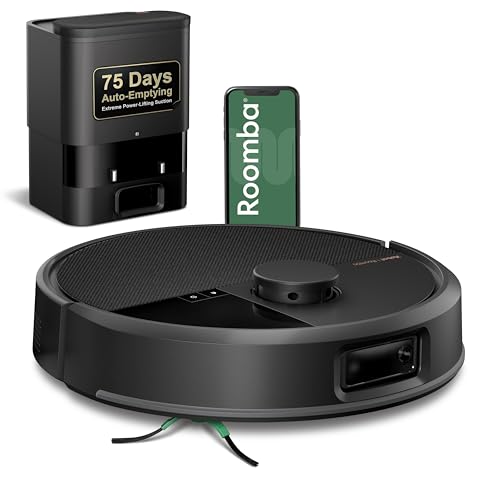
iRobot Roomba Max 705 with AutoEmpty Dock
A premium robot vacuum that combines LiDAR mapping, obstacle avoidance, and dual rubber brushes for effective cleaning on carpets and hard floors. The AutoEmpty dock lets you skip manual emptying for up to 75 days, making it ideal for busy households or those with pet hair.
Pros
- AutoEmpty dock traps particles as small as 0.7 microns, extending intervals between bag changes
- LiDAR and PrecisionVision AI combination handles complex home layouts and obstacle avoidance effectively
- Dual rubber brushes adapt to different floor types without tangling on pet hair
- Dirt Detect and app-based room prioritization learn your home's cleaning needs over time
Cons
- No verified user reviews available yet, making real-world performance difficult to assess
- Premium price point may not suit budget-conscious buyers
- Requires compatible smart home devices for full voice control functionality

Shark AV2501AE AI Robot Vacuum with 60-Day Self-Empty Base
This AI-powered robot vacuum uses LiDAR navigation and Matrix Clean technology to map and methodically clean your entire home, with a self-emptying base that holds 60 days of debris. Its strong suction, self-cleaning brushroll, and HEPA filtration make it particularly effective for pet hair and allergens.
Pros
- Extended 60-day self-empty capacity means minimal maintenance between emptying
- Precise LiDAR-based navigation maps your home and adapts to layout changes
- Strong suction and self-cleaning brushroll effectively capture pet hair and allergens
- Extended 120-minute runtime covers whole-home cleaning on most floor plans
- Hands-free voice control via Alexa or Google Assistant integration
Cons
- No verified buyer reviews available yet to assess real-world performance
- Requires Wi-Fi connectivity and smartphone app setup for full functionality
- Self-empty base and premium features position it in the higher price tier

MONSGA MR7PRO Robot Vacuum and Mop Combo
A 2-in-1 vacuum and mop with 8000Pa suction, LiDAR mapping, and 90-day self-emptying capability designed for pet owners and larger homes. The dual anti-tangle brush system and 160-minute runtime handle extended cleaning sessions, though it requires Wi-Fi connectivity and periodic water tank refills for mopping.
Pros
- Impressive 160-minute battery life with smart recharge and resume function minimizes downtime on large homes
- Dual anti-tangle brush system specifically designed to reduce hair wrap-ups, beneficial for pet owners
- Vacuum and mop in single pass without attachment switching, plus moisture protection prevents wood floor warping
- LiDAR mapping remembers up to 5 floor plans, eliminating need to remap between levels
- 90-day self-emptying reduces hands-on maintenance significantly
Cons
- Zero verified buyer reviews available yet, making real-world performance reliability unclear
- Requires 2.4GHz Wi-Fi only, limiting connectivity for dual-band setups
- Large 460ml water tank still requires refills during extended mopping sessions on whole-home jobs

ROPVACNIC Robot Vacuum and Mop Combo, 5200Pa Suction
This 2-in-1 robot vacuum and mop combines 5200Pa suction with adjustable water tank mopping and smart obstacle avoidance. Built for pet owners with a no-entanglement brush design, it offers voice control and self-charging automation across multiple cleaning modes.
Pros
- Effective pet hair handling with dual rotating side brushes and no-tangle brush design
- Flexible water control system for addressing different stain types
- Hands-free operation via smartphone app and voice commands
- Strong suction performance suitable for multiple floor surfaces
- Fully autonomous scheduling and self-return charging
Cons
- No verified buyer reviews available to confirm real-world performance claims
- 4.5-star rating with zero reviews makes durability and reliability assessment difficult
- Limited information on water tank capacity and mopping runtime specifications
Robot Vacuums Buying Guide
Choosing a robot vacuum is no longer as simple as picking the one with the highest suction number. Modern robot vacuums compete on navigation intelligence, docking ecosystems, mopping capability, and long-term maintenance costs.
The sections below walk through the criteria that actually matter, so you can match the right model to your home and habits.
If you are also building out a smarter home ecosystem, pairing your robot vacuum with smart plugs and smart light switches can streamline your whole automation setup.
Suction Power and Floor Type Compatibility

Suction power is measured in Pascals (Pa), and the numbers have grown dramatically in recent years. Budget models typically offer suction in the 2,000 to 5,000 Pa range, while premium picks like the ECOVACS DEEBOT T90 Omni push into the 30,000 Pa territory.
On bare hard floors, moderate suction is usually sufficient for dust, debris, and pet hair. Carpet, especially thick pile, demands substantially more power to pull debris from deep fibers.
If your home is primarily hard flooring with area rugs, a mid-range model will handle daily upkeep without issue.
Households with wall-to-wall carpet or shedding pets should prioritize higher suction ratings and dual rubber brush rolls, which resist tangling far better than traditional bristle brushes.
Look for models that automatically boost suction when transitioning from hard floors to carpet, a feature now common across mid-range and premium picks.
Navigation and Mapping Technology

How a robot vacuum finds its way around your home is one of the biggest differentiators between price tiers.
Entry-level models use random-bounce navigation, which eventually covers most of a room but wastes time and misses edges.
LiDAR (Light Detection and Ranging) navigation, found on models like the Shark AV2501AE and iRobot Roomba Max 705, creates precise room maps and follows systematic, efficient cleaning paths.
Smart mapping lets you divide your home into named rooms, set no-go zones, and schedule cleaning by area. AI-powered obstacle avoidance takes this further by recognizing and steering around objects like charging cables, shoes, and pet waste in real time.
This matters most in homes with clutter or free-roaming pets. If you are investing in a premium model, confirm that its companion app supports persistent multi-floor maps and lets you adjust cleaning zones without resetting the map entirely.
A well-integrated smart home setup, including smart bulbs that can signal cleaning schedules visually, can complement your robot vacuum routine.
Vacuuming Versus Vacuum-and-Mop Combos
Dedicated robot vacuums focus entirely on suction performance and are generally better at deep carpet cleaning than combo units. Vacuum-and-mop combos add a wet mopping module, which is invaluable for hard floors but introduces complexity.
The key question is whether the mopping system is genuinely useful or just a damp cloth dragged across the floor.
Higher-end combos like the ECOVACS DEEBOT T90 Omni and roborock Qrevo feature spinning or oscillating mop pads with meaningful pressure and rotation speed (the T90 Omni uses a roller mop with instant self-cleaning; the Qrevo runs at 200 RPM).
Auto mop lifting is also critical: without it, the robot will drag a wet mop across carpet. Look for models that automatically raise or retract the mop when transitioning to carpeted areas.
If you want to understand how smart home automation fits into daily routines more broadly, our overview of smart home lighting controls is a useful companion read.
Self-Emptying and All-in-One Dock Systems
Self-emptying bases transformed robot vacuums from daily-attention devices to genuinely hands-off appliances.
When the robot returns to its dock, suction from the base pulls debris from the dustbin into a larger sealed bag or bin, extending the interval between manual emptying to anywhere from 30 to 90 days depending on the model and your home.
The MONSGA and Shark models in this lineup both offer self-emptying functionality at more accessible price points.
All-in-one stations, featured on the roborock Qrevo, eufy E25 and C28, and ECOVACS DEEBOT T90 Omni, add auto mop washing, water refilling, and hot air drying to the equation.
This is a major convenience upgrade for combo models: the station cleans the mop pads automatically so mildew and bacteria do not build up.
Hot water washing and high-temperature drying (the T90 Omni dries at 145°F) are the most effective at sanitizing mop pads. Factor in ongoing consumable costs, including replacement bags, filters, and cleaning solution, when budgeting for these systems.
App, Voice Control, and Smart Home Integration

A capable companion app is not a luxury on modern robot vacuums; it is the primary interface. Good apps provide room-by-room scheduling, cleaning history, consumable tracking (filter life, brush wear), and firmware updates.
Look for apps that offer persistent maps across sessions, not just ones that remap the home every run. iRobot’s app ecosystem is mature and reliable, while roborock and ECOVACS both offer feature-rich apps with strong mapping tools.
Voice control via Alexa or Google Assistant is a standard feature at mid-range and above.
If you run a larger smart home setup, Alexa compatibility (supported on the Shark AV2501AE, among others) allows you to start, stop, or send your robot home hands-free.
Wi-Fi connectivity is now table stakes; the more relevant differentiator is whether the app reliably maintains room maps across reboots and firmware updates.
Maintenance, Filtration, and Long-Term Cost
Robot vacuums require regular maintenance beyond emptying the bin: brush rolls need detangling and periodic replacement, filters need cleaning or swapping, and sensors need occasional wiping.
Anti-tangle brush designs, now offered on the roborock Qrevo, eufy E25 and C28, and iRobot Roomba Max 705, significantly reduce hair wrap and are a meaningful quality-of-life upgrade for pet owners or households with long hair.
HEPA filtration, featured on the Shark AV2501AE, captures fine particles and allergens and is worth prioritizing if anyone in your household has allergies or respiratory sensitivities.
Replacement filter and brush costs vary by brand and can add up over time, so check the availability and pricing of consumables before committing.
Models with longer dock capacities (the Shark’s XL base handles up to 60 days of debris) reduce how often you interact with the system but still require periodic consumable replacement.
Why You Should Trust Us
ProductFind is an independent review publication with no manufacturer relationships that influence our rankings. Every robot vacuum in this guide was evaluated using a consistent, multi-factor research methodology.
We do not conduct our own product trials; our evaluations are grounded in research, published data, expert review consensus, and verified buyer feedback.
Our analysts assess each model against a standardized set of criteria covering suction performance, navigation accuracy, mopping capability, dock and station features, app quality, filtration, maintenance burden, and overall value.
Each product is assigned a PF Score on a scale of 0 to 10. Scores reflect our synthesis of all available evidence: manufacturer-published specifications, consensus findings across multiple expert publications, and patterns in verified owner reviews.
A higher PF Score signals consistent, well-rounded performance across our criteria, not just a standout spec sheet. Products are ranked by PF Score, with the highest-scoring models appearing first in our list.
ProductFind may earn a commission if you purchase through a link in this article. That affiliate relationship has no bearing on which products we include, how we rank them, or the scores we assign.
Our editorial decisions are driven entirely by research quality, not by commission rates or brand relationships. We review, revise, and update our picks as new models launch and market conditions change.
Final Thoughts
The robot vacuum market in 2026 is genuinely strong across multiple price tiers.
Whether you need a no-fuss daily driver, a full vacuum-and-mop combo with a hands-off station, or a reliable budget option to keep a smaller space tidy, there is a well-supported pick in this lineup.
Here is how we break down the top awards based on our research and PF Scores:
- Best Overall: ECOVACS DEEBOT T90 Omni earns the top spot with the highest PF Score in this lineup, combining class-leading 30,000 Pa suction, a sophisticated roller mop with instant self-cleaning, TruEdge deep edge coverage, hot water wash and high-temperature air dry, and mature AI obstacle avoidance into one of the most complete packages available at a premium price point.
- Best Vacuum-and-Mop Combo for Everyday Use: iRobot Roomba 505X delivers an impressive balance of vacuuming power, multifunction dock convenience, 75-day self-emptying capacity, and a genuinely capable hot-dry mop system, backed by iRobot’s proven navigation reliability and a strong PF Score.
- Best Mid-Range All-in-One: roborock Qrevo (QV 35A) stands out in the mid-range tier with 8,000 Pa suction, anti-tangle brush technology, smart obstacle avoidance, and an all-in-one dock that handles both mop washing and water management, making it an excellent value for feature-conscious buyers.
- Best for Pet Hair and Heavy-Duty Mopping: eufy E25 Robot Vacuum and Mop Combo addresses pet-hair households directly with 20,000 Pa suction, zero-tangle brush design, an extendable side brush for edges, HydroJet self-cleaning roller mop, and a well-rounded all-in-one station, earning a strong PF Score for its versatility.
- Best Budget Pick: Shark AV2501AE remains a smart choice for buyers who want LiDAR navigation, a 60-day self-empty HEPA base, and solid Alexa integration at an accessible price, without sacrificing the core navigation intelligence that makes a robot vacuum genuinely useful.
If you are building out a broader smart home setup around your new robot vacuum, it is worth thinking about the full ecosystem.
A reliable set of smart plugs can automate charging schedules, and pairing your vacuum with quality smart bulbs brings the whole home closer to a seamlessly automated experience.
Frequently Asked Questions
How Often Should a Robot Vacuum Run to Keep Floors Clean?
For most households, running a robot vacuum once daily is sufficient to maintain clean floors between deeper manual cleans. Pet owners or households with high foot traffic may benefit from twice-daily scheduling on high-traffic zones.
Most apps let you set room-by-room schedules so you can run the robot in the kitchen every day while running it in low-traffic guest rooms only a few times a week.
Are Vacuum-and-Mop Combos Good Enough to Replace a Dedicated Robot Vacuum?
It depends on your floor mix. On homes that are primarily hard flooring, a quality combo like the ECOVACS DEEBOT T90 Omni or roborock Qrevo can absolutely replace a dedicated robot vacuum for daily maintenance.
On homes with substantial carpet coverage, dedicated robot vacuums still hold a performance edge because the absence of mopping hardware allows for more aggressive brush and suction optimization for carpet fibers.
A combo with auto mop lifting is a reasonable compromise if you have both floor types.
Do Robot Vacuums Work Well on Thick Carpets?
High-suction models with rubber brush rolls perform well on low-to-medium pile carpet. Very thick or shag carpet can challenge even premium robots, reducing suction efficiency and sometimes causing the robot to get stuck.
If you have thick pile throughout your home, prioritize models with the highest available suction ratings and confirm compatibility in user reviews from verified buyers with similar flooring. Many models automatically boost suction on carpet, which helps considerably.
What Is the Difference Between LiDAR and Camera-Based Navigation?
LiDAR navigation uses laser pulses to measure distances and build precise room maps, working accurately in low-light and dark environments.
Camera-based navigation (vSLAM) uses visual landmarks and performs well in well-lit rooms but can struggle in darkness or in rooms with repetitive visual patterns.
LiDAR is generally considered more reliable for consistent room mapping, which is why it features prominently in mid-range and premium picks including the Shark AV2501AE and iRobot Roomba Max 705. Some models combine both for enhanced obstacle recognition.
Can Robot Vacuums Handle Homes With Multiple Floor Types?
Yes, and multi-surface versatility is a baseline expectation for any model in the mid-range or above. The key feature to look for is automatic suction adjustment when transitioning between surfaces.
For combo models, automatic mop lifting when crossing onto carpet is essential to avoid dragging a wet pad across fibers.
All of the models in our lineup are rated for both carpet and hard floors, though performance depth varies by suction power and brush design.
Are Robot Vacuums Worth It for Smaller Apartments?
Robot vacuums offer strong value in smaller spaces where a single-room or studio layout is easy for the robot to map and navigate efficiently.
In compact homes, even a mid-range model completes a full cleaning cycle quickly and returns to dock without getting lost. A budget-tier model with basic navigation can be a practical, low-commitment entry point.
If your apartment has an open layout with minimal obstacles, you may not need advanced AI avoidance at all.
Think of it as a complement to, not a replacement for, a periodic deeper clean with an upright or kitchen appliance routine that keeps the whole home in order.
About the author
Connie is a reviewer and writer for ProductFind who specializes in Home Cleaning & Floor Care. Connie evaluates products through independent research: specifications, expert review consensus, and verified buyer feedback, and rates each one on the PF Score. Connie focuses on helping readers pick the right home cleaning & floor care for their needs and budget.