The 9 Best Rubber Gym Flooring
Rubber gym flooring protects your floors, dampens noise, and keeps equipment stable. Here are the top-rated tiles and mats for home gyms, ranked by durability, grip, and coverage value.
 By Amelia Crawford
Updated July 23, 2026
By Amelia Crawford
Updated July 23, 2026
Rubber gym flooring is one of those purchases that looks simple until you’re staring at a cracked subfloor or a treadmill that won’t stop vibrating through two floors of your house.
The right flooring protects your equipment, your floors, and your joints during everything from daily cardio sessions to heavy deadlift work.
Whether you’re outfitting a dedicated garage gym or carving out a corner of a spare room, the material you lay down first shapes every workout that follows.
Options from brands like AIRHOP, SUPERJARE, Yes4All, and HAPBEAR now make it easier than ever to build a functional, durable surface without a commercial-sized budget.
To help you cut through the noise, ProductFind researched this category thoroughly, pulling together manufacturer specifications, expert review consensus across the category, and verified buyer feedback from thousands of real purchases.
We do not conduct our own product trials; every pick here is grounded in published data and real-world user patterns.
If you’re also building out the rest of your space, pairing quality flooring with solid adjustable dumbbells and a dependable treadmill turns any room into a genuinely capable training environment.
Our top picks are ranked below, starting with the highest-rated option in the category.
| Award | Product | PF Score About PF ScoreThe PF Score is our own rating from 0 to 10, based on performance, design and build, ease of use, and value. It reflects independent research and is never influenced by manufacturers, retailers, or affiliate commissions. Learn more › | Price | |
|---|---|---|---|---|
| Best Overall |
 AIRHOP 48 Sq Ft Interlocking Gym Mats, 0.56in Thick
|
8.4/10 | Buy | |
| Editor's Pick |
 Superjare 30" Interlocking Gym Mat, 12-Piece Set (75 Sq Ft)
|
8.3/10 | Buy | |
| Best Value |
 Superjare 12-Tile Interlocking Gym Mat, 0.56" Thick
|
8.1/10 | Buy | |
| Top Rated |
 HAPBEAR 12-Tile Interlocking Gym Mat, 0.56in Thick
|
7.9/10 | Buy | |
 Yes4All 24x24 Rubber Gym Flooring Tiles, 0.56" Thick
|
7.8/10 | Buy | ||
 VivaLuz 0.6" Rubber Gym Floor Mat 48 Sq Ft
|
7.7/10 | Buy | ||
 Baselayer Performance Series 19x19 TPE Gym Tiles
|
7.5/10 | Buy | ||
 ProSource Exercise Puzzle Mat 144 SQ FT (36 Tiles)
|
7.2/10 | Buy | ||
 GymCope 8x6 Exercise Mat, 7mm Thick
|
7.0/10 | Buy |
AIRHOP 48 Sq Ft Interlocking Gym Mats, 0.56in Thick
A 12-tile interlocking mat system with dual-layer rubber and EVA foam construction, designed to protect floors from heavy weights and equipment. Best suited for home gym setups that need durable, easy-to-assemble flooring across larger spaces.
Pros
- Upgraded interlocking system prevents tile separation during intense workouts
- Durable recycled rubber handles scratches, scuffs, and dents from dumbbells and weights
- Quick assembly and detachable design allows flexible space configuration
- Quiet operation and shock absorption suitable for various exercises
- Waterproof and low-maintenance cleaning
Cons
- At 0.56 inches thick, thinner than some premium gym mats which may affect cushioning for high-impact activities
- No verified buyer reviews available to validate real-world durability claims
- Limited to black/white color options for interior aesthetic matching
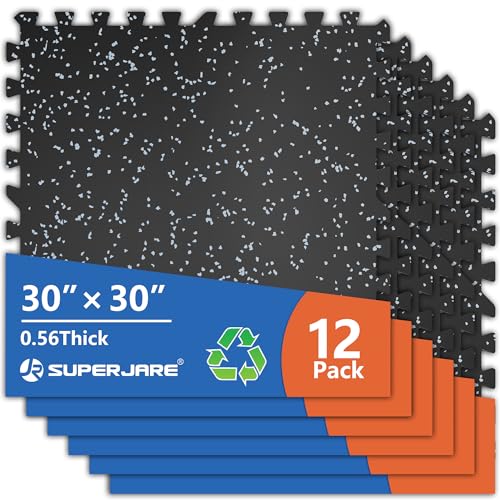
Superjare 30" Interlocking Gym Mat, 12-Piece Set (75 Sq Ft)
Large interlocking rubber and EVA foam tiles designed for home gyms and equipment protection. Offers shock absorption, noise reduction up to 30-50%, and easy maintenance across 75 square feet of coverage.
Pros
- Large tile size minimizes installation gaps and edge lifting compared to smaller mats
- Dual-layer construction handles heavy equipment and intense workouts without compression
- Thick cushioning provides effective joint protection for jumping, weights, and HIIT
- Noise-dampening performance rated at 30-50% reduction, suitable for apartments
- Water-resistant and simple to wipe clean after sweaty sessions
Cons
- No verified buyer reviews yet to confirm real-world durability claims
- Black/Grey color option only, limited customization for gym aesthetics
- Heavy material and large tile count may require significant space and effort to assemble and move
Superjare 12-Tile Interlocking Gym Mat, 0.56" Thick
A dual-layer exercise mat combining EVA foam with EPDM rubber top, designed to handle heavy equipment while reducing noise and protecting floors. Best suited for home gyms that need modular flooring covering 48 square feet.
Pros
- Durable dual-layer design resists tearing and wear from heavy weights and vigorous movements
- Interlocking system makes it easy to expand, reconfigure, or move between rooms
- Superior grip and cushioning balance provides traction without sacrificing shock absorption
- Effective noise and vibration reduction for apartment-friendly home workouts
- Covers substantial floor area (48 sq ft) with single purchase
Cons
- No verified buyer reviews yet, making real-world durability difficult to confirm
- Individual tile weight (2.5 lbs) requires assembly of all 12 pieces before use
- Thickness (0.56 inches) may be thinner than dedicated heavy-lifting platforms for serious powerlifters
HAPBEAR 12-Tile Interlocking Gym Mat, 0.56in Thick
Interlocking foam and rubber tiles that total 48 sq ft, designed for home gyms and heavy equipment. Two-layer construction with shock-absorbing EVA foam and non-slip rubber top works well for protecting floors during cardio and strength training.
Pros
- Flexible interlocking design lets you customize layout around equipment and spaces
- Dual-layer construction balances stability (rubber) with cushioning (EVA foam)
- Reported to have minimal odor, safe for indoor use
- Water-resistant surface simplifies cleanup after sweaty sessions
- Disassembles and stacks for easy storage when not in use
Cons
- No verified buyer reviews available to confirm real-world durability claims
- Individual tile weight and assembly effort not specified
- Limited color option (black only for this configuration)
Yes4All 24x24 Rubber Gym Flooring Tiles, 0.56" Thick
Interlocking rubber and EVA foam tiles designed for home gyms with noise reduction and slip resistance. The cushioned construction suits yoga, weightlifting, and cardio workouts in garage or basement spaces.
Pros
- Rubber top layer reduces odor over time and provides lasting protection
- Thick tiles offer effective cushioning and noise dampening for home gyms
- Secure interlocking system allows flexible layout customization
- Suitable for multiple exercise types from yoga to strength training
Cons
- No verified customer reviews available to validate real-world durability claims
- Limited color options (White Dot only listed)
- Individual 24x24 tile size may require many pieces for larger spaces
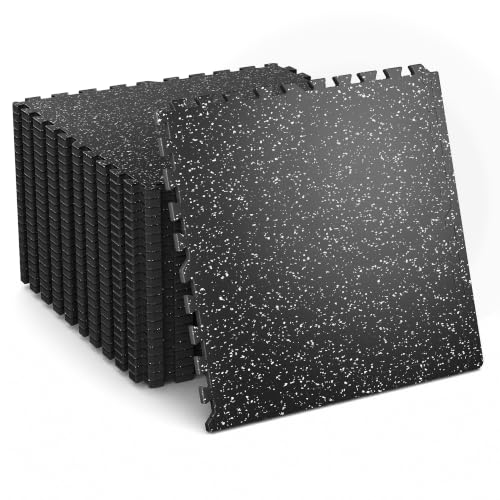
VivaLuz 0.6" Rubber Gym Floor Mat 48 Sq Ft
A 12-tile interlocking gym mat system with dual-layer rubber and EVA foam construction, designed for heavy-duty training and impact absorption. Best suited for home gyms and strength training spaces where durability and noise reduction matter.
Pros
- Dual-layer construction combines wear-resistant rubber top with dense EVA foam base for lasting performance
- Tool-free interlocking puzzle design enables quick assembly, disassembly, and flexible expansion
- Effective shock absorption and grip stability designed for heavy-weight and high-impact workouts
- Waterproof surface allows easy cleaning with a damp cloth
- Versatile for multiple exercise types including CrossFit, weight training, yoga, and aerobics
Cons
- No verified customer reviews available to assess real-world durability and performance over time
- 0.56-inch thickness may be considered thinner compared to some premium gym mat alternatives
- 48 square feet coverage requires dedicated floor space, limiting use in very small home gyms
Baselayer Performance Series 19x19 TPE Gym Tiles
Heavy-duty rubber gym flooring made from injection-molded TPE with a firmer cushion designed for weights and high-impact training. Interlocking tiles stay secure with minimal gaps, require minimal maintenance, and include cord management channels for a cleaner gym setup.
Pros
- Firm, cushioned surface engineered specifically for heavy weights and equipment
- Interlocking design locks tiles securely in place with minimal movement during use
- TPE material offers resilience of rubber mats without odor concerns of EVA foam alternatives
- Electrical cord management channels integrated into tile design
- Low maintenance and resistant to chemicals and wear
Cons
- No customer reviews available yet to verify real-world performance claims
- Edges and corners sold separately, requiring additional purchases for complete coverage
- Firmer density may feel less cushioned than softer foam alternatives for lower-impact exercises
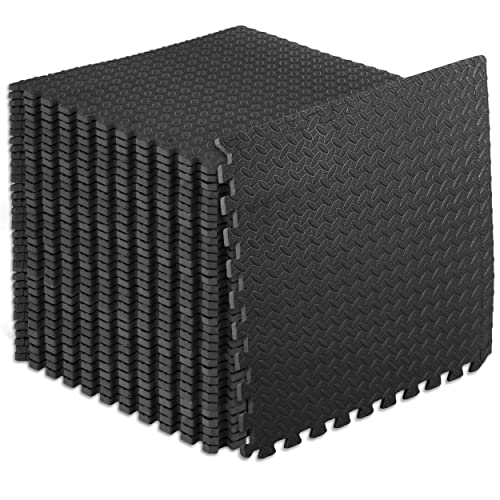
ProSource Exercise Puzzle Mat 144 SQ FT (36 Tiles)
High-density EVA foam interlocking tiles that protect floors and reduce noise in home gyms, garages, or play areas. Easy to assemble and disassemble, though surface may compress under heavy weights.
Pros
- Excellent floor protection and noise reduction for home workouts
- Phthalate-free, high-density foam provides good cushioning and support
- Lightweight interlocking design allows fast setup and breakdown for storage
- Water-resistant surface simplifies cleaning
- Pre-bordered tiles create a polished, finished appearance
Cons
- Foam may compress slightly under heavy objects, causing minor surface variation
- Color and texture can vary slightly between production batches
- Best performance on flat, hard surfaces rather than uneven floors
GymCope 8x6 Exercise Mat, 7mm Thick
A large, durable workout mat available in six sizes with 7mm cushioning and anti-slip surfaces on both sides. Designed for cardio, weightlifting, yoga, and high-impact activities, it includes a carrying bag, straps, and microfiber towel for portability and maintenance.
Pros
- Multiple size configurations let you choose the right fit for your space or combine mats for larger areas
- 7mm thickness offers meaningful cushioning for joint impact while remaining stable for weightlifting
- High-density PVC resists wear from both high-impact activities and equipment use
- Included carrying bag and straps make transport and storage practical for active users
- Works effectively on multiple floor types without shifting during use
Cons
- No verified customer reviews available to confirm real-world durability and longevity claims
- 28-pound weight for the 8x6 size may be cumbersome for frequent transport despite included bag
- Product rating of 4.5 appears to be a default rather than based on actual customer feedback
Rubber Gym Flooring Buying Guide
Choosing the right rubber gym flooring comes down to more than thickness and price. The type of workouts you do, the surface you’re installing on, and the size of your space all push you toward different solutions.
This guide breaks down the six factors that matter most, so you can match the flooring to your actual training, not just a marketing claim.
Material Composition: Pure Rubber vs. Rubber-Top Foam
The most important distinction in this category is what the mat is actually made of. True solid rubber rolls and tiles offer maximum density and durability, making them the go-to for heavy commercial use.
However, the majority of home gym options use a hybrid construction: a textured rubber surface bonded to a dense EVA foam core.
This approach reduces cost and weight while still delivering meaningful floor protection and impact absorption for most home training scenarios.
For stationary cardio equipment, light to moderate dumbbell work, and bodyweight training, a rubber-top EVA foam tile performs excellently.
Under repeated heavy barbell drops or loaded sled pushes, solid rubber holds up better over time because the foam core can compress and deform under extreme concentrated loads.
If your sessions routinely include drops from height or very heavy compound lifts, lean toward denser, higher-mass options.
For the majority of home gym users, a well-made rubber-top foam tile is more than sufficient and far easier to install and move.
One newer material worth noting is TPE (thermoplastic elastomer), which behaves like rubber but is manufactured without the same vulcanization odor.
The Baselayer Performance Series tiles on our list use this material and are made in the USA, which matters for buyers sensitive to off-gassing in enclosed spaces like basements or garages with limited ventilation.
Thickness and Impact Absorption
Thickness directly determines how well a mat handles impact and how much noise and vibration it absorbs. In the home gym tile segment, the dominant thickness you’ll encounter is around 0.56 inches, which most of the picks on this list share.
That dimension hits a practical sweet spot: thick enough to absorb the shock of a dropped dumbbell or the vibration of a treadmill, thin enough not to raise your equipment to an unstable height or create a tripping hazard at the edge.
If your primary concern is protecting hardwood floors or concrete from equipment feet, 0.56 inches is generally adequate.
For high-impact activities like jump rope, box jumps, or MMA training, a thicker mat in the 7mm to 10mm range, like the GymCope large exercise mat on this list, provides more cushioning for joints and reduces fatigue during long sessions.
The tradeoff is that very thick mats can feel unstable under barbells and heavy machines.
Paired with the right kettlebells for dynamic swings and cleans, a 0.56-inch hybrid tile offers enough floor protection without the springiness that makes ballistic lifts feel unpredictable. Prioritize thicker pads specifically under equipment feet, and use standard-thickness tiles for the surrounding training area.
Tile Size and Coverage Area
Standard interlocking tiles in this category typically come in 24-inch by 24-inch squares, covering 48 square feet per 12-tile set.
That’s enough to floor a roughly 7 by 7 foot area, which works for a focused equipment zone but falls short of a full garage gym.
Before you buy, measure your intended space and calculate exactly how many sets you need, adding at least one extra tile for edge trimming and future replacement.
Some newer options are moving to larger format tiles. The SUPERJARE 30-by-30-inch tile set covers 75 square feet with the same 12-tile count, which means fewer seams across your floor and faster installation over bigger areas.
Fewer seams also means fewer edges for tiles to separate during lateral movements or sliding equipment. If you’re covering a large space, larger tile formats are worth the slightly higher per-set cost.
Seam Stability and Interlocking Design
Interlocking tiles are only as good as their puzzle-edge design. Poor-quality interlocks allow tiles to drift apart during dynamic movements, creating raised edges that are both a tripping hazard and a sign of degrading performance.
When evaluating buyer feedback in this category, seam separation is the single most common complaint, and it correlates strongly with tile density and edge manufacturing precision.
Corner tiles and perimeter tiles tend to shift more than center tiles because they have fewer interlocking neighbors. For areas where equipment doesn’t sit directly on the tiles, consider using weight plates or equipment feet to anchor corners.
Alternatively, some buyers use double-sided carpet tape under the perimeter tiles in permanent gym setups. If you move your gym layout frequently, look for tiles that buyers specifically report stay locked even when separated and reconnected multiple times.
A stable floor also matters for the equipment placed on it. Even the most capable home treadmill will vibrate and walk if the surface beneath it isn’t secure. Tiles that interlock firmly and lie flat eliminate that variable entirely.
Odor and Off-Gassing
Rubber flooring, particularly products with recycled rubber content, can produce a noticeable smell when first unboxed. This is especially relevant in enclosed spaces: basements with no windows, sealed garages, or spare bedrooms with limited airflow.
The smell is not toxic at typical exposure levels but can be unpleasant enough to delay installation or make initial workouts uncomfortable.
Most rubber-top foam hybrids see the odor dissipate within a few days to a week of ventilation. Buyers consistently report that simply leaving tiles laid out in an open area before final installation speeds this up significantly.
If odor sensitivity is a primary concern, TPE-based options like the Baselayer Performance Series are specifically manufactured to reduce this problem, and several buyers note no detectable smell even on day one.
Surface Texture and Equipment Grip

The top texture of a gym tile determines two things: how well your shoes grip the surface during athletic movement, and how well equipment feet stay in place during operation.
A smooth rubber top looks clean but can become slippery under sweaty conditions. A raised diamond or pebble texture adds friction for both footwear and equipment pads without collecting as much debris as a deeply grooved pattern.
For general home gym use, a lightly textured rubber top handles the full range of training scenarios competently.
If you’re running a high-volume cardio setup, look for buyer feedback specifically on grip during longer sessions, since some tiles show wear on the texture after extended use at one spot.
Durability of surface texture under concentrated equipment feet is a meaningful differentiator between budget and mid-range options in this category.
A non-slip surface also matters more when your gym includes higher-impact exercises. Jump rope sessions, for example, place repetitive point-loads on a small area of mat that can cause cheaper tiles to shift or dimple over time.
Look for tiles that verified buyers report holding their surface texture after months of regular use, not just during the first few weeks.
Why You Should Trust Us
ProductFind is an independent review publication. We do not sell products, fulfill orders, or accept manufacturer samples in exchange for coverage.
Every recommendation on this page is the result of systematic research: we analyze manufacturer specifications, assess expert review consensus across the category, and evaluate verified buyer feedback from thousands of documented purchases.
We do not conduct our own product trials; our evaluations are grounded in research, published data, expert review consensus, and verified buyer feedback.
Each product on this list received a PF Score on our 0 to 10 scale. That score reflects a consistent, multi-factor evaluation framework applied identically across every product we assess in this category.
Factors include material quality, thickness and impact performance, seam stability, surface grip, coverage value, and the quality and volume of verified user experience data available. No manufacturer can pay to improve a score or purchase a higher ranking.
ProductFind may earn a commission when you purchase through links on this page. That affiliate relationship does not influence our rankings, scores, or selection of recommended products in any way.
Our editorial decisions are made independently, and products are ranked solely on the merit of our evaluation criteria.
Final Thoughts
The rubber gym flooring market has matured significantly, and the picks on this list cover a genuine range of needs from budget-conscious buyers to those building serious home training facilities. Here are the standout designations based on our research and PF Score rankings:
- Best Overall: AIRHOP 0.56in Thick 48 Sq Ft Exercise Equipment Mats earns the top position with the highest PF Score in this group, combining a textured rubber top, high-density EVA foam, and strong verified buyer consensus on seam stability and floor protection across a wide range of home gym workouts.
- Best for Large Spaces: SUPERJARE 30″ x 30″ Larger Rubber Top Exercise Equipment Mats stands out for its oversized tile format, delivering more coverage per set with fewer seams, which pays off substantially in bigger garage or basement gym layouts.
- Best Runner-Up: SUPERJARE 0.56″ Thick 12 Pcs 48 Sq Ft Rubber Top Exercise Equipment Mats matches the standard 24-by-24-inch format with excellent buyer-reported durability and a strong overall PF Score, making it a reliable choice at a competitive price point.
- Best for Heavy Equipment: HAPBEAR 0.56″ Thick 12 Pcs 48 Sq Ft Exercise Equipment Mats earns consistent praise from buyers running treadmills and other heavy machines on hardwood floors, with verified feedback specifically highlighting vibration dampening and floor protection.
- Best No-Odor Option: Baselayer Performance Series Interlocking Floor Tiles is the only TPE-based pick on this list, manufactured in the USA without the rubber off-gassing that plagues many competitors. Ideal for enclosed spaces with limited ventilation.
Whichever surface you choose, remember that even the best flooring performs better when it’s part of a well-planned space.
Consider how your floor layout works around larger equipment, and think about recovery tools like foot massagers for post-workout care and creatine supplements to support your training goals over time.
Frequently Asked Questions
How Thick Should Rubber Gym Flooring Be for a Home Gym?
For most home gym uses, including cardio equipment, light to moderate free weights, and bodyweight training, a thickness of around 0.5 to 0.6 inches provides adequate floor protection and impact absorption.
This is the range that dominates the verified buyer market and accounts for most of the picks on this list. If your training involves heavy barbell drops or high-volume jump training, consider supplementing with additional mats under impact zones.
Do Interlocking Rubber Gym Tiles Stay in Place During Workouts?
It depends on the tile quality and the type of movement. Center tiles in a well-installed set generally stay locked during most workouts, including running on a treadmill, lifting, and cardio circuits.
Perimeter and corner tiles are more likely to drift during intense side-to-side movements. Buyer feedback consistently shows that higher-density tiles with tighter puzzle edges shift significantly less.
For permanent setups, using carpet tape or furniture weight to anchor perimeter tiles removes the issue entirely.
Is Rubber-Top Foam the Same as Solid Rubber Flooring?
No. Rubber-top foam tiles have a thin rubber surface layer bonded to a dense EVA foam core, while solid rubber tiles or rolls are uniform rubber throughout. Solid rubber is heavier, more durable under extreme loads, and more expensive.
Rubber-top foam is lighter, easier to install, provides better cushioning for joints, and handles the demands of most home gyms well. For the majority of buyers, rubber-top foam is the practical and cost-effective choice.
Can I Put Rubber Gym Flooring Over Hardwood or Carpet?
Rubber gym tiles can be placed over hardwood floors without adhesive and work well for protecting the surface beneath equipment. On carpet, tiles may shift more because the soft base reduces interlocking effectiveness.
Verified buyers consistently report better results installing directly over concrete, hardwood, or vinyl plank. For carpet installation, choose tiles with a textured underside and consider using fewer but larger tiles to reduce the number of seams that can buckle.
How Do I Reduce the Rubber Smell from New Gym Flooring?
Lay the tiles out flat in a well-ventilated space before installation. Open windows, run a fan, or leave the tiles in a garage with the door open for 24 to 72 hours.
The odor comes from rubber compounds and dissipates with air exposure. Cleaning the surface with a mild soap-and-water solution can also speed up the process.
If odor is a persistent concern, look at TPE-based options that are engineered without the off-gassing compounds found in traditional recycled rubber products.
How Many Tiles Do I Need to Floor My Home Gym?
Measure your space in square feet and match it against the coverage listed on the product. A standard 12-tile set of 24-by-24-inch tiles covers 48 square feet, enough for roughly a 7 by 7 foot area.
Larger format tiles, like 30-by-30-inch options, cover more ground per set. Always buy slightly more than your measurement to allow for edge trimming and to have replacement tiles on hand.
A dedicated home gym that includes a treadmill, a weight bench, and free weight storage typically needs at least 100 to 150 square feet of coverage.
About the author
Amelia is a reviewer and writer for ProductFind who specializes in Home Gym & Strength Training. Amelia evaluates products through independent research: specifications, expert review consensus, and verified buyer feedback, and rates each one on the PF Score. Amelia focuses on helping readers pick the right home gym & strength training for their needs and budget.