The 9 Best Rv Backup Cameras
Backing an RV safely depends on more than mirrors. We evaluated wireless, solar, Furrion-compatible, and multi-camera systems to find the clearest, most reliable rear-view options.
 By Isobel Gordon
Updated July 23, 2026
By Isobel Gordon
Updated July 23, 2026

Backing a large motorhome, travel trailer, or fifth wheel into a tight campsite without a reliable rear view is one of the most stressful maneuvers in RV ownership.
Standard mirrors leave massive blind spots, and a single miscalculation can mean a crumpled corner cap or a damaged utility hookup.
A quality RV backup camera system addresses exactly that problem, giving drivers a clear, real-time view of what is directly behind or alongside the rig, whether you are reversing into a wooded lot, aligning a hitch, or navigating a congested campground.
With wireless solar systems, plug-and-play Furrion-compatible kits, and multi-camera split-screen setups all competing for your attention, picking the right one requires understanding which features actually matter on the road.
This guide draws on manufacturer specifications, expert review consensus across the RV and automotive camera space, and verified buyer feedback from confirmed purchasers to help you cut through the noise.
We evaluated each model against a consistent set of criteria, including image resolution, night vision range, signal stability, installation complexity, monitor quality, and weatherproofing, and scored every product on our 0 to 10 PF Score scale.
Whether you want a no-drill magnetic solar camera for a small travel trailer, a plug-and-play wireless system for a Furrion-prepped Class A, or a full four-camera split-screen setup for a commercial-length coach, the ranked picks below cover every realistic need and budget.
Pair your camera upgrade with other smart RV accessories like RV surge protectors that guard your electrical system at every campsite, and you will be well equipped for safer, lower-stress travel.
| Award | Product | PF Score About PF ScoreThe PF Score is our own rating from 0 to 10, based on performance, design and build, ease of use, and value. It reflects independent research and is never influenced by manufacturers, retailers, or affiliate commissions. Learn more › | Price | |
|---|---|---|---|---|
| Best Overall |
 AUTO-VOX Wireless RV Backup Camera, 7.2-inch Triple-Split
|
8.6/10 | Buy | |
| Editor's Pick |
 AUTO-VOX Dual Lens RV Backup Camera System 7.2" Monitor
|
8.5/10 | Buy | |
| Best Value |
 AUTO-VOX 7.2" Wireless Backup Camera with Solar & DVR
|
8.4/10 | Buy | |
| Top Rated |
 Pemacom 7" Wireless Backup Camera with Solar, 1080P HD
|
8.2/10 | Buy | |
 Yakry Y27-N Wireless RV Backup Camera 1080P
|
8.1/10 | Buy | ||
 Haloview BT7 7-Inch Wireless RV Backup Camera System
|
7.9/10 | Buy | ||
 AMTIFO A7 7-Inch Wireless RV Backup Camera System
|
7.8/10 | Buy | ||
 Thybro Wireless RV Backup Camera, 1080P HD with Solar
|
7.6/10 | Buy | ||
 VOONOA 4K RV Backup Camera System 10.36 inch Quad Split
|
7.2/10 | Buy |
AUTO-VOX Wireless RV Backup Camera, 7.2-inch Triple-Split
A wireless backup camera system designed for RVs and trailers, offering rear and dual side views on a 7.2-inch display with 1080P clarity and infrared night vision. The triple-split screen mode and 500ft wireless range address common maneuvering challenges in tight campground spaces, though setup requires integration with existing RV wiring.
Pros
- Comprehensive view coverage eliminates blind spots on both sides and rear simultaneously
- Extended 500ft wireless range suitable for longer trailers and fifth wheels
- IP69 waterproofing and infrared capability ensure functionality in harsh camping conditions
- Built-in DVR loop recording captures driving and backing footage automatically
- Flexible power supply accommodates modern RVs with USB ports
Cons
- No verified buyer reviews available to validate real-world reliability and installation experience
- Integration with factory wiring and side marker light replacement requires technical competency or professional installation
- Wireless signal stability at maximum 500ft range depends on open terrain and may degrade in obstructed areas
AUTO-VOX Dual Lens RV Backup Camera System 7.2" Monitor
Wireless RV backup camera system with dual rear lenses and side coverage on a 7.2-inch HD screen, designed for large rigs and campsite maneuvering. Dual antenna setup reaches up to 500 feet in open areas, includes 1080P resolution with night vision, and offers flexible power options.
Pros
- Dual rear lenses provide both highway monitoring and precise hookup alignment, addressing two distinct RV backing scenarios
- Strong signal range with dual antennas covers long RV setups without frequent dropouts
- Rugged IP69K waterproof construction handles harsh towing conditions and weather exposure
- Flexible power input reduces installation complexity in different vehicle layouts
- Integrated DVR capability allows footage review for incident documentation
Cons
- No verified customer reviews available at this time, limiting real-world performance feedback
- MicroSD card for DVR recording sold separately, adding to total setup cost
- Wireless systems are subject to potential signal interference in areas with heavy electronic devices or obstacles
AUTO-VOX 7.2" Wireless Backup Camera with Solar & DVR
A magnetic wireless backup camera system designed for trucks, RVs, and trailers with a 7.2-inch dual-split display and 1080P recording. The solar-powered battery and quick magnetic installation appeal to mobile vehicle owners seeking hands-free setup without drilling.
Pros
- Magnetic base with soft rubber padding allows tool-free installation on metal surfaces and includes metal plate for non-magnetic vehicles
- Solar charging combined with high-capacity battery reduces manual charging frequency, ideal for extended trips
- Dual-antenna system ensures interference-free transmission across 524 feet, suitable for towing trailers and boats
- 1080P resolution with IR night vision provides clear footage in varied lighting conditions
- Auto sleep mode and customizable working timers (120s, 240s, Never) optimize power consumption
Cons
- No verified customer reviews available to assess real-world reliability and long-term performance
- 7.2-inch screen display may be smaller than some competitors for operators preferring larger preview monitors
- Signal range of 524 feet, while good, may have limitations in dense urban areas or environments with significant RF interference
Pemacom 7" Wireless Backup Camera with Solar, 1080P HD
A wireless backup camera system designed for trucks and RVs, featuring magnetic quick installation, 1080P HD night vision, and extended battery life with solar charging. The 7-inch display and dual video channel support make it practical for larger vehicles and trailers.
Pros
- One-minute magnetic installation without drilling or wiring
- Extended 24-hour battery life with solar panel supplementation
- Clear night vision and glare reduction for safer low-light reversing
- Weatherproof construction rated for extreme temperatures
- Dual video channel support for connecting secondary cameras
Cons
- No verified buyer reviews available to assess real-world reliability
- 33-foot wireless range may be limited for very long trailers or RVs
- Requires regular charging or adequate sunlight for solar panel function
Yakry Y27-N Wireless RV Backup Camera 1080P
A wireless backup camera system designed for RVs and trailers with 1080P resolution, dual antennas for stable signal up to 320 feet, and expandable multi-camera support. The 7-inch touch monitor includes recording capability and infrared night vision, making it practical for full-time monitoring beyond just reversing.
Pros
- Stable wireless signal with dual antenna design and extended 320-foot range for vehicles
- Supports up to 4 cameras on one monitor, ideal for comprehensive RV coverage
- Recording feature adds dash cam functionality beyond basic backup monitoring
- Straightforward installation process with provided Furrion bracket and YouTube guidance
- IP69K waterproof construction suitable for varied weather conditions
Cons
- No verified buyer reviews available to confirm real-world performance and reliability
- Signal range claims (825 feet open area, 320 feet working range) may vary significantly in practice depending on terrain and interference
- Touch key interface and monitor setup may require learning curve despite simplicity claims
Haloview BT7 7-Inch Wireless RV Backup Camera System
Wireless backup camera system designed for large vehicles like RVs and trailers, featuring a 7-inch touch screen monitor with 1080P recording and up to 984 feet wireless range. Combines real-time video feed with dash cam functionality for extended vehicle monitoring.
Pros
- Exceptionally long wireless range makes it practical for RVs, travel trailers, and multi-camera setups
- Built-in 1080P recorder doubles as a dash cam for continuous documentation
- 7-inch touch screen with curved glass provides better visibility than smaller monitors
- Low-latency wireless technology reduces signal lag and interference
- Wide 10-32V voltage input and multi-vehicle compatibility span RVs, trucks, campers, and tractors
Cons
- No verified buyer reviews available to confirm real-world reliability or performance consistency
- 984-foot range requires line-of-sight conditions, which may be limited by RV structural obstacles
- Multi-camera setup and recording functionality add complexity compared to simpler single-camera systems
AMTIFO A7 7-Inch Wireless RV Backup Camera System
A plug-and-play wireless backup camera designed for Furrion-equipped RVs, featuring a 7-inch touchscreen monitor, 1080P recording, and support for up to four cameras. The system delivers stable 2.4-GHz wireless connectivity and IP69K waterproofing, making it suited for RV owners seeking an affordable alternative to OEM systems.
Pros
- Wireless signal is stable and lag-free with dual-antenna design and advanced IPS technology for improved response time
- Supports up to four cameras simultaneously, allowing flexible placement on RV, truck, or trailer for comprehensive blind-spot coverage
- IP69K waterproof rating and all-metal construction provide durability in harsh weather conditions, with upgraded 60V power IC for reliability
- Video recording function works as a dash cam equivalent with automatic loop recording when storage is full
- Includes test cord kit and YouTube installation guides to verify functionality before mounting
Cons
- No verified buyer reviews available to confirm real-world performance and long-term durability claims
- Wireless range drops significantly indoors (825ft open area vs 320ft vehicle range), which may limit use in certain RV scenarios
- Installation, while marketed as plug-and-play, still requires mounting hardware and may need custom wiring depending on RV age and electrical setup
Thybro Wireless RV Backup Camera, 1080P HD with Solar
Wireless RV backup camera with magnetic quick-mount installation and solar charging, designed to eliminate the hassle of traditional wired systems. Features 1080P clarity, 170-degree wide angle, and a 50-pound magnetic base rated for highway use.
Pros
- Magnetic mount allows rapid tool-free installation and transfers between vehicles
- Solar charging reduces battery anxiety on extended RV trips
- Strong 50-pound magnetic base withstands bumpy roads and vibration
- 1080P resolution with wide 170-degree viewing angle covers full rear area
- Pre-paired monitor and accessories arrive ready to use
Cons
- No user reviews available to verify real-world durability and performance claims
- Solar charging effectiveness depends on daylight exposure, which may be limited in overcast conditions or during extended night travel
- Magnetic mounting works only on metal surfaces, limiting placement options on some RVs with non-metal bumpers or bodywork
VOONOA 4K RV Backup Camera System 10.36 inch Quad Split
A wired four-camera RV monitoring system with a 10.36-inch touchscreen display, combining 4K resolution on the monitor with 1080P feeds from four cameras. Designed for RVs, trucks, and trailers with extensive night vision and waterproof construction, though the wired setup requires careful routing through your vehicle.
Pros
- Wide voltage range (12-36V DC) works with diverse vehicle types including RVs, buses, and tractors
- IP69K waterproof seals and infrared night vision provide reliable all-weather operation
- Quad-split display shows all four camera feeds on one screen without switching
- Built-in DVR with loop recording captures accident footage automatically
- Bluetooth integration allows hands-free calls and audio streaming while driving
Cons
- Wired system requires permanent cable routing through the vehicle, making installation more complex than wireless alternatives
- No voice recording during DVR playback limits some documentation capabilities
- Product carries 4.8 rating with zero verified reviews, limiting real-world reliability data
RV Backup Cameras Buying Guide
Choosing among the many RV backup camera systems on the market comes down to matching a handful of core specifications to your specific rig type, driving habits, and campsite conditions.
The following subsections break down the factors that separate a camera you will rely on every trip from one that ends up stuffed in a storage bay.
Protecting your investment on the road also means thinking about related gear: RV water filters and RV covers are equally important parts of a complete rig protection plan.
Wired vs. Wireless: Signal Path and Installation Trade-Offs

Wired systems route a coaxial or power cable from the camera at the rear of the vehicle to the monitor at the dash.
The signal path is stable and immune to radio-frequency interference, which matters on crowded campgrounds where dozens of wireless devices are competing for the same 2.4 GHz band.
The trade-off is installation complexity: routing a cable through a Class A or fifth wheel can take several hours and may require drilling through exterior panels.
Wired systems are a strong choice for permanently installed setups on larger rigs where you want zero signal dropouts.
Wireless systems broadcast the camera signal over a dedicated RF or Wi-Fi link.
Modern 2.4 GHz and 5.8 GHz digital systems from brands like AUTO-VOX and Haloview have made significant strides in signal reliability, with many maintaining stable connections at distances well beyond typical RV lengths.
Magnetic solar cameras such as the pemacom unit and the AUTO-VOX solar model take wireless convenience further by eliminating hardwired power entirely, using a built-in solar panel and rechargeable battery to power the camera.
These are particularly popular for travel trailers and rental rigs where permanent wiring is impractical.
For Furrion-prepped RVs, plug-and-play wireless systems like those from AMTIFO and Yakry connect to the factory-wired port at the rear of the coach and pair with a dedicated monitor, combining wired-grade signal stability with wireless monitor flexibility.
Before purchasing, confirm whether your RV has a Furrion pre-wired port. If it does, a Furrion-compatible plug-and-play system will offer the fastest and most reliable installation. If it does not, a magnetic solar wireless camera or a hardwired system is your next best path.
Image Resolution and Night Vision Quality

Resolution is one of the most frequently cited specifications in this category, and it genuinely matters.
A 1080p camera delivers noticeably sharper lane markings, proximity cues, and pedestrian detail compared to a 720p or 480p sensor, particularly when the monitor is a 7-inch or larger panel.
In bright daylight conditions the difference between 720p and 1080p is visible but not always critical; at dusk or in poorly lit campgrounds the gap widens considerably.
The VOONOA four-camera kit steps up to 4K capture on the camera side, though the monitor’s practical rendering capability determines how much of that resolution is actually visible to the driver.
Night vision in this product category is almost universally infrared-based. The key specification to compare is the stated infrared range, which typically runs between 20 and 50 feet.
A 30-foot infrared range is adequate for most backing maneuvers in a standard campsite; if you regularly park in very dark rural settings or frequently need to see objects close to the rear bumper in complete darkness, prioritize a system whose verified buyers specifically confirm good low-light performance rather than relying on the advertised range alone.
Color night vision, which uses a very low-light CMOS sensor rather than IR LEDs, is an emerging feature in automotive cameras but is not yet common in purpose-built RV systems at mainstream price points.
Monitor Size, Touch Controls, and DVR Recording
The monitor is what the driver actually interacts with, so size and usability matter as much as the camera itself.
A 7-inch screen is the most common choice in purpose-built RV systems and strikes a good balance between visibility at arm’s length from the driver’s seat and clean dash placement without obstructing forward sightlines.
The Haloview BT7 offers a 7-inch touchscreen optimized for Bluetooth connectivity, while the VOONOA quad-split system steps up to a 10.36-inch panel specifically designed to display four simultaneous camera feeds without making any individual view too small to interpret quickly.
Touch-key or physical-button monitors are largely a matter of preference, though physical buttons are easier to operate with gloved hands in cold weather.
DVR recording capability, available on several models in this roundup including the AMTIFO A7, the Yakry Y27-N, and the VOONOA system, allows the driver to review footage after a backing incident and can be useful for insurance documentation.
DVR-equipped monitors typically accept a microSD card. If you plan to use the DVR function regularly, check that the monitor supports a card of appropriate capacity and that the recording format is compatible with standard video playback software.
A high-endurance microSD card is worth sourcing separately to ensure continuous loop recording holds up over thousands of hours of use.
Camera Coverage: Single, Dual, and Multi-Camera Configurations
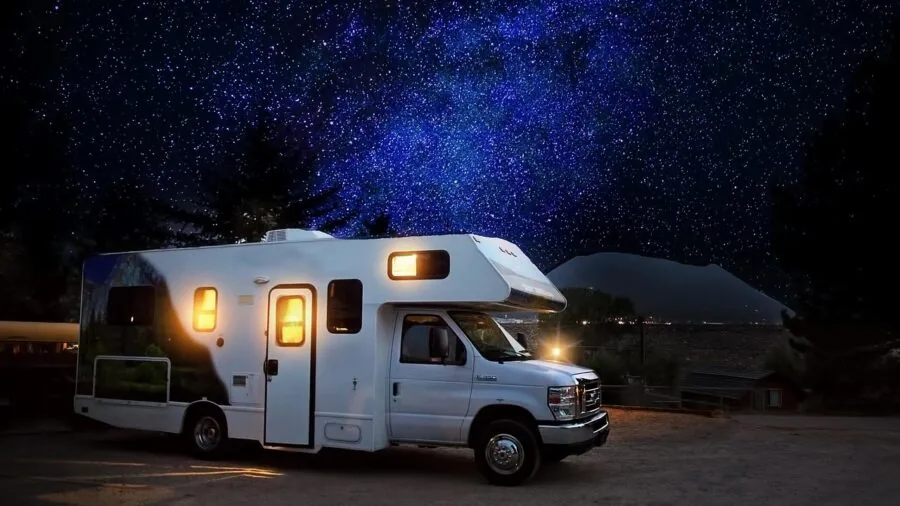
A single rear-facing camera covers the most critical blind spot and is sufficient for most RV drivers who primarily use the system for backing into campsites and aligning hitches.
Dual-lens or two-camera systems add a second view, typically aimed at the side or the hitch point, which is valuable when backing a fifth wheel or a gooseneck trailer where the coupling point is difficult to see from the cab.
The AUTO-VOX triple-split model and the AUTO-VOX dual-lens system are specifically designed around this expanded coverage philosophy, allowing the driver to monitor the rear and both blind-spot zones simultaneously from a split-screen monitor.
Four-camera systems like the VOONOA quad-split kit extend coverage to all four corners of a large coach or commercial truck, replicating the kind of surround-view monitoring typically found on high-end factory driver-assistance packages.
The trade-off is installation complexity and cost: running four cameras and managing a quad-split display requires more planning, more mounting hardware, and a larger monitor budget.
For the majority of Class B and Class C RV owners, a single or dual-camera system at a mid-range price point will cover 95 percent of real-world use cases.
Weatherproofing and Durability Ratings

An RV backup camera is an outdoor component that faces rain, road spray, temperature extremes, and vibration from highway driving.
The IP (Ingress Protection) rating printed on the camera specification sheet tells you how well the housing resists water and dust.
IP67 indicates the camera can withstand temporary immersion; IP69K, which appears on several models in this roundup including the AMTIFO A7 and the VOONOA system, indicates resistance to high-pressure, high-temperature water jets, the most demanding standard in this category.
For typical camping and highway use, IP67 is fully adequate. IP69K provides an extra margin of protection if you wash the exterior of your rig with a pressure washer.
Beyond the IP rating, look at the operating temperature range specified for the camera. Cameras installed on the rear exterior of an RV can reach very high surface temperatures in direct sun and very low temperatures in mountain winter camping.
Verified buyer feedback is often the most reliable source for real-world durability data in conditions that extend beyond the controlled range listed in a specification sheet.
If a model shows a consistent pattern of connector failures or lens fogging in long-term buyer reviews, that pattern is a meaningful signal regardless of the advertised IP rating.
Range, Signal Stability, and Interference Resistance

Wireless backup cameras are subject to radio-frequency interference, and the long metal body of a Class A motorhome or a fifth wheel trailer can degrade signal quality if the camera and monitor antennas are not positioned carefully.
Most manufacturers specify a line-of-sight range that does not account for the vehicle body acting as a barrier between the camera at the rear and the receiver near the dash.
In practice, a claimed 200-foot range may translate to a stable in-vehicle signal of 50 to 80 feet when the camera signal must pass through the coach body.
The Haloview BT7 uses a Bluetooth-based architecture with dual antennas designed specifically to maintain stable signals through long coach bodies, and verified buyer feedback from Class A owners supports its real-world in-vehicle performance.
For the highest signal reliability in a wireless setup, look for systems that use digital signal processing with auto-channel-hopping or dedicated 5.8 GHz bands, which experience less congestion than the crowded 2.4 GHz band common in campgrounds.
If you are evaluating a solar magnetic camera for use with a long trailer, read verified buyer accounts specifically from owners of trailers in the same length range as yours, as signal performance can differ significantly between a 20-foot travel trailer and a 40-foot fifth wheel.
Why You Should Trust Us
ProductFind is an independent editorial platform. We do not manufacture, sell, or distribute any of the products we cover, and we have no commercial relationship with the brands featured in this guide.
Every product included here was evaluated against a consistent, category-specific set of criteria: image resolution and sensor quality, night vision capability, signal path and wireless stability, monitor size and usability, installation complexity, weatherproofing, multi-camera expandability, and long-term durability as reported by confirmed purchasers.
Each product receives a PF Score on a 0 to 10 scale, reflecting its overall performance across all evaluated dimensions relative to other products in the same category.
We do not conduct our own product trials; our evaluations are grounded in research, published data, expert review consensus, and verified buyer feedback.
This approach allows us to compare dozens of models across a consistent framework without the conflicts of interest that can arise when reviewers accept manufacturer samples or paid placements.
Scoring is determined solely by the quality of available evidence, not by affiliate commission rates or advertising relationships.
ProductFind may earn a commission when you purchase through links in this article. That affiliate relationship does not influence which products are selected, how they are ranked, or what PF Score they receive.
We disclose this relationship in the interest of full transparency. If a product does not meet our quality threshold, it does not appear in our roundups, regardless of its commercial popularity or margin potential.
Final Thoughts
After evaluating all nine systems across resolution, night vision, signal stability, installation simplicity, monitor quality, and verified owner satisfaction, the right choice depends primarily on your rig configuration and how much coverage you need.
Here are our top danh hiệu picks, each reflecting a distinct strength among the products in this roundup:
- Best Overall: AUTO-VOX Wireless RV Backup Camera with Triple-Split Screen earns the top spot with the highest PF Score in this group, combining rear and side coverage in a single system that eliminates the most common blind spots on large coaches without requiring a complex multi-device installation.
- Best Dual-Coverage System: AUTO-VOX Wireless RV Backup Camera System with Dual Lens scores closely behind the top pick and delivers comprehensive rear-and-side coverage in a streamlined two-lens design, making it a compelling option for owners who want broad situational awareness on long highway pulls.
- Best Solar Magnetic Camera: AUTO-VOX Solar Magnetic Wireless Backup Camera stands out among no-drill, wire-free options by pairing a 7.2-inch DVR monitor with solar-powered camera operation, making it the strongest choice for travel trailer owners who want installation measured in minutes rather than hours.
- Best for Furrion-Prepped RVs: Yakry Y27-N RV Backup Camera Wireless Plug and Play is purpose-built for factory-wired Furrion ports, delivering 1080p clarity and a 7-inch touch-key monitor in a system that verified Class A and Class C buyers consistently describe as a genuine plug-and-play experience.
- Best Budget-Friendly Pick: pemacom 1080P HD Wireless Backup Camera with Solar Magnetic Mount leads this roundup in PF Score among cameras at a mid-range price point, offering a one-minute magnetic install, 24-hour battery endurance, and an anti-glare monitor that performs well in direct sunlight, making it the sharpest value for small RV and SUV owners who do not need a Furrion-specific system.
Whichever system you choose from this list, it will represent a meaningful safety upgrade over mirrors alone.
If you are outfitting a new rig from scratch, consider building out a broader safety and comfort ecosystem at the same time: outdoor security cameras are a natural complement for monitoring your campsite perimeter when you step away from the coach.
Frequently Asked Questions
Do RV backup cameras work while driving on the highway, or only when reversing?
Most RV backup camera systems can display a live feed at any time, not just when the transmission is in reverse.
The display typically activates automatically when you shift into reverse and then switches off or shows a static screen when you return to drive.
Many systems, particularly those with dedicated monitors rather than rearview mirror replacements, allow you to manually activate the camera view while moving forward, which is useful for monitoring blind spots alongside a long trailer on the highway.
Check the specific monitor’s settings menu to confirm whether always-on or manual activation is supported.
Can I use a backup camera system designed for a standard vehicle on my RV or travel trailer?
Technically yes, but purpose-built RV systems offer significant practical advantages.
RV-specific systems are engineered for longer wireless transmission distances, larger monitor screens, and camera housings rated for the road spray and vibration that a rear-mounted camera on a 30-plus-foot trailer will experience.
Standard automotive backup cameras are typically optimized for vehicle lengths under 20 feet and may exhibit signal degradation or insufficient range when stretched across a long fifth wheel.
If your rig is longer than about 25 feet, using a system specifically designed and verified by buyers for RV use is strongly recommended.
What does it mean for an RV to be Furrion pre-wired, and do I need a special camera for it?
Many motorhomes and travel trailers built in the last several years come from the factory with a Furrion-branded port pre-installed at the rear of the coach.
This port provides a standardized electrical and data connection that compatible cameras plug into directly, eliminating the need to run a new power wire from the front of the vehicle to the camera.
Cameras and systems labeled as Furrion plug-and-play or Furrion-compatible, such as the AMTIFO A7 and the Yakry Y27-N, are designed to mate with this port.
If your RV does not have a Furrion port, these systems will not work without additional wiring, and a magnetic solar or standard hardwired camera is the better path.
How do I know if a wireless backup camera will maintain a stable signal through my coach body?
The most reliable indicator is verified buyer feedback from owners of rigs similar in length and construction to yours.
Manufacturer range specifications are always measured line-of-sight in open air, which does not reflect the attenuation caused by a steel or aluminum coach body sitting between the camera and the receiver.
Look for buyer reviews that specifically mention the length of their rig and describe signal behavior during highway driving, not just in a driveway.
Systems with dual antennas, digital signal processing, or Bluetooth mesh architectures, such as the Haloview BT7, tend to produce more consistent in-vehicle performance on longer coaches based on aggregated owner feedback.
If signal stability is your primary concern and your rig is a long Class A, a plug-and-play Furrion system with a physical wired connection between the rear port and the camera will always outperform a purely wireless setup in signal consistency.
Is a DVR recording function on the monitor actually useful for an RV backup camera?
DVR capability is genuinely useful in a few specific scenarios. If you are involved in a backing incident at a campground or a fuel station, recorded footage can clarify exactly what happened and support an insurance claim.
Some full-time RVers also use DVR-equipped systems as a basic security measure, with the camera monitoring the rear of a parked coach overnight.
The practical limitation is that most DVR monitors require a separately purchased memory card, and the recording quality is bounded by the camera sensor resolution.
If you rarely reverse into complex situations and have no security monitoring need, a non-DVR system at a lower price point will serve equally well for day-to-day backing.
If you do value the recording feature, confirm that the system supports loop recording so older footage is automatically overwritten when the card is full.
About the author
Isobel is a reviewer and writer for ProductFind who specializes in RV & Camping Auto. Isobel evaluates products through independent research: specifications, expert review consensus, and verified buyer feedback, and rates each one on the PF Score. Isobel focuses on helping readers pick the right rv & camping auto for their needs and budget.