The 8 Best Sergers
Finishing seams like a pro starts with the right overlock machine. We researched JUKI, SINGER, Janome, and Brother sergers to find the strongest performers for every skill level.
 By Kylie Duncan
Updated July 23, 2026
By Kylie Duncan
Updated July 23, 2026
A serger can transform the way you sew.
Where a standard sewing machine leaves raw, unfinished edges that fray over time, a serger trims, wraps, and stitches in a single pass, producing the same clean seams you find inside store-bought garments.
Whether you are finishing knit activewear, constructing woven shirts, or hemming stretch fabrics that a regular machine struggles with, a quality overlock machine makes the process faster and the results noticeably more professional.
The category spans a wide range of price points and capability levels, from entry-level models aimed at confident beginners up to heavy-duty machines built for production-level output, and sorting through the options takes real research.
At ProductFind, we evaluated each model through comprehensive research: analyzing published specifications, synthesizing expert review consensus from the sewing community, and weighing verified buyer feedback gathered over hundreds of real-world purchases.
Every machine on this list has been scored on our 0 to 10 PF Score scale so you can compare options at a glance.
From brands like JUKI, SINGER, Janome, Brother, and SewLaVie, the picks below represent the strongest performers across every skill level and budget. Scroll down to see our ranked top picks.
| Award | Product | PF Score About PF ScoreThe PF Score is our own rating from 0 to 10, based on performance, design and build, ease of use, and value. It reflects independent research and is never influenced by manufacturers, retailers, or affiliate commissions. Learn more › | Price | |
|---|---|---|---|---|
| Best Overall |
 JUKI MO654DE 2/3/4 Thread Serger
|
8.5/10 | Buy | |
| Editor's Pick |
 Singer Professional 14T968DC Serger Overlock Machine
|
8.2/10 | Buy | |
| Best Value |
 Singer X5004-HD Heavy-Duty Serger, 2-4 Thread
|
7.9/10 | Buy | |
| Top Rated |
 Juki MO-50E 3/4-Thread Serger
|
7.8/10 | Buy | |
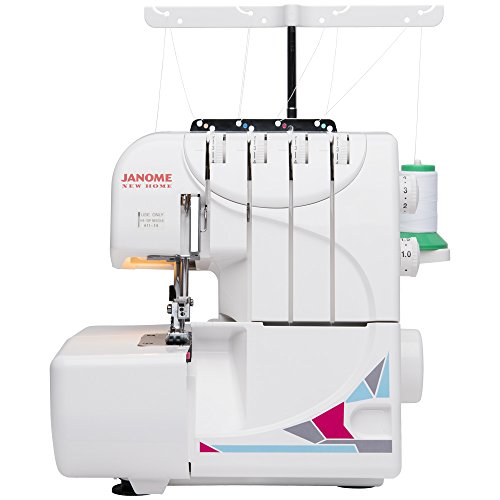 Janome MOD-8933 3/4-Thread Serger with Lay-In Threading
|
7.7/10 | Buy | ||
 Singer S14-78 Serger with 2-3-4 Thread Capability
|
6.5/10 | Buy | ||
 Brother 1034D 3/4-Thread Serger
|
6.0/10 | Buy | ||
 SewLaVie 360 Serger with 2/3/4 Thread Capability
|
5.8/10 | Buy |
JUKI MO654DE 2/3/4 Thread Serger
A versatile serger designed for sewers tackling everything from delicate fabrics to heavy knits. The MO654DE combines automatic rolled hem capability with a powerful knife system and differential feed control, making it suitable for both finishing seams and creative edge work.
Pros
- Versatile threading options accommodate various seam finishes and decorative work
- High sewing speed of 1500 spm reduces project completion time
- Color-coded looper design and external stitch length adjustment streamline threading and adjustments
- Differential feed system addresses common serger challenges with stretch and delicate fabrics
- Safety switch prevents accidental operation when cover is open
Cons
- No user reviews available to assess real-world reliability and learning curve
- Maximum stitch length of 4mm may limit decorative stitch options compared to some competitor models
- Relatively compact footprint (10.6 x 13.6 x 11.6 inches) could feel cramped for larger projects
Singer Professional 14T968DC Serger Overlock Machine
A professional-grade serger offering 2-3-4-5 stitch capability and automatic tension adjustment for balanced seams across various fabrics. Designed for serious sewers tackling garments and home decor projects at 1,300 stitches per minute.
Pros
- Multiple stitch options eliminate need for separate machines on different fabric types
- Automatic tension adjustment reduces learning curve and manual tweaking during setup
- Differential feed system delivers professional results on both lightweight and stretchy materials
- High sewing speed handles large projects efficiently
- Generous accessory bundle covers most maintenance and threading needs
Cons
- No verified buyer reviews available to assess real-world durability or user experience
- Product listed under Kitchen & Dining category suggests data classification issues, raising questions about product information accuracy
- Heavier weight at 18.6 pounds may limit portability for crafters who need flexibility
Singer X5004-HD Heavy-Duty Serger, 2-4 Thread
A durable serger designed for thick fabrics with a 60% larger cutting knife, 1,300 stitches per minute, and 2-3-4 thread versatility. Best suited for crafters working with heavy materials like denim and upholstery who need reliable, skip-free stitching.
Pros
- Built-in metal frame provides stability and reduces skip stitches on thicker materials
- Larger cutting knife saves time and effort on heavy fabrics like upholstery and denim
- Multiple thread options and stitch types accommodate both functional and decorative projects
- High stitch speed with adjustable feed offers control across various fabric types
- Complete accessory bundle with organized storage simplifies workflow
Cons
- No verified buyer reviews available to confirm real-world durability or long-term reliability
- Primarily optimized for heavy fabrics, may lack features for users focused on delicate or specialty serging
- Heavier weight at 15.52 pounds may require dedicated workspace
Juki MO-50E 3/4-Thread Serger
The Juki MO-50E is a versatile serger designed for both 3 and 4-thread finishing work. It includes practical features like automatic lower looper threading and adjustable differential feed, making it suitable for sewers who want reliable seam finishing without excessive complexity.
Pros
- Automatic lower looper threader simplifies the threading process
- Adjustable differential feed accommodates stretch and delicate fabrics
- Built-in rolled hem function adds decorative finishing options
- Adjustable calibrated knife ensures consistent cutting
- Relatively lightweight at 16 pounds for a serger
Cons
- No verified buyer reviews available to assess real-world reliability and user experience
- Limited information on noise level, stitch quality consistency, or long-term durability
- May require learning curve for users new to serger operation despite automated features
Janome MOD-8933 3/4-Thread Serger with Lay-In Threading
A convertible serger designed for home sewers who want both 3 and 4-thread capability without complexity. The lay-in threading system and differential feed address common serger pain points like puckering and difficult threading.
Pros
- Lay-in threading system reduces setup frustration typical of sergers
- Differential feed technology manages stretchy and delicate fabrics effectively
- 3 and 4-thread flexibility allows different finishing techniques on one machine
- Adjustable presser foot pressure accommodates various fabric weights
Cons
- No verified buyer reviews available to assess real-world durability and ease of use
- Specifications lack details on stitch options, speed, and noise level
- Compact dimensions may indicate limited workspace and thread capacity
Singer S14-78 Serger with 2-3-4 Thread Capability
A versatile overlock machine designed for sewers tackling varied fabrics, from lightweight delicates to stretchy knits. The S14-78 handles professional seam finishing, hems, and decorative edges with differential feed technology and comes bundled with essential accessories.
Pros
- Multiple stitch options (2-3-4 thread) handle diverse sewing projects without buying separate machines
- Differential feed solves common serger issues with problem fabrics, eliminating puckering and distortion
- Comprehensive accessory bundle gets you started immediately without additional purchases
- Free arm and removable extension table increase versatility for tight spaces
- Convertible rolled and narrow hem modes add professional finishing options
Cons
- No verified user reviews available to confirm real-world performance or learning curve
- Relatively heavy at 13.89 pounds may require dedicated space for permanent setup
- Complex threading for multiple stitch options typically requires careful attention to instruction manual
Brother 1034D 3/4-Thread Serger
A metal-frame serger designed for home sewers tackling multiple fabric weights, from lightweight to heavy denim. The 1034D handles up to 1,300 stitches per minute with color-coded threading and three interchangeable feet for different stitch types.
Pros
- Metal frame construction provides durability
- High stitch speed reduces project completion time
- Included threader and color guides simplify setup
- Three accessory feet expand project versatility
- Handles multiple fabric weights without adjustment issues
Cons
- No verified buyer reviews available to confirm real-world performance
- Limited information on learning curve or instruction manual quality
- Compact footprint may feel cramped for larger serging projects
SewLaVie 360 Serger with 2/3/4 Thread Capability
A beginner-friendly serger built around accessible threading and quick setup, the SewLaVie 360 handles edge finishing and garment construction at 1,300 stitches per minute with 12 stitch options. Pre-threaded and factory-tested for immediate use, it suits hobbyists and tailors looking for practical overlock features without steep setup friction.
Pros
- Open threading design with visual alignment guide makes initial setup significantly easier than traditional sergers
- Arrives pre-threaded and factory-tested, so users can start sewing without troubleshooting tension or threading issues
- Differential feed prevents wrinkling on delicate fabrics and enables controlled gathering on stretchy materials
- Compact footprint and included storage bag suit home sewing spaces with limited room
- High speed and multiple thread options handle varied projects from garment construction to decorative finishes
Cons
- No verified buyer reviews available yet, so real-world durability and long-term performance remain untested
- Entry-level serger with 12 stitches may feel limiting for advanced sewers seeking wider stitch selection
- Dimensions and 15.5-pound weight suggest it occupies notable table space despite being standard home size
Best Sergers Buying Guide
Buying a serger is a bigger commitment than picking up a standard sewing accessory.
The machines have multiple loopers, specialized threading paths, and adjustment controls that interact with each other, so understanding what each specification actually means in practice will save you from choosing a machine that frustrates more than it helps.
The six criteria below reflect what consistently separates high-performing sergers from disappointing ones, based on the specifications, expert consensus, and verified buyer experience we analyzed for this guide.
If you already invest in quality women’s underwear and want to start making your own stretch garments, a good serger is the logical next step.
Thread Count and Stitch Versatility

Sergers are commonly marketed by the number of threads they can use: 2-thread, 3-thread, 4-thread, and sometimes 5-thread configurations. Each adds a distinct capability. A 2-thread rolled hem is the cleanest way to finish lightweight chiffon or organza edges.
A 3-thread overlock is fast and flexible for standard seam finishing on woven fabrics.
A 4-thread safety stitch, which pairs a 2-thread chain stitch with a 3-thread overlock, adds durability and is the standard configuration for seams that need to withstand stress, such as activewear and jeans.
More threads generally means more versatility, but it also means more complexity at setup.
Look for machines that convert between thread counts without requiring you to swap out physical parts. The best options offer convertible 2/3/4-thread capability via adjustable tension and a retractable or bypassable lower looper, so you can switch modes in minutes.
Machines locked into a single configuration are limiting unless that configuration is exactly what your projects require.
If decorative work is a priority, some machines support a 5-thread safety stitch or flatlock capability, which opens up sporty exposed-seam aesthetics popular in athleisure construction.
Check that the machine you are considering actually includes the presser feet and auxiliary parts needed to use every advertised mode, not just the thread count.
Threading System and Ease of Setup
Threading is the single biggest pain point new serger owners report.
Unlike a standard sewing machine with one needle and one bobbin, a serger has two to four loopers with separate thread paths that must be routed in a specific sequence.
A color-coded threading diagram printed on the machine is the minimum acceptable standard.
What separates good machines from frustrating ones is whether those diagrams are clear, whether the thread paths are accessible with the machine’s cover open, and whether any mechanical aids are present.
Lay-in tension systems, offered on several machines in this guide, allow you to drop the thread into a slot rather than manually guide it through a set of discs.
This significantly reduces the chance of mis-threading and makes re-threading after a thread break much faster. Some higher-end machines add an automatic lower looper threader, a small lever that routes the most difficult thread path with a single motion.
Verified buyers consistently cite this feature as a quality-of-life upgrade worth paying for if you change thread colors frequently.
Wide-open or free-arm threading designs, where the front and side covers swing fully open, make it easier to see every thread path clearly.
If you sew tubular items like sleeves or cuffs, a free arm configuration also lets you maneuver fabric in a way a fixed-base machine cannot.
Pair a capable serger with the right men’s t-shirts patterns and you will notice immediately how much the threading speed affects your overall project rhythm.
Differential Feed System
The differential feed is one of the most practically important controls on a serger and one of the least understood by buyers comparing specs on paper.
A serger has two sets of feed dogs: a front set that grabs fabric before the needle and a rear set that releases it after.
The ratio between them, the differential feed ratio, controls how much the fabric is stretched or gathered as it moves through the machine.
Set to a ratio above 1.0 and the front feed dogs move faster than the rear, easing fabric through and preventing the stretched, wavy seams that plague knit and jersey construction on machines without this control.
Set below 1.0 and the machine creates deliberate gathering, which is useful for ruffles and lettuce-edge hems. Without adjustable differential feed, sewing knits on a serger is genuinely difficult, and you will fight distortion on almost every seam.
Every machine on our list includes differential feed, but the range of the adjustment varies. Broader adjustment ranges give you more creative control over gathering ratios and a wider tolerance for tricky fabrics.
Narrow ranges are typically sufficient for standard garment construction but limit decorative applications.
Stitch Speed and Motor Performance
Serger stitch speed is measured in stitches per minute (SPM). Budget machines typically operate in the 1,100 to 1,300 SPM range, while heavier-duty machines push above 1,500 SPM.
For home use, the raw SPM number matters less than how the machine performs at sustained speed: whether it runs smoothly, without vibration, and whether the stitch quality remains consistent from slow start-up to full throttle.
Expert reviewers frequently note that less expensive machines can advertise high SPM figures while exhibiting stitch irregularities at those speeds.
Verified buyers working with heavier materials like denim or canvas report that motor torque at low speeds matters more than peak SPM, because slow, controlled passes through thick seams stress the motor differently than high-speed straight runs on lightweight fabric.
Heavy-duty designations, used by both SINGER and JUKI in their respective lineups, typically indicate reinforced internal components, stronger feed mechanisms, and motors rated for longer continuous use.
If you produce garments regularly rather than occasionally, a heavy-duty motor is worth the investment.
Just as you would choose a capable washer dryer combo based on load capacity rather than just cycle count, choose a serger based on the workload it will realistically handle.
Rolled Hem Capability
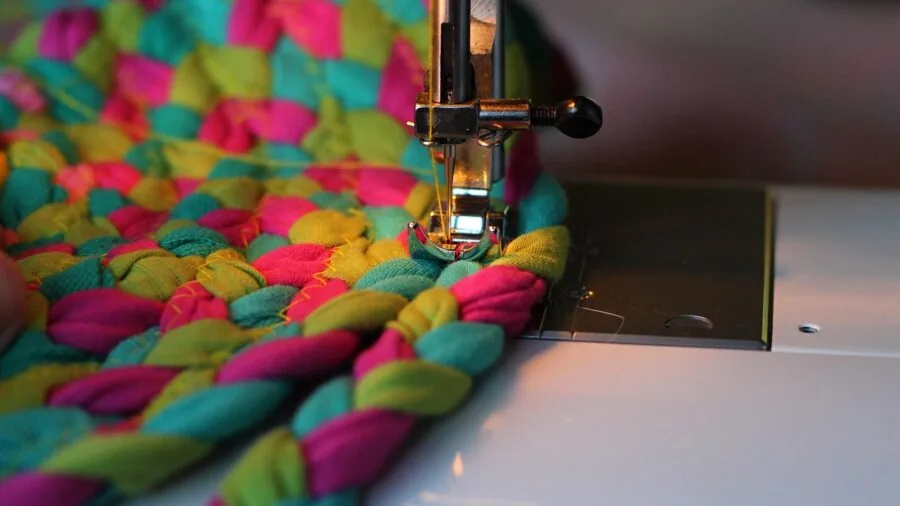
A rolled hem is one of the most useful serger-specific techniques and a feature that no standard sewing machine can replicate with the same result.
It produces a narrow, tightly wrapped edge that works beautifully on scarves, napkins, ruffles, and sheer blouse hems. The key question is how the machine switches into rolled hem mode.
Some machines require you to swap the standard stitch finger for a narrower rolled hem plate, a quick process but one that involves handling a small mechanical part.
Others, including several models in this guide, feature a built-in rolled hem switch that flips the machine into mode without any plate change. Built-in systems are faster and involve less risk of losing a small part.
Buyers who use the rolled hem function regularly report the built-in approach saves meaningful time over a sewing session.
Thread weight interacts with rolled hem quality significantly. A 2-thread narrow rolled hem on lightweight thread produces the cleanest results on sheers, while a 3-thread rolled hem on slightly heavier thread suits linen and quilting cotton.
If your work spans fabric weights, verify that the machine’s rolled hem mode performs well across that range, not just on the lightest fabrics shown in marketing photos.
Tension Controls and Stitch Adjustment
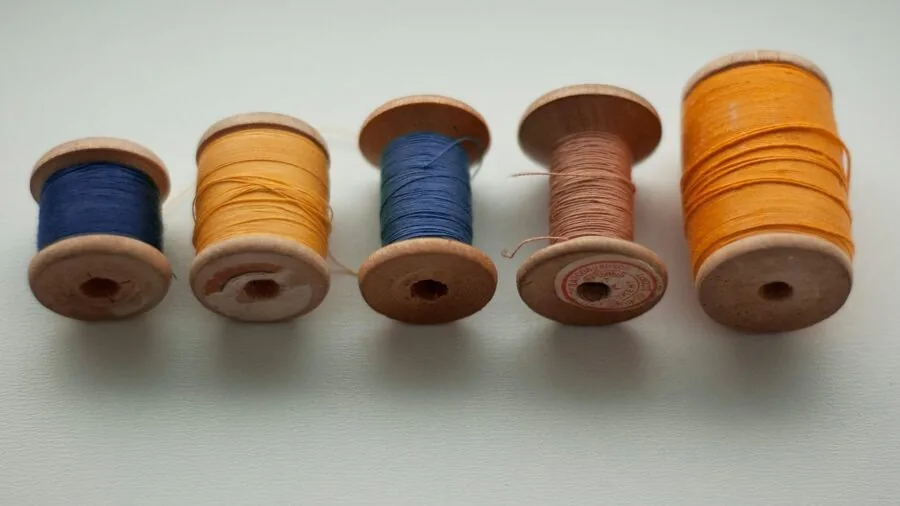
Tension adjustment on a serger is more complex than on a standard sewing machine because each thread, needle or looper, has its own tension control.
Dial-based tension controls are the most common and most reliable, offering tactile, repeatable adjustments you can return to for a saved setting.
Some machines offer automatic or electronically assisted tension, which reduces guesswork for beginners but can limit fine-tuning for experienced sewers working with specialty threads or unusual fabrics.
The stitch length and width controls are equally important. Stitch length affects how much thread is used per inch of seam and how visible the overlock stitch appears.
Stitch width, which is adjusted by moving the cutting blade position on most machines, controls how much fabric is trimmed with each pass. Wider stitch width leaves more seam allowance; narrower is better for rolled hems and tight finishes.
Expert reviewers consistently flag machines with poorly labeled or stiff tension dials as frustrating in daily use, even when the underlying stitch quality is acceptable.
LED lighting in the work area is a practical detail that deserves mention. Serger needle areas are compact and shadowed by design, and inadequate lighting causes mis-threading and stitch errors.
Machines with dedicated LED task lights reduce eye strain during extended sewing sessions, particularly for detail work like matching seam intersections on handmade garments. If you care about precision finishing, lighting quality is not a trivial spec.
Why You Should Trust Us
ProductFind is an independent review publication with no brand affiliations and no manufacturer relationships that influence our rankings. Every serger on this list was scored using our standardized PF Score system, a 0 to 10 scale built on consistent, category-specific criteria.
We do not conduct our own product trials; our evaluations are grounded in research, published data, expert review consensus, and verified buyer feedback.
Our analysis draws on publicly available manufacturer specifications, aggregated buyer reviews from verified purchasers, and the consensus of knowledgeable voices in the sewing and home textiles community.
We apply the same scoring framework to every product in a given category so that comparisons between a budget Brother and a professional-grade JUKI reflect genuine differences in capability and value, not differences in how much each brand invested in marketing.
Scores are reviewed periodically as new models enter the market and as longer-term buyer feedback accumulates. ProductFind may earn a commission when you purchase through a link in this article.
That affiliate relationship has no influence whatsoever on which products are included, how they are ranked, or the scores assigned. Our recommendations reflect our honest assessment of each product’s merits.
Final Thoughts
After evaluating every machine in this guide against our PF Score criteria, a few clear standouts emerge for different types of sewers.
Whether you are outfitting a home studio or looking for a capable entry point into overlocking, there is a well-matched option in this lineup.
The brands represented here, JUKI, SINGER, Janome, Brother, and SewLaVie, cover a meaningful range of price points and capability levels, and our scoring reflects where each machine genuinely excels and where it makes compromises.
Picking a serger that fits how you actually sew matters more than chasing the highest spec sheet, so use the danh hiệu below as a practical starting point.
- Best Overall: JUKI MO654DE earns the top PF Score in this roundup through a combination of reliable threading, consistent stitch quality across fabric weights, and a reputation among experienced sewers for long-term durability that entry-level machines rarely match.
- Best Heavy-Duty Pick: SINGER Professional 14T968DC stands out for buyers who regularly work with heavier fabrics or need a machine that can sustain production-level output without performance degradation, reflected in its high PF Score among the premium tier.
- Best Mid-Range Value: SINGER X5004-HD Serger offers a strong balance of capability and accessibility, with 2/3/4 thread versatility at a mid-range price that makes it one of the most recommended options for confident intermediate sewers.
- Best for Beginners: JUKI MO-50E earns its position through lay-in tensions and an automatic lower looper threader that significantly flatten the serger learning curve, making it the most beginner-friendly JUKI in the lineup without sacrificing core stitch quality.
- Best Budget Pick: SINGER S14-78 Serger is the most accessible entry point in this guide, offering free-arm capability, 2/3/4 stitch modes, and LED lighting at a budget-friendly price for sewers who want to explore overlocking without a large upfront commitment.
Frequently Asked Questions
Do I need a serger if I already own a regular sewing machine?
A serger does not replace a standard sewing machine; it complements one. Your regular machine handles topstitching, zippers, buttonholes, and structured seams.
A serger finishes raw edges, sews knit seams, and produces professional-looking garment interiors that a standard machine simply cannot replicate.
If you sew garments regularly, especially knitwear or activewear, a serger is one of the most impactful upgrades you can make to your studio setup.
How difficult is it to thread a serger?
Threading a serger has a steeper learning curve than threading a standard sewing machine, but the difficulty varies significantly by model.
Machines with lay-in tension systems, color-coded thread paths, and automatic lower looper threaders are noticeably easier to work with than older designs requiring fully manual threading through tight internal channels.
Most buyers report that after the first few attempts, re-threading becomes routine. Choosing a machine with threading aids, as several on this list offer, makes the initial experience much less intimidating.
What is the difference between a 3-thread and 4-thread serger seam?
A 3-thread overlock uses one needle and two loopers to create a stretchy, efficient seam finish. It is lighter and uses less thread, making it suitable for seam finishing on wovens and lightweight knit hems.
A 4-thread safety stitch adds a second needle, creating a more stable seam that resists seam pop under tension. It is the preferred configuration for garment side seams, shoulder seams, and any seam that will face repeated stress.
Many machines in this guide support both configurations so you can choose based on the specific project.
Can a serger handle heavy fabrics like denim or canvas?
Some sergers handle heavy fabrics well and others do not, and the distinction is not always obvious from the spec sheet.
Machines marketed as heavy-duty, like the SINGER 14T968DC and the JUKI MO654DE, are designed with stronger motors and feed mechanisms for thicker material.
Standard consumer sergers can struggle with multiple layers of denim, exhibiting skipped stitches or slowed feed.
If heavier fabrics are a regular part of your work, prioritize machines with explicit heavy-duty designations and verified buyer feedback from people working in that material range.
Just as you would match a top load washer to your laundry volume, match your serger to the material demands of your actual projects.
How many stitches per minute do I actually need for home sewing?
For typical home garment construction, any machine in the 1,100 to 1,300 SPM range is more than adequate.
The limiting factor in home sewing is almost never the machine’s top speed; it is the sewer’s ability to guide fabric accurately and manage curves, seam intersections, and fabric transitions.
Very high SPM figures matter more for production environments where consistent high-speed runs on straight seams are the norm.
Focus instead on stitch consistency at moderate speeds, motor smoothness, and how the machine behaves when you slow down for tricky sections, because that is where home sewers spend most of their time.
Is the SewLaVie serger a good choice for professional tailors?
The SewLaVie 360 markets itself toward professional tailors with its wide-open threading system and high SPM rating, but its PF Score reflects the reality that it has less established long-term reliability data and verified buyer depth than the JUKI and SINGER options at comparable price points.
For hobbyists and enthusiastic home sewers, it offers a feature-rich package worth considering. Professional tailors with sustained daily production demands would be better served by the proven track record of the JUKI MO654DE or the SINGER 14T968DC.
About the author
Kylie is a reviewer and writer for ProductFind who specializes in Sewing, Knitting & Needlecraft. Kylie evaluates products through independent research: specifications, expert review consensus, and verified buyer feedback, and rates each one on the PF Score. Kylie focuses on helping readers pick the right sewing, knitting & needlecraft for their needs and budget.