The 12 Best Sewing Kits for Kids
Choosing the right sewing kit can make or break a child's first experience with the craft. This guide covers safe tools, beginner-friendly projects, and age-matched picks for kids 4 to 12.
 By Minnie Knight
Updated July 23, 2026
By Minnie Knight
Updated July 23, 2026
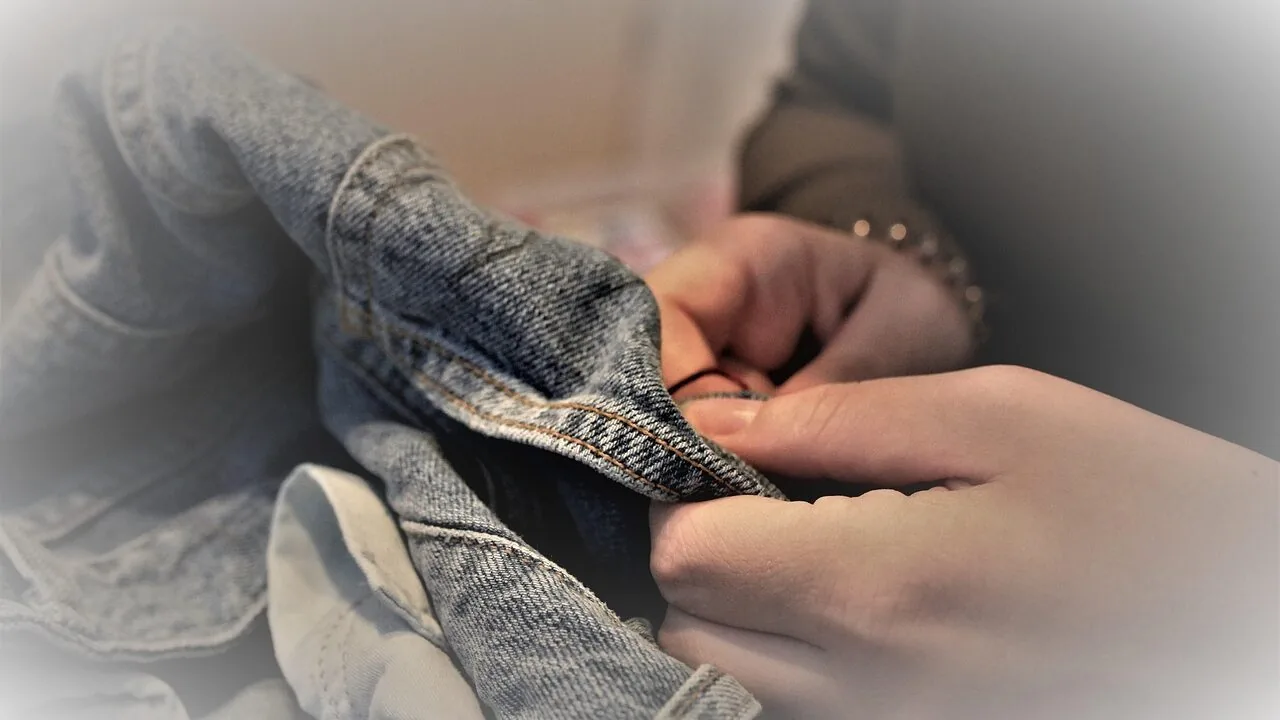
Sewing kits give kids a rare combination: a hands-on creative outlet that also builds real-world skills like fine motor control, patience, and spatial reasoning.
Unlike screen-based activities, a well-chosen sewing kit delivers a finished, tangible object a child can hold up and say, “I made this.” That sense of accomplishment keeps kids coming back for more, which is exactly why parents, teachers, and gift-givers keep searching for the right kit season after season.
The challenge is that not every kit lives up to its packaging. Some include sharp tools inappropriate for young hands, instructions that frustrate rather than guide, or projects so fiddly that a beginner gives up before finishing the first seam.
Choosing wisely matters a great deal. If you are also exploring other creative outlets for young ones, craft kits for kids cover a broader range of hands-on options worth considering alongside sewing.
This guide focuses specifically on sewing kits designed for children, from pre-schoolers taking their first stab at lacing cards all the way to tweens ready for full hand-sewing projects with real needles.
ProductFind assessed each option through comprehensive research: manufacturer specifications, verified buyer feedback across thousands of reviews, and expert consensus from crafting educators and child development resources.
The result is a ranked list of twelve kits, each assigned a PF Score on our 0 to 10 scale, so you can compare quality at a glance.
Read on for the top picks, then scroll through our buying guide to match the right kit to your child’s age, patience level, and creative goals.

CRAFTILOO Fairy Sewing Kit for Kids Ages 5-12
A beginner-friendly sewing kit with five pre-cut felt fairy projects and a mushroom house, designed for ages 5 and up with no prior experience needed. Includes all materials in one box: safety needles, embroidery floss, stuffing, glue, and illustrated instructions.
Pros
- Complete kit requires no additional purchases or prep work
- Pre-punched holes and pre-cut pieces eliminate frustration for young beginners
- Step-by-step illustrated guide designed specifically for ages 5+
- Children create tangible stuffed plush dolls they can keep and display
- Encourages independent creativity with minimal adult supervision
Cons
- No verified buyer reviews available yet to assess real-world durability or difficulty
- Limited to five projects, so replayability depends on child's interest in variations
- May require parental guidance for younger children (age 5-6) despite beginner claims

Serabeena Sewing Kit for Kids, 6 Felt Purse Projects
A complete sewing kit designed for ages 4 and up, featuring six individual felt purse projects with pre-cut materials and child-safe needles. No prep required, minimal cleanup, and award-winning design that encourages creative expression and fine motor skill development.
Pros
- Complete kit requires no additional supplies or parental prep
- Age-appropriate design with plastic needles and thick felt for safe handling
- Builds hand strength, coordination, and completion confidence without right or wrong outcomes
- Suitable for independent play or guided parent-child activity
- Meets ASTM and CPSIA safety standards with ethical supply chain certification
Cons
- No customer reviews available to verify real-world durability or user experience
- Limited to purse projects only - less variety if child wants different sewing activities
- Requires adult supervision for ages 4-5, limiting true independence for youngest age group

Craft-tastic Let's Learn to Sew Mini Kit
A beginner-friendly sewing kit with nine projects ranging from scrunchies to phone cases, guided by a 34-page instruction booklet that teaches essential stitches and embroidery techniques. Includes reusable tools like measuring tape and needles, making it a solid introduction to hand sewing for kids ages 7 and up.
Pros
- Comprehensive instruction booklet designed for age-appropriate progression
- Projects produce usable items kids will actually wear or carry
- Kit includes quality reusable tools like measuring tape and needles
- Complete package with no hidden material gaps
Cons
- No verified customer reviews available to assess real-world durability or satisfaction
- Limited to hand sewing techniques, no machine sewing introduction
- May require adult supervision for younger kids in the 7+ range

CRAFTSBEE Unicorn Sewing Kit for Kids Ages 7-12
A progressive felt sewing kit with 5 large stuffed animal projects designed for children ages 7-12, featuring three skill levels from beginner to advanced. Includes pre-cut felt, plastic needles, and visual instructions that require minimal adult supervision.
Pros
- Projects advance from simple to advanced, allowing children to build confidence as skills improve
- All materials included and pre-prepared (pre-cut felt, pre-punched holes) minimize mess and setup
- Large finished stuffed animals (unicorn reaches 11 inches) give satisfying, huggable results kids will keep
- Child-safe plastic needles and non-toxic materials designed for independent use with minimal adult help
Cons
- No verified buyer reviews available to assess real-world durability or age-appropriateness accuracy
- Plastic needles may be difficult for some children to thread without assistance despite claims of beginner-friendliness
- Limited to unicorn/fairy theme designs, offering less variety for children with different interests

EZCRA Unicorn Sewing Kit for Kids Ages 4-8
A beginner-friendly sewing kit combining sticker decoration with basic hand-sewing projects, designed for children ages 4-8. Includes 8 pre-punched animal projects, safety-focused jumbo plastic needles, and mess-free instructions that make learning sewing accessible without frustration.
Pros
- Pre-punched holes and pre-cut pieces eliminate setup frustration for young learners
- Dual activity approach (sewing plus stickers) increases creative engagement and replayability
- Jumbo plastic needles and simplified instructions make it genuinely accessible for ages 4+
- All materials are non-toxic and safety-tested, prioritizing child wellbeing
- Compact size (8 x 6 x 0.5 inches) makes it portable for travel or storage
Cons
- No verified buyer reviews available yet, so real-world durability and satisfaction remain unconfirmed
- Jumbo plastic needles limit the complexity of projects compared to standard sewing kits
- Limited to 8 projects, which may provide only temporary activity value depending on child interest

CiyvoLyeen Puppy Sewing Kit for Kids, 12-Piece Set
A beginner-friendly felt sewing kit that includes materials to craft 12 different puppy designs, complete with easy-to-follow instructions suitable for ages 7 and up. The set doubles as both a creative craft activity and a fine motor skill builder, with finished pieces that can be displayed individually or strung together as a garland.
Pros
- Comprehensive 12-design collection provides variety and extended play value
- No sewing experience required, making it accessible to beginners
- All materials included in one kit, no need for additional supplies
- Dual-purpose creations can be displayed or linked as decorative garland
- Supports skill development while remaining engaging and fun for target age group
Cons
- No verified buyer reviews available to confirm ease of use and final quality
- Small size may limit appeal for older children or those seeking larger craft projects
- Kit focused on single craft type, offers limited creative variation beyond the 12 puppy designs
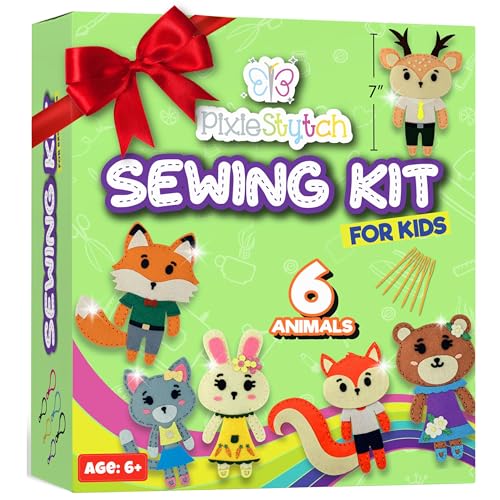
Pixiestytch Sewing Kit for Kids - 6 Stuffed Animal Projects
A beginner-friendly sewing kit designed for children ages 6 and up, featuring pre-punched holes and larger fabric pieces to build six different stuffed animals. Comes with step-by-step manual and video instructions to support independent learning and develop fine motor skills.
Pros
- Beginner-focused design with pre-punched holes reduces frustration for young crafters
- Complete package includes all materials needed for 6 projects without additional purchases
- Multiple instructional formats (manual and video) accommodate different learning styles
- Diverse animal character selection encourages varied creative projects
- Promotes educational benefits like patience, fine motor skills, and independent problem-solving
Cons
- No verified customer reviews available to assess real-world durability or assembly difficulty
- Kit scope limited to 6 predetermined projects with no indication of expandability
- Requires adult supervision for younger children despite age 6 recommendation, increasing parental involvement

Craftorama Sewing Kit for Kids, 165-Piece Felt Animals Set
A beginner-friendly sewing kit designed for ages 7-12 that includes pre-cut felt projects, all necessary tools, and instructional videos. The kit emphasizes screen-free creativity with pre-punched holes to guide stitches and premium sticker backings for securing smaller parts.
Pros
- Everything included means no need to purchase additional supplies separately
- Pre-punched holes eliminate frustration and ensure beginner success
- Dual instructional approach with written guides and video tutorials reduces confusion
- Variety of embroidery thread colors and craft eyes for customization
Cons
- Limited to 8 pre-cut projects, so creative scope is predetermined rather than open-ended
- No verified buyer feedback available to confirm real-world durability or user satisfaction
- Dimensions suggest compact storage, which may limit workspace during assembly

Cymbana 5-Animal Felt Sewing Kit for Kids Ages 8+
Beginner-friendly felt sewing craft kit that guides kids through making five stuffed animal buddies with coordinating accessories in 10-25 minutes each. Includes safety-focused tools like plastic needles and blunt scissors, making it suitable for children 6 and up.
Pros
- All necessary supplies included with clear step-by-step instructions, eliminating the need to source materials separately
- Safety-focused design using soft felt, plastic needles, and rounded scissors reduces injury risk for young crafters
- Fast project completion builds confidence and maintains engagement for beginners
- Accessory customization options (dresses, charms) add creative variety without adding complexity
- Compact kit size makes it practical for gift-giving or travel
Cons
- No verified buyer reviews available to confirm real-world durability or ease of use despite high stated rating
- Limited to five projects, so kids may exhaust the kit quickly without purchasing additional supplies
- Plastic needle and thread quality not detailed, which may affect stitching experience for repeated use
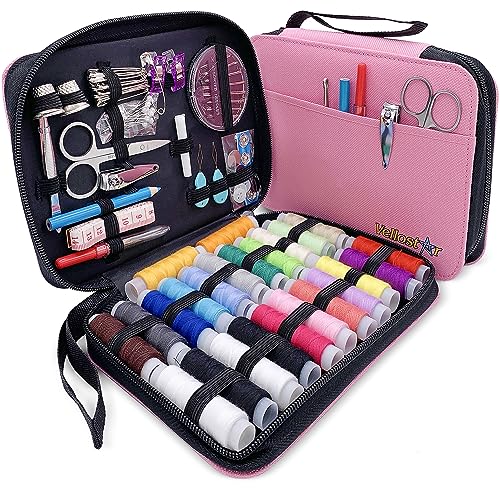
VelloStar Pink Sewing Kit - 30 Needles & Thread
A compact, portable sewing kit designed for quick clothing repairs and basic mending. Includes 30 needles, assorted threads, scissors, and essential tools, making it practical for beginners and a convenient gift for students or travelers.
Pros
- Complete all-in-one kit with multiple essential tools and thread colors included
- Portable and lightweight design (0.68 lbs) makes it ideal for travel and on-the-go repairs
- Versatile for various skill levels from beginners to experienced crafters
- Compact dimensions (8.25 x 5.75 x 1.5 inches) fit easily into bags and drawers
Cons
- No verified buyer reviews available to assess real-world durability and ease of use
- Limited detail on thread quality or needle durability for extended use
- Binding classification suggests possible organizational or categorization inconsistency in product data
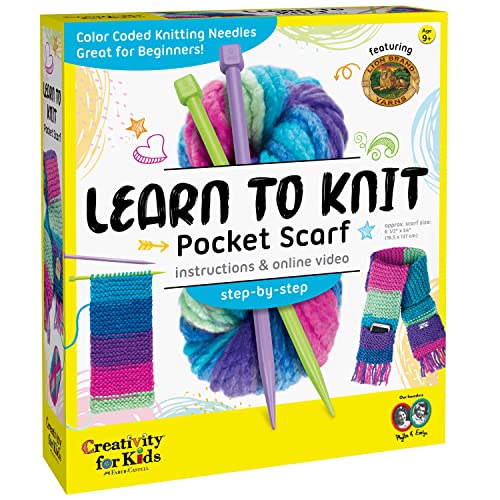
Creativity for Kids Learn to Knit Pocket Scarf Kit
A complete beginner knitting kit for kids ages 9 and up that guides them through creating a functional 54-inch scarf with a built-in pocket. Includes color-coded needles, rainbow yarn, sewing supplies, and video tutorial for screen-free creative play.
Pros
- Complete beginner kit eliminates need to source materials separately
- Finished scarf is practical and wearable, not just a practice piece
- Supports mindfulness and focus through repetitive craft motions
- Color-coded needles and illustrated instructions reduce learning curve
- Suitable for both kids and adults learning together
Cons
- No verified buyer reviews available to confirm ease of learning or durability of finished product
- Rated for ages 9 and up, which may limit appeal for younger children interested in knitting
- Video tutorial availability and quality not detailed in product specifications
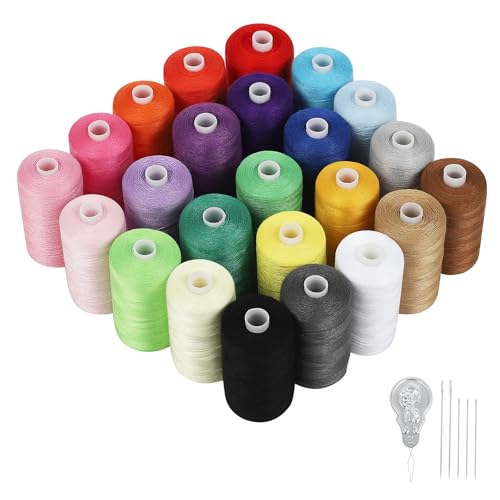
NEX 24-Color Sewing Thread Kit with Needles
A budget-friendly thread assortment offering 24 colors with 1000 yards per spool, designed for both machine and hand sewing. Includes basic accessories like needles and a threader, making it practical for beginners and casual crafters tackling everyday repairs and projects.
Pros
- Wide color selection reduces need to purchase threads separately for varied projects
- Adequate yardage per spool minimizes frequent replacement
- Universal compatibility with standard household sewing machines and embroidery work
- High-quality polyester construction with wear and shrink resistance
- Useful add-ons (needles and threader) eliminate need for separate purchases
Cons
- No verified buyer reviews available to confirm real-world durability and performance
- Generic specifications lack detail on thread weight, exact fiber composition, or spool dimensions
- Limited information on color accuracy or whether shades are suitable for specific fabric types
Sewing Kits for Kids Buying Guide
A sewing kit that looks exciting on the shelf can become a source of frustration if it does not match a child’s current skill level and hand strength.
The sections below break down every factor worth thinking through before you buy, from needle safety to project complexity and everything in between.
Age-Appropriateness and Skill Progression
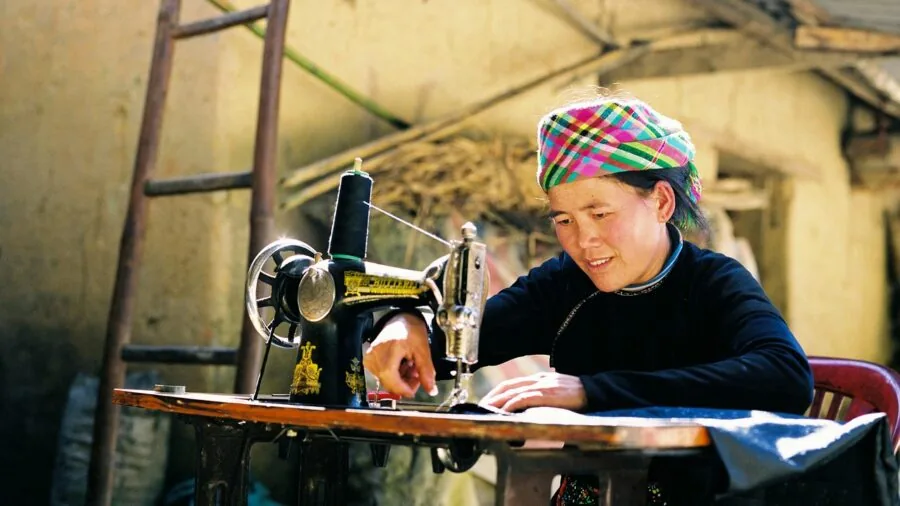
Age guidance printed on a box is a starting point, not a guarantee.
A confident six-year-old with strong fine motor skills may handle a kit rated for ages seven to nine, while a distracted nine-year-old might need the structure of a simpler lacing-style set.
Think about the child’s tolerance for multi-step instructions and their grip strength, since pushing a needle through stacked felt layers repeatedly does require hand endurance.
As a general framework: children aged four to six do best with large plastic needles, thick yarn, and pre-punched holes or lacing cards where the goal is threading rather than stitching through raw fabric.
Children aged seven to nine are ready for blunt tapestry needles, pre-cut felt shapes, and simple plush projects where messy stitches still produce a cute result.
Children aged ten and older can graduate to kits that include a small but real hand-sewing needle, simple patterns, and optional embroidery details.
Kits that clearly identify their target age range and sequence projects from easiest to hardest within the box tend to keep kids engaged far longer than single-project sets.
Many of the kits on our list, including options from CRAFTILOO, CRAFTSBEE, and Craft-tastic, include multiple projects arranged by difficulty so a child can build confidence on project one before tackling project three.
That progressive structure is one of the clearest markers of a thoughtfully designed kit.
Needle Safety and Tool Quality
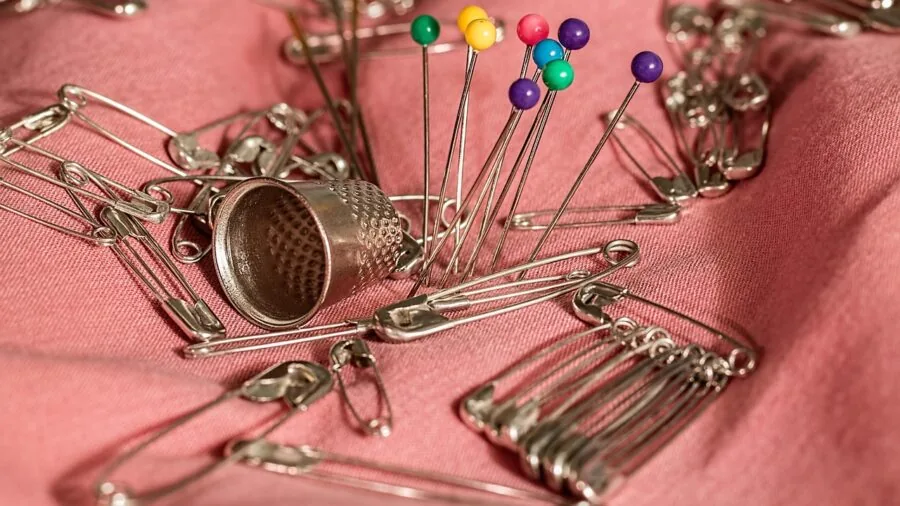
The needle is the most safety-critical component in any sewing kit for children.
Blunt or tapestry-style needles with large eyes are the standard choice for felt-based kits because they pass through pre-punched holes without requiring force, dramatically reducing the risk of slips and finger pokes.
Plastic needles eliminate the sharp-tip risk entirely and work well for ages four to seven when paired with thick yarn and wide holes.
Kits that include sharp sewing needles should clearly label themselves for older children and ideally include a needle case or pincushion so needles are never loose in the box.
Beyond the needle itself, look at the overall tool quality. Scissors included for children should have rounded tips and enough tension to actually cut felt cleanly.
Cheap scissors that crush rather than cut are a common complaint in lower-rated kits and a fast path to frustration.
Thread or embroidery floss should be pre-cut or wound on a small bobbin so it does not tangle into an unusable knot the moment a child opens the packaging.
Project Design and Achievability
The single biggest predictor of whether a child finishes a sewing project is whether the design is forgiving of imperfect stitches.
Plush animals, small pillows, and felt pouches are ideal beginner projects because slight variations in stitch length or placement do not ruin the final look.
Kits that require precise topstitching or exact seam allowances to look presentable set beginners up for disappointment.
Pre-cut felt is a major advantage over kits that include fabric yardage requiring cutting before sewing can even begin.
Pre-punched holes take this one step further by removing the need to pierce the felt independently, which is often the hardest physical step for young children.
The best kits pair pre-cut, pre-punched pieces with clear graphical step-by-step instructions that a child can follow independently rather than relying on constant adult guidance.
Look for kits where the finished project photographs match what a beginner can realistically produce, not a perfectly staged studio version.
Kits offering five or more distinct projects, like those from EZCRA and Craftorama, provide significantly more play value per dollar than single-project sets and give children room to improve across sessions rather than having nothing left to do after one afternoon.
Materials Quality and Safety Certifications
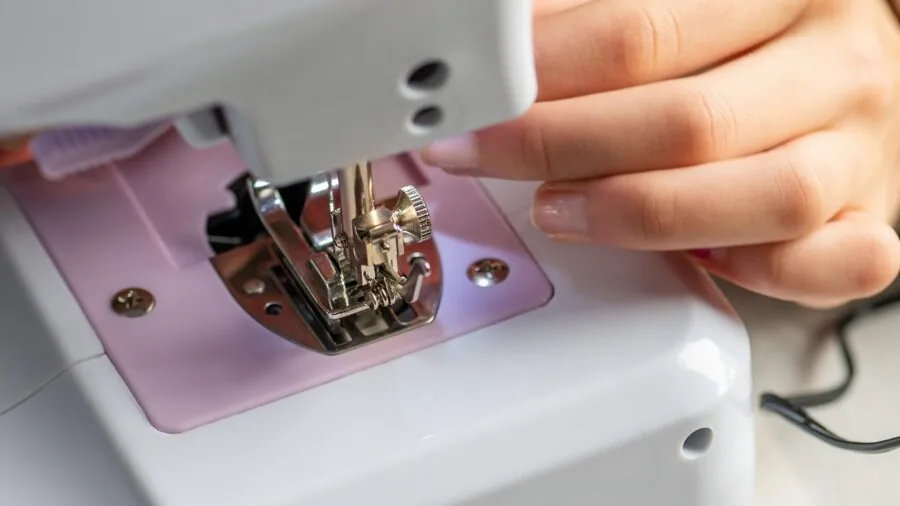
Felt quality varies widely between kits. Higher-quality felt holds its shape after stitching and does not fray or pill after handling. Thin, scratchy felt distorts under tension and makes projects look sloppy even when the stitching is correct.
Look for kits that describe their felt as non-woven or polyester-blend, which tends to be more durable and easier to sew than bargain craft-store weight material.
Thread and stuffing materials in reputable kits should meet relevant safety standards, particularly ASTM F963 for toys sold in the United States. Kits explicitly marketed for children aged three and above are held to stricter small-parts regulations.
If a kit includes beads, buttons, or decorative embellishments, verify that those components are securely attached or sized above the choking hazard threshold for the intended age group.
This is especially important if the kit will be used by a child with younger siblings in the household.
Verified buyer feedback across thousands of reviews consistently flags kits that include substandard thread that breaks mid-project or felt that shreds at the seams.
Checking the rating breakdown for common complaints about material failures is one of the most useful pre-purchase research steps you can take.
Instructions and Independent Usability

One of the most frequent complaints across children’s craft kits in general is instructions written at an adult reading level or presented as dense paragraphs that a child cannot parse independently.
The best sewing kits for children use numbered visual steps, large diagrams, and minimal text so a seven-year-old can pick up the booklet and understand what to do next without asking for help every few minutes.
This independence is actually part of the developmental value of the activity: children build problem-solving confidence when they can self-correct and continue.
Some kits supplement printed instructions with QR codes linking to tutorial videos, which can be especially helpful for knot-tying steps that are genuinely difficult to convey in a flat diagram.
If a child tends to learn better by watching than reading, this feature adds real value.
Kits that assume prior sewing knowledge (such as expecting a child to already know how to tie a quilter’s knot without showing them) are consistently called out in negative reviews and should be avoided for true beginners.
Value, Completeness, and Gift Presentation
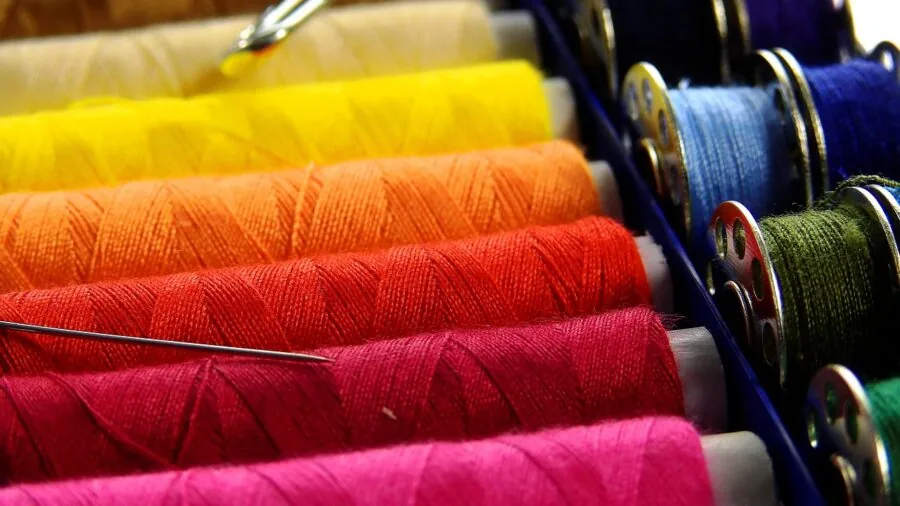
A complete kit should include everything needed to finish every included project: felt pieces, thread or floss, needle, stuffing if required, and any closures like buttons or snaps.
Kits that require a parent to purchase additional supplies before starting erode the out-of-the-box experience that makes these sets such popular gifts.
Check the product description carefully for phrases like “scissors not included” or “additional stuffing may be needed,” as these signal an incomplete package.
Packaging matters more for a gift than it does for a classroom supply purchase. Several of the kits on our list, particularly from Serabeena and Craftorama, arrive in presentable boxes suitable for gifting without additional wrapping.
If the kit is destined for a birthday or holiday, factor in whether the box design will land well under a tree or at a party table.
Reusable storage containers that keep leftover materials organized after the first project is finished add long-term utility beyond the initial unboxing moment.
Pairing a sewing kit with complementary kids paint sets makes for a well-rounded creative gift bundle for any age.
Why You Should Trust Us
ProductFind is an independent editorial platform. We do not sell products, fulfill orders, or handle returns. Every recommendation on this page reflects our own research process, not a paid placement or a manufacturer relationship.
Each sewing kit in this guide was evaluated using a consistent multi-factor framework: published product specifications, expert review consensus from crafting educators and child development sources, and verified buyer feedback drawn from large review pools.
We do not conduct our own product trials; our evaluations are grounded in research, published data, expert review consensus, and verified buyer feedback.
Every kit receives a PF Score on a 0 to 10 scale based on how well it performs across criteria including safety, instruction quality, materials, project achievability, and overall value. Scores are recalibrated when significant new buyer data becomes available.
ProductFind may earn a commission when you purchase through links on this page. That affiliate relationship has no effect on our rankings, PF Scores, or editorial decisions. Kits are ranked by research merit only.
We call out weaknesses as readily as strengths because our readers’ trust depends on honest assessments, not cheerleading.
Final Thoughts
After comprehensive research across twelve kits spanning multiple price points and age ranges, a few clear leaders emerged.
Whether you are shopping for a brand-new beginner or a child who has already finished one or two starter projects, there is a well-matched option in this list.
Here are our top picks by use case, each linked to the full product detail:
- Best Overall: CRAFTILOO Fairy Sewing Kit for Kids Ages 5-12 earns the top PF Score in this roundup by combining five pre-cut felt projects, genuinely beginner-friendly graphical instructions, and an age range that covers the widest audience. Verified buyers consistently note that children finish their first project in a single sitting and immediately want to start the next one.
- Best for Ages 4 to 8: Serabeena Sewing Kit for Kids is purpose-built for the youngest sewers, with six felt purse projects sized for small hands and pre-punched holes that make the needle-threading step achievable without adult intervention. Its high PF Score reflects strong consensus across thousands of buyer reviews praising its durability and approachable difficulty curve.
- Best Beginner Project Kit: Craft-tastic Let’s Learn to Sew stands out for its structured, learn-at-your-own-pace format. The kit functions almost like a mini curriculum, walking children through foundational stitches before introducing finished projects, making it a strong choice for kids who benefit from step-by-step scaffolding.
- Best for Unicorn and Fantasy Themes: CRAFTSBEE Unicorn Sewing Kit for Kids Ages 7-12 delivers five large felt stuffed animals across three difficulty levels, meaning a child can genuinely grow with the kit rather than outgrowing it after the first weekend. Its thematic appeal makes it a reliable birthday gift for kids who are passionate about imaginative play.
- Best Budget-Friendly Pick: VelloStar Easy-to-Use Pink Sewing Kit offers an accessible entry point with a complete set of hand-sewing essentials at a wallet-friendly price point. It is best suited to older children and teens learning practical repair skills rather than decorative plush projects.
No single kit is right for every child. The buying guide above is the most reliable tool for narrowing the field to one or two options that genuinely fit your child’s age, temperament, and creative goals.
If sewing sparks a broader crafting interest, exploring coloring books for kids can keep that creative momentum going between sewing sessions.
Frequently Asked Questions
What age is appropriate for a first sewing kit?
Most children develop the hand coordination needed for basic sewing between ages five and seven, though this varies widely by child.
For ages four to six, look for lacing-style kits with large plastic needles and pre-punched holes, where the physical challenge is manageable and no sharp tools are involved.
By age seven, most children can handle a blunt tapestry needle and basic running stitches through pre-cut felt. True hand-sewing with a standard needle is generally appropriate from age ten onward, with adult supervision during the first few sessions.
Are felt sewing kits better than fabric sewing kits for kids?
For beginners, felt-based kits are almost always the better starting point. Felt does not fray, holds its shape during stitching, and is stiff enough to be handled by small hands without shifting.
It also pairs well with blunt needles because it can be pre-punched without the holes closing back up.
Woven fabric kits introduce fraying, grain direction, and the need for precise cutting, all of which add complexity that can overwhelm a child who is still learning what a running stitch is.
Many children move naturally from felt kits to fabric projects after gaining confidence over several months.
How many projects should a good kids sewing kit include?
Five or more projects is a strong benchmark for value and longevity. A kit with only one or two projects may be finished in a single afternoon, leaving nothing to return to.
Multiple projects also allow for skill progression within the same box, where project one teaches a basic stitch and project five introduces something slightly more complex like a closure or embroidery detail.
Kits from brands like EZCRA, Craftorama, and Pixiestytch that include six to eight projects consistently receive higher satisfaction scores from buyers because children stay engaged over multiple sessions rather than completing everything at once.
Can boys use these sewing kits, or are they only for girls?
Sewing is a skill for everyone, and several kits on our list are explicitly designed with gender-neutral or mixed themes.
The CiyvoLyeen Puppy Sewing Kit and the Craftorama Sewing Kit for Kids both feature animal themes that appeal broadly to boys and girls alike.
When shopping for a boy who may be put off by heavily pink packaging, look for kits with animal, adventure, or nature themes and neutral color schemes.
The skills taught are identical regardless of theme, so the best approach is simply to match the project theme to the child’s interests.
What is the difference between a sewing kit and an embroidery kit for kids?
Sewing kits focus on construction, joining pieces of material together to create a three-dimensional object like a plush toy, pouch, or pillow.
Embroidery kits focus on decorating a flat surface with stitched patterns or images, typically on a hoop of woven fabric. Many beginner kits blend both approaches by including simple embroidery-style stitches as decoration on a sewn plush project.
Pure embroidery kits generally require more patience and finer motor control, making them better suited to children aged nine and older who are comfortable with slow, deliberate work.
If your child is drawn to colorful thread patterns rather than three-dimensional objects, an embroidery kit may be the stronger match.
What should I avoid when buying a sewing kit for a child?
Avoid kits with instruction sheets written in dense adult-level text, projects that require precise stitching to look presentable, loose sharp needles without a case, and embellishments (beads, small buttons) that pose choking risks for younger siblings.
Also be cautious of kits that require purchasing additional materials before the first project can be started, as these undermine the all-inclusive convenience that makes craft kits appealing in the first place.
Reading the one-star and two-star reviews on any kit you are considering is one of the most efficient ways to surface recurring issues before committing to a purchase.
About the author
Minnie is a reviewer and writer for ProductFind who specializes in Kids Arts, Crafts & Musical. Minnie evaluates products through independent research: specifications, expert review consensus, and verified buyer feedback, and rates each one on the PF Score. Minnie focuses on helping readers pick the right kids arts, crafts & musical for their needs and budget.