The 9 Best Speed Parachutes
Speed parachutes build explosive acceleration by adding scalable drag to every stride. Our research covers canopy size, harness quality, and hardware reliability to match the right chute to your training level.
 By Chad Owens
Updated July 23, 2026
By Chad Owens
Updated July 23, 2026
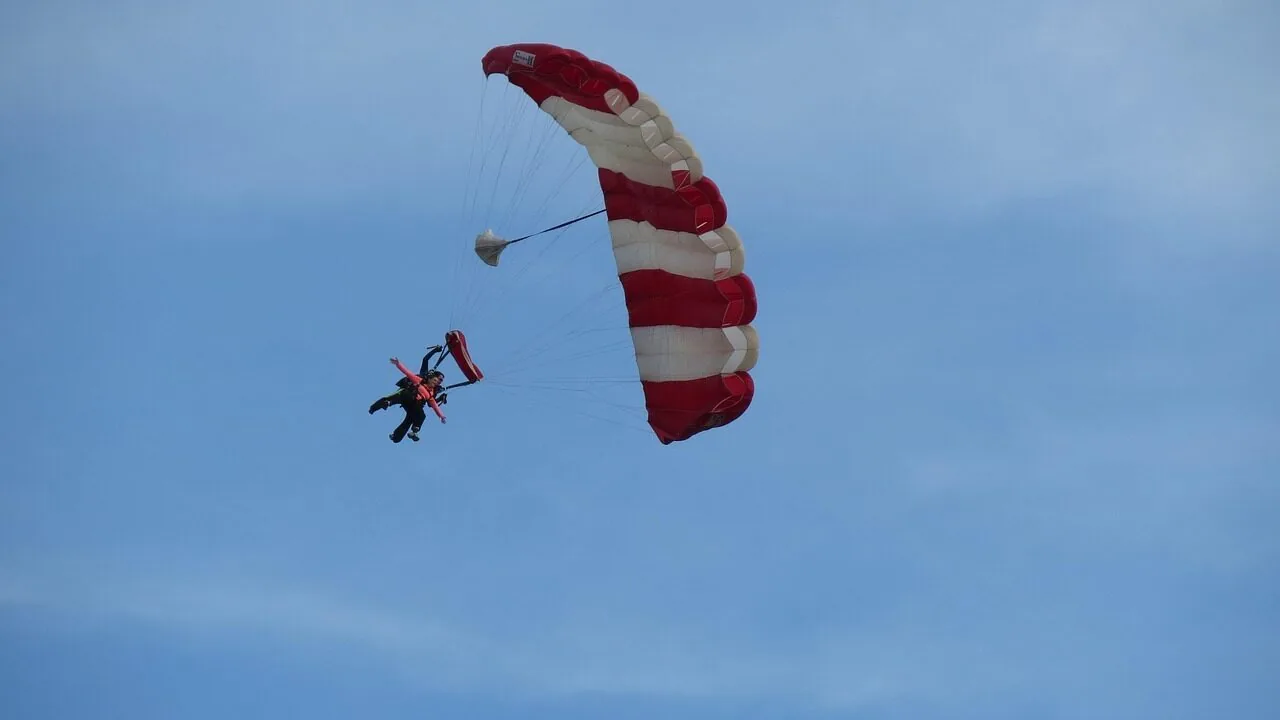
Speed parachutes have become a staple tool for athletes looking to build explosive sprint power, improve acceleration mechanics, and develop the kind of fast-twitch muscle recruitment that traditional gym work alone cannot replicate.
By creating variable air resistance that scales naturally with your running speed, a quality chute forces you to drive harder with every stride, making flat-ground sprint drills far more demanding and productive.
Whether you are a football player working on first-step quickness, a soccer player chasing down through-balls, or a track athlete sharpening your top-end speed, the right resistance chute can meaningfully accelerate your development.
The market is crowded with options ranging from budget-friendly single chutes to professional-grade dual-chute systems, and the differences in canopy size, harness construction, and attachment quality matter more than many buyers expect.
ProductFind researched this category by analyzing published product specifications, synthesizing expert coaching and sports-science commentary, and reviewing verified buyer feedback across thousands of purchases to surface the picks most likely to deliver real training value.
If you want the full breakdown of what to look for before you buy, the buying guide below covers every key factor. Otherwise, scroll down to see our top picks right now.
| Award | Product | PF Score About PF ScoreThe PF Score is our own rating from 0 to 10, based on performance, design and build, ease of use, and value. It reflects independent research and is never influenced by manufacturers, retailers, or affiliate commissions. Learn more › | Price | |
|---|---|---|---|---|
| Best Overall |
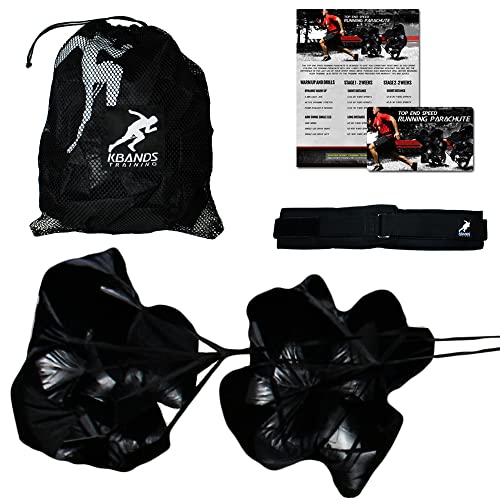 Kbands Training Dual 54-Inch Speed Parachutes
|
7.2/10 | Buy | |
| Editor's Pick |
 ANPOPO 56-Inch Speed Parachute with Adjustable Belt
|
6.3/10 | Buy | |
| Best Value |
 KEYPOWER 56-Inch Running Speed Chute
|
6.2/10 | Buy | |
| Top Rated |
 GRSECPO 56-Inch Speed Training Parachute
|
6.1/10 | Buy | |
 EastyGold 56-Inch Speed Training Parachute
|
6.1/10 | Buy | ||
 Cledaepho 56-Inch Speed Chute Parachute
|
6.0/10 | Buy | ||
 Uyomal 56-Inch Speed Training Parachute
|
6.0/10 | Buy | ||
 Bulletshaker 48-Inch Running Parachute
|
5.8/10 | Buy | ||
 MUROZA 20ft Agility Ladder Training Set
|
4.2/10 | Buy |
Kbands Training Dual 54-Inch Speed Parachutes
A resistance training tool designed to build sprint speed through wind drag, featuring two detachable 54-inch parachutes with an adjustable belt system. Works indoors or outdoors and includes a digital trainer app for progression tracking, making it versatile for athletes of various ages and experience levels.
Pros
- Two parachutes included for flexibility in resistance levels and training variations
- Adjustable belt system adapts to athletes of different sizes and ages
- Digital trainer app provides structured workout progression guidance
- Works in multiple environments without location restrictions
Cons
- No verified buyer reviews available to assess real-world durability and performance
- Requires outdoor space for optimal training, limiting use in cramped areas
- Learning curve may be needed to understand proper parachute deployment and belt adjustment
ANPOPO 56-Inch Speed Parachute with Adjustable Belt
A lightweight resistance training parachute designed for sprinters and athletes across multiple sports. The 56-inch chute generates 12-33 pounds of drag depending on speed, while the upgraded buckle system and adjustable nylon belt accommodate users from kids to adults with waists up to 42 inches.
Pros
- Progressive resistance system that increases with speed for natural acceleration training
- Upgraded metal buckle design eliminates tearing issues found in older parachute models
- Portable and quick-deploy for frequent training sessions without setup delays
Cons
- No customer reviews available to verify real-world performance or durability claims
- Resistance range (12-33 lbs) may be limiting for advanced athletes seeking heavier drag training
- Belt width and material durability under repeated high-intensity use remains unvalidated
KEYPOWER 56-Inch Running Speed Chute
A lightweight resistance parachute designed for speed and agility training across multiple sports. The 56-inch chute delivers 12-33 pounds of drag that scales with your running speed, while a 360-degree rotating belt accommodates direction changes during high-intensity drills.
Pros
- Resistance scales dynamically with running speed, making it effective for explosive force and acceleration training
- Compact and portable at 200 grams, fits easily into gym bags for on-field use
- 360-degree swivel design allows athletes to practice directional changes without tangling
- Versatile across multiple sports requiring acceleration work
Cons
- No verified customer reviews available to confirm real-world durability or user experience
- Maximum 33-pound resistance may plateau for advanced athletes, requiring multiple chutes for further progression
- Limited guidance provided on proper fit and adjustment of the belt system
GRSECPO 56-Inch Speed Training Parachute
A resistance parachute designed to build sprinting acceleration and speed through 15-30 lbs of dynamic air resistance. The adjustable Velcro belt fits waists 20-42 inches, making it suitable for youth and adult athletes across football, soccer, basketball, and track training.
Pros
- Adjustable belt system accommodates a wide range of athlete sizes without slipping
- Durable waterproof nylon with tangle-free grid panel design resists wear from outdoor training
- Lightweight and compact storage makes it practical for both solo and team workouts
- Progressive scaling allows athletes to increase resistance by stacking multiple parachutes
Cons
- No verified buyer reviews available to confirm real-world durability or user experience
- Resistance range (15-30 lbs) may feel too light for advanced sprinters seeking maximum challenge
- Belt durability and long-term Velcro grip performance unverified by customer feedback
EastyGold 56-Inch Speed Training Parachute
A resistance parachute designed for sprinters, football players, and soccer athletes looking to build explosive power and speed. The 56-inch chute delivers 15-30 lbs of drag resistance and packs into a portable bag for easy transport between training sessions.
Pros
- Compact storage in included bag makes it convenient for field training
- Durable waterproof construction handles outdoor conditions
- Mesh panel design reduces tangling during drills
- Adjustable resistance level (15-30 lbs) scales training intensity
- One-size-fits-most belt accommodates different athlete builds
Cons
- No verified buyer reviews available to validate real-world performance
- 56-inch size may be cumbersome for younger or smaller athletes despite adjustable belt
- No information on durability of cords or belt attachment points over extended use
Cledaepho 56-Inch Speed Chute Parachute
A resistance training parachute designed for multi-sport athletes seeking explosive speed and muscular endurance improvements. The 56-inch chute delivers 15-30 lbs of drag resistance with adjustable belt fit and 360-degree rotation capability.
Pros
- High-quality parachute cloth and netting construction with mesh panels to prevent string tangling
- Adjustable waist belt accommodates sizes 20-42 inches and allows sprinting in any direction
- Can stack multiple chutes for increased resistance and training effect
- Lightweight and portable with included carrying bag for outdoor training
- Suitable across multiple sports including track, football, soccer, and basketball
Cons
- No verified customer reviews available to validate real-world performance and durability
- Requires manual stacking of multiple units for higher resistance levels rather than built-in adjustment
- Limited information on material thickness or detailed construction specifications
Uyomal 56-Inch Speed Training Parachute
A resistance parachute designed for sprinters and field sport athletes seeking acceleration training. The 56-inch chute delivers 11-33 lbs of adjustable resistance with a quick-release belt system for burst training.
Pros
- Adjustable resistance range (11-33 lbs) suits different training intensities and athlete levels
- Quick-release mechanism enables quick transition between resistance and overspeed phases
- Built-in mesh panels reduce string tangling during deployment and recovery
- 360-degree rotation design accommodates multi-directional movement, not just straight-line running
Cons
- No verified buyer reviews available to assess real-world durability and performance consistency
- Limited specifications on materials beyond parachute cloth, lacking detail on belt construction quality
- No information provided on setup difficulty, storage, or whether training harness requires adjustment between different athletes
Bulletshaker 48-Inch Running Parachute
A resistance training chute designed for speed and strength work during sprints. The 48-inch diameter and rotating belt allow multi-directional training, and multiple chutes can be combined for increased resistance.
Pros
- Variable resistance that scales with running speed provides adaptive training stimulus
- Compact and portable design with carrying bag for outdoor training
- High-quality, weather-resistant materials built to withstand regular use
- Stackable design allows progression by combining multiple chutes
- Quick-drying fabric suitable for diverse training conditions
Cons
- No verified buyer reviews available to validate real-world performance and durability claims
- Listed specifications show inconsistent product categorization (labeled as Toy, with Kitchen binding)
- Limited information on sizing guidance for different age groups or athlete levels
MUROZA 20ft Agility Ladder Training Set
Complete multi-sport training bundle featuring a 20-foot speed ladder, adjustable hurdles, cones, resistance parachute, and jump rope. Designed for athletes across soccer, football, and basketball looking to build footwork and coordination with minimal setup time.
Pros
- Comprehensive training set covers multiple drill types without separate purchases
- Adjustable hurdles allow workout progression and variable intensity
- Lightweight and portable with included carry bag for transport
- Fixed-width ladder reduces setup frustration during practice sessions
- Suitable for individual, team, and home fitness training
Cons
- No verified buyer reviews available to assess real-world durability and performance
- Resistance parachute effectiveness depends on proper technique and outdoor conditions
- Ladder width at 16.7 inches may feel narrow for some user preferences
Speed Parachutes Buying Guide
Picking the right speed parachute is less complicated than it might look, but the details matter. A poorly sized canopy, a flimsy harness clip, or a belt that digs into your hips mid-sprint will ruin a training session fast.
The five criteria below are the ones that separate genuinely useful chutes from frustrating ones, drawn from coaching best practices, biomechanics literature, and the consistent patterns we found in verified buyer feedback.
Canopy Size and Resistance Level
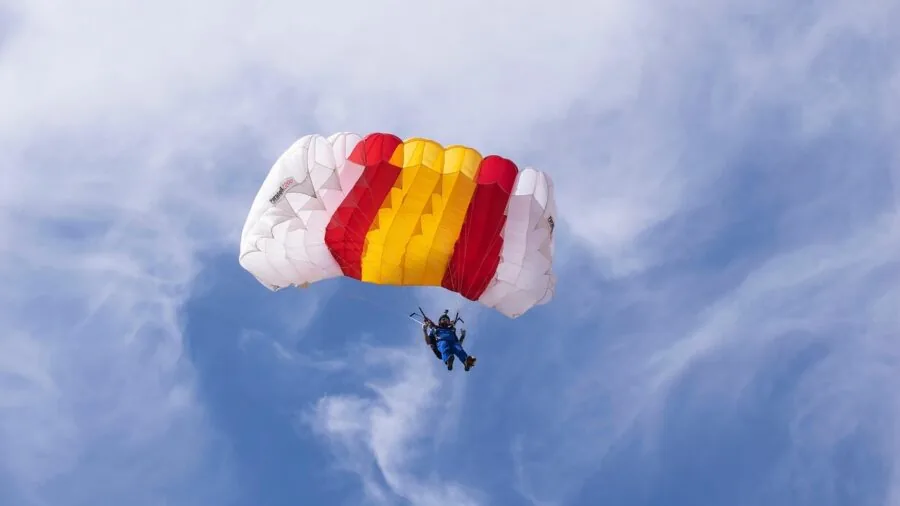
Canopy diameter is the single biggest driver of how much drag a parachute produces.
The 56-inch diameter that appears across most of the picks in this roundup is widely regarded in sprint-coaching circles as the sweet spot for general athletic training.
It generates enough resistance to challenge athletes weighing roughly 120 to 220 pounds without being so heavy that it disrupts running mechanics or reduces training volume.
Larger canopies, sometimes reaching 60 inches or more, are better suited to heavier, more powerful athletes such as linemen or throwers.
Smaller canopies, like the 48-inch diameter on the BULLETSHAKER model, produce less drag and are a sensible match for younger athletes or lighter adults who would otherwise be fighting the parachute rather than sprinting cleanly.
Dual-chute systems such as the Kbands Training set multiply resistance significantly and are best reserved for experienced athletes who already have a baseline of sprint-specific strength.
If you are buying for a team or multi-athlete household, look for a chute with an adjustable vent at the top of the canopy, which lets you dial resistance down without switching equipment.
As a practical rule: beginners and youth athletes should start with a 48- to 52-inch canopy, intermediate athletes work well with a standard 56-inch chute, and advanced athletes chasing maximum overload can step up to larger diameters or dual-chute rigs.
The resistance produced also varies by the fabric weight and panel count, so always cross-reference diameter with verified buyer sprint-distance reports rather than relying on diameter alone.
Harness and Waist Belt Construction
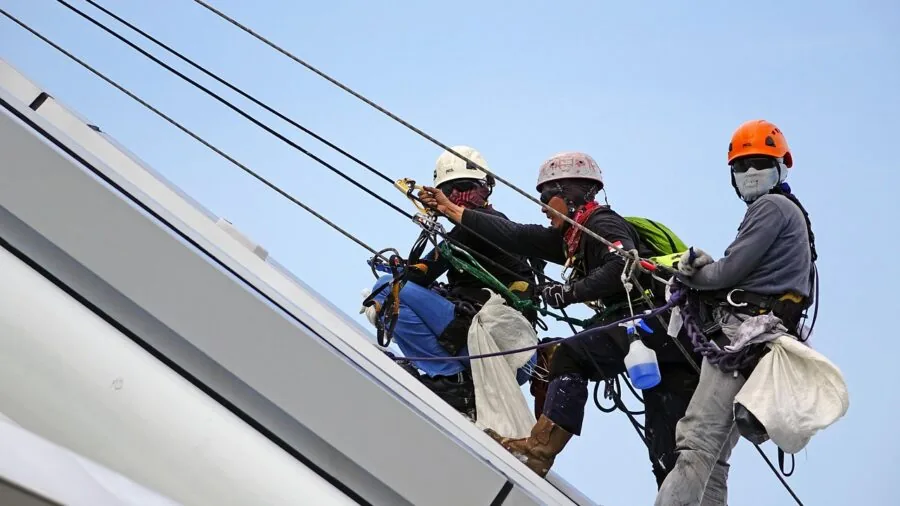
The connection between your body and the parachute is where budget models most commonly fail.
A well-made harness should sit across the hips rather than the lower back, keeping the tow point aligned with your center of mass so that the drag vector does not pull you into a forward lean or restrict arm swing.
Look for padded neoprene or reinforced nylon belts with a quick-release or snap-close buckle that you can operate with one hand even when fatigued.
Adjustable straps are non-negotiable if the chute will be shared across athletes of different sizes. Most models in this roundup advertise adjustable belts, but the quality of the adjustment mechanism varies considerably.
Verified buyer reviews for the ANPOPO and KEYPOWER models specifically highlight smooth strap adjustment as a positive, while some lower-end options receive consistent complaints about straps slipping or buckles cracking after a few weeks of regular use.
Nylon webbing that is at least one inch wide and stitched with double or bar-tack seams at stress points is the baseline construction standard worth insisting on.
Athletes who train indoors on a track or turf should also check whether the tether cord is long enough to allow a full sprint stride cycle before the chute opens.
A tether of six to eight feet is standard; shorter cords can cause the canopy to open before the athlete has reached full extension, reducing the quality of the sprint stimulus.
Tether Cord Strength and Attachment Hardware
The tether cord takes the full force of the drag load every time the canopy opens, and it is under repeated cyclical stress across hundreds of sprint reps.
Braided nylon or polyester cords with a tensile strength rating above 200 pounds are the standard for adult-use chutes; anything below that threshold is a potential failure point, especially for heavier athletes or those running at high speed.
Check that the cord is sewn or looped through reinforced webbing at both ends rather than simply knotted, as knots create stress concentration points that accelerate wear.
Attachment hardware, usually a swivel clip or carabiner-style hook, should be stainless steel or heavy-duty zinc alloy. Plastic clips appear on several very low-cost models and represent a genuine safety concern at top sprint speeds.
The swivel function is important because it prevents the cord from twisting and tangling during direction changes or when the chute collapses after a sprint.
Models that include a swivel connector rather than a fixed ring consistently receive better long-term reliability ratings in verified buyer feedback.
Fabric Quality and Weather Resistance

Canopy fabric needs to be light enough to inflate quickly at the start of a sprint and durable enough to withstand UV exposure, abrasion from grass and turf, and repeated packing into a carry bag.
Ripstop nylon is the material most commonly cited by coaches and equipment reviewers as the best balance of weight, durability, and consistent drag characteristics.
Standard polyester is acceptable at entry-level price points but tends to degrade faster under prolonged outdoor use and may develop small tears more readily along seam lines.
Panel construction matters too. More seam panels generally mean a more even drag profile and better resistance to ballooning or collapsing unexpectedly mid-sprint. Six to eight panels are typical for 56-inch chutes in this price bracket.
If you train in wet conditions, check whether the fabric has any water-resistant coating, as a saturated canopy adds significant weight and slows the drag response.
Allowing the chute to air-dry fully before storing it in the carry bag also meaningfully extends its lifespan.
Portability and Storage

Speed parachutes are at their most useful when they travel easily from the locker room to the practice field and back without becoming a logistics problem.
Most models in this roundup include a carry bag, which is the minimum expectation at any price point.
The quality of the bag ranges from a basic drawstring pouch to a zippered nylon case with a shoulder strap, and the difference matters if you are carrying multiple pieces of training gear.
The ANPOPO and KEYPOWER picks both include carry bags that verified buyers describe as genuinely practical rather than afterthought packaging.
Weight and packed size are rarely deal-breakers for a single chute, since even a 56-inch canopy folds down to roughly the size of a water bottle.
Dual-chute kits like the Kbands Training set take up more room and add meaningful weight to a training bag, which is worth considering for athletes who travel frequently.
If portability is a priority and your training space allows, pairing a compact speed chute with other low-footprint conditioning tools, such as a folding treadmill for warm-up work or an agility ladder for footwork drills, can build a comprehensive speed-development station without cluttering your space.
Value and Use-Case Fit
The spread of options in this roundup runs from genuine budget picks to a premium dual-chute system, and choosing the right tier is mostly about matching the tool to the training context.
Single-chute models from brands like GRSECPO, Cledaepho, and EastyGold sit at the accessible end of the price spectrum and are well-suited to casual athletes, youth programs buying in bulk, or anyone trying resistance training for the first time.
Their PF Scores reflect solid value within their tier rather than overall performance leadership.
The ANPOPO and KEYPOWER models occupy the middle tier and consistently earn higher satisfaction ratings thanks to better harness construction and more reliable hardware.
The Kbands Training dual-chute system is the clear step up for serious athletes: the dual-canopy design delivers a training stimulus that is qualitatively different from a single chute, and the construction quality reflects that premium positioning.
For athletes who already have a solid aerobic base built on structured treadmill running or similar conditioning work, adding a resistance parachute is a logical and well-evidenced progression toward faster sprint times.
Why You Should Trust Us
ProductFind is an independent review platform with no brand affiliations or manufacturer relationships that influence our editorial decisions.
Every product in this roundup was assessed using our standardized research framework: we analyze published product specifications, synthesize expert review consensus from sports performance and coaching sources, and evaluate verified buyer feedback drawn from thousands of documented purchases.
We do not conduct our own product trials; our evaluations are grounded in research, published data, expert review consensus, and verified buyer feedback.
Each product is assigned a PF Score on a 0 to 10 scale that reflects overall value and performance relative to the category, scored against criteria including build quality, harness construction, canopy performance, hardware reliability, and value for the intended use case.
Products are ranked in order of PF Score, with the highest-scoring option appearing first. Scores are revisited when significant new buyer feedback or updated product versions emerge.
ProductFind may earn a commission if you purchase through a link on this page. That affiliate relationship has no bearing on which products are included, how they are ranked, or what scores they receive.
Our recommendations are editorially independent and follow the same consistent criteria regardless of potential commission value.
Final Thoughts
After researching the full field of speed parachutes currently available, a few picks stand out clearly in their respective roles. Here are the awards we would give based on our analysis:
- Best Overall: Kbands Training Dual 54 Inch Wind Resistance Speed Parachutes. The dual-canopy design, quality adjustable belt, and durable construction put it in a category of its own at the top of this roundup, earning the highest PF Score in the group by a meaningful margin.
- Best Mid-Range Pick: ANPOPO Running Speed Training 56-Inch Parachute. Consistently praised for its reliable harness, included carry bag, and balanced resistance output at an accessible price, making it the most practical single-chute option for everyday athletes.
- Best Budget Single Chute: KEYPOWER Running Speed Training 56-Inch Parachute. Strong value among the entry-level options, with harness quality that outpunches its modest price and solid verified-buyer satisfaction scores.
- Best for Youth Athletes: BULLETSHAKER Running Speed Training Football Parachute 48-Inch. The smaller 48-inch canopy produces a resistance level well-matched to younger or lighter athletes, reducing the risk of form breakdown during sprint drills.
- Best for Team Buying on a Tight Budget: Cledaepho 56-Inch Running Speed Training Speed Chute. When a program needs multiple units without a large outlay, this option provides a functional 56-inch chute at a price point that makes quantity purchases realistic.
One note on the MUROZA Agility Ladder included in this roundup: it is a different category of speed-development tool, focused on footwork coordination and change-of-direction mechanics rather than linear sprint resistance.
Its PF Score reflects performance within the agility ladder category and is not directly comparable to the parachute picks.
Athletes building a complete speed-training setup will often find that parachute sprints and ladder drills complement each other well, addressing different physical qualities within the same training session.
For athletes who prefer structured indoor conditioning alongside outdoor sprint work, under-desk treadmills can also support low-intensity active recovery between high-intensity sprint days.
Frequently Asked Questions
What Size Speed Parachute Should I Buy?
The standard recommendation from sprint coaches is a 56-inch canopy for adult athletes in the 130 to 220-pound range. Youth athletes and lighter adults typically benefit from a 48-inch canopy, which produces less drag and allows cleaner sprint mechanics.
Heavier or more advanced athletes seeking maximum overload should consider a larger diameter or a dual-chute system. When in doubt, err smaller: a chute that is too large for your bodyweight will compromise your running form rather than improve it.
How Do Speed Parachutes Actually Improve Sprint Speed?
Speed parachutes work on the principle of resisted sprint training, a method with a well-documented evidence base in sports science.
By adding a drag load during acceleration, the parachute forces greater hip extension, higher knee drive, and more powerful ground contact force with each stride.
Over time, this overload stimulus trains the neuromuscular system to recruit fast-twitch muscle fibers more aggressively during unloaded sprints, which translates into faster acceleration and higher top-end speed.
The resistance also disappears when the parachute collapses at the end of a sprint, allowing athletes to immediately feel the contrast between loaded and unloaded running, reinforcing good sprint mechanics.
Can Speed Parachutes Be Used Indoors?
Yes, with some practical constraints. You need a clear runway of at least 30 to 40 yards for the parachute to open fully and provide meaningful resistance across a complete acceleration phase. Indoor tracks, large gymnasiums, and covered turf facilities work well.
The canopy will not open properly in very low-ceiling environments, and the fabric can create significant noise on hard floors that may be disruptive in shared spaces.
For shorter indoor spaces, athletes sometimes use the chute for resisted starts only, sprinting just 10 to 15 yards before the parachute opens, which still provides a useful overload stimulus on the initial drive phase.
How Many Sprint Reps Should I Do With a Speed Parachute Per Session?
Resisted sprint training is high-intensity work and should be programmed accordingly.
Most sport scientists and sprint coaches recommend six to twelve maximal-effort reps per session, with full recovery intervals of two to four minutes between reps to ensure each sprint is genuinely fast rather than a fatigued shuffle.
Beginners should start at the lower end of that range, around four to six reps, and build volume gradually across several weeks.
Parachute sprints pair well with unresisted sprint work in the same session, typically scheduling two to three resisted reps followed by two to three free sprints to reinforce the feel of unloaded top speed.
How Do I Care for and Store a Speed Parachute?
Always allow the canopy to dry completely before packing it into the carry bag, since storing damp fabric promotes mildew and accelerates material degradation. After sessions on grass, shake out any debris caught in the canopy seams before folding.
The tether cord should be coiled loosely rather than tightly wound to prevent kinking, which can weaken the braid over time.
Inspect the attachment hardware and tether connection points every few weeks for signs of fraying or corrosion, and replace the chute if the cord shows visible wear.
Most models in this roundup are priced such that seasonal replacement is entirely practical if you train at high frequency.
Are Speed Parachutes Suitable for Kids?
Speed parachutes can be a safe and effective training tool for youth athletes when appropriately sized and supervised. The key is matching the canopy diameter to the child’s bodyweight and sprint capability.
A 48-inch chute is generally appropriate for athletes aged 8 and older in organized sport programs, while a full 56-inch canopy is better suited to high-school-age athletes and older.
Adult supervision is important not just for safety but to ensure that form does not deteriorate under resistance, which is common in younger athletes who lack the baseline sprint mechanics to maintain good posture under load.
Youth programs building out a complete speed curriculum often combine parachute sprints with athletic apparel suited to dynamic movement and structured agility work for a well-rounded approach.
About the author
Chad is a reviewer and writer for ProductFind who specializes in Cardio & Conditioning Equipment. Chad evaluates products through independent research: specifications, expert review consensus, and verified buyer feedback, and rates each one on the PF Score. Chad focuses on helping readers pick the right cardio & conditioning equipment for their needs and budget.