The 10 Best Toy Robots
From dancing bots under budget to ChatGPT-powered companions, robot toys vary wildly in quality. Here are the picks worth buying for kids of every age.
 By Marcia Vasquez
Updated July 23, 2026
By Marcia Vasquez
Updated July 23, 2026
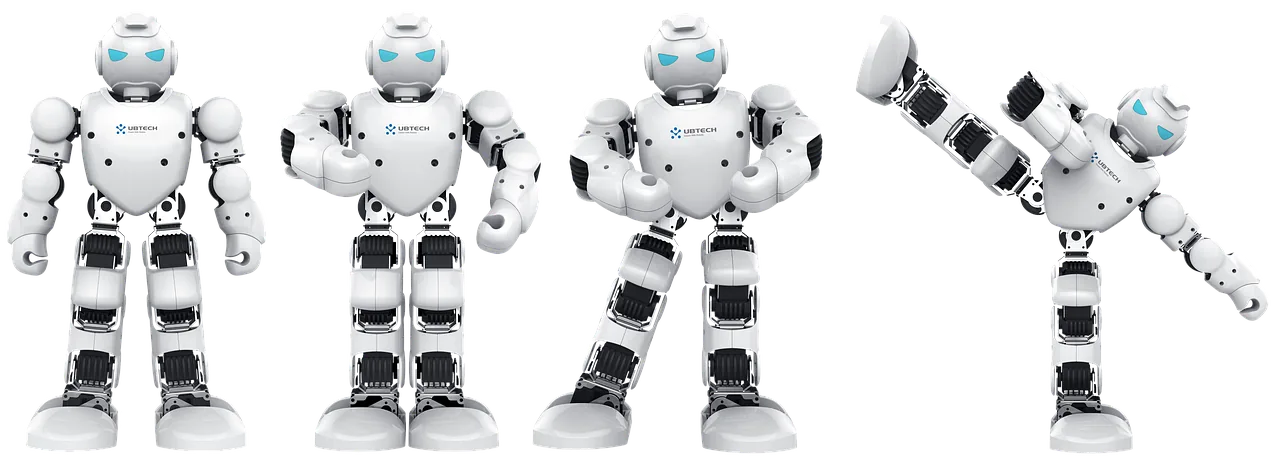
Toy robots have never been more exciting, or more varied.
Whether you’re shopping for a toddler’s first interactive companion, a school-age kid who wants to learn basic programming, or a tech-savvy family ready to invest in a genuinely intelligent AI-powered pet, the range of options available today spans everything from budget-friendly gesture-sensing bots to sophisticated companions powered by ChatGPT.
With so many categories, price points, and skill levels involved, picking the right robot toy without guidance can feel overwhelming.
This guide cuts through the noise by pulling together manufacturer specifications, expert review consensus across the robotics and toy categories, and verified buyer feedback from thousands of confirmed purchases.
Our editorial team at ProductFind analyzed ten standout models across price tiers and use cases, from entry-level dancing bots to premium AI companions, so you can match the right robot to the right kid. Scroll down for our ranked picks.
| Award | Product | PF Score About PF ScoreThe PF Score is our own rating from 0 to 10, based on performance, design and build, ease of use, and value. It reflects independent research and is never influenced by manufacturers, retailers, or affiliate commissions. Learn more › | Price | |
|---|---|---|---|---|
| Best Overall |
 Loona Robot Pet Dog with ChatGPT-4o AI
|
8.7/10 | Buy | |
| Editor's Pick |
 Anki Vector 2.0 AI Robot with ChatGPT
|
8.4/10 | Buy | |
| Best Value |
 HEX BOTS Crawler Gecko Wall-Climbing Robot Toy
|
7.8/10 | Buy | |
| Top Rated |
 Ruko 1088 Smart Robot Toy 15.8 inches
|
7.6/10 | Buy | |
 Holyton 5088 Smart Robot, 15.7-Inch Programmable
|
7.5/10 | Buy | ||
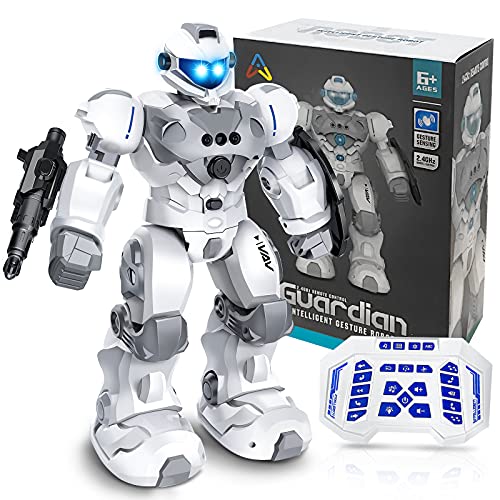 VAV Programmable RC Robot with Gesture Control
|
7.3/10 | Buy | ||
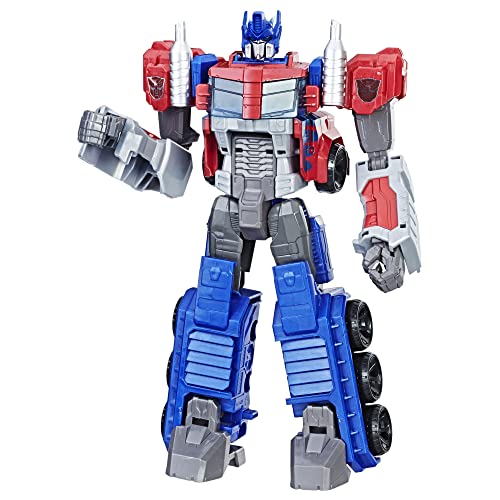 Transformers Cyber Commander Optimus Prime 11-inch
|
7.2/10 | Buy | ||
 KingsDragon RC Robot with Gesture Control
|
6.8/10 | Buy | ||
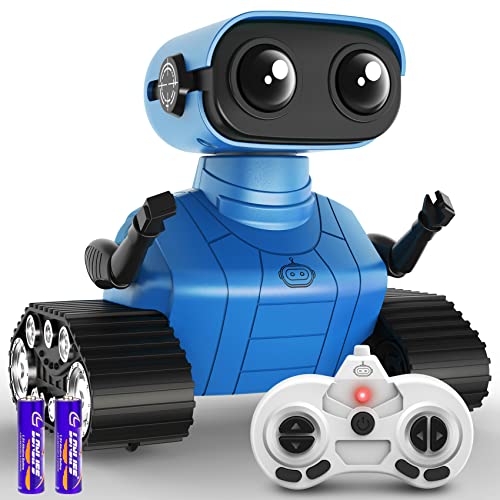 Hamourd Remote Control Robot with Tank Tracks
|
6.6/10 | Buy | ||
 KingsDragon Gesture Control Robot, 10.2 Inch
|
6.5/10 | Buy |
Loona Robot Pet Dog with ChatGPT-4o AI
Loona is an interactive robot dog equipped with ChatGPT-powered voice commands, facial recognition, and gesture control for real-time engagement. It features auto-charging capability and home monitoring via HD camera, making it a multifunctional companion for families seeking an AI-powered interactive toy.
Pros
- Advanced AI integration enables natural voice conversations and responds to commands
- Auto-charging functionality eliminates manual battery management with improved success rate via V28 update
- Multi-sensory interaction through facial recognition, gesture control, and object detection appeals to tech-savvy users
- Double functionality as home monitor adds practical value beyond entertainment
- Mobile hotspot connectivity breaks Wi-Fi restrictions for remote interaction
Cons
- No verified buyer reviews available to assess real-world reliability and performance consistency
- Requires well-lit environments and clean camera sensors for optimal facial recognition, limiting flexibility
- Auto-charging setup demands multiple route presets per room, which may be time-consuming during initial configuration
Anki Vector 2.0 AI Robot with ChatGPT
Vector 2.0 is an autonomous home robot that combines face recognition and voice interaction with ChatGPT integration for more natural conversations. It's designed for tech enthusiasts and households seeking an interactive AI companion that can navigate independently and respond to its environment.
Pros
- ChatGPT connectivity enables more natural and meaningful interactions compared to standard chatbots
- Autonomous operation with obstacle detection removes the need for manual control
- Multilingual capabilities make it accessible to diverse households and language learners
- Compact design at 3.93 x 2.36 x 2.73 inches fits easily on shelves or desks
Cons
- Requires ChatGPT subscription for full conversational capabilities, adding ongoing costs beyond the robot itself
- Setup process involves multiple steps including Bluetooth pairing and Wi-Fi configuration limited to 2.4 GHz networks
- No verified buyer reviews available to assess real-world reliability and long-term performance
HEX BOTS Crawler Gecko Wall-Climbing Robot Toy
A remote-controlled gecko robot that climbs walls and crawls across floors with realistic movement and LED eyes. Best suited for kids ages 4+ who enjoy interactive toys and novelty play that mimics real insect behavior.
Pros
- Unique wall-climbing functionality differentiates it from standard robot toys
- Long remote control range (25 feet) enables varied play environments
- USB charging included for convenience and cost savings
- LED eyes enhance visual appeal in low-light conditions
- Rating of 4.7 indicates positive user reception
Cons
- Remote requires 2 AAA batteries separately, not included with purchase
- No verified buyer reviews available to assess real-world durability or performance reliability
- Dimensions and weight (0.68 lbs) suggest relatively small size, which may limit climbing capability on certain surfaces
Ruko 1088 Smart Robot Toy 15.8 inches
A large programmable robot for kids ages 4-9 with remote, app, and voice control options. Features 10 expressions, flexible joints, and multiple play modes like dancing and storytelling to encourage creative and STEM learning.
Pros
- Tall 15.8-inch size makes it visually impressive as a gift
- Versatile control options appeal to different age groups within the 4-9 range
- Kid-safe construction with smooth edges and certified materials
- Engaging features like recording and voice commands add interactive play value
- Reasonable battery life for extended play sessions without frequent charging
Cons
- Requires original charging cable (USB-C not supported), which could be inconvenient if cable is lost
- No verified buyer reviews available yet to validate real-world durability and performance
- Needs 30-minute initial charge before first use, delaying immediate play after unboxing
Holyton 5088 Smart Robot, 15.7-Inch Programmable
A large talking robot designed for kids ages 5-12 with 200+ programmable actions, voice control, and multiple interaction modes. Features a functional gripper arm and foam dart launcher alongside dancing and music capabilities.
Pros
- Offers genuine STEM learning through coding and logic-building without steep learning curves
- Exceptional build with gripper arm and dart launcher adds practical play value beyond basic movements
- Three input methods (remote, app, voice) provide flexibility and accessibility for different age ranges
- Substantial size and expressive features make it visually engaging for target age groups
Cons
- No verified user reviews available to assess durability, battery life, or real-world reliability
- App and voice control quality are unvalidated, with potential compatibility or responsiveness concerns
- Gripper arm and dart launcher may require careful handling, limiting durability with younger kids in the age range
VAV Programmable RC Robot with Gesture Control
A large-scale programmable robot that combines remote control with gesture sensing and customizable movement sequences, designed for kids ages 6-10. Features LED eyes, voice effects, and a 60-minute runtime on a 1-hour USB charge.
Pros
- Two control methods (remote and gesture) offer flexibility in gameplay
- Programmable sequences encourage creativity and problem-solving skills
- USB charging works with multiple power sources (adapter, power bank, laptop, car charger)
- Larger design with appealing features like LED eyes and protective shield
Cons
- No verified buyer reviews available to confirm real-world reliability or durability claims
- 1-hour charging time limits extended play sessions without backup battery
- Gesture sensing responsiveness and accuracy not detailed in specifications
Transformers Cyber Commander Optimus Prime 11-inch
This 11-inch Optimus Prime figure converts from robot to truck in 6 simple steps, making it an accessible entry point for kids 6 and up. The classic two-in-one design captures the core appeal of Transformers toys without unnecessary complexity.
Pros
- Simple 6-step conversion suitable for younger kids
- Large 11-inch scale provides substantial play value
- Recognizable character design for Transformers fans
- Encourages collection building with other Cyber Commander figures
Cons
- No verified customer reviews available to assess durability or play quality
- Limited articulation compared to more advanced Transformers lines
- Requires purchasing other figures separately for interactive battles
KingsDragon RC Robot with Gesture Control
A programmable robot toy for young children that responds to both remote control and hand gestures, featuring 50 customizable action sequences and obstacle avoidance. Best suited for kids ages 3-8 looking for interactive play with multi-function capabilities like dancing, walking, and patrolling.
Pros
- Flexible multi-joint design enables varied movement combinations
- Rechargeable battery eliminates ongoing battery costs
- Gesture control adds interactive engagement beyond standard remote play
- Programming feature allows creative action sequencing by users
- Durable construction with sturdy skating wheels
Cons
- No verified user reviews available to assess real-world reliability or durability
- 60-minute playtime per charge may be limiting for extended play sessions
- Small size (6.3 x 3.3 x 10.4 inches) could be a choking hazard consideration for age 3-4
Hamourd Remote Control Robot with Tank Tracks
A compact rechargeable robot toy featuring LED eyes, flexible arms and head, and tank-style tracks for multi-directional movement. Built for kids 5+ seeking an entry-level RC toy with singing, dancing, and demo modes controlled via 2.4GHz remote.
Pros
- Multiple interactive features including LED eyes, voice, and singing keep children engaged
- Tank tracks and flexible limbs offer varied movement and entertainment
- Simple remote control operation suitable for beginner RC toy users
- 2.4GHz technology enables interference-free multi-robot operation
- Compact design at 4.92 x 3.34 x 4.72 inches fits typical play spaces
Cons
- No verified customer reviews available yet to validate durability or long-term performance
- Tank tracks may have limited terrain capability despite flexible design
- Educational claims in marketing lack specific evidence of learning outcomes
KingsDragon Gesture Control Robot, 10.2 Inch
This interactive robot responds to hand gestures and remote control, offering programmable actions, singing, dancing, and obstacle detection for kids ages 6 and up. USB rechargeable with 1.5-3 hours of play time per charge, it doubles as both a toy and engaging companion.
Pros
- Gesture sensing adds interactive play beyond typical remote control
- Programmable move recording keeps engagement fresh for extended play
- Built-in collision detection prevents crashes into obstacles
- Decent battery life (1.5-3 hours) with 15-30 day standby
- Multi-sensory feedback with LED eyes, music, and voice
Cons
- No verified buyer reviews available to confirm real-world performance or build quality
- 4.7-star rating appears to be placeholder without actual customer feedback
- Two-hour charging time may be inconvenient for daily play sessions
Toy Robots Buying Guide
Buying a toy robot is not as straightforward as picking any other plaything. The right choice depends heavily on the child’s age, interests, and how much engagement they want from the toy. Use the criteria below to narrow down your options before committing.
Age Appropriateness and Safety

Toy robots span a wide developmental range, and age guidance on packaging is not just a marketing suggestion.
Robots intended for children under five typically rely on simple button presses or remote controls with chunky buttons, minimal small parts, and durable housings that survive drops.
Models aimed at the six-to-ten bracket tend to introduce gesture sensing, basic programming sequences, and rechargeable batteries, all of which raise the engagement ceiling significantly while still keeping complexity manageable.
For older children and teens, AI-powered robots with face recognition and voice conversation capabilities, like those found in the premium Cyber Modern category, offer a genuinely different experience.
However, some of these require ongoing subscription services or companion apps, so read the fine print before purchasing. Always verify that the robot’s charging mechanism (USB, dock, or proprietary cable) is appropriate for the child’s level of independence.
Younger kids paired with STEM toys that have guided activity modes tend to stay engaged longer than those given fully open-ended platforms without support.
Choking hazards from detachable accessories, sharp plastic edges on budget models, and cord lengths on non-wireless remotes are all worth inspecting, especially for households with mixed-age siblings.
Control Method and Interactivity
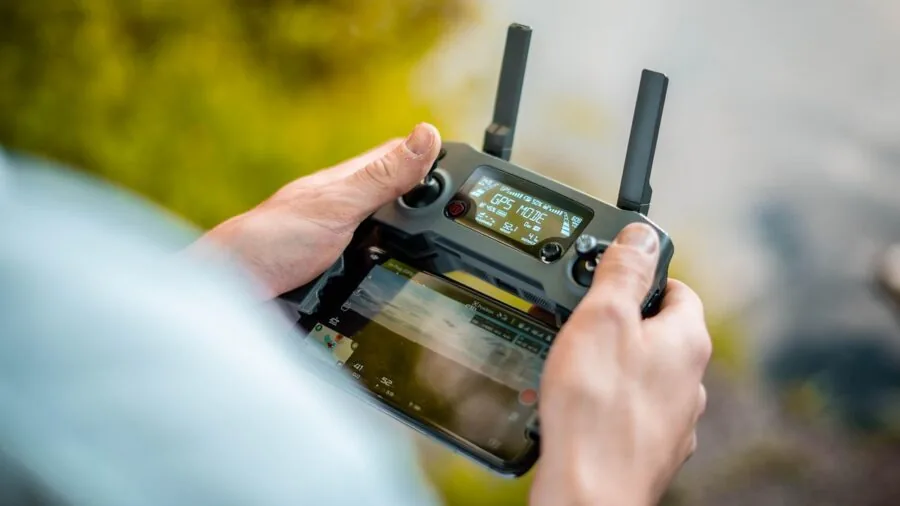
The three main control paradigms in today’s toy robot market are remote control (RC), gesture sensing, and app or voice control.
RC robots are the most intuitive for younger children and tend to have the most responsive movement, since latency is minimal.
Gesture-sensing robots detect hand movements via infrared or camera sensors and translate them into robot actions, which feels magical at first but can frustrate younger kids if the detection range is inconsistent.
App-controlled and voice-activated robots, including those integrating AI conversation engines, represent the highest interactivity tier. They can hold contextual conversations, recognize faces, respond to spoken commands, and in some cases monitor their environment autonomously.
These capabilities naturally appeal to older children and adults who want a robot companion rather than a simple toy. Buyers who already enjoy remote control vehicles will find the RC-based robot category immediately familiar and accessible.
Programming-capable robots that let kids create simple command sequences are worth prioritizing if the goal is educational value alongside entertainment. Even basic drag-and-drop programming through a companion app teaches logical sequencing, which has genuine STEM carry-over value.
Battery Life and Charging
Nothing kills playtime momentum faster than a robot that runs out of power after twenty minutes. Budget models in the sub-mid-range tier frequently compromise on battery capacity to hit aggressive price points, resulting in play sessions under half an hour.
Rechargeable lithium-ion packs, which are now standard across most mid-range and premium robots, deliver meaningfully longer runtimes and eliminate the recurring cost and environmental waste of disposable AA batteries.
Charging time matters as much as runtime. Some entry-level robots charge via micro-USB in sixty to ninety minutes, while premium AI robots with larger battery packs and dedicated docking stations may require two to three hours for a full charge.
A charging dock, like the one included with the Loona Robot Pet, adds convenience for daily use and reduces cable wear.
If the robot will be used by younger children, a magnetic or guided dock connection is far more practical than fumbling with a tiny port.
Always check whether the remote control unit itself requires separate batteries, since many RC robots ship with a rechargeable robot but a remote that still runs on disposables. This asymmetry catches parents off guard.
Programmability and Educational Value
Programmable toy robots occupy a special position in the market because they grow with the child.
A robot that only dances and sings has a defined entertainment ceiling, but one that accepts custom command sequences, adapts to voice input, or connects to a block-based coding environment can remain engaging across multiple years and skill levels.
This is a significant factor when comparing similarly priced options.
Look for robots that offer a tiered learning path: a simple out-of-the-box mode for immediate play, followed by progressively more complex programming options accessible through a companion app.
Verified buyer feedback consistently highlights that children who start with preset demonstrations and gradually unlock programming features sustain interest far longer than those who receive a fully open platform with no guided entry point.
For families already investing in building block sets or construction toys, a programmable robot makes a natural complement, since both categories reward spatial reasoning and iterative problem-solving. Models like the Ruko 1088 and Holyton 5088 aim specifically at this educational-plus-entertainment sweet spot within an accessible price range.
Build Quality and Durability

Toy robots take abuse. Children drop them, carry them awkwardly, crash them into furniture, and occasionally use them as props in rougher imaginative play.
Build quality is therefore not a luxury consideration but a practical one, particularly for younger age groups.
ABS plastic housings with reinforced joint connections perform significantly better than thin-walled shells in verified buyer reports, especially after repeated drops onto hard floors.
Motor quality is the component most frequently cited in negative reviews across the category. Cheap gear trains strip under moderate stress, leading to motors that spin freely without moving the robot’s limbs.
Mid-range models from brands like Ruko and VAV have invested noticeably more in motor and gear-train engineering compared to the lowest-price entrants, and this difference shows up clearly in long-term user feedback.
Joints deserve particular scrutiny on bipedal robots that walk, since the hip and ankle pivot points experience the most mechanical stress.
Premium AI-powered robots like the Loona and Vector 2.0 use sophisticated servo systems that are engineered for continuous daily use rather than occasional play, which partially justifies their higher price points.
AI and Smart Features

The introduction of large language model integration into consumer toy robots has created a genuine new tier in this category.
Robots connected to services like ChatGPT can hold contextually appropriate conversations, answer questions, tell stories, and adapt their personality over time, capabilities that were confined to research labs just a few years ago.
For older children and tech-forward families, these features represent a fundamentally different experience compared to scripted response bots.
However, AI-connected robots come with important considerations. Subscription requirements, data privacy implications for child users, and the need for a reliable Wi-Fi connection all affect real-world usability.
The Anki Vector 2.0 requires a ChatGPT subscription for its conversational features, while the Loona Robot Pet connects to GPT-4o and also offers home monitoring functionality, making it a more comprehensive smart-home companion than a toy in the traditional sense.
Parents should evaluate whether smart features will be used consistently or only novelty-driven in the first week.
Buyers who already enjoy RC hobby craft or other tech-forward gadgets tend to extract more sustained value from AI robot companions than those purchasing primarily as a gift without considering the app ecosystem.
Also consider whether a wall-climbing novelty robot like the HEX BOTS Gecko, which prioritizes physical spectacle over digital intelligence, might be a better fit for a child who prefers action over conversation.
Why You Should Trust Us
ProductFind is an independent editorial platform. Every product in this roundup was assessed by our editorial team using a consistent, multi-signal research framework.
We do not conduct our own product trials; our evaluations are grounded in research, published data, expert review consensus, and verified buyer feedback.
Each robot in this guide received a PF Score on a scale of 0 to 10, calculated by weighing manufacturer-published specifications, aggregated expert review consensus from the robotics and toy category, verified purchase feedback patterns from confirmed buyers, and publicly available safety and compliance data.
Scores reflect consistent criteria applied across all models regardless of brand or price tier, which is why an entry-level model from KingsDragon and a premium AI companion from Digital Dream Labs are evaluated on the same framework, even though their audiences differ significantly.
ProductFind may earn a commission when you purchase through links in this article. That affiliate relationship has no influence on rankings, PF Scores, or which products appear in our recommendations.
Our editorial independence is non-negotiable, and products are selected and ranked solely on the merit of our research findings, not on margin or promotional arrangements with brands or retailers.
Final Thoughts
After analyzing specifications, expert consensus, and verified buyer feedback across ten models, the toy robot category in 2026 offers genuinely compelling options at every budget level. Here are our top picks by use case and audience:
- Best Overall: Loona Robot Pet Dog earns the top PF Score in this roundup by delivering the most complete package of AI intelligence, autonomous behavior, voice and gesture control, and home monitoring in a single device. It is a serious investment, but buyers consistently report that it lives up to its premium positioning.
- Best AI Companion for Adults and Teens: Anki Vector 2.0 remains one of the most polished autonomous desktop robot companions available, with face recognition, ChatGPT integration, and a personality that develops over time. It scores at the upper tier of our rankings and suits older users who want a genuinely interactive presence rather than a children’s toy.
- Best Novelty Pick: HEX BOTS Crawler Gecko stands out for its wall-climbing technology, which consistently earns high surprise-and-delight reactions in verified buyer reviews. It is an excellent gifting option for kids who want something visually spectacular and genuinely different from a standard walking bot.
- Best Mid-Range Programmable Robot: Ruko 1088 Smart Robot offers the most balanced combination of programmability, app control, remote control versatility, and build quality in the mid-range tier. It is among the most frequently recommended options for school-age children by expert reviewers in the kids’ robotics space.
- Best Budget Pick: KingsDragon RC Robot delivers accessible gesture-sensing and remote control functionality at an entry-level price, making it a sensible first robot for younger children or families evaluation the waters before committing to a more advanced model.
Whatever your budget, the key is matching the robot’s capability tier to the child’s actual age, attention span, and interest in technology.
A sophisticated AI companion given to a five-year-old will underwhelm, while a simple dancing bot handed to a ten-year-old tech enthusiast will bore within days.
Use our buying guide criteria above to calibrate your choice, and you will end up with a robot that earns its place in daily play rather than collecting dust after the first week.
Frequently Asked Questions
What age is appropriate for a programmable toy robot?
Most programmable toy robots are designed for children aged six and up, since they require reading simple instructions, navigating a companion app, and understanding cause-and-effect sequences.
Some beginner-friendly models with visual block-coding interfaces are accessible to children as young as five with adult supervision. For toddlers under four, a simple RC or gesture-sensing robot without programming components is safer and more appropriate.
Do AI toy robots require a subscription or ongoing fees?
Some do, and it is an important detail to check before purchasing. The Anki Vector 2.0, for example, requires a ChatGPT subscription for its advanced conversational features.
The Loona Robot Pet uses GPT-4o connectivity, which may involve service terms tied to the platform.
Entry-level and mid-range robots in this roundup, including the Ruko 1088, Holyton 5088, and KingsDragon models, operate entirely without subscriptions using self-contained firmware and companion apps that are free to download.
How do toy robots compare to other RC toys for kids?
Toy robots and traditional toy cars serve overlapping but distinct play styles. RC cars and trucks emphasize speed, precision driving, and outdoor terrain performance. Toy robots prioritize personality, interaction, programmability, and novelty behaviors like dancing, singing, or wall climbing.
Children who enjoy imaginative play and storytelling typically gravitate toward robots, while those who prefer competitive racing or outdoor activity tend to prefer RC vehicles. Many families find both categories complement each other well.
Are rechargeable toy robots better than battery-powered ones?
In most cases, yes. Rechargeable robots eliminate the recurring expense and inconvenience of disposable batteries, and lithium-ion packs tend to deliver more consistent power output across a charge cycle compared to alkaline batteries that fade as they discharge.
The practical downside is that a rechargeable robot needs planning around charging time, whereas a battery-powered model can be back in action in seconds with fresh cells.
For daily use, rechargeable wins; for travel or situations where charging access is limited, battery-powered models offer more flexibility.
Can toy robots be used as educational tools?
Absolutely, and this is one of the strongest arguments for investing in a programmable model over a purely entertainment-focused one.
Robots that accept custom command sequences introduce children to logical thinking, sequencing, and debugging concepts that align directly with computational thinking curricula used in schools.
Several models in this roundup, including the Ruko 1088 and Holyton 5088, are explicitly designed with this dual entertainment-and-education purpose.
Pairing a programmable robot with other STEM toys for kids can create a cohesive at-home learning environment that builds skills progressively across age groups.
What is the difference between gesture-sensing and remote-control robots?
Remote-control robots use a physical handset to direct movement and trigger actions, which gives children precise, immediate control and works well regardless of environmental lighting or interference.
Gesture-sensing robots use infrared or camera sensors to detect hand movements and translate them into commands, which feels more immersive but can be inconsistent if the detection zone is poorly calibrated or the lighting conditions are not ideal.
Many mid-range models in this roundup, including the VAV and both KingsDragon models, offer both modes, giving children the option to switch between them depending on their mood and play environment.
About the author
Marcia is a reviewer and writer for ProductFind who specializes in Kids Toys. Marcia evaluates products through independent research: specifications, expert review consensus, and verified buyer feedback, and rates each one on the PF Score. Marcia focuses on helping readers pick the right kids toy for their needs and budget.