The 8 Best Weighted Vests
From rucking to home gym circuits, the right weighted vest adds real challenge to any workout. Here are the top options across every budget and use case.
 By Amelia Crawford
Updated July 23, 2026
By Amelia Crawford
Updated July 23, 2026

Weighted vests have quietly become one of the most versatile tools in home and gym training, embraced by runners, hikers, calisthenics athletes, and older adults looking to maintain bone density alike.
A growing body of research supports their benefits: weighted walking has been shown to reduce bone stress injuries and may help prevent significant bone loss in postmenopausal women, while the added load meaningfully increases calorie burn and progressive overload without requiring extra gym time.
Whether you are rucking around the block or grinding through bodyweight circuits, a well-fitted vest turns an ordinary workout into a genuinely harder one.
With dozens of options spanning budget-friendly fixed-weight models to fully adjustable performance vests, choosing the right one can be genuinely confusing.
Our team at ProductFind researched the category thoroughly, drawing on published specifications, expert review consensus, and verified buyer feedback from confirmed purchasers to compile this guide.
The picks below represent the strongest options across price tiers, use cases, and body types. Scroll down to see our full ranked list of top picks.
| Award | Product | PF Score About PF ScoreThe PF Score is our own rating from 0 to 10, based on performance, design and build, ease of use, and value. It reflects independent research and is never influenced by manufacturers, retailers, or affiliate commissions. Learn more › | Price | |
|---|---|---|---|---|
| Best Overall |
 ZELUS Adjustable Weighted Vest, 23-45 lbs
|
8.3/10 | Buy | |
| Editor's Pick |
 APEXUP Adjustable Weighted Vest 40lbs
|
8.1/10 | Buy | |
| Best Value |
 ZELUS 10lb Weighted Vest, Washable
|
7.9/10 | Buy | |
| Top Rated |
 ZELUS Adjustable Weighted Vest 11-20 lb.
|
7.5/10 | Buy | |
 Sportneer Adjustable Weighted Vest 2-18 lbs
|
7.3/10 | Buy | ||
 MiR 30 lb Short Weighted Vest
|
7.2/10 | Buy | ||
 Atybo Adjustable Weighted Vest 11-18 lbs
|
7.1/10 | Buy | ||
 ProSource 20lb Weighted Training Vest
|
6.8/10 | Buy |
ZELUS Adjustable Weighted Vest, 23-45 lbs
Solid iron weights in removable pockets eliminate bounce and shifting during cardio and strength work, backed by 900D fabric and foam padding for durability. Best suited for serious trainers seeking progressive loading without the mess of sand-filled alternatives.
Pros
- Removable iron weights allow gradual progression from 23 to 45 lbs without buying new vests
- Solid iron construction eliminates sand leakage and provides stable weight during running, HIIT, and calisthenics
- Extra-wide shoulder straps and thick foam padding distribute weight evenly for extended wear comfort
- Built-in reflective strips enhance visibility for outdoor training in low-light conditions
- Easy maintenance through simple hand washing once iron weights are removed
Cons
- 4.9 rating with zero verified reviews makes it difficult to assess real-world durability and comfort over time
- No information provided about sizing fit, which could be critical for proper weight distribution across different body frames
- Iron weights add significant bulk compared to sand-filled alternatives, potentially limiting compact storage
APEXUP Adjustable Weighted Vest 40lbs
Adjustable weighted vest with removable 2.5lb cast iron blocks in three weight options (20/30/40lbs) designed for strength training, running, and cardio workouts. Features durable 1000D nylon construction, padded shoulder straps, reflective strips for visibility, and even weight distribution to reduce injury risk.
Pros
- Customizable weight with removable 2.5lb iron blocks for different fitness levels
- Padded construction and adjustable straps provide secure fit during dynamic exercises
- Durable 1000D nylon material with reinforced stitching withstands regular use
- Reflective strips enhance visibility for nighttime running or outdoor training
- Balanced weight distribution design reduces concentrated pressure on shoulders
Cons
- No verified buyer reviews available to confirm real-world durability and comfort fit
- Requires manual balancing of weights on front and back for proper weight distribution
- 44+ lbs total package weight may be cumbersome for beginners or those with upper body limitations
ZELUS 10lb Weighted Vest, Washable
A slim, washable weighted vest filled with soft iron that distributes weight evenly without digging in. Works for cardio, strength training, and everyday wear under clothing, with adjustable straps fitting chest sizes 34 to 42.5 inches.
Pros
- Washable construction sets it apart from traditional iron sand vests, keeping it fresh and hygienic long-term
- Slim, comfortable fit won't shift or dig into ribs during extended wear
- Reflective strips provide visibility for outdoor workouts
- Adjustable straps accommodate a wide range of chest sizes
Cons
- No verified customer reviews available yet to confirm real-world durability or comfort claims
- Limited weight range (5-15lb) may not suit advanced lifters seeking heavier resistance
- Soft iron filling adds cost compared to standard iron sand alternatives
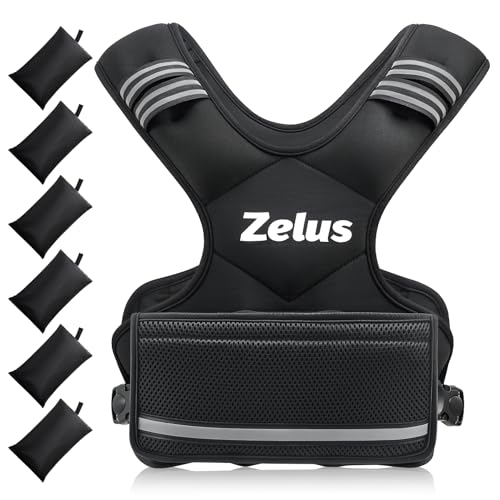
ZELUS Adjustable Weighted Vest 11-20 lb.
An adjustable weighted vest that scales from 11 to 20 pounds using removable iron sand weight bags, designed for cardio and strength training across various fitness levels. Neoprene construction and reflective strips prioritize comfort and visibility during workouts.
Pros
- Scalable weight system allows progression without buying multiple vests
- Reflective design enhances safety during outdoor or low-light workouts
- Neoprene material offers durability across diverse exercise types
- Integrated pocket eliminates need for separate gear carriers during cardio
- Even weight distribution prevents strain during extended wear
Cons
- No verified user reviews available to validate real-world comfort and durability claims
- Weight options limited to three fixed ranges (4-10 lb., 11-20 lb., 20-32 lb.) rather than granular customization
- Iron sand fill may shift or require periodic adjustment during high-impact activities
Sportneer Adjustable Weighted Vest 2-18 lbs
A modular weighted vest with removable 2lb and 1lb weight packs that let you dial in anywhere from 2 to 18 pounds of load. Built with neoprene, reflective strips, and a zipper design for easy adjustments, it's suitable for running, strength training, and cardio across different fitness levels.
Pros
- Wide weight range (2-18 lbs) accommodates beginners to intermediate users
- Modular weight system lets you scale intensity as fitness improves
- Reflective strips enhance safety for low-light workouts
- Removable weights make the vest machine-washable for hygiene
- Zipper design and shoulder straps reduce setup friction
Cons
- No verified customer reviews to assess real-world comfort or durability
- Double-lock system requires manual adjustment; not one-size preset
- 4.7 rating appears unverified with zero reviews, limiting buyer confidence
MiR 30 lb Short Weighted Vest
A compact weighted vest designed to stay high on your torso, offering full range of motion for running, squats, and cardio work. Features removable 3 lb iron weights, adjustable fit, and durable 1200 D-nylon construction backed by a lifetime warranty.
Pros
- Compact cut doesn't interfere with running form or squat depth
- Solid iron weights built to last with quick add/remove mechanism
- Durable materials designed specifically for high-impact workouts
- Adjustable fit accommodates various users and body shapes
Cons
- No verified customer reviews available to assess real-world durability claims
- Limited color option (black only) for this model
- Weight increments fixed at 3 lbs per segment, less granular than some competitors
Atybo Adjustable Weighted Vest 11-18 lbs
An adjustable weight vest that scales from 11 to 18 pounds with removable iron sandbags, designed for running, walking, and strength training. Features breathable neoprene, reflective visibility strips, and a phone pocket for convenient everyday use.
Pros
- Flexible weight progression allows users to start light and increase resistance as fitness improves
- Distributed pressure design with adjustable side straps prevents shoulder chafe and chest squeeze
- Breathable material with anti-odor lining keeps the vest fresh during extended wear
- Reflective safety features and integrated phone storage add practical value for outdoor runners
- Works across multiple workout styles from casual walking to high-intensity training
Cons
- No verified buyer reviews available to confirm real-world comfort and durability claims
- Weight capacity starts at 11 pounds, which may be too heavy for complete beginners or lighter individuals
- Limited color options with only black available based on current specifications
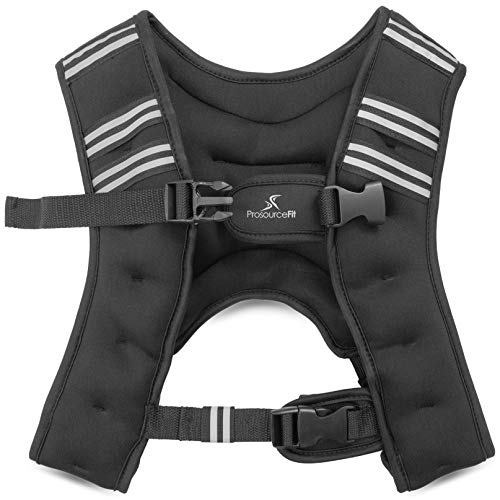
ProSource 20lb Weighted Training Vest
A neoprene weighted vest designed for cross-training, running, and gym workouts with balanced weight distribution and adjustable fit for different body types. Hands-free resistance adds intensity to cardio and strength exercises.
Pros
- Adjustable design accommodates different body frames and sizes
- Balanced weight placement reduces movement and discomfort during activity
- Breathable neoprene material allows extended wear comfort
- Works across diverse workout styles from running to cross-training to agility drills
Cons
- No verified customer reviews available to validate real-world durability claims
- 20lb weight may be limiting for advanced users seeking heavier resistance options
- Neoprene material durability under intense sweat exposure not confirmed by user feedback
Weighted Vests Buying Guide
Not all weighted vests are built for the same purpose. A runner needs a snug, low-profile vest with minimal bounce; someone doing pull-ups in a home gym values quick weight adjustment more than aerodynamics.
Before spending money, it pays to understand the key variables that separate a comfortable training tool from one that ends up gathering dust.
The criteria below reflect what consistently separates high-rated vests from lower-scoring ones across expert reviews and buyer feedback, and they apply equally whether you are pairing your vest with kettlebells or building a purely bodyweight program.
Weight Range and Adjustability
This is the single most important factor for most buyers. Fixed-weight vests are simpler and often more affordable, but they offer no room to progress as you get stronger.
Adjustable vests let you start light and add load incrementally, which is the foundation of effective progressive overload training. Look at both the minimum and maximum weight the vest supports, and pay attention to how fine-grained the increments are.
Some vests, like the Sportneer model in this guide, offer nine discrete weight settings spanning a very wide range, which suits beginners and intermediate athletes equally well.
Others top out at a fixed ceiling that may feel limiting within a few months of consistent training.
If you are serious about long-term progression, prioritize vests with granular increments and a high ceiling rather than those with only a handful of preset options.
Also consider the weight format: iron sand bags are common, removable iron plates give a more structured feel, and some vests use steel shot pockets.
Each format distributes mass differently across the torso, which affects how the vest feels during dynamic movements like running or jumping jacks.
Fit, Sizing, and Gender Compatibility

A poorly fitting vest is uncomfortable at best and potentially unsafe at worst. Weight that shifts or bounces places asymmetric stress on your spine and knees, especially during running or rucking.
Look for vests with adjustable shoulder straps, side buckles or Velcro panels, and ideally a contoured cut that accommodates different torso shapes.
Unisex designs work reasonably well for many people, but verified buyer feedback frequently highlights that some vests sit awkwardly on narrower shoulders or shorter torsos.
Brands like ZELUS and APEXUP have addressed this by engineering adjustable straps into all three of their respective models in this guide, making them accessible to a wider range of body types.
If you are petite or have a shorter torso, prioritize vests with multiple strap adjustment points rather than those with a single buckle system.
Sizing also matters for how the vest sits during exercise. A vest that rides up during squats or sags forward during push-ups will disrupt your form.
Expert reviewers consistently recommend trying the vest on with the lightest weight configuration first, then loading it gradually to check for shifting.
Comfort and Padding
Internal padding and the choice of outer fabric have a significant effect on wearability during extended sessions. Thin neoprene or mesh constructions breathe better in warm conditions but offer less cushioning against metal weight plates.
Thicker padded shoulders reduce hotspots but can add bulk that restricts arm movement during overhead exercises.
The ZELUS Z-Fit model in this guide takes a deliberately ultra-thin approach, using soft iron as the weighting medium to keep the profile low without sacrificing padding at the contact points.
Buyer reviews frequently praise this design for walking and light cardio where heat management matters. For heavy strength work, slightly more structure around the shoulders and chest is worth the trade-off in breathability.
Washability is another comfort-adjacent factor worth checking. Vests accumulate sweat rapidly, and many cannot be machine-washed. Models that are fully washable or have removable, washable liners score consistently higher in long-term buyer satisfaction.
Bounce and Stability During Movement

Bounce is one of the most common complaints in buyer feedback across the weighted vest category.
A vest that shifts vertically with each stride not only feels uncomfortable but can also disrupt running gait and add unwanted stress to the neck and lower back.
This is why the weight format and vest construction matter so much for runners specifically.
Vests designed for running typically use a close-fitting, compression-style shell with weights positioned low on the torso and secured tightly enough that they cannot shift during dynamic movement.
The top-scoring ZELUS 23 to 45 lb model in this guide explicitly incorporates a no-bounce design, a feature that expert reviewers and verified buyers consistently flag as a meaningful differentiator for HIIT and running use cases.
If walking and hiking are your primary activities, bounce is less critical, but for any activity above a brisk walk it becomes a significant factor.
Safety Features and Visibility

Outdoor use introduces visibility concerns that matter more than many buyers initially consider. Reflective strips on a vest can be the difference between being seen and being invisible to a driver during an early morning or evening run.
Several models in this guide, including both APEXUP and ZELUS options, incorporate reflective striping as a standard feature rather than an afterthought.
Weight distribution also has a direct safety implication. Front-and-back balanced designs place load symmetrically across the torso, which is preferable for joint health compared to vests that concentrate weight predominantly on one side.
Look for vests where the weight pockets are arranged to balance load between the front and rear panels, especially if you plan to wear the vest for extended durations.
Phone pockets are a smaller but genuinely useful safety feature for solo outdoor training, allowing you to keep a device accessible without an armband.
The Atybo model in this guide includes a dedicated phone pocket alongside its reflective stripes, a combination that outdoor walkers and runners appreciate in verified buyer reviews.
Value and Price Tier
Weighted vests span a wide price range from entry-level to performance-grade, and the right tier depends entirely on how and how often you plan to use one.
Budget options from brands like ProSource and Atybo are well suited to casual walkers or beginners who want to add light resistance without a significant upfront investment.
They typically offer fixed or limited weight ranges and simpler construction, which is an acceptable trade-off at that price point.
Mid-range options like the ZELUS and Sportneer models offer meaningful adjustability and better construction at a price that most regular exercisers will find reasonable.
At the upper end of the range represented in this guide, the miR Short Weighted Vest and the APEXUP model deliver professional-grade load capacity and durability suited to serious strength athletes and those training for military or tactical fitness.
Pairing a high-capacity vest with adjustable dumbbells creates a remarkably complete home resistance system without requiring a full rack of equipment.
Why You Should Trust Us
ProductFind is an independent review publication. We do not sell products, manage orders, or have any relationship with the brands featured here beyond the affiliate arrangements disclosed below.
Every product on this site is evaluated on its own merits against a consistent set of criteria developed by our editorial team.
Each weighted vest in this guide was scored using our PF Score system, a 0 to 10 rating that synthesizes multiple data streams into a single comparative figure.
Our research process draws on published product specifications, expert review consensus from fitness professionals and certified trainers, and verified buyer feedback from confirmed purchasers across major retail platforms.
We do not conduct our own product trials; our evaluations are grounded in research, published data, expert review consensus, and verified buyer feedback.
We weight several factors when scoring weighted vests: adjustability and weight range, fit and comfort across body types, bounce control during dynamic movement, safety features like reflective strips and balanced weight distribution, washability, and overall value within each price tier.
Products are ranked by PF Score, not by profit margin or affiliate commission rate.
ProductFind may earn a commission when you purchase through links on this page. That relationship does not influence our scores, rankings, or editorial recommendations in any way. We include a product because it earned its place based on merit, not because of commercial arrangements.
Final Thoughts
The weighted vest market has matured significantly, and there is now a genuinely good option at virtually every price point and use case.
Here is how our top picks break down by category, based on PF Score and the characteristics that make each one stand out.
- Best Overall: ZELUS Weighted Vest Men (23 to 45 lbs) earns the top PF Score in this group with its no-bounce design, wide adjustable weight range, removable iron weights, and reflective strips that make it equally capable at the track and in the gym.
- Best for Running and HIIT: APEXUP Adjustable Weighted Vest scores near the top of the group thanks to its reflective stripe visibility, broad weight options from 20 to 40 lbs, and a design that verified buyers consistently praise for staying secure during high-intensity movement.
- Best Lightweight Everyday Vest: ZELUS Z-Fit Soft Iron Weighted Vest offers an ultra-thin, washable profile in a compact package that suits walking, daily activity, and light gym work without the bulk of heavier performance vests.
- Best Mid-Range Adjustable: ZELUS Weighted Vest for Men and Women (4 to 32 lbs) delivers excellent flexibility with its ironsand weight system across a range that suits beginners through intermediate athletes at a mid-range price.
- Best for Progressive Training: Sportneer Adjustable Weighted Vest (2 to 18 lbs) stands out for its nine discrete weight settings, making it the most granular adjustable option in the group and an ideal companion for structured progressive overload programs.
For those building out a complete home training setup, a quality weighted vest pairs naturally with other resistance tools.
If you are exploring ways to expand your home gym beyond bodyweight work, our guides to kettlebells for home gyms and adjustable dumbbells cover companion equipment that complements vest training well.
Recovery matters too, and TENS units for drug-free pain relief are worth knowing about if weighted training surfaces any joint discomfort.
Supporting your training with the right protein powder can also make a meaningful difference in how quickly you adapt to added load.
Frequently Asked Questions
How heavy should a weighted vest be for beginners?
Most fitness professionals recommend starting at roughly 5 to 10 percent of your bodyweight and building from there as your body adapts. For a 150 lb person, that means beginning around 8 to 15 lbs.
The adjustable models in this guide, particularly the Sportneer and ZELUS Z-Fit, are well suited to beginners precisely because they allow you to start very light and progress gradually without purchasing a new vest.
Jumping too heavy too soon increases injury risk, particularly for the lower back, hips, and knees. Err on the side of lighter than you think you need for the first few weeks, especially if walking or running is your primary use case.
Can I wear a weighted vest every day?
Light daily use, such as wearing a low-weight vest during a walk, is generally well tolerated by healthy adults.
However, wearing a heavier vest during intense training sessions every day without adequate recovery is the same mistake as any other form of overtraining.
Most trainers recommend treating vest-wearing sessions the same as weighted resistance workouts, with rest days built in.
Older adults and those with existing joint or spine conditions should consult a physician before introducing weighted vest training, since the compressive load adds stress to the lumbar spine and hips even during low-intensity activities like walking.
Are weighted vests good for weight loss?
Adding a weighted vest to activities you already do, like walking, hiking, or bodyweight circuits, increases your energy expenditure without requiring you to do more volume or spend more time exercising.
That incremental caloric increase, compounded over weeks and months, can contribute meaningfully to fat loss when combined with appropriate nutrition.
They are not a standalone weight loss solution, but as one component of a broader program they are effective. The lean muscle preservation effect of resistance training under load also tends to support better metabolic outcomes compared to cardio alone.
What is the difference between iron sand bag vests and plate-loaded vests?
Iron sand bag vests, like those from ZELUS and Atybo, use flexible pouches filled with granular iron material. They conform more closely to the body, tend to feel softer against the torso, and are easier to wash.
The trade-off is that the weight distribution can shift slightly within each bag during intense movement.
Plate-loaded vests, such as the miR Short Weighted Vest, use solid iron or steel plates that sit in structured pockets.
They offer a more stable, predictable weight distribution and are typically preferred by serious strength athletes who need a rigid feel during heavy calisthenics or weighted pull-ups. They are generally heavier to handle and harder to clean.
Do weighted vests work for walking specifically?
Yes, and this is one of the most research-supported use cases for weighted vests.
Studies on weighted walking have found benefits including reduced bone stress injuries, potential prevention of bone loss in older populations, and increased energy expenditure compared to unweighted walking at the same pace.
For people who find it difficult to raise their heart rate through walking alone, a vest adds meaningful challenge without requiring a faster pace.
For walking, prioritize comfort, fit, and breathability over maximum weight capacity. The thin, low-profile designs in this guide, including the ZELUS Z-Fit and Atybo models, are particularly well suited to extended walking sessions.
Pair them with quality walking shoes to ensure proper foot support under the added load.
How do I clean a weighted vest?
Cleaning instructions vary significantly by model. Some vests are fully machine washable once the weights are removed, which is the most convenient option for regular users. Others are spot-clean only, requiring a damp cloth and mild detergent applied by hand.
Check the care label before purchasing if washability matters to you.
The ZELUS Z-Fit is specifically marketed as washable, which is a notable feature in a category where many vests are not.
For vests that cannot be washed, airing them out thoroughly after each session and using a moisture-wicking underlayer can extend the time between deep cleans and reduce odor buildup significantly.
About the author
Amelia is a reviewer and writer for ProductFind who specializes in Home Gym & Strength Training. Amelia evaluates products through independent research: specifications, expert review consensus, and verified buyer feedback, and rates each one on the PF Score. Amelia focuses on helping readers pick the right home gym & strength training for their needs and budget.