The 10 Best Ear Muffs
Noise damage is permanent but preventable. We compared NRR ratings, build quality, and verified buyer feedback from 3M, Walker's, Pro For Sho, and more to find ear muffs that genuinely protect.
 By Gilbert Phillips
Updated July 23, 2026
By Gilbert Phillips
Updated July 23, 2026

Hearing damage is permanent, yet it remains one of the most preventable workplace and recreational injuries.
Whether you work on a construction site, spend weekends at the shooting range, operate loud power equipment, or simply need a quieter environment for concentration, a quality pair of ear muffs is one of the most straightforward investments you can make in your long-term health.
The market spans everything from no-frills passive protectors to slim, low-profile designs built for active use, and the differences between them matter far more than most buyers realize before they make a purchase.
To put this list together, our editorial team at ProductFind analyzed manufacturer specifications, noise reduction rating (NRR) data published by accredited sources, expert review consensus from occupational safety and audiological communities, and verified buyer feedback across thousands of confirmed purchases.
We evaluated options from 3M, Walker’s, Pro For Sho, Floriogra, Dr.meter, and Yedilen to surface picks that genuinely deliver on protection, comfort, and value. Scroll down to see our top picks ranked below.
| Award | Product | PF Score About PF ScoreThe PF Score is our own rating from 0 to 10, based on performance, design and build, ease of use, and value. It reflects independent research and is never influenced by manufacturers, retailers, or affiliate commissions. Learn more › | Price | |
|---|---|---|---|---|
| Best Overall |
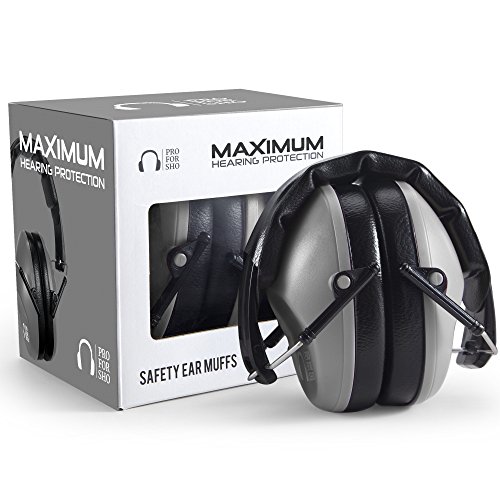 Pro For Sho 34dB NRR Compact Ear Muffs
|
8.6/10 | Buy | |
| Editor's Pick |
 3M PELTOR X5A NRR 31 dB Earmuffs
|
8.3/10 | Buy | |
| Best Value |
 Walker's Razor Slim Patriot Earmuffs
|
7.8/10 | Buy | |
| Top Rated |
 Walker's Razor Slim Passive Earmuff, 27dB NRR
|
7.5/10 | Buy | |
 Floriogra 2-Pack 34dB Noise Canceling Earmuffs
|
7.1/10 | Buy | ||
 Walker's Razor Slim Passive Earmuffs, 27dB NRR
|
6.8/10 | Buy | ||
 3M PELTOR Optime 98 H9A Safety Earmuffs NRR 24
|
6.5/10 | Buy | ||
 Dr.meter EM100 Noise Reduction Earmuffs, 27.4dB SNR
|
5.2/10 | Buy | ||
 3M Pro-Grade NRR 30 dB Safety Earmuffs
|
4.8/10 | Buy | ||
 Yedilen Large Foldable Earmuffs with Dual Wearing Styles
|
3.2/10 | Buy |
Pro For Sho 34dB NRR Compact Ear Muffs
Compact hearing protection rated 34dB NRR that folds to pocket size, designed for shooting ranges, loud events, and sensory use. ANSI S3.19 and CE EN 352-1 certified with a break-in period required for optimal comfort.
Pros
- Industry-leading 34dB NRR in a slim, foldable package without bulk
- Certified for safety with documented OSHA-adjusted rating of 31dB
- Adjustable design accommodates both children and adults with padded comfort
- Versatile for loud environments, sports events, and sensory regulation
- Established brand with 10-year history and satisfaction guarantee
Cons
- Requires 2-4 hour break-in period on packaging to loosen initial tight clamp
- Passive noise reduction less effective on low-frequency sounds like bass or conversation
- No verified buyer reviews available to assess real-world durability and fit consistency
3M PELTOR X5A NRR 31 dB Earmuffs
Industrial-grade hearing protection with NRR 31 dB attenuation designed for high-noise environments like construction and manufacturing. Features wide foam cushions, heat-reducing twin headband design, and replaceable components for extended use in demanding jobs.
Pros
- Highest noise reduction rating in class with NRR 31 dB for serious industrial applications
- Specialized comfort features including stainless steel wire headband and tilting pivot points designed for extended 8-hour wear
- Replaceable hygiene kit keeps earmuffs clean and extends product lifespan
- Dielectric headband adds electrical safety protection for multi-hazard work environments
Cons
- No verified buyer reviews available to assess real-world comfort and durability claims
- Marketed for industrial use only, limiting consumer accessibility and home workshop applications
- No information on noise isolation performance across different frequency ranges
Walker's Razor Slim Patriot Earmuffs
Ultra-slim hearing protection with sound amplification via dual microphones, letting you hear ambient sounds clearly while blocking hazardous noise. Audio input jack doubles functionality as headphones, making it versatile for shooting ranges, industrial sites, or outdoor work.
Pros
- Compact, slim profile fits under helmets and hats better than full-size muffs
- Sound amplification lets you hear voices and environmental sounds while protecting against loud impulses
- Dual microphones provide clear, natural omni-directional audio
- Rugged design with rubberized exterior and padded metal headband handles rough conditions
- Audio jack adds flexibility to use as standard headphones when hearing protection isn't needed
Cons
- No verified customer reviews available to confirm real-world durability and comfort during extended wear
- Recessed volume knob, while preventing accidents, may be harder to adjust quickly in the field
- Limited specification details on battery life, NRR rating, or microphone range
Walker's Razor Slim Passive Earmuff, 27dB NRR
Compact hearing protection designed for smaller frames, offering 27dB noise reduction for shooting and hunting. Ultra-lightweight and foldable construction makes it portable, though passive amplification means no active sound management.
Pros
- Specifically engineered for smaller head sizes with slim muff design
- Lightweight and foldable, ideal for transport to ranges or hunting trips
- Solid 27dB NRR rating provides meaningful hearing protection in loud environments
- Rubberized ear cups and metal wire headband balance durability with comfort
- Trusted Walker's brand known for industry reliability
Cons
- Passive design only, no active noise cancellation or amplification features
- No verified buyer reviews available to confirm real-world durability or comfort claims
- One-size-fits-all construction may not accommodate all head shapes equally well despite slim profile focus
Floriogra 2-Pack 34dB Noise Canceling Earmuffs
A budget-friendly pair of safety earmuffs certified to SNR 34dB (ANSI S3.19), designed for shooting, construction, and industrial environments. The 2-pack includes adjustable headbands, rotatable ear cups, and a compact folding design for portability, though there are currently no verified buyer reviews available.
Pros
- Strong certifications (ANSI S3.19, CE EN 352-1) provide third-party validation
- Adjustable headband and rotatable ear cups offer customizable fit for different users
- Compact folding design makes it practical for range bags and job sites
- Includes 2 pairs, offering value for multiple users or backup protection
Cons
- No verified customer reviews available to assess real-world durability or comfort over extended wear
- Imitation leather padding may show wear or degradation with heavy use
- Generic design specifications lack details on battery life or alternative features some competitors offer
Walker's Razor Slim Passive Earmuffs, 27dB NRR
Compact hearing protection designed for smaller frames, particularly youth and women shooters. Delivers 27dB noise reduction with a lightweight, foldable design that balances protection and all-day wearability.
Pros
- 27dB NRR provides solid hearing protection for shooting environments
- Slim, low-profile design fits well under hats and shooting glasses
- Lightweight and foldable construction makes it easy to transport
- Rubberized ear cups provide comfort for extended wear
- Trusted Walker's brand with reputation for reliability
Cons
- No active noise cancellation, passive protection only
- Zero verified buyer reviews available to assess real-world durability and fit accuracy
- Compact sizing may not accommodate larger head shapes comfortably
3M PELTOR Optime 98 H9A Safety Earmuffs NRR 24
Industrial-grade earmuffs designed for high-noise occupational environments up to 98 dBA, featuring a stainless steel headband and liquid-foam cushions for extended wear comfort. Purpose-built for workplace safety rather than consumer use.
Pros
- High NRR rating (24 dB) suitable for serious industrial noise exposure
- Stainless steel construction and adjustable pivots accommodate different head shapes and sizes
- Hybrid liquid-foam cushions balance seal quality with comfort for long shifts
- Compact dimensions (8 x 6 x 4 inches) for storage and portability on jobsites
Cons
- Industrial-only designation means no consumer warranty or support claims
- No verified buyer reviews available to assess real-world durability or comfort consistency
- Liquid-filled cushions require maintenance and may degrade over time with temperature changes
Dr.meter EM100 Noise Reduction Earmuffs, 27.4dB SNR
Safety earmuffs designed for kids and adults with 27.4dB noise reduction, memory foam padding, and an adjustable headband that fits most ages. Foldable and portable for events like concerts, fireworks, and monster truck rallies where sound sensitivity is a concern.
Pros
- ANSI and CE certified dual safety standards provide legitimate hearing protection assurance
- Memory foam construction prioritizes comfort for all-day wear without irritation
- Adjustable design genuinely accommodates wide age range from toddlers to adults
- Foldable form factor makes it practical for school bags and travel
- Maintains ambient sound awareness while reducing harmful noise levels
Cons
- Reduces but does not completely block noise, limiting use for extremely loud environments
- No verified customer reviews available yet to confirm real-world comfort and durability claims
- Tight fit on first use requires stretch-out period (4 hours on soccer ball or box) as suggested remedy
3M Pro-Grade NRR 30 dB Safety Earmuffs
3M's Pro-Grade earmuffs deliver a 30 dB noise reduction rating with a lightweight, adjustable design built for extended wear. The steel wire headband with rubber overmold and premium cushioning make them suitable for industrial and construction environments where all-day comfort matters.
Pros
- Strong 30 dB NRR rating provides substantial noise attenuation for power tools and machinery
- Durable steel wire construction with rubber overmold resists workplace damage
- Lightweight and adjustable, designed specifically to reduce pressure point discomfort
- Premium cushioning and pivoting cups deliver customizable fit across users
Cons
- No verified customer reviews available to assess real-world comfort or durability claims
- Title discrepancy lists NRR as 3 dB while description states 30 dB, creating specification confusion
- Limited color options (Black only) restricts choice for varied workplace preferences
Yedilen Large Foldable Earmuffs with Dual Wearing Styles
These unisex earmuffs offer flexible wearing options (over-the-head or behind-the-head) to avoid interfering with hats or glasses, plus an adjustable frame and foldable design for portability. Built with soft fleece exterior and faux fur lining, they're designed for winter sports and outdoor activities in cold weather.
Pros
- Dual wearing options accommodate different preferences and reduce accessory conflicts
- Adjustable frame ensures a secure, customized fit across different head sizes
- Folds compactly for storage and travel convenience
- Larger cup design intended to fully wrap and insulate ears
- Soft materials prioritize comfort for extended wear in cold conditions
Cons
- No verified customer reviews available to validate comfort or durability claims
- Limited information on how adjustability mechanism performs with repeated use or extreme cold
- Faux fur lining durability and washability not specified in product details
Ear Muffs Buying Guide
Choosing the right ear muffs comes down to matching the product’s protection level, fit, and design to your specific environment.
A pair that excels at the shooting range may be overkill for a casual lawn-mowing session, while entry-level options that work fine around the yard could fall dangerously short in industrial or high-decibel settings.
The criteria below will help you prioritize what actually matters for your use case.
If you also rely on safety goggles or other personal protective equipment on the job, think about how your ear muffs will interact with those items before you buy.
Noise Reduction Rating (NRR)

The NRR is the single most important number on any ear muff package. Measured in decibels and regulated by the EPA under the Noise Control Act, it tells you how much sound attenuation the device provides under standardized laboratory conditions.
Consumer-grade products typically range from around 22 dB NRR on the low end to 31 dB or higher on premium passive models, while the highest-performing options in our list reach 34 dB NRR.
There is an important nuance here: OSHA recommends a 50% derating of the published NRR to account for real-world fit variability. That means a product rated at 30 dB NRR effectively provides roughly 15 dB of protection in a typical workplace scenario.
For environments that regularly exceed 90 dB, occupational health guidelines suggest considering double protection (ear muffs over foam ear plugs) for sustained exposure.
Understanding this gap between the label number and practical attenuation helps you avoid being misled by marketing and choosing a product that genuinely matches your noise environment.
For casual sensory use, concerts, or sporting events, a mid-range NRR in the high 20s is usually adequate. For sustained industrial exposure, power tools, or close-range firearm use, look for NRR values of 28 dB or higher.
Pay attention to whether the published NRR has been certified by an independent accredited body rather than relying solely on manufacturer claims.
Ear Cup Design and Passive vs.
Electronic
Passive ear muffs use acoustic foam and sealed cup construction to physically block sound. They require no batteries, have no moving parts, and tend to be more durable and affordable than electronic alternatives.
Models like the 3M PELTOR X5A achieve their high NRR through dense cup material and a deep, wide cup cavity that keeps the cushions well clear of the ear canal.
The tradeoff is that passive muffs attenuate all sound indiscriminately, which can be a drawback when situational awareness matters.
Electronic or “active” ear muffs use microphones and speakers to amplify low-level sounds like conversation while automatically clamping down when impulse noises (like gunfire) exceed a safe threshold.
Walker’s Razor Slim series in our list takes this approach, making it popular at shooting ranges where brief verbal communication between shooters matters. The added cost and maintenance (battery replacement) are the main drawbacks of electronic designs.
For general construction, landscaping, or workshop use, passive muffs are almost always the better value. For range shooting, hunting, or any environment where you need to hold conversations between loud events, electronic protection earns its price premium.
Pair either type with well-fitting safety glasses to maintain full-face protection on the job site, and be mindful that thicker temple arms can break the ear cup seal and reduce effective NRR.
Headband Style and Fit
Ear muffs come in three primary headband configurations: over-the-head, behind-the-neck, and under-the-chin (cap-mounted). Over-the-head is by far the most common and suits the broadest range of users.
Behind-the-neck and cap-mounted styles exist primarily for workers who must wear hard hats, helmets, or other head protection simultaneously.
Adjustability is non-negotiable. A properly fitted ear muff must create an unbroken seal around the entire circumference of each ear. Look for headbands with multiple adjustment points and cushioned pads that distribute clamping pressure evenly.
Excess clamping force causes fatigue during extended wear; too little allows sound to bleed around the cup.
Budget options often use stiff, non-padded headbands that become uncomfortable in under an hour, a hidden cost that isn’t visible on a spec sheet.
Ear cup depth and cushion diameter matter especially for users with larger ears.
Standard cups accommodate most adults, but individuals with larger pinnae may find that budget models leave edges of the ear pressed against the internal foam, both reducing comfort and degrading the acoustic seal.
Some professional-grade models like the 3M PELTOR Optime 98 use a dual-shell cup design specifically to keep the ear free-floating inside the cup, improving both comfort and attenuation consistency.
Portability and Low-Profile Design

Slim, foldable designs are increasingly popular, particularly for range shooting and outdoor recreation.
Walker’s Razor Slim series is named for its narrow cup profile, which allows a cheek weld when shouldering a rifle or shotgun without the ear cup breaking the seal.
This is a genuinely useful feature for shooters, not merely an aesthetic choice.
For users who need to store their ear muffs in a bag or toolkit, foldability adds real-world value. Many mid-range options fold flat along one or both axes.
Consider where you’ll store the muffs between uses: soft drawstring pouches work for light transport, but if you’re carrying them in a larger kit bag alongside hard tools, a structured carrying case protects the cushions from deformation over time.
Cushion Material and Replaceable Parts
The ear cushions (also called seals or pads) are the components that degrade fastest on any ear muff.
Foam cushions compress and lose their seal over time; liquid-filled or foam-plus-gel cushions tend to maintain their shape longer and often provide a better acoustic seal across a wider range of head shapes.
For heavy daily use, prioritize models whose cushions and liners are available as separate replacement parts, as with several 3M PELTOR models in our list. Replacing cushions is far more economical than replacing an entire headset.
In high-heat environments (outdoor summer work, foundries, etc.), foam cushions can absorb sweat and become unhygienic quickly. Wipe-clean PVC cushions or those with removable fabric covers are easier to maintain.
If hygiene is a concern in shared-equipment environments, disposable cushion covers are available for several professional-grade models as an accessory.
Intended Use and Regulatory Compliance

Occupational use in OSHA-regulated environments requires hearing protection devices that carry a certified NRR and comply with ANSI S3.19 (the U.S. standard for measuring and expressing hearing protector attenuation).
Most major-brand products from 3M and Walker’s carry this certification; budget imports may not. If you’re purchasing for a workplace program, verify the certification explicitly rather than assuming it from the NRR number alone.
For parents purchasing ear muffs for children at loud events (Monster Jam, concerts, air shows, fireworks), fit is the primary concern since children’s heads are smaller and the clamping force calibrated for adults may be uncomfortable.
Dr.meter’s EM100 and similar child-oriented models use softer, more flexible headbands with lighter clamping force. Note that NRR figures are established on adult head measurements, so the real-world attenuation for a child may differ from the stated rating.
Protective equipment is worth pairing with complementary gear: workers who also need a full face shield should read up on face shields worth buying to understand how to layer protection without compromising the ear muff seal.
Why You Should Trust Us
ProductFind is an independent editorial platform. We do not manufacture, sell, or distribute any of the products we evaluate, and we have no commercial relationship with any brand whose products appear in our rankings.
Every product in this article was assessed using our standardized research framework, which draws on published manufacturer specifications, ANSI-certified NRR data, consensus findings from occupational safety and audiological review communities, and verified buyer feedback aggregated from confirmed-purchase reviews.
Each product receives a PF Score on a scale of 0 to 10.
This score reflects a weighted assessment across protection performance (NRR and certification), build quality and cushion design, comfort and adjustability, value relative to category, and consistency of verified buyer experience over time.
We do not conduct our own product trials; our evaluations are grounded in research, published data, expert review consensus, and verified buyer feedback. No brand can pay to improve its PF Score or placement.
ProductFind may earn an affiliate commission when you purchase through links on this page. That relationship has no effect on our rankings, scores, or editorial decisions. Our recommendations are determined entirely by the quality of our research and the merits of the products themselves.
Final Thoughts
Across the 10 options we evaluated, there’s a clear correlation between NRR, build quality, and PF Score. The products that score highest are those that combine certified attenuation, durable construction, and verified comfort over extended wear. Here are the standout picks by use case:
- Best Overall: Pro For Sho 34dB NRR Hearing Protection Ear Muffs earns the top spot with the highest NRR in the group, a compact and foldable design, and broad consensus across expert reviewers and verified buyers that it consistently delivers on its protection claims at a budget-accessible price point.
- Best Professional-Grade Protection: 3M PELTOR X5A is the pick for industrial and occupational environments where 31 dB NRR, ANSI certification, and long-term replaceable cushions justify the higher investment. It represents the pinnacle of passive hearing protection in our evaluated group.
- Best for Shooting and Range Use: Walker’s Razor Slim Patriot Series Muffs combines slim cup geometry that doesn’t interfere with a cheek weld, solid passive attenuation, and a durable build that range shooters and hunters consistently rate highly in verified purchase reviews.
- Best Budget Value: Walker’s Razor Slim Passive Earmuff delivers reliable hearing protection at a highly affordable price, making it the sensible choice for homeowners, DIYers, and occasional power-tool users who need solid performance without a large outlay.
- Best Two-Pack Value: Floriogra 2 Pack 34dB Noise Canceling Headphones offers a competitive 34 dB NRR across two pairs, making it an efficient choice for households, job-site crews, or instructors who need duplicate protection without doubling the cost.
Whatever your noise environment, the single most important step is wearing your ear muffs consistently and correctly. A high-NRR pair that sits loosely on your head provides far less protection than a mid-range pair with a proper acoustic seal.
Combine ear muffs with quality protective eyewear for full coverage on the job site, and revisit your hearing protection choices whenever your noise environment changes significantly.
Frequently Asked Questions
What does NRR mean, and how much do I actually need?
NRR stands for Noise Reduction Rating, a U.S. EPA-regulated measurement expressed in decibels that indicates how much sound attenuation a hearing protector provides under standardized conditions.
OSHA recommends applying a 50% derating to published NRR values to estimate real-world performance, because laboratory conditions don’t replicate the variability of individual fit. For most recreational uses (lawn mowing, power tools, concerts), an NRR of 25 to 28 dB is adequate.
For sustained industrial exposure or close-range shooting, 28 to 31 dB or higher is advisable. Environments consistently exceeding 100 dB may require double protection.
Are ear muffs better than ear plugs for hearing protection?
Neither is universally superior. Foam ear plugs can achieve higher NRR ratings (some reach 33 dB) when inserted correctly, but correct insertion is rarely achieved consistently by untrained users, which erodes their real-world effectiveness.
Ear muffs are easier to put on and take off correctly, making consistent use more likely, especially in environments where protection is intermittent. For users with small or sensitive ear canals, ear muffs are often more comfortable for extended wear.
Many occupational safety programs use both simultaneously when noise levels are extreme.
How do I know if my ear muffs actually fit properly?
A proper fit requires the cushions to form an unbroken seal against the head around the entire circumference of each ear.
Common fit failures include cushions resting on eyeglass arms or thick helmet straps (which breaks the acoustic seal), headbands that are too short or too long causing tilted cups, and cushions that have compressed over time and no longer fill the gap between the cup rim and the head.
When wearing correctly fitted ear muffs, there should be a noticeable and immediate drop in ambient sound the moment the cups seat against your head. If the attenuation feels inconsistent between the two cups, re-check alignment.
Safety glasses with thin temple arms minimize seal disruption better than bulkier frames.
Can children use the same ear muffs as adults?
Most adult ear muffs are not suitable for young children. The headband width and clamping force are calibrated for adult head dimensions, and oversized cups on a small head will not achieve the acoustic seal needed for meaningful attenuation.
Child-specific models (like Dr.meter’s EM100) use narrower headbands, lighter clamping springs, and smaller cup cavities.
For children attending loud events like fireworks or motorsports, a properly sized child ear muff is far more effective and more comfortable than an adult pair worn loosely.
Check manufacturer age recommendations and confirm the headband adjusts down to the child’s head circumference before purchasing.
How often should I replace my ear muffs?
The cushions and foam liners are the components with the shortest service life.
In regular daily-use environments, cushions typically degrade noticeably within six to twelve months, losing their ability to form a consistent acoustic seal as the foam compresses and the PVC cover hardens or cracks.
Visually inspect cushions monthly: any cracking, flattening, or hardening is a replacement signal. For models with available replacement cushion kits (several 3M PELTOR products in our list), replacing cushions is cost-effective and extends the life of the headset by years.
The headband and cups themselves, if undamaged, can last many years with proper cushion maintenance and appropriate storage away from UV exposure and extreme temperatures.
Do ear muffs work for sensory sensitivities and autism spectrum needs?
Yes, passive ear muffs are widely used as sensory tools for individuals on the autism spectrum and others with auditory hypersensitivity. They don’t require medication, have no electronic components to manage, and can be put on and removed quickly.
For this use, comfort and low clamping force matter more than maximum NRR, since the goal is reducing sensory overwhelm from unpredictable environmental sound rather than blocking sustained industrial noise. Lightweight, adjustable models are typically preferred.
Because sensory use often involves children, verify that the specific model you choose fits the child’s head correctly and has a child-appropriate clamping force before committing.
About the author
Gilbert is a reviewer and writer for ProductFind who specializes in Safety Equipment. Gilbert evaluates products through independent research: specifications, expert review consensus, and verified buyer feedback, and rates each one on the PF Score. Gilbert focuses on helping readers pick the right safety equipment for their needs and budget.