The 9 Best Lifting Slings
Choosing the wrong lifting sling puts every lift at risk. Here are the top-rated web, round, and bridle slings for safe overhead rigging across construction, warehouse, and industrial use.
 By Bernice Reed
Updated July 23, 2026
By Bernice Reed
Updated July 23, 2026

Lifting slings are the unsung workhorses of rigging and material handling.
Whether you are hoisting HVAC equipment onto a rooftop, loading machinery onto a flatbed, or suspending a load from an overhead crane, the sling you choose directly determines how safely and efficiently the job gets done.
A wrong selection, mismatched capacity, incompatible attachment, or degraded webbing, can cause catastrophic load failure. Understanding what separates a reliable sling from a liability is not optional; it is foundational to safe rigging practice.
This guide covers the best lifting slings across web, round, and multi-leg configurations, from budget-friendly flat-eye straps to industrial-grade four-leg bridle assemblies with G80 alloy hardware.
Our team at ProductFind researched each option through a synthesis of published specifications, expert rigging community consensus, and verified buyer feedback across thousands of real-world applications.
Scroll down to see our ranked picks, organized by PF Score, to find the right sling for your workload.
| Award | Product | PF Score About PF ScoreThe PF Score is our own rating from 0 to 10, based on performance, design and build, ease of use, and value. It reflects independent research and is never influenced by manufacturers, retailers, or affiliate commissions. Learn more › | Price | |
|---|---|---|---|---|
| Best Overall |
 JCHL 6.5' x 2" Lift Sling Straps, 13,000 lbs Capacity
|
8.5/10 | Buy | |
| Editor's Pick |
 Kivomot 3m Polyester Lifting Sling, 4-Ton Capacity
|
8.4/10 | Buy | |
| Best Value |
 Kivomot 5ft 4-Leg Polyester Lifting Sling, 8,800 lbs
|
8.3/10 | Buy | |
| Top Rated |
 Kennedy Wire Rope 2" x 20' Polyester Lifting Sling
|
8.2/10 | Buy | |
 ATERET 6FT Green Round Sling, 5,300 lb Vertical
|
8.1/10 | Buy | ||
 SENKEYFE 4-Leg Web Sling 5ft 6600lbs
|
7.6/10 | Buy | ||
 Kodiak Straps 1" x 4ft Lifting Sling, 3100lbs Capacity
|
7.3/10 | Buy | ||
 Sumpluct 1" x 2' Lift Sling Straps, 2-Pack
|
7.2/10 | Buy | ||
 XSTRAP STANDARD 6-Pack 1" x 8' Lift Sling
|
7.1/10 | Buy |
JCHL 6.5' x 2" Lift Sling Straps, 13,000 lbs Capacity
Heavy-duty polyester lifting straps designed for construction and household use, offering multiple load capacities depending on configuration. The 2-inch width and nylon construction balance durability with comfort for moving furniture and appliances.
Pros
- High load capacity across multiple configurations (vertical, choker, basket)
- Abrasion and corrosion resistant materials for longevity
- Comfortable 2-inch width reduces hand fatigue during use
- Lightweight and portable for versatile household applications
Cons
- No verified buyer reviews available to assess real-world durability claims
- Limited information on maintenance or care requirements
- Nylon stretching behavior may not suit all lifting scenarios requiring rigid support
Kivomot 3m Polyester Lifting Sling, 4-Ton Capacity
A heavy-duty polyester lifting sling rated for 4-ton loads with G80 alloy steel hooks and a 6:1 safety factor, designed for construction and industrial applications. The heat-treated hardware and UV-resistant sling material suit demanding warehouse and machinery handling environments.
Pros
- Robust 6:1 safety factor exceeds basic lifting requirements
- G80 heat-treated hardware resists corrosion in harsh environments
- High-strength polyester stands up to UV exposure and wear
- Adequate 4-ton capacity for general industrial lifting tasks
Cons
- No verified buyer reviews available to confirm real-world durability
- Limited information on sling width or weight specifications
- Single capacity rating may not suit specialized heavy lifting needs
Kivomot 5ft 4-Leg Polyester Lifting Sling, 8,800 lbs
A four-leg polyester web sling rated for 8,800 lbs with a 6:1 safety margin and G80 hooks, designed for balanced load handling in construction and rigging. Lighter and more affordable than chain or wire rope alternatives, though with zero verified buyer feedback to validate real-world durability claims.
Pros
- High safety margin well above working load limit
- Versatile four-leg configuration adapts to various load shapes
- Weighs significantly less than chain or wire rope slings
- Meets relevant safety standards for industrial use
- Polyester and steel construction resists UV and corrosion
Cons
- No verified customer reviews available to confirm durability or performance claims
- Polyester webbing may have lower heat tolerance than metal alternatives
- Limited information on long-term wear patterns or maintenance requirements
Kennedy Wire Rope 2" x 20' Polyester Lifting Sling
A domestic-made polyester web sling with twisted eyes for secure hook installation and versatile load ratings up to 12,800 lbs in basket hitch configuration. Built for industrial lifting applications where lightweight handling matters.
Pros
- Twisted eye design at 90 degrees improves hook engagement and installation ease
- Substantial load capacity: 6,400 lbs vertical, 12,800 lbs basket hitch
- Made in the USA since 1979 with industrial-grade polyester construction
- Lightweight compared to steel alternatives for the same working load
Cons
- No verified buyer reviews available to assess real-world durability or user experience
- Limited size visibility in product data, unclear how many alternative dimensions are actually available
- Polyester webbing may degrade faster than steel in harsh outdoor or chemical environments
ATERET 6FT Green Round Sling, 5,300 lb Vertical
An endless polyester round sling designed for heavy lifting and rigging tasks with a 5,300 lb vertical capacity. The 100% polyester construction offers protection, flexibility, and reusability across industrial and automotive applications.
Pros
- Protective exterior sleeve extends sling lifespan and prevents internal damage
- High tenacity polyester core offers strong resistance to environmental degradation
- Soft construction allows better control when choking loads
- Color-coding follows international safety standards for quick capacity identification
Cons
- No verified customer reviews available to assess real-world durability claims
- 6-foot length limits versatility for applications requiring longer slings
- Limited information on temperature or extreme weather performance limits
SENKEYFE 4-Leg Web Sling 5ft 6600lbs
A four-leg bridle web sling rated for 6600lbs vertical lift capacity, designed for general rigging and cargo handling across construction, factories, and ports. Built with G80 steel hooks and polyester webbing that resists kinking and rust.
Pros
- High load rating (6600lbs) suitable for industrial and construction use
- G80 steel hardware provides durable, corrosion-resistant performance
- Polyester webbing won't kink or rust, easier to handle and store than wire rope
- Four-leg configuration accommodates various cargo types and attachment points
Cons
- No verified customer reviews to assess real-world durability and reliability
- Limited information on sling length options or capacity range variation
- Four-leg design may require more setup experience for proper load balancing
Kodiak Straps 1" x 4ft Lifting Sling, 3100lbs Capacity
Two-ply polyester lifting slings designed for vertical loads up to 3100lbs, with minimal stretch and a 5:1 safety factor. Best suited for equipment moving, engine hoists, and construction rigging where lightweight durability matters more than chain alternatives.
Pros
- Strong vertical capacity (3100lbs) relative to weight, ideal for engine cranes and hoists
- Low stretch polyester resists elongation during use, maintaining load control
- Conservative 5:1 safety margin reduces failure risk in demanding scenarios
- Flat eye design and multiple hitch configurations (vertical, choker, basket) for flexible rigging
Cons
- No verified buyer reviews on record to validate real-world durability claims
- Polyester may degrade faster under UV exposure compared to synthetic alternatives
- Limited to indoor or covered use; outdoor storage longevity not documented
Sumpluct 1" x 2' Lift Sling Straps, 2-Pack
Two-ply polyester lifting slings rated for up to 6,400 lbs in basket hitch configuration, designed for construction, equipment moving, and industrial rigging. Versatile option for professionals and personal use with three hitch load ratings.
Pros
- High basket hitch capacity at 6,400 lbs supports heavy loads
- Multiple hitch types accommodate different rigging scenarios
- 2-ply polyester material provides durability for industrial use
- Covers broad applications from engine work to tree removal
Cons
- No verified customer reviews to assess real-world performance or durability claims
- Documentation heavily emphasizes what NOT to do, suggesting careful inspection required before use
- Limited information on actual weight, material thickness, or long-term wear characteristics
XSTRAP STANDARD 6-Pack 1" x 8' Lift Sling
Set of six polyester web slings rated for 1,333 lbs working load and 4,000 lbs break strength, designed for lifting furniture, appliances, and machinery. UV-resistant and rust-proof, making them a lightweight alternative to chains and wire rope.
Pros
- Adequate breaking strength of 4,000 lbs for moderate lifting tasks
- Rust-proof polyester material requires minimal maintenance
- Reinforced loop ends rated for repeated attachment and wear
- Lighter and more convenient to handle than metal alternatives
Cons
- No verified buyer reviews available to assess real-world durability and performance
- 1,333 lbs working load is modest for heavy industrial applications
- Limited information on specific loop reinforcement construction details
Lifting Slings Buying Guide
Rigging is a discipline where informed decisions prevent accidents. The market for lifting slings spans a wide range of materials, configurations, and capacities, and no single sling suits every application.
The six criteria below reflect the factors that rigging professionals, safety inspectors, and experienced tradespeople consistently identify as the most important when selecting a sling.
Understanding these will help you match the right product to your specific load, environment, and rigging geometry.
If you handle heavy equipment regularly, pairing quality slings with reliable floor jacks gives you a more complete material handling toolkit for workshop or field work.
Sling Type and Configuration
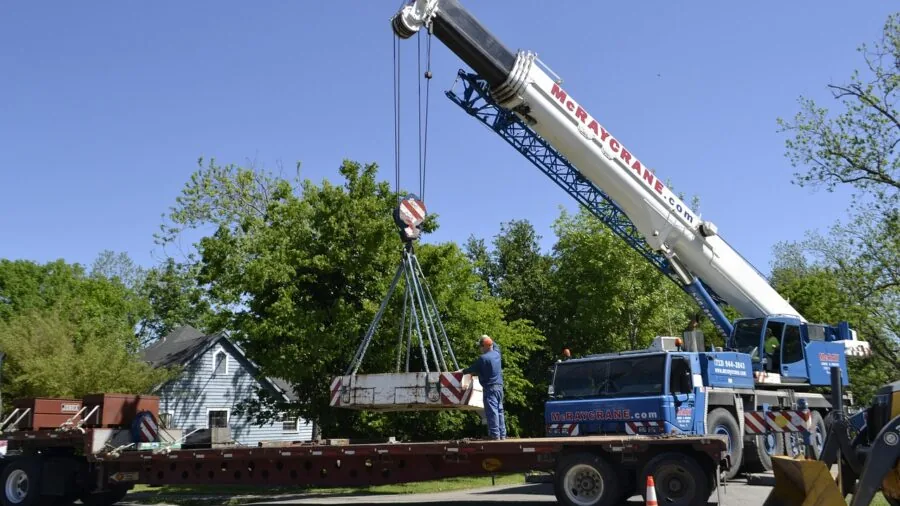
Lifting slings come in four primary types: web (flat), round (endless loop), wire rope, and chain.
Among the products in this guide, web slings and round slings dominate because they are lightweight, non-marring, and suitable for a wide range of industrial and commercial applications.
Web slings with flat eye ends are the most versatile everyday option, working with hooks, shackles, and spreader bars.
Round slings, like the ATERET Powerlift, distribute load contact over a curved profile, which reduces stress concentration on delicate or polished surfaces.
Multi-leg bridle configurations, such as the SENKEYFE Four-Leg and Kivomot four-leg assemblies, spread a single load across multiple attachment points.
This geometry is essential when lifting long or irregularly shaped loads that cannot be balanced by a single central pick point.
The trade-off is added hardware weight and the need to account for load angle, which affects effective working load limit.
A four-leg assembly rated at a given capacity assumes a specific included angle; exceeding that angle drastically reduces actual capacity and increases lateral load on each leg.
For lighter-duty tasks such as moving furniture and appliances within a building, flat-eye web straps in the 1-inch width class are practical and compact.
They share conceptual kinship with the straps used on furniture dollies and hand trucks, but are purpose-designed for vertical suspension rather than horizontal rolling loads.
Working Load Limit and Safety Factor
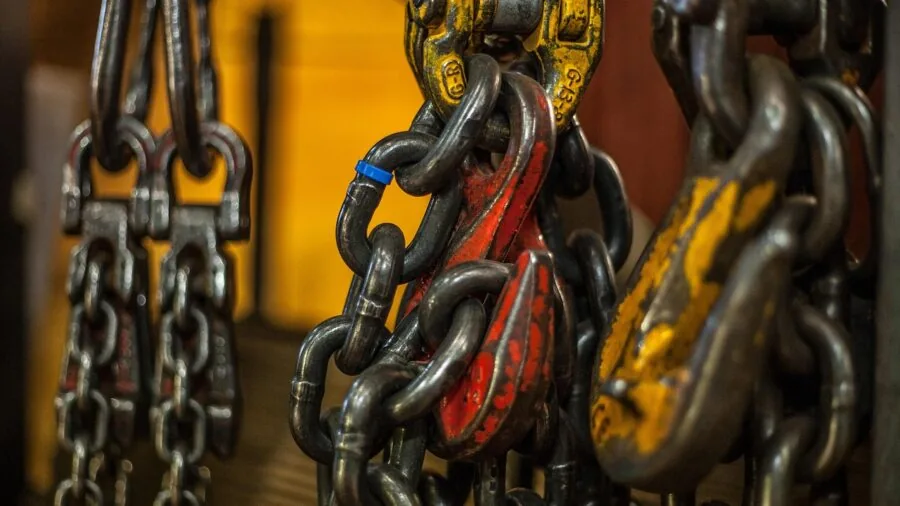
Working Load Limit (WLL) is the maximum load a sling is rated to carry under a specific rigging configuration in normal service. It is not the same as break strength.
The relationship between break strength and WLL is the safety factor, which ASME B30.9 sets at a minimum of 5:1 for synthetic web and round slings in standard vertical hitch configurations.
Several products in this guide, including both Kivomot four-leg assemblies, advertise a 6:1 safety ratio, which provides additional margin above the ASME baseline.
A critical and often misunderstood point is that WLL changes with hitch configuration.
A sling rated at a given vertical capacity has roughly 80 percent of that capacity in a choker hitch and approximately twice the capacity in a basket hitch when the load legs are vertical.
When using a bridle or angled configuration, consult the angle factor table before lifting. Never assume a four-leg sling can carry four times its per-leg rating; load distribution across legs is rarely equal in practice.
Always select a sling whose rated WLL exceeds your maximum expected load with room to spare.
Account for dynamic loading: shock loads during crane pick-up and set-down, wind, and equipment start-stop cycles can momentarily multiply effective load weight significantly above the static figure.
Material and Durability
Nearly all synthetic slings in this guide use polyester webbing or polyester core construction.
Polyester is the preferred material for most outdoor and mixed-environment rigging because it absorbs very little moisture (less than 0.4 percent by weight), maintains its rated capacity when wet, and is resistant to most acids and bleaches at normal concentrations.
This contrasts with nylon webbing, which can absorb moisture and lose up to 15 percent of its strength when wet, though nylon offers better elongation characteristics that can absorb shock loads more effectively in certain applications.
The Kennedy Wire Rope sling in this guide uses a 2-ply twist-eye polyester construction and is manufactured in the USA, which typically implies stricter quality control and traceability.
For industrial operations where documentation and audit trails matter, US-made slings from established manufacturers often come with serial numbers and traceable inspection records.
The XSTRAP STANDARD web straps include wear guard ends, which reinforce the eye area that contacts crane hooks and hardware, extending service life at the highest-wear point of any flat-eye sling.
UV exposure, abrasion, and chemical contact are the three primary degradation pathways for synthetic slings. Inspect webbing for cuts, fraying, kinking, discoloration, and stiffness before each use.
A sling that has been exposed to strong acids, bases, or solvents should be retired immediately regardless of apparent physical condition, as chemical damage is not always visible.
Hardware Quality and Attachment Points

Multi-leg bridle slings require metal hardware at their termination points, typically hooks and rings. The G80 designation refers to alloy steel with a minimum tensile strength of 800 megapascals, which is the ASME and EN 818 standard for load-rated rigging hardware.
Both the SENKEYFE and Kivomot bridle slings in this guide specify G80 alloy grab hooks, which is the correct specification for overhead lifting.
Hardware marked simply as “steel” or without a grade designation should not be used for overhead lifts; only graded and marked hardware provides the traceability and consistent strength properties required for safe rigging.
Adjusters and master rings on four-leg assemblies should also carry a rated capacity and manufacturer mark. The SENKEYFE assembly includes an adjuster, which allows leg length equalization when the attachment points on a load are not at identical heights.
This is a practical feature that helps maintain more equal load distribution across legs during the lift. Without an adjuster, one or more legs can go slack or become overloaded depending on load geometry.
For flat-eye web slings, inspect stitching at the eye terminations before each use. Stitching is the structural element that transfers load from the webbing body into the eye, and any broken, cut, or melted stitches are grounds for immediate retirement.
Double-stitched and bar-tacked eyes provide additional redundancy and are the standard on quality web slings. Pairing quality slings with appropriate overhead anchor points and utility carts for staging equipment helps streamline the full material movement workflow.
Compliance and Marking

In the United States, synthetic lifting slings for overhead use must comply with ASME B30.9, which governs sling construction, marking, use, inspection, and retirement.
Every compliant sling must have a durable identification tag showing: manufacturer name, rated capacity in the basic hitch configurations, material, length, width, and ASME B30.9 compliance statement.
OSHA 29 CFR 1910.184 references ASME B30.9 for general industry, making compliance a legal requirement in most commercial and industrial workplaces, not merely a best practice.
The ATERET Powerlift round sling in this guide references EN 1492-2 compliance, which is the European equivalent standard for round lifting slings.
For US applications, verify that any sling you purchase also carries ASME B30.9 identification; EN compliance alone does not satisfy US regulatory requirements.
The color coding used on round slings follows EN 1492-2 conventions internationally, but US round slings should be verified against ASME B30.9 color identification tables, which define color-coded capacity ranges.
Always keep tags legible and intact; a sling with an unreadable or missing tag must be removed from service regardless of apparent condition, because capacity cannot be confirmed without documentation.
Just as safety goggles carry ANSI Z87.1 markings to confirm their protection rating, lifting slings must carry their compliance markings to be used on regulated job sites. Unmarked slings are not acceptable for overhead lifting in professional settings, full stop.
Length, Width, and Application Match
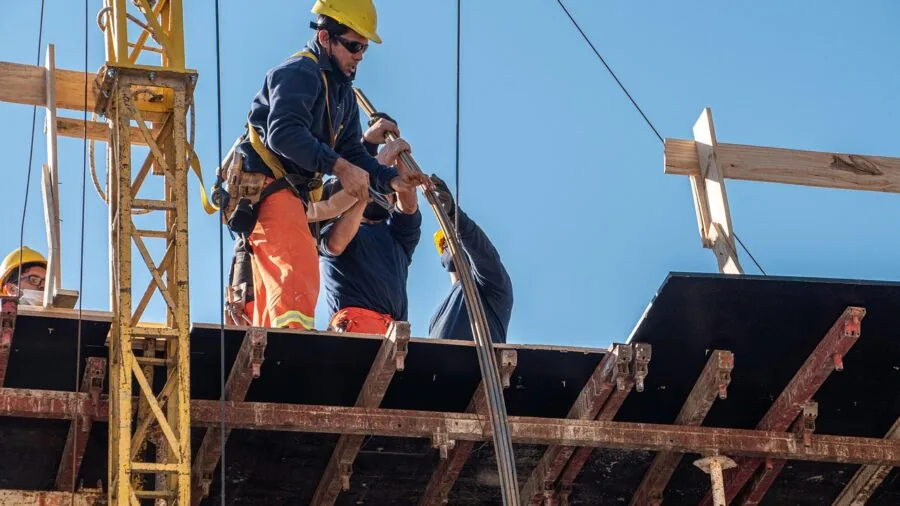
Sling length determines your vertical clearance, the angle at which legs meet a central hook, and the height loss between the crane hook and the load.
Longer slings produce shallower included angles on bridle lifts, which keeps angle-reduction factors closer to 1.0 and maintains closer to full rated capacity. Shorter slings create steeper angles, increase horizontal tension in each leg, and reduce effective WLL.
As a practical rule, keep included angles below 60 degrees on bridle lifts to avoid significant capacity reductions and lateral stress on attachment hardware.
Width matters for web slings because wider straps spread load contact over a greater surface area, which reduces pressure on soft or delicate loads. A 2-inch web sling is the standard for general construction and manufacturing use.
A 1-inch web sling, like the XSTRAP STANDARD and Kodiak Straps options in this guide, is appropriate for lighter-duty tasks such as moving appliances, machinery components, or smaller equipment where a full 2-inch sling would be physically awkward.
Match sling width and length to the load size, not just the weight; a physically large but moderate-weight load often benefits from a wider, longer sling even when a narrower option has sufficient rated capacity.
Why You Should Trust Us
ProductFind is an independent review publication.
Every product in this guide was evaluated using our structured research methodology: we analyze manufacturer specifications, cross-reference expert review consensus from rigging professionals and industrial safety communities, and weight verified buyer feedback from confirmed purchasers across major retail channels.
We do not conduct our own product trials; our evaluations are grounded in research, published data, expert review consensus, and verified buyer feedback.
Each product earns a PF Score on a 0 to 10 scale based on consistent, category-specific criteria applied uniformly across every product we assess.
For lifting slings, those criteria include rated capacity relative to price tier, material and construction quality, compliance and documentation standards, hardware specification (where applicable), and the depth and consistency of verified user feedback across real-world applications.
Scores are assigned independently of commercial relationships.
ProductFind may earn a commission if you purchase through links in this article. That affiliate relationship has no bearing on which products are included, how they are scored, or where they appear in our rankings. Our recommendations are editorially independent.
We do not accept payment for rankings, and no manufacturer reviewed this content before publication.
Final Thoughts
Across web, round, and bridle configurations, the lifting slings in this guide cover the full practical range of rigging applications, from light furniture moving to industrial four-point overhead lifts.
Below are the standout picks by use case, each linked to its product detail for quick reference.
- Best Overall: JCHL 6.5’X2 Heavy Duty Flat Eye Lift Sling earns the top PF Score in this roundup through its combination of high-capacity polyester webbing, two-pack value, and consistent performance feedback across construction and recovery applications.
- Best Four-Leg Bridle (Long Reach): Kivomot 10ft Polyester Lifting Sling with G80 Hooks is the pick for lifts requiring extended leg length, delivering a 6:1 safety ratio with heat-treated G80 hardware and a 4-ton capacity across a generous reach.
- Best Four-Leg Bridle (Compact): Kivomot Industrial-Grade 5ft Polyester Lifting Sling brings the same G80 hardware and 6:1 safety ratio as its longer sibling into a more compact format, ideal where headroom is limited and a shorter leg length is practical.
- Best USA-Made Web Sling: Kennedy Wire Rope 2-Ply Twist Eye Polyester Sling stands out for domestic manufacturing, rigorous construction standards, and the traceability that regulated job sites and professional riggers demand.
- Best Round Sling: ATERET Powerlift Green Polyester Endless Round Sling delivers impressive basket capacity in a non-marring round profile that protects finished and polished surfaces better than flat-eye alternatives at a competitive price point.
For any overhead lifting operation, always verify that your selected sling is rated for the actual hitch configuration you intend to use, not just the product’s headline capacity figure.
Consult ASME B30.9 tables for angle reduction factors when using bridle configurations, inspect every sling before each lift, and retire any sling immediately upon visible damage, chemical exposure, or tag loss.
Safe rigging is a process, not just a product choice.
Frequently Asked Questions
What is the difference between a web sling and a round sling?
A web sling uses a flat strip of woven polyester or nylon webbing with formed eyes at each end. A round sling consists of a continuous loop of polyester fiber yarns enclosed inside a tubular sleeve.
Round slings conform to curved load surfaces more readily, distribute contact stress over a larger contact area, and tend to be gentler on delicate or polished loads.
Web slings are more rigid, easier to position, and typically more cost-effective for general construction and industrial use. Both types must comply with ASME B30.9 for overhead lifting in US workplaces.
What does G80 mean on sling hardware?
G80 indicates grade 80 alloy steel, meaning the material has a minimum tensile strength of 800 megapascals. This grading system is used for load-rated chain and forged hardware such as hooks, shackles, and rings.
Only G80 or higher graded hardware is acceptable for overhead lifting in most professional and regulated environments.
Never use unmarked or ungraded hardware for overhead lifts, as it lacks the documented strength properties required to verify capacity and maintain compliance with ASME B30.9 and OSHA standards.
Can I use the same lifting sling outdoors and indoors?
Polyester web and round slings are generally suitable for both indoor and outdoor use. Polyester maintains its rated capacity when wet and resists UV degradation better than nylon over extended outdoor exposure.
However, all synthetic slings should be protected from prolonged direct UV exposure when not in use, stored away from chemicals and heat sources, and inspected more frequently in harsh outdoor environments.
Slings used in chemical plants, near acids or caustics, or in extreme temperature conditions require additional evaluation and potentially more frequent replacement intervals than those used in controlled indoor settings.
How often should I inspect lifting slings?
ASME B30.9 requires a visual inspection before each use by the person performing the lift, plus a periodic formal inspection by a qualified person at intervals determined by frequency of use, severity of service conditions, and the nature of the lifts performed.
In heavy industrial use, formal inspections monthly or quarterly are common.
Any sling showing cuts, abrasion, broken stitching, kinking, discoloration from chemical exposure, or a missing or illegible identification tag must be removed from service immediately, regardless of when it was last formally inspected.
Retirement is permanent; do not attempt to repair a damaged synthetic sling.
Does the angle of the sling legs affect how much weight I can lift?
Yes, significantly. When using a bridle or double-leg configuration, the included angle between the legs affects the tension in each leg.
As the angle between legs increases beyond 60 degrees (the legs spread wider), the tension in each leg increases beyond the static weight of the load, effectively reducing the safe working load of the assembly.
At a 60-degree included angle, each leg carries more than the load weight divided by the number of legs. ASME B30.9 provides angle correction factors for this reason.
Always calculate or look up the angle factor before lifting with any multi-leg configuration, and never assume a wider spread is safe simply because the legs look taut and level.
Are these lifting slings appropriate for tree removal or vehicle recovery?
Some products in this guide, including the JCHL web slings and XSTRAP STANDARD straps, are marketed for tree-saver and recovery applications in addition to rigging use. Tree-saver straps protect bark by distributing winch cable tension over a wider surface area.
However, recovery and off-road use involves dynamic shock loading that differs substantially from controlled overhead lifts. A sling appropriate for tree-saver winch recovery is not necessarily appropriate for overhead crane use at the same marked capacity, and vice versa.
Always use each product within the specific application and rigging configuration its identification tag and manufacturer documentation describe.
About the author
Bernice is a reviewer and writer for ProductFind who specializes in Material Handling. Bernice evaluates products through independent research: specifications, expert review consensus, and verified buyer feedback, and rates each one on the PF Score. Bernice focuses on helping readers pick the right material handling for their needs and budget.