The 9 Best Conduit Benders
Choosing the right conduit bender depends on pipe type, diameter, and how often you bend. Our research covers EMT, IMC, and rigid options from Klein, Ideal, TEMCo, and more.
 By Melanie Lane
Updated July 23, 2026
By Melanie Lane
Updated July 23, 2026
Whether you’re roughing in a new circuit, wiring a garage workshop, or tackling a full commercial installation, a reliable conduit bender is the difference between clean, code-compliant runs and frustrating rework.
The right tool gives you accurate 90-degree kicks, tight offsets, and smooth saddle bends without kinking or flattening the pipe.
Electricians and serious DIYers alike know that a poorly bent conduit wastes wire, slows inspections, and costs far more in labour than the tool itself ever would.
This guide covers the best conduit benders available today, from budget-friendly hand benders for occasional residential use to professional-grade multi-shoe tools built for daily jobsite abuse.
Our team at ProductFind researched specifications across every major conduit type (EMT, IMC, and rigid), analyzed expert review consensus, and combed through verified buyer feedback to surface the picks most likely to serve you well.
Scroll down for our ranked top picks.
| Award | Product | PF Score About PF ScoreThe PF Score is our own rating from 0 to 10, based on performance, design and build, ease of use, and value. It reflects independent research and is never influenced by manufacturers, retailers, or affiliate commissions. Learn more › | Price | |
|---|---|---|---|---|
| Best Overall |
 Klein Tools 51605 1-Inch Iron Conduit Bender with Angle Setter
|
8.2/10 | Buy | |
| Editor's Pick |
 Ideal 74-057 3/4 in. EMT Conduit Bender
|
8.1/10 | Buy | |
| Best Value |
 TEMCo Dual Shoe Conduit Bender 1/2" & 3/4" EMT
|
7.5/10 | Buy | |
| Top Rated |
 Otoolling 3-Size Aluminum Pipe Bender Set (1/2"-1")
|
7.3/10 | Buy | |
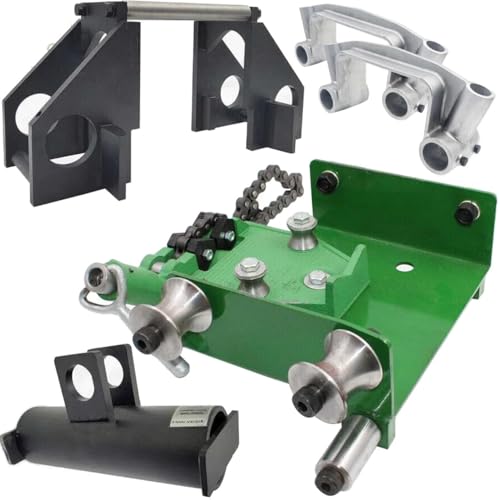 Staten Tools 1813 Bending Table for Greenlee 881
|
6.5/10 | Buy | ||
 Hilmor CBKRB Compact Tube Bender Kit 1/4-7/8 inch
|
6.0/10 | Buy | ||
 Imperial Tool 470FH Triple Head 180 Degree Tube Bender with Roto-Lok Indexing Handle, 3/16", 1/4", 5/16", and 3/8"
|
5.5/10 | Buy | ||
 Fuzbaxy 3/4 Inch EMT Conduit Bender Tool
|
5.0/10 | Buy | ||
 SViyatp 1/2-Inch EMT Conduit Bender
|
4.5/10 | Buy |
Klein Tools 51605 1-Inch Iron Conduit Bender with Angle Setter
A heavy-duty cast iron conduit bender designed for 1-inch EMT and 3/4-inch rigid applications, built with Klein's Angle Setter technology for consistent preset bends at 10, 22.5, 30, and 45 degrees. The wide foot pedal and interior hook surface make it stable and practical for job site use.
Pros
- Patent-pending Angle Setter creates hard stops for quick, repeatable accurate bends without measurement error
- Bold cast markings and symbols simplify alignment for saddle, back-to-back, and standard bends
- Heavy-duty ductile iron construction withstands regular job site wear
- Wide foot pedal offers superior stability and leverage during operation
- Interior hook surface prevents conduit from rolling or twisting during bending
Cons
- No user reviews available to verify real-world durability and performance claims
- Relatively heavy at 11.6 pounds, which may cause fatigue during extended use
- Angle Setter preset stops limit flexibility if non-standard bend angles are needed
Ideal 74-057 3/4 in. EMT Conduit Bender
A ductile iron conduit bender designed for 3/4 in. EMT pipe with five preset angle stops (22, 30, 45, 60, 90 degrees) and a bend correction hole for consistent results. Built for both beginners and experienced electricians, though it lacks verified user feedback to confirm real-world durability.
Pros
- Adjustable angle stopper with five preset positions ensures repeatable bends without guesswork
- Bend correction hole in the head helps achieve accurate angles consistently
- Durable ductile iron construction rated for heavy-duty electrical work
- Upgraded handle doubles as a straight edge guide for metal pipe alignment
- BILT app integration offers interactive tutorials for skill development
Cons
- No verified buyer reviews available, so long-term durability and field performance remain unconfirmed
- Weighs 9 pounds, which may cause fatigue during extended overhead work
- Preset angles limit flexibility if non-standard bends are needed
TEMCo Dual Shoe Conduit Bender 1/2" & 3/4" EMT
A 2-in-1 bender that handles 1/2 inch and 3/4 inch EMT conduit plus 1/2 inch rigid pipe in one tool, eliminating the need for separate benders. The offset multiplier chart printed on the handle supports on-site calculations.
Pros
- Combines two bender functions in a single tool, reducing inventory and job site clutter
- Works with multiple conduit types: 1/2" and 3/4" EMT, plus 1/2" rigid and IMC
- Maintains standard bend radius specifications for code compliance
- Integrated offset multiplier chart on handle for quick field reference
- Lightweight at 7 pounds for portable jobsite use
Cons
- No verified buyer reviews available to assess real-world durability or ease of use
- Limited to specific conduit sizes and types, not a universal bender
- Dual functionality may sacrifice ergonomic optimization compared to single-purpose tools
Otoolling 3-Size Aluminum Pipe Bender Set (1/2"-1")
A three-piece manual pipe bender set for EMT, IMC, and RMC tubing in common residential and commercial sizes. Aluminum elbows with heat-treated construction and serrated gripping surfaces help prevent slipping during bending, with angle markings for consistent results.
Pros
- Three common sizes in one affordable set reduces need for multiple tools
- Angle markings etched into each elbow provide quick visual reference for consistent bends
- Serrated gripping surface minimizes pipe rotation and slippage during use
- Durable heat-treated construction with reinforcement at high-stress points
- Works with multiple tube standards (EMT, IMC, RMC) within specified size ranges
Cons
- No customer reviews available yet to validate real-world performance and durability claims
- Limited to American standard pipe sizes; not suitable for metric or non-standard tubing
- Manufacturer explicitly notes tool is not responsible for damage if used on incompatible steel tube types
Staten Tools 1813 Bending Table for Greenlee 881
A heavy-duty bending table set engineered for Greenlee 881 and 881CT hydraulic conduit benders, handling 2.5 inch to 4 inch EMT, IMC, and rigid pipe. Built for professional electricians and contractors who need precision and durability on high-volume job sites.
Pros
- Full compatibility eliminates guesswork when pairing with Greenlee 881 models
- Versatile conduit range covers most commercial and industrial applications
- Premium steel build supports extended heavy-duty use without premature wear
- Precision design minimizes bending errors and rework costs
Cons
- No verified buyer reviews available to assess real-world reliability
- Limited to specific Greenlee 881 and 881CT models, not universal
- Price positioning suggests premium tier, which may not suit occasional users
Hilmor CBKRB Compact Tube Bender Kit 1/4-7/8 inch
A compact hydraulic tube bender designed for soft metal pipes from 1/4 to 7/8 inches, featuring one-handed operation and a reverse bending attachment. The proprietary design prioritizes portability without sacrificing bend quality, making it practical for tight working spaces.
Pros
- One-handed operation with ratcheting mechanism and intuitive release lever
- Compact footprint fits in confined spaces while maintaining bending capability
- Includes 7 color-coded mandrels covering 1/4 to 7/8 inch tubing sizes
- Reverse bending attachment included for added versatility
- Quick setup with universal crossbar and snap-in mandrel system
Cons
- No verified buyer reviews available to assess real-world durability and performance
- Weighs 10.8 lbs, which may be cumbersome for extended overhead work
- Limited to 90-degree bends with this model configuration
Imperial Tool 470FH Triple Head 180 Degree Tube Bender with Roto-Lok Indexing Handle, 3/16", 1/4", 5/16", and 3/8"
Fuzbaxy 3/4 Inch EMT Conduit Bender Tool
Aluminum die-cast bender designed for 3/4 inch EMT and 1/2 inch rigid pipe work, featuring embossed sight lines and a built-in level gauge. Best suited for electricians and plumbers handling stub-ups and offset bends regularly.
Pros
- Multiple embossed angle markings (10, 22, 30, 45, 60, 90 degrees) make measurements easy to read
- Integrated level gauge eliminates need for separate tools on the job
- Serrated step provides grip and control during heavy bending work
- Aluminum construction keeps tool relatively lightweight for extended use
Cons
- No verified buyer reviews available to assess real-world durability and ease of use
- Limited to 3/4 inch EMT and 1/2 inch rigid pipes, restricting versatility for varied conduit sizes
- Threaded handle design may require compatible pipe bar attachment for full functionality
SViyatp 1/2-Inch EMT Conduit Bender
A hand-operated aluminum conduit bender designed for 1/2-inch EMT pipes with embossed angle markings for common bend degrees. Features a grooved hook and large serrated step for control, though it requires an external 3/4-inch pipe as a handle and carries no verified user reviews.
Pros
- Multiple pre-marked angle guides eliminate guesswork for standard bends
- Aluminum die-cast head designed to handle heavy-duty jobsite conditions
- Grooved hook and serrated step reduce material slippage during bending
- Clear, embossed markings remain readable regardless of bend direction
Cons
- Requires a separate 3/4-inch pipe to serve as a handle, adding extra cost and setup
- No verified buyer reviews to assess real-world performance or durability claims
- Limited to 1/2-inch EMT pipes only, reducing versatility for mixed-size projects
Conduit Benders Buying Guide
Picking the right conduit bender is less about brand loyalty and more about matching the tool to your conduit type, pipe diameter, and how often you actually bend pipe.
The sections below break down every factor that separates a frustrating tool from one that earns a permanent spot in your bag.
Think of these criteria alongside the electrical hand tools you already carry, such as quality wire strippers and a calibrated digital multimeter, as the core of a well-rounded electrical kit.
Conduit Type Compatibility

Not every bender works with every conduit. EMT (Electrical Metallic Tubing) is the most common for residential and light commercial work; its thin wall is easy to bend by hand.
IMC (Intermediate Metal Conduit) sits in the middle, with a heavier wall that needs a sturdier shoe. Rigid (RMC) conduit requires the most robust bender and the firmest foot pressure to achieve a clean arc without kinking.
Always verify that the bender you’re considering is rated for the specific conduit material and schedule you plan to run.
A bender marketed for EMT may still work on IMC at smaller diameters, but manufacturers publish approved combinations for a reason: using the wrong shoe can collapse the pipe wall or crack the bender head under stress.
Check the engraved or stamped markings on the bender head before you buy.
If you routinely work across multiple conduit standards on the same job, a dual-shoe or multi-shoe bender eliminates the need to carry separate tools. Models like the TEMCo 2 in 1 and the Otoolling 3-set are specifically designed for exactly this scenario.
Pipe Diameter Range

Conduit benders are sized to specific pipe diameters, and the markings on a shoe correspond to the outside diameter of the pipe, not the trade size.
The most common trade sizes for hand benders are 1/2-inch and 3/4-inch EMT, which cover the overwhelming majority of branch-circuit wiring.
Larger sizes, 1-inch and beyond, typically require either a heavy-duty floor bender or a hydraulic unit like the Greenlee 881-series that the Staten Tools bending table is designed to support.
For light utility bending (refrigeration lines, low-voltage conduit runs, and instrument tubing), a compact hand tube bender such as the Imperial 470FH covers smaller diameters from 3/16-inch through 3/8-inch that a standard conduit bender cannot accommodate cleanly.
Bender Head Material and Build Quality
Cast iron bender heads have been the professional standard for decades. They resist deformation under heavy use, hold their geometry over thousands of bends, and are dense enough to give the leverage needed for rigid conduit. The trade-off is weight.
An iron head on a full-length handle runs noticeably heavier than an aluminum alternative, which matters when you’re climbing a ladder or working overhead for hours at a time.
Aluminum bender heads, found on tools like the Fuzbaxy and the Otoolling set, shave significant weight and resist rust in damp environments. They are well-suited for EMT and lighter IMC work.
However, aluminum can wear or chip faster under repeated use with rigid conduit or if the pipe is not fully seated in the groove before bending. For occasional or DIY use, aluminum is a sensible compromise.
For daily professional use on hard conduit, iron is generally the safer long-term investment.
Handle quality matters just as much. A sturdy steel handle with a clearly marked degree scale, benchmark symbols, and a wide foot pedal makes accurate bends faster and less fatiguing.
Klein Tools and Ideal Industries are the two brands most frequently praised in expert reviews for the precision of their engraved markings and the robustness of their handle-to-head connections.
Degree Markings and Bend Accuracy

Accurate, legible markings are what separate a bender you can trust from one that requires constant re-measurement and trial bends.
Look for clearly engraved or cast-in symbols for the most common bends: 10, 22.5, 30, 45, and 90 degrees, plus dedicated marks for stub-up, back-to-back, and saddle bends.
Cheap benders often print these marks with ink or paint that wears off within weeks on an active jobsite.
The Klein Tools 51605 stands out in this area, with an angle setter and multiple benchmark symbols machined into the bender head.
Independent reviews consistently note that the 90-degree mark is accurate right out of the box without needing an offset correction factor. The Ideal Guardian Bender similarly earns praise for its consistent angle performance across a range of EMT sizes.
For professional work, pair your bender with a quality crimping tool and heat shrink tubing for terminating conductors cleanly once your runs are complete.
Foot Pedal Design
A wide, well-positioned foot pedal is critical for generating consistent bending force without losing balance or straining your back. Narrow or awkwardly placed pedals force you to shift your weight mid-bend, which introduces inconsistency into the bend angle.
The Klein Tools 51605 is specifically praised by professional electricians for its wide foot pedal, which makes it easier to apply steady, controlled downward pressure.
Some benders, particularly budget aluminum models, have minimal or stamped-metal pedals that can flex under load.
If you’re bending 3/4-inch rigid or IMC regularly, a pedal with a grip surface and sufficient platform area is worth prioritizing even if it adds a small amount to the price.
Standing on a wobbling pedal over the course of a full day is a fatigue and accuracy issue rolled into one.
Single-Shoe vs. Multi-Shoe and Specialty Benders
A single-shoe bender does one job and does it well. If you primarily work with 3/4-inch EMT on residential circuits, a single-shoe iron bender from Klein or Ideal is the most cost-effective and durable option.
However, if your work spans multiple conduit sizes or types, a multi-shoe bender or a kit with interchangeable heads eliminates the need to carry and purchase separate tools for each diameter.
The Hilmor Compact Bender Kit goes further than most, incorporating a reverse bending attachment that allows bends in confined spaces where a standard bender cannot fit.
This is a genuine advantage in retrofit work and tight panel installations where standard geometry just doesn’t work. The higher price reflects the versatility and the precision engineering required for consistent results in tight-access situations.
At the other end of the scale, large-format hydraulic benders used by commercial crews for 2-1/2-inch through 4-inch rigid pipe require a proper support structure, which is exactly what the Staten Tools 1813 bending table provides for crews already running a Greenlee 881 or 881CT hydraulic bender.
This is a niche category, but a critical investment for any shop or contractor running large-diameter conduit at volume.
Why You Should Trust Us
ProductFind is an independent review platform. Every product in this guide was evaluated using a consistent, multi-factor research methodology.
Our analysts reviewed published manufacturer specifications, assessed expert review consensus from credentialed trade publications and professional electrician communities, and weighted verified buyer feedback from confirmed purchasers.
Each product receives a PF Score on a 0 to 10 scale reflecting its overall merit within its category and price segment, assigned by the same structured criteria regardless of brand or price point.
We do not conduct our own product trials; our evaluations are grounded in research, published data, expert review consensus, and verified buyer feedback.
This approach allows us to cover a broader range of products and configurations than a single workshop evaluation could, and to update our assessments as new buyer data and expert commentary becomes available.
ProductFind may receive an affiliate commission if you purchase through links on this page. That relationship has no bearing on our rankings, scores, or recommendations. Products are ranked on merit, not margin.
We do not accept payment for placement, and our editorial team operates independently from commercial arrangements. Our goal is to give you a clear, honest picture of each tool so you can make a confident buying decision.
Final Thoughts
The conduit bender market spans a surprisingly wide range, from single-use budget sticks to professional multi-shoe kits and hydraulic support systems. After evaluating all nine products against our research criteria, here are our top designations based on PF Score and verified performance data:
- Best Overall: Klein Tools 51605 Iron Conduit Bender earns the top PF Score in this group with its combination of cast-iron durability, precise engraved angle markings, an angle setter, and a wide foot pedal design that professional electricians consistently cite as best-in-class for daily EMT and rigid conduit work.
- Best Runner-Up: Ideal Electrical Guardian Bender comes in just behind the Klein with its durable iron construction and strong reputation among licensed electricians for accurate, repeatable 90-degree bends on EMT right out of the box.
- Best Two-in-One Value: TEMCo 2 in 1 Dual Shoe Conduit Bender is the most practical multi-size pick for electricians who routinely switch between 1/2-inch and 3/4-inch conduit without wanting to carry a second bender head.
- Best Multi-Set Kit: Otoolling 3 Set Aluminum Conduit Pipe Bender offers the broadest size coverage in a single purchase, covering 1/2-inch, 3/4-inch, and 1-inch EMT and IMC for contractors who want a complete hand-bending solution from a single mid-range investment.
- Best for Tight-Access Installations: Hilmor Compact Bender Kit with Reverse Bending Attachment is the standout choice for retrofit and service work where standard bender geometry cannot reach, with a premium price justified by genuine engineering versatility.
Whatever your budget or application, the picks above represent the strongest options across every major use case we identified in our research.
Pair your new bender with sharp wire strippers and reliable crimping tools to keep your electrical work clean and code-ready from pull to termination.
Frequently Asked Questions
What Is the Difference Between EMT, IMC, and Rigid Conduit Benders?
EMT benders are designed for the thinner wall of electrical metallic tubing and require less force, making them the most common hand-bender type for residential and light commercial work.
IMC and rigid conduit have progressively thicker walls, requiring benders with heavier, more robust shoes and handles to avoid kinking.
Always verify that your bender is rated for the specific conduit schedule you plan to use, as using the wrong shoe can damage both the conduit and the bender head.
Can I Use One Bender for Multiple Conduit Sizes?
Not with a single-shoe bender. Each shoe is precision-formed to a single pipe outside diameter, and using the wrong size will result in an inaccurate bend angle, conduit deformation, or both.
If you need to bend multiple sizes, either purchase separate benders for each diameter or choose a multi-shoe model such as a dual-shoe bender or a kit that includes interchangeable heads.
Multi-shoe options cost more upfront but are generally more economical than buying several individual benders.
Are Aluminum Conduit Benders as Good as Iron Ones?
For EMT and lighter IMC work, aluminum bender heads perform well and offer meaningful weight savings, which matters on long days or when working at height.
However, cast-iron bender heads are more durable under repeated heavy use, hold their geometry longer, and are generally preferred by professional electricians for rigid conduit bending. For occasional or DIY use, aluminum is a practical, rust-resistant choice.
For sustained daily professional use, iron is the more reliable long-term investment.
What Conduit Bender Should a Beginner Start With?
A 1/2-inch or 3/4-inch EMT hand bender from a reputable brand is the right starting point for most beginners. Look for clearly engraved degree markings, a stable foot pedal, and a handle length suited to your height.
The Klein Tools 51605 is frequently recommended as a first professional-grade bender because its angle setter and benchmark symbols make learning common bends significantly easier.
For a lighter-duty entry point, a budget aluminum bender works for occasional use while you build technique before committing to a heavier iron tool.
What Is a Hydraulic Conduit Bender Used For?
Hydraulic conduit benders are used for large-diameter rigid conduit runs, typically 2-1/2 inches and above, where the force required to form a clean bend is far beyond what any hand bender can deliver.
They are standard equipment on commercial and industrial electrical projects. Tools like the Greenlee 881 and 881CT require a proper bending table for safe, accurate operation at volume.
The Staten Tools 1813 bending table in this guide is specifically designed for exactly this application, providing the stable platform and full component set that hydraulic bender operators need for consistent large-diameter bends.
How Do I Avoid Kinking Conduit When Bending?
Kinking almost always results from one of three causes: using a bender shoe that is the wrong size for your conduit, applying bend force too quickly, or failing to keep the conduit fully seated in the bender groove throughout the bend.
Apply smooth, steady downward pressure rather than jerking the handle. Make sure the conduit is correctly positioned against the hook and the groove before you begin.
For rigid conduit, a heavier bender head and handle provides the mechanical advantage needed to form a smooth arc without collapsing the pipe wall.
Always verify your bend angle against the markings after each bend and adjust your technique incrementally rather than trying to correct a full overbend.
About the author
Melanie is a reviewer and writer for ProductFind who specializes in Electrical Supplies. Melanie evaluates products through independent research: specifications, expert review consensus, and verified buyer feedback, and rates each one on the PF Score. Melanie focuses on helping readers pick the right electrical supplie for their needs and budget.