The 10 Best Digital Multimeters
Accuracy, safety ratings, and build quality vary widely across multimeters. Our research covers top picks from Fluke, Klein Tools, AstroAI, and more to match every skill level.
 By Noelle Gray
Updated July 23, 2026
By Noelle Gray
Updated July 23, 2026
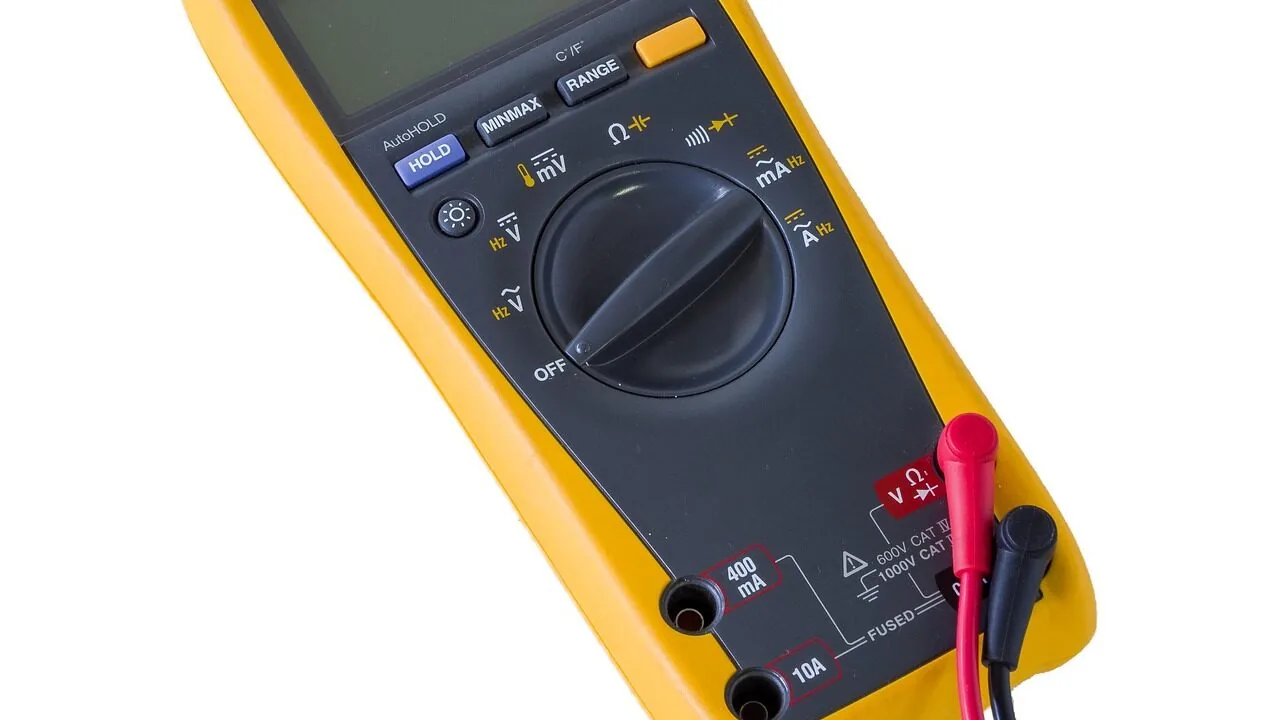
A reliable digital multimeter is one of the most essential tools you can own, whether you are a licensed electrician, an automotive technician, or a homeowner who wants to diagnose a tripped circuit without calling a contractor.
The market ranges from no-frills manual-ranging meters under thirty dollars to industrial-grade instruments with true-RMS measurement, low-pass filters, and comprehensive safety ratings that professionals stake their safety on every day.
Sorting through the options is harder than it looks because specifications alone do not tell the whole story: display readability in dim crawl spaces, build quality under daily abuse, and the reliability of non-contact voltage detection all matter as much as raw accuracy numbers.
To cut through the noise, ProductFind researched the digital multimeters that consistently earn the strongest praise across expert review consensus, manufacturer specifications, and verified buyer feedback, covering options from Fluke, Klein Tools, AstroAI, and FNIRSI at every price tier.
Our research covers everything from professional-grade picks for industrial environments to budget-friendly options for occasional home use. Read on for our top picks ranked below.
| Award | Product | PF Score About PF ScoreThe PF Score is our own rating from 0 to 10, based on performance, design and build, ease of use, and value. It reflects independent research and is never influenced by manufacturers, retailers, or affiliate commissions. Learn more › | Price | |
|---|---|---|---|---|
| Best Overall |
 Fluke 115 Compact True-RMS Multimeter
|
8.9/10 | Buy | |
| Editor's Pick |
 Fluke 87V Industrial Digital Multimeter, 1000V
|
8.7/10 | Buy | |
| Best Value |
 Fluke 117 Digital Multimeter with VoltAlert
|
8.5/10 | Buy | |
| Top Rated |
 Klein Tools MM720 Digital Multimeter, 1000V TRMS
|
8.3/10 | Buy | |
 Fluke 17B+ Digital Multimeter, 1000V/10A
|
8.2/10 | Buy | ||
 Klein Tools MM420 Auto-Ranging Digital Multimeter
|
7.8/10 | Buy | ||
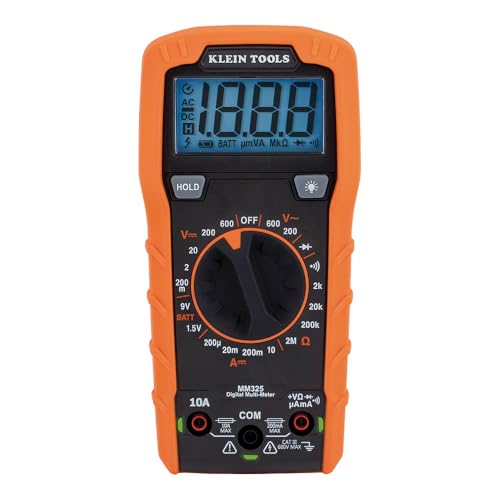 Klein Tools MM325 Manual Multimeter, 600V
|
7.6/10 | Buy | ||
 AstroAI CM2K0R 2000-Count Clamp Meter
|
7.4/10 | Buy | ||
 Klein Tools 69149P Electrical Test Kit
|
7.1/10 | Buy | ||
 FNIRSI DMT-99 9999-Count Digital Multimeter with Waveform Display
|
6.8/10 | Buy |
Fluke 115 Compact True-RMS Multimeter
A compact true-RMS digital multimeter designed for field technicians who need reliable voltage, current, and resistance measurements in the field. Features min/max/average recording and CAT III 600V safety rating, with LED backlight for low-light work.
Pros
- True-RMS capability for accurate AC measurements on non-linear loads
- Min/Max/Average feature captures signal fluctuations without manual monitoring
- LED backlight enables work in dimly lit environments
- CAT III 600V rating provides adequate safety for most field applications
- Compact and portable form factor at 1.4 pounds
Cons
- No verified user reviews available to confirm real-world reliability or durability
- Limited measurement range details not specified in available data
- Larger display dimensions (10.83 x 16 x 3.94 inches) may be less pocket-friendly than advertised as compact
Fluke 87V Industrial Digital Multimeter, 1000V
A rugged True RMS multimeter built for field troubleshooting on variable frequency drives and complex electrical systems. The 87V captures intermittent faults quickly and delivers precision across multiple voltage ranges, making it a solid choice for industrial technicians.
Pros
- Specialized low-pass filter eliminates noise on variable frequency drive circuits, a key advantage over basic multimeters
- Peak Capture function reliably detects intermittent faults that standard sampling would miss
- High resolution option reveals subtle voltage and current fluctuations critical for precision diagnostics
- Comprehensive accessory bundle (test leads, clips, temp probe) reduces need for separate purchases
- Dual safety rating (CAT III/IV) covers both panel and utility-level work
Cons
- No customer reviews available to validate real-world durability or reliability claims
- Dimensions and weight suggest it is not pocket-sized, requiring tool bag space on job sites
- Operating altitude limit of 2000 m may restrict use in high-elevation industrial environments
Fluke 117 Digital Multimeter with VoltAlert
A straightforward mid-range multimeter built for electricians and maintenance technicians who need reliable voltage detection and basic measurements. VoltAlert non-contact sensing and low impedance mode reduce false readings, while True RMS accuracy handles real-world AC loads.
Pros
- Non-contact voltage detection reduces risk when checking live circuits
- Low impedance mode specifically addresses ghost voltage errors common in modern electronics
- True RMS ensures accurate readings on non-linear loads like motors and LED drivers
- Wide measurement range from 600 mV DC to multiple functions in one unit
- Bright LED backlight suitable for dark work environments
Cons
- No user reviews available yet to confirm real-world reliability
- Operating temperature range of -10 to +50 degrees C limits use in extreme conditions
- Basic feature set compared to advanced industrial multimeters with logging or wireless connectivity
Klein Tools MM720 Digital Multimeter, 1000V TRMS
Klein Tools' MM720 is a professional-grade digital multimeter equipped with auto-ranging TRMS technology and Low Impedance mode for accurate voltage, current, and resistance measurements. Built for electricians and HVAC technicians who need reliable ghost voltage detection and hands-free operation.
Pros
- LoZ mode specifically addresses stray voltage detection, critical for electricians troubleshooting phantom voltages
- Auto-ranging and TRMS technology deliver precise measurements across varied electrical conditions
- Reverse-contrast display remains readable in poor lighting typical of job sites
- Multiple measurement modes (voltage, current, resistance, continuity, temperature, capacitance, frequency) consolidate tools needed
- Integrated features like test lead holders and kickstand reduce need for additional accessories
Cons
- No verified buyer reviews available to assess real-world durability or long-term reliability
- Compact size and weight suggest potential limitations for heavy-duty industrial environments compared to larger models
- Magnetic hanger and some accessories sold separately
Fluke 17B+ Digital Multimeter, 1000V/10A
A solidly-rated mid-range multimeter built for residential and light commercial electrical work. Covers voltage, current, resistance, capacitance, diode, continuity, frequency, and temperature measurements with CAT III safety certification.
Pros
- Wide measurement range: AC/DC voltage to 1000V and current to 10A handles most standard applications
- CAT III 600V safety rating provides certified protection for common residential and commercial work
- Comprehensive function set includes diode test, continuity, capacitance, frequency, and temperature via included type K thermocouple
- Compact and portable at 1.04 lbs with dimensions under 9 inches
- Strong user rating of 4.7 stars
Cons
- No verified buyer reviews available to assess real-world reliability and durability claims
- Temperature measurement limited to 400 degrees Celsius, which may constrain industrial high-heat applications
- Current measurement capped at 10A, insufficient for heavy-load circuit diagnostics
Klein Tools MM420 Auto-Ranging Digital Multimeter
A compact, durable multimeter designed for electricians and HVAC technicians working in residential and light-industrial settings. It combines essential measurement functions with practical features like lead-alert protection and a backlit display, making it suitable for fieldwork where reliability matters.
Pros
- Versatile measurement range covers voltage, current, resistance, capacitance, frequency, continuity, temperature, and diode testing
- Lead-alert protection and backlit display reduce measurement errors in field conditions
- Built to survive drops and designed for residential, commercial, HVAC, and light-industrial environments
- Complete kit includes test leads with CAT III/CAT IV safety ratings and batteries
Cons
- No verified buyer reviews available to assess real-world performance or user experience
- Limited to basic and controlled electromagnetic environments, not suitable for heavy industrial settings
- Battery life and display durability not specified in product data
Klein Tools MM325 Manual Multimeter, 600V
A straightforward digital multimeter designed for basic electrical troubleshooting in residential and light commercial settings. The MM325 measures AC/DC voltage, current, and resistance while adding practical conveniences like a backlit display, lead-alert LEDs, and drop protection.
Pros
- Durable construction rated for 6.6-foot drops reduces replacement costs
- Backlit display and lead-alert LEDs improve measurement accuracy and safety awareness
- Battery test, continuity, and diode modes cover common diagnostic needs
- Compact, lightweight design (0.87 lbs) makes it portable for various job sites
- Includes quality test leads with safety caps and two batteries in the box
Cons
- Manual-ranging requires manual selection of measurement ranges, slower than auto-ranging models
- Maximum 10A DC current and 2M ohm resistance are limited for more demanding electrical work
- No reviews available yet to verify real-world performance and reliability claims
AstroAI CM2K0R 2000-Count Clamp Meter
A versatile clamp meter designed for both AC and DC voltage measurement, AC current testing, and resistance checks, with non-contact voltage detection and safety certifications for household and light industrial use. Best suited for electricians and DIY users who need reliable AC current measurements without DC capability.
Pros
- Non-contact voltage detection with dual indicator system (green for weak signal, red for strong signal) helps identify live wires safely
- Comprehensive measurement capabilities cover most household and light industrial electrical diagnostics
- Practical convenience features like data hold, max/min tracking, backlit display, and flashlight enhance usability in poor lighting
- Safety certifications and overvoltage protection demonstrate compliance with electrical safety standards
Cons
- Cannot measure DC current, limiting its use for certain applications requiring direct current testing
- Requires proper clamp positioning with conductor centered in clamp head, which adds a learning curve for beginners
- No verified customer reviews available to assess real-world durability and long-term performance
Klein Tools 69149P Electrical Test Kit
A three-tool electrical diagnostic kit combining a digital multimeter, non-contact voltage tester, and receptacle tester. Designed for electricians and DIY users who need to verify voltage, check continuity, and identify common wiring faults in standard residential outlets.
Pros
- Complete kit covers three common electrical diagnostics without buying separate tools
- Non-contact voltage tester detects 50-1000V AC with LED and audible alerts for safer detection
- Receptacle tester quickly identifies correct wiring versus open ground, open hot, open neutral, and reversed hot/ground
- Multimeter measures voltage up to 600V AC/DC plus current and resistance for broader troubleshooting
- Includes test leads and batteries, ready to use out of box
Cons
- Receptacle tester limited to basic wiring faults and cannot diagnose complex electrical issues
- No customer reviews available to assess real-world reliability or durability
- Multimeter maxes at 10A DC current, limiting application for high-current circuits
FNIRSI DMT-99 9999-Count Digital Multimeter with Waveform Display
A rechargeable multimeter designed for automotive and electrical diagnostics, featuring a 2.4-inch color display with real-time waveform graphing and auto-ranging capability. The built-in monitoring mode with threshold alarms suits technicians needing to track intermittent faults hands-free.
Pros
- 9999-count True RMS resolution provides precise AC/DC voltage measurements across varied electrical systems
- Integrated 1500mAh rechargeable battery with Type-C charging eliminates repeated battery purchases
- Graphic waveform display captures transient spikes and voltage ripples that traditional meters miss
- Monitoring Mode with customizable alarms enables automatic fault detection without constant attention
- Dual ceramic fuses and protection circuitry reduce accidental burn-out risk during complex diagnostics
- Compact design with integrated kickstand and test lead storage for field technicians
Cons
- No verified customer reviews available to confirm real-world durability and performance reliability
- 2.4-inch screen, while HD, may be smaller than some technicians prefer for detailed waveform analysis
- Waveform graphing feature and monitoring capabilities represent additional complexity versus basic multimeters
Digital Multimeters Buying Guide
Choosing the right digital multimeter comes down to matching the instrument’s capabilities to the environments where you will actually use it. The subsections below walk through the criteria our research team weighs most heavily when assessing each model.
True-RMS vs. Average-Responding Measurement

This is the single most important specification most buyers overlook. A true-RMS meter accurately measures both pure sine-wave AC signals and the non-sinusoidal waveforms produced by variable-speed motor drives, switching power supplies, LED dimmers, and inverters.
An average-responding meter can read up to 40 percent low on those same signals, which leads to incorrect diagnoses and potentially dangerous under-voltage assumptions.
For any professional working around modern electrical equipment, or any home shop running inverter-based tools, true-RMS is a must-have, not a luxury.
Budget meters aimed at basic battery and continuity checks can get away without it, but once your work involves anything beyond simple resistive loads you should prioritize true-RMS capability above almost every other feature.
When evaluating a meter’s measurement claims, also check the count specification: a 6,000-count display offers finer resolution than a 2,000-count display, which matters when you need to distinguish small resistance differences or low-voltage ripple.
High-count instruments with true-RMS sit at the professional end of the market and command a corresponding premium.
Safety Category (CAT) Rating
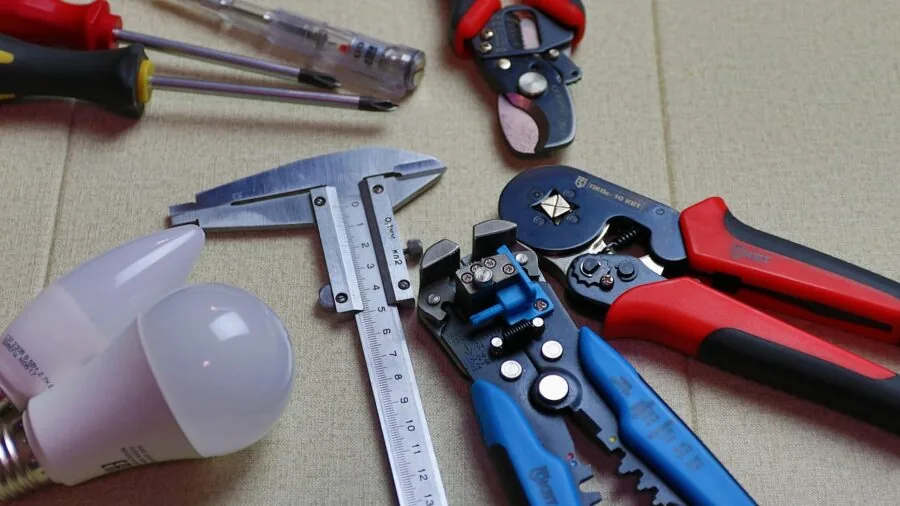
CAT ratings define the transient overvoltage environments a meter can withstand safely. CAT II covers household outlet-level measurements. CAT III is required for work inside distribution panels, building wiring, and equipment permanently connected to fixed installations.
CAT IV applies to utility supply entry points and outdoor conductors. The higher the CAT number at a given voltage rating, the more robust the protection against destructive voltage spikes.
Many inexpensive meters carry CAT labels that are printed rather than independently certified. Look for meters with a third-party certification mark from UL, CSA, or TÜV alongside the CAT rating.
Fluke’s instruments are benchmarks here: their safety ratings are independently verified and their fuse and current-path designs are engineered to absorb fault energy that would destroy a lesser instrument and potentially injure its operator.
For general home DIY use, a CAT III 600 V instrument is a sensible floor. Electricians working at service entrances or in commercial distribution environments should not compromise below CAT IV 600 V.
Automotive work typically falls under CAT II, but a CAT III meter used in that context simply gives extra headroom. A solid home improvement toolkit benefits from having at least a CAT III-rated multimeter as a core diagnostic instrument.
Display Readability and Backlight
A multimeter that is difficult to read in the conditions where you actually work is a multimeter that will frustrate you into mistakes.
Digit height, contrast ratio, and the quality of the backlight matter enormously in low-light environments such as electrical panels, under-hood automotive spaces, and crawl spaces.
Wide-angle displays visible from off-axis save time when the meter is propped in an awkward position.
Professional-grade meters from Fluke are consistently praised by verified buyers for their high-contrast LCDs and crisp segmented digits. Budget meters often compromise on backlight brightness and digit height, which becomes a real issue in daily professional use.
If you plan to use your meter outdoors or in high-ambient-light environments, some models also offer adjustable backlight timeout to conserve battery life.
Auto-Ranging vs. Manual-Ranging
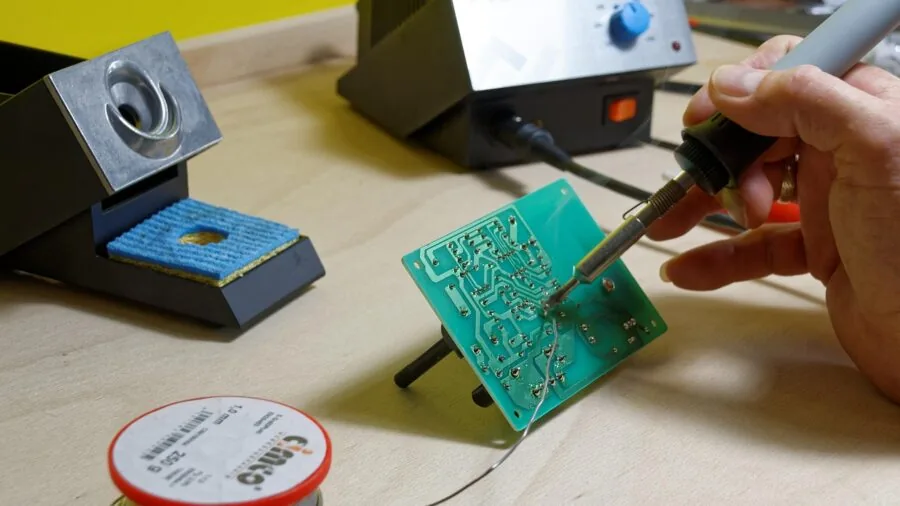
Auto-ranging meters select the appropriate measurement range automatically, which speeds up workflows and reduces the chance of overloading the meter by accidentally measuring a high voltage on a low-voltage range.
Manual-ranging meters require you to dial in the correct range yourself, which some experienced technicians prefer because it gives them explicit control and can settle on a reading faster in repetitive tasks.
For most users, auto-ranging is the more practical choice. It lowers the barrier to entry for less experienced users and reduces errors.
The Klein Tools MM720 and MM420 are good examples of auto-ranging TRMS instruments that balance convenience with professional-grade measurement capability.
Manual-ranging models like the Klein MM325 are better suited to experienced users who already know what range they need and want the simplicity of a lower-cost, no-frills instrument.
Non-Contact Voltage Detection and LoZ Mode
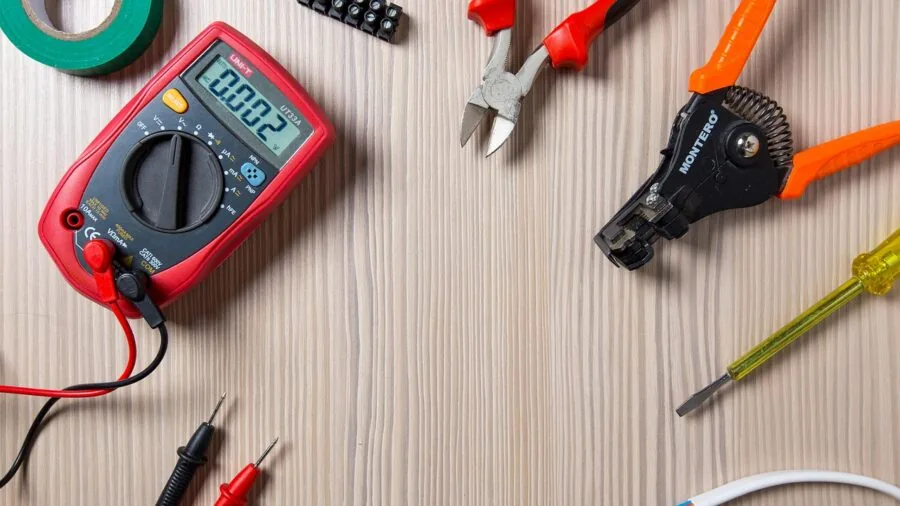
Non-contact voltage (NCV) detection allows you to confirm whether a conductor is live without touching it.
On a day-to-day basis this is a crucial safety feature: it lets you perform a quick sanity check before connecting probes, and it is invaluable when you are tracing an unknown circuit.
Many mid-range and professional meters now incorporate NCV directly, eliminating the need to carry a separate tester.
Low-impedance mode, often labeled LoZ, is equally important for professionals troubleshooting ghost voltages. Induced phantom voltages on de-energized conductors can trick a high-impedance meter into showing a live reading when the circuit is actually dead.
LoZ mode presents a low load path that collapses these phantom readings to near zero, confirming a truly dead circuit.
The Fluke 117 and Klein MM720 both offer LoZ as a dedicated mode, which expert reviewers consistently cite as a differentiating feature at their respective price points.
Included Accessories and Build Quality
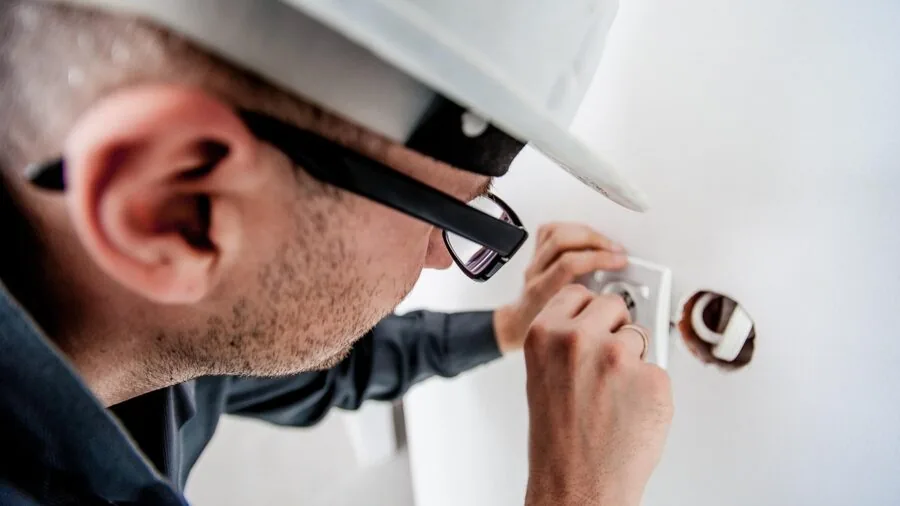
evaluation leads are often underestimated. Thin, stiff leads with poorly insulated probe tips are a safety hazard and an ergonomic annoyance.
The Fluke 87V ships with the TL75 evaluation leads and AC175 alligator clips, which are substantially better than the leads bundled with budget instruments.
For frequent use, the quality of the leads and probe tips can directly affect measurement reliability, particularly at the extremes of the current measurement range.
Build quality encompasses the meter’s housing, input protection, and holster or stand design. Fluke instruments are drop-evaluated and known for surviving years of daily professional use.
Budget meters from brands like AstroAI and FNIRSI are adequate for occasional home tasks but are not designed for the daily physical punishment of a commercial electrical or HVAC environment.
Consider whether the meter includes a magnetic hanger, a kickstand, or a protective holster if you plan to work hands-free in tight spaces.
Why You Should Trust Us
ProductFind is an independent editorial review publication. We do not sell the products we evaluate, and we have no financial relationship with any of the brands featured in this guide.
Every product in our roundup is scored using the PF Score system, a consistent 0 to 10 rating scale applied uniformly across models regardless of brand or price.
We do not conduct our own product trials; our evaluations are grounded in research, published data, expert review consensus, and verified buyer feedback.
For this guide, our research team analyzed manufacturer specifications including CAT safety ratings, true-RMS capability, count resolution, and accessory configurations alongside consensus findings from professional electrical trade reviewers and thousands of verified buyer reviews on retailer platforms.
We weighted safety certification, measurement accuracy, build quality, and real-world usability in equal proportion to price-to-performance ratio, which is why both Fluke’s premium instruments and Klein Tools’ mid-range options appear in the same list: they serve genuinely different users and both earn their place on merit.
ProductFind may earn an affiliate commission if you purchase a product through a link on this page. That relationship does not influence our rankings, scores, or editorial decisions in any way. Our recommendations reflect research quality, not commission rates.
Final Thoughts
After comprehensive research across specifications, expert consensus, and verified buyer feedback, here are our standout picks from this roundup:
- Best Overall: Fluke 115 Multimeter earns the top PF Score in this roundup with its combination of true-RMS measurement, independent safety certification, compact professional-grade form factor, and a reputation for accuracy that professional electricians and verified buyers consistently validate.
- Best for Advanced Industrial Troubleshooting: Fluke 87V Industrial Digital Multimeter stands apart for its low-pass filter for VFD measurements, peak Min/Max capture, and the comprehensive accessory bundle, making it the instrument of choice for technicians working on industrial motor drives and complex electrical systems.
- Best for Ghost Voltage Elimination: Fluke 117 Digital Multimeter is the go-to recommendation for electricians who regularly encounter phantom voltage situations, combining NCV detection with a dedicated LoZ mode that expert reviewers praise as one of the most reliable ghost-voltage-busting implementations available.
- Best Mid-Range Auto-Ranging Pick: Klein Tools MM720 Digital Multimeter delivers TRMS accuracy, 1000 V range, and a LoZ mode at a price point that makes professional-level features accessible to contractors and serious DIYers who do not need the full Fluke premium.
- Best Budget Pick: AstroAI Digital Clamp Meter Multimeter offers remarkable value for homeowners and hobbyists who need basic AC/DC voltage, current, continuity, and NCV detection without committing to a professional-grade price. Its auto-ranging interface and clamp form factor make it a versatile starter instrument.
Whatever your electrical work involves, matching the meter to your actual environment and safety requirements is the most important decision you can make. For precision-demanding professional environments, Fluke remains the consensus benchmark.
For value-focused or occasional use cases, Klein Tools and AstroAI deliver honest capability at accessible prices.
If you are building out a broader toolkit, consider pairing your multimeter with quality task lighting to ensure you can read displays and probe connections clearly in dim work areas.
Frequently Asked Questions
What is true-RMS and do I actually need it?
True-RMS (Root Mean Square) is a measurement method that correctly calculates AC voltage and current for both pure sine waves and distorted waveforms.
Average-responding meters assume a perfect sine wave and can read significantly low on non-linear loads like dimmers, inverters, and variable-frequency drives.
If your work involves any modern electronic loads, LED lighting circuits, or motor-driven equipment, true-RMS is essential for accurate readings. For simple tasks like checking a standard household outlet or evaluation a battery, average-responding accuracy is generally sufficient.
How do I know which CAT rating I need?
CAT II covers receptacle-level measurements and most household appliance circuits. CAT III is required for work at fixed building installations including distribution boards, lighting circuits, and permanently installed equipment.
CAT IV applies to utility entry points and overhead or underground service conductors. When in doubt, choose a higher CAT rating: a CAT III 600 V meter used in a CAT II environment simply provides extra protection with no downside.
Always verify the rating is third-party certified rather than self-declared.
What is ghost voltage and how does LoZ mode help?
Ghost voltage, also called phantom voltage, is an induced AC voltage that appears on de-energized conductors due to capacitive coupling from adjacent live wiring.
A standard high-impedance multimeter can display a misleading live reading on a circuit that is actually dead, which can cause a technician to assume incorrectly that a circuit is energized.
LoZ mode presents a low-impedance load path across the measurement inputs, which collapses these phantom voltages to near zero and confirms a genuinely dead circuit. This feature is particularly valuable for electricians working in conduit runs with many parallel conductors.
Is a clamp meter the same as a digital multimeter?
A clamp meter and a traditional probe-based digital multimeter measure many of the same quantities but use different methods for current measurement.
A clamp meter uses a jaw that clamps around a conductor to measure current inductively without breaking the circuit, which is faster and safer for high-current measurements.
Traditional multimeters measure current in series, requiring the circuit to be interrupted and limited by the meter’s fuse rating.
Combination instruments like the AstroAI model in this roundup offer both clamp-based current measurement and standard probe inputs, giving you flexibility for different measurement scenarios without carrying two separate instruments.
How long should a quality digital multimeter last?
A well-built meter from a reputable brand can last a decade or more under regular professional use. Fluke instruments are specifically engineered and drop-rated for daily field use, and many verified buyers report ten-plus years of reliable service.
Budget meters from newer brands typically have shorter service lives due to component selection and housing durability, though for occasional home use they can provide years of adequate performance.
Replacing worn evaluation leads periodically extends the useful life of any meter, since leads are a consumable that degrades with repeated flexing and temperature cycling.
Just as a good health monitoring device requires calibration over time to maintain accuracy, multimeters used in calibration-sensitive environments should be sent for annual recalibration against a traceable standard.
Can I use a digital multimeter to diagnose car electrical problems?
Yes, and a digital multimeter is one of the most useful tools for automotive electrical diagnosis. You can use it to check battery voltage, evaluation alternator output, diagnose parasitic drains, verify sensor reference voltages, and evaluation fuses and relays.
For automotive work, a CAT II or CAT III rated auto-ranging meter with a min/max capture function is particularly helpful for catching intermittent voltage drops during cranking or load evaluations.
The Fluke 87V’s peak min/max capture and its bundled temperature probe make it especially capable for automotive diagnostics.
For broader automotive upkeep, pairing electrical diagnostics with quality exterior care products keeps your vehicle in full working order inside and out.
About the author
Noelle is a reviewer and writer for ProductFind who specializes in Test & Measurement. Noelle evaluates products through independent research: specifications, expert review consensus, and verified buyer feedback, and rates each one on the PF Score. Noelle focuses on helping readers pick the right test & measurement for their needs and budget.