The 9 Best Cooperative Board Games for Kids
Cooperative board games teach teamwork and cut sibling rivalry. We researched nine top-rated picks by age range, replayability, and component quality to help you choose the right one.
 By Manuel Davidson
Updated July 23, 2026
By Manuel Davidson
Updated July 23, 2026

Cooperative board games have quietly become one of the most effective tools parents and educators reach for when they want to build teamwork, communication, and problem-solving skills in children without turning the kitchen table into a battleground.
Unlike competitive games where one child walks away a winner and another a sore loser, cooperative play means the whole family succeeds or fails together, which researchers in child development consistently flag as a healthier, more inclusive dynamic, especially for mixed-age sibling groups.
The category has exploded in recent years, with publishers ranging from family staples like Peaceable Kingdom and Gamewright to mainstream names like Ravensburger and Thames and Kosmos releasing titles specifically engineered for younger players.
Choosing the right cooperative game for kids is harder than it looks.
A title pitched at ages five and up can be a frustrating mess for a six-year-old if the rule complexity is not matched to real-world attention spans, and a game that works brilliantly for a five-year-old may bore an eight-year-old within two plays.
At ProductFind, we assessed each title below by synthesizing published specifications, expert review consensus across the board game enthusiast and parenting press communities, and verified buyer feedback from thousands of documented purchases.
Our picks span a price range from budget-friendly to mid-tier, covering ages five through twelve. Read on for our ranked top picks.
| Award | Product | PF Score About PF ScoreThe PF Score is our own rating from 0 to 10, based on performance, design and build, ease of use, and value. It reflects independent research and is never influenced by manufacturers, retailers, or affiliate commissions. Learn more › | Price | |
|---|---|---|---|---|
| Best Overall |
 Fireside Games Castle Panic 2nd Edition Board Game
|
8.2/10 | Buy | |
| Editor's Pick |
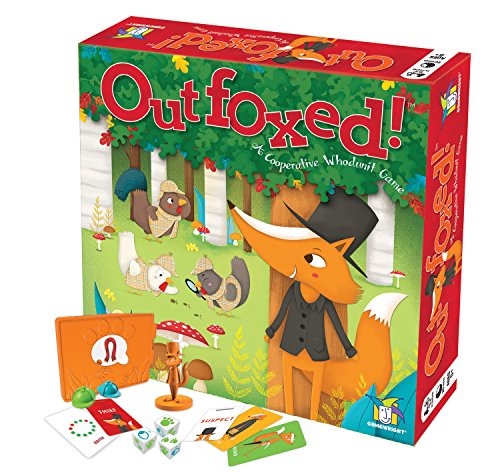 Gamewright Outfoxed Cooperative Board Game for Ages 4-8
|
8.6/10 | Buy | |
| Best Value |
 Thames & Kosmos The Crew Family Adventure Card Game
|
8.4/10 | Buy | |
| Top Rated |
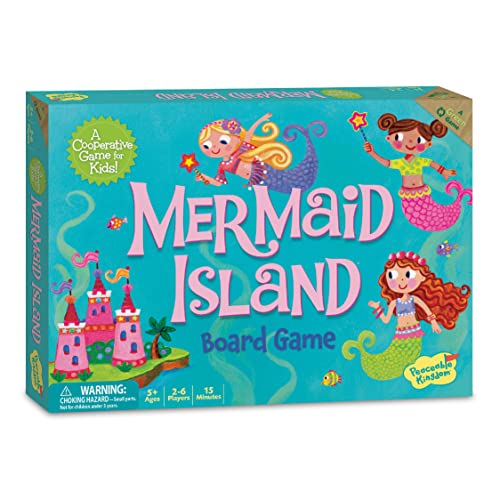 Peaceable Kingdom Mermaid Island Cooperative Board Game
|
7.5/10 | Buy | |
 Peaceable Kingdom Cauldron Quest Cooperative Game for Ages 6+
|
7.4/10 | Buy | ||
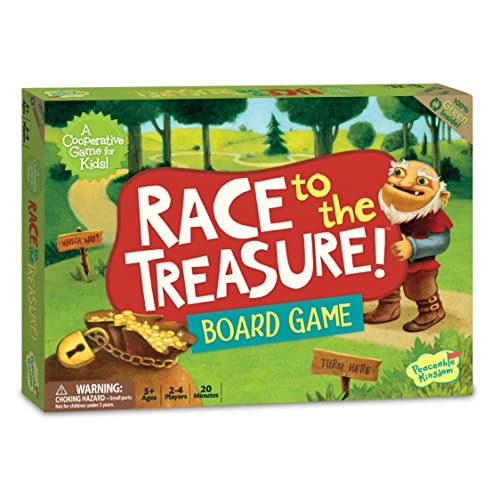 Peaceable Kingdom Race to the Treasure Cooperative Game
|
7.3/10 | Buy | ||
 Ravensburger Minecraft Heroes of The Village Board Game
|
7.1/10 | Buy | ||
 ThinkFun Shadows in the Forest Board Game
|
6.8/10 | Buy | ||
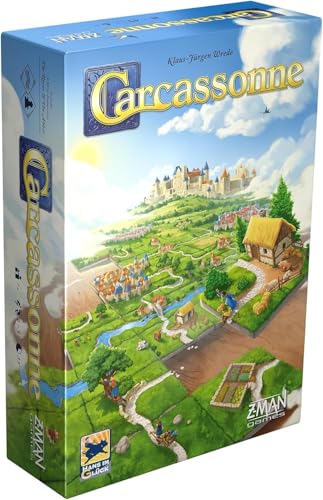 Z-Man Games Carcassonne Board Game, 2-5 Players
|
7.8/10 | Buy |
Fireside Games Castle Panic 2nd Edition Board Game
A cooperative tower defense board game where 1-6 players work together to protect Castle Bravehold from waves of monsters. Combines accessible gameplay with strategic depth across four different modes, making it suitable for mixed skill levels and repeat play.
Pros
- Multiple game modes provide different experiences and high replay value
- 3D tower components and quality illustrations enhance table presence
- Scales well from solo play to full 6-player sessions
- Card trading mechanic encourages meaningful teamwork and communication
- Easy learning curve makes it accessible to newcomers alongside experienced players
Cons
- No verified customer reviews available to assess real-world durability or gameplay balance
- 45-minute play time may feel short or long depending on player group size and mode
- Limited information on component quality and tower stability during extended play
Gamewright Outfoxed Cooperative Board Game for Ages 4-8
Outfoxed is a cooperative mystery game where players work together to catch a fox before it escapes, using dice rolls and clue-solving rather than competing against each other. It builds logic and deduction skills in 15-20 minutes with minimal setup, making it ideal for family game nights with young children.
Pros
- Cooperative design encourages teamwork and communication instead of conflict
- Fast gameplay and easy rules make it accessible for preschoolers through age 8
- Combines entertainment with learning-based deduction mechanics
- Compact size (9.5 x 9.5 inches) stores easily
Cons
- No reviews currently available to verify real-world experience
- Limited to 4 players maximum, excludes larger family groups
- Relies on decoder mechanics that younger children may need adult guidance to use
Thames & Kosmos The Crew Family Adventure Card Game
A family-friendly cooperative card game from the award-winning Crew series, designed for ages 8 and up with 2-5 players. Features 35 unique missions across a pirate-themed adventure with trick-taking gameplay and new power-ups to help younger players succeed together.
Pros
- Award-winning Kennerspiel des Jahres series pedigree brings quality gameplay to families
- 35 missions provide substantial replay value and progression for repeated plays
- Cooperative mechanics build communication and problem-solving as a family unit
- New power-ups system adds strategic depth beyond standard trick-taking rules
Cons
- No verified buyer reviews available to confirm accessibility for the stated 8+ age range in practice
- 15-minute playtime may feel short for players seeking extended family game sessions
- Trick-taking game mechanics require players to understand card rank and suit tracking
Peaceable Kingdom Mermaid Island Cooperative Board Game
A spin-and-move board game where 2 to 6 players ages 5+ work together to help mermaids reach safety before the Sea Witch does. Requires no reading, runs about 15 minutes, and emphasizes cooperation over competition.
Pros
- Genuinely cooperative mechanics eliminate winners and losers, reducing stress
- Spin-and-move mechanic is simple enough for 5-year-olds to understand independently
- Compact size and quick playtime make it convenient for families and classrooms
- Award recognition from established toy authority
- Encourages emotional development and positive self-esteem through collaborative success
Cons
- No customer reviews available to verify long-term durability or actual play experience
- Limited strategic depth may lose appeal with older children after repeated plays
- Spinner-based gameplay introduces luck element that can feel limiting to some players
Peaceable Kingdom Cauldron Quest Cooperative Game for Ages 6+
A cooperative board game where 2-4 players work together to break a dark spell by collecting potion ingredients and solving puzzles. Built around collaborative play rather than competition, it emphasizes teamwork, problem-solving, and social skill development in a low-stress environment.
Pros
- Cooperative mechanics eliminate cutthroat competition and encourage collective problem-solving
- Includes varied gameplay elements (dice, tokens, ingredients, spell-breaker mechanics) to maintain engagement
- Designed specifically to support emotional development and community building during play
- Includes all necessary components in one box with clear player count and age range
Cons
- No verified customer reviews available yet to assess actual gameplay experience or difficulty balance
- Limited to 2-4 players, excludes larger group play sessions
- Requires adults to teach rules and facilitate initial play sessions for younger children
Peaceable Kingdom Race to the Treasure Cooperative Game
A cooperative board game where 2 to 4 players ages 5+ work together to reach treasure before an Ogre, building strategy skills without requiring reading. Award-winning design emphasizes teamwork and social development over competition.
Pros
- Cooperative format eliminates competitive conflict, reducing tears and frustration among young players
- Award-winning design backed by educational toy portfolio recognition and PAL Seal
- Works with varied player counts (2-4) and requires no reading skills
- Engaging path-building mechanic keeps children strategically involved
Cons
- No customer reviews available yet to verify real-world experience and gameplay longevity
- Limited to ages 5+, leaving younger siblings unable to participate
- Game depth and replay value unclear from product specifications alone
Ravensburger Minecraft Heroes of The Village Board Game
A cooperative board game that translates Minecraft into a 2-4 player experience with a randomly generated map that shifts every playthrough. Well-suited for families and Minecraft fans ages 7 and up seeking strategic gameplay without excessive complexity.
Pros
- Cooperative structure makes it accessible for families and mixed-skill groups
- Randomized map design ensures each session feels different
- Thoughtfully crafted wooden and cardboard components add tactile quality
- Appropriate difficulty curve for younger players and casual adults
Cons
- No verified buyer reviews available to assess real-world durability or player experience
- Limited to 2-4 players, excluding larger groups
- Minecraft theme may appeal primarily to fans already familiar with the game
ThinkFun Shadows in the Forest Board Game
A light-based board game where players take on roles as seekers or shadowing forest creatures, combining flashlight tag mechanics with strategic gameplay. Designed for 2-7 players ages 8 and up with glow-in-the-dark components and included batteries.
Pros
- Unique asymmetrical gameplay where seekers and shadowing creatures have opposing objectives
- All necessary components included with batteries, no additional purchases required
- Easy-to-learn mechanics with clear instruction manual
- Works for mixed-age groups with legitimate strategic depth for adults
Cons
- No verified customer reviews available yet to assess real-world durability or playability issues
- Limited to 7 players maximum, excluding larger group settings
- Requires adequate dark or dimly-lit play environment for optimal experience with light mechanics
Z-Man Games Carcassonne Board Game, 2-5 Players
Carcassonne is a tile-placement strategy game where players build medieval landscapes and score points by claiming cities, roads, and monasteries with meeples. Its accessible rules and randomized tile draws make it equally enjoyable for families with kids 7+ and experienced adult gamers looking for a quick, replayable session.
Pros
- Simple ruleset with depth that scales from casual to competitive play
- Two mini-expansions bundled in, extending gameplay variety immediately
- Short playtime fits weeknight gaming without long commitment
- Randomized tile draws ensure no two games play identically
- Works well across a wide age and skill range
Cons
- No verified buyer reviews available to assess real-world durability or component quality
- Limited to 5 players maximum, excluding larger game groups
- Base game alone may feel repetitive after numerous plays without additional expansions
Cooperative Board Games for Kids Buying Guide
Not every cooperative game is created equal, and the difference between a title that gets played weekly and one that collects dust often comes down to a handful of practical factors.
The sections below walk through the criteria our research found most predictive of long-term enjoyment for families with children.
Age-Appropriateness and Rule Complexity

The single biggest predictor of whether a cooperative game lands well is whether children can genuinely participate in decision-making rather than being guided hand-over-hand by adults.
Publishers typically list a minimum age on the box, but those numbers can be optimistic.
Expert reviewers and verified buyers consistently flag that games rated five and up with three or fewer core rules, such as the Peaceable Kingdom titles in our list, actually work at that age.
Games rated eight and up with layered mechanics, like Castle Panic, may frustrate a younger child even if an older sibling can explain the rules fluently.
A useful rule of thumb drawn from parenting-press consensus: a child should be able to understand their main decision on each turn without adult prompting after the first two rounds of play.
If the game requires an adult to narrate every choice, it is functioning as a solo game with spectators rather than a true cooperative experience.
Look for clear iconography, limited text on cards, and turns short enough to hold a young child’s attention.
Scalability Across Player Counts
Family size and available players vary enormously from session to session. A game that plays well with two children but collapses with five, or that requires exactly four players to function, is a practical liability.
Our top picks all support a range of two to four or more players, and several scale gracefully from a parent-child duo to a full family of six.
The Peaceable Kingdom lineup, for instance, is specifically engineered for two to six players, making it flexible enough for playdates and family gatherings alike.
Also consider solo play. Several titles on our list, including Castle Panic, explicitly support one-player sessions, which matters more than it might seem.
A child who can return to a game independently on a rainy afternoon is a child who internalizes its mechanics faster, making group sessions smoother and more enjoyable for everyone at the table.
Replayability and Randomness
Cooperative games live or die by replayability. A game children can exhaust in three sessions is not a sound investment, regardless of how well it plays on the first run.
The strongest titles in this category use shuffled decks, randomized setups, or modular boards to ensure each session presents a different challenge.
Outfoxed!, for example, draws suspect cards and clue tiles randomly so no two games follow the same deductive path. Castle Panic randomizes monster placement and card draws across every playthrough.
Expert reviewers note that randomness needs to be balanced against fairness. A game where children consistently lose because of unlucky draws, rather than poor decisions, damages motivation and trust in the cooperative model.
Look for titles where randomness sets up the challenge but player choices meaningfully influence the outcome.
The balance between luck and strategy is one of the sharpest differentiators among cooperative kids’ games, and it is a central factor in how we assigned PF Scores across this list.
Setup Time and Session Length

A cooperative board game that takes fifteen minutes to set up before a child’s attention window even opens is a game that will not reach the table.
Verified buyer reviews across nearly every title on our list reinforce a consistent preference for setup times under five minutes and session lengths between fifteen and forty-five minutes for younger players.
Games marketed at ages five to seven should ideally play in twenty minutes or fewer; games for ages eight and up can stretch to forty-five minutes if the pacing keeps all players engaged throughout rather than leaving some idle while others deliberate.
Session length also affects the crucial issue of “quarterbacking,” the tendency for one dominant player (often a parent or older sibling) to direct all decisions.
Shorter games with faster turn rotations naturally reduce this dynamic because there is less downtime for one player to fill with instructions.
If quarterbacking is a real concern in your household, prioritize titles with individual roles or hidden information, which structurally limit what any one player can see or control.
Component Quality and Durability

Components that survive young children require thicker cardstock, chunky pieces, and boards that can take repeated folding and unfolding without delaminating at the seams. Peaceable Kingdom titles are consistently praised by verified buyers for above-average cardstock at their price point.
Castle Panic ships with 3D tower components that add tactile engagement and hold up well to rough handling.
Shadows in the Forest by ThinkFun takes an entirely different approach, using a battery-powered lantern and opaque figurines that eliminate printed cardstock from the core experience entirely.
For families who invest in a game expecting years of use, component quality is worth weighing against price.
A budget cooperative game with flimsy tokens that bend after ten sessions ultimately costs more than a sturdier mid-tier title played hundreds of times.
Reviewer consensus and buyer feedback both flag component durability as one of the top complaint categories for kids’ board games, so it deserves weight in any purchasing decision.
Thematic Engagement and Novelty
Mechanics alone do not keep children returning to a game. The theme needs to connect with their imagination.
Our list deliberately spans a range of themes: underwater mermaid adventure, forest creature treasure hunt, castle defense against monsters, Minecraft village building, arctic exploration, and a classic fox-in-the-henhouse mystery.
Matching theme to the child’s current interests is the fastest way to lower the barrier to a first play, and a child who is emotionally invested in the premise is a more patient, engaged cooperative partner.
Thematic novelty also extends to gameplay format. Shadows in the Forest is played in near-darkness with a glowing lantern, which creates an atmosphere unlike any conventional board game.
The Crew: Family Adventure is a cooperative card game rather than a board game, making it easy to pack for travel. Minecraft: Heroes of the Village will immediately hook children already immersed in that universe.
Matching format and theme to the household’s actual play context, whether that is a family game night at home or a weekend camping trip, pays dividends in repeat plays.
Why You Should Trust Us
ProductFind is an independent review publication. Every product on this list was assessed using our standardized PF Score methodology, a 0 to 10 rating system applied consistently across the board games category.
We do not conduct our own product trials; our evaluations are grounded in research, published data, expert review consensus, and verified buyer feedback.
For cooperative kids’ board games, our research drew on published reviews from the board game enthusiast press, parenting publications, and educator resources, cross-referenced against verified buyer feedback from documented purchasers.
Criteria weighted in our scoring include age-appropriate rule complexity, replayability, component quality, scalability across player counts, session length, and thematic engagement relative to the target age range.
ProductFind may earn an affiliate commission if you purchase through links on this page. That relationship has no bearing whatsoever on which products appear in our rankings, what PF Scores they receive, or which titles we recommend.
Our editorial process is kept separate from commercial considerations, and products are ranked solely on the quality and consistency of the evidence supporting each score. We never accept payment for placement or adjust a score based on affiliate rates.
If a product scores poorly by our criteria, it does not make the list, regardless of its commercial arrangement.
Final Thoughts
The cooperative kids’ board game market has matured considerably, and there are now genuinely excellent options at nearly every price point and age level.
After synthesizing expert review consensus and verified buyer feedback across all nine titles, here is how our top picks sort into distinct roles for different families and play contexts.
- Best Overall: Fireside Games Castle Panic 2nd Edition earns the top PF Score on our list with its rare combination of strategic depth, genuine scalability from solo to six players, tactile 3D components, and a difficulty curve that grows with the children playing it. It is the title expert reviewers and verified buyers most consistently return to as their household’s favorite cooperative experience for ages eight and up.
- Best for Preschoolers and Early Readers: Outfoxed! by Gamewright is the strongest cooperative deduction game built specifically for young children, with a scoring that reflects near-universal praise for its simple clue-gathering mechanic, quick sessions, and ability to include children as young as four without adult mediation of every decision.
- Best Budget Card Game: The Crew: Family Adventure by Thames and Kosmos delivers an exceptionally high-quality cooperative card experience at the most accessible price point on this list, with a compact format that travels easily and sessions short enough for school nights.
- Best for Ages 5 and Up: Peaceable Kingdom Mermaid Island is the most approachable gateway cooperative game for kindergarten-age children, praised consistently for its gentle difficulty, vibrant components, and the genuine way it teaches turn-taking and shared decision-making without overwhelming young players.
- Best Unique Play Experience: ThinkFun Shadows in the Forest stands apart from every other title on this list by being played in actual darkness with a glowing lantern, creating an atmospheric cooperative experience that children and adults remember long after the game is put away.
Whichever title you choose, cooperative play consistently outperforms competitive formats for mixed-age groups when the goal is a positive shared experience rather than a declared winner.
The games above represent the strongest evidence-backed options across age ranges, budgets, and play styles available in the category right now.
Pairing a well-chosen cooperative board game with other family-focused home investments, whether that is a comfortable patio seating setup for outdoor game nights or a reliable floor lamp that keeps the game table well-lit without glare, can make game nights a genuinely consistent family ritual.
Frequently Asked Questions
What age is appropriate to start cooperative board games?
Most child development experts and verified buyer feedback suggest children as young as four or five can engage meaningfully with cooperative games designed for their age group, provided the rules are simple enough to understand without reading.
Titles like Outfoxed! and the Peaceable Kingdom games are specifically engineered for this window.
Games with more layered mechanics, such as Castle Panic or The Crew: Family Adventure, are better suited to children eight and older who can hold multiple rules in working memory simultaneously.
The key indicator is whether a child can make their own turn decisions after the first full round of play.
If they still need every choice narrated by an adult, the game is above their current developmental level and should be revisited in six to twelve months.
Do cooperative games actually reduce sibling rivalry compared to competitive games?
Expert review consensus and parenting-press research strongly support this. Because cooperative games eliminate the zero-sum dynamic where one child wins at another’s direct expense, post-game conflict is significantly reduced.
The shared emotional investment in a cooperative outcome, whether victory or defeat, tends to generate conversation and replanning rather than resentment. This is one of the core reasons educators and family therapists frequently recommend cooperative games for multi-child households.
That said, cooperative games introduce their own interpersonal challenge: quarterbacking, where one dominant player takes over all decisions. Choosing titles with individual roles or hidden information, as several picks on this list feature, structurally mitigates that dynamic.
How many players do most cooperative kids’ games support?
The majority of cooperative games for children support two to four players, with several titles on our list extending to five or six.
Castle Panic supports one to six players, making it one of the most flexible options for larger families or classroom settings. The Crew: Family Adventure plays with two to five. Most Peaceable Kingdom games accommodate two to six.
If you regularly host playdates or game nights with more than four children, checking the maximum player count before purchasing is essential, as overcrowding a game designed for four can stall turns and reduce individual engagement.
Are cooperative board games replayable enough to justify the purchase?
For the strongest titles in this category, yes, significantly so. Games that use randomized card draws, shuffled setups, or modular boards generate a different challenge configuration with each play.
Verified buyer feedback for Castle Panic, Outfoxed!, and the Peaceable Kingdom series consistently notes dozens to hundreds of plays across multi-year ownership periods.
The Crew: Family Adventure adds a mission-based structure that sequences new objectives across many sessions, extending the effective content well beyond a single playthrough.
Titles with fixed puzzle structures, where the solution is learnable and repeatable, are the exception and generally score lower on replayability in our assessment. If replayability is your primary concern, prioritize games with randomized or procedurally variable setups from the list above.
Can cooperative board games be played with just two people, including a parent and one child?
Most titles on our list are specifically designed to work well as two-player games. Outfoxed! plays smoothly with one parent and one child, and the cooperative deduction mechanic scales naturally to two investigators.
Peaceable Kingdom titles are explicitly two-to-six player, and verified buyers frequently highlight the two-player format as one of the best ways to introduce a child to cooperative gaming before adding siblings.
Castle Panic even supports true solo play, which is rare at this category’s price point and makes it a strong choice for families who want a game that a child can return to independently.
If you are shopping primarily for a parent-child two-player experience, also consider session length.
Shorter games, around fifteen to twenty-five minutes, tend to sustain a young child’s engagement through a complete arc without fatigue, which is one reason The Crew: Family Adventure’s fifteen-minute sessions earn consistent praise from buyers in exactly this demographic.
How is this list different from other cooperative game rankings?
ProductFind evaluates every product through a structured research process rather than a single reviewer’s personal preference.
For this list, we synthesized expert review consensus from the board game press and parenting media, cross-referenced with verified buyer feedback from thousands of documented purchases, and applied a consistent set of criteria covering age-appropriateness, replayability, component quality, scalability, and thematic engagement.
Each title received a PF Score on our 0 to 10 scale, and the ranking reflects those scores rather than editorial whim or commercial relationships. Titles with stronger evidence across multiple independent sources rank higher, regardless of brand recognition or marketing spend.
We also deliberately limit this list to titles with documented track records of genuine child engagement, not just games that reviewers enjoyed as adults.
Verified buyer feedback from parents describing real household play patterns is weighted heavily in our scoring, because a game that scores well in adult reviews but collects dust in a child’s playroom has not fulfilled its purpose.
For similar research-grounded guidance on other purchases for your home and family, explore our coverage of robot vacuum and mop combos to keep your play area clean, smart light bulbs for setting the right atmosphere on game night, and cordless vacuums for quick cleanup after a session involving lots of small game pieces.
About the author
Manuel is a reviewer and writer for ProductFind who specializes in Board Games & Puzzles for Kids. Manuel evaluates products through independent research: specifications, expert review consensus, and verified buyer feedback, and rates each one on the PF Score. Manuel focuses on helping readers pick the right board games & puzzles for kid for their needs and budget.